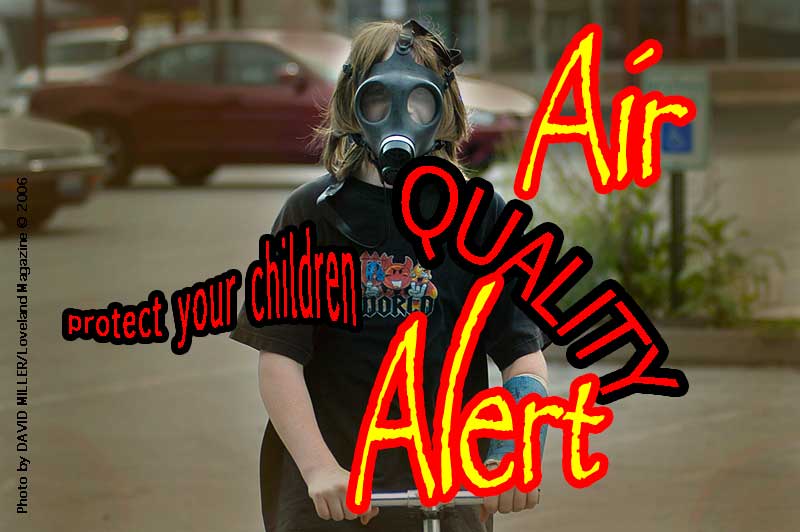
Loveland, Ohio – The Southwest Ohio Air Quality Agency has issued an Air Quality Alert for Sunday, August 8 for the Loveland, Ohio Area.
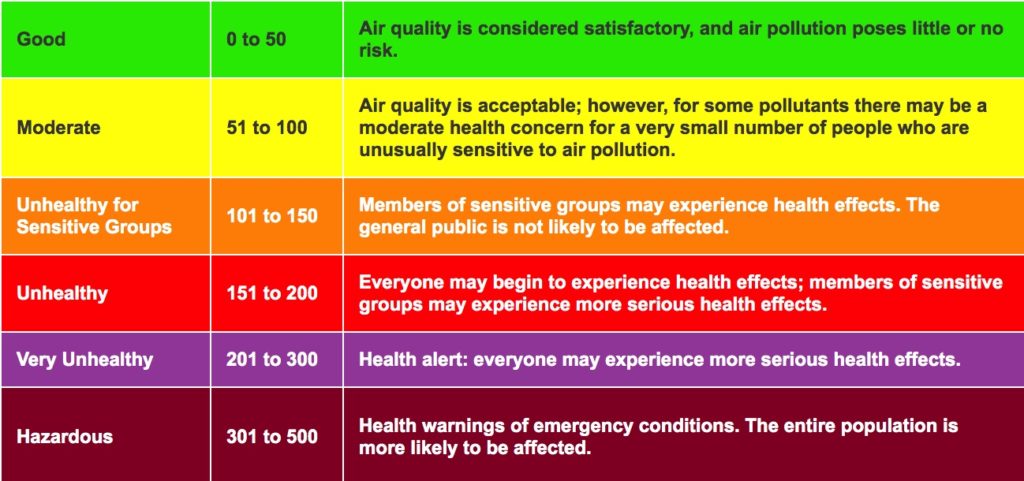
The Air Quality Index is predicted to reach 110.
The Agency expects to see levels of ozone in the “unhealthy for sensitive groups” range on the Air Quality Index.
Active children and adults, and people with respiratory diseases, such as asthma, should be avoiding all outdoor exertion; everyone else, especially children, should limit outdoor exertion.
Activities for children, who can be especially harmed by high levels of ozone because of their developing lungs and that some activities such as sports result in them breathing in quite a large amount of the chemical irritants should be suspended.
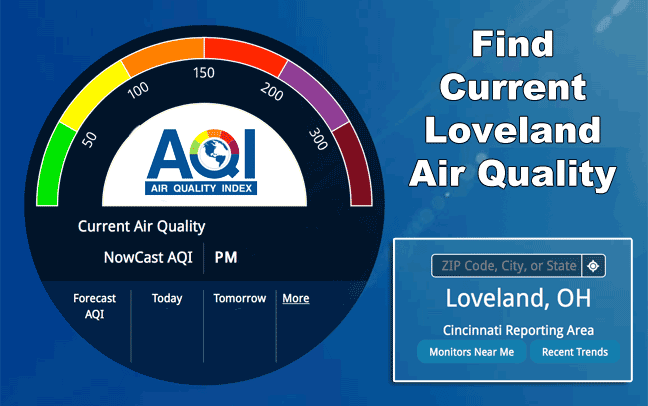
To keep informed about Loveland’s hour-by-hour air quality you can always look for this image on our Home Page or use this LINK.
On Air Quality Alert days, everyone can help reduce ozone formation by taking the following actions:
• Take the bus, carpool, bike, or walk instead of drive.
• Refuel your vehicle after 8 p.m.; do not top off when refueling and tighten the gas cap.
• Do not idle your vehicle; exhaust contributes considerably to ozone formation.
• Combine trips or eliminating unnecessary vehicle trips.
• Keep your vehicle maintained with properly inflated tires and timely oil changes.
• Avoid use of gasoline-powered lawn equipment on Air Quality Alert days.
• Avoid use of oil-based paints and stains on Air Quality Alert days.
• Never burn leaves or other yard trimmings.
• Suspend use of fire pits, campfires and charcoal grills on Air Quality Alert days.
• Conserve electricity by turning out lights and unplugging unused appliances and electronics.
Photos of FC Cincinnati and D.C. United by Alex Eicher
Cincinnati, Ohio – No goals were scored last Saturday night in a scoreless draw between FC Cincinnati and D.C. United behind a sellout crowd of 25,060 at TQL Stadium.
The Orange and Blue (3-7-5) moved into 10th place in the Eastern Conference with 14 points. D.C. United (6-7-3, 21 points) is in eighth place.
The scoreless draw marked the first time that happened for the club since September 23, 2020 when FCC and Philadelphia Union ended 0-0 at Nippert Stadium.
D.C. United nearly scored early, until VAR deemed a player in the buildup on a D.C. attack was offside in the third minute.
In the 52nd minute, the Orange and Blue went up a man after D.C. United’s Moses Nyeman was ejected with a red card. Brenner took over possession from Nyeman on a counterattack near midfield, and Nyeman pulled down the Brazilian from behind as the last D.C. defender.
In second half stoppage time, D.C.’s Joseph Mora’s foul resulted in his second yellow card and ejection from the contest.
The Orange and Blue dominated possession, 68.8 percent to 31.2. The team outshot D.C. 12-10.
FC Cincinnati and New York Red Bulls played to a scoreless draw Wednesday night in front of 9,203 fans at Red Bull Arena.
The Orange and Blue (3-7-6, 15 points) took a road point in the first ever draw between FC Cincinnati and NYRB. The Red Bulls are now 5-7-4 with 19 points.
FCC finished consecutive matches in a scoreless draw for the first time since drawing 0-0 with Columbus Crew and Chicago Fire on August 29 and September 2 of last season, respectively.
Goalkeeper Kenneth Vermeer recorded his fourth clean sheet of the season. He has not allowed a goal in the last 213 minutes of game action, the fifth-longest shutout streak in club history.
FC Cincinnati recorded two shots on goal, both coming off headers from defenders Nick Hagglund and Gustavo Vallecilla.
The Orange and Blue have 12 points on the road this season with a 3-4-3 record away from home, which is the second-best in the Eastern Conference behind first place New England’s 18 road points.
The club returns home Saturday night at TQL Stadium to take on Orlando City SC. Kickoff in Cincinnati is set for 7:30 p.m.
Loveland, Ohio – Here is a short video explaining the current need of the Loveland Stage Company.
There has been over $7000 raised thus far!
Can we make it to $10K?
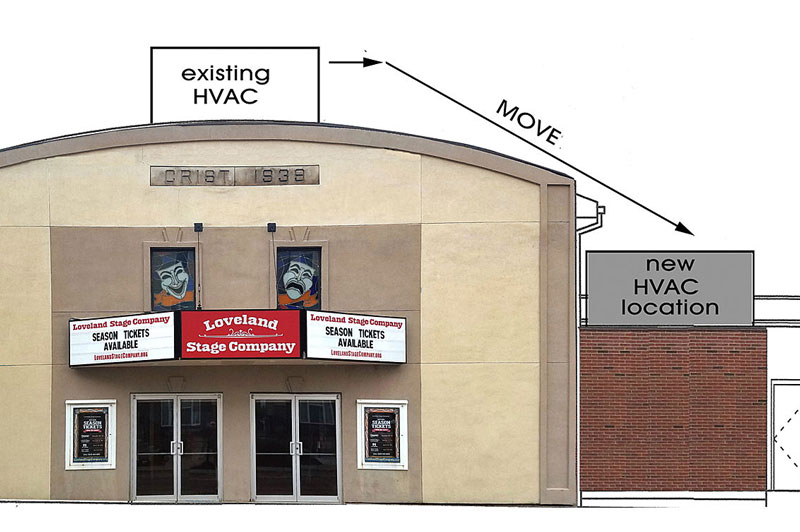
Each unique email donation gets us closer to our goal of replacing the HVAC system to make our theater quieter and more comfortable.
Here’s how you can help:
Donate to LSC using the links below. You will be taken to a special fundraising page, hosted by MightyCause (similar to the GoFundMe site).
USING THIS WEBSITE IS THE ONLY WAY THAT YOUR DONATION COUNTS TOWARDS THE GRANT AWARD.
Our goal is to raise at least $8000. That amount will get the improvements started, even if the big grant eludes us.
INCREASING THE CHANCES OF LSC WINNING:
Each “unique” contribution scores bonus points towards earning the large Grant money. Two donations of $25, each using separate emails, is ranked higher than if one person gives $50.
Take an extra moment and ask each member of your family to give something ($5 minimum). Any amount helps, as long as it uses a different email.
Loveland, Ohio – The Southwest Ohio Air Quality Agency has issued an Air Quality Alert for Thursday, August 5 for the Loveland, Ohio Area.
The Agency expects to see levels of ozone in the “unhealthy for sensitive groups” range on the Air Quality Index.
Active children and adults, and people with respiratory diseases, such as asthma, should be avoiding all outdoor exertion; everyone else, especially children, should limit outdoor exertion.
Activities for children, who can be especially harmed by high levels of ozone because of their developing lungs and that some activities such as sports result in them breathing in quite a large amount of the chemical irritants should be suspended.
To keep informed about Loveland’s hour-by-hour air quality you can always look for this image on our Home Page or use this LINK.
On Air Quality Alert days, everyone can help reduce ozone formation by taking the following actions:
• Take the bus, carpool, bike, or walk instead of drive.
• Refuel your vehicle after 8 p.m.; do not top off when refueling and tighten the gas cap.
• Do not idle your vehicle; exhaust contributes considerably to ozone formation.
• Combine trips or eliminating unnecessary vehicle trips.
• Keep your vehicle maintained with properly inflated tires and timely oil changes.
• Avoid use of gasoline-powered lawn equipment on Air Quality Alert days.
• Avoid use of oil-based paints and stains on Air Quality Alert days.
• Never burn leaves or other yard trimmings.
• Suspend use of fire pits, campfires and charcoal grills on Air Quality Alert days.
• Conserve electricity by turning out lights and unplugging unused appliances and electronics.
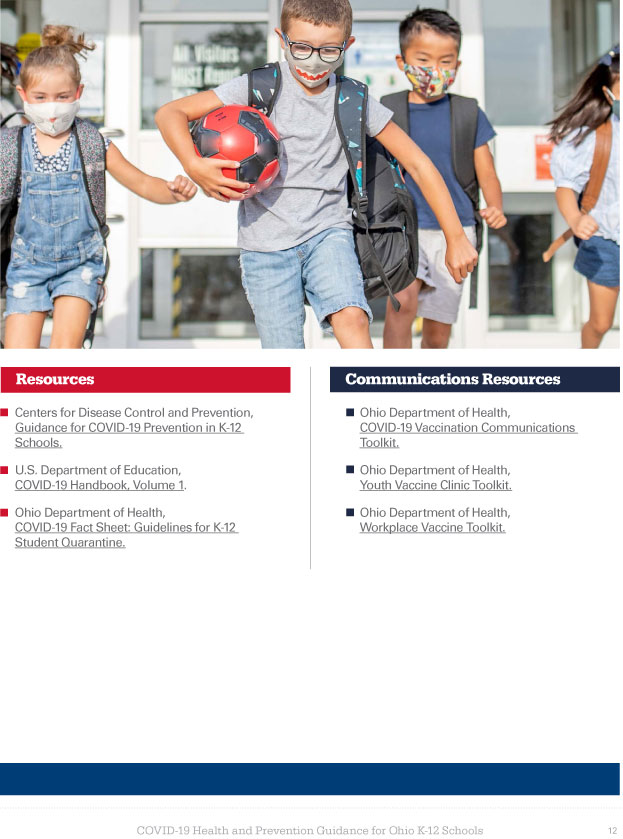
“It is strongly recommended that schools implement masking.”
Loveland, Ohio – When asked, this morning to provide Loveland Magazine with the current Board of Health guidance for covid 19 protocol for K-12 schools “Mike Samet, the Public Information Officer for Hamilton County Public Health responded, “We are following the Ohio Dept. of Health guidelines (attached) until we develop our own, if necessary.”
The current Loveland school protocol reads in part, “…the Board will follow any mandates set forth by the Ohio Governor, Ohio State Health Department, Hamilton County Health Department, and Ohio Department of Education, (“Directing Entities”) as it relates to protecting the health of students, staff and visitors.”
There will be no remote learning opportunities (Remote Academy) for Loveland teachers or students as all school buildings will return to full capacity in-person classes in August.
Samet referred Loveland Magazine to the Ohio Dept. of Health (ODH) guidelines which are currently Hamilton County Health Department’s as well.
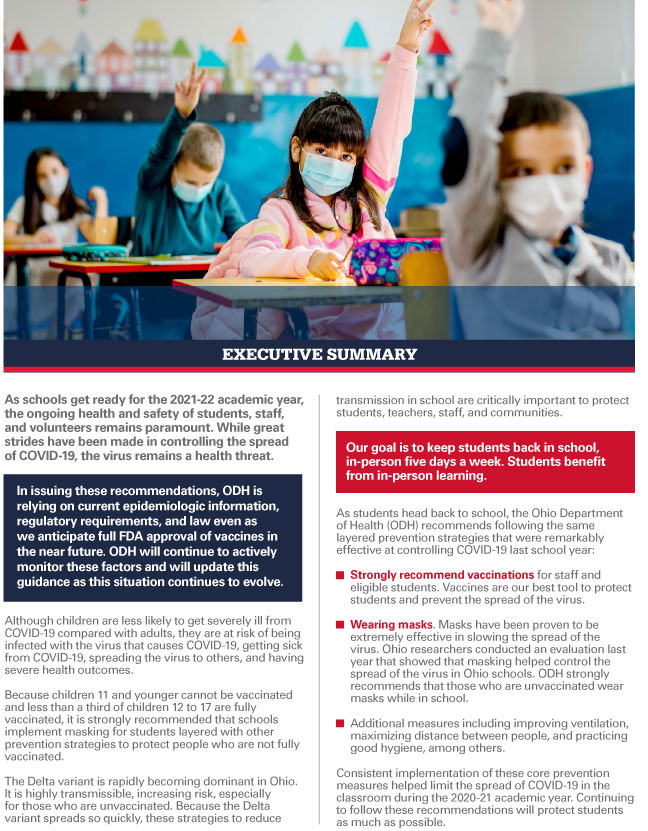
The ODH guidelines begin with this opening introduction:
As schools get ready for the 2021-22 academic year, the ongoing health and safety of students, staff, and volunteers remains paramount. While great strides have been made in controlling the spread of COVID-19, the virus remains a health threat.
Although children are less likely to get severely ill from COVID-19 compared with adults, they are at risk of being infected with the virus that causes COVID-19, getting sick from COVID-19, spreading the virus to others, and having severe health outcomes.
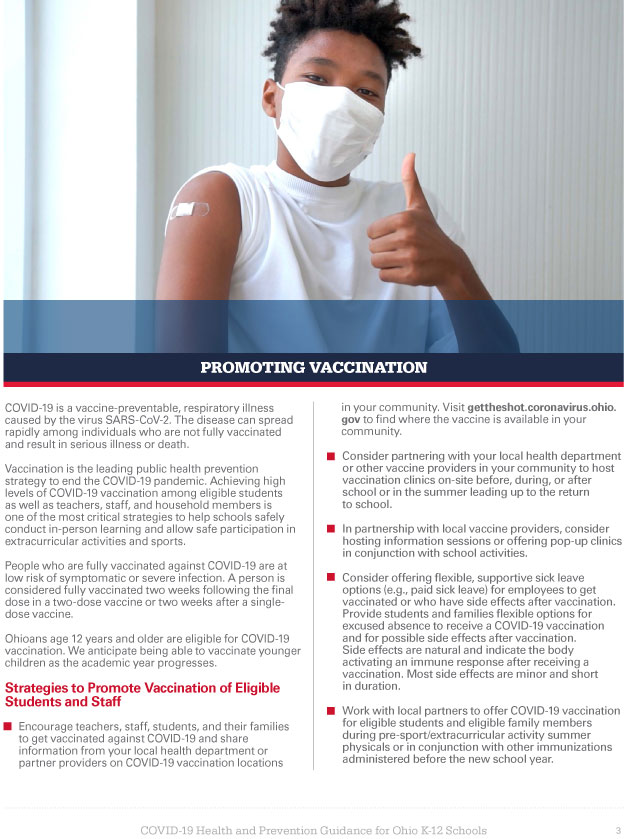
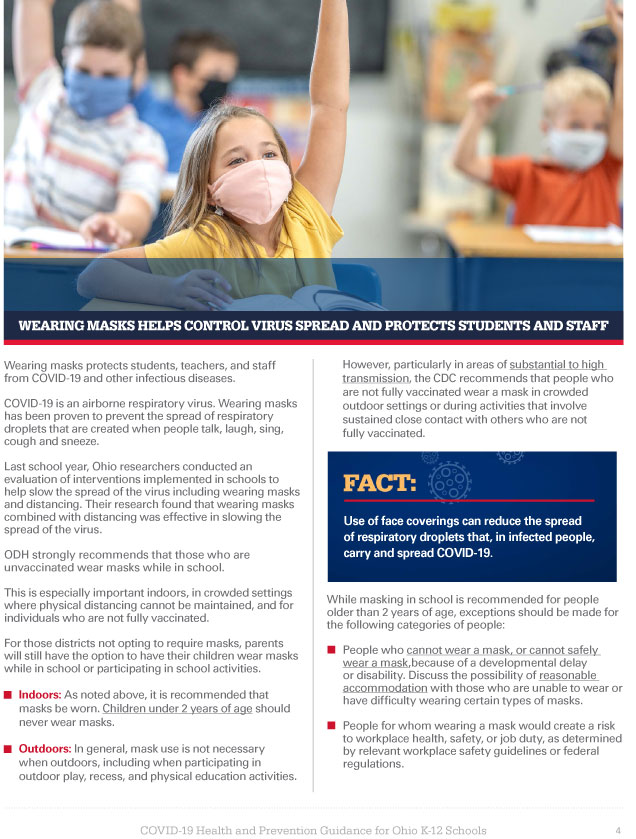
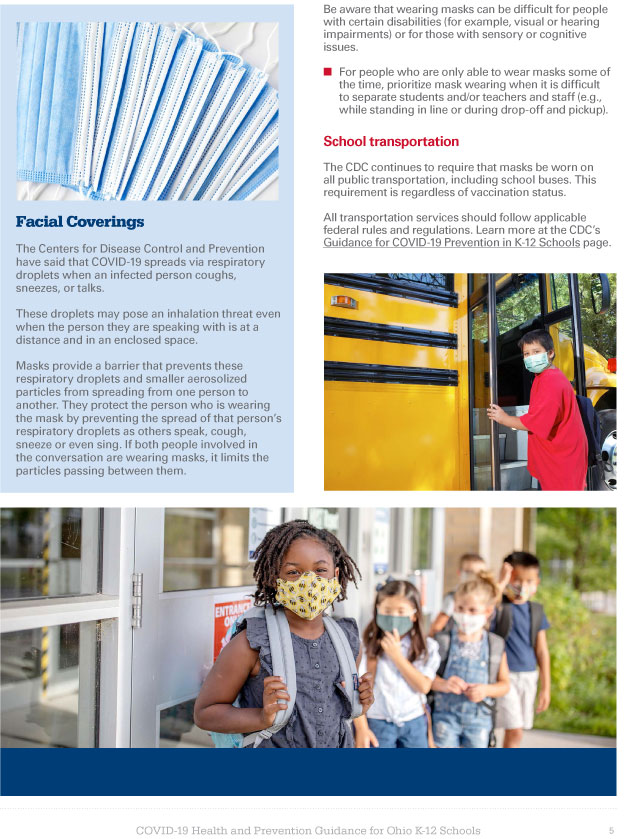
Because children 11 and younger cannot be vaccinated and less than a third of children 12 to 17 are fully vaccinated, it is strongly recommended that schools implement masking for students layered with other prevention strategies to protect people who are not fully vaccinated.
The Delta variant is rapidly becoming dominant in Ohio. It is highly transmissible, increasing risk, especially for those who are unvaccinated. Because the Delta variant spreads so quickly, these strategies to reduce transmission in school are critically important to protect students, teachers, staff, and communities.
As students head back to school, the Ohio Department of Health (ODH) recommends following the same layered prevention strategies that were remarkably effective at controlling COVID-19 last school year:
Strongly recommend vaccinations for staff and eligible students. Vaccines are our best tool to protect students and prevent the spread of the virus.
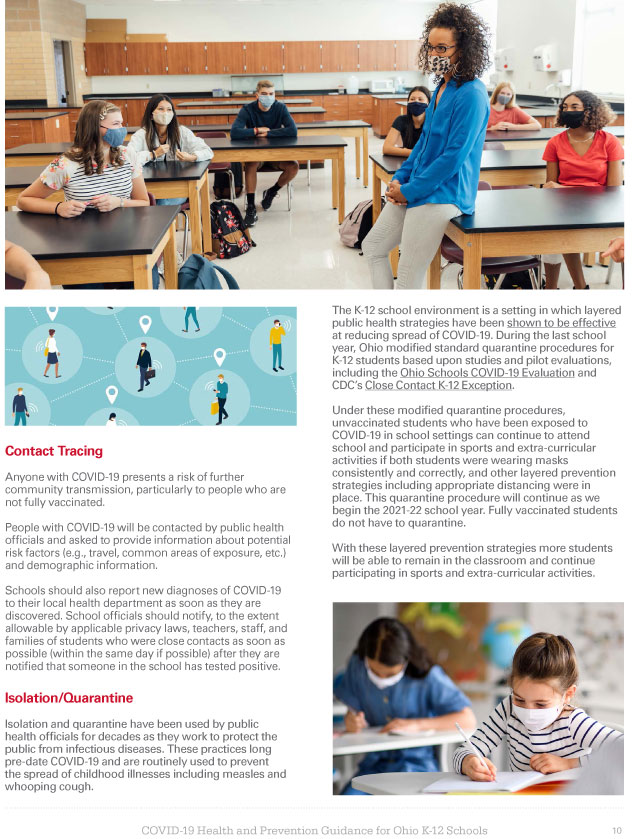
Wearing masks. Masks have been proven to be extremely effective in slowing the spread of the virus. Ohio researchers conducted an evaluation last year that showed that masking helped control the spread of the virus in Ohio schools. ODH strongly recommends that those who are unvaccinated wear masks while in school.
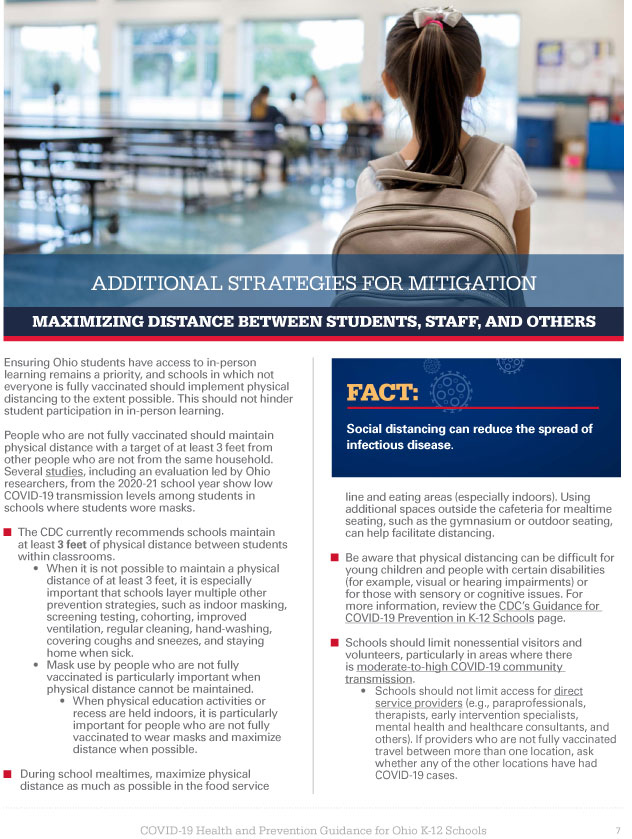
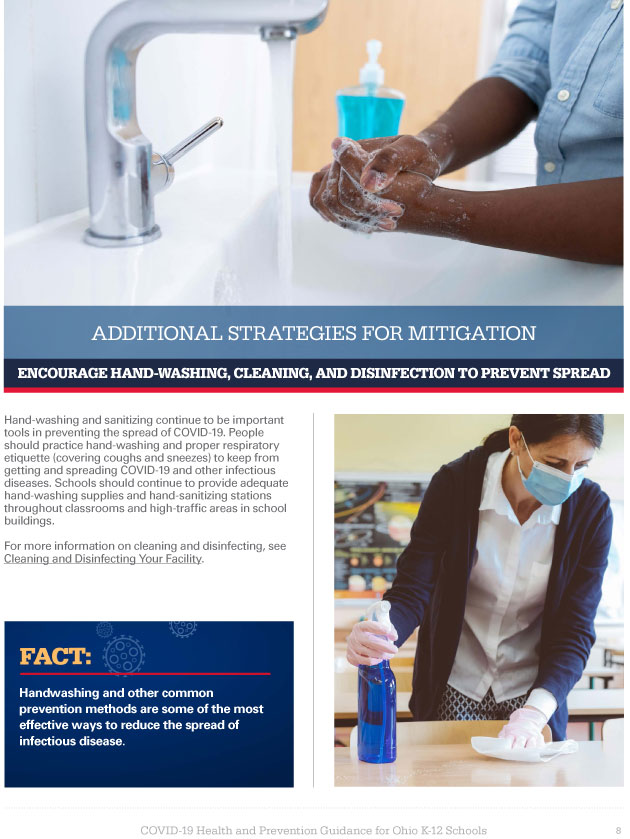
Additional measures including improving ventilation, maximizing distance between people, and practicing good hygiene, among others.
Consistent implementation of these core prevention measures helped limit the spread of COVID-19 in the classroom during the 2020-21 academic year. Continuing to follow these recommendations will protect students as much as possible.
As the next school year begins, there needs to be a continued focus on keeping students safe, since not all students will have the opportunity or be eligible to be vaccinated before the start of the next school year. – American Academy of Pediatrics
The AAP strongly advocates that all policy considerations for school plans should start with the goal of keeping students safe and physically present in school.
Purpose and Key Principles
The purpose of this guidance is to continue to support communities, local leadership in education and public health, and pediatricians collaborating with schools in creating policies for safe schools during the COVID-19 pandemic that foster the overall health of children, adolescents, educators, staff, and communities and are based on available evidence. As the next school year begins, there needs to be a continued focus on keeping students safe, since not all students will have the opportunity or be eligible to be vaccinated before the start of the next school year. Since the beginning of this pandemic, new information has emerged to guide safe in-person learning. Remote learning highlighted inequities in education, was detrimental to the educational attainment of students of all ages, and exacerbated the mental health crisis among children and adolescents. 1,2 Opening schools generally does not significantly increase community transmission, particularly when guidance outlined by the World Health Organization (WHO),3 United Nations Children’s Fund (UNICEF), and Centers for Disease Control and Prevention (CDC) is followed. 4,5 There are still possibilities for transmission of SARS-CoV-2, especially for individuals and families who have chosen not to be vaccinated or are not eligible to be vaccinated. In addition, SARS-CoV-2 variants have emerged that may increase the risk of transmission and result in worsening illness. However, the AAP believes that, at this point in the pandemic, given what we know about low rates of in-school transmission when proper prevention measures are used, together with the availability of effective vaccines for those age 12 years and up, that the benefits of in-person school outweigh the risks in almost all circumstances. Along with our colleagues in the field of education,6the American Academy of Pediatrics (AAP) strongly advocates for additional federal assistance to all schools throughout the United States, irrespective of whether the current local context allows for in-person instruction.
Schools and school-supported programs are fundamental to child and adolescent development and well-being and provide our children and adolescents with academic instruction; social and emotional skills, safety, reliable nutrition, physical/occupational/speech therapy, mental health services, health services, and opportunities for physical activity, among other benefits.7 Beyond supporting the educational development of children and adolescents, schools can play a critical role in addressing racial and social inequity. As such, it is critical to reflect on the differential impact the COVID-19 pandemic and the associated school closures have had on different racial and ethnic groups and populations facing inequities. Disparities in school funding, quality of school facilities, educational staffing, and resources for enriching curricula among schools have been exacerbated by the pandemic. Families rely on schools to provide a safe, stimulating, and enriching space for children to learn; appropriate supervision of children; opportunities for socialization; and access to school-based mental, physical, and nutritional health services.
Everything possible must be done to keep students in schools in-person. Many families did not have adequate support to the aforementioned educational services, and disparities, especially in education, did worsen, especially for children who are English language learners, children with disabilities, children living in poverty, and children who are Black, Hispanic/Latino, and American Indian/Alaska Native. 8,9,10,11
The AAP strongly recommends that school districts promote racial/ethnic and social justice by promoting the well-being of all children in any school COVID-19 plan, with a specific focus on ensuring equitable access to educational supports for children living in under-resourced communities.
It is critical to use science and data to guide decisions about the pandemic and school COVID-19 plans. All school COVID-19 policies should consider the following key principles and remember that COVID-19 policies are intended to mitigate, not eliminate, risk. Because school transmission reflects (but does not drive) community transmission, it is vitally important that communities take all necessary measures to limit the community spread of SARS-CoV-2 to ensure schools can remain open and safe for all students. The implementation of several coordinated interventions can greatly reduce risk:
All eligible individuals should receive the COVID-19 vaccine.
It may become necessary for schools to collect COVID-19 vaccine information of staff and students and for schools to require COVID-19 vaccination for in-person learning.
Adequate and timely COVID-19 vaccination resources for the whole school community must be available and accessible.
All students older than 2 years and all school staff should wear face masks at school (unless medical or developmental conditions prohibit use).
The AAP recommends universal masking in school at this time for the following reasons:
a significant portion of the student population is not eligible for vaccination
protection of unvaccinated students from COVID-19 and to reduce transmission ▪ lack of a system to monitor vaccine status among students, teachers and staff
potential difficulty in monitoring or enforcing mask policies for those who are not vaccinated; in the absence of schools being able to conduct this monitoring, universal masking is the best and most effective strategy to create consisent messages, expectations, enforcement, and compliance without the added burden of needing to monitor vaccination status
possibility of low vaccination uptake within the surrounding school community
continued concerns for variants that are more easily spread among children, adolescents, and adults
An added benefit of universal masking is protection of students and staff against other respiratory illnesses that would take time away from school.
Adequate and timely COVID-19 testing resources must be available and accessible.
It is critically important to develop strategies that can be revised and adapted depending on the level of viral transmission and test positivity rate throughout the community and schools, recognizing the differences between school districts, including urban, suburban, and rural districts.
School policies should be adjusted to align with new information about the pandemic; administrators should refine approaches when specific policies are not working.12
Schools must continue to take a multi-pronged, layered approach to protect students, teachers, and staff (ie, vaccination, universal mask use, ventilation, testing, quarantining, and cleaning and disinfecting). Combining these layers of protection will make in-person learning safe and possible. Schools should monitor the implementation and effectiveness of these policies.
Schools should monitor the attendance of all students daily inclusive of in-person and virtual settings. Schools should use multi-tiered strategies to proactively support attendance for all students, as well as differentiated strategies to identify and support those at higher risk for absenteeism.
School districts must be in close communication and coordinate with state and/or local public health authorities, school nurses, local pediatric practitioners, and other medical experts.
School COVID-19 policies should be practical, feasible, and appropriate for child and adolescent’s developmental stage and address teacher and staff safety.
Special considerations and accommodations to account for the diversity of youth should be made, especially for populations facing inequities, including those who are medically fragile or complex, have developmental challenges, or have disabilities. Children and adolescents who need customized considerations should not be automatically excluded from school unless required in order to adhere to local public health mandates or because their unique medical needs would put them at increased risk for contracting COVID-19 during current conditions in their community.
School policies should be guided by supporting the overall health and well-being of all children, adolescents, their families, and their communities and should also look to create safe working environments for educators and school staff. This focus on overall health and well-being includes addressing the behavioral/mental health needs of students and staff.
These policies should be consistently communicated in languages other than English, when needed, based on the languages spoken in the community, to avoid marginalization of parents/guardians of limited English proficiency or who do not speak English.
Ongoing federal, state, and local funding should be provided for all schools so they can continue to implement all the COVID-19 mitigation and safety measures required to protect students and staff. Funding to support virtual learning and provide needed resources should continue to be available for communities, schools, and children facing limitations implementing these learning modalities in their home (eg, socioeconomic disadvantages) or in the event of school re-closure because of a resurgence of SARS-CoV-2 in the community or a school outbreak.
With the above principles in mind, the AAP strongly advocates that all policy considerations for school COVID-19 plans should start with a goal of keeping students safe and physically present in school. The importance of in-person learning is well-documented, and there is already evidence of the negative impacts on children because of school closures in 2020.13
Policy makers and school administrators must also consider the scientific evidence regarding COVID-19 in children and adolescents, including the role they may play in the transmission of the infection. 14,15,16,17,18,19,20,21,22Although many questions remain, the preponderance of evidence indicates that children and adolescents are less likely to have severe disease resulting from SARS-CoV-2 infection. 23,24 We continue to learn more about the role children play in the transmission of SARS-CoV-2. At present, it appears that children younger than 10 years are less likely to become infected and less likely to spread the infection to others, although further studies are needed. 25,26,27 Some data suggest children older than 10 years may spread SARS-CoV-2 as efficiently as adults. Additional in-depth studies are needed to truly understand the infectivity and transmissibility of this virus in anyone younger than 18 years, including children and adolescents with disabilities and medical complexities. Current SARS-CoV-2 variants may change both transmissibility and infection in children and adolescents even in those who have been vaccinated.
Visit the CDC COVID-19 Prevention Strategies for additional information on mitigation measures including physical distancing, testing, contact tracing, ventilation, and cleaning and disinfecting.
In the following sections, some general principles are reviewed that policy makers and school administrators should consider as they safely plan for in-person school. There are several other documents released by the CDC, the National Association of School Nurses, and the National Academy of Sciences, Engineering, and Medicine that can be referenced as well. For all of these, engagement of the entire school community, including families, teachers, and staff, regarding these measures should be a priority.
Special Considerations for School Health During the COVID-19 Pandemic
School Attendance and Absenteeism: Studies performed throughout the pandemic demonstrated wide variability in tracking of school attendance. As of January 2021, only 31 states and the District of Columbia required attendance to be taken.28 Definitions of attendance for individuals participating in distance learning have varied between and within states. Among jurisdictions that did report on attendance during the pandemic period, several studies demonstrate disparities in impact of chronic absence.29 In an evaluation of Connecticut’s attendance data from school year 2020-21, rates of chronic absenteeism were highest among predominantly remote students compared with students who were primarily in-person; that gap was most pronounced among elementary and middle school students. Chronic absence was more prevalent among Connecticut students who received free or reduced-price lunch, were Black or Hispanic, were male, or identified as English learners or having disabilities.29 National prepandemic chronic absenteeism data mirror several of these demographic trends.30
The best way to reduce absenteeism is by closely monitoring attendance and acting quickly once a pattern is noticed.31 During the the 2021-22 school year, daily school attendance should be monitored for all students; for students participating in in-person and distance learning. Schools should use multi-tiered strategies to proactively support student attendance for all students. Additionally, schools should implement strategies to identify and differentiate interventions to support those at higher risk for absenteeism. Local data should be used to define priority groups whose attendance has been most deeply impacted during the pandemic. Schools are encouraged to create an attendance action plan with a central emphasis on family engagement leading up to and through the start of school.
With the beginning of the 2021-22 school year, plans should be in place for outreach to families whose students do not return for various reasons. This outreach is especially critical, given the high likelihood of separation anxiety and agoraphobia in students. Students may have difficulty with the social and emotional aspects of transitioning back into the school setting, especially given the unfamiliarity with the changed school environment and experience. Special considerations are warranted for students with pre-existing anxiety, depression, and other mental health conditions; children with a prior history of trauma or loss; children with autism spectrum disorder; and students in early education who may be particularly sensitive to disruptions in routine and caregivers. Students facing other challenges, such as poverty, food insecurity, and homelessness, and those subjected to ongoing inequities may benefit from additional support and assistance. Schools should identify students who are at risk for not returning and conduct outreach prior to the beginning of the school year. Resources should be available to assist families with preparing their student for transition back to school.
Students with Disabilities: The impact of loss of instructional time and related services, including mental health services, as well as occupational, physical, and speech/language therapy during the period of school closures and remote learning is significant for students with disabilities. All students, but especially those with disabilities, may have more difficulty with the social and emotional aspects of transitioning out of and back into the school setting because of the pandemic. As schools prepare for or continue in-person learning, school personnel should develop a plan to ensure a review of each child and adolescent with an IEP to determine the needs for compensatory education to adjust for lost instructional time and disruption in other related services. In addition, schools can expect a backlog in evaluations; therefore, plans to prioritize students requiring new referrals as opposed to reviews and re-evaluations will be important. Many school districts require adequate instructional effort before determining eligibility for special education services. However, virtual instruction or lack of instruction should not be reasons to avoid starting services such as response-to-intervention (RTI) services, even if a final eligibility determination is delayed.
Each student’s IEP should be reviewed with the parent/guardian/adolescent yearly (or more frequently if indicated). All recommendations in the IEP should be provided for the individual child no matter which school option is chosen (in person, blended, or remote). See the AAP Caring for Children and Youth with Special Health Care Needs During the COVID-19 Pandemic for more details.
Additional COVID-19 safety measures for teachers and staff working with some students with disabilities may need to be in place to ensure optimal safety for all. For certain populations, the use of face masks by teachers may impede the education process. These include students who are deaf or hard of hearing, students receiving speech/language services, young students in early education programs, and English language learners. There are products (eg, face coverings with clear panels in the front) that may be helpful to use in this setting.
Adult Staff and Educators: Universal use of face masks is recommended, given that certain teachers must cross-over to multiple classes, such as specials teachers, special educators, and secondary school teachers, and in consideration of new SARS-CoV-2 variants. At this time, this recommendation for use of face masks includes staff and educators who have been fully vaccinated, especially for teachers with students who are unvaccinated (including pre-K, kindergarten, and elementary schools). School staff working with students who are unable to wear a face mask or who are unable to manage secretions, who require high-touch (hand over hand) instruction, and who must be in close proximity to these students should consider wearing a surgical mask in combination with a face shield.
School health staff should be provided with appropriate medical PPE to use in health suites. This PPE should include N95 masks, surgical masks, gloves, disposable gowns, and face shields or other eye protection. School health staff should be aware of CDC guidance on infection control measures.
On-site School-Based Health Services: On-site school health services, including school-based health centers, should be supported if available, to complement the pediatric medical home and to provide pediatric acute, chronic, and preventive care. Collaboration with school nurses is essential, and school districts should involve school health services staff and consider collaborative strategies that address and prioritize immunizations and other needed health services for students, including behavioral health, vision screening, hearing, dental and reproductive health services. Plans should include required outreach to connect students to on-site services regardless of remote or in-person learning mode.
Immunizations: Pediatricians should work with schools and local public health authorities to promote childhood vaccination messaging well before the start of the school year and throughout the school year. It is vital that all children receive recommended vaccinations on time and get caught up if they are behind as a result of the pandemic. The capacity of the health care system to support increased demand for vaccinations should be addressed through a multifaceted, collaborative, and coordinated approach among all child-serving agencies including schools.
Existing school immunization requirements should be discussed with the student and parent community and maintained. In addition, although influenza vaccination is generally not required for school attendance, it should be highly encouraged for all students and staff. The symptoms of influenza and SARS-CoV-2 infection are similar, and taking steps to prevent influenza will decrease the incidence of disease in schools and the related lost educational time and resources needed to handle such situations by school personnel and families. School districts should consider requiring influenza vaccination for all staff members.
Schools should collaborate with state and local public health agencies to ensure that teachers and staff have access to the COVID-19 vaccine and that any hesitancy is addressed as recommended by the Advisory Committee on Immunization Practices (ACIP) of the CDC. Pediatricians should work with families, schools, and public health to promote receipt of the COVID-19 vaccine and address hesitancy as the vaccine becomes available to children and adolescents.
In order to vaccinate as many school staff, students, and community members as possible, school-located vaccination clinics should be a priority for school districts. Schools are important parts of neighborhoods and communities and serve as locations for community members after school hours and on weekends.
Vision Screening: Vision screening practices should continue in school whenever possible. Vision screening serves to identify children who may otherwise have no outward symptoms of blurred vision or subtle ocular abnormalities that, if untreated, may lead to permanent vision loss or impaired academic performance in school. Personal prevention practices and environmental cleaning and disinfection are important principles to follow during vision screening, along with any additional guidelines from local health authorities.
Hearing Screening: Safe hearing screening practices should continue in schools whenever possible. School screening programs for hearing are critical in identifying children who have hearing loss as soon as possible so that reversible causes can be treated and hearing restored. Children with permanent or progressive hearing loss will be habilitated with hearing aids to prevent impaired academic performance in the future. Personal prevention practices and environmental cleaning and disinfection are important principles to follow during hearing screening, along with any additional guidelines from local health authorities.
Children with Chronic Illness: Certain children with chronic illness may be at risk for hospitalization and complications with SARS-CoV-2. These youth and their families should work closely with their pediatrician and school staff using a shared decision-making approach regarding options regarding return to school, whether in person, blended, or remote. See the AAP Caring for Children and Youth with Special Health Care Needs During the COVID-19 Pandemic for more details.
Behavioral Health/Emotional Support for Children and Adolescents: The COVID-19 pandemic has created profound challenges for communities, families, and individuals, leading to a range of emotional and behavioral responses. There are many factors unique to this pandemic (eg, grief/loss, uncertainty, rapidly changing and conflicting messages, duration of the crisis, and need for quarantine) that increase its effects on emotional and behavioral health (EBH). Populations with a higher baseline risk, such as historically under-resourced communities, children and youth with developmental disabilities and other special health care needs, may be especially vulnerable to these effects. 32,33 The impact of the pandemic is also compounded by isolation and an interruption in the support systems families utilize.
Schools are a vital resource to continue to address and provide resources for a wide range of mental health needs of children and staff. The emotional impact of the pandemic, grief because of loss, financial/employment concerns, social isolation, and growing concerns about systemic racial inequity—coupled with prolonged limited access to critical school-based mental health services and the support and assistance of school professionals—demand careful attention and supports in place during all modes of learning, whether remote or in-person. Schools should be prepared to adopt an approach for mental health support, and just like other areas, supporting mental health will require additional funding to ensure adequate staffing and the training of those staff to address the needs of the students and staff in the schools.
Schools should consider providing training to classroom teachers and other educators on how to talk to and support children during and after the COVID-19 pandemic including how to support grief and loss among students. The United States has already accumulated more than 600,000 deaths from COVID-19; on average, it is estimated that each of these deaths impacts 9 people – many of these 4.5 million grieving individuals are children. Bereavement has a significant impact on the short- and long-term adjustment of children, their developmental trajectory, academic learning, psychosocial functioning, and emotional adjustment and behavior. Students experiencing significant personal losses can be referred to school and community-based bereavement support programs, centers, and camps, as well as to their pediatrician or other pediatric health care provider.34 Students with additional mental health concerns should be referred to school mental health professionals.
Suicide is the second leading cause of death among adolescents or youth 10 to 24 years of age in the United States.35 Schools should develop mechanisms to evaluate youth remotely and in-person if concerns about a risk of suicide are voiced by educators or family members and should be establishing policies, including referral mechanisms for students believed to be in need of in-person evaluation, even before schools resume in-person instruction.
School mental health professionals should be involved in shaping messages to students and families about the response to the pandemic and the changing school learning plans based on a variety of community SARS-CoV-2 factors. Fear-based messages widely used to encourage strict physical distancing may cause problems when schools resume in-person instruction, because the risk of exposure to COVID-19 may be mitigated but not eliminated. Communicating effectively is especially critical, given potential adaptations in plans for in-person or distance learning that need to occur during the school year because of changes in community transmission of SARS-CoV-2.
Schools need to incorporate academic accommodations and supports for all students who may still be having difficulty concentrating or learning new information because of stress or family situations that are compounded by the pandemic. It is important that school personnel do not anticipate or attempt to catch up for lost academic time through accelerating curriculum delivery at a time when students and educators may find it difficult to even return to baseline rates. These expectations should be communicated to educators, students, and family members so that school does not become a source of further distress
The personal impact on educators and other school staff should be recognized. In the same way that students need ongoing support to process the information they are being taught, teachers cannot be expected to be successful at teaching children without having their mental health needs supported. The strain on teachers, as they have been asked to teach differently while they support their own needs and those of their families, has been significant. Additional challenges with staff shortages, changing learning modalities, and prolonged duration of the crisis are continuing to present additional challenges and further impact teachers and school staff. Resources such as Employee Assistance Programs and other means to provide support and mental health services should be prioritized. The individual needs and concerns of school professionals should be addressed with accommodations made as needed.
Although schools should be prepared to be agile to meet evolving needs and respond to increasing knowledge related to the pandemic and may need to institute partial or complete closures when the public health need requires, school leaders should recognize that staff, in addition to students and families, will benefit from sufficient time to understand and adjust to changes in routine and practices. During a crisis, people benefit from clear and regular communication from a trusted source of information and the opportunity to dialogue about concerns and needs and feel they are able to contribute in some way to the decision-making process. Change is more difficult in the context of crisis and when predictability is already severely compromised.
Food Insecurity: According to the United States Department of Agriculture, the number of food-insecure households has increased during the pandemic with a currently estimated 30 million adults and 12 million children living in households where they may not get enough to eat.36 We also know that disparities with food insecurity exist, with Black and Latino adults being twice as likely as white adults to report their households did not get enough to eat.34School planning must consider the many children and adolescents who experience food insecurity already (especially at-risk populations and those living in poverty) and those who will have limited access to routine meals through the school district in the event of school closure or if a child is ill. The short- and long-term effects of food insecurity in children and adolescents are profound.37 Schools can partner with community resources including federal and state food programs to mitigate the effects of food insecurity on children and families. More information about how families can access federal nutrition programs can be found in the AAP/FRAC Food Insecurity Toolkit.
Housing Insecurity: Like food insecurity, housing insecurity is a significant and sometimes overlooked issue that affects many families and will impact children’s ability to return and re-engage with school. With pandemic-associated job losses, there have been significant numbers of families with children who have been evicted or will soon be evicted from their homes. According to the US Census Bureau, as of February 2021, there are 5.2 million households with children who are behind on rent and 4.5 million homeowners with children behind on mortgage payments.38 Housing insecurity impacts a child’s education directly through missed school days and through transferring to a new school, which is associated with a 4 times higher risk of chronic absenteeism, lower grades and test scores, and increased risk of dropping out of school.39 Housing insecurity also impacts education indirectly by impacting a child’s overall physical and mental health, which can have negative consequences for educational achievement. Children who experience homelessness are at increased risk for malnutrition, asthma, obesity, and dental, vision, emotional, behavioral, and developmental problems.40 In addition, the increased toxic stress children experience when they live in unstable housing situations can contribute to anxiety and other mental health conditions that interfere with a child’s education. The interconnectedness of employment, housing, health, and education and the disproportionate impact this has had on communities of color because of structural racism must be considered as children return to school.41 Schools are encouraged to partner with community agencies to address the effects of housing insecurity and mitigate the impact this will have on the education of children.
Digital Divide: The digital divide has been a known disparity for decades, contributing to the “homework gap”—the gap between school-aged children who have access to high-speed internet at home and those who do not. According to a Pew research study in 2015, 35% of lower-income households with school-aged children did not have a broadband internet connection at home. According to the Pew Research Center, 1 in 5 teenagers are not able to complete schoolwork at home because of a lack of a computer or internet connection.42 This technological homework gap disproportionately affects Black families living in poverty.9 With the transition to virtual learning during the pandemic, this divide was highlighted as families struggled to adapt to school from home. In April 2020, 59% of parents with lower incomes who had children in schools that were remote because of the pandemic said their children would likely face at least 1 of 3 digital obstacles to their schooling, such as a lack of reliable internet at home, no computer at home, or needing to use a smartphone to complete schoolwork. Gains have been made over this past year with creative local and state solutions working toward providing improved access to both technology devices and internet connections for students, but a significant gap still exists, particularly for students living in poverty. This digital divide is a critical component to be addressed in schools even as children return to in-person learning as they navigate the increasing digital learning environment, academic recovery, and extended home learning materials. Access to both reliable high-speed internet and adequate devices beyond a smart phone are critical to promote equity and support academic success.Long-term sustainable funding is needed to support school districts in providing universal internet access and technology for all students.
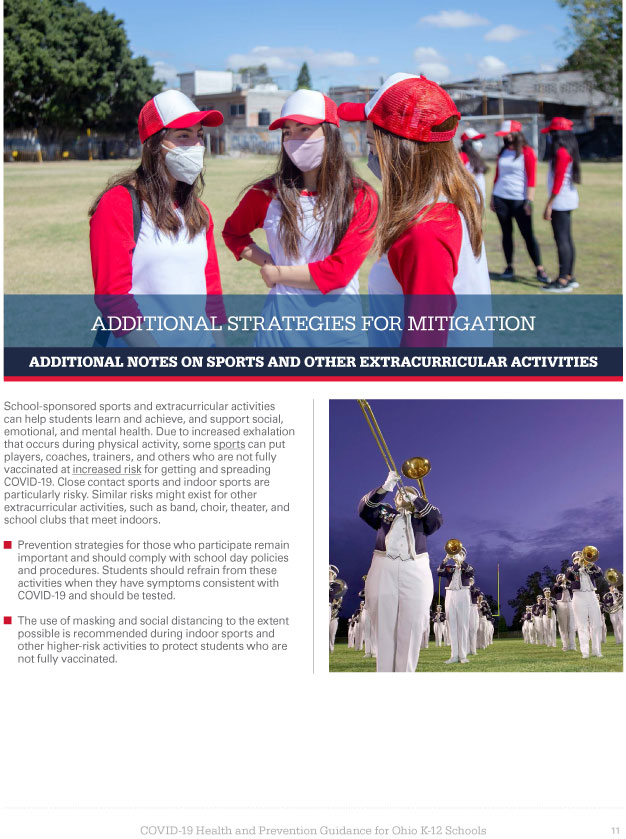
Organized Activities: It is likely that sporting events, practices, and conditioning sessions as well as other extracurricular activities will be limited in some locations while reopening fully in other locations. The AAP Interim Guidance on Return to Sports helps pediatricians inform families on how best to ensure safety when considering a return to sports and physical activity participation. Preparticipation evaluations should be conducted in alignment with the AAP Preparticipation Physical Evaluation Monograph, 5th ed, and state and local guidance.
The Ohio Department of Health released updated recommendations for K-12 schools yesterday. The guidance strongly recommends COVID-19 vaccinations for staff and eligible students; consistent…
Columbus, Ohio – The mammoth scandal surrounding a 2019 energy bailout appeared to creep closer on Thursday to the administration of Ohio Gov. Mike DeWine.
FirstEnergy said in a deferred prosecution agreement that the man DeWine appointed to lead the Public Utility Commission of Ohio took a $4.3 million payment and then acted on behalf of the Akron-based power company instead of as the state’s top regulator.
That man, Sam Randazzo, has resigned.
But FirstEnergy also helped control a 501(c)(4) “dark-money” group started by a senior DeWine aide while he was still a FirstEnergy lobbyist, the agreement showed. The company passed a torrent of money through the secretive group as part of a successful $61 million effort to buy a $1.3 billion, ratepayer-funded bailout, the document FirstEnergy signed off on said.
While Acting U.S. Attorney Vipal J. Patel slammed the dark money group, DeWine and the aide, Legislative Affairs Director Dan McCarthy, didn’t respond to requests for comment. DeWine has staunchly defended McCarthy since the scandal broke almost exactly a year ago.
Patel held a press conference in Cincinnati on Thursday to announce that his office had entered into a deferred prosecution agreement with FirstEnergy. The company will pay $230 million and, if it lives up to the terms of the agreement, will have a charge of conspiracy dismissed.
Former Ohio House Speaker Larry Householder, R-Glenford, has been charged in the case. He was stripped last year of his speakership and he was ejected from the House earlier this year.
Two of Householder’s associates charged in the case have pleaded guilty and a third, Neil Clark, took his own life in March.
For its part, FirstEnergy fired CEO Chuck Jones and two other executives and is conducting an investigation of its own.
In Cincinnati Wednesday, Patel stressed that the investigation is continuing. But he wouldn’t comment on matters other than the agreement with FirstEnergy.
DeWine aide McCarthy hasn’t been charged and last summer, he denied wrongdoing. But Partners for Progress, the dark-money group he founded, was a topic of the prosecution agreement.
Then still a FirstEnergy lobbyist, McCarthy founded it, “weeks after certain FirstEnergy Corp. senior executives traveled with (Householder) on the FirstEnergy Corp. jet to the presidential inauguration (of Donald Trump) in January 2017,” the agreement said.
The prosecution agreement added, “Although Partners for Progress appeared to be an independent 501(c)(4) on paper, in reality, it was controlled in part by certain former FirstEnergy Corp. executives, who funded it and directed its payments to entities associated with public officials.
“For example, FirstEnergy Corp. executives directed the formation of Partners for Progress and decided to incorporate the entity in Delaware, rather than Ohio, because Delaware law made it more difficult for third parties to learn background information about the entity. Certain FirstEnergy Corp. executives were also involved in choosing the three directors of Partners for Progress, two of whom were FirstEnergy Corp. lobbyists.”
Millions would flow through Partners for Progress while McCarthy was its president and tens of millions more would later run through it and into the furious effort to pass the bailout after McCarthy resigned to become DeWine’s legislative affairs director in early 2019.
The prosecution agreement also appears to refer to McCarthy as “Official Aide 1” as he worked on DeWine’s behalf to help pass the bailout that DeWine would sign later that year.
It cites emails among energy executives saying that Official Aide 1 and others were “fighting” to extend the term of a bailout of two failing nuclear reactors in Northern Ohio. It also cites a text-message discussion between a FirstEnergy executive and the aide about language that would make the bailout harder to challenge in a referendum.
And in the press conference, Patel said the scandal would never have happened if not for the dark-money group of which McCarthy was president and another, Generation Now, which has pleaded guilty.
“This effort would not have been possible — both in the nature and the amount of the money provided — without the use of 501(c)(4)s,” Patel said.
The acting U.S. attorney called the scheme, and even the name of McCarthy’s former dark-money group, dishonest.
“These are supposed to be, according to the (tax) code, social welfare organizations. You all see a lot of social welfare going on? I don’t,” Patel said, adding, “What about these names? Partners for Progress? What are the partners here? The conspirators? What’s the progress? Passage of (the energy bailout) through bribery?”
While DeWine’s office didn’t respond to questions on Thursday, the governor in February defended his legislative affairs director.
“As far as I know, Dan McCarthy has been well-respected for many, many years, long before he started working for me as our legislative director and I have faith in his integrity,” DeWine said.
For Dayton Mayor Nan Whaley, a Democrat challenging DeWine in the 2022 election, that’s not good enough.
“Today’s charges make clear that this corruption case reaches the highest levels of government in Ohio,” she said in a statement. “Enough is enough. It’s time for Gov. DeWine to come clean about his knowledge and involvement in this scandal.”
On Tuesday, the state reported 744 new positive cases within the previous 24 hours, a daily total that hadn’t been seen since May.
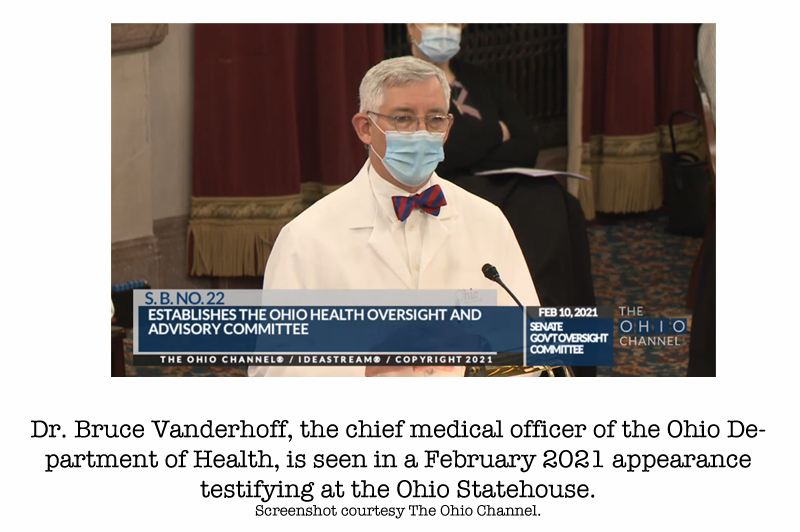
Dr. Bruce Vanderhoff acknowledges that as the public face of the Ohio Department of Health he is repeating himself a lot these days.
Dr. Bruce Vanderhoff
But the message is important enough to continue repeating in simple terms, ODH’s chief medical officer said Wednesday.
“It really comes down to, are you vaccinated and safe or are you unvaccinated and vulnerable?”
Ohio once again finds itself at a crossroads. After months of declining rates of new cases, hospitalizations and deaths, Ohio is now seeing increases thanks mostly to a new “Delta variant” that officials say is even more contagious.
I think it is absolutely the case that we are now looking at a pandemic of the unvaccinated.
– Dr. Bruce Vanderhoff, Ohio Department of Health
Vaccination rates here have all but stalled, concerning those like Vanderhoff who fear the state will slip back into a public health crisis as schools look to return to class next month.
“I think it is absolutely the case that we are now looking at a pandemic of the unvaccinated,” he told reporters .
Vanderhoff was joined by two pediatricians, including Dr. Patty Manning-Courtney, the chief of staff at Cincinnati Children’s Hospital. The recent rise in cases has them worried not just of the Delta variant, but what else could be on the horizon.
Patricia Manning-Courtney, MD
Manning-Courtney said her hope is Ohioans will get vaccinated before the state experiences an even worse variant that could significantly impact the youth population. She fears a scenario of Ohio learning “the hard way” that vaccines are necessary for public health.
The latest surge
The state’s COVID-19 numbers declined throughout the spring, leading Gov. Mike DeWine and ODH to rescind the swath of public health mandates.
There was reason for optimism: The two-week average was down to just 17.6 cases per 100,000 residents as of July 7.
But since then, that average has more than doubled to 37.8.
On Tuesday, the state reported 744 new positive cases within the previous 24 hours, a daily total that hadn’t been seen since May. The state is recording a greater proportion of cases and hospitalizations among younger people, according to ODH data.
“It appears that this surge is being driven by yet another variant, the Delta variant,” Vanderhoff said, “which is, as I’ve shared before, even more contagious than the (alpha) variant that preceded it.”
The Delta variant is now present in more than one-third of all new cases in Ohio and is on its way to being the dominant variant of COVID-19, Vanderhoff said.
‘Captains of the ship of their own health’
President Biden recently said COVID-19 vaccine misinformation is costing Americans lives. (Photo by Alex Wong/Getty Images)
Unlike a year ago, when mitigation tactics like distancing and face masks were seen as the most effective ways to protect oneself from the virus, a proven vaccine is now available for Ohioans.
But it remains difficult to convince a majority of residents here to get vaccinated.
A vast number of Ohioans received shots when they were first made available, with a boost in vaccinations this spring with the widening of eligibility and the announcement of a Vax-A-Million sweepstakes. (Franklin County is among the places still experimenting with vaccine incentives; those who get their first dose at Columbus-area clinics receive a $100 Visa gift card.)
On the whole, the statewide vaccination rate has stagnated. More than 5.3 million Ohioans have completed their vaccination doses, but that still reflects just 45.5% of the total population.
DeWine had said his lottery idea was meant to target those who were not anti-vaccine, but needed some kind of boost to schedule their appointment.
Now, after months of availability, Vanderhoff and others believe there is still a large segment of the population who can be convinced. These are well-intentioned people with understandable concerns that can eventually be swayed to change their minds, the officials hope.
Misinformation spread online and in public spaces isn’t helping matters. Vanderhoff agreed with a recent statement by President Joe Biden that vaccine misinformation shared around on social media platforms is contributing to ongoing hesitancy and COVID-19 deaths.
“I think there have been people who are sharing information in a very authoritative way that is not scientifically accurate,” Vanderhoff said. “As a physician, that’s very distressing, because we want people to make their own decisions of course. We want people to be the captains of the ship of their own health, but we want them to make their decisions on the basis of good, well-founded, scientific information.
Dr. Amy Edwards
“Frankly, it’s heartbreaking when we see people who are cascading information that is not scientifically based,” he added.
Dr. Amy Edwards, the associate medical director of pediatric infection control at UH Rainbow Babies & Children’s Hospital, said vaccine misinformation has been around long before the coronavirus. She noted an example of seeing a child die of the whooping cough.
“That’s unacceptable to me,” she said. “It should just never happen.”
Vanderhoff and the pediatricians tried to dispel fears about the vaccine harming children. They noted rare cases of myocarditis, an inflammation of the heart muscle that has been reported in a small number of children this year.
But Edwards called this a “rare side effect” that impacts as few as one in every 100,000 or more that receive the vaccine.
“The risk is much higher from the virus itself,” she said.
While there continue to be some examples of vaccinated people getting COVID-19, most are protected against serious outcomes like hospitalizations and deaths.
All of the 130 people in Maryland who died of the virus in June were unvaccinated. Other states have reported similar statistics, including Alabama, where 96% of the COVID-19 deaths between April and mid-July were unvaccinated.
“The issue of breakthrough with this kind of a vaccine against this kind of virus,” Vanderhoff said, “is really the issue of: Are you seeing people get severely ill? Are they ending up in the hospital? Are they dying? We’re just not seeing that in appreciable numbers with this vaccine.”
Asked about future health orders with school returning in the fall, Vanderhoff said he could not disclose ongoing policy discussions within the state health department. He said ODH will be providing guidance and recommendations “in the near future.”
Symmes Township, Ohio – You are invited to bring your children to join the Symmes Branch Library each month for a short storytime, fun craft, and snack. This month the library will meet at the Meade Historic Preserve, 11887 Lebanon Road, on July 26th from 10 AM until Noon.