Tag: Loveland City School District

  • Loveland High School Homecoming Parade 411

    Loveland High School Homecoming Parade 411

    The parade is Thursday, October 6

    Starts at 6:30

    Loveland, Ohio – This year’s Loveland High School Homecoming Parade will be on Thursday, October 6.

    The Homecoming Game will be Friday, October 7 against the Little Miami Panthers.

    The Loveland Athletic Boosters Homecoming Parade, celebrating Loveland High Schools Homecoming is a Loveland tradition. The Parade starts at the Moose Lodge Hall on East Loveland Avenue and proceeds to West Loveland Avenue, to Rich Road, and ends at Loveland High School.

    The annual Powder Puff football game will be held at Tiger Stadium immediately following the parade. The school is at #1 Tiger Trail.

    2022 Homecoming Parade Registration – High School and Middle School Participants

    The Grand Marshal this year is Jeff Williams. Jeff was president of Loveland Athletic Boosters for over 10 years. Parade organizer Tori Morrison said, “He was instrumental in getting funding for our first turf field and building our Athletic Fitness Center which is used by athletes in grades 7-12. I can’t think of a better or more deserving person to serve as our Grand Marshal.”

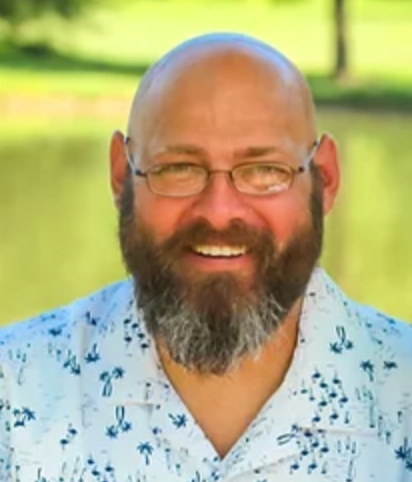
    A 2009 Loveland Magazine file photo of Jeff Williams doing his thing. raising money for a turf field at Loveland High School. Williams pulled off the installation fundraising during a recession.

    Jeff Williams receives Louis Rockwood Award

    Here is the Loveland Magazine TV video from the 2019 Homecoming Parade

  • Loveland High School Students Brady and Connor Burns come to aid of Goshen tornado families

    Loveland High School Students Brady and Connor Burns come to aid of Goshen tornado families

    Provided Photo

    by David Miller

    Loveland, Ohio – Brady Burns said, “I wanted to help the people in the Goshen community because what they experienced had to be devastating.”

    Connor Burns said, “I can’t imagine how scared these people must have been because the area looked like something out of a movie.”

    Brady Burns added, ”The least we could do was help in any way possible.”

    Connor Burns added, “Thanks to all of those who donated money, cleaning supplies, gift cards, and nonperishable food. We appreciate it as well as the people in the Goshen community.”

    Immediately after Loveland High School Students Brady and Connor Burns hear that a tornado touched down in Goshen, Ohio, neighboring their hometown of Loveland, Tiger Country – the started a collection for families in Goshen, Warrior Country. They put it out to the Loveland community that they would have a relief drive. When they did they said, “Actually we have family who live there. One had the top of their roof come off.”

    In the next few days, they had cash donations that totaled $1,000 which was used to buy gift cards, nonperishable food, and cleaning supplies. They also had a van load of items that was dropped off at their house.

    Brady, an 11th grader has always been a straight-A student. He is on the Tiger tennis and bowling teams and a Manager for the cross country team. He participates in: SALT (Student Athletic Leadership Team), FCA (Fellowship of Christian Athletes, Young Life, and was just selected to be on the Ohio Advisory Safety Council.

    Connor is just starting high school – 9th grade. He has also always been a straight-A student and was on the Tiger cross country and track teams Connor has a love for roller coasters.

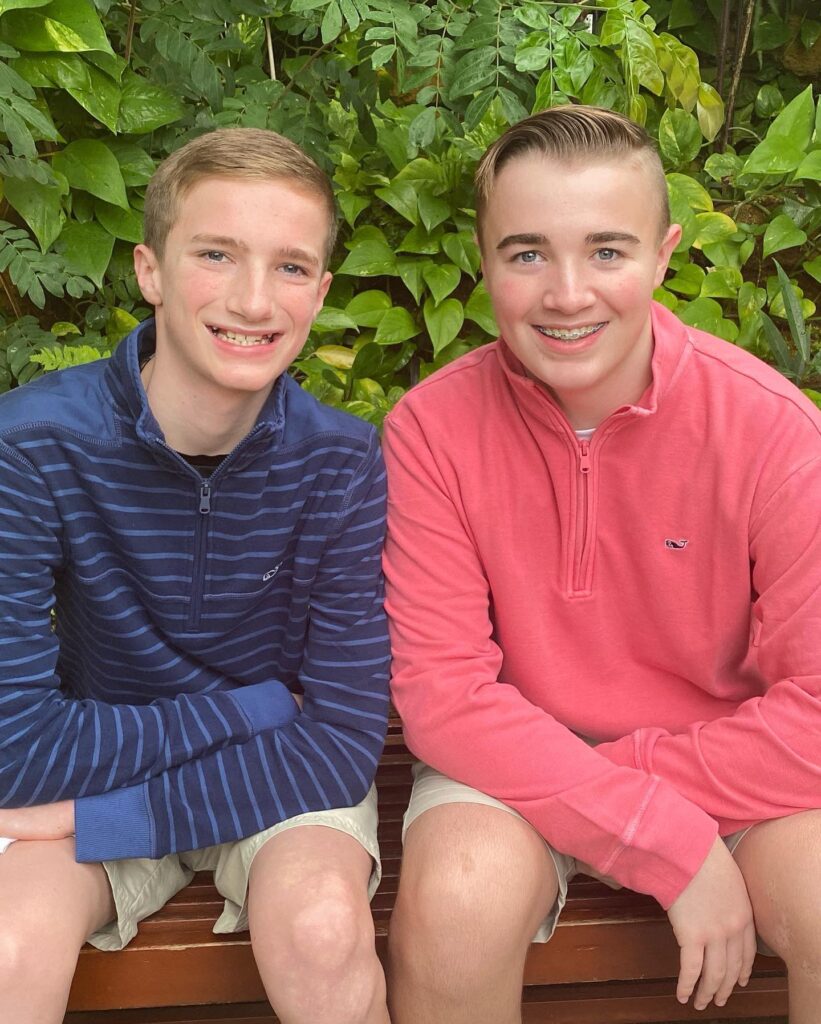
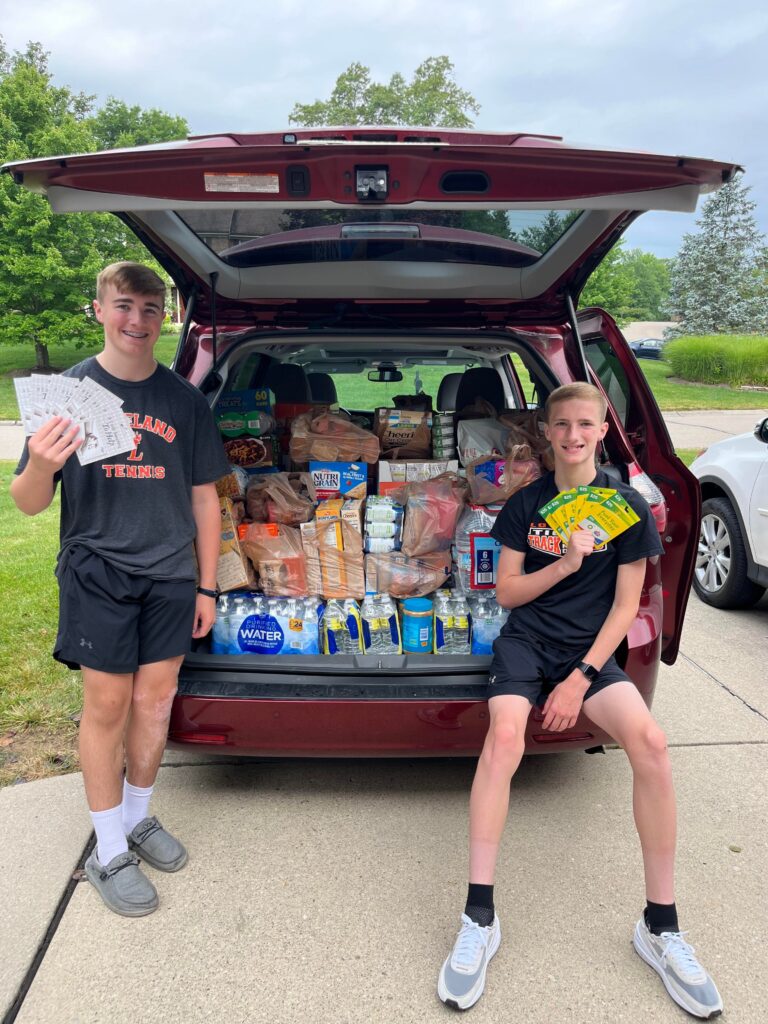
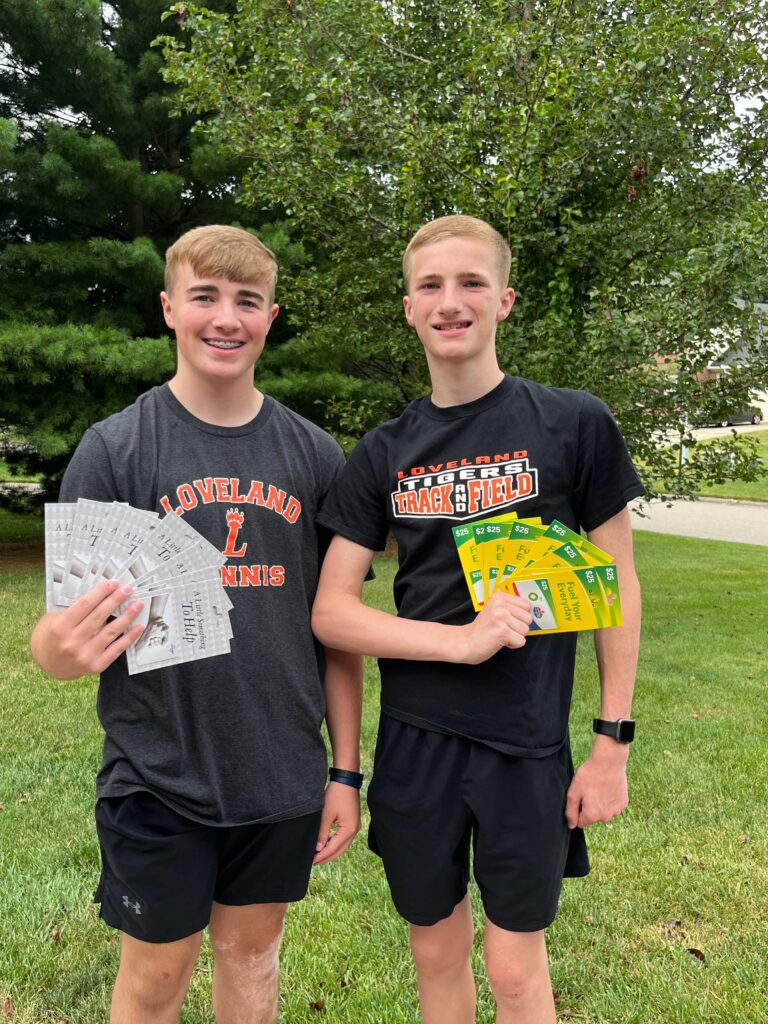
    Brady and Connor Burns (Provided Photo)

    Below is the original appeal that Brady and Connor Burns sent out to the Loveland Tiger community:

    Yesterday, a community close to us experienced a devastating tornado. Goshen has been declared a state of emergency. 
    
    We have family that live in Goshen and luckily they are safe. 
    
    We would love to have the neighborhood help the families of Goshen in this time of need. 
    
    Please consider donating bottled water, nonperishable food items, gift cards, new blankets, new pillows, etc. 
    
    Many of these families are displaced. 
    
    We are providing our mom’s Venmo account if you are unable to go purchase items, but want to donate money. We will take the money to buy items needed for families.

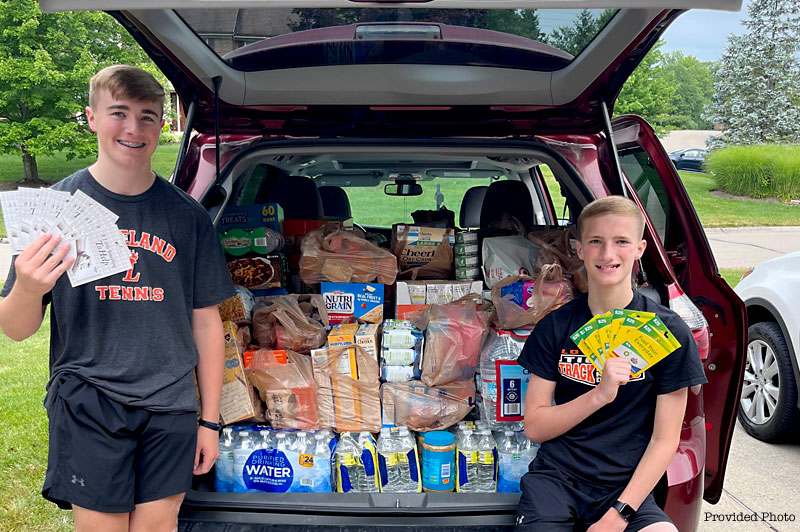
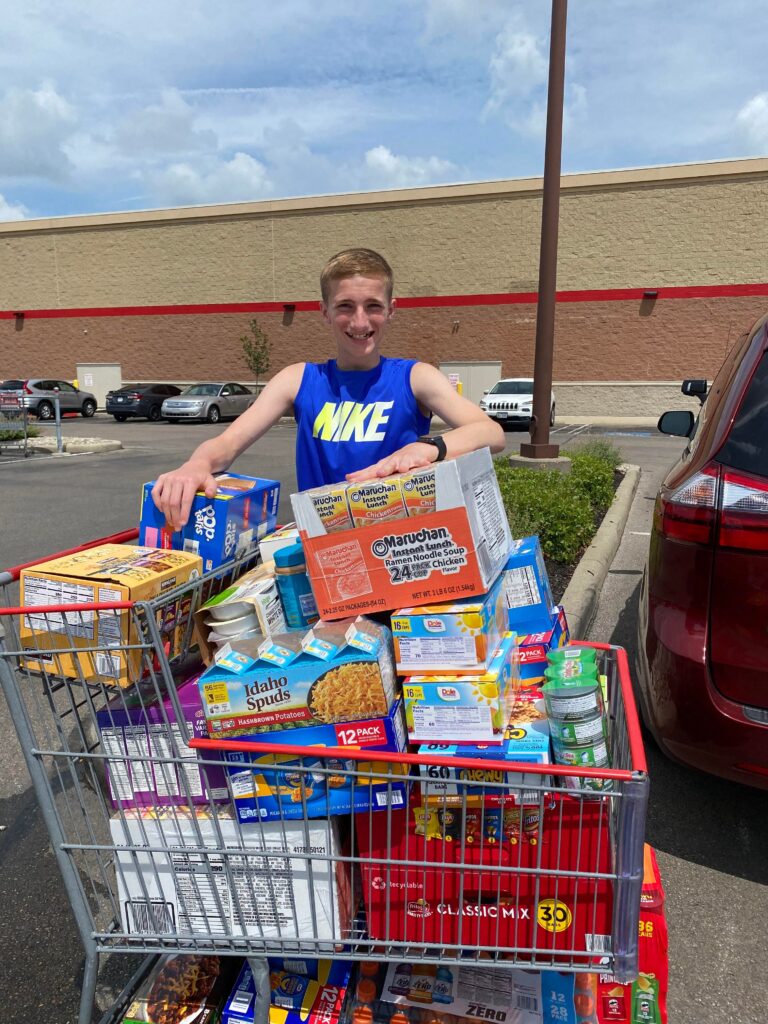
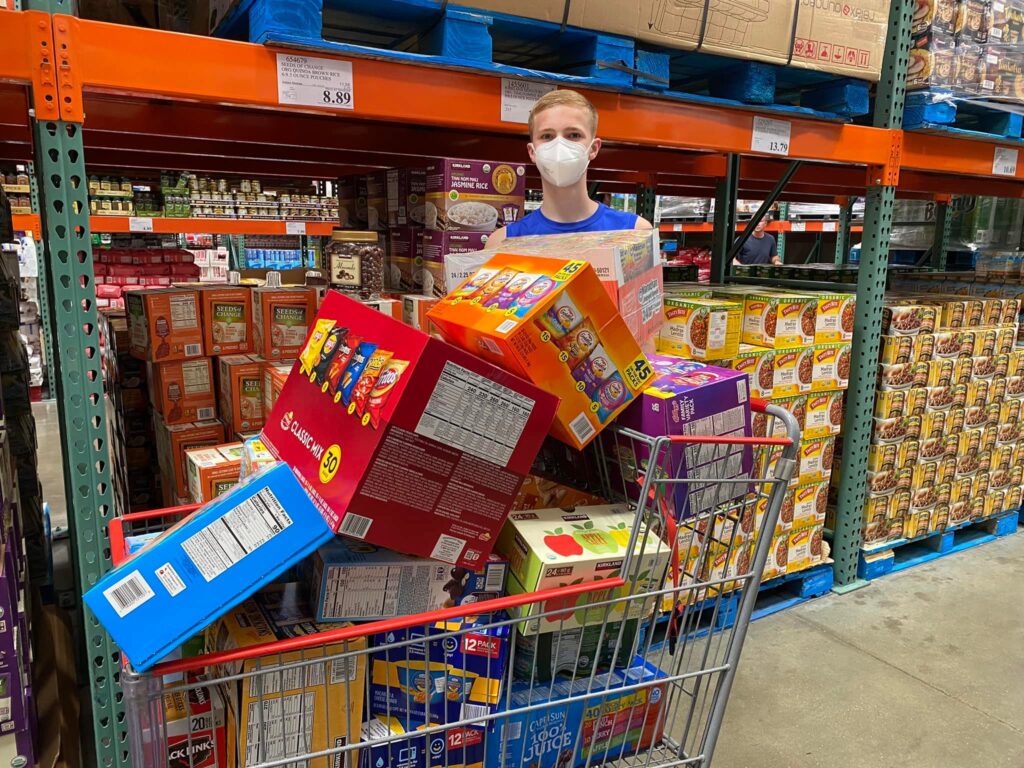
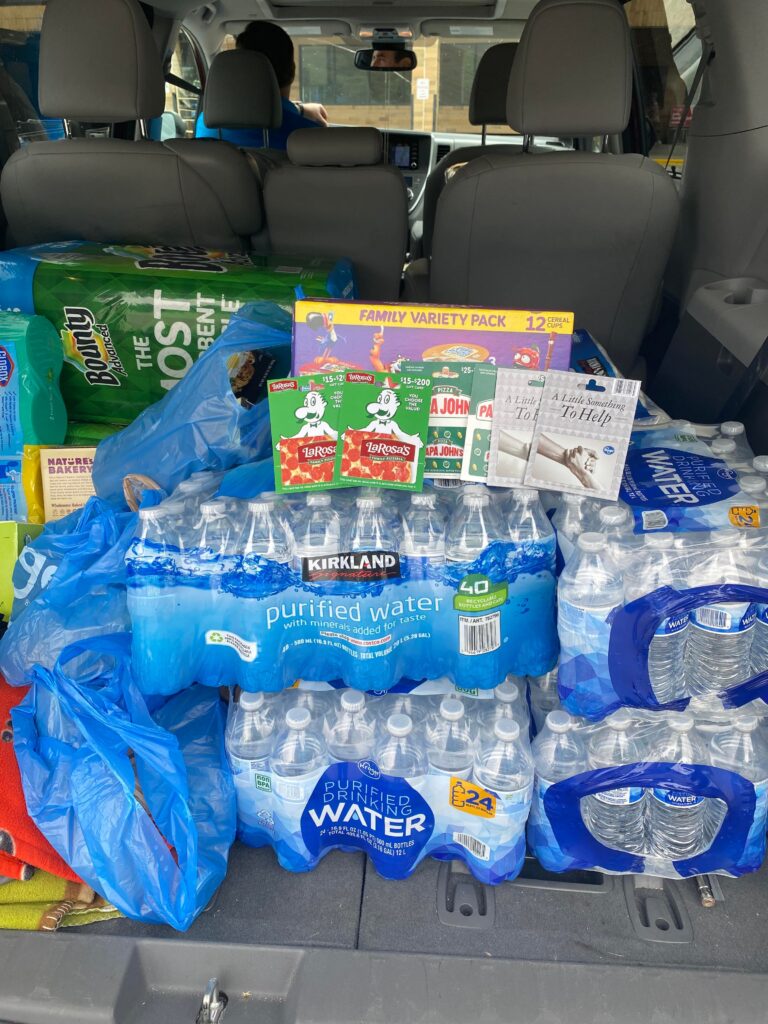
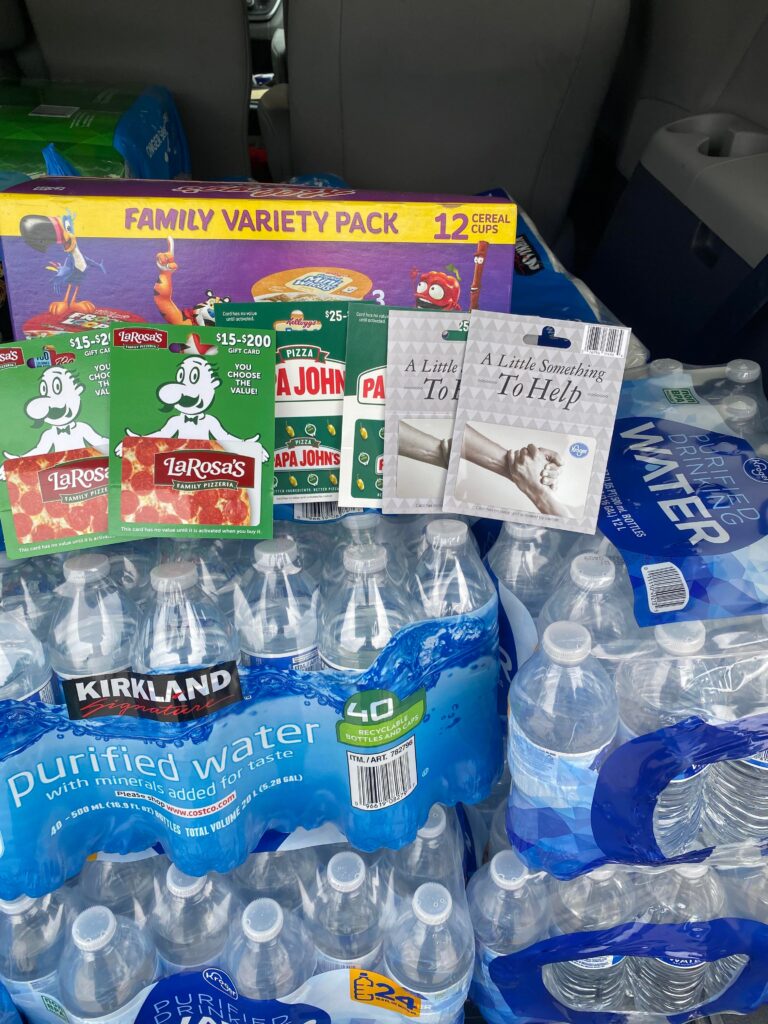
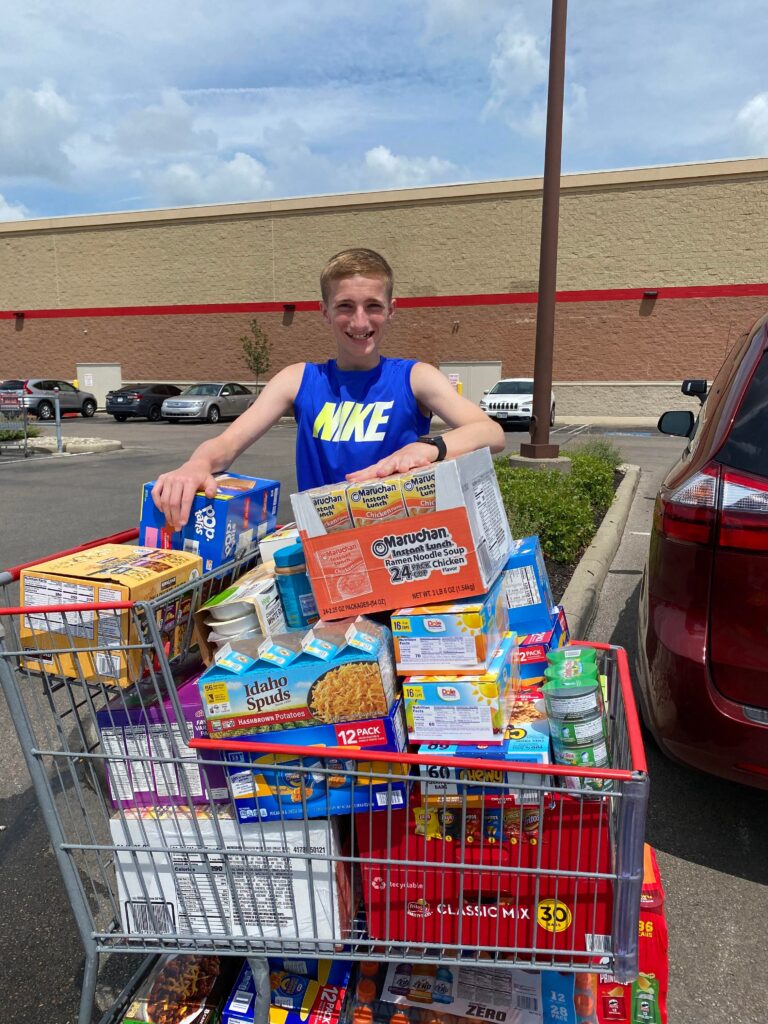
    Last week with the monetary donations they received, Brady and Connor Burns purchased these items for the community of Goshen, Ohio. The boys then had more money donated and purchased a lot of $25 Kroger gift cards for groceries and gas. (Provided Photo)

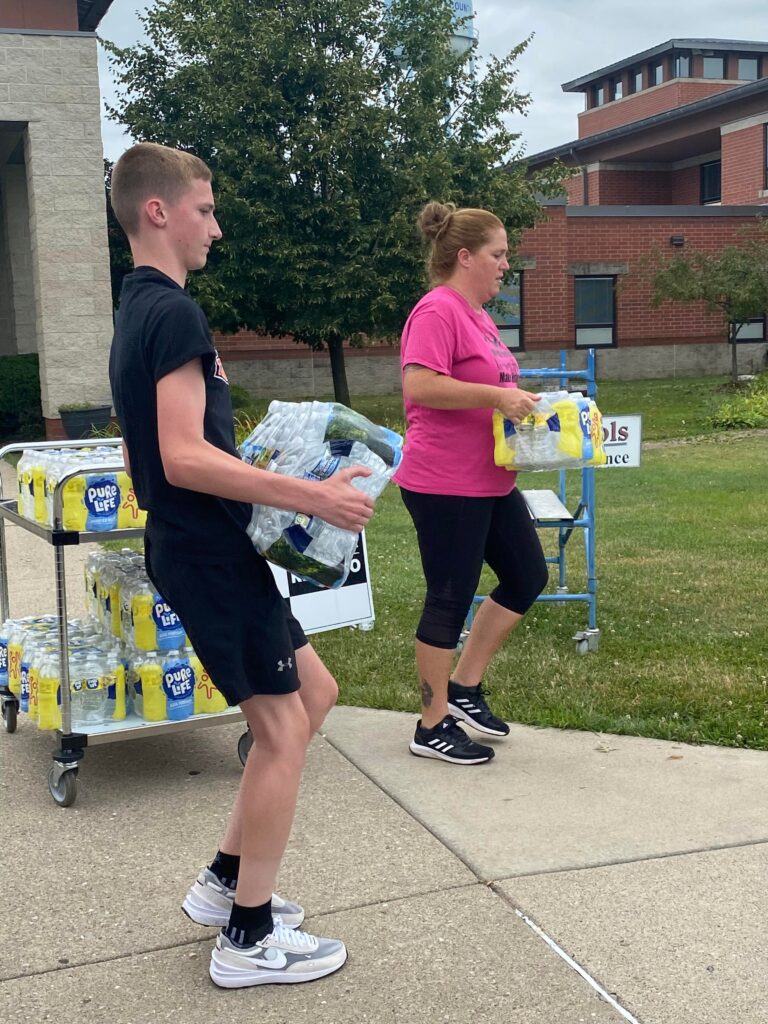
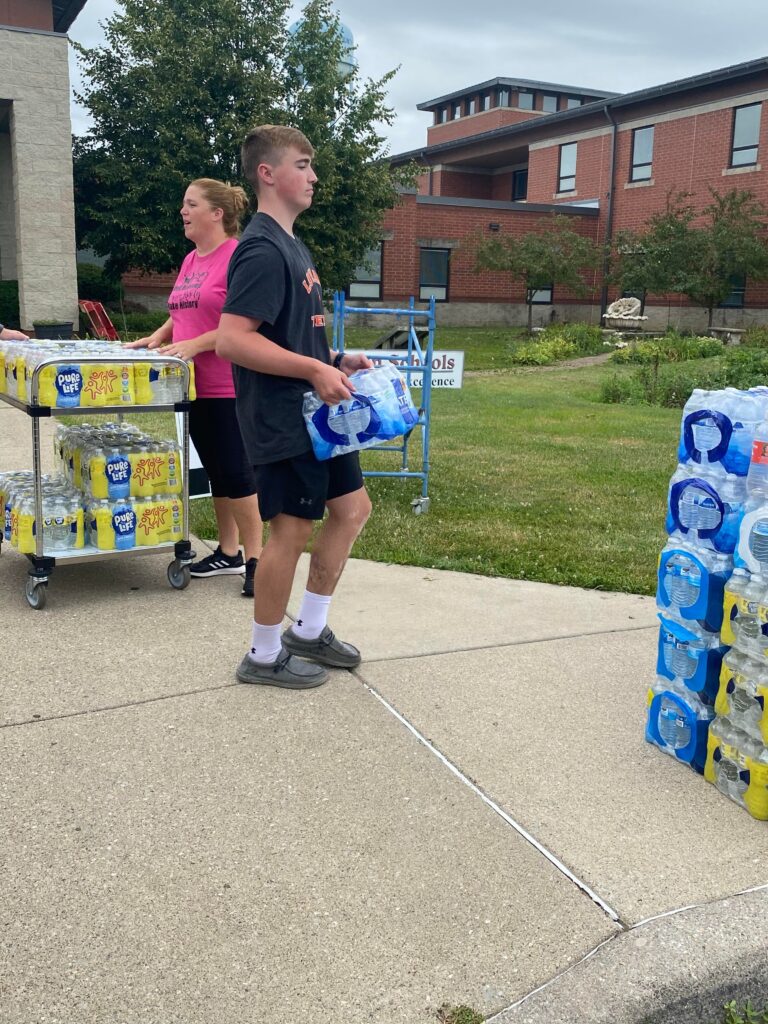
    The young men delivered “a ton” of nonperishable food items to the collection point at Goshen High School. When they heard that gas gift cards were in need because people are using generators, they bought some.

    They want people that responded to their appeal to know that the people who were volunteering at Goshen High School were so appreciative. “Seeing the devastation was heartbreaking. Thanks to everyone who donated. If any more money or items come to the house we will make another delivery.”


    A previous story was published in Loveland Magazine in October 2021 about Brady Burns’ doing what needs doing!

    Amy Switzer Burns wants to say “Thanks” for compassion project

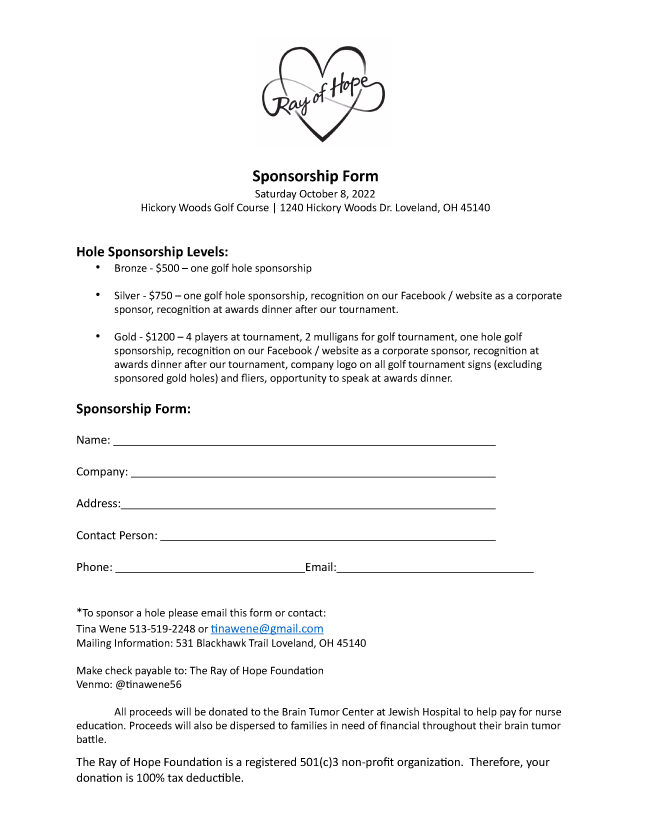
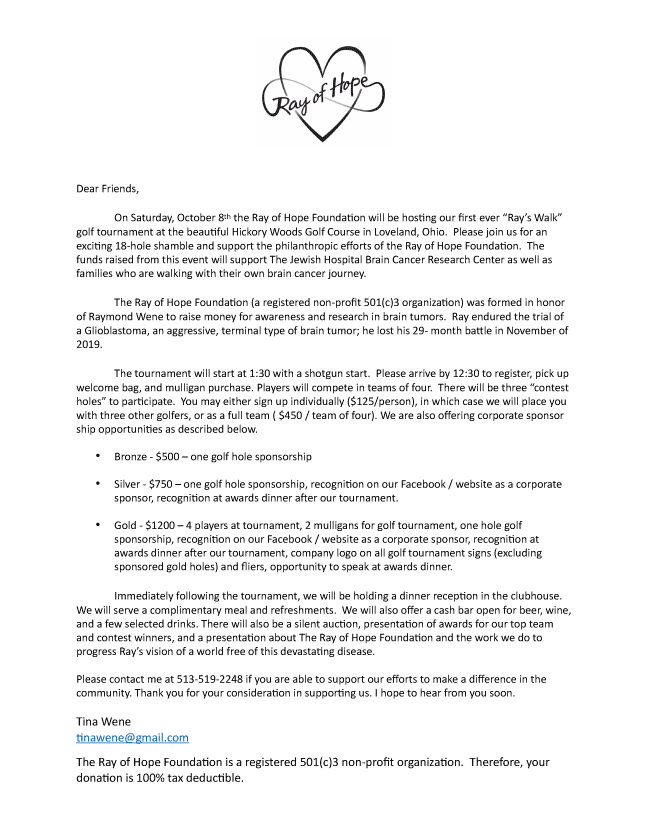
  • Support the Ray Wene Memorial Golf Outing

    Support the Ray Wene Memorial Golf Outing

    Loveland, Ohio – Ray Wene, graduated from Loveland High School in 1991 and he passed away in 2019 from brain cancer. His wife Tina has started a non-profit foundation in his name to raise money for brain cancer research at Jewish Hospital; money for local youth sports and families that may not be able to afford the costs involved, and a local church youth group. These were some of the most important things to Ray and we hope to carry his legacy on by providing support for these organizations.  

    They are having their first golf outing at Hickory Woods and would like to reach out to the local community for interests.

    Oct 08

    1:30 PM

    Loveland, 1240 Hickory Woods Dr, Loveland

    This man here is Ray Wene, the face of The Ray Hope Foundation.

    As stated above, Ray was diagnosed with Grade IV GBM in June of 2017. He fought a long and hard 29 months, and in November of 2019, “the Lord brought him home”. Ray’s faith was unshakable throughout those hard times; nothing broke him. Through his testimonial journey, he wanted to change the lives of others by bringing them closer to God. Ray was a passionate, loving man. He cared deeply about the youth programs held in church and kids who couldn’t pay to play. He desired to support them in any way he could, whether that be; financially or spiritually. Lastly, Ray’s biggest goal was to bring awareness to brain tumors and further research in the medical field. The proceeds will be donated and used to further his request for The Ray of Hope Foundation. 

    The number one goal for this foundation is to honor the life of Raymond Wene. “We will be supporting local youth faith-based programs, community youth sports, nurses education, and cancer research at The Jewish Hospital Brain Tumor Center.”

    Read About Becoming a Sponsor

    Ray Wene Memorial Golf Outing Registration Form

  • Ohio River Foundation Opens Registration for 2022-2023 School Year Educational Programs

    Ohio River Foundation Opens Registration for 2022-2023 School Year Educational Programs

    Cincinnati-based nonprofit encourage area educators to submit applications for Mussels in the Classroom and River Explorer programs for the 2022-23 school year

    Purple warty backs? Pyramid pigtoes? Monkeyfaces? No, not fictitious creatures from a fantasy novel, just the very real—and important—river species coming to a classroom near you next school year as part of Ohio River Foundation’s Mussels in the Classroom program.

    With successful programs dedicated to protecting and improving the water quality and ecology of the Ohio River and its entire watershed, Cincinnati-based nonprofit Ohio River Foundation (ORF) has opened registration for its popular hands-on educational programs for the 2022-23 school year. Along with improving academic STEM skills, the goal of these programs is to help kids—the next generation of environmental stewards, voters, and government leaders—foster a lifetime interest in protecting the environment in their communities and beyond.

    May marked the end of another successful school year, so registration is officially opened for 2022-23 and area educators are encouraged to apply. This year, more than 4,700 students were able to take part in ORF’s Mussels in the Classroom and River Explorer programs. 

    Mussels in the Classroom  

    Through ORF’s Mussels in the Classroom program (MIC), students get the chance to play host to and learn about freshwater mussels and their importance to river ecosystems. ORF launched MIC, the only program of its kind, in 2017. Since then, nearly 7,000 students in the Greater Cincinnati, Greater Columbus, and Greater Lexington areas have experienced the program.

    The program kicks off with an in-person or virtual visit by an ORF educator, who describes the freshwater mussels’ unusual characteristics and significance to their ecosystems. While freshwater mussel species may have some interesting and humorous names, these small but mighty creatures have an important job to do. Although they clean water, acting as a natural filter for our waterways, most people know little about these important animals. Many species are threatened or endangered. Following the educator visit, mussels remain in the classroom for two weeks so students can care for and study them.

    “We hope that participating students come away with not only a better understanding of complex aquatic ecosystems but also an appreciation for these amazing animals,” said Rich Cogen, ORF’s executive director. “With increasing scientific interest in repopulating rivers with native mussels, it’s critical for the public to understand the important role they fill.”

    MIC is open to grades K-12, and applications are accepted on a rolling basis on the program’s web page. Availability is Sept. 1 through Dec. 15 and Jan. 15 through June 1.

    River Explorer

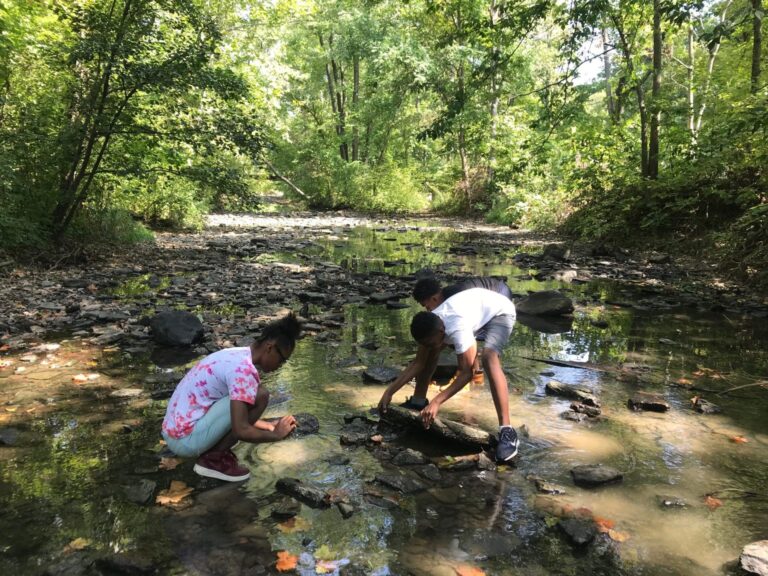
    In addition to MIC, ORF offers its perennially popular River Explorer program in Greater Cincinnati and Columbus. The trips let students be junior scientists for a day as they learn about the ecology and importance of the Ohio River and its watershed at area creeks, streams, and rivers. Open to grades four through 12, River Explorer includes three hands-on stations:

    1) Catching, examining, and identifying fish;

    2) Collecting and identifying macroinvertebrates; and

    3) River chemistry (grades six through 12) or water use and the water cycle (grades four and five).

    All but the youngest students also take part in habitat assessments as part of their day, and ORF educators touch on issues such as water pollution and environmental stewardship with all students.

    The River Explorer program is offered in September, October, April, and May. Greater Cincinnati field trips take place at Nisbet Park and Lake Isabella Park in Loveland; Sycamore Park in Batavia; Sharon Woods Park in Sharonville; Pioneer Park in Covington; and Guilford Covered Bridge Park in Guildford, Indiana. Columbus programs are at Highbanks MetroPark and Gahanna Friendship Park.

    Registration for fall River Explorer field trips is open through Monday, August 15 on the program’s web page.

    So far more than 55,000 students have participated in Mussels in the Classroom and River Explorers.

    Russel the Mussel

    Rounding out ORF school programs is an environmental literacy offering, courtesy of ORF team member, Russell the Mussel. He’s a freshwater mussel not unlike those that inhabit the creeks, streams, and rivers of the Ohio River watershed.

    Russell himself is a character in a Virginia Tech/U.S. Fish & Wildlife Service children’s book that bears his name. ORF spearheaded efforts to resurrect the book, which was previously out of print. The nonprofit distributes copies as part of its Mussels in the Classroom program. It’s most appropriate for students on fourth through sixth-grade reading levels or for teachers who wish to read the book to younger students.

    “Adding the Russell the Mussel book as a leave-behind lets us share information about freshwater mussels in a new way that will benefit students who are reading/writing learners,” said Cogen. “Because the book will remain in the classroom after our program ends, it will also reinforce what we teach and serve as a continuous reminder about this critical species.”

    Support for ORF education programs is provided by the Charles H. Dater Foundation, Elsa Heisel Sule Foundation, Harrison Family Foundation, Toyota, Inc., Honda Manufacturing, International Paper, The Gardner Family Foundation, PNC Charitable Trusts, Marge & Charles Schott Foundation, Thomas Anthony Sullivan Foundation, and Valvoline, Inc.

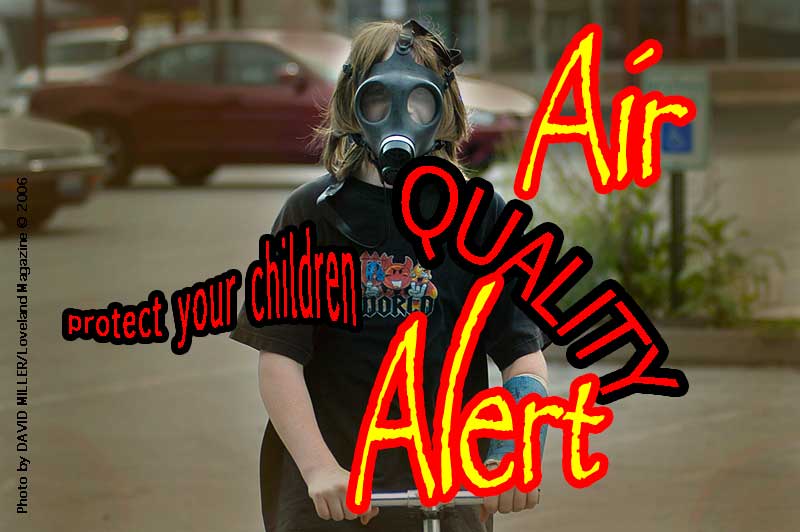
  • Air Quality Alert for Loveland today

    Air Quality Alert for Loveland today

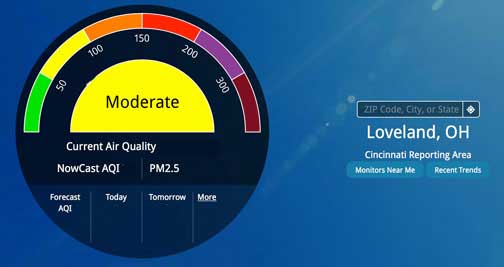
    Check Current Air Quality

    https://www.airnow.gov/?city=Loveland&state=OH&country=USA

    Current Air Quality is the most recent air quality in your area. It’s updated hourly. Check your current air quality to see if now is a good time for outdoor activities. More about Current Air Quality.

    Primary Pollutant

    This pollutant currently has the highest forecasted AQI in the area.

    OZONE

    105

    Unhealthy for Sensitive Groups

    Have flexibility in your schedule?

    Even if the forecast is Orange (unhealthy for sensitive groups), there may be times during the day when air quality is OK for outdoor activities. Ozone is often lower in the morning. Check current air quality to see if now is a good time for you to be active outdoors.

    Can’t change your schedule?

    People with lung disease such as asthma, children and teens, older adults, and people who are routinely active outdoors for six or more hours a day: Reduce your exposure by choosing less strenuous activities or shortening the amount of time you are active outdoors.
    Everyone else: Enjoy your outdoor activities.


    Active children and adults, and people with respiratory diseases, such as asthma, should be avoiding all outdoor exertion; everyone else, especially children, should limit outdoor exertion.

    Activities for children, who can be especially harmed by high levels of ozone because of their developing lungs and that some activities such as sports result in them breathing in quite a large amount of the chemical irritants should be suspended.

    Do Your Share

    • Take the bus, carpool, bike or walk instead of driving
    • Refuel your vehicle after 8 p.m.; do not top off when refueling and tighten the gas cap
    • Avoid idling your vehicle
    • Combine trips or eliminate unnecessary vehicle trips
    • Keep your vehicle maintained with properly inflated tires and timely oil changes
    • Avoid use of gasoline-powered lawn equipment on Air Quality Alert days
    • Avoid use of oil-based paints and stains on Air Quality Alert days
    • Never burn leaves or other yard trimmings
    • Always burn clean, seasoned wood in outdoor fire pits, fireplaces and wood stoves
    • Do not use fire pits or fireplaces for non-essential home heating on Air Quality Alert days
    • Conserve electricity

  • Ohio School Safety Summit now accepting teams to attend

    Ohio School Safety Summit now accepting teams to attend

    The Ohio School Safety Center is excited to release this year’s summit agenda. The schedule is packed with experts across the various school safety disciplines including physical security, emergency management, mental health, school climate, suicide prevention, cyber safety, transportation, and threat assessment. View the agenda here.
    Register Your Team Now The 2022 Ohio School Safety Summit is free and open to the public, but requires registration to ensure adequate space is available. We recommend bringing your team to the summit and dividing up the presentations you attend so you can share what you have learned after. Visit the below link to register today!  REGISTER NOW
    Parking Parking is available at several lots next to the convention center. You can view an interactive map and find pricing on the Downtown Columbus website. Accommodations Several room blocks have been made at nearby hotels and a list of additional hotels are also available on the website. Reserve your room in advance to avoid increasing rates. Find out more information here
  • Loveland Care Center’s “Party with a Purpose”

    Loveland Care Center’s “Party with a Purpose”

    Promoted Story

    Join us on August 25th from 6:30 until 9 PM at The Landing Event Center in Historic Downtown Loveland to party with a purpose as we celebrate the lives impacted by the Care Center. There will be great local food, live music, and the opportunity to find out more about the work that we do and how you can partner with us to help even more of our under-resourced neighbors thrive!

    Tickets are $50 each or you can buy 6 or more for $40 each and invite your friends. For more info please visit bit.ly/thrivefundraiser.

    And thanks to our amazing partners for helping sponsor the event including: Calvary Industries, Christian Brothers Automotive (Loveland), Plum Tree Realty, Northstar Church, Loveland Biggby Coffee, Narrow Path Brewing, Tano Bistro – Loveland, and Loveland Symmes Fire Department!

    For the last 15 years the Care Center has been providing care for the whole person to help our neighbors thrive in life.  We offer physical, emotional, educational, relational and spiritual support.  We are available to anyone who has need, no matter where they live.  Check out carecenterinfo.com for hours, directions, services and how you can help.

  • Retired teachers go to court for Ohio pension records

    Retired teachers go to court for Ohio pension records

    BY: MARTY SCHLADEN – Ohio Capital Journal

    An analyst working for Ohio retired teachers went to court last week seeking records relating to the state pension funds. 

    The analyst is trying to determine whether teachers’ pension money is being squandered on high-fee “alternative” investments such as private equity and hedge funds. He is also investigating whether external consultants directing such investments are also being paid by the firms in which retirement system money is being invested.

    Edward Siedle is president of Benchmark Financial Services, which investigates pension funds on behalf of their members. Last week, former Ohio Attorney General Marc Dann filed for a writ of mandamus on Siedle’s behalf to get records from the State Teachers Retirement System. 

    If successful, Ohio’s 10th District Court of Appeals will order the teachers retirement system, or STRS, to turn over a boatload of documents relating to its investments.

    In an interview, Dann said Siedle has been seeking the records since last year.

    “We’re not some gadfly trying to throw a wrench in the operation of STRS,” Dann said. “These are members of STRS who hired a professional to analyze the work that STRS is doing on their behalf. We want documents that will help that expert give an honest and accurate analysis.”

    He added, “To the extent that they say our requests are trade secrets or are too voluminous, it makes you think maybe they don’t want us to look so closely at this.”

    However, STRS spokesman Nick Treneff said that his agency has been working with Siedle and has already turned over many records.

    “We did try to work with Siedle on his request,” Treneff said.

    In a report last year, STRS said it had already turned over a boatload of information.

    “Over a period of three months, from February to May 2021, STRS Ohio sent 24 emails and a thumb drive to counsel, amounting to 812 documents and over 22,000 pages,” it said, adding that remaining requests are “overly broad.”

    Lawyers for Ohio state agencies commonly use such language in response to records requests. It will be up to the court to determine whether in this case STRS is using it, as Dann says, to stonewall. 

    But the stakes are pretty high.

    STRS is managing $92 billion on behalf of 166,000 active members. And, as benefits have become stingier, some of those members have become suspicious that the agency is making dubious investments through politically connected entities.

    The governor and the leaders of the General Assembly appoint “investment experts” to the STRS board of directors, and many of the state’s retired teachers believed the investments made on their behalf have underperformed.

    The distrust was evident in a newsletter written last August by Robin Rayfield, executive director of the Ohio Retired Teachers Association.

    “STRS has overstated investment returns while under-reporting the fees and costs associated with those investments,” he said.

    Part of the distrust surely stems from the fact that the pension fund stopped paying cost-of-living increases in 2017 — although it is planning a 3% increase this year.

    Treneff, the STRS spokesman, said the freeze was due to new rules set down by the legislature in 2012. State and local governments were still reeling from the Great Recession and there were nationwide concerns about unfunded pension liabilities.

    The retired teachers association points out that the General Assembly hasn’t increased its contribution rate to the pension fund in 38 years.

    But it did act to shore STRS up by cutting benefits. The cost-of-living hike was cut from 3% to 2% and teachers were made ineligible for any increases until they’ve been retired for five years. 

    The General Assembly also required that the system have enough assets to pay off any liabilities within 30 years. In 2017, when the fund didn’t appear likely to meet that requirement, the living increase was suspended. 

    Treneff said it was due to reduced investment-return assumptions, longer lifespans and lower-than-expected payroll growth.

    “That was painful for sure,” he said. “It wasn’t an easy decision.”

    But with five STRS employees making salaries and bonuses totaling more than $500,000 in 2020 — and with 64 making more than $200,000 the same year —  frustration and suspicion among Ohio teachers and retirees was perhaps predictable.

    And, with the U.S. Securities and Exchange Commission in January finding a raft of problems with the transparency and honesty of private equity funds, it’s also probably understandable that pension fund members have turned their suspicions on its alternative investments.

    Treneff, the system spokesman, was quick to point out that those investments are providing the system’s second-best returns. 

    The best? The American stock market. 

    Over the past decade, it has provided a 14.8% return on investments, while the system’s alternative investments have provided 11.84% once fees are subtracted, Treneff said.

    So why make a substantially worse-performing investment with teachers’ money? To avoid putting too many eggs in one basket, Treneff said.

    “The goal is to build this (pension) fund as fast as you can without taking wild risks,” he said, adding, “you don’t want one downturn in the stock market to destroy you.”


  • Study shows Ohio K-12 teacher burnout rates higher than any other industry

    Study shows Ohio K-12 teacher burnout rates higher than any other industry

    BY: SUSAN TEBBEN – Ohio Capital Journal


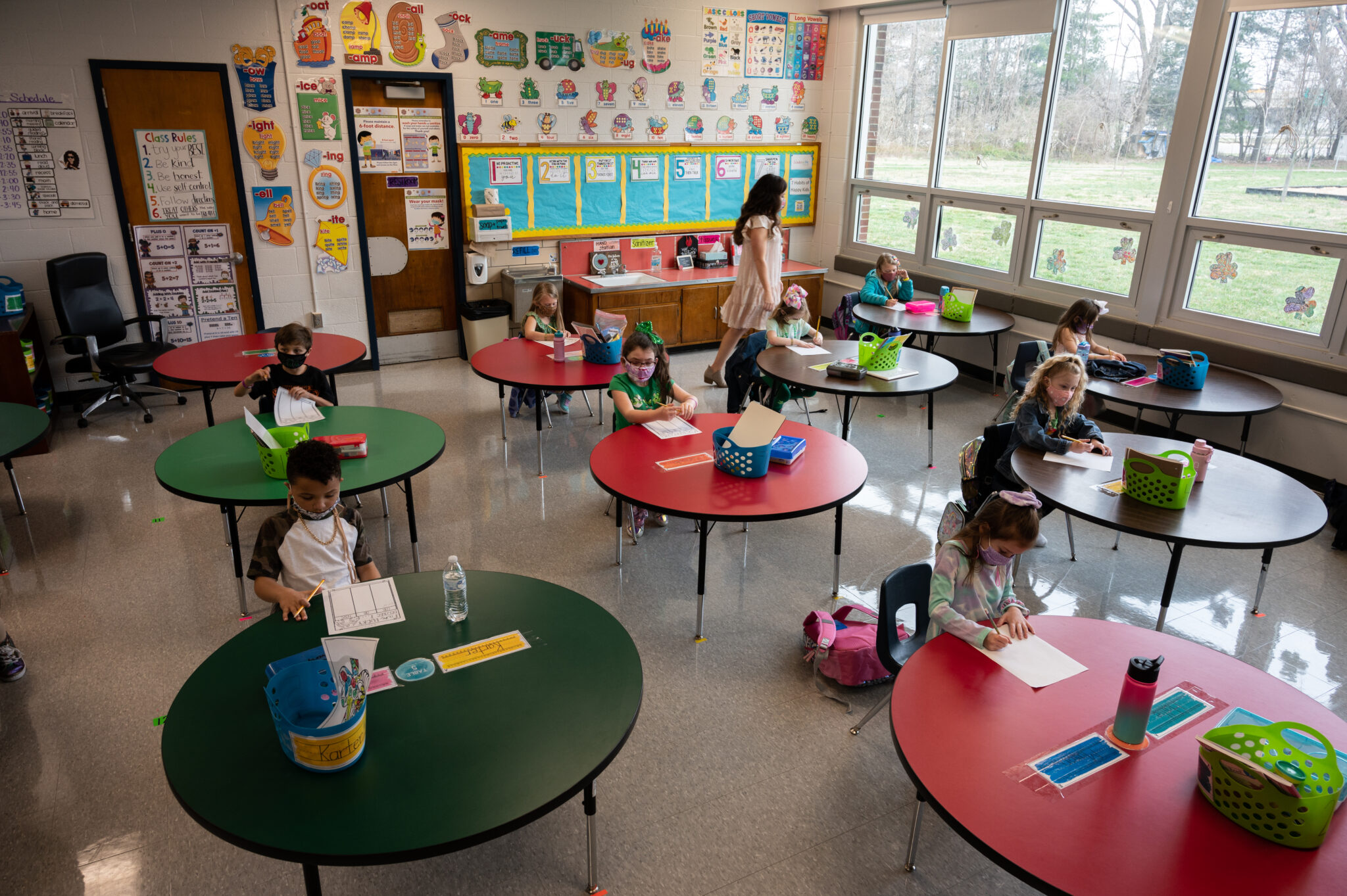
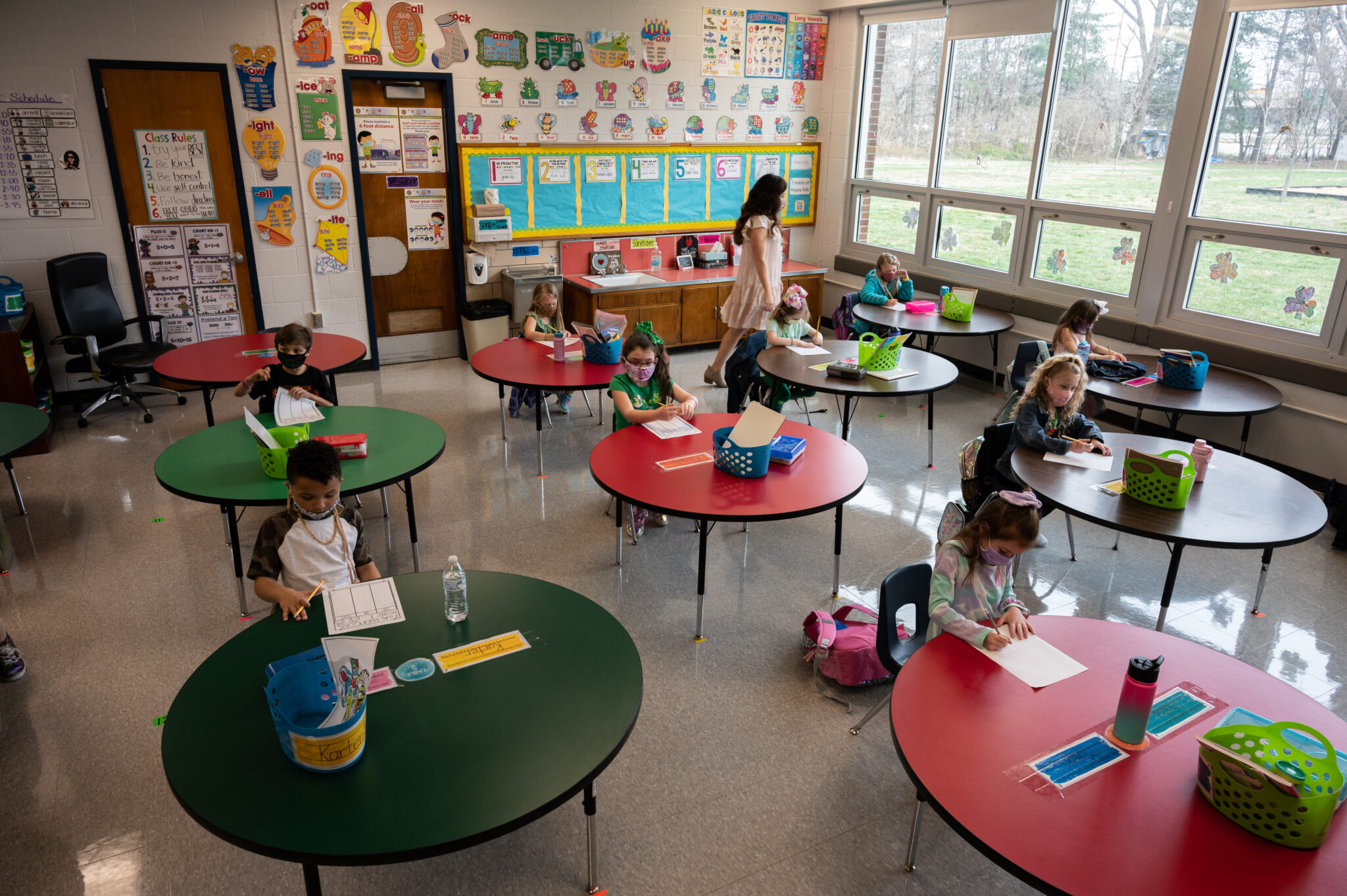
    Ohio educators say burnout is real, but with pending legislation regulating lesson-plan choices and security roles in schools, they feel “demoralized” as well.

    A national survey showed 44% of K-12 teachers in the U.S. “always” or “very often” feel burned out, a stat that has surpassed other industries.

    The Gallup poll showed more than 4 in 10 K-12 workers felt that way, topping college/university employees, retail workers and the government/public policy industry in the survey, conducted in February but released this week.

    Researchers found that K-12 workers have “consistently” been leaders in burn-out in the country, but the COVID-19 pandemic “exacerbated existing challenges,” while also introducing new ones.

    Female teachers reporter higher burnout levels than male teachers, at a split of 55% to 44%.

    “The result is a workforce that is burned out and unfortunately leaving the profession at a high rate,” according to the Gallup poll.

    Those who teach in Ohio agree that the increased workload has taken its toll, but to also see mounting legislation regulating their careers and what they see as a continued lack of appropriate support from the state adds a new amount of weight to educators’ shoulders.

    “When you talk about burnout, you’re talking about when you’ve extinguished a flame,” said Wendi Davis, band director and music teacher at Cory-Rawson Local Schools in northwest Ohio. “Teachers, they love what they do, and when they’re put in situations like what they’re dealing with right now, it’s more demoralization than burnout.”

    Teachers have had to don ever-multiplying caps: as teachers, as standardized test guides, as social workers and as guidance counselors. Faced with all those issues already, teachers then faced a pandemic, according to Shari Obrenski, president of the Cleveland Teachers Union.

    “What the pandemic did was essentially lay bare all of the problems that existed in education,” Obrenski said. “More and more is being put on (a teacher’s) plate and nothing is being taken off.”

    When pandemic learning is combined with legislation currently being considered in the Ohio legislature that would dictate the subjects that teachers can discuss, and a recently passed and governor-signed law that allows teachers to carry weapons in school, Obrenski said educators get pushed to their limits.

    That is, the teachers that are still there. Cleveland is short about 200 teachers going into the new school year, not to mention the ongoing shortage of substitute teachers, in the hundreds as well.

    “And we’re not as bad off as other districts,” Obrenski said.

    As school districts struggle to recruit and retain teachers and substitute teachers, teachers also struggle to be heard in their own districts and in their state government.

    “Teachers need to be empowered at the local level by their administrators,” Davis said. “They need to have a voice at the table.”

    Paying teachers more and funding schools in a way that supports the role they play is definitely a need, according to Obrenski, but so, too, is respecting teachers as professionals in order to keep them in schools.

    “Something that is really important is a teacher’s voice in decision-making; Having teachers be part of the solution instead of condemning them as part of the problem,” Obrenski said.

  • FDA greenlights emergency use of COVID vaccines for kids under 5

    FDA greenlights emergency use of COVID vaccines for kids under 5

    BY: JENNIFER SHUTT –  Ohio Capital Journal

    WASHINGTON — The U.S. Food and Drug Administration on Friday authorized emergency use of two COVID-19 vaccines for children under 5, moving the country one step closer to having shots for all age groups.

    The decision leaves just one hurdle, a recommendation from the Centers for Disease Control and Prevention, before parents can begin getting babies and toddlers vaccinated against the virus. That CDC decision was expected this weekend.

    “As we have seen with older age groups, we expect that the vaccines for younger children will provide protection from the most severe outcomes of COVID-19, such as hospitalization and death,” FDA Commissioner Robert M. Califf said in a statement.

    “Those trusted with the care of children can have confidence in the safety and effectiveness of these COVID-19 vaccines and can be assured that the agency was thorough in its evaluation of the data.”

    The FDA’s decision to grant emergency use requests for a two-dose Moderna shot and a three-dose Pfizer vaccine came two days after its outside panel of advisers unanimously voted on Wednesday to recommend use of the two vaccines.

    White House COVID-19 Response Coordinator Ashish Jha said earlier this month that the federal government would begin shipping the vaccines to states as soon as the FDA granted the emergency use authorization.

    He expects shots can begin next week as long as the CDC issues its recommendation over the weekend.

    The Biden administration made 10 million doses of vaccine for kids under 5 available for states during a two-week pre-ordering period that closed Tuesday.

    States, tribes, territories, pharmacies and other federal partners ordered 2.5 million Pfizer doses, about 50% of those available, and 1.3 million Moderna doses, about 25%, according to a spokesperson for the U.S. Department of Health and Human Services.

    “Jurisdictions will have an opportunity to order additional doses if and when the vaccines are authorized by FDA and recommended by CDC,” an HHS spokesperson said in a statement.

    Florida vaccination distribution in question

    Florida remains the only state not to have placed any pre-orders.

    White House press secretary Karine Jean-Pierre said Thursday that some pharmacies and community health centers in the state would have COVID-19 vaccines for kids under 5 through federal distribution. But those options are limited for parents wishing to vaccinate their kids, she said.

    “By being the only state, this is Florida, not pre-ordering … pediatricians, for example, in Florida will not have immediate ready access to vaccines,” Jean-Pierre said.

    “Some pharmacies and community health centers in the state get access through federal distribution channels, but those options are limited for parents. We encouraged Florida on several occasions to order vaccines. We’ve been aware of this, and we will continue to do so.”

    Florida not pre-ordering, Jean-Pierre said, will “make it harder” for parents to get their children vaccinated.

    “That’s why we continued to, on several occasions, encourage Florida to do this,” she said.

    The Florida Department of Health said in a statement Thursday that its officials have “made it clear to the federal government that states do not need to be involved in the convoluted vaccine distribution process, especially when the federal government has a track record of developing inconsistent and unsustainable COVID-19 policies.”

    “Doctors can order vaccines if they are in need, and there are currently no orders in the Department’s ordering system for the COVID-19 vaccine for this age group,” the statement continued.

    Florida Gov. Ron DeSantis said Thursday that “there’s not going to be any state programs,” to vaccinate babies and toddlers against COVID-19.

    “That’s not something that we think is appropriate and so that’s not what we’re going to be utilizing our resources in that regard,” DeSantis said.