Tag: Loveland Diversity Advisory Board

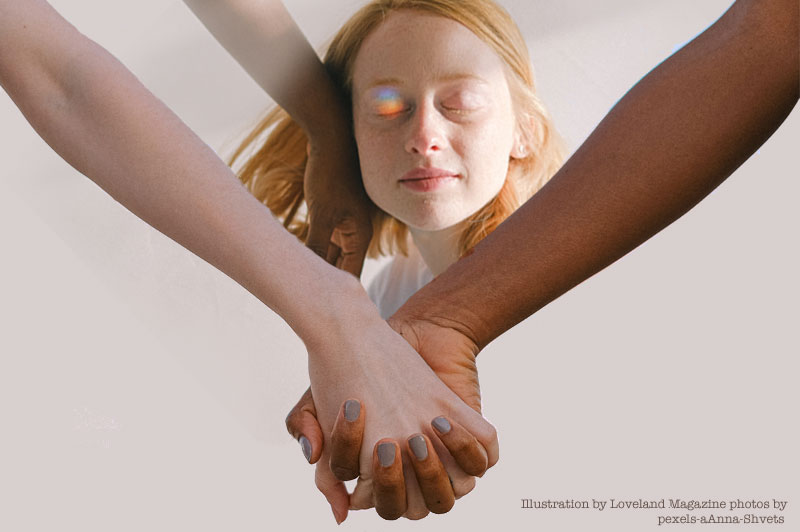
  • Taking Lessons From Our Past: The Story of Everett and The Importance of DEI

    Taking Lessons From Our Past: The Story of Everett and The Importance of DEI

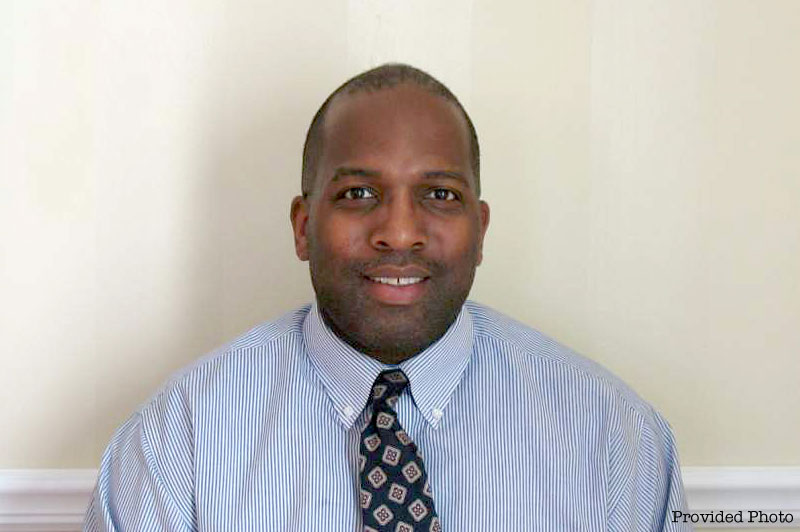
    John Coburn is a Loveland Resident, a lifelong educator, and a founding member of the Loveland Diversity Advisory Board.

    by John Coburn

     In 1954 my father-in-law Everett enlisted in the US. Army stationed in Alaska. The base was a rugged area far removed from big cities like Anchorage, Fairbanks, or his hometown of St. Louis. Everett quickly found himself the odd man out; it became clear the men in the company were not accepting of Black folks. Fortunately, he was blessed with the gift of gab, enabling him to hold his own without fear of repercussion. 

    Everett met a young man in his platoon named Ken. Ken, being Jewish and from New York, also struggled with the new environment and described Alaska as “living in a foreign land.” Friendly and outgoing, Everett became like a brother to Ken. Eventually the two forged a friendship with Ken dubbing his new pal “Duke.” While Ken and Duke were an unlikely duo–it seemed incredulous that a Jewish man and a Black man could become friends and work together– the truth was Everett knew no strangers, and he never left anyone behind.

    Everett’s strong sense of family instilled in him the importance of acceptance toward all people, regardless of their differences. As such, he helped Ken fit in with the rest of the company by reinforcing to Ken that he was special. By helping Ken to develop a sense of self-worth and demonstrating that he was a crucial member of the team, Duke enabled  Ken to develop a sense of belonging. That was a favor Ken never forgot and after the tour in Alaska ended, Everett and Ken remained lifelong friends. Over the next 60 years, they continued to stay in touch via yearly phone calls. When Everett died in 2020, Ken remembered his friend’s kindness, stating he would never have made it out of basic training without his friend Duke.

    By the 1970s, Everett was named the first Black employee at the St. Louis Corvette plant,  working in security for General Motors. (Technically, he was the second Black employee, but GM didn’t know this; Everett’s cousin Bob who got him the job was the first, but Bob passed as white.) 

    The interview process was brutal and Everett was openly mocked for having taken college courses at the local business school. While cruel and demeaning, unfortunately the interview was only a small glimpse of what was to come. 

    GM was a toxic workplace during those days and fellow workers desperately tried to get Everett fired or intimidate him into quitting by placing nooses and tools in his locker.  If you possessed company materials, you were subject to disciplinary action so those would be planted as well. Employees would drive to his home and sit in front of his house during the day, Everett recognizing the cars because of his position in security. He would come home after work crying tears of frustration. This pernicious behavior was against everything he believed and stood for. He’d initially believed his vivacious personality coupled with his gift of unconditional acceptance and love for others would help him navigate life’s challenges. He was starting to think it would not. Fortunately, his wife supported and encouraged him to continue to push forward. Eventually, Everett was the first black foreman at GM, receiving Quality awards for the work.

    In the years since, I’ve taken Everett’s experiences to heart and they’ve shaped the way I live and the way I approach my career as an educator. At one point, I accepted a job in the city next to my hometown as an assistant principal. The principal was indifferent to the idea of Diversity, Equity, and Inclusion and its impact on the school environment. It was obvious: both the school environment and the surrounding community were incredibly toxic. Students that were deemed different were overly disciplined and behind academically. It was clear no one felt a sense of belonging or importance, not the students in the school or the members of the community surrounding it. And with no leader to inspire these feelings, things would only continue to get worse. 

    With the help of another teacher, I instituted plans to help students academically. I continued my work with students and parents providing social-emotional support while addressing underlying social-emotional needs. I started an ACT Prep program to help improve the students’ college acceptance.

    In the spring, the community experienced a mass shooting that killed local government officials and police officers because of a community conflict. Those students that felt a sense of belonging began to seek social and emotional support. Despite the community upheaval, many students followed the academic plan and graduated with their classmates. The community has started to heal, and many community members have made it their mission to speak up and be more inclusive of others in their community.

    I share these stories about my father-in-law’s and my experiences to illustrate that everyone wants to belong. The need for belonging is an innate sense of the human condition. If we cannot develop relationships and feel a sense of acceptance, we become isolated, withdrawn, and want to quit. A feeling of belonging, and having people around you who foster that feeling, is an essential component to success. 

    That said, because of Covid-19 and social injustice, many students don’t have that sense of belonging. They may feel excluded at school or in society in general. This, as we’ve seen, is neither conducive to a healthy self-esteem or academic success. The question is, how can we help our students feel like they belong? 

    Taking inspiration from Everett, as I have done, has been instrumental. We can ask ourselves: 

    As teachers, are we accepting of students and not hypercritical? Everett welcomed all people. He did not put people down, and he was not overly judgmental. No matter what others said, he never judged anyone. 

    As educators, do we allow students the opportunity to restart?  Everett always gave everyone a fresh start. Once his nephew forged his signature on a document, and he received free service on his car. Everett forgave him. 

    Are we empathetic toward students? Everett displayed grace toward people even when people were unkind to him. 

     Finally, is our climate and culture inclusive, accepting, and inviting? It was not until the final years of working at GM that Everett felt a sense of belonging. Toward the end of life, Everett developed dementia. He recalled the names of most of his family and not much else. However, he remembered in detail his experiences at GM.

    Though it has only recently been given a formal title, Diversity, Equity, and Inclusion is a concept that has always been important. And while there will always be outliers like Everett who persevere despite the odds, there are far more Kens, who need the camaraderie and encouragement of others to succeed. As educators, caregivers, and members of the community, we are uniquely poised to provide this encouragement and well-crafted DEI programming is the most impactful way to do it. It need not be a political or divisive issue–the fact is that when everyone feels they belong, everyone wins.

    Regardless, I’ll continue to advocate for DEI not only because I’ve seen that it works, but also because I know that Everett wouldn’t have wanted it any other way. 

    This Guest Column by John Coburn is presented by Loveland Magazine in collaboration with the Loveland Diversity Advisory Board. Contact them if you’ve a story to share.

  • Part II: There weren’t enough napkins to clean up the tears when my Loveland school-children were called N——s!

    Part II: There weren’t enough napkins to clean up the tears when my Loveland school-children were called N——s!

    A true story by a Loveland resident presented by Loveland Magazine in collaboration with the Loveland Diversity Advisory Board. Contact them if you’ve a story to share.

    The family in this story has chosen to remain anonymous for fear of retaliation against their children.

    You may want to read Part I first or re-read it to remember the story we are telling.

    Part I of II

    As the years passed our family had more brushes with racism and the talks my husband and I had with our sons became, both by choice and necessity, more regular. As they grew from children into tweens and teens, we had to remind them that in the eyes of others they were no longer perceived to be cute, unthreatening little boys. For a Black child, that shift in perception can be the difference between life and death. While their Caucasian friends were in the habit of wearing the hoods of their sweatshirts over their heads when walking around town, their dad and I recognized the danger inherent in this scenario for boys of color. And that was just the beginning. Every news story became another talk we had to have. 

    Still, despite the increasing frequency of our family talks and growing awareness of society’s bigotry, one can never quite be prepared when racism rears its ugly head. 

    She wanted to go to the park. My daughter, only five, was not yet included in these family conversations. The innocence my sons were cruelly stripped of that final day of school was still intact in her, as evidenced by her bright eyes, sweet giggles, and the ambient toothy grin she had for everyone she met. Like so many moms that day, I tied her soft brown curls in a ponytail, gave her breakfast and got her dressed before setting out for our walk to the park, just around the corner from our house. It was an unremarkable walk, one we’d taken a thousand times. 

    Upon arrival we encountered several boys. They appeared to be aged 12 or 13, and like so many boys their age they were roughhousing, laughing, and hollering. I half-smiled and shook my head remembering how boys that age could be, before turning my attention back to my little girl. 

    The rowdiness didn’t bother us, but I winced as one spewed a series of obscenities, hoping my daughter’s attention was focused on the playground and not the words her young ears were hearing. A quick glance around showed no parents or elder siblings in attendance and so apparently, as tween boys are apt to do, they were in relishing their temporary emancipation, saying things they knew better than to say. 

    They’ll stop this behavior now that I’m here. Kids don’t act like this in front of adults, I deduced. I’ll just keep her on the far side of the park where she’s less likely to hear them.

    “ Mommy!” I was jerked back into reality by my daughter’s excitement. “Can you help me get up there?” she asked, motioning to the play structure.

    I had done it a thousand times. I’d fit my hands around her waist, giving her a boost. I’d watch as her small hands smoothly and confidently scaled the rungs. But before I could lift her I heard a mocking shout coming from the direction of the boys. 

    “Why are YOU calling HER that? She’s not YOUR mom,” he chortled. 

    Now is the part of the story where I let you, the reader, know that I am, in fact, Caucasian. My husband is Black and, thus, our childrens’ richly hued complexions do not match mine. And while there has been more than one instance where children (and the occasional adult) are curious about how one pale-skinned mother comes to have three darker-skinned children, the tone in this boy’s voice told me this was not childhood confusion. 

    This was antagonistic. 

    This was unmistakable cruelty.

    My daughter let go of the play structure, whipping her head around to face me. Loose curls softly grazed her cheek. We locked eyes. On her face was an eerily familiar expression. It was one I’d seen years earlier and in many nightmares since. It was the same look my sons had given me on the last day of school.

    That last day of school.  

    “Have a good summer, you N——s!”

    The feeling came rushing back, the unadulterated terror where my stomach flips, my heart drops, my breath quickens, and I can feel the color draining from my face. 

    Oh, not again. 

    “Mommy?” my daughter looked at me, baffled.

    “Stop calling her your mom!” The boy scoffed. “She can’t be your mom. She’s white!” The boy sneered at us, before glancing at his buddies with a snicker and a smile, seeking approval for what he must have thought were his superior skills of observation. One of his friends joined in on the cackling. The other stood silently, head down. 

    The old adage of “sticks and stones” isn’t always accurate. One look at my daughter’s collapsed expression told me these words, while not breaking her proverbial bones, threatened to break her spirit. 

     “Don’t you talk to my daughter that way,” I snapped. “I am her mother.”

    “Mom–”

    “She’s not your mom! SHE”S NOT YOUR MOM! She’s white!”

    Laughter. Jeers. 

    I walked toward the boys slowly, the soft earth yielding beneath my sandaled feet. 

    Imagine, for a moment, you are standing in my shoes.

    What do you do in a situation like this? Do you unleash your wrath on someone else’s kids? Do you completely lose your composure in front of your daughter who is already visibly shaken? Or do you ignore such a blatant and dangerous transgression? And where did these kids learn this behavior anyway? Why would they think this sort of racially-charged rhetoric is acceptable? What emboldened them, still children, to speak this way around me, an adult? And of all places for this to happen, why did it have to be on a playground, a place of childhood innocence? A magical place meant to foster youthful wonder and unbridled imagination?

    The questions rang in my ears while a whirlwind of emotions bubbled to the surface. Though seemingly intertwined, my feelings were in direct juxtaposition with each other. I felt sorrow, but also anger. Despair, but also rage.

    “You know,” I began, measuring my words carefully, “I wish your moms were here so they could see how you’re behaving.” 

    I didn’t know what else to say. I still don’t. Would you? 

    I took my daughter’s small hand and led her out of the park, back to our house, back to the embrace of the four walls that felt comforting and familiar. The sun swelled in the sky, casting shadows as it fought to rise above the clouds. 

    As we walked, my daughter begged insistently for answers. 

    “Mommy, why are those boys saying you’re not my mommy?” The loose brown curls now stuck to her face, plastered in place by tears. “You are my mommy, right? You’re my mommy?”

    Explaining a nuanced topic like racism to my school-aged sons felt like too soon and even then I felt guilty somehow. Like I hadn’t broached the subject enough and had somehow failed them. But my daughter was five. How do I explain this situation to a five year-old? And why should I have to? I resented those boys. I resented the situation. I resented everything that put me in the position of having to reassure a five year-old little girl that I am her mother, to explain why she and I look different, and to address how that will be an issue for her in the future.

    If I have learned anything from the events involving my children it’s that everyone, regardless of the color of their skin, needs to be having conversations about race with their families. These talks, whether organic and casual in nature or full-fledged sitdown discussions, must happen regularly. Not only that, but the topic needs to be addressed in a manner that honors and celebrates our differences while still acknowledging our similarities. And because so much of racism is learned behavior, modeling acceptable treatment of others can’t start and end when the conversations do. It isn’t the sole responsibility of families of color to teach their kids about prejudice and racism; Eradicating hatred is a group effort that has to include everyone to be successful. 

    I have replayed that day in my mind a thousand times.

    Fortunately, in the years since, my daughter’s memory of the incident has somewhat faded. I’m thankful that she doesn’t have to carry that burden around anymore, a veritable boulder on her tiny back. 

    But I carry it everyday. 

    I carry it when I see the news.

    I carry it when I think of my own school experience. The cruel taunts of classmates calling me a “N—-rlover” leave me wondering what onslaught the teen years have in store for my own children.

    I carry it when I see comments on social media that assert prejudice does not exist in Loveland, or does not exist in Loveland today, or does not exist with “my child.” 

    I carry it when I’m sitting on my porch watching my daughter play and from a yard within earshot I hear someone commenting on the election. Well I hope all those dumb Black people are happy now that they got what they wanted.

    Racism is here, in Loveland, whether we want to admit it or not. It’s here today and everyday, and it’s all around us whether we want to admit it to others or to ourselves. 

    But what gives me hope is that once we acknowledge the issue, we can unburden ourselves of this unnecessary weight. By taking that first step, we can commit to doing better. We can do what is needed to learn and to grow, and we can do that learning and growing together. I hope that by sharing my family’s experiences others will be empowered to take that first step.


    In Part I of this Diversity Story, we see that the trouble was only beginning. 

    Read Part I


    Read our first installment of a true story by a Loveland resident presented by Loveland Magazine in collaboration with the Loveland Diversity Advisory Board

    I felt the tears welling behind my eyes and willed them…


    For more information on talking to your kids about race and racism:

    Teaching and talking to kids

    Its never too early talk children about race

    Parenting/talking to your kids about racism

    For engaging story times on diversity (including race) for young learners, join the Loveland Diversity Advisory Board and the Cincinnati Hamilton County Library the 2nd Monday of every month for Bedtime Book Talks.

    Support for those feeling fearful, vulnerable, or uncomfortable upon reading these accounts:

    https://brenebrown.com/podcast/brene-with-aiko-bethea-on-inclusivity-at-work-the-heart-of-hard-conversations/

  • Loveland City Schools adopt Statement on Diversity

    Loveland City Schools adopt Statement on Diversity

    “This resolution is the first step toward ensuring a safe and inclusive learning environment for all students while fostering cultural awareness and understanding.” – Loveland Diversity Advisory Board

    by David Miller

    Loveland, Ohio – At their meeting on April 20, the Loveland City Board of Education voted unanimously to adopt a statement on diversity, equity, and inclusion. The statement will be placed into the Board Manual and distributed to school administrators and all staff. After staff discussions, it will be “pushed out into classrooms” according to Superintendent, Bradley Neavin.

    Board member Eileen Washburn  said before the vote, “I very much appreciate the work that was done. I hope it will be embraced and people really read it and act on it.” (read resolution below)

    Speaking of the student experience Neavin said, “This goes well beyond the walls of the schools. This prepares students to go out into a broader world and to have a broader world view.”

    The writing of the resolution was a collaboration between district leadership and the Loveland Diversity Advisory Board (DAB). “This resolution is the first step toward ensuring a safe and inclusive learning environment for all students while fostering cultural awareness and understanding,” said a statement issued by DAB after the approval.

    Below is the discussion of the Board while adopting the diversity, equity, and inclusion policy:


    Loveland City Schools Statement on Diversity, Equity, and Inclusion

    A comprehensive education in a free society develops persons who can think critically, engage in self-reflection, understand all cultures, live compassionately with others, and use their reflection and experiences to make sound judgments. As the great equalizer, education in a pluralistic society must strive to present varied events, activities and perceptions reflected in history, literature and other sources of humanity’s thought and expression. Therefore, the Loveland City School District commits unwavering support to diversity, equity, and inclusion of culture, thought, ideas and experiences.

    LCSD seeks to ensure the growth of every individual in our sphere of influence by:

    • Creating a safe & inclusive learning environment that provides equitable access for all members of the school community regardless of race, religion, ethnicity, gender identification or expression, sexual orientation, ability, language, family structure or economic status.
    • Providing access to materials and experiences which express diversity of perspective, broaden students’ worldviews, and better equip them to live, thrive, and contribute positively to a diverse world.
    • Engaging in culturally competent practices that target core areas: value of diversity, cultural awareness, understanding the dynamics of cultural interactions, and taking cultural knowledge and adapting it to diversity and learning.

    The Loveland City Schools commit to the development of critical thinkers by offering the opportunity to understand, study, and embrace difference as the fabric of our Democracy, a Democracy free from hatred, alienation, or division.


  • There weren’t enough napkins to clean up the tears when my Loveland school-children were called N——s!

    There weren’t enough napkins to clean up the tears when my Loveland school-children were called N——s!

    A true story by a Loveland resident presented by Loveland Magazine in collaboration with the Loveland Diversity Advisory Board. Contact them if you’ve a story to share.
    The family in this story has chosen to remain anonymous for fear of retaliation against their children.

    Part I of 2

    We arrived at school bright and early, just as my sons had requested. It was their last day of 2nd and 4th grade and the anticipation they felt for the occasion was palpable. The dew collected on the toes of their sneakers as they ran to line up, the unmistakable scent of spring perfuming the air. It would be the kind of summer children dream about, with lazy mornings, afternoon trips to the park, and visits to the local Whippy Dip where the cones melted and dripped down their small arms onto the picnic tables. We never got enough napkins. It was going to be the kind of summer they’d look back on years from now with a hint of nostalgia, remembering the carefree innocence of childhood. 

    The school day went by without a hitch; games were played, awards were dispersed, maybe there was a hint of sorrow from the teachers as they retreated back to their now-empty classrooms. But on the faces of my sons and their friends after the final bell had rung, I saw nothing but pure elation. As they played on the front lawn of the school, one last farewell before loading them up, a car slowed to a cruise on Loveland-Madeira. It was all decked out, congratulatory chalk paint on the windows; apparently the driver and his passengers were recently graduated seniors.

    The passenger leaned out of his open window as the car passed my sons and me. 

    “Have a good summer,” he shouted. My sons smiled back, visibly excited a ‘cool’ older kid was acknowledging them.

    But his sentence didn’t end there. 

    I wish his sentence had ended there. 

    “Have a good summer, you N——s!

     My heart dropped. I felt as though I’d been punched in the stomach. And then instinct kicked in.

    “Get in the car, boys,” I frantically stammered.

    “But mom–what did he say?”

    “I said GET IN THE CAR. NOW.” 

    “What did he call us mom? Why did he say that?” 

    I met the puzzled gaze of my younger son who had no idea what had just transpired. 

    My older son looked equally befuddled. This wasn’t the first time he’d encountered that vile term. He knew what it meant. The confusion on his face told me he just hadn’t heard the slur over all the commotion. 

    And here I was, flushed, sweating, and doing everything I could to keep from melting into a puddle of tears in front of them.

    There weren’t enough napkins to clean up the mess.

    With a single word, our perfect day was shattered.

    I tried to see the car’s plate number, but they’d sped away too quickly. I called the school to report the transgression, but, being the last day of school, I never heard back. I met with a police officer, but unfortunately his hands were tied; with what little information we had there was no feasible way to determine the identity of the culprits. As a last ditch effort, I tried doing my own reconnaissance work on a local moms’ group page on social media where my post was promptly removed after group members began chastising me. This isn’t the place for this, I was scolded. Well, where was the place? In the midst of a travesty, I’d turned to my community and in turn I was brushed off and chided.

    That night, instead of eating ice cream that dribbled down their chins and staying up past bedtime, my sons, my husband, and I had to have “the talk.” This is the talk that all parents of Black children, boys in particular, dread. We’d had conversations before but this time they’d been called out. This time it was personal. 

    We had to explain what they were called. What it meant. Where it originated. We had to explain that not everyone saw them as an equal. That prejudice exists.That stereotypes, to some people, are the stuff of truth. We had to sit down, the first night of summer, at the end of what began as a day full of promise, to explain racism to our elementary school-aged children. We had to explain that there are people who hate them for no reason other than the color of their skin. We had to explain that sometimes, inexplicably, people will respond differently to things they do, even if those things are exactly the same as those their Caucasian friends are doing. We had to explain injustice, an intrinsically unfriendly concept, in the most child-friendly way possible. 

    We were determined not to let racism win. This would not ruin our summer; it would not ruin our family. And ultimately, we have triumphed. This event and others like them, as upsetting, maddening and sorrowful as they are, have only served as teachable moments and life lessons. We turn the negativity into chances to fortify our familial bond and bolster our pride. 

    But make no mistake, there have been tears. There have been lots of tears. 

    And there are never enough tissues.

    With this horrifying experience behind them, this family hoped the worst was over.

    In Part II of this Diversity Story, we see that the trouble was only beginning. 

    Stay tuned for Part 2


    Read our first installment of a true story by a Loveland resident presented by Loveland Magazine in collaboration with the Loveland Diversity Advisory Board

    I felt the tears welling behind my eyes and willed them…


    For more information on talking to your kids about race and racism:

    Teaching and talking to kids

    Its never too early talk children about race

    Parenting/talking to your kids about racism

    For engaging story times on diversity (including race) for young learners, join the Loveland Diversity Advisory Board and the Cincinnati Hamilton County Library the 2nd Monday of every month for Bedtime Book Talks.

    Support for those feeling fearful, vulnerable, or uncomfortable upon reading these accounts:

    https://brenebrown.com/podcast/brene-with-aiko-bethea-on-inclusivity-at-work-the-heart-of-hard-conversations/
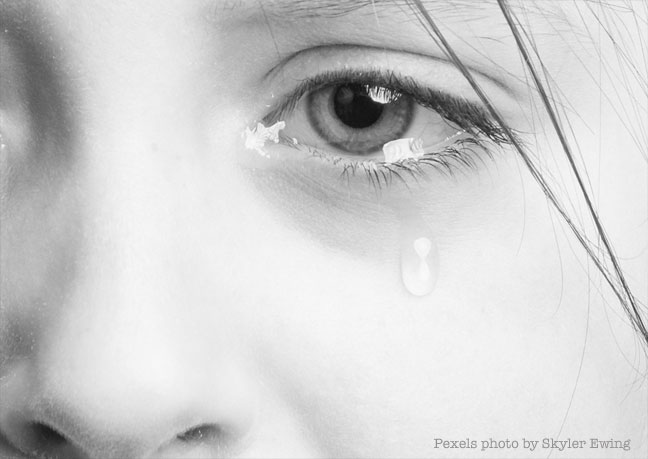
  • I felt the tears welling behind my eyes and willed them not to escape

    I felt the tears welling behind my eyes and willed them not to escape

    There is value in having no child feel rejected and invisible in their own school. If I can help it, none of them will.

    A story by a Loveland resident presented by Loveland Magazine in collaboration with the Loveland Diversity Advisory Board

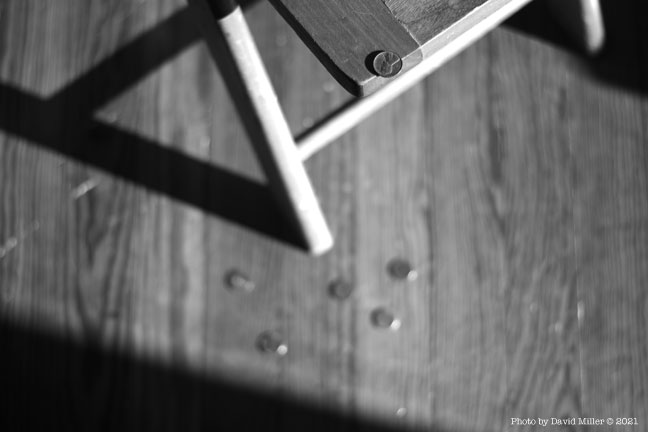
    A sharp pain startled me. Something had pelted my head. Whatever it was ricocheted to the floor with a hollow plink. I rubbed the back of my skull and looked around trying to determine what had hit me. As I did, I took another sharp blow, this time to the cheek, followed again by a distinct plinking sound. The next shot hit my shoulder. Then my neck. Finally one of the projectiles flew past my face and I was able to identify what was being hurled toward me. 

    It was a penny. 

    I looked in the direction from which the projectiles originated and saw a lunch table of my fifth grade peers laughing, trying to look inconspicuous in the conspicuous way guilty ten year-olds have a tendency to do.

    “Did she pick them up?” one whispered.

    “Shhhhh! She’s looking over here,” the other said, waving his hand in the universal sign to keep it down.

    More giggles.

    x

    I sheepishly rubbed my cheek, which by now was smarting and red. I looked down at the floor where several pennies lay in a telltale scatter at my feet. 

    Another sharp pain.

    “Pick up the pennies, Jew,” someone from the table jeered, just loud enough for me to hear.

    I felt the tears welling behind my eyes and willed them not to escape. No one would see me cry. Despite my best intentions, a tear leaked out, betraying me as it rolled down my injured cheek. Its saltiness stung against the broken skin.  

    x

    The perpetrators weren’t the school’s “bad” kids. They weren’t the “troublemakers.” They weren’t the kids who wadded up the stiff brown paper towels, wet them, and threw them up on the bathroom ceiling where they’d stick and harden like cement. 

    These were the kids who raised their hands to read aloud from the social studies textbook when the teacher asked for volunteers.They attended PSR at the church down the street from my house where a giant tree sprouted pink blossoms each spring before dropping her petals in a sudden heap. These were the kids who, if I’d told a teacher, would elicit the response of ‘Well now that doesn’t sound like them. I’m sure they meant nothing by it. Have you tried ignoring it?’

    x

    The lone tear fell onto the lunch table, a solitary puddle on the faux wood facade. Pennies? What does that even mean? I pondered this question silently, focusing intently on the fallen tear to prevent more from spilling out. I felt ashamed and embarrassed. I never mentioned it again. 

    This was the first time it happened, but it wouldn’t be the last.  

    At ten years old, I didn’t understand the deeply anti-Semitic implications of these kids’ actions. As an adult, I know they picked up on these stereotypes somewhere. I feel confident that the hateful message was learned outside of school, however subtly transmitted. Maybe slips of the tongue by their parents. Maybe from the innuendos presented in the news channel their family watched. Maybe from friends whose families held biases. But what about what they learned–or didn’t learn–while they were in school? What was the message there?

    There was nary a mention of Jewish people in my elementary school. Despite a small population of Jewish students, the curriculum had settled into a comfortable rhythm they saw no need to update. I remember clearly how each year my teachers were startled when they learned that I didn’t have a Christmas tree. 

    “What do you mean?” my second grade teacher asked incredulously. “Everyone has a Christmas tree,”  And so it went. 

    x

    I accepted my lot early. I dutifully completed my “Letter to Santa” assignments each December prior to “Christmas Break” where I’d take home the ornament I had to make for my non-existent tree. In the spring, I mustered up fake gusto to color oil pastel Easter egg cut-outs. I completed the multiplication worksheets asking how much tinsel Jane needs to trim her Christmas tree and conducted the science experiments on decorating Easter eggs with various substances, bright red beet juice staining my hands for days. 

     The message coming from the school was clear: one specific religion was the universal norm. Obviously, I was different. That made me a target. 

    I share this with you to illustrate that representation matters. While some may disagree, they are likely the ones who have never been in a situation where they were the “other.”

    Representation doesn’t mean anyone has to alter their own convictions or feel put on the defensive. It doesn’t mean one side is right and the other is wrong, that there’s a hidden agenda, or that any one lifestyle is being attacked. 

    What it does do is allow students to learn that the world is full of people whose beliefs, values, and opinions differ from their own. It means the students who aren’t part of the status quo feel a sense of belonging. At its best, it fosters mutual understanding and civility. Representation neither promotes one lifestyle, race, or religion, nor detracts from another. All representation does is to allow students to see that there are different ways of being and that there is validity in who we ALL are. 

    x

    While I cannot change my school experience, we owe it to our own kids the opportunity to explore diversity through equal and prominent representation. If you’re a minority, there is value in seeing someone like yourself; if you’re in the majority, there is value in seeing that there’s an actual living, feeling human being behind the label. Most importantly, there is value in having no child feel rejected and invisible in their own school. If I can help it, none of them will.


  • Virtual Book Talk: BED Time Book Talk from the Library

    Virtual Book Talk: BED Time Book Talk from the Library

    Loveland, Ohio – This book reading series is Co-sponsored by the Loveland Diversity Advisory Board and the Library.

    https://www.facebook.com/groups/706996006892722

    Virtual Book Talk: BED Time Book Talk

    Monday, March 8, 7:00 PM – 7:30 PM

    Monthly at Loveland Branch

    The Public Library of Cincinnati and Hamilton County wants you and your children to join them for a BED (Books Engaging Discussion) Time book talk.

    The book talks are centered on diverse characters and underrepresented experiences.

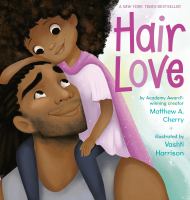
    Next Month’s Book: Hair Love by Matthew A. Cherry. 

    Children 5-8 and caregivers. Registration required.

    For list of upcoming books, go to http://cinlib.org/2P90HKR

  • Virtual BED-Time Book Talk

    Virtual BED-Time Book Talk

    For Children 5-8 and caregivers

    Monday, January 11

    7:00 PM – 7:30 PM

    Loveland, Ohio – Join for a BED (Books Engaging Discussion) Time book talk centering on diverse characters and underrepresented experiences. Co-sponsored by the Loveland Diversity Advisory Board and the Library.

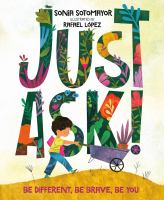
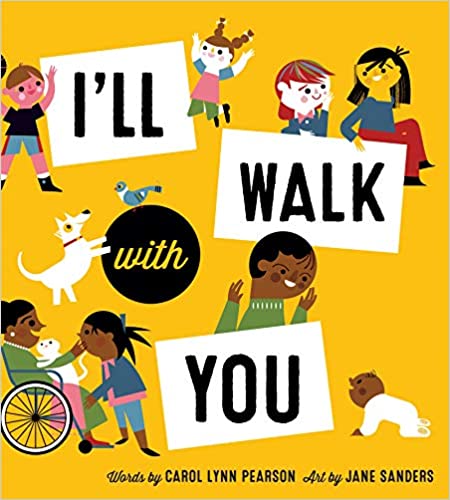
    This Month’s Books are: Just Ask by Sonia Sotomayor and I’ll Walk With You by Carol Lynn Pearson

    Just Ask!
    Be Different, Be Brave, Be You

    In this creative non-fiction story, Sonia and her friends plant a garden, and each one contributes in his or her own special way, in a book that celebrates the many differences among humans. In this warm and inclusive story by U.S. Supreme Court Justice Sonia Sotomayor, inspired by her own childhood diagnosis of diabetes, readers join along as differently abled kids use their strengths to work together and learn about each other.

    I’ll Walk With You
    by Carol Lynn Pearson

    Help little ones learn to show love for the people around them, no matter how they look, sound, pray, love, or think. Beloved author of The Lesson and Will You Still Be My Daughter, Carol Lynn Pearson is known for her heartfelt, sometimes tear-jerking poetry and stories. Her newest title, illustrating her popular song written for children in 1987, will enchant children with a sweet, tender poem about loving and accepting others, no matter what they look like, where they come from, or what their age and abilities are. Carol Lynn Pearson is the author of more than forty books and plays, including Goodbye, I Love You and I’ll Always Be Your Daughter She has been a guest on The Oprah Winfrey Show,” and “Good Morning, America,” and was featured in People Magazine. She lives in Walnut Creek, California.”

    Library card and REGISTRATION is required.

    Get a library card

    Log In to register

    This event is offered on:

    Virtual Book Talk: BED Time Book Talk Monday, February 8, (7:00 PM – 7:30 PM)

    Virtual Book Talk: BED Time Book TalkMonday, March 8, (7:00 PM – 7:30 PM)

    Virtual Book Talk: BED Time Book Talk Monday, April 19, (7:00 PM – 7:30 PM)

    Virtual Book Talk: BED Time Book Talk Monday, May 10, (7:00 PM – 7:30 PM)

    Virtual Book Talk: BED Time Book Talk Monday, June 14, (7:00 PM – 7:30 PM)

    Virtual Book Talk: BED Time Book Talk Monday, July 12, (7:00 PM – 7:30 PM)

    Virtual Book Talk: BED Time Book Talk Monday, August 9, (7:00 PM – 7:30 PM)