|
|

News and Events from the Loveland, Ohio Area
Without fear or favor
Since 2004


|
|


By Kim and Rick Donaldson
As a community, we support the goal of providing high-quality education for our children. But we also need to consider affordability. Loveland is largely a residential community whose local tax burden falls primarily on individual homeowners who are somewhat less affluent than those in surrounding districts. Whereas a one mil property tax raises about $228 per student in Mariemont, $249 in Madeira, $339 in Sycamore and $607 in Indian Hill, it raises only about $191 per student in Loveland. Consequently, we need to recognize that our school budgets are necessarily more limited, and just as a family with a limited budget must prioritize needs and manage money wisely, so must the school district. The proposed building master plan does not, in our opinion, adequately address these budget constraints.
We wonder what other cost reduction opportunities we might find were we provided with a more detailed plan.
In the board of education’s January 23rdcommunity meeting presentation, there is a single slide showing a $65M baseline plan for repairs at all existing building sites, which was rejected because it “does NOT address any of the core identified needs that were discovered during the assessment process.” After evaluating multiple options for addressing these “needs”, the board settled on a $165M plan and a $7.7M land purchase, i.e. $108M more than the baseline plan. From the very high-level cost breakdown subsequently provided by the administration, we can see that the plan includes $10M for athletic facility upgrades and $22.6M for a new fine arts building. That’s 30% of the incremental cost over the baseline plan going toward enrichment programs affecting a subset of the students, not to fundamental academic programs affecting the entire student body. We wonder what other cost reduction opportunities we might find were we provided with a more detailed plan.
To arrive at a more cost-effective solution, we need to start again from the beginning with clear priorities regarding what is needed, as opposed to what is wanted.
To arrive at a more cost-effective solution, we need to start again from the beginning with clear priorities regarding what is needed, as opposed to what is wanted. Building safety and security come first, followed by those facility improvements that have a proven impact on academic achievement. Increasing classroom space to enable reducing the student to teacher ratio might fall into the latter category. We then need to develop facility concepts that satisfy these needs in a manner that minimizes both construction and future operational costs. For example, the current facility master plan envisions three separate buildings for pre-K through 5thgrade. Combining these into a single building would reduce construction costs, reduce heating and cooling costs and maximize the opportunity for sharing resources and occasional use spaces like cafeterias, gymnasiums, and auditoriums. A two- or three-story building would also provide the opportunity to use an existing site, eliminating the cost of land purchase and development.
These are just a few ideas meant to illustrate the point. Given the right set of objectives and constraints, the district’s architectural consultants would undoubtedly come up with more and better ideas. But the first step toward developing a school facility plan that strikes a reasonable balance between the educational needs of our children and the financial limitations of the community is to vote against the Loveland school levy and bond issue on November 5th.
Reference
January 23, 2019 Community Meeting Presentation: https://secureservercdn.net/50.62.175.49/f0o.a87.myftpupload.com/wp-content/uploads/2019/01/CM3-01.23.19-Slide-Deck.pdf

Loveland, Ohio – Loveland High School will present the Lerner and Loewe classic musical My Fair Lady at 7 PM on November 6, 7 and 8, and at 2 PM and 7 PM on Saturday, November 9.
Tickets are $10 for students/senior citizens and $12 for adults if bought online (https://lovelandhstheater.wixsite.com/lhsdrama), and $11 for students/senior citizens and $13 for adults if bought at the door.


by Cati O’Keefe
The prospect of higher property taxes brought on by the proposed Loveland school levy has spawned Tigers Helping Tigers, a charitable foundation formed to help those with limited resources pay their tax bills.
Cati O’Keefe is a resident of Downtown Loveland
The foundation was conceived by Art and Kim Jarvis. Art Jarvis is the president of the School Board, which proposed the ambitious new building master plan for the school system. “My job on the Board of Education is to make sure kids get the education they need to excel in the future. And that’s the purpose of the levy,” he says.
That’s his board member perspective. At home with his wife, however, he found their conversations frequently turning to the impact the financial ask could have on those with limited resources. “The community member Art Jarvis was bothered with the thought that the levy could cause fixed-income neighbors to suffer,” he says.
The Jarvises reached out to friends in the community, started sharing ideas, and Tigers Helping Tigers was born. Jarvis and the fledgling board (currently Kim Jarvis and Loveland residents Deb Ricci and Katherine Dannemiller) sat down with Greg Knake, executive director of The Care Center, and detailed their plan to raise $80,000-$100,000 to launch the new foundation.
Knake was on board immediately, framing the issue as a problem that needed to be addressed long before the current levy. “We’ve seen poverty grow 100% locally from 2005-2015 in Loveland,” he says. “Approximately 15% of kids in Loveland are on free and reduced lunch. This is an eight times faster increase than in urban areas.”
We’ve seen poverty grow 100% locally from 2005-2015 in Loveland. Approximately 15% of kids in Loveland are on free and reduced lunch.
Knake believes the proposed tax relief adds another spoke in The Care Center’s service wheel. “We are trying to bring help and resources to families teetering on the edge, and do it in a targeted way by getting people back to work or into a better job, giving them life skills, and breaking the cycle of poverty with one-on-one coaching and mentoring,” he explains.
The Care Center, which Knake describes as a faith-based organization, is collocated with the non-denominational North Star Church on Lebanon Road. The center is in the midst of a fund-raising endeavor itself, with a new facility slated for completion October 2020. “Our strategy employs best-practice research that has started organizations locally, like CityLink and the Healing Center, and is focused on bringing resources together under one roof,” he says.
Knake highlights the synergy between Tigers Helping Tigers and The Care Center: “ We already have relationships with many of the families who would qualify for assistance from the foundation,” he says. “We have the forms and processes in place needed to prequalify families–plus financial coaches and mentors–because hopefully this isn’t just a little bit of help on taxes but is also integrated with financial coaching to get them to an even better place in all parts of their lives.” (While The Care Center encourages people to discover and use its services, participation in the program is not a prerequisite for assistance through Tigers Helping Tigers.)
Tigers Helping Tigers board members are equally pleased with how the two organizations dovetail.
While The Care Center encourages people to discover and use its services, participation in the program is not a prerequisite for assistance through Tigers Helping Tigers.
“I am passionate about The Care Center’s impact on our community, and Tigers Helping Tigers is just another piece in assisting the marginalized, says Ricci. “The Care Center embodies the culture of our community, which generously gives back to those in need. The work of the Care Center team has helped so many cross the bridge of poverty to thriving in life. Having a strong education system is vital to our youth in reaching their greatest potential. This paired with the resources of The Care Center represents a community I am proud to be a part of.”
Dannemiller, who also serves on the fund-raising executive team for Nest Community Learning Center, believes the partnership will pay dividends for the Loveland community. “We have put six kids through the Loveland school system and stayed for the quality of the schools,” she says. “The levy is a hardship, but bridging the gap for people on limited incomes through the Care Center is a natural fit. The organization takes care of people who need help and creates a continuous path for them to get on their feet. Combining our program with theirs will extend help to people in a way that is impactful.”
At the end of the day, it is immaterial whether the current levy passes, fails, or gets kicked down the road to return in another iteration. Real need exists now.
The process of pondering cost versus value on the levy has, for many citizens, served as a reminder that levies–even modest ones–threaten the fragile existence of some community members and families. At the end of the day, it is immaterial whether the current levy passes, fails, or gets kicked down the road to return in another iteration. Real need exists now. Please consider donating to Tigers Helping Tigers and The Care Center. Inquiries regarding donations, receiving services, or volunteering can be made through Greg Knake at greg@carecenter.com or Art Jarvis at jarvisa@fuse.net .


Maria Bashardoust helps defeat Beavercreek in Regional Semi-Final
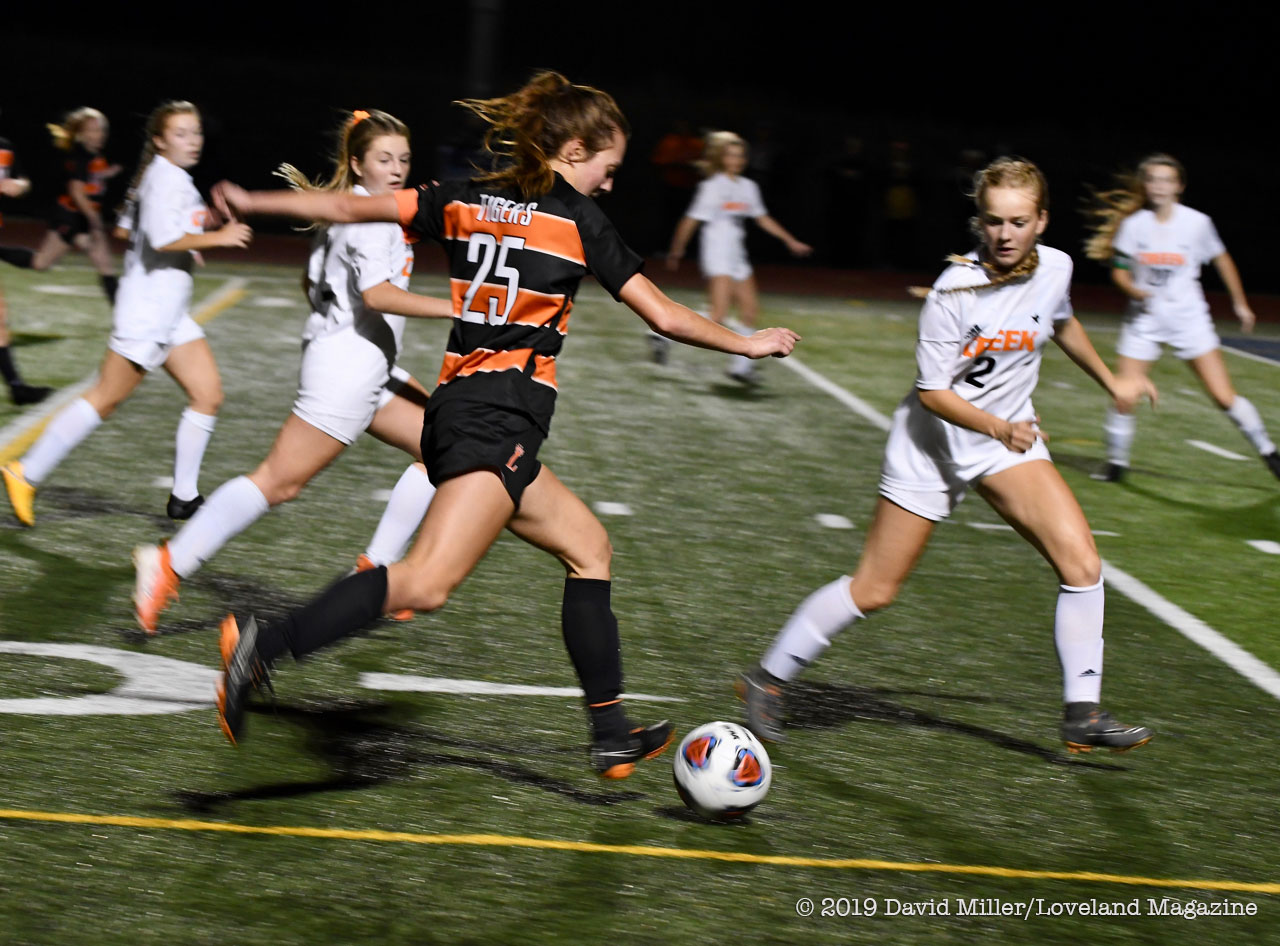
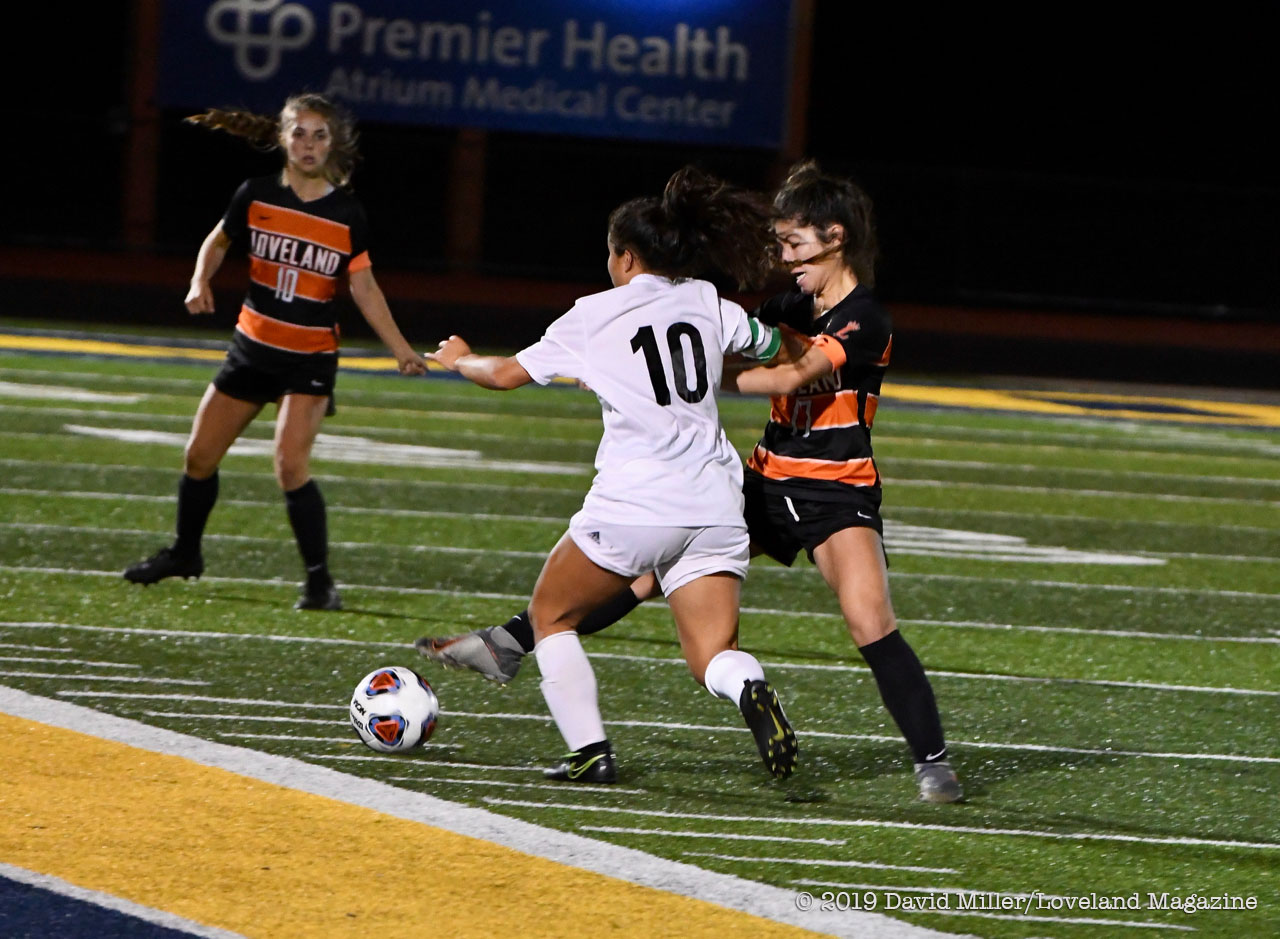
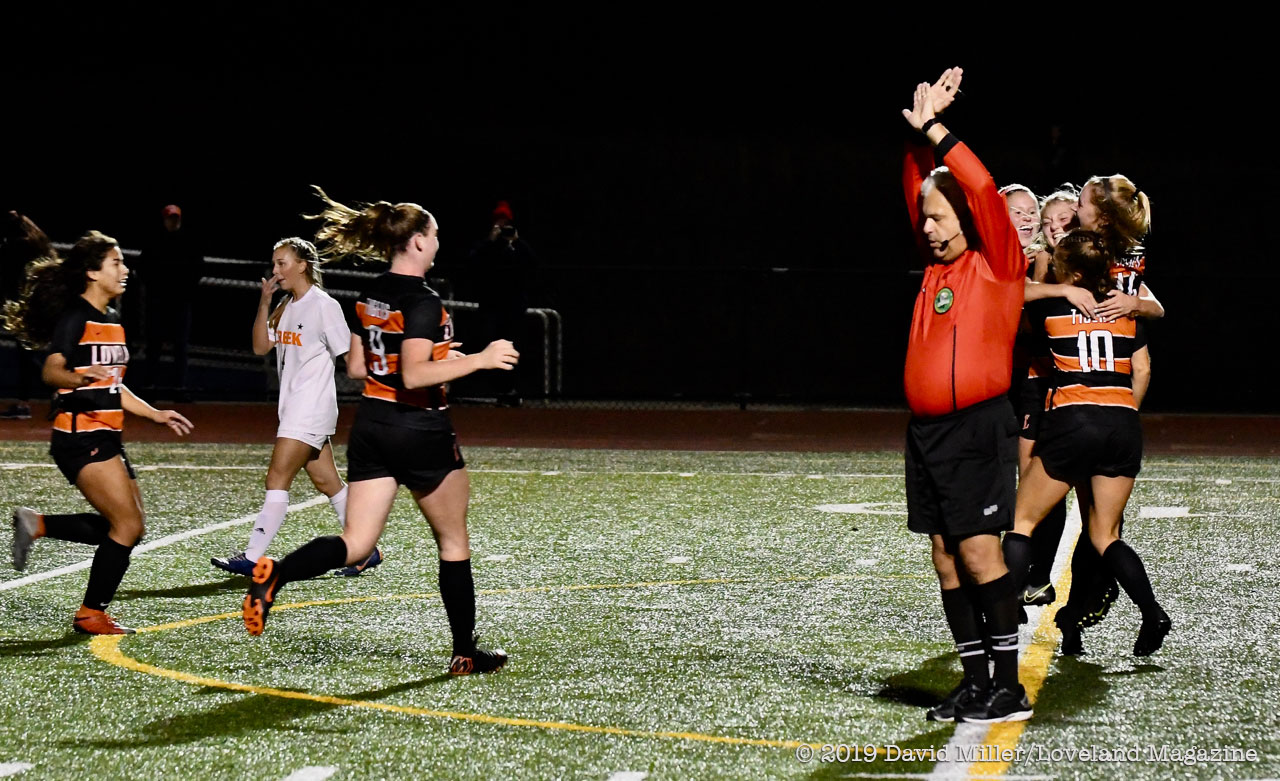
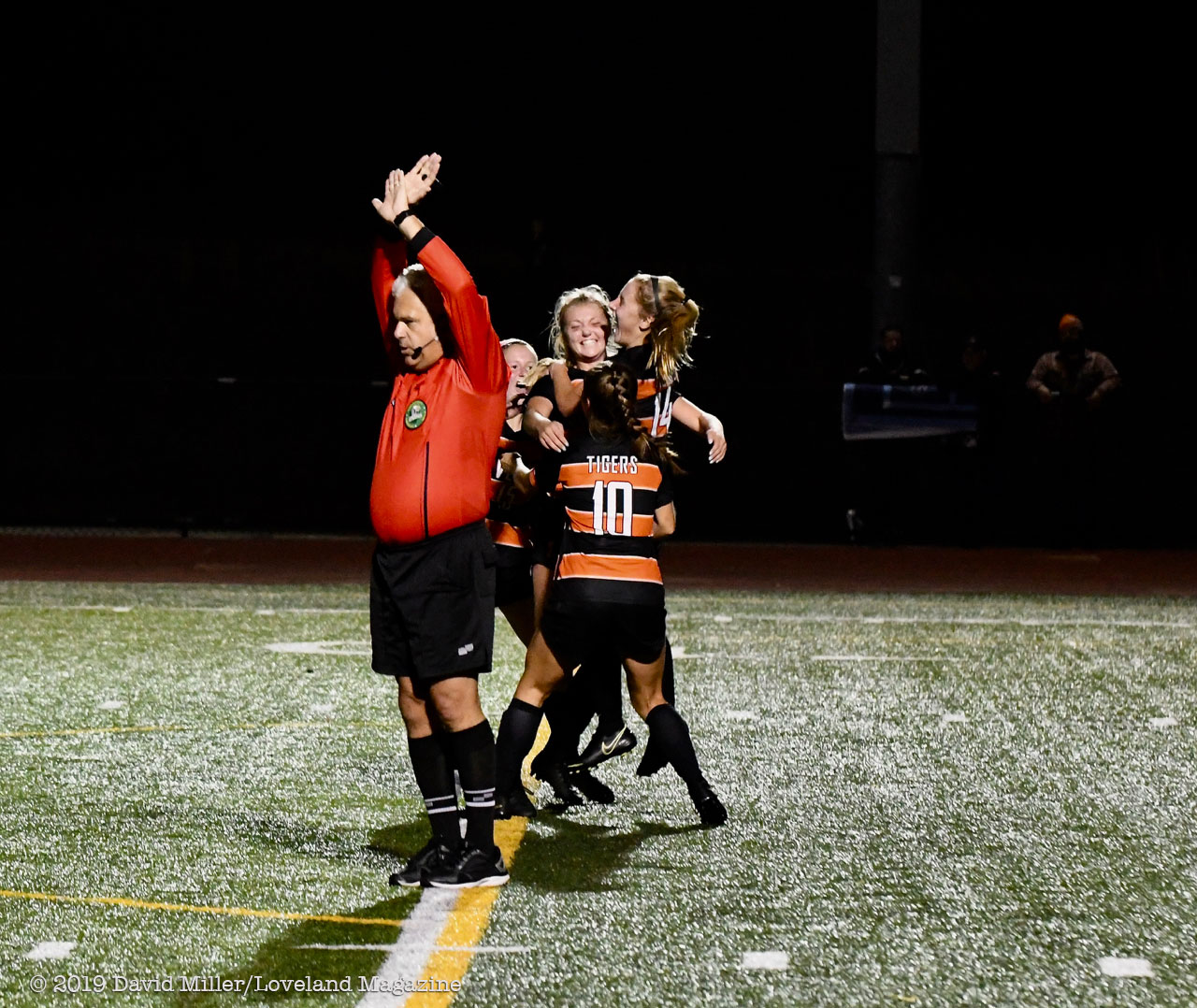
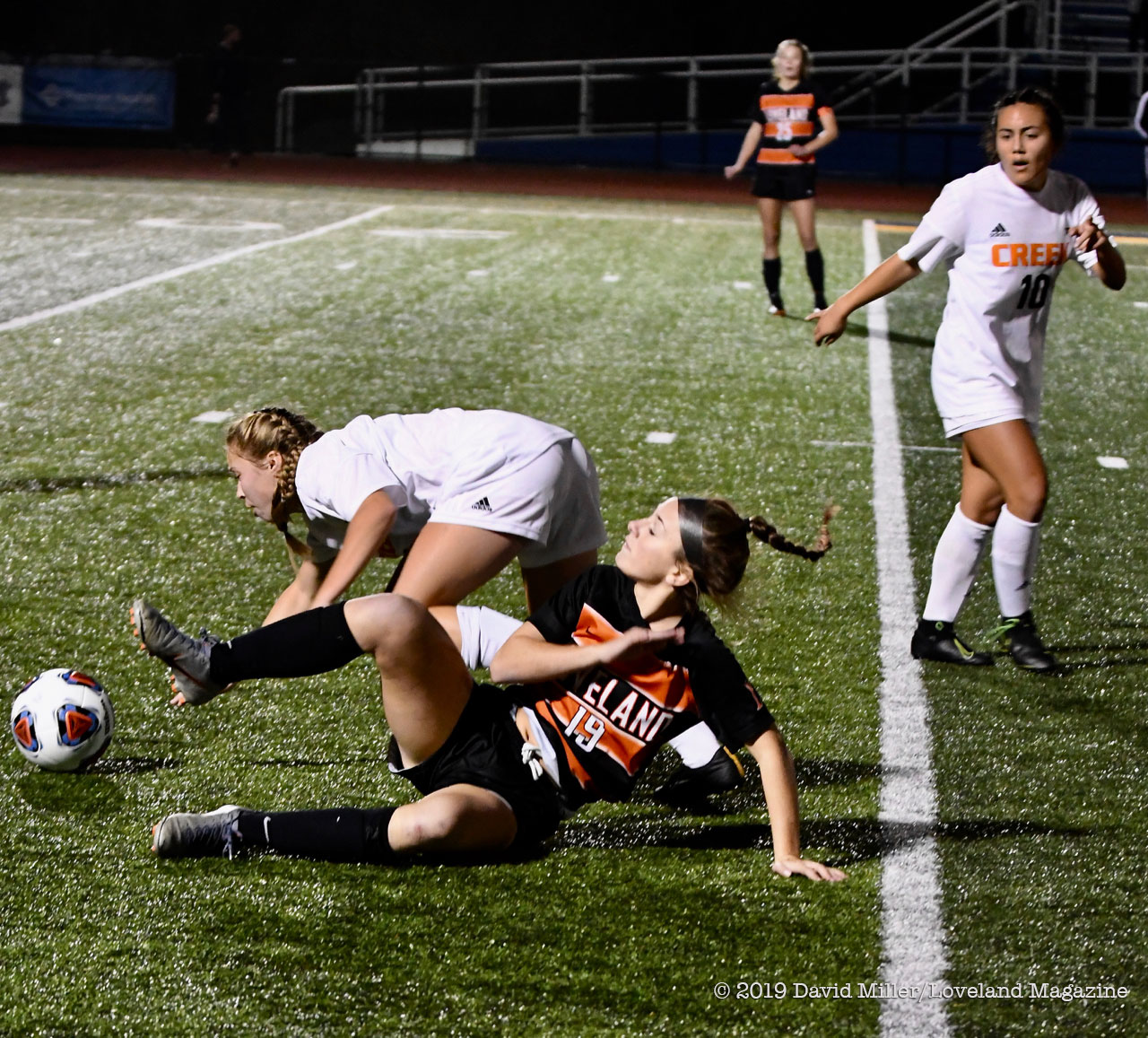
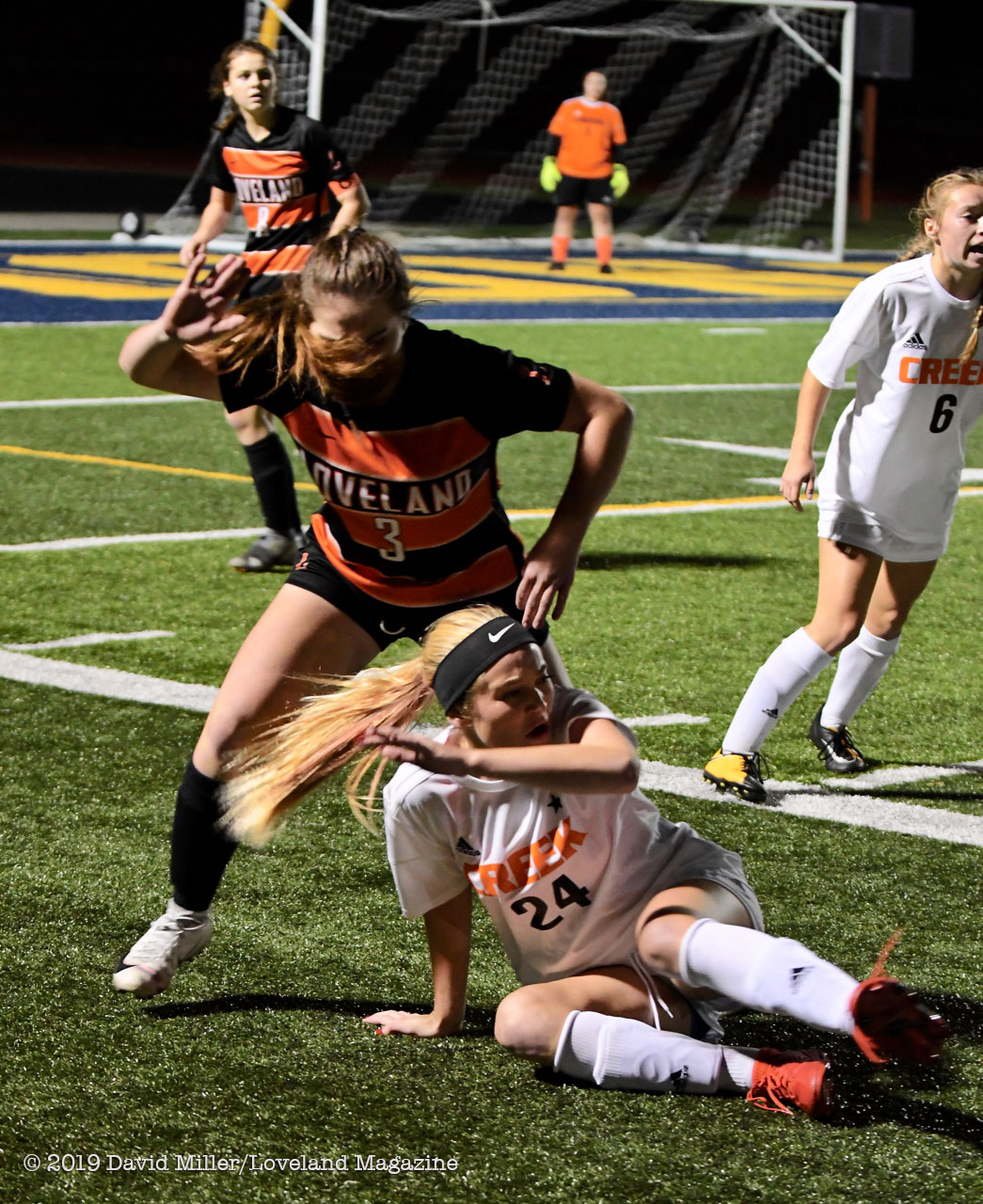
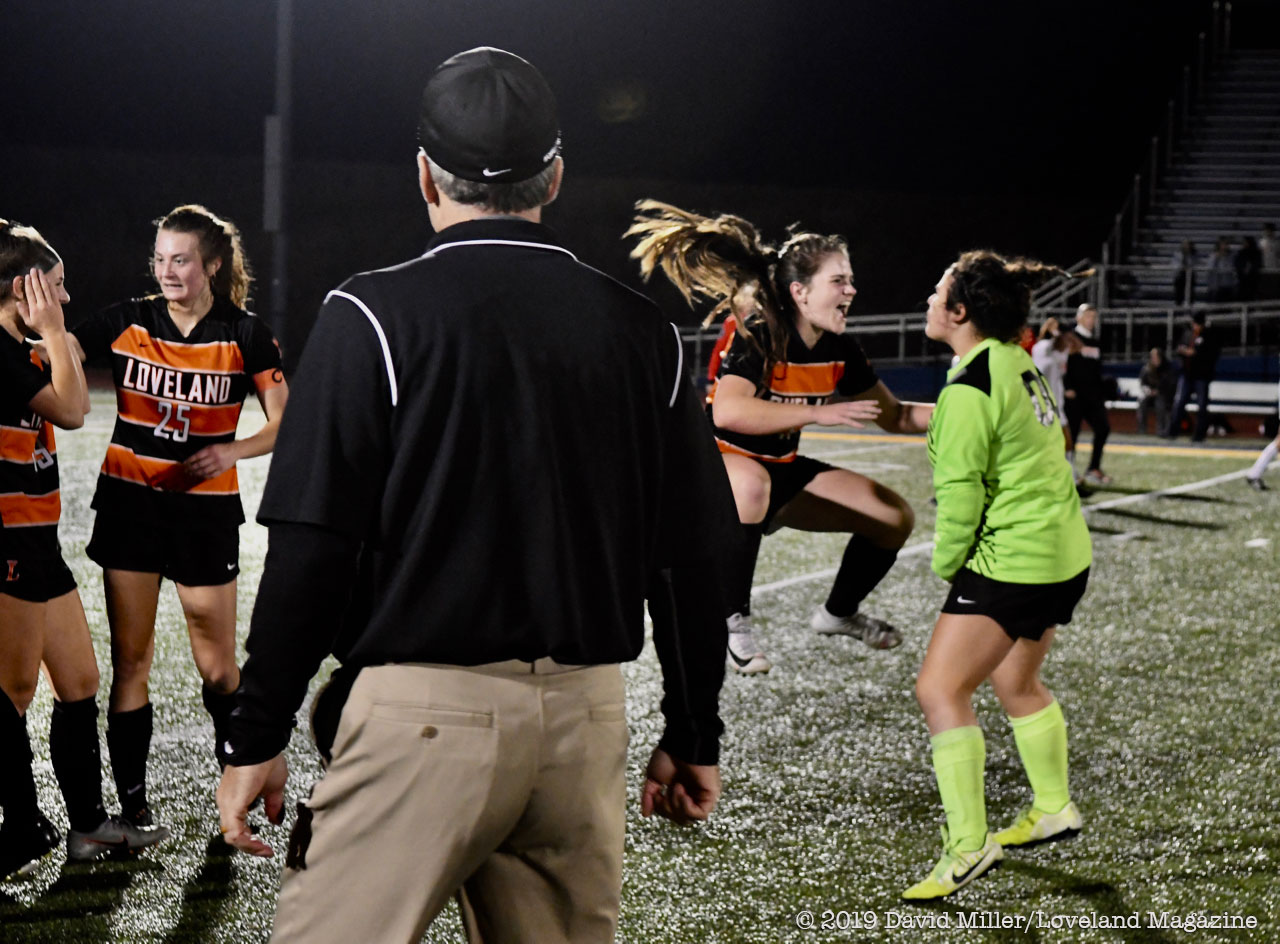
Monroe, Ohio – To get to the Regional Finals the Loveland Women’s Soccer Team had to beat the #2 team in the nation and a team that until Tuesday evening held the longest winning streak in Ohio history of 43 straight games. The Tigers won over Beavercreek, 3-2 in a game played at Monroe High School. Beavercreek, the reigning Ohio Div. I Champions had not lost a match since they lost in the post-season in 2017.
Caroline Florea, Claire Massey, and Lauren Donavon scored for the Tigers.
Loveland Magazine caught up with Head Coach Todd Kelly after the game…
The Tigers play 19-0-2 Lakota West on Saturday at Princeton High School at 7 PM for the Regional Title. Loveland traveled to Lakota West on August 20 to open their season and lost 1-2.
In 2017, Loveland High School soccer competed for the Division I state title at the Columbus MAPFRE stadium and beat Perrysburg High School 1-0, earning Loveland the OHSAA state championship. Loveland competed in the state championship in 2015 and fell to Walsh Jesuit. They are currently on a 12-game winning streak and have a 16-3-0 record.
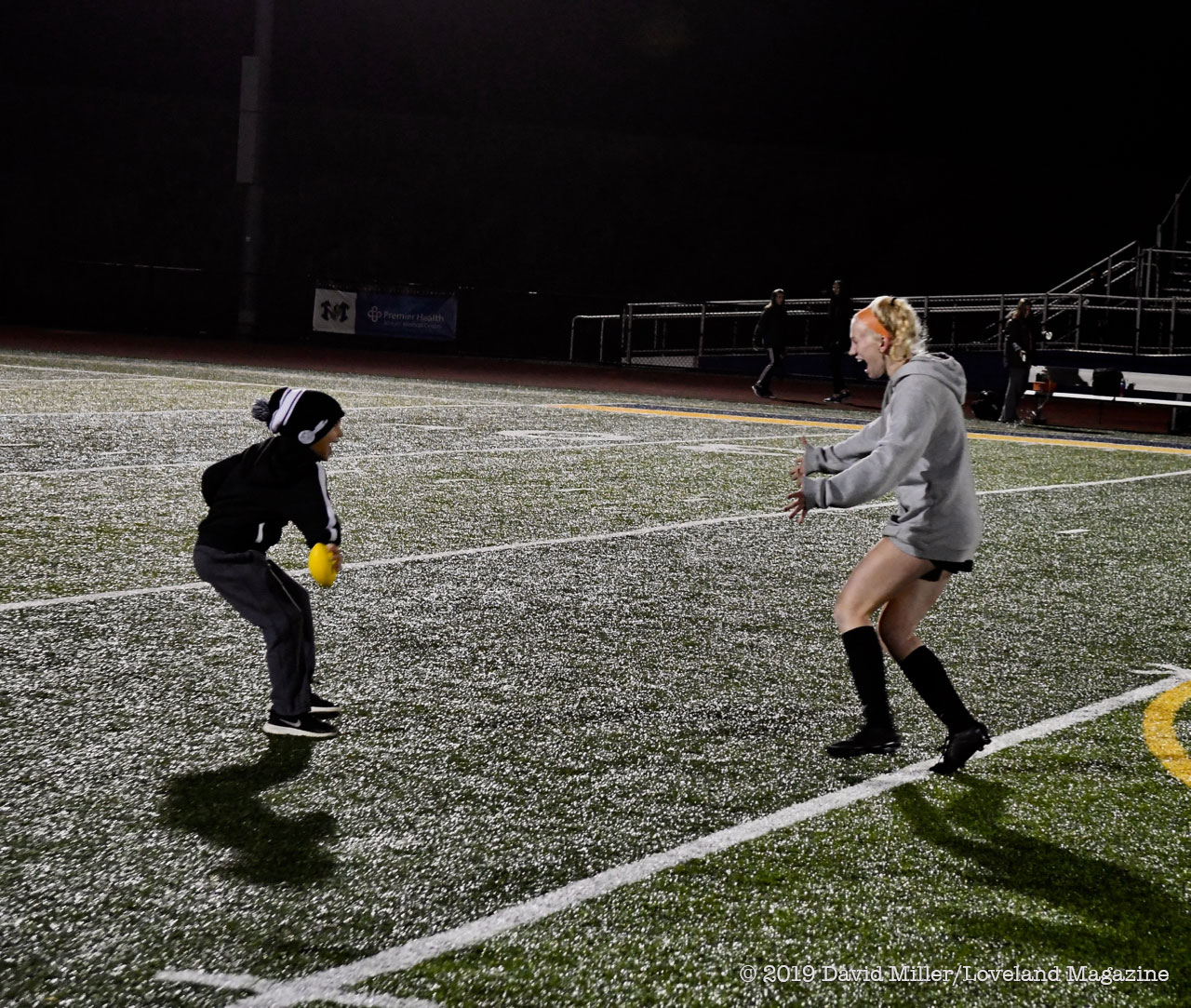
Here is a slide show of photos taken at the victory over Beavercreek. All photos are © protected but you can purchase high resolution files by sending an email to Loveland Magazine.



























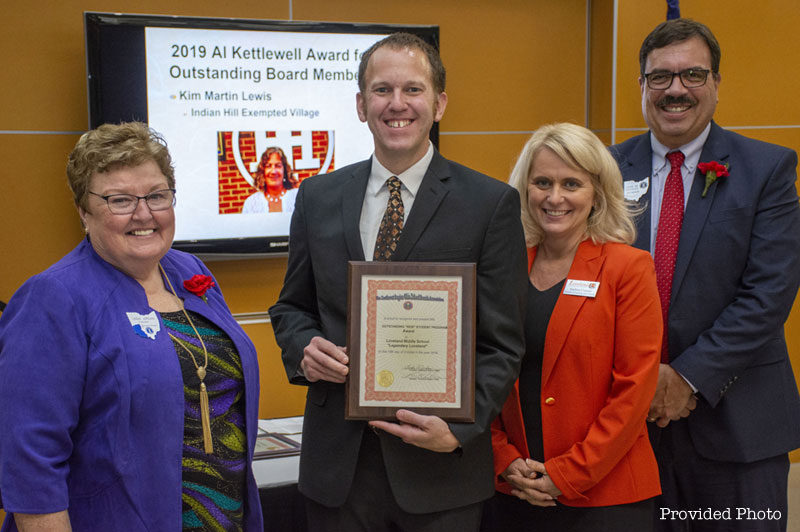
Charlie Mirus received the “Outstanding New Program” award at the OSBA Southwest Region Fall Meeting on October 10, 2019. Pictured (left to right): OSBA Southwest Region President Linda Jordan, Charlie Mirus, Loveland City School District Director of Teaching and Learning Andrea Conner, and OSBA President John Halkias
Loveland, Ohio – “I am humbled and honored to have the efforts of my past and current students honored in this way. The Legendary Loveland gamified approach is just one example of the amazing things happening in each and every classroom across the Loveland School District,” said 8th grade English Language Arts teacher Charlie Mirus
The Ohio School Boards Association (OSBA) Southwest Region has recognized “Legendary Loveland” – a gamified classroom concept implemented by Loveland Middle School Teacher Charlie Mirus – as an “Outstanding New Program.” The program was officially recognized as one of the top three new outstanding programs in the region with an award at the OSBA annual fall meeting on October 10.
“It was a surprise to be chosen, but it’s an honor to be recognized for this approach to teaching and learning,” said Mirus. “Gamification has been the center of my classroom at Loveland since I joined the district at the beginning of the 2018-19 school year. While working with the same curriculum as all other eighth grade English Language Arts classrooms, this approach emphasizes opportunities for collaboration, exploration, and creativity.”
“The greatest benefit has been seeing students take ownership of their own growth and learning,” said Mirus. “I’m excited to see the next great things that students will do because they are so excited to demonstrate innovation and mastery.”
The gamification strategy has gained increased popularity among teachers and students throughout the United States over the past several years. It transforms the delivery of education by turning traditional academic content into games, with the added benefit of increasing both motivation and collaboration among the students.
For those unfamiliar with gamification, it’s the approach of using various ideas inspired by all types of games and applying those ideas to educational or training situations.
Within education, gamified learning experiences have been used by other educators in kindergarten through university/college courses in all subject areas.
I have read about a great number of Fortune 500 companies who utilize aspects of gamification for training as well as to increase motivation and productivity. Types of games that can be used for inspiration include board games, tabletop RPGs – such as Dungeons and Dragons, collectible card games, video games, TV reality shows, and more). The ideas utilized are known as game mechanics, and they are put into place to enhance the experience, increase motivation, and immerse learners into a “world” where their learning is contextualized and given greater meaning.
While I teach 8th grade ELA, and I address the same Ohio Learning Standards and curricular materials, my classroom environment and approach look different than my colleagues.
For example, in my gamified classroom, Legendary Loveland, students are one of three avatar/character types: a mage, a healer, or a warrior. Students (which are referred to as citizens), are placed into teams (known as factions) within their period/class (known as their society). Citizens are given health points (HP) and Action Points (AP). They can also earn experience points (XP) and gold pieces (GP). Each of these currencies has their own benefits, and these are examples of the previously-mentioned game mechanics that are taken from various types of games. At least one citizen from each of the three characters classes makes up each faction. This is important because their roles are interdependent, as citizens have “powers” that are collaborative in nature. These powers allow citizens to positively affect the currencies of members of their factions.
This teamwork aspect goes beyond just “sitting” with one another at connected desks, as it teaches empathy, collaboration, and strategic thinking.
Student’s main drive in my classroom game is to earn XP. Doing so allows students to eventually level up (every 1,500 XP). Leveling up comes with opportunities to earn new powers and use different items (these come in the form of collectible-card game style cards, and they are rewards that are also awarded or earned in various ways).
Examples of items and powers would be being able to turn in an assignment a day late without penalty, listening to music during structured work time, or doubling the reward from a Side Quest.
That idea, of course, brings up the question about what Side Quests are. In short, Side Quests are additional enrichment opportunities that are tied to the Ohio Learning Standards for 8th grade ELA. Side Quests are never required assignments; rather, they are chances to do work, in addition to the typical content. Students can be rewarded with various in-game rewards, such as XP, GP, or items. While Side Quests do not have affect grades in any way, students who do them benefit academically as they work with the standards and the content of the class in new and creative ways.
I have seen an increase in student engagement with Side Quests this year, compared to last year, which was the first year of Legendary Loveland. Students have created Hollywood-style book trailers, magazine covers, character resumes, and more!

Four societies had a Royal Seminar (Socratic Seminar) during class today. Gamemaster (
) used
to track interaction, trends, participation, and quality of responses. Interesting data. Mostly proud of citizens for embracing a new challenge. #LMSinnovation

 by Cassie Mattia
Loveland, Ohio – “Congratulations to our girls cross country team on their fantastic season,” said Brian Conaster the Loveland High School Athletic Director.
The Loveland High School Women’s cross country team qualified to compete for the Division I State Championship which will take place on Saturday, at the National Trail Raceway, in Hebron. The Women’s Division I race is at 12:30 PM.
The Tigers placed 3rd in the Regional tournament this past Saturday at Troy High School. The 2019 state-bound Tigers team will consist of Emmy Sager, Jessie Gibbins, Sarah Madix, Ellie Carr, Audrey O’Keefe, Allyson Colegate, and Ansley Richards. Alternate Runners if needed will be, Maaike Snider, Ellie Zicka, Bella Dillhoff, and Skyler Daumeyer. Leading the Tigers to state will be head coach Steve Nester.
“Our girls dedicated themselves to run against some of the toughest competition, not only in the state of Ohio but other top programs of other states too. They understand what it takes to be the best and are committed to getting there. They worked hard to be better than last year and have now set the new Tiger standard of excellence. Best of luck at State” added Conaster.
The last time Loveland runners qualified as a team was in 2007 so this year will definitely be making Tiger school history!
42nd Girls State Cross Country Tournament. National Trail Raceway in Hebron, Ohio
Race Schedule
Girls Div III – 11:00 AM
Girls Div II – 11:45 AM
Girls Div I – 12:30 PM
Boys Div III – 1:30 PM
Boys Div II – 2:15 PM
Boys Div I – 3 PM
National Trail Raceway is located at 2650 National Road SW Hebron, OH 43025
School transportation and spectators should enter Gate A off State Route 40 and follow parking coordinator directions to designated parking.
School spirit signs are permitted to be placed on facility fencing. Recommendation is for zip tied material. Taping of signs is not recommended.
Spectator vehicles traveling from the east should exit I-70 at Exit 126 Rt. 37N entering the Campground Gate or Gate A on Route 40. When traveling from the west spectators must exit I-70 at Exit 122 Rt. 158N. Turn right onto Route 40. Enter Gate D. After parking for free, admission into the facility is $10.00 for all school age and older. Handicapped registered vehicles will enter Gate D from State Route 40. Recreational Vehicles wishing to set up tailgating inside the competition grounds should use exit 126 from I-70 and proceed to Gate A on Route 40. A $25.00 parking fee will be taken at Gate A. Spectator admission ($10.00) will also be taken at the gate. Vehicles will park inside the meet facility with tailgating space available for each RV unit. Recreation Vehicles may park in the Campground lot outside the competition area without paying the parking fee, but due to limited parking spaces, RV tailgating is not permitted in the main parking lots.

by Dale Friemoth
Dale Friemoth is a Loveland School District resident and lives on East Loveland Avenue in Loveland.
I have put together some facts on the proposed Loveland City School District (LCSD) Levy in a question and answer format with footnotes on sources.
After gathering and evaluating these facts, I am voting NO on the Loveland School Levy on the November 5th ballot!
The levy on the ballot is divided into three sections totaling 16.78 mills1; one is for 37 years and the other two are for “continuing period of time” or PERMANENT.
1. 6.42 mills: Issue bonds for land purchase, construction bond, and improving sites – 37-year duration (This IS permanent for many voters; I’ll be nearly 100 in 37 years!)
2. 3.41 mills: Funds for permanent improvements – permanent.
3. 6.95 mills: Funds to pay operating expenses – permanent (Note: this is a 24% increase over the last Operating Fund Levy of 5.6 mills in passed in 20142).
• This levy would be a 42% increase in the school taxes that you are currently paying.
• You will pay an additional $49 per month ($587.30 per year) for every $100,000 of your home’s appraised value2. Own a $250,000 home; your taxes increase ~$1,468 per year!
• As a renter, you typically would not pay a real estate tax directly, though common sense would tell us that landlords will attempt to pass on their increased costs.
• This levy will impact you as well – ask your landlord what they intend to do if the levy passes!
Will the Board purchase the land at Grailville even if the levy issue fails?
• The Loveland School District has already paid a $100,000.00 non-refundable deposit on the Grailville property3. According to Art Jarvis, President – Loveland Board of Education1 “The board will purchase the GV property if the levy fails. This levy represents needs, not wants. Unfortunately, the GV (Grailville) property is the only suitable land available in the school district, and it will eventually be needed to expand for our growing student population and their educational needs.”
• Dr. Amy Crouse – Superintendent hedges this some stating “The Board of Education has not yet voted on any purchase of land. The LCSDBOE must take formal action concerning the purchase of the property prior to March (2020) per the option-to-purchase contract with The Grail.”
• Although not formally approved by the Board, the plan would be to pay for the $70,000 per acre ($7,700,000 total) land purchase using funds from the existing Permanent Improvement Levy that was approved to maintain existing buildings.
• Use these funds instead of “diverting funds to pay for temporary solutions such as trailers for classroom space.2”
• Use these funds so LSD won’t need “to continue to defer important safety and security upgrades2”. (Currently deferring important safety and security upgrades – the community should be aghast!!)
• Use these funds instead of “diverting funds from the classroom” so that we can make critical fixes in our schools.
Has the Board of Education and school management held down operating expenses to reduce the impact on taxpayers?
• Since the last Operating Expense Levy in 2014, the Loveland School District’s Operating Expenditures6 increased from $43,225, 390 to $55,568,450 projected for 2019, or 5% compounded annually with a large 13% increase from 2018 to 2019.
• The Cost per Pupil went from $8,600 in 2014 to $10,689 in 2019 which is now $968 per pupil higher than the state average.
• This 5% annual LSD expense growth compares to a 1.66% United States average inflation rate7 (2015-2019E) over the same basic time period. LSD operating expenses are increasing three times (3x) inflation!
If the Levy fails, won’t the Loveland School District be in a financial crisis?
• Loveland School District will have funds required to operate through the end of fiscal 2021 though the district would fall into “fiscal watch” after this time according to the Ohio Department of Education definition.
• There are multiple opportunities to put a reasonable levy on the ballot before the end of fiscal 2021, this is not a crisis!
There has been extensive growth in housing and rental properties within the LSD the past 10+ years, have we seen this same growth in Loveland students attending our schools?
• Loveland District total enrolment decreased from 4,566 to 4,462 in the past 10 years (2007/8 to 2017/18)6 even as the community residence numbers increased.
• As they say for investments “past performance is not indicative of future results” but no one has presented any evidence supporting future headcount growth.
Does the Levy fund updated and new Athletic & Extracurricular Facilities that are historically funded through boosters, private donations, & corporate sponsorships?
• The LSD plans include ~$10M in athletic upgrades8 including: New turf fields for baseball, softball, & multi-use.; New locker rooms, restroom facility, ticket booth, and gateway entrance; and New concessions building.
• Plans also include $22.5M5,8 for a new performing arts building with an auditorium for ~1000 and six (6) additional classrooms.
• This $32. M equals 20% of the total $165M “ask”.
1Official ballot language
2LCSD Website
3LCSD contract to purchase The Grail land
426-August-2019 e-mail to Loveland resident
56-October-2019 letter to Loveland resident
6Ohio Department of Education Score Card
7U.S. Bureau of Labor Statistics
8LCSD breakout of planned cost for implementing “Build Tiger Nation”

Enter your email address:


by Cassie Mattia
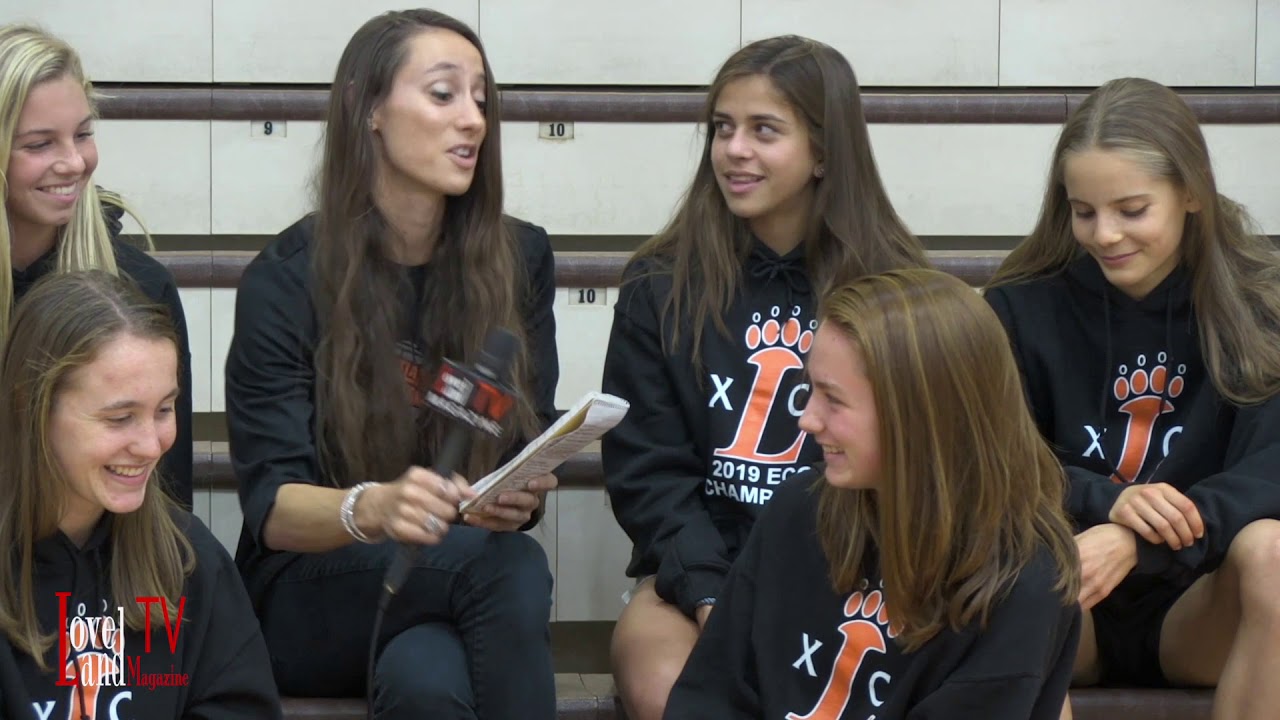
Loveland, Ohio – Loveland High School Fall sports have been running away with ECC titles left and right, but one team in particular actually did “run away” with the ECC title! The Loveland High school Women’s Cross Country is marking one of their best seasons in history not only winning the 2019 ECC title but also continuing well into the post-season where the Lady Tigers will compete for a bid to the State Tournament on Saturday at Troy High School.
2019 Women’s Cross Country Coach of the Year Steve Nester has also managed to lead the Men’s Cross Country Team to regionals on Saturday. With all of the great athletes running around the halls of Loveland High School Loveland Magazine had to, of course, take another trip out to the land of the Tigers to chase down and chat with the Women’s Cross Country Team about their season of personal bests! Click the below to see Loveland Magazine TV’s sit down interview with the Loveland High School Women’s Cross Country Team!

by Wayne Pagel
There is a logical reason for voting against the 42% tax increase proposed in the Loveland School Levy: a 42% tax increase is illogical. Unconscionable. Federal Income Tax. Ohio State Income Tax. Loveland City Income Tax, State and local sales tax. Hamilton, Clermont and Warren County property tax.
Wayne Pagel is an 11 year resident of Loveland residing on Rich Road.
Our own most recent property tax disbursement indicates that 60% of those taxes were disbursed to the Loveland School District. Through its proposed levy, the Loveland School Board feels that portion should be 77%. A bigger slice of a larger pie.
Good for the community? The 14 other recipients, including Family and Children Services, Public Library, Mental Health, Senior Services, Indigent Hospital Care, should understand that the School Board’s deep dive into the pockets of the taxpayers of Loveland to build Fine Arts Centers, Student Collaboration Areas, and artificial turf practice facilities may put a squeeze on any revenue increases or levies in the foreseeable future. There is a limit to how much we can afford and after all, the School Board seems to be first in line. It’s doubtful the board members will form any PACs, hire any consultants, or orchestrate any media campaigns for those causes representing the other 23% of the community’s needs.
Loveland Schools are stellar. They receive the highest ratings possible. Our teachers are incredible. They deserve to be well compensated. They are. These things are being accomplished because of the commitment and dedication of the people, including parents, doing the hard work of coaching and educating our children every day. A reasonable, practical approach to revenue enhancement would have been well received and supported. Opposing this one by no means represents a lack of concern or support for Loveland educators.
Most of us share in the common goal of providing a good education for our children, saving for their college educations, paying for a home, retiring comfortably. These taxes do not guarantee meeting the needs of our children or for that matter our teachers, rather they  are a list of wants. Dollars directed from your income to pay for the Board of Education’s wants can’t be invested for your children’s college expenses. Taxes rarely go down, or away. We can pay off our mortgages and debts, but these taxes will continue well into our own retirements. When children starting school next fall graduate from college, they will have 20 years left to pay on this inherited levy should it pass on November 5th.
Educating our children is our individual and collective responsibility. Setting an example of making practical, economically prudent choices with our financial resources should be part of that education.
Send the message to the Board of Education that the community deserves and demands a better approach. Vote Against the Loveland School Levy on November 5th