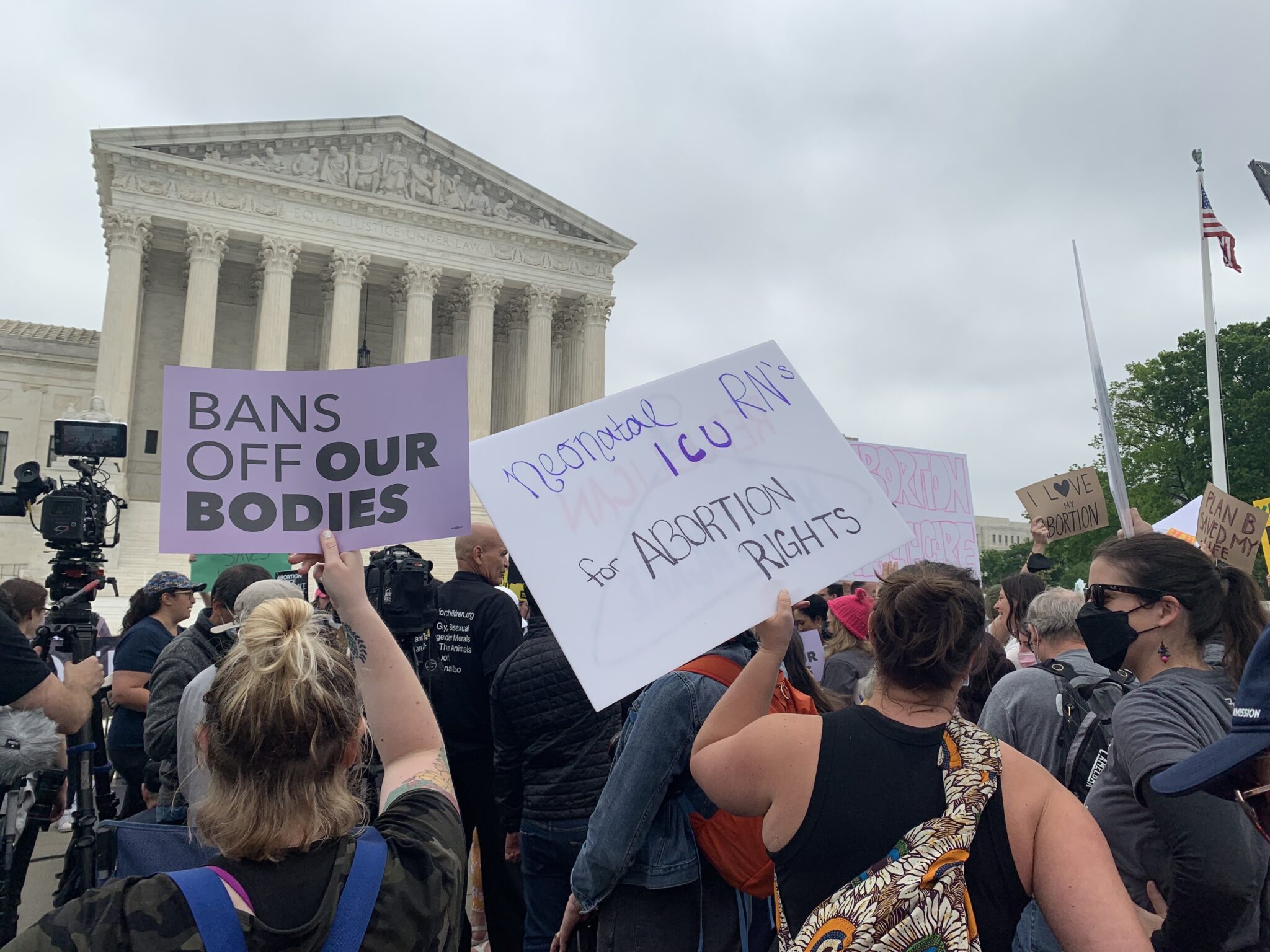
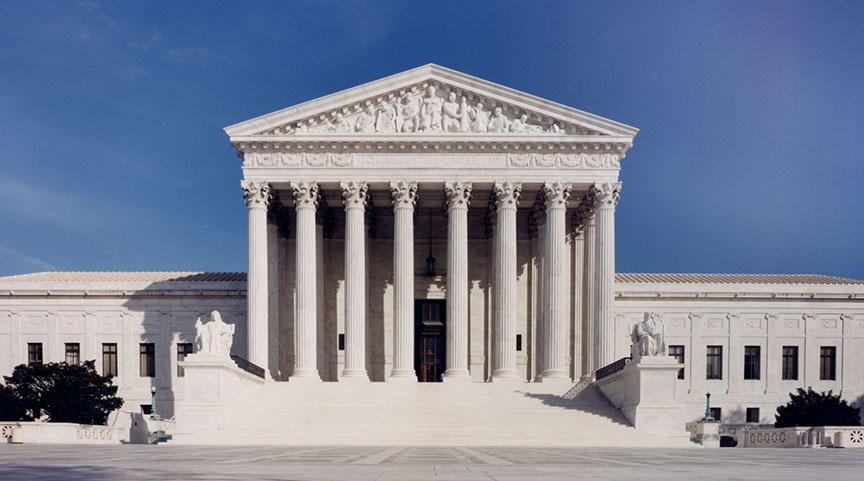
Now that Roe v. Wade has been overturned by the U.S. Supreme Court, the Ohio legislature is set up to move forward with abortion bans in the state.
The U.S. Supreme Court ruled Friday morning that “The Constitution does not confer a right to abortion; Roe and Casey are overruled; and the authority to regulate abortion is returned to the people and their elected representatives.”
Legislative leaders said they were prepared to wait until the decision was released before moving forward with legislation to eliminate abortion services. As of Friday night, abortion is legal in Ohio up to six weeks into a pregnancy.
“The most important thing that Ohioans need to know today is that abortion is still legal in Ohio,” said Kellie Copeland, executive director of Pro-Choice Ohio. “There are nine clinics across the state and several in neighboring states that can safely and legally provide abortion care for patients. Today’s ruling is devastating, but it is not the end.”
Gov. Mike DeWine agreed that it would be “prudent” to wait until the Dobbs decision was made, and implement the previously-passed six-week abortion ban before moving on to new legislation.
“While noting those conditions, the Governor has expressed support for additional legislation depending on the details of the Dobbs decision,” a spokesperson for DeWine told the OCJ.
The Ohio Policy Evaluation Network, a group of researchers working with The Ohio State University, the University of Cincinnati and Case Western Reserve University, said in a fact-sheet that it expects Ohio to ask for immediate implementation of the six-week abortion ban enacted in 2019.
The ban does not include exceptions for rape or incest, and only allows doctors to present an “affirmative defense,” legal arguments that could only come into play after a doctor has been charged with an offense, if the life of the pregnant person was at risk at the time of the abortion. The defense only works if the abortion happened in a hospital, and does not allow for risks that involve mental health.
Columbus-area OB/GYN Dr. Anita Somani said a ban at six weeks could eliminate the chance of an abortion before a pregnant person is aware of the pregnancy.
“If you don’t know you’re six-weeks pregnant, and you find out at eight or 10 weeks, then you have to look at going to a neighboring state,” Somani said. “At that point, you have to have money and time, as a patient, when you may have other children or just can’t afford it.”
The most recent abortion trigger ban, House Bill 598, was introduced by state Rep. Jean Schmidt, R-Loveland, would make abortion a fourth-degree felony, and promotion of abortion a misdemeanor offense.
The charges are targeted at the medical professionals providing the abortions, and provides no exemptions for cases of incest or rape. “Affirmative defenses” would be allowed in cases where the pregnancy presented a serious risk to the pregnant person.
Civil lawsuits could also be filed against physicians who perform abortions under the bill, and medical licenses could be at risk.
Senate President Matt Huffman celebrated the decision as “a long overdue turning point in our nation’s history.”
“I look forward to reviewing the specific details in the opinion, so that as we move forward, any legislation we pass in the Ohio Senate follows the guidance of the court, protecting life, and upholding the Constitution,” Huffman said.
House Speaker Bob Cupp said in a Friday statement that the “process of reviewing the decision is underway, including what steps should be taken at the state level and the timeline for doing so.”
“We will be working closely with Governor DeWine, Attorney General Dave Yost and our colleagues in the Ohio Senate on this matter,” Cupp’s statement read.
DeWine has been consistently pro-life in his support of legislation and funding choices, including an executive order that allocated $3 million in Temporary Assistance for Needy Families (TANF) dollars to organizations who assisted pregnant Ohioans without promoting abortion as an option.
Attorney General Dave Yost said the decision “returns abortion policy to the place it has always belonged: to the elected policy branches of government.”
“Roe was poorly reasoned, a doctrine of shifting sands that invited perpetual litigation,” Yost said in a statement.
Meanwhile, the impacts of abortion bans in the state could create significant health care barriers and increased transportation costs to access care, according to researchers. These impacts could disproportionately impact low-income communities and people of color.
Iris Harvey, CEO and president of Planned Parenthood of Greater Ohio, said the Supreme Court decision will give politicians power over Ohio bodies, including how they receive care.
“This dangerous and chilling decision can have devastating consequences in Ohio, forcing people to travel hundreds, sometimes thousands, of miles for care or remain pregnant,” Harvey said in a statement.
WASHINGTON — The U.S. Supreme Court on Friday overturned the 1973 Roe v. Wade ruling that established abortion as a constitutional right.
The decision by five of the Court’s nine justices will allow each state to set its own abortion laws, leading to a patchwork of access throughout the country. The result is expected to be an uptick in the number of women traveling out of state for abortions, as well as unsafe abortions in states where the medical procedure will now be banned or heavily restricted.
“We hold that Roe and Casey must be overruled,” Justice Samuel Alito wrote in his opinion, joined by Justices Clarence Thomas, Neil Gorsuch, Brett Kavanaugh and Amy Coney Barrett.
Chief Justice John Roberts filed a separate opinion concurring in the judgment about the Mississippi law at the center of the case, making that a 6-3 ruling, but not about overturning the constitutional right to an abortion, making that a 5-4 ruling.
“The Constitution makes no reference to abortion, and no such right is implicitly protected by any constitutional provision, including the one on which the defenders of Roe and Casey now chiefly rely — the Due Process Clause of the Fourteenth Amendment,” Alito continued.
“That provision has been held to guarantee some rights that are not mentioned in the Constitution, but any such right must be ‘deeply rooted in this Nation’s history and tradition’ and ‘implicit in the concept of ordered liberty.’”
Justice Stephen Breyer wrote the dissent in the case for himself, Elena Kagan and Sonia Sotomayor.
“With sorrow — for this Court, but more, for the many millions of American women who have today lost a fundamental constitutional protection — we dissent,” he wrote.
The new status of abortion access on a state-by-state basis, Breyer wrote , “says that from the very moment of fertilization, a woman has no rights to speak of. A State can force her to bring a pregnancy to term, even at the steepest personal and familial costs.”
Breyer later added, “Whatever the exact scope of the coming laws, one result of today’s decision is certain: the curtailment of women’s rights, and of their status as free and equal citizens.”
Twenty-two states have laws that would restrict when and how a patient can terminate a pregnancy, according to the Guttmacher Institute, a reproductive health and rights organization.
Arizona, Michigan and Wisconsin are among the 10 states that have pre-Roe abortion bans that are now expected to take effect. Thirteen states — including Idaho, Louisiana, Missouri and Tennessee — have laws enacted since Roe that will be “triggered” by the court’s decision.
A dozen states, including Maine, Maryland, Nevada and Washington, have laws that would protect abortion access up to the point of viability, usually 22 to 24 weeks into a pregnancy.
Colorado, the District of Columbia, New Jersey, Oregon and Vermont have laws that protect abortion access throughout a pregnancy, according to the Guttmacher Institute.
Thomas targets birth control, same-sex marriage
Justice Thomas wrote his own concurring opinion, arguing that since the court has overturned the constitutional right to an abortion, which was grounded in the 14th Amendment and the due process clause, other cases that have been rooted in the same right to privacy could all be reconsidered.
Those include:
The Griswold v. Connecticut case from 1965 that said states couldn’t bar married couples from making private decisions about birth control use.
The Lawrence v. Texas case from 2003 that said states couldn’t criminalize consensual sexual relations between same-sex partners.
The Obergefell v. Hodges case from 2015 that legalized same-sex marriage.
“For that reason, in future cases, we should reconsider all of this Court’s substantive due process precedents, including Griswold, Lawrence, and Obergefell,” Thomas wrote.
Thomas also wrote of the Dobbs case that “The resolution of this case is thus straightforward. Because the Due Process Clause does not secure any substantive rights, it does not secure a right to abortion.”
Reaction pours in
The Center for Reproductive Rights, which brought the case to the Supreme Court, rebuked the Republican-nominated justices for ending the right to an abortion.
“The Court’s opinion delivers a wrecking ball to the constitutional right to abortion, destroying the protections of Roe v. Wade, and utterly disregarding the one in four women in America who make the decision to end a pregnancy,” said Nancy Northup, president and CEO of the Center for Reproductive Rights.
“Utter chaos lies ahead, as some states race to the bottom with criminal abortion bans, forcing people to travel across multiple state lines and, for those without means to travel, carry their pregnancies to term — dictating their health, lives, and futures. Today’s decision will ignite a public health emergency,” Northup continued.
Susan B. Anthony Pro-Life America, an anti-abortion group, celebrated the decision, while its president called for “an entirely new pro-life movement” to begin.
“Today’s outcome raises the stakes of the midterm elections. Voters will debate and decide this issue and they deserve to know where every candidate in America stands,” Marjorie Dannenfelser said in a statement. “Federal as well as state lawmakers must commit to being consensus builders who advocate for the most ambitious protections possible.”
Mississippi ban
The court heard two hours of arguments in December in Dobbs v. Jackson Women’s Health Organization, which arose after Mississippi enacted a law that banned the vast majority of abortions after 15 weeks of pregnancy.
U.S. Solicitor General Elizabeth B. Prelogar, who argued on behalf of the federal government as a “friend of the Court,” said that the “real-world effects of overruling Roe” and the 1992 Planned Parenthood v. Casey decision that affirmed the right to an abortion “would be severe and swift.”
“Nearly half of the states already have or are expected to enact bans on abortion at all stages of pregnancy, many without exceptions for rape or incest,” Prelogar said. “Women who are unable to travel hundreds of miles to gain access to legal abortion will be required to continue with their pregnancies and give birth, with profound effects on their bodies, their health and the course of their lives.”
Mississippi Solicitor General Scott G. Stewart argued the nine justices should not only uphold Mississippi’s 2018 law, which had yet to go into effect, but overturn the two cases that have kept abortion access legal for nearly 50 years.
“Roe versus Wade and Planned Parenthood versus Casey haunt our country,” he said. “They’ve poisoned the law.”
Abortion rights history
The Supreme Court first ruled that a pregnant person has a constitutional right to abortion in the 1973 Roe v. Wade case that stemmed from a Texas woman being unable to access an abortion in her home state. The decision was 7-2.
Justice Harry Blackmun wrote that the right to an abortion stemmed from the right to privacy under the 14th Amendment. But the court ruled that a person’s fundamental right to terminate their pregnancy must be weighed against the government’s interest in protecting the person’s health and potential life.
The court established a trimester framework that determined when and how governments could impose regulations on abortion access.
In the 1992 Planned Parenthood v. Casey case, a 5-4 ruling, the court upheld a constitutional right to an abortion. But the decision overturned the trimester framework, instead setting viability, about 22 to 24 weeks into a pregnancy, as the line for government regulation.
The court said a person had a right to an abortion before viability without undue interference from the government. After reaching a point of viability, states can regulate abortion as long as it doesn’t affect a person’s health or life.
In the plurality opinion, Justice Sandra Day O’Connor wrote that “Some of us as individuals find abortion offensive to our most basic principles of morality, but that cannot control our decision. Our obligation is to define the liberty of all, not to mandate our own moral code.”
In a dissenting opinion, Justice Thomas wrote for himself, Antonin Scalia and two others that they would have overturned Roe v. Wade, saying the issue in the case was “not whether the power of a woman to abort her unborn child is a ‘liberty’ in the absolute sense; or even whether it is a liberty of great importance to many women. Of course it is both.”
“The issue is whether it is a liberty protected by the Constitution of the United States. I am sure it is not,” he wrote.
Will court survive a ‘stench’?
During oral arguments in December in the Mississippi case the justices ruled on Friday, Justice Sotomayor expressed concern over how the court overturning cases that established abortion access as a constitutional right would impact its reputation.
“Now, the sponsors of this bill, the House bill in Mississippi, said we’re doing it because we have new justices. The newest ban that Mississippi has put in place, the six-week ban, the Senate sponsor said we’re doing it because we have new justices on the Supreme Court,” Sotomayor said.
“Will this institution survive the stench that this creates in the public perception that the Constitution and its reading are just political acts?”
Justice Kagan questioned whether the court overruling Roe and Casey would lead Americans to view the court as “a political institution that will go back and forth, depending on what part of the public yells the loudest or changes to the court’s membership.”
And Justice Breyer read from a decision the entire Supreme Court issued in Casey about when and how justices should overturn watershed cases to avoid a situation that “would subvert the Court’s legitimacy.”
“They say overruling unnecessarily and under pressure would lead to condemnation, the Court’s loss of confidence in the judiciary, the ability of the Court to exercise the judicial power and to function as the Supreme Court of a nation dedicated to the rule of law,” Breyer read.
The Mississippi law at the center of the argument allowed abortions after 15 weeks in cases of “severe fetal abnormality” or medical emergency, but it did not include exceptions for rape or incest.
At the time Mississippi Gov. Phil Bryant signed the bill in March 2018, the 15-week threshold was the earliest abortion ban in the nation.
That has since changed, with several states enacting laws restricting abortion below that benchmark, including an Oklahoma law that makes abortion a felony punishable by up to 10 years in state prison, a maximum fine of $10,000, or both.
Abortion rights organizations have filed lawsuits to stop many of those new laws from going into effect on the basis that they violated the constitutional right to an abortion that the court undid this week.
Politico leak
The Supreme Court majority opinion released Friday is similar to a draft version, led by Justice Alito, that was leaked to Politico in early May.
The leak was broadly criticized by Republicans, who at the time didn’t want to talk about the implications of the court overturning Roe, while Democrats rebuked the conservative justices for the expected decision.
Senate Majority Leader Chuck Schumer, a New York Democrat, held a floor vote in May on a bill that would have codified a nationwide right to an abortion.
That legislation couldn’t get past the chamber’s 60-vote legislative filibuster.
Maine Sen. Susan Collins and Alaska Sen. Lisa Murkowski, both Republicans who expressed frustration with how the Trump-nominated justices portrayed their view of Roe as a settled precedent during their confirmation processes, voted against the bill.
West Virginia Democratic Sen. Joe Manchin did as well.
Manchin said in a statement Friday that he was “deeply disappointed that the Supreme Court has voted to overturn Roe v. Wade.”
“I trusted Justice Gorsuch and Justice Kavanaugh when they testified under oath that they also believed Roe v. Wade was settled legal precedent and I am alarmed they chose to reject the stability the ruling has provided for two generations of Americans,” Manchin continued.
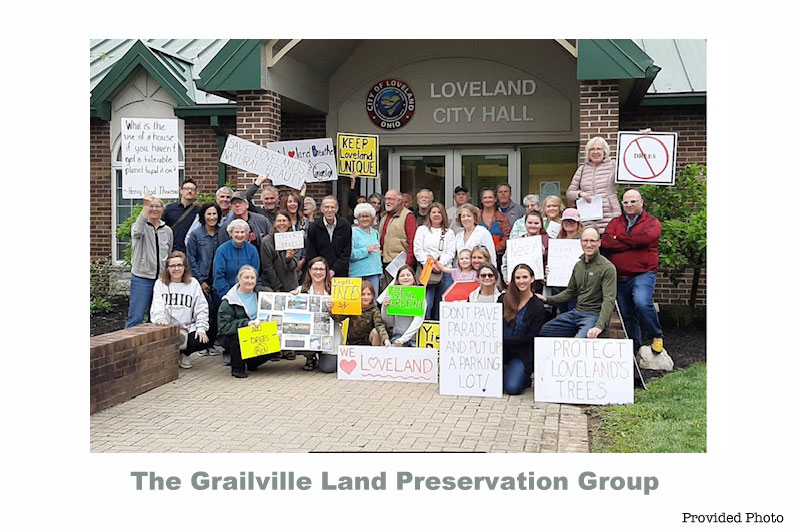
by Tom Scovanner – On behalf of the Grailville Land Preservation Group
Imagine a place just outside of Loveland Ohio that serves as a foundation for an economy powered by outdoor recreation. Loveland has an opportunity to create a place that will be a beacon of hope and peace, a place where everyone in the community feels welcome and connected, coupled with the opportunity to experience the mental and physical health benefits of being in nature and the sacredness of the land. According to the Trust for Public Land, ‘Quality parks and green space are a fundamental requirement for sustaining healthy, equitable, resilient communities.’
Drees Homes had hoped to develop 111 acres owned by The Grail since the early 1940’s into a 209-unit housing development. This rural oasis just outside of Loveland has been a ‘sacred space for women who value peace and care of the earth’ according to The Grail’s website.
When members of the community learned of the Drees proposal, an organic, grassroots organization of smart, engaged, well informed and dedicated people went to work to protect the land. We, the Grailville Land Preservation Group are environmentalists, naturalists, neighbors, lawyers, mothers, fathers and children, Grail members, community leaders and organizers, farmers, business owners, people of faith, historians, and past Grail participants. While our group is diverse, what brings us together is a visceral desire to protect the land from development.
We first needed to prevent Drees from getting a zoning change from the current zoning of Residential Low-Density, 1 acre lots. While Drees states that they intended to “maximize green space” in actuality, Drees’ objective was to build as many houses as possible on the land. Looking at the topography, some 37 acres are undevelopable; Add in roads and other infrastructure, less than 70 acres are developable for housing. On those 70 acres, Drees wanted to build 209 houses, more than triple the density currently allowed.
The standing room only crowds at the two Planning and Zoning meetings saw over 20 people speaking against the proposal at each meeting and only one person speaking in favor. Many issues were presented by those who spoke, including the need to maintain greenspace, preserving the unique historic site, demolition of historic buildings, concerns about increased traffic, demands on Loveland’s infrastructure and the costs of the necessary improvements. Others spoke about the negative revenue stream to the city caused by the increased populations and adding students to the school district already using portable classrooms.
Loveland is on the verge of approving a new comprehensive master plan for the city which stipulates it should ‘continue to aggressively preserve land for open space to ensure that our community remains a green haven for our residents and wildlife.’ We agree and desire to partner with like-minded people to accomplish this goal.
Yes, Corporate Grail and Drees wanted to change the zoning to build a large compressed housing development because they would both make more money, but the community said no and many individual members of the Grail agreed.
The members of the Grailville Land Preservation Group have no motives other than honoring the legacy of the Grail and stewarding this land into the future in a way that preserves it for the benefit of all. We hope to have the opportunity to partner with the Grail to find an alternate path for the Grail land, one that incorporates many of the values that the Grail taught.
The real story that needs to be told is that everyday citizens living in and around Loveland spoke up to preserve the land and at least for now, preservation triumphed over development.
Tom Scovanner
On behalf of the Grailville Land Preservation Group
To reach out to help protect this sacred land, you can contact us on the Nextdoor app under the group ‘Grailville Land Preservation Group’ or follow our blog at grailvillesacredpathways.substack.com
EDITOR’S NOTE: After the Loveland Planning and Zoning Commission denied the request by Drees to rezone the property they were going to buy from the Grail the contract between the two parties was not extended. ([Complete Video] Rezoning of Grailville denied)
• Take the bus, carpool, bike or walk instead of driving • Refuel your vehicle after 8 p.m.; do not top off when refueling and tighten the gas cap • Avoid idling your vehicle • Combine trips or eliminate unnecessary vehicle trips • Keep your vehicle maintained with properly inflated tires and timely oil changes • Avoid use of gasoline-powered lawn equipment on Air Quality Alert days • Avoid use of oil-based paints and stains on Air Quality Alert days • Never burn leaves or other yard trimmings • Always burn clean, seasoned wood in outdoor fire pits, fireplaces and wood stoves • Do not use fire pits or fireplaces for non-essential home heating on Air Quality Alert days • Conserve electricity
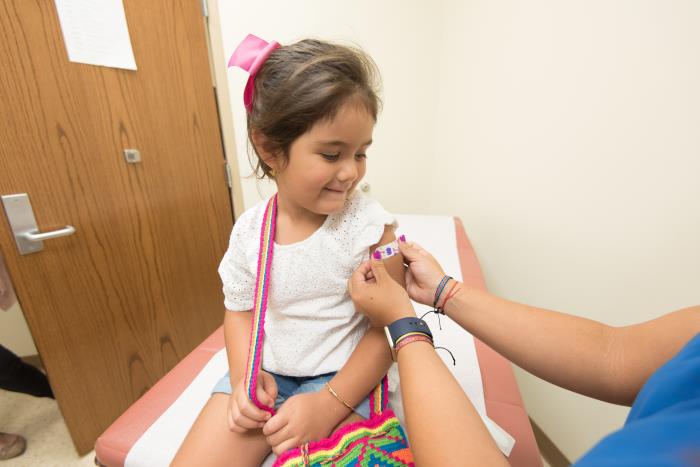
CDC Recommends COVID-19 Vaccines for Young Children
On Saturday, CDC Director Rochelle P. Walensky, M.D., M.P.H., endorsed the Advisory Committee on Immunization Practices’ (ACIP) recommendation that all children 6 months through 5 years of age should receive a COVID-19 vaccine. This expands eligibility for vaccination to nearly 20 million additional children and means that all Americans ages 6 months and older are now eligible for vaccination.
Parents and caregivers can now get their children 6 months through 5 years of age vaccinated with the Pfizer-BioNTech or Moderna vaccines to better protect them from COVID-19. All children, including children who have already had COVID-19, should get vaccinated.
COVID-19 vaccines have undergone—and will continue to undergo—the most intensive safety monitoring in U.S. history. Parents and caregivers can play an active role in monitoring the safety of these vaccines by signing their children up for v-safe – personalized and confidential health check-ins via text messages and web surveys where they can easily share with CDC how a child feels after getting a COVID-19 vaccine.
Distribution of pediatric vaccinations for these younger children has started across the country, and will be available at thousands of pediatric practices, pharmacies, Federally Qualified Health Centers, local health departments, clinics, and other locations this week. Children in this younger age group can be vaccinated with whichever vaccine is available (either Moderna or Pfizer-BioNTech). Parents can reach out to their doctor, nurse, local pharmacy, or health department, or visit vaccines.gov to see where vaccines for children are available.
“Together, with science leading the charge, we have taken another important step forward in our nation’s fight against COVID-19. We know millions of parents and caregivers are eager to get their young children vaccinated, and with today’s decision, they can. I encourage parents and caregivers with questions to talk to their doctor, nurse, or local pharmacist to learn more about the benefits of vaccinations and the importance of protecting their children by getting them vaccinated,” said CDC Director Dr. Rochelle P. Walensky.
Ohio educators say burnout is real, but with pending legislation regulating lesson-plan choices and security roles in schools, they feel “demoralized” as well.
A national survey showed 44% of K-12 teachers in the U.S. “always” or “very often” feel burned out, a stat that has surpassed other industries.
The Gallup poll showed more than 4 in 10 K-12 workers felt that way, topping college/university employees, retail workers and the government/public policy industry in the survey, conducted in February but released this week.
Researchers found that K-12 workers have “consistently” been leaders in burn-out in the country, but the COVID-19 pandemic “exacerbated existing challenges,” while also introducing new ones.
Female teachers reporter higher burnout levels than male teachers, at a split of 55% to 44%.
“The result is a workforce that is burned out and unfortunately leaving the profession at a high rate,” according to the Gallup poll.
Those who teach in Ohio agree that the increased workload has taken its toll, but to also see mounting legislation regulating their careers and what they see as a continued lack of appropriate support from the state adds a new amount of weight to educators’ shoulders.
“When you talk about burnout, you’re talking about when you’ve extinguished a flame,” said Wendi Davis, band director and music teacher at Cory-Rawson Local Schools in northwest Ohio. “Teachers, they love what they do, and when they’re put in situations like what they’re dealing with right now, it’s more demoralization than burnout.”
Teachers have had to don ever-multiplying caps: as teachers, as standardized test guides, as social workers and as guidance counselors. Faced with all those issues already, teachers then faced a pandemic, according to Shari Obrenski, president of the Cleveland Teachers Union.
“What the pandemic did was essentially lay bare all of the problems that existed in education,” Obrenski said. “More and more is being put on (a teacher’s) plate and nothing is being taken off.”
That is, the teachers that are still there. Cleveland is short about 200 teachers going into the new school year, not to mention the ongoing shortage of substitute teachers, in the hundreds as well.
“And we’re not as bad off as other districts,” Obrenski said.
As school districts struggle to recruit and retain teachers and substitute teachers, teachers also struggle to be heard in their own districts and in their state government.
“Teachers need to be empowered at the local level by their administrators,” Davis said. “They need to have a voice at the table.”
Paying teachers more and funding schools in a way that supports the role they play is definitely a need, according to Obrenski, but so, too, is respecting teachers as professionals in order to keep them in schools.
“Something that is really important is a teacher’s voice in decision-making; Having teachers be part of the solution instead of condemning them as part of the problem,” Obrenski said.
WASHINGTON — The U.S. Food and Drug Administration on Friday authorized emergency use of two COVID-19 vaccines for children under 5, moving the country one step closer to having shots for all age groups.
The decision leaves just one hurdle, a recommendation from the Centers for Disease Control and Prevention, before parents can begin getting babies and toddlers vaccinated against the virus. That CDC decision was expected this weekend.
“As we have seen with older age groups, we expect that the vaccines for younger children will provide protection from the most severe outcomes of COVID-19, such as hospitalization and death,” FDA Commissioner Robert M. Califf said in a statement.
“Those trusted with the care of children can have confidence in the safety and effectiveness of these COVID-19 vaccines and can be assured that the agency was thorough in its evaluation of the data.”
The FDA’s decision to grant emergency use requests for a two-dose Moderna shot and a three-dose Pfizer vaccine came two days after its outside panel of advisers unanimously voted on Wednesday to recommend use of the two vaccines.
White House COVID-19 Response Coordinator Ashish Jha said earlier this month that the federal government would begin shipping the vaccines to states as soon as the FDA granted the emergency use authorization.
He expects shots can begin next week as long as the CDC issues its recommendation over the weekend.
The Biden administration made 10 million doses of vaccine for kids under 5 available for states during a two-week pre-ordering period that closed Tuesday.
States, tribes, territories, pharmacies and other federal partners ordered 2.5 million Pfizer doses, about 50% of those available, and 1.3 million Moderna doses, about 25%, according to a spokesperson for the U.S. Department of Health and Human Services.
“Jurisdictions will have an opportunity to order additional doses if and when the vaccines are authorized by FDA and recommended by CDC,” an HHS spokesperson said in a statement.
Florida vaccination distribution in question
Florida remains the only state not to have placed any pre-orders.
White House press secretary Karine Jean-Pierre said Thursday that some pharmacies and community health centers in the state would have COVID-19 vaccines for kids under 5 through federal distribution. But those options are limited for parents wishing to vaccinate their kids, she said.
“By being the only state, this is Florida, not pre-ordering … pediatricians, for example, in Florida will not have immediate ready access to vaccines,” Jean-Pierre said.
“Some pharmacies and community health centers in the state get access through federal distribution channels, but those options are limited for parents. We encouraged Florida on several occasions to order vaccines. We’ve been aware of this, and we will continue to do so.”
Florida not pre-ordering, Jean-Pierre said, will “make it harder” for parents to get their children vaccinated.
“That’s why we continued to, on several occasions, encourage Florida to do this,” she said.
The Florida Department of Health said in a statement Thursday that its officials have “made it clear to the federal government that states do not need to be involved in the convoluted vaccine distribution process, especially when the federal government has a track record of developing inconsistent and unsustainable COVID-19 policies.”
“Doctors can order vaccines if they are in need, and there are currently no orders in the Department’s ordering system for the COVID-19 vaccine for this age group,” the statement continued.
Florida Gov. Ron DeSantis said Thursday that “there’s not going to be any state programs,” to vaccinate babies and toddlers against COVID-19.
“That’s not something that we think is appropriate and so that’s not what we’re going to be utilizing our resources in that regard,” DeSantis said.
Loveland, Ohio – Below is the partial draft of the minutes of the Loveland School Board meeting that was held last night. The Board authorized a “Resolution of Necessity” to request that the Hamilton County Auditor certify the projected revenues for a 4.90 Mill levy for the General Election on November 8.
Members Eileen Washburn. Eric Schwetschenau, Kevin. Dougherty, and Jonathan Eilert voted, “Yes”. Kathryn Lorenz did not attend the meeting.
This is the first of the two votes needed for the Board to place the operating levy on the ballot.
The Board of Education of the Loveland City School District, Counties of Hamilton, Clermont and Warren, Ohio, met in regular session at 6:00 P.M, on the 16th day of June, 2022, at the LMS/LIS Media Center, 757 S. Lebanon Road, Loveland, Ohio, with the following members present:
Mr. Kevin Dougherty Rev. Jonathan Eilert Dr. Eric Schwetschenau
Mrs. Eileen Washburn
The following members were absent: Dr. Kathryn Lorenz
Mrs. Washburn moved the adoption of the following resolution:
LOVELAND CITY SCHOOL DISTRICT
RESOLUTION NO. 22-69
RESOLUTION DECLARING THE NECESSITY OF LEVYING AN ADDITIONAL TAX FOR CURRENT OPERATING EXPENSES IN EXCESS OF THE TENMILL LIMITATION AND REQUESTING THE COUNTY AUDITOR TO CERTIFY MATTERS IN CONNECTION THEREWITH.
WHEREAS, this Board of Education of the Loveland City School District (the “Board of Education”) anticipates levying an additional tax in excess of the ten-mill limitation as described herein;
WHEREAS, pursuant to Section 5705.03 of the Ohio Revised Code, this Board of Education is required to certify to the County Auditor a resolution requesting the County Auditor to certify certain matters in connection with such a tax levy;
NOW THEREFORE BE IT RESOLVED by the Board of Education of Loveland City School District, Counties of Hamilton, Clermont and Warren, Ohio:
That pursuant to the provisions of Section 5705.21 of the Ohio Revised Code, it is necessary that an additional tax be levied in excess of the tenmill limitation for the benefit of the Loveland City School District (the “School District”), for the purpose of current operating expenses at a rate not exceeding four and nine-tenths (4.9) mills for each one dollar ($1.00) of valuation, which amounts to forty-nine cents ($0.49) for each one hundred dollars ($100.00) of valuation, for a continuing period of time.
That the question of the passage of said tax levy shall be submitted to the electors of the School District at an election to be held on November 8, 2022. If approved by the electors of the School District, said tax levy shall first be placed upon the 2022 tax list and duplicate, for first collection in calendar year 2023 for a continuing period of time. The tax shall be levied upon the entire territory of the School District and the ballot measure shall be submitted to the entire territory of the School District. The School District has territory in Hamilton County, Clermont County and Warren County, Ohio.
That pursuant to Section 5705.03 of the Ohio Revised Code, the County Auditor is hereby requested to certify to this Board of Education the total current tax valuation of the School District and the dollar amount of revenue that would be generated by the number of mills specified in Section 1 hereof, and the Treasurer of this Board of Education be and is hereby directed to certify forthwith a copy of this resolution to the County Auditor at the earliest possible time so that said County Auditor may certify such matters in accordance with such Section 5705.03 of the Ohio Revised Code.
That it is found and determined that all formal actions of this Board of Education concerning and relating to the adoption of this resolution were adopted in an open meeting of this Board of Education, and that all deliberations of this Board of Education, and of any of its committees that resulted in such formal action, were in meetings open to the public, in compliance with all legal requirements, including Section 121.22 of the Ohio Revised Code, and the rules of this Board of Education adopted in accordance therewith.
Dr. Schwetschenau seconded the motion, and the roll being called upon the question of adoption of the resolution the vote resulted as follows:
AYE: Mrs. Washburn, Dr. Schwetschenau, Mr. Dougherty, Rev. Eilert
NAY:
ADOPTED this 16th day of June, 2022.
Robert Giuffre’, Interim Treasurer
CERTIFICATE
The undersigned hereby certifies that the text of the foregoing resolution is taken and copied from the record of proceedings of a meeting of the Board of Education of the Loveland City School District held on June 16, 2022. The undersigned further certifies that the same has been compared by me with said record and it is a true and correct copy thereof, together with a true and correct copy of excerpts from the minutes of said meeting to the extent pertinent to the consideration and adoption of said resolution.
Robert Giuffre’, Interim Treasurer
RECEIPT
The undersigned hereby acknowledges this day receipt of a certified copy of the foregoing resolution.
County Auditor, Hamilton County, Ohio
Date: June ___, 2022
CERTIFICATE OF COUNTY AUDITOR
Pursuant to a resolution of the Board of Education of the Loveland City School District, adopted on June 16, 2022, the undersigned county auditor of Hamilton County, Ohio hereby certifies that the total current tax valuation of such school district is $___________________, and that the dollar amount of revenue that would be generated by four and nine-tenths (4.9) mills per year as specified in such resolution is $___________________ per year, assuming that the tax valuation of such school district remains the same throughout the life of the levy.
Loveland, Ohio – The police department announced on Wednesday that Alicia Kenny was found safe and unharmed and is currently in the care of her family members. The department said on Facebook, “The Loveland Police Department would like to thank our law enforcement partners the Ohio Bureau Of Criminal Investigations and the Hamilton County Sheriff’s Office for their extensive assistance with resources and agents, as well as help from the community. The involved law enforcement agencies worked long hours in challenging weather conditions to bring Alicia home.”
A “Critical Missing Person” alert was issued by the department on June 13 concerning Kenny.