Loveland, Ohio – If you have tested positive for COVID-19 and are a resident of Clermont County, the health district would like to get more information from you.
Clermont County Public Health says that this helps their nurses identify disease trends, discover outbreaks of cases, and identify close contacts that need to be quarantined.
If you want to help, you should only fill out the survey if you have recently tested positive for COVID-19.
Once this survey is completed, they will call or email you with any questions. They will also send you a letter stating you have been placed in isolation by public health if we have not already sent you one.
The health department says the information in this survey is confidential and for public health use only.
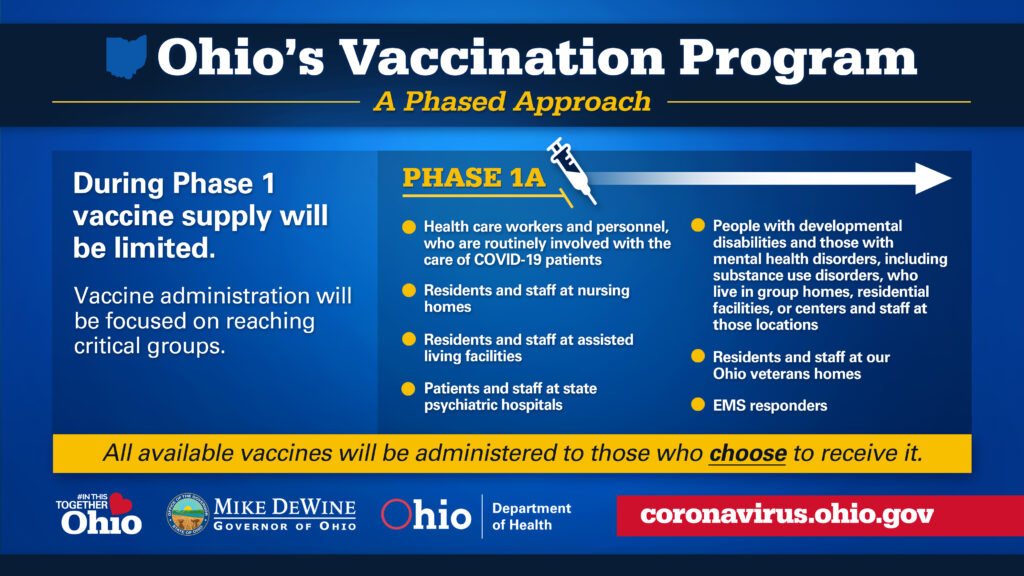
Warren County, Ohio – If your organization is in the State of Ohio Prioritization List, complete this form to be placed on the vaccination scheduling list.
Warren County Public Health says they will work with you as they continue to receive doses from the Ohio Department of Health.
They do not have an ETA on when doses will be available. Only submit this form if you are in the Phase 1A list. All others will not be kept until they match a Phase. You will need to submit a new form at that time.
FOR INDIVIDUALS
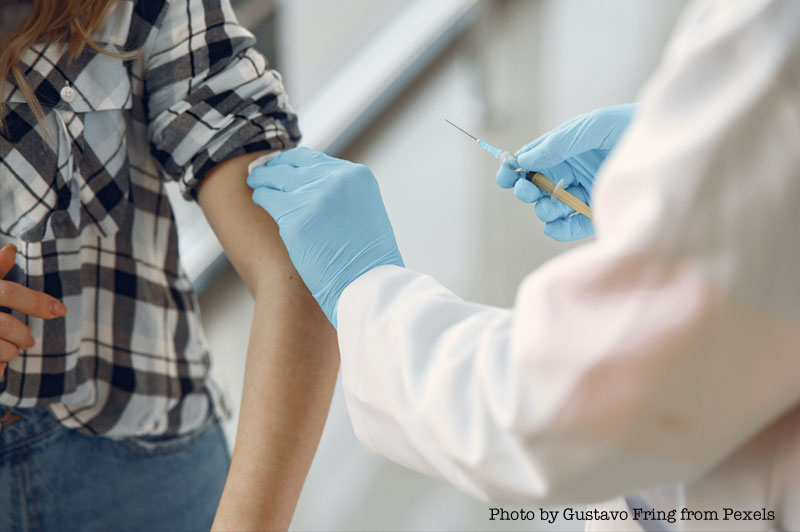
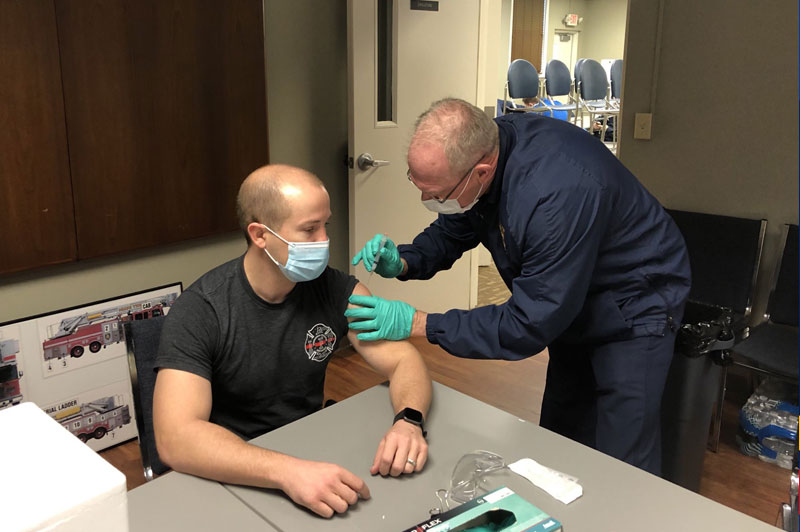
If you are in Phase 1a and have the ability to come to the Warren County Health District within an hour or so, due to the limited shelf life of the vaccine once opened, they can put your name on a list to call if you can come at that time. This will be 9 or fewer doses that could be available at the end of a vaccination clinic that must be used by the end of the day. They have added a question to their Covid-19 Vaccine Form that will allow you to opt into this option.
Loveland, Ohio – As more vaccine is produced more groups of people will be prioritized. However, it may be the middle of 2021 before the vaccine will be widely available to the Clermont County community.
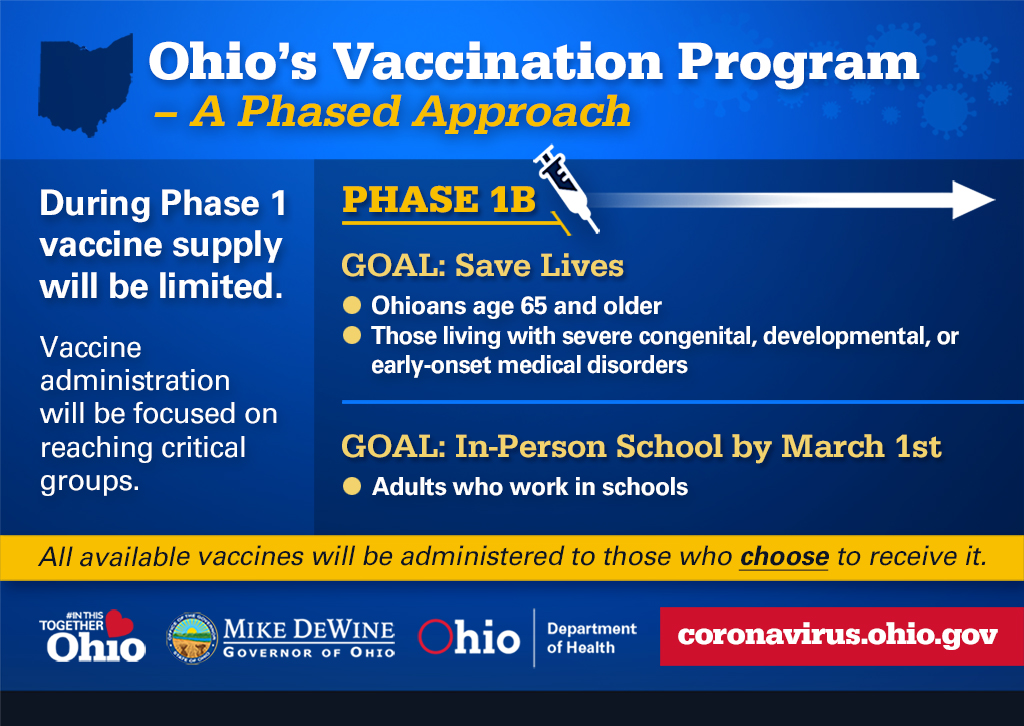
Beginning the week of January 18, Ohio will be vaccinating people who fall into phase 1B. That includes:
• Ohioans 65 and older • Those with severe congenital or developmental disorders • Employees of K-12 schools that wish to remain or return to in-person learning
Because the vaccine is still very limited in supply, Ohio will take a tiered approach to vaccinate group 1B. Ohio will follow this timeline for vaccinating group 1B.
Week of January 18 – Ohioans 80 years of age and older
Week of January 25 – Ohioans 75 years of age and older
Week of February 1 – Ohioans 70 years of age and older; K-12 school employees
Week of February 8 – Ohioans 65 years of age and older
If you or a loved one falls into group 1B and is eligible to be vaccinated, get on the:
Completing this survey will put you on the waiting list. A public health staff member will contact you to schedule an appointment or provide additional information about your vaccination options.
Hamilton County Public Health VACCINE REGISTRATION
LOVELAND, OHIO – Fill out this form to register for vaccine distribution through Hamilton County Public Health. They will be using this survey to prioritize distribution based on the Ohio Vaccination Program guidelines set by the Ohio Department of Health. If you already completed previous versions of the registration survey you do not need to do it again.
Hamilton County Public Health has jurisdictional responsibility for all of Hamilton County with the exceptions of the City of Cincinnati, Springdale and Norwood. If you fall under one of these health districts, please contact them directly.
It was a tumultuous week for our nation. Yet, America has shown her resolve. It is critical that everyone – regardless of political party – work to lower the collective temperature of our political discourse. We must, as Ronald Reagan often said, disagree without being disagreeable. Before any political ideology or persuasion, we are first Americans.
Please join me in praying for our nation and those who lost their lives during the events that unfolded at the Capitol this past week.
I unequivocally condemn the actions of the criminals who broke into the U.S. Capitol, injured law enforcement, and tried to disrupt the constitutional process. No matter what flag one is carrying, people violating the law need to be held accountable. That is not who we are. That is not what this country stands for.
The peaceful transfer of power is enshrined in the fabric of our constitutional republic. It is part of what makes America the greatest country in the world. Without it, we are no better than the banana republics from which we seek to protect ourselves and our allies.
I believe there remain constitutional concerns and actual violations regarding election administration. Understandably, many Americans across the political spectrum have concerns about its fairness and accuracy. Unfairness on the part of the media and big tech only exacerbated these concerns, which have been arising over the last two decades.
I am deeply concerned about state officials making changes to their election laws without the consent of their state legislators. This concern has arisen in states won by each candidate.
That’s why I joined with 125 of my colleagues last month in signing the amicus brief that presented election irregularities and asked the U.S. Supreme Court to rule on whether states should be held accountable to the Constitutional prescriptions. It is the body best suited to make that determination of constitutionality. Unfortunately, it refused to hear the case based on standing, though it never heard the arguments or struck down the merits of the questions. The Court has unfortunately left this issue unresolved.
Article II, Section 1, Clause 2 of the U.S. Constitution grants state legislatures sole authority to direct the manner for how its state’s Electors are appointed to the Electoral College. And yet, judges, governors, and other officials in certain states repeatedly made changes to election laws that circumvented the state legislatures.
The discrepancies in these states must be resolved, and the constitutional questions must be answered. Before the election, state legislatures should have exerted their constitutional role to either object to or codify election administration changes. They did not, and they still have not, sadly. The Supreme Court should have accepted the opportunity to hear and rule on this issue, which is why I joined the amicus brief asking the Court to take up the issue and rule definitively. They did not. Presidential campaigns with constitutional concerns should have brought those forth before Election Day. They did not. We as Congress should weigh these constitutional concerns alongside a state’s constitutional role in appointing and certifying their electors.
Two constitutional issues are hitting each other: The non-constitutionality of non-legislative changes to the election and the constitutionality of states choosing their own electors and certifying them.
Specifically, I joined the petition to object to Pennsylvania’s Electors because of clear discrepancies between Pennsylvania’s own state law and how its election was administered. These include judges unilaterally extending certain election deadlines, election officials not requiring signature checks on mail-in ballots, and inconsistent standards from county officials for “ballot curing.” I believe the changes these Pennsylvania officials made without the consent of their state legislators are unconstitutional. In addition, Pennsylvania’s law – Act 77, which expanded mail-in ballots – violates their own Constitution. These issues need to be heard and debated. Objections in the certification process are not unprecedented.
As I understand it, neither Article II nor the 12th Amendment grants Congress the power to overrule the states’ certification of their own Electors.Article II states, in part, “Each State shall appoint, in such Manner as the Legislature thereof may direct, a Number of Electors,” and the 12th Amendment states, in part, “The President of the Senate shall, in the presence of the Senate and House of Representatives, open all the certificates and the votes shall then be counted; — The person having the greatest number of votes for President, shall be the President.” Historically, a reason the Electoral Counting Act of 1887 included the ability to object to a slate of electors came from the need to resolve disputes arising from when a single state certified multiple slates of electors. That has not happened in this case.
One may not like it right now amidst this election, but we would create a dangerous precedent and do harm to the institution of the Electoral College and election process. If either party were to gain a majority in both chambers of Congress, they could simply reject the will of the voters and select their own President.
This is not a decision I have arrived at lightly, and I understand and respect that many of my colleagues may have reached a different conclusion. Our discussions in the House were spirited and sincere, with both sides legitimately standing firmly on constitutional ground with competing interpretations.
The Electoral College is a critical component of our carefully balanced constitutional republic, and we must protect it. Let me be clear: the issues I’ve raised deal not with the institution of the Electoral College but only with how some states have run their elections and selected their Electors. Ultimately, the individual states should and must decide their Electors.
Where Do We Go from Here?
I pledge to work to ensure that these constitutional questions are answered ahead of the next election so that Americans can have faith in our republic as well as clarity as we work to protect the electoral college, our constitution, and our laws. America remains the greatest country in the world. However, we must settle these unresolved questions and restore faith in our election system if we are to live up to the legacy given to us by past generations and sustain the blessings of our liberties for future generations. I pledge to work to ensure these constitutional questions are answered ahead of the next election so Americans have clarity on and faith in our democracy and the integrity of the Electoral College and our Constitution is protected.
Our government – Congress, the courts, and the states – must work to reach agreed-upon answers to these questions to ensure future integrity of, and faith in, our elections. Ohio has stood as a model in election administration for the 2020 Presidential Election. We did things right.
I am going to fight to make sure the American people are never in this position again. I support efforts by Senator Tim Scott to establish an Election Integrity Commission to formally investigate the missteps from this election and provide guidance for future elections as both sides of the aisle should want clarity and certainty. Undoubtedly, more legislation to safeguard our Electoral College and elections will be needed to prevent future irregularities, discrepancies, and constitutional concerns. The American people deserve it.
We can and we must right these wrongs. Like the song “America the Beautiful” suggests, we ask that “God mend thine every flaw.”
PUBLISHERS NOTE:
President Donald Trump and his allies have baselessly claimed that there was rampant voter fraud in the 2020 Presidential election.
“There’s a great human capacity for inventing things that aren’t true about elections,” said Frank LaRose, a Republican who serves as Ohio’s secretary of state. “The conspiracy theories and rumors and all those things run rampant. For some reason, elections breed that type of mythology.”
Election officials in every state have not reported any major voting issues. Each of the 60 election related lawsuit filed, contesting election processes by either Trump or his supports all failed, and none have proven widespread problems.
When Colin Kaepernick knelt on a football field to call attention to disparate treatment and unnecessary deaths of blacks by some law enforcement, there was outrage, especially on social media, about the inappropriateness and disrespect in his protest.
When a Congressman and minister ended a prayer before Congress with “amen/awoman”, a playful pun meant as a nod to a record number of women (144) taking office in Congress this term, and to the first female House chaplain being appointed, there were cries that the “Radical Left” are ruining our country.
Yet when Americans stormed the Capitol yesterday, pushing past police and into Senate chambers and offices to disrupt the certification of election results with the intention of demanding that those results be overturned, there was largely silence from those so distraught by a knee and a pun.
“No More Bullshit” flags hung in my community, in many communities, for months prior to the election.
On numerous occasions before November, Trump claimed without evidence that widespread mail-in voting would mean a fraudulent election, and many times, including to a rally of supporters in Oshkosh, Wisconsin, in August, he said, “The only way we’re going to lose this election is if the election is rigged.”
After Biden’s win was made official by Congress last night, Trump said he will leave office on Jan. 20, in the same breath that he again expressed that the election was stolen from him, despite any evidence.
I find it interesting that so many “Pray for our nation” signs suddenly went up after Biden won the election. Shouldn’t the praying have been happening for our nation all along—no matter the leader, or the election results?
Subtleties, after a while, take on all the subtlety of a sledgehammer.
Our divisions are strong. We saw yesterday where unchecked words and actions over time can lead.
I hope Trump fulfills his words in two weeks by stepping aside for his successor. And I hope we’re learning how vital a role we ordinary citizens play in a transfer of power being peaceful, and a nation moving on, by our actions and words every day.
Loveland, Ohio – The Loveland City School District announced today that they will relax COVID 19 quarantine guidelines and start using protocol announced on December 5 by Governor Mike DeWine
DeWine announced that Ohio was changing its guidance regarding quarantines following an in-classroom exposure in K-12 schools. The Ohio Department of Health said, “Moving forward, students and teachers exposed to a COVID-positive person in school are no longer required to quarantine as long as the exposure occurred in a classroom setting and all students/teachers were wearing masks and following other appropriate protocols.”
Loveland school students returned to the classroom today, Monday, January 4.
Here is the announcement issued by the District today:
Changes to K-12 School Quarantine Guidelines
Loveland Tiger Family,
We hope that you have had a safe and healthy winter break, and that your students have eagerly returned to their school activities!
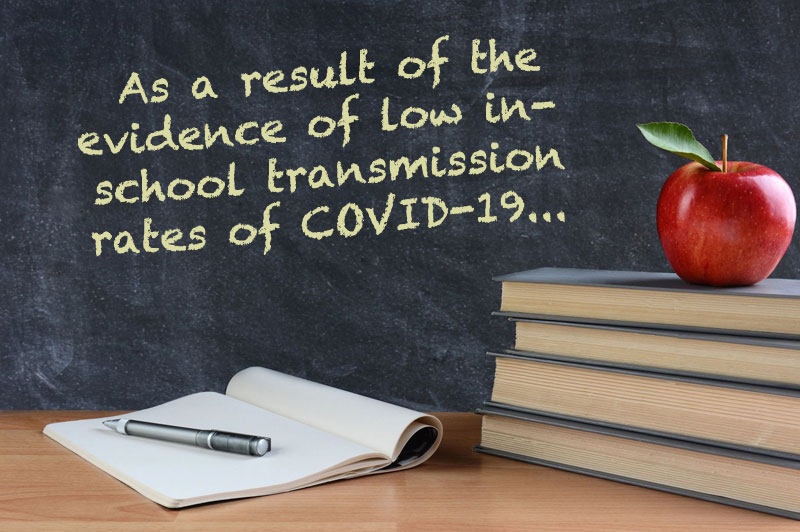
As a result of the evidence of low in-school transmission rates of COVID-19, Governor Mike DeWine announced in his press conference last week that school districts will no longer have to quarantine students and staff who are in a “classroom setting” wearing masks and following other safety protocols that would have previously been named a close contact and had to stay home in quarantine for at least 10 days. Hamilton County Public Health, and under their direction the Loveland City School District, will follow this order.
For the purpose of this order, we wish to reiterate that the following:
Safety protocols to be adhered to include mask wearing, hand sanitizing and hand washing, maintaining social distance guidance, and continuing our thorough cleaning protocols – the “bundle”.
Where these protocols cannot be adhered to, students and staff may still need to quarantine following close contact with a person who is positive for COVID-19. For example, eating lunch prevents the wearing of a mask, and as such, close contact in this setting may require quarantining. However, as the district has worked hard to maintain social distancing in our cafeterias, we would expect that this would happen infrequently.
At this time, the district is waiting for guidance on whether or not students would need to quarantine for close contact on a bus. A future communication will clarify that issue. In the interim, Loveland will continue to quarantine close contacts for this setting.
Per the Governor’s order, this new quarantine guidance does NOT apply to close contacts that happen outside of the classroom setting. Students and staff who are identified as a close contact of a positive case outside of the classroom setting (for example, a family member, a teammate, or a close contact outside of school tests positive) will still need to follow the new CDC/ODH approved guidelines. This does include all athletics and extracurricular activities.
We will continue to communicate pertinent COVID-19 information with families as we did during the first semester:
Daily communications when a staff member or student tests positive within 48 hours of being at school if asymptomatic, or within 48 hours of having symptoms.
Personal communications from school when students are determined to be in close contact of a positive case, even if no longer required to quarantine.
Our COVID-19 Dashboard updated on Fridays and inclusive of at-school cases and quarantines (if applicable), as well as a separate tally of community cases that do not meet the definition of being at-school noted in the first bullet.
The district also announced that they have been notified of the following positive cases of COVID-19:
On 12/22/20, a student at Loveland Middle School, last at school on 12/14/20;
On 1/3/21, a student at the Loveland Early Childhood Center, last at school on 12/18/20;
On 1/4/21, a student at Loveland High School, last at school on 12/14/20; and
On 1/4/21, a student at Loveland High School, last at school on 12/16/20.
Loveland, Ohio – Join for a BED (Books Engaging Discussion) Time book talk centering on diverse characters and underrepresented experiences. Co-sponsored by the Loveland Diversity Advisory Board and the Library.
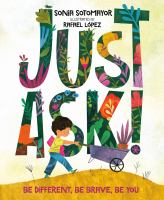
In this creative non-fiction story, Sonia and her friends plant a garden, and each one contributes in his or her own special way, in a book that celebrates the many differences among humans. In this warm and inclusive story by U.S. Supreme Court Justice Sonia Sotomayor, inspired by her own childhood diagnosis of diabetes, readers join along as differently abled kids use their strengths to work together and learn about each other.
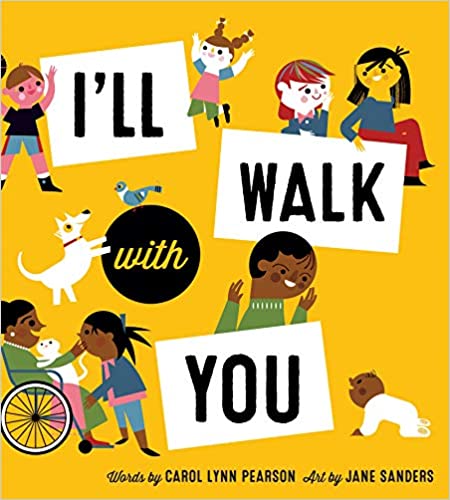
I’ll Walk With You by Carol Lynn Pearson
Help little ones learn to show love for the people around them, no matter how they look, sound, pray, love, or think. Beloved author of The Lesson and Will You Still Be My Daughter, Carol Lynn Pearson is known for her heartfelt, sometimes tear-jerking poetry and stories. Her newest title, illustrating her popular song written for children in 1987, will enchant children with a sweet, tender poem about loving and accepting others, no matter what they look like, where they come from, or what their age and abilities are. Carol Lynn Pearson is the author of more than forty books and plays, including Goodbye, I Love You and I’ll Always Be Your Daughter She has been a guest on The Oprah Winfrey Show,” and “Good Morning, America,” and was featured in People Magazine. She lives in Walnut Creek, California.”
Mollie Kuramoto is a Loveland High School alumna. She’s the marketing manager for Element Three, a marketing agency based in Indianapolis, Indiana.
She graduated from Purdue University having studied English, Design, Art and Film, and now uses those skills to tell stories across the written and visual spectrum.
This piece reflects an evening scene in the city of Amsterdam and was created digitally with Procreate® on an Ipad Pro.