Loveland, Ohio – Reader Julie Fenton Elias writes with a request to get this word out to the community.
“Could you please post this on your FaceBook page to get the word out? I appreciate your help to get the word out into the community.” said Julie.
Anyone that needs hats, gloves and scarves may then visit one of the area’s Free Little Libraries to receive the free gift from the community.
The donations will be available in Tupperware located next to the little libraries, not on the property of the little library!
LOVELAND Friends: ‘Tis the season to make sure everyone in our community stays warm this winter,” said Julie.We are filling the free little libraries around town with hats, gloves & scarves for anyone that may need them. It’s a tough season for a lot of people, if you need something please stop by a little library!If you would like to add a donation, please feel free to stop by any of the little library boxes. Contactless donation!
Home of the Brave Park Nisbet Park Miami Riverview Park Symmes Park
Image above is from one of the many virtual tours that Great Oaks now offers to students that cannot visit the campus
Choosing classes to take during high school can be a challenge. Sophomores at area high schools typically get the chance to visit the career labs at Great Oaks campuses before making such a decision, but with current pandemic restrictions many sophomores may not have that opportunity.
“Seeing the professional equipment and technology that our students use in their programs is important for those considering a career program,” said Great Oaks Director of Student Services Nancy Mulvey. “We want them to get to know the instructor, hear from other students and graduates, and walk through the labs.” Mulvey said that because most of Great Oaks’ 36 school districts aren’t able to send groups of sophomores to tour the nearest campus, Great Oaks has created virtual tours.
The virtual tours, posted on greatoaks.com, include 360-degree views of each lab at each campus, along with profiles of the instructors, conversations with alumni, pictures of students at work, and information about future careers.
“Thousands of students each year apply for these hands-on, experiential learning programs that lead to professional certifications,” said Mulvey. “We want to make sure that they have a chance to explore and ask questions.”
Loveland, Ohio – The Loveland Christian Church is inviting the community to a candlelight Christmas Eve service. Join them either in person or online at 6 or 8 PM. The in person capacity will be 75 people per service.
In order to follow CDC guidelines, our in-person service will have limited availability. To register for in-person services, visit LovelandChristianChurch.org to make a reservation.
All of their online service information can also be found on the website or by following them on FaceBook.
Gov. Mike Dewine’s latest statement on lethal injections could mean the Ohio death house has seen its last execution.
The state hasn’t executed anybody since July 2018, when convicted killer Robert Van Hook wheezed and gasped as he died on a gurney at the Southern Ohio Correctional Facility outside Lucasville.
DeWine, who took office the following January, started canceling executions late that month after a federal magistrate compared Ohio’s three-drug protocol to waterboarding and wrote that experts convinced him that one of the drugs “would feel as though fire was being poured” into a prisoner’s veins.
The 6th U.S. Circuit Court of Appeals later ruled that Ohio’s lethal injection protocol is constitutional, but by that time publicity surrounding the issue prompted drug makers to step up their pressure on the state to stop using their products in executions. DeWine has cancelled all subsequent executions as drug makers have threatened not to sell the state drugs for any purpose if they kept ending up in the death chamber.
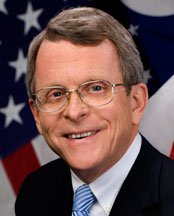
Ohio Governor Mike DeWine
On Tuesday, DeWine told the Associated Press that lethal injection as an execution method was no longer an option for Ohio.
The comment was greeted enthusiastically by groups seeking to stop the death penalty.
“We’re living in such a politically divisive climate nationally and in state, but the left, right, and everyone in between can agree on one thing: the death penalty is irreparably flawed,” Hannah Kubbins, executive director of Ohioans to Stop Executions, said in an email. “Governor DeWine’s comments were big news, but it’s also common sense that the death penalty doesn’t work to deter crime or keep communities safe — we know this. The death penalty is purely security theater and no longer aligns with Ohio’s values.”
A national group of conservatives opposed to the death penalty praised DeWine for taking lethal injections off the table — at least while he’s in office.
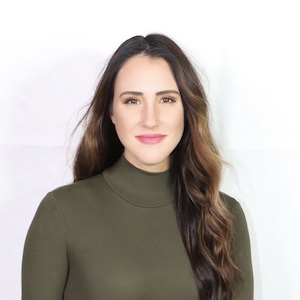
Hannah Cox
“We continue to applaud Governor DeWine’s strong conservative leadership and are excited to see the groundswell of support especially among Republicans — for ending this failed system in the state of Ohio,” Hannah Cox, national manager of Conservatives Concerned about the Death Penalty, said in an email.
As lethal injections become more problematic, DeWine has few alternatives — even if he wanted to employ them.
“All indications are that Gov. DeWine is not pushing for alternative methods,” said Robert Dunham, executive director if the Death Penalty Information Center. “I think (DeWine’s Tuesday statement) is a very significant development.”
Some states have alternative methods on their books.
In December 2019, as Tennessee executed a man in the electric chair, witnesses said they saw smoke or steam rising from his head. When another man was electrocuted there in February, witnesses didn’t make any similar reports, but nationally, no other state has used the electric chair since 2013.
Utah still has death by firing squad on its books, but that state hasn’t executed anybody in more than a decade.
Oklahoma, Alabama and Mississippi allow for executions using nitrogen gas to suffocate a prisoner but Dunham said that, as with death drugs, manufacturers have been unwilling to supply the gas for that use.
“We’re essentially looking at a process in which the market has opted out,” Dunham said of businesses’ unwillingness to participate. “Nobody wants to be seen as participating in killing people.”
Nobody, that is, other than the Trump administration.
As the coronavirus pandemic took hold, no states conducted executions since the summer. Meanwhile, no federal prisoners had been executed since 2003. But on July 14, the first of eight were executed at the federal prison in Terre Haute, Ind.
The men were killed with an injection of pentobarbital, which Dunham said the government obtained from an unnamed compounding pharmacy.
Coordination with the CDC Advisory Committee on Immunization Practices Recommendations Will Ensure Access to Vaccines for Minority Communities and Other Groups at Disproportionate Risk to Covid-19
Washington, D.C. – As the Food and Drug Administration’s (FDA) independent vaccine review panel meets to consider the emergency use authorization of an initial COVID-19 vaccine, U.S. Sens. Sherrod Brown (D-OH) and Mark Warner (D-VA) led eight of their colleagues in urging Health and Human Services (HHS) Secretary Alex Azar and Centers for Disease Control and Prevention (CDC) Director Robert Redfield to ensure a fair and equitable vaccine distribution.
The letter follows HHS Secretary Azar’s comments that states should decide who gets the first round of the federally approved COVID-19 vaccine, which could lead to a patchwork of varying distribution plans and affect vaccine access for minority and high-risk populations disproportionately impacted by the virus. The senators’ letter calls on federal health officials to provide more support to states so that they fully understand and appropriately implement expert guidelines ensuring equity.
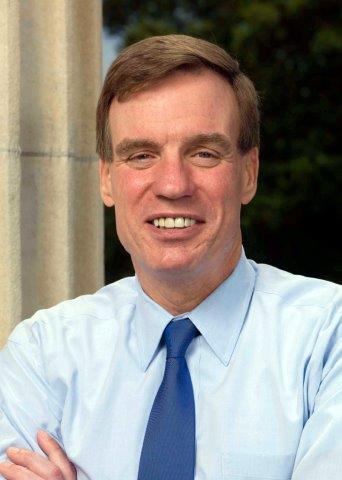
Mark Warner (D-VA)
“We are writing to urge the Department of Health and Human Services to ensure a fair and equitable distribution of a COVID-19 vaccine by working closely with states to understand and appropriately implement COVID-19 vaccine distribution recommendations made by the Centers for Disease Control and Prevention’s (CDC) Advisory Committee on Immunization Practices (ACIP). As we approach potential emergency use authorization by the Food and Drug Administration for one or more COVID-19 vaccines, it is essential that we do everything we can to ensure access to the vaccine for communities and populations hit hardest by the pandemic,” wrote the senators to HHS Secretary Azar and CDC Director Redfield.
The CDC’s Advisory Committee on Immunization Practices (ACIP) is a 15-member panel comprised of leading medical and public health experts with a focus on the fields of immunization practices and public health. The Advisory Committee reports to the CDC Director and is responsible for developing evidence-based public health recommendations for the safe and ethical use of vaccines. In the case of COVID-19, where initial supplies of a vaccine will be limited, ACIP will make recommendations to ensure the vaccine is equitably distributed. Historically, states and localities – in coordination with federal health authorities – use ACIP recommendations to develop their vaccination strategies. Ohio plans to incorporate recommendations from ACIP to plan and execute its vaccine distribution program.
In their letter, the senators also underscore how the COVID-19 crisis has continued to disproportionately affect older Americans, communities of color, and essential workers. In many cases, these disparities have been exacerbated by factors like overrepresentation in front-line jobs, higher rates of chronic disease, inequitable access to health care, and longstanding bias within the health care system itself.
The senators also urge that HHS and CDC work closely with state and local officials to ensure they fully understand and implement ACIP’s recommendations in a manner that prioritizes public health, equity, and the wellbeing of vulnerable communities.
Sens. Brown and Warner were also joined on the letter by Sens. Michael Bennet (D-CO), Angus King (I-ME), Cory Booker (D-NJ), Maggie Hassan (D-NH), Tammy Duckworth (D-IL), Bob Menendez (D-NJ), Jeff Merkley (D-OR) and Richard Blumenthal (D-CT).
Loveland, Ohio – Tony Carovillano graduated from Loveland High School in 1987.
Mother-in-law Lynne McManus Lee told Loveland Magazine this morning, “Our family is so proud of him. He’s one of the best!”
FROM 16-YEAR-OLD RIDE OPERATOR TO GM: MEET TONY CAROVILLANO
As the vice president and general manager of Worlds of Fun, Tony Carovillano is responsible for leading the operation of the park’s 235 acres and all of its rides and slides. His day typically starts at the front gate where he welcomes ambassadors and guests. From there, he bounces around attending meetings, checking on projects, leading his directors and planning for upcoming events. The day usually stretches past 8 hours, and the workweek almost always stretches beyond five days, but just as Tony did when he started – he relies on the energy of the park to keep him going.
For the past 35 years, amusement parks have been Tony’s life. He fell in love with the industry soon after he started as a train conductor at Kings Island in Mason, Ohio outside of Cincinnati. He was 16, and he’s been along for the ride ever since that whistle blew.
Working on the Railroad at Kings Island
After turning 16, it was time for Tony to get a job. To his delight, he was hired to work in rides at Kings Island after his sister, who was a supervisor at the log flume, put in a good word for him. Decked out in his train conductor uniform, Tony went to work on the K.I. & Miami Valley Railroad.
The House passed a bill on Thursday to require abortion providers to bury or cremate fetal remains, despite arguments from religious groups and health clinics in the state.
State representatives passed the bill on a 60 to 35 vote along party lines.
The bill passed out of the House Civil Justice Committee the same day where members of state right-to-life groups acknowledged existing law regarding disposal of fetal remains, but said Senate Bill 27 was needed to further specify the role of abortion providers.
“Current Ohio law requires the humane disposition of fetal remains but it is vague and open to interpretation,” said Meg DeBlase, of Right to Life of Greater Cincinnati.
Opponents to the bill noted that the bill requires the burial or cremation of fetal remains from surgical abortions, but leaves out those from medication abortions, stillborns, miscarriages, and embryos from fertility clinics.
Several opponents to the bill held a press conference Thursday morning because they felt due to the pandemic it was unsafe to testify at the Ohio Statehouse. During the press conference, members of clinics who provide abortions and abortion access advocacy groups said the bill had little to do with the need for burial services, and more to do with closing abortion clinics by creating another cost for them.
Chrisse France, of Pre-Term Cleveland, said the law “does not serve any public health interest,” and places the legislature as a faith advisor and doctor, rather than lawmaking body. According to Lauren Blauvelt-Copeland, of Planned Parenthood of Ohio, the laws already made in the state cover what Senate Bill 27 does.
“There are already laws in place that require safe medical tissue disposal and Planned Parenthood and other providers follow them,” Blauvelt-Copeland said.
On the House floor, state Rep. Erica Crawley, D-Columbus, called it “unacceptable” that the General Assembly has quickly taken up the measure while legislation regarding infant mortality and maternal mortality remain stalled in committees. Ohio stands as one of the top states in infant and maternal mortality rates.
“That leaves me to believe that we are okay with women dying during childbirth or after, and babies dying within one year of their life,” Crawley said. “I do not hear the same passion for these women and infants who are dying.”
State Rep. Candice Keller, R-Middletown, one of the authors of the the total ban on abortion in the state which is currently being fought in court, stood in support of the bill, saying the abortion “industry” should take up the cost of disposing of the fetal remains.
She also accused a Democratic legislator, state Rep. and physician, Beth Liston, D-Dublin, of “age discrimination” for arguing that fetal remains at a certain point are about the size of a grain of rice, and therefore “untenable” to dispose of in a burial or cremation.
“This industry can afford to bury these babies, and they deserve it, and their mothers deserve it,” Keller said.
The bill now moves to the governor for a signature, and with a pattern of support for anti-abortion measures, Gov. Mike DeWine is expected to support the bill.
Loveland, Ohio – RP Diamond Printing & Embroidery and Jarvis Global Investments are once again collecting NEW and UNWRAPPED TOYS along with CANNED GOODS to donate to the LIFE Food Pantry.
Donations can be dropped off at RP Diamond Printing & Embroidery located at 368 Loveland-Madeira Rd. Monday-Friday 11:00-6:00, Saturday 11:00-3:00. We will be collecting now through Saturday, December 19.
If you prefer a curbside drop off just pull up out front and give us a call at 513-583-8447 and we will be glad to come out and accept your donation.
David Terry says, “Happy Holidays from all of us here at RP Diamond and Jarvis Global Investments.”
Symmes Township, Ohio – Eric J. Beck, Hamilton County Engineer, just announced a full road closure on Kemper Road between Loveland Madeira and Twightwee Road in Symmes Township.
Indiana Ohio Railway will be repairing the railroad track on Tuesday, December 8, between the hours of 8 AM and – 6 PM (weather permitting).
The contractor’s detour route will be from Kemper – Loveland Madeira – South Riverside – Kemper and vice versa.
Any problems/questions should be directed to Geoff Reeder (330) 749-1906 with Indiana Ohio Railway or Dan Jones at (513) 946-8430 with the Hamilton County Engineers.
If you appreciate these kinds of heads ups that might make your daily life better, please consider sending a donation to keep them coming your way. There are many behind the scene expenses that make these stories possible. These kinds of reports are FREE for you, however, they are not CHEAP for Loveland Magazine to publish.



 Home of the Brave Park