Tag: loveland

  • Cradle Cincinnati Promotes Infant Safe Sleep During the Winter Holidays

    Cradle Cincinnati Promotes Infant Safe Sleep During the Winter Holidays

    Holiday travel and cold weather can lead to higher risk of unsafe sleep

    Cradle Cincinnati, Cincinnati Health Department and Hamilton County Public Health are encouraging families to practice safe sleep during this holiday season. New sleeping environments and colder temperatures can increase a baby’s risk of sleep-related death. Babies sleep safest Alone, on their Backs, and in Cribs.

    When visiting relatives or friends this holiday season, Cradle Cincinnati recommends travelling with a portable crib. Many homes lack safe sleeping spaces for babies and sleeping in a bed with a baby or placing a baby on a couch for sleep greatly increases his or her risk of a sleep- related death. Co-bedding, or sleeping with another person, accounted for more than half of all sleep-related infant deaths in Hamilton County over the past five years.

    As well, frigid temperatures may lead parents to wrap their babies in bulky blankets or layer on clothing. However, babies can accidentally suffocate from loose blankets or overheat under multiple layers.

    Families can take the following steps to keep their baby warm and safe this holiday season:

    Baby should have his or her own sleep space. Bring a safety-approved portable crib, Pack n Play, or bassinet with you on your travels. Babies should never sleep with another person.

    Place baby on his or her back for every sleep. The risk of sleep-related death increases when infants are placed in new sleep positions (i.e. stomach or back). Infant sleep guidelines have changed in the last 30 years; it’s important to share ‘back to sleep’ messaging with older generations.

    Don’t overheat your baby. Dress your baby in a wearable sleeper or one-piece pajama, instead of using a blanket. Wearable sleepers can be layered over an undershirt or onesie.

    Keep baby’s room at a comfortable temperature, usually between 68° and 72°F.

    Don’t smoke around your baby. Exposure to secondhand smoke increases the risk of Sudden Infant Death Syndrome.

    Qualifying families can receive a FREE Pack n Play through the Cincinnati Health Department by calling (513) 564-BABY.

    Sleep-related infant deaths have been on the rise the past several years, reaching a ten-year high of 21 deaths in 2020. Cradle Cincinnati promotes the ABCs of safe sleep for every sleep – naptime and nighttime.


  • Lorenz and Dougherty indicate they will not run for school board in 2023

    Lorenz and Dougherty indicate they will not run for school board in 2023

    Loveland, Ohio – At a meeting of the Loveland City School District held on December 10, both the current President of the Board, Kathryn Lorenz, and current Vice-President, Kevin Dougherty announced that it is their intention to not seek another term by running for re-election in the fall of 2023.

    Here is the excerpt from the meeting where they announce their intentions:

    You can watch the full Board meeting below.

  • Ohio health care leaders want child health investment by year’s end

    Ohio health care leaders want child health investment by year’s end

    Adobe Stock photo.

    BY: SUSAN TEBBEN – Ohio Capital Journal

    A coalition of health care advocates want to see congressional investment in child health care by the end of the year, including permanent funding for the Children’s Health Insurance Program.

    The coalition, Protect Our Care Ohio, held a press event to push for improvements to maternal health, child outcomes and the issues like discrimination that can increase mortality and lower birth rates, particularly in Black Americans and Black Ohioans.

    “Our Black babies are dying at a rate of three times that of which babies, even here in Toledo/Lucas County,” said Celeste Smith, former coordinator of the Toledo/Lucas County Commission on Minority Health.

    An 2020 analysis by the Commonwealth Fund showed that maternal deaths have been increasing in the U.S., but that most of those deaths are preventable. They found that a “relative undersupply of maternity care providers, especially midwives” and a lack of “comprehensive postpartum supports” contributes to the mortality rates in the country.

    The study also found that more than half of pregnancy-related deaths happen after birth.

    The CDC found that Black babies make up the highest number of deaths per live births in the country as well, with a maternal death rate for Black mothers of three to four times the rate of white mothers.

    Part of the problem, Ohio health advocates say, is the price of health care. For those families that have insurance, often the plans they can afford leave holes in coverage. Many plans chosen for their affordability have high deductibles, even those provided by an employer.

    “Employee-sponsored health care is no longer the gold standard,” said Erika White, chair of the Healthy Lucas County CHIP (Children’s Health Insurance Program). “In reality, many families can not afford their employer health plans and that means the care that we need for our children is falling to the side.

    It is for that reason that the CHIP program through Medicaid is such a needed resource, White said.

    The CHIP program works through Medicaid and separate CHIP programs and is funded both through states and federal block grants.

    According to an annual report filed with the U.S. Department of Medicaid, Ohio’s child enrollment in CHIP rose more than 4% between 2020 and 2021. The increase was due to “economic and policy changes related to the COVID-19 pandemic,” according to the report.

    The Ohio Department of Medicaid has “educated state agency partners and numerous community stakeholders that work with low-income families” to increase outreach efforts, but in terms of reaching uninsured children, Ohio “does not have an effective way to measure” the outreach methods, the report stated.

    One way the problem could be helped is through the permanent authorization of funds for CHIP, which is currently active through June 2023.

    “CHIP is a block grant program, meaning Congress must act periodically to extend funding for the program,” White said.

    A lapse in the funding could mean a lack of health care access for millions of children, more than 9 million nationally in most recent figures from the U.S. Department of Medicaid.

    spending bill being considered by Congress could be the way forward for child health care funding, and an easy way for lawmakers to show their priorities, Smith says.

    “As we reach the end of the year, Congress has not just an opportunity but an obligation to take meaningful action to confront this preventable crisis,” Smith said.

  • Duke Energy prepares for winter storm Elliott and urges customers to do the same

    Duke Energy prepares for winter storm Elliott and urges customers to do the same

    • Mix of below-freezing temperatures and high winds are expected to cause power outages Thursday and Friday
    • Duke Energy lineworkers, damage assessors and vegetation crews are ready to respond
    • Customers are encouraged to prepare in advance for extended outages and check on loved ones

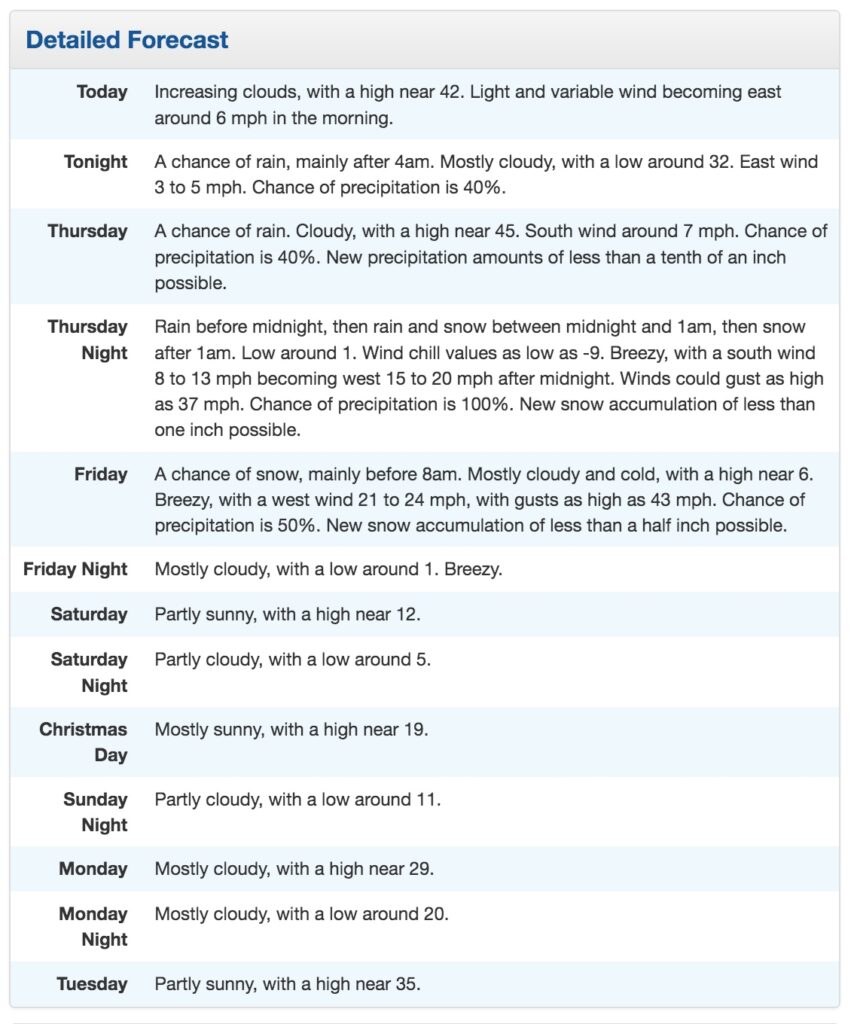
    Loveland, Ohio – Duke Energy is monitoring and preparing for a winter storm system that is expected to cause power outages across southwest Ohio and Northern Kentucky this holiday weekend. A mix of dangerously low temperatures, high winds and snow is predicted to move across the region beginning late Thursday evening and continuing through Friday evening.

    Snow on its own typically has little to no impact on the electric system. However, high winds may bring down trees, limbs and power lines, while below-freezing temperatures result in increased demand to the power grid. These types of winter storms can also create hazardous driving conditions, which could impede Duke Energy workers’ ability to assess storm damage and restore power. Crews are prepared and will work as quickly as possible to restore power, however, expected high winds will also restrict some restoration efforts.

    “As Duke Energy meteorologists are tracking this significant winter weather event, crews are preparing to restore power as safely and quickly as possible,” said Anthony Brown, Midwest Storm Director, Duke Energy. “Our top priority is to keep our customers informed and urge them to prepare in advance.”

    Customers are encouraged to maintain a plan to move family members – especially those with special needs – to a safe, alternative location in case an extended power outage occurs, or evacuation is required.

    In a press release, Duke says, “Crews will work diligently to restore power in impacted communities as quickly as possible. As restoration begins, the first priority is to repair large power lines and other infrastructure that will return power to the greatest number of customers as safely, quickly and efficiently as possible. Crews then can work on repairs affecting individual neighborhoods and homes.”

    Safety information from Duke

    Duke Energy encourages customers to have a plan in place to respond to an extended power outage after severe weather. Below are some tips:

    Before the storm

    • Create (or update) an emergency supply kit to save valuable time later. The kit should include everything an individual or family would need for at least two weeks, especially medicines, water, nonperishable foods and other supplies that might be hard to find after a storm hits.

       
    • Keep a portable radio or TV or a NOAA weather radio on hand to monitor weather forecasts and important information from state and local officials.
       
    • Charge cellphones, computers and other electronic devices in advance of storms to stay connected to important safety and response information. Consider purchasing portable chargers and make sure they are fully charged as well.
       
    • Pet owners should arrange to stay at evacuation shelters that accept pets; friends’ or family members’ homes; or pet-friendly hotels.

    After the storm

    • Stay away from power lines that have fallen or are sagging. Consider all lines energized, as well as trees, limbs or anything in contact with lines.
       
    • If a power line falls across a car that you are in, stay in the car. If you MUST get out of the car due to a fire or other immediate life-threatening situation, do your best to jump clear of the car and land on both feet. Be sure that no part of your body is touching the car when your feet touch the ground.
    • The quickest way for customers in Ohio and Kentucky to report power outages is by calling 1.800.543.5599.
       
    • You can receive status updates on a power outage affecting you by texting REG to  57801, or sign-up online at duke-energy.com/outagealerts.

    Generator Safety

    • Always operate a generator in accordance with manufacturer’s guidelines and instructions. Do not operate more appliances and equipment than the output rating of the generator.
       
    • To avoid carbon monoxide poisoning, never use a generator indoors or in attached garages.
       
    • Only operate the generator outdoors in a well-ventilated, dry area away from air intakes into the home.
       
    • To avoid electrocution, plug individual appliances into the generator using heavy-duty, outdoor-rated cords with a wire gauge adequate for the appliance load.
       
    • If connecting into the house wiring is necessary on a temporary basis, homes should have a transfer switch installed by a licensed electrician.
       
    • Additional storm tips as well as current outage information is located on duke-energy.com/storm under the “Outage and Storm Information.”
  • Spectrum Alert: Winter Storm Elliott Preparation

    Spectrum Alert: Winter Storm Elliott Preparation

    Loveland, Ohio – Spectrum says they are preparing for potential service outages that may occur as a result of Winter Storm Elliott.

    “If you lose power during the storm, contact your local utility company for updates. Once power is restored and conditions are safe, our technicians will resolve any service issues.”

    Stay connected during a storm:

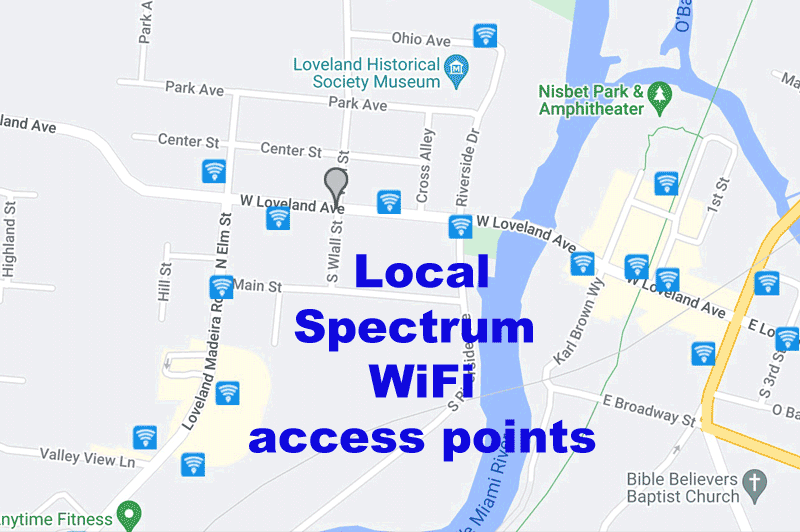
    •  Internet customers can connect to Spectrum’s WiFi access points nationwide. Find one near you.
    •  Spectrum TV customers can still use the Spectrum TV app to watch many programs.
  • Wind chills from 10 below to 30 below are expected

    Wind chills from 10 below to 30 below are expected

    Winter Storm Watch from Thursday evening through Friday afternoon.

    Loveland, Ohio – From the National Weather Service in Wilmington issued for Loveland.

    The combination of very cold temperatures and wind will produce
    dangerously cold wind chills Friday through Sunday. Wind chills from
    10 below to 30 below are expected.
    
    Strong winds are likely Friday into Friday night. Gusts of 40 to 50+
    MPH will be possible.
    
    There is a chance for accumulating snow Thursday night into Friday.
    Even minor amounts of snow, combined with the gusty winds, may lead
    to blowing snow and reduced visibility, causing impacts to holiday
    travel.
    
  • Dangerously cold weather, strong wind and snow is in the forecast

    Dangerously cold weather, strong wind and snow is in the forecast

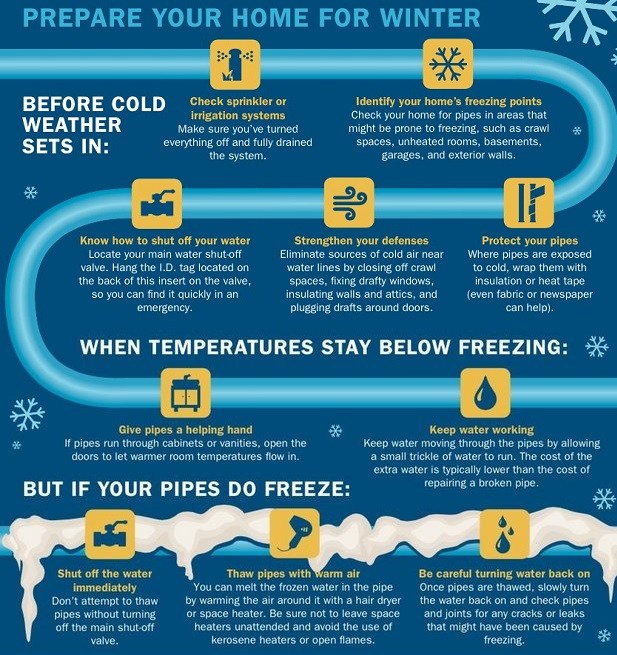
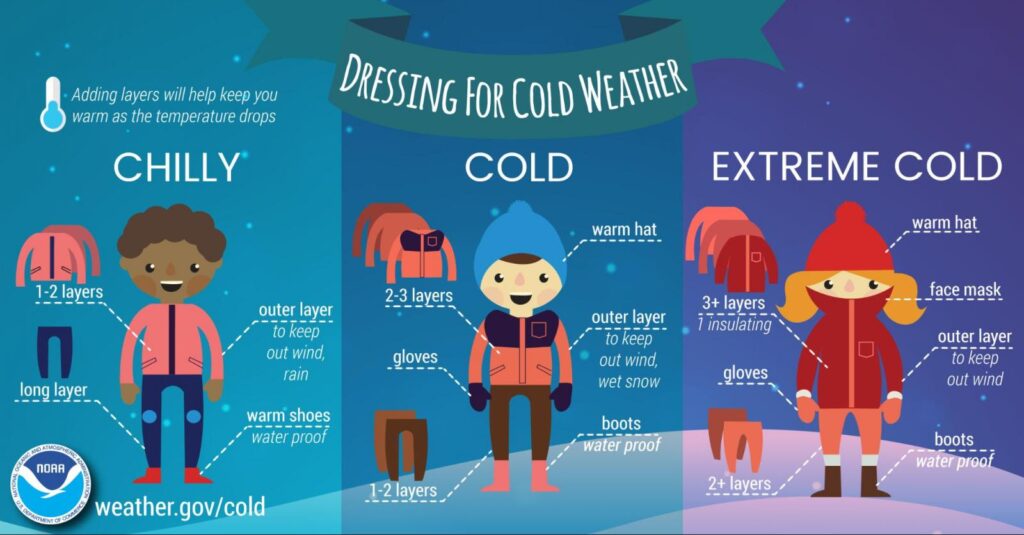
    Loveland, Ohio – Dangerously cold weather, strong wind, and snow are in the forecast on Thursday night through Saturday. Check out these preparedness guides.

    @hcema is urging all residents to be prepared.

  • Christmas in Loveland through the Alex Eicher lens

    Christmas in Loveland through the Alex Eicher lens

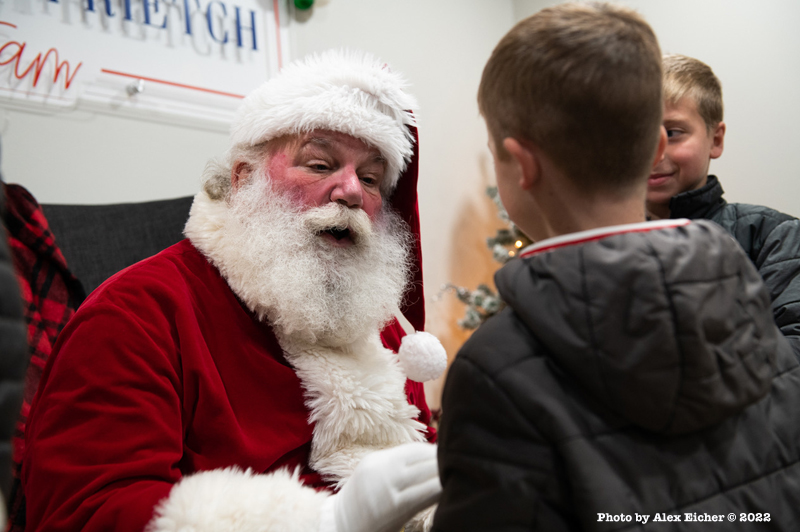
    Loveland, Ohio – These photos were taken on December 17 by Loveland Magazine photographer Alex Eicher during the Christmas in Loveland pagent that was presented by the Little Miami River Chamber Alliance.

    Photos by Alex Eicher/Loveland Magazine © 2022

  • [Photo Albumn] and LHS basketball update

    [Photo Albumn] and LHS basketball update

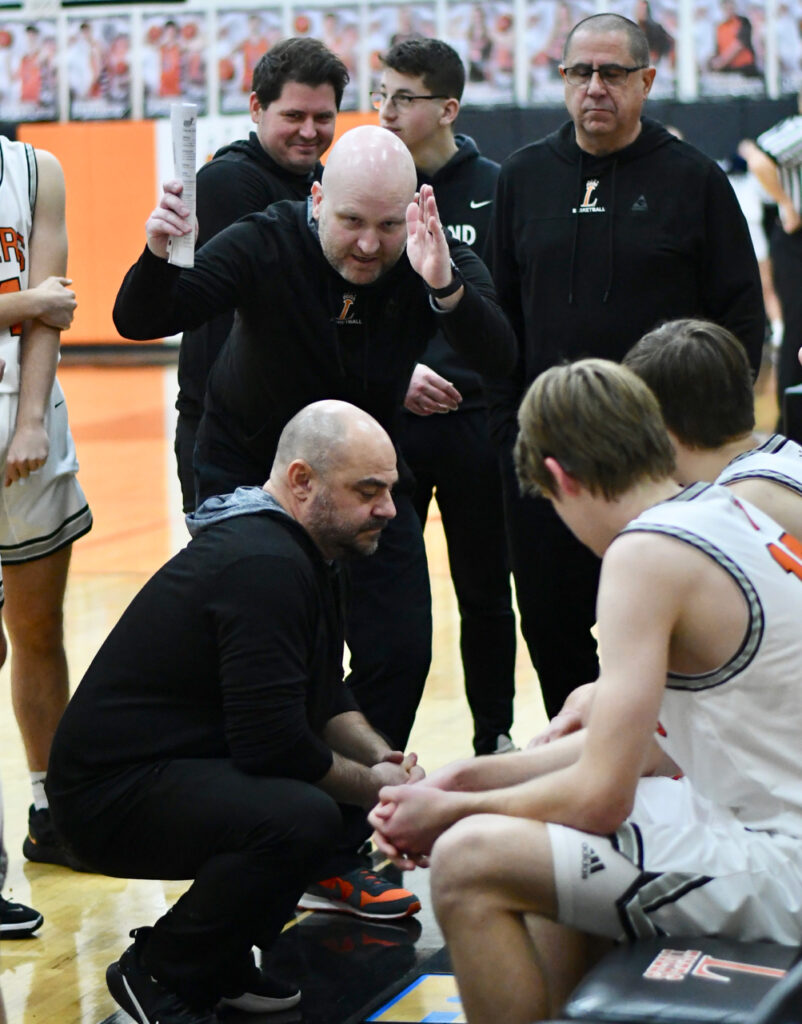
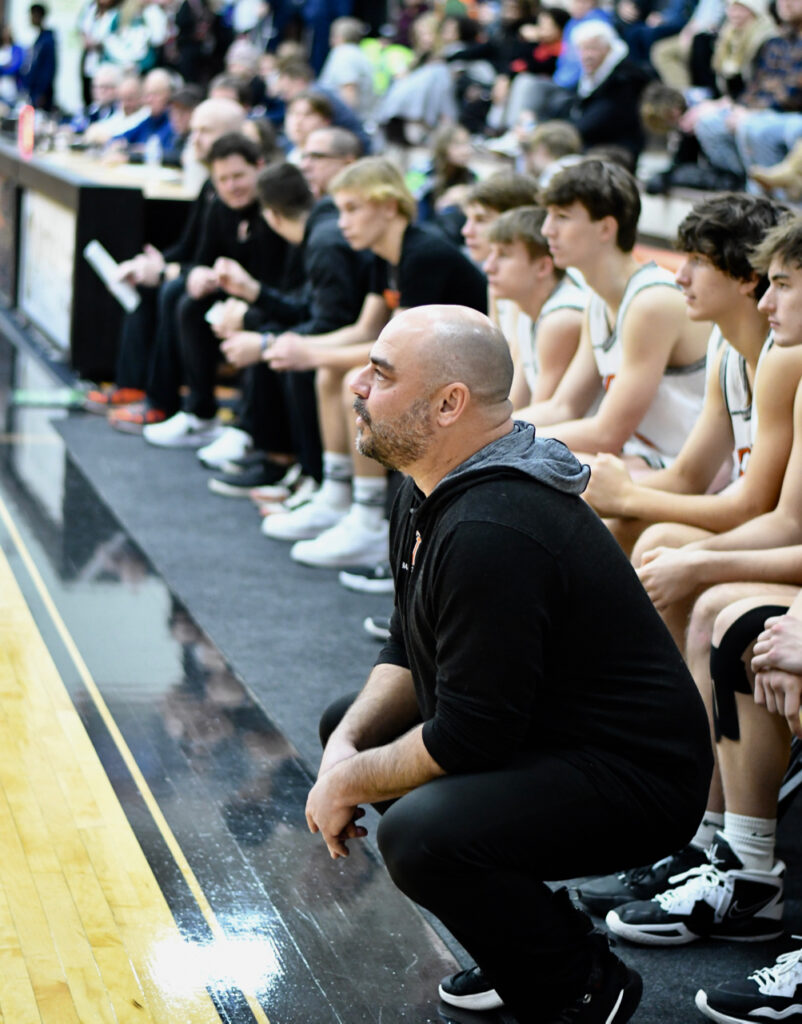
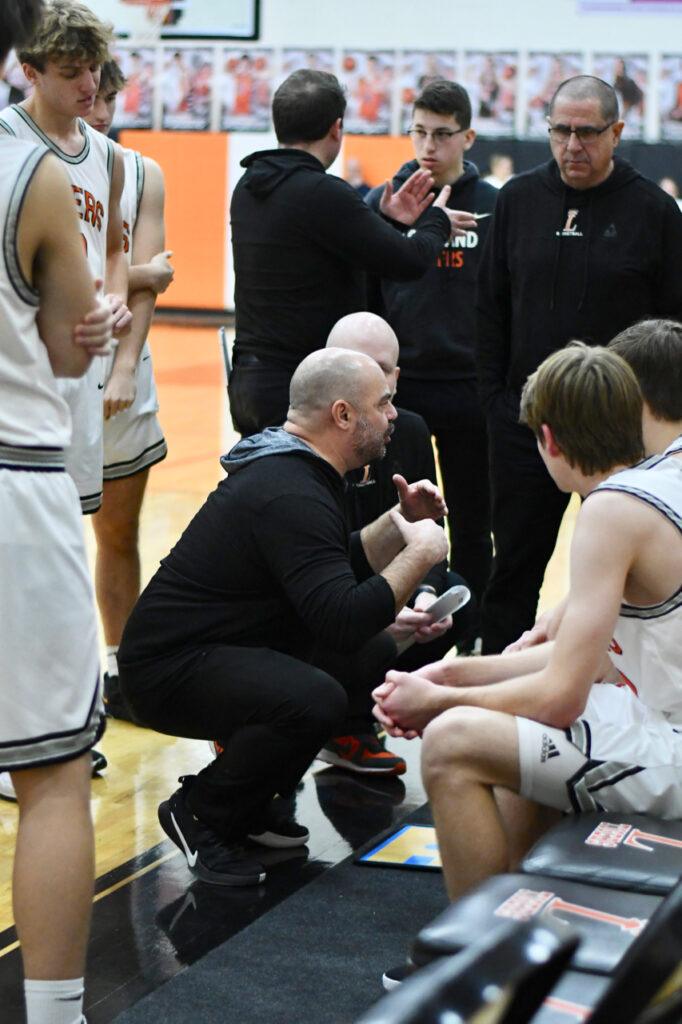
    Loveland, Ohio – Eight games into the season the Tiger Men (2-3, 5-3) stand in 5th place in the Eastern Cincinnati Conference (ECC). Leading the Tigers in scoring is 11th grader Brayden Frietch averaging 11.5 points per game. Close behind is 11th grader Jack Sauer averaging 11.4. Both Frietch and Sauer have scored 12 three-pointers.

    The Women are 3-3, 5-3, and Leading the Women are Senior forward Olivia Raby averaging 10.6, and Senior guard Josie Early averaging 10. The Women are in 7th place in the ECC.

    Men’s ECC Standings

    Standings 
     CONFERENCEOVERALL
    TEAMSW-LPCTPFPAW-LPCTPFPASTRK
    Anderson5 – 01.00069.047.46 – 01.00067.246.5W6
    Kings5 – 01.00066.247.66 – 01.00068.547.8W6
    Turpin4 – 1.80058.048.45 – 1.83357.748.5W1
    Winton Woods3 – 2.60057.455.64 – 2.66758.756.3W3
    Loveland2 – 3.40047.848.05 – 3.62550.346.6W2
    Lebanon2 – 3.40050.456.62 – 4.33349.354.8L1
    Walnut Hills2 – 3.40055.261.42 – 5.28653.161.1L1
    Little Miami1 – 4.20047.056.83 – 4.42946.952.0L3
    Milford1 – 4.20054.861.42 – 4.33357.761.7L4
    West Clermont0 – 5.00041.263.80 – 5.00041.263.8L5

    Women’s ECC Standings

    StandingsWOMEN 
     CONFERENCEOVERALL
    TEAMSW-LPCTPFPAW-LPCTPFPASTRK
    West Clermont5 – 01.00053.236.07 – 01.00055.737.7W7
    Lebanon4 – 2.66750.046.08 – 2.80054.942.5W4
    Walnut Hills4 – 2.66750.344.37 – 2.77854.736.7W1
    Kings4 – 2.66746.847.85 – 2.71447.144.6W3
    Winton Woods4 – 2.66746.536.34 – 2.66746.536.3L1
    Milford3 – 3.50051.749.06 – 3.66753.144.9L1
    Loveland3 – 3.50047.747.55 – 3.62548.438.8L2
    Little Miami1 – 4.20037.848.01 – 6.14342.050.0L1
    Turpin1 – 5.16736.748.83 – 6.33336.845.9L2
    Anderson0 – 6.00038.354.01 – 9.10039.050.8L9

    Photos © 2022 by David Miller/Loveland Magazine

  • Four ways to help people with disabilities get work

    Four ways to help people with disabilities get work

    ROB MOORE – Ohio Capital Journal

    A bill currently in the Ohio General Assembly would eliminate the subminimum wage for people with disabilities.

    Currently, companies in Ohio are allowed to apply for a waiver from the state minimum wage to hire people with disabilities. The goal of this program is to make it easier for companies to hire people with disabilities and therefore to give more people with disabilities jobs.

    I was talking to Michael Hartnett, a policy analyst I work with at Scioto Analysis about this problem earlier today. He brought up a few options for the state to increase employment of people with disabilities without paying them less.

    Job training

    Providing more funding for job training programs for people with disabilities can help give people with disabilities skills that are valuable for employers. The federal Employment and Training Administration provides funds for training people with disabilities.

    The state of Ohio even has an office called the Bureau of Vocational Rehabilitation. The Bureau specifically focused on providing individuals with disabilities the services and support necessary to help them attain and maintain employment. More funding for training programs referred through the Bureau could increase employment of people with disabilities.

    Grants for making workplaces accessible

    One reason it is hard to hire people with disabilities is because employers may have trouble accommodating workers with disabilities in traditional workplaces. For instance, if a job traditionally requires typing, people with limited dexterity would typically not be a candidate. A grant for a job that requires some typing could allow a company to hire a scribe part- or full-time to type for that person.

    One example of this type of program is the Retaining Employment and Talent after Injury/Illness Network (RETAIN) Initiative, a federal program that Ohio takes part in. Eight state teams received competitive awards to develop and run pilot programs aimed at helping workers stay at or return to the workforce following an illness or injury. A similar program could be developed for counties and cities if this program is successful.

    Subsidizing wages for people with disabilities

    The Earned Income Tax Credit is a popular wage subsidy aimed at bringing low-wage people into the labor force. A weakness of the Earned Income Tax Credit is that it is targeted at families, so people without children often have a small credit. Having a larger credit for people with disabilities or making the state earned income tax credit refundable for people with disabilities are two policy levers policymakers have for making it easier for people with disabilities to go to work.

    Mandates for accommodation

    A final option is to just tell employers they need to accommodate. The Americans with Disabilities Act requires employers to reasonably accommodate workers with disabilities. Strengthening state law around accommodations could require employers in Ohio to work harder to accommodate people with disabilities.

    A 2018 study estimated that making it easier for people with disabilities to work would bring 10.7 million people into the U.S. workforce and would increase national GDP by $25 billion. If this is the case, that means more people with disabilities in Ohio’s workforce would mean hundreds of thousands of new workers and hundreds of millions of more dollars in the state economy. This looks like a win for everyone.