David Miller is the Editor and Publisher of Loveland Magazine
by David Miller
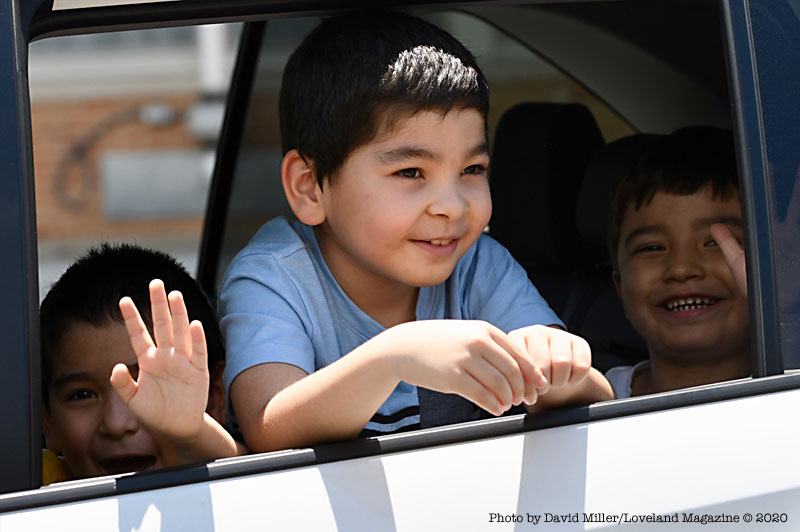
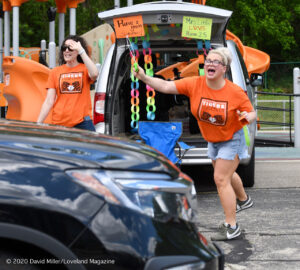
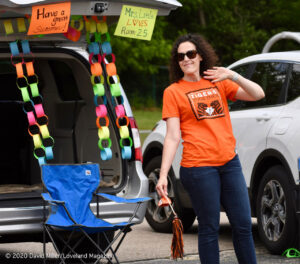
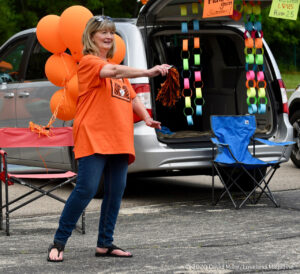
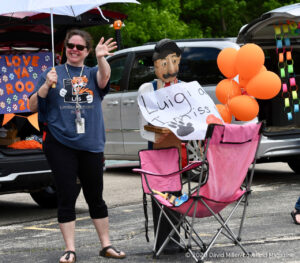
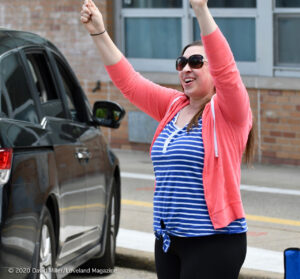
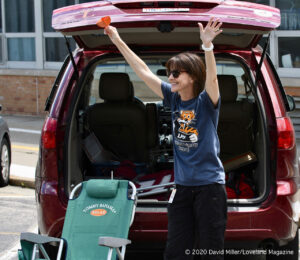
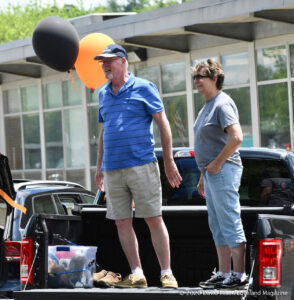
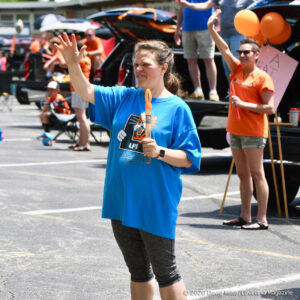
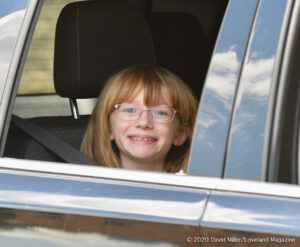
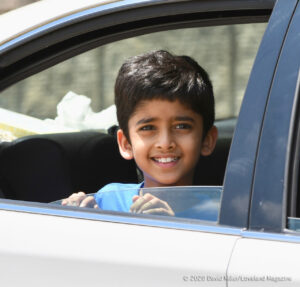
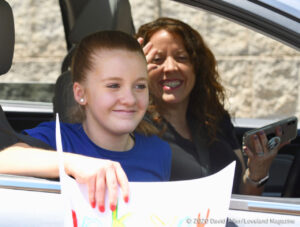
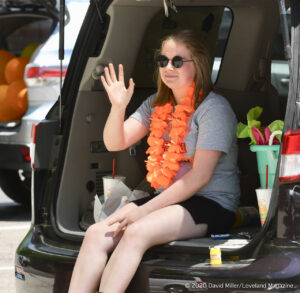
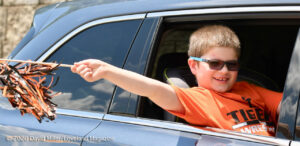
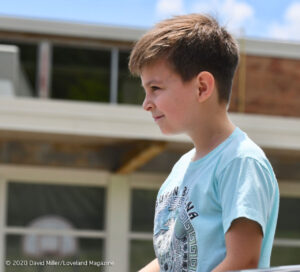
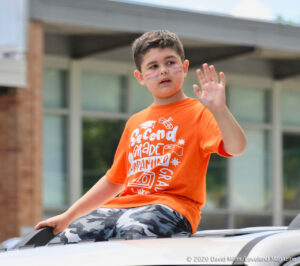
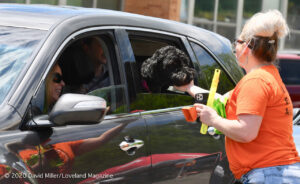
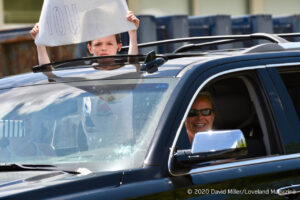
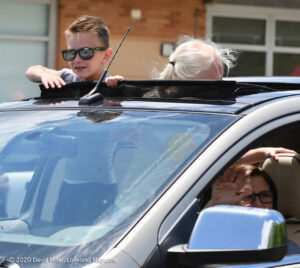
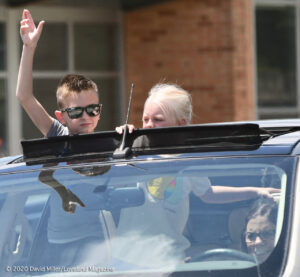
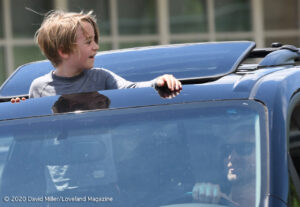
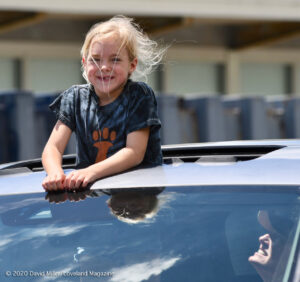
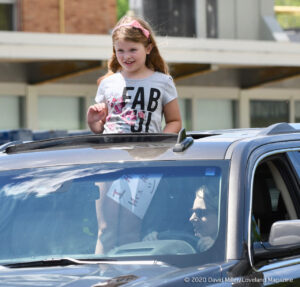
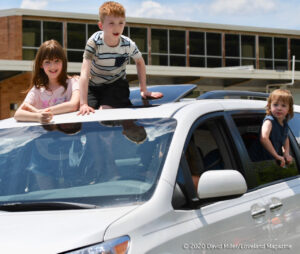
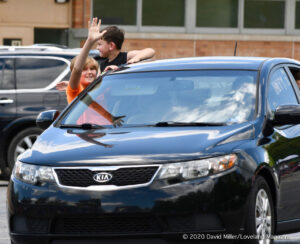
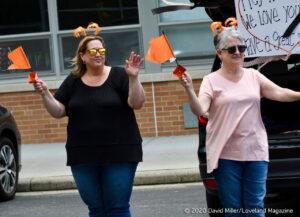
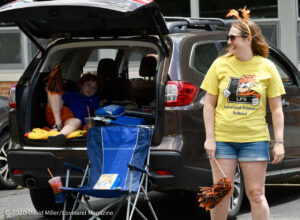
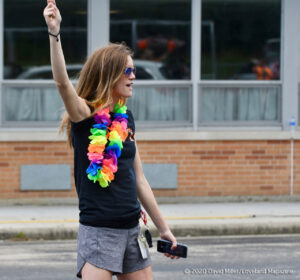
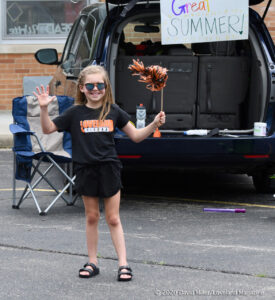
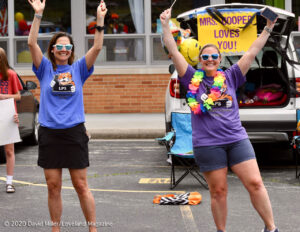
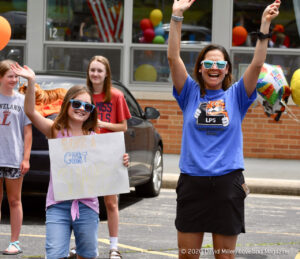
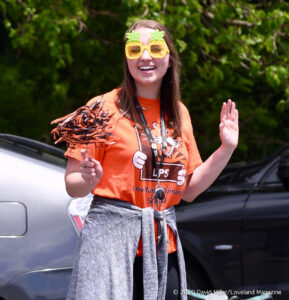
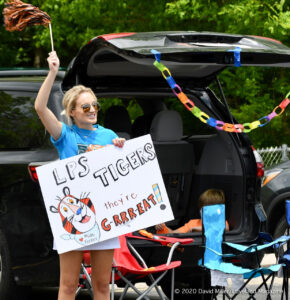
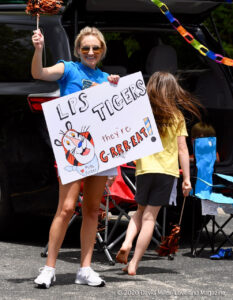
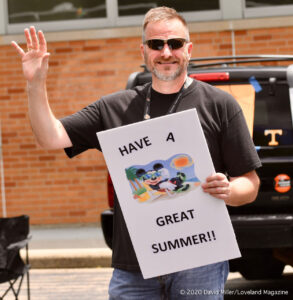
Loveland, Ohio – Last Thursday was the last day of school for children and staff at the Loveland Primary School and the traditional goodbye was much like any other year because of the cheering and tearing.
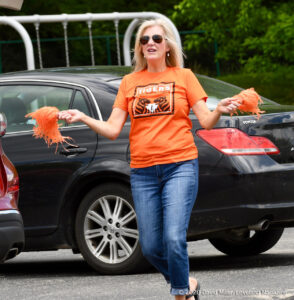
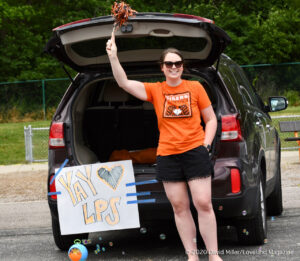
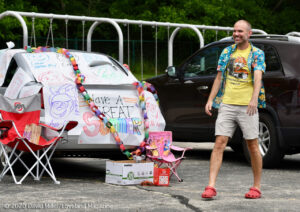
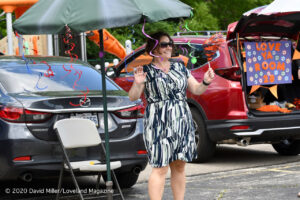
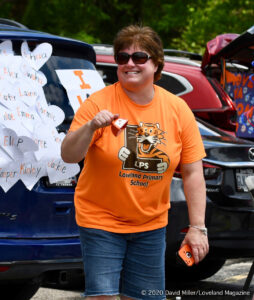
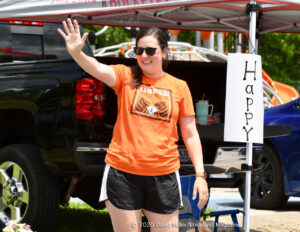
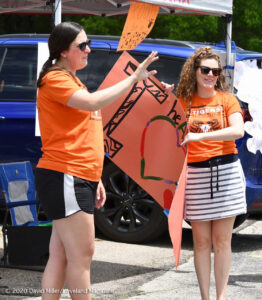
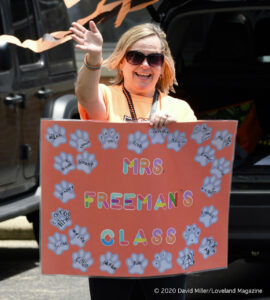
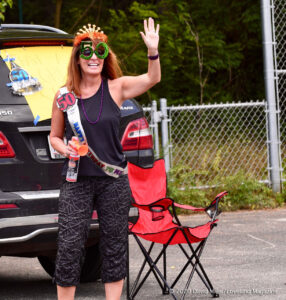
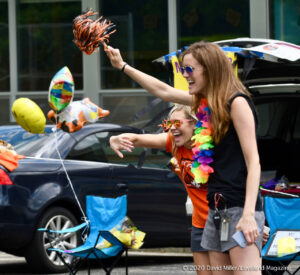
Usually the teachers and staff line up as buses and parents drive the children away to begin their summer break, but on Thursday afternoon parents drove their children to the school campus and to the back parking lot where teachers and staff had formed a chute to be driven through so everyone could wave and shout their goodbyes. One family even rode bicycles through the middle.
One young man navigated the waves in a speed boat.
There were many homemade signs and decorations, bubbles blowing, and music blasting.
Click on any picture to see a larger view or click on the first one and keep on clicking to see them all.
I apologize that it was just not possible to capture the faces of every child that was there that day.
There are still several issues that need to be addressed with this request being made of the taxpayers; issues such as reducing the millage, and the short and long term cost risk. Below are issues that need to be closely reviewed, addressed, and considered in order to achieve a millage reduction and a clearer path to this levy passing.
Why are three buildings needed for grades K-5?
One building for grades K-5, or two separate buildings; one for grades K-2 and one for grades 3-5 will be less costly to design, construct and maintain than three separate buildings, even if located on the same property. The new facility plan for grades K-5 is not efficient cost-wise. Significant cost savings can be realized by reducing the number of buildings, without sacrificing the safety and delivery of education, and still maintains the same number of grade levels between one or two buildings versus three buildings.
New or renovated educational facilities are more important than upgraded athletic facilities. The current athletic facilities are more than adequate for now. Priority needs to be focused towards the educational facilities’ needs and not the athletic facilities’ needs.
What maintenance has occurred at the existing middle school athletic facilities?
Having been to the athletic facilities at the middle school, it appears to me that maintenance has been largely ignored. Illustration of care needs to be shown towards the existing athletic facilities before asking the taxpayers to fund new; otherwise, history will quickly repeat itself. The existing high school athletic facilities are wonderful in my opinion. The field turf and track surface are brand new at the football stadium, and the baseball and softball fields are more than adequate. There is no need to spend taxpayer dollars unnecessarily.
The immediate needs pertaining to capital building improvements appear to be the current LECC, LPS, and LES buildings. I have attended several functions at all three buildings and it is obvious that these buildings need to be replaced with new ones. I have much respect for the administration and staff for delivering quality education given the antiquated state of these buildings. Regarding the capital building improvements for the LIS, LMS, and the HS, either place this scope on a future ballot for permanent improvements if upgraded athletic facilities take precedent over updated buildings, or eliminate the entire scope for the upgraded athletic facilities. If safer buildings and delivery of quality education are the priorities, then the scope for upgrades to the athletic facilities is expendable.
Why risk combining the operation portion of the levy with the permanent improvement portion?
The Loveland community has largely supported the levies placed on the ballot over the last approximately 20 years. I do not want to hear that services will have to be reduced or eliminated since the entire levy did not pass when a stand-alone operation levy will have a much better chance of passing instead of combining with the permanent improvement portion.
Overall, Loveland City School District received a B
Loveland, Ohio – On September 13, the Ohio Department of Education released its annual report cards for public school districts across the state and Loveland High School was listed as one of six high schools in the Greater Cincinnati area to receive an A, the highest grade a school can obtain.
Dr. Amy Crouse
“I am so proud of the work we’re doing in all of our classrooms for all of our students, although I believe we will always have room for growth and improvement,” said Dr. Amy Crouse, superintendent. “Even though we know the state report card is just one tool of accountability based on one standardized test, it is validation that we are on the right track in preparing students for tomorrow, today.”
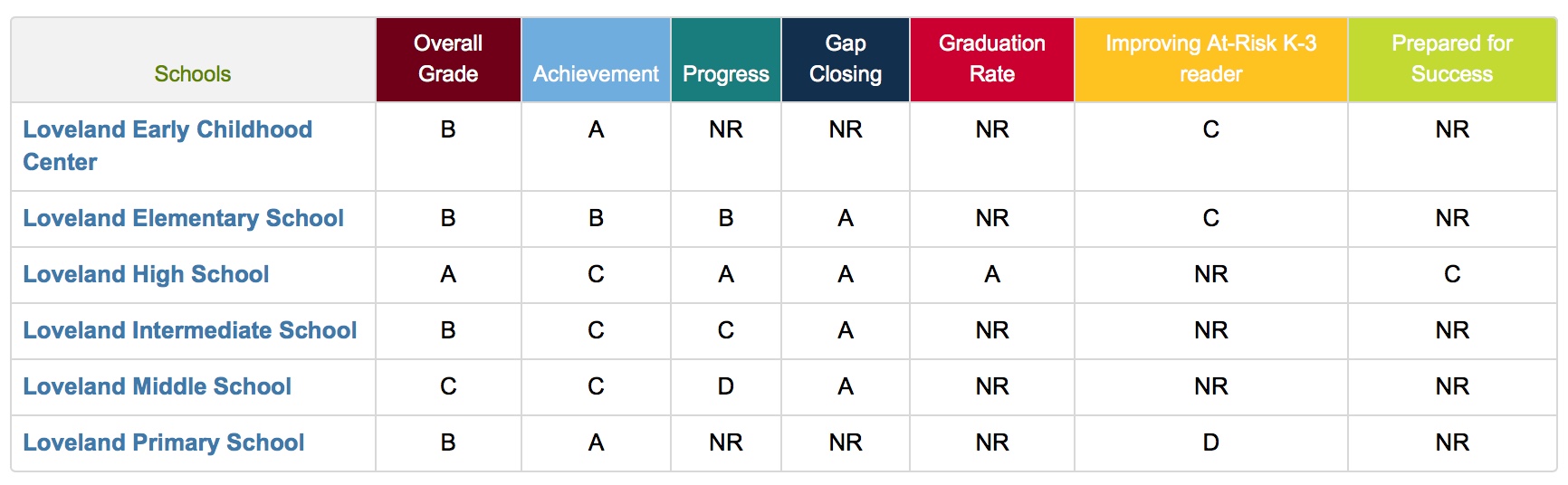
The report card grades, A through F, are based on other sub-grades in areas such as Achievement, Progress, Graduation Rate and Gap Closing. For the first time, the state also released an overall district-level grade summing up how districts performed in this year’s report cards. Loveland City School District received a B. In Hamilton County, four school districts received an A, five received a B, and the 13 remaining districts received a grade of C or lower.
“We know the state report card can provide us with useful information, although we have to keep in mind that its data offers just one snapshot of the very complex work we do every day in our classrooms,” said Crouse. “As a school district committed to high achievement and continuous growth, we monitor, analyze and factor in multiple data points when we consider the educational experience we strive to provide in our schools.”
Later this month, the Loveland City School District will also release their own “Quality Profile”, which offers a look at the performance of district students and staff, using multiple measures and data points. The Quality Profile is supported by the Alliance for High Quality Education, an education consortium that works to improve educational opportunities for students and represent member districts on matters of educational policy and funding.
“Our Quality Profile includes measures beyond the test scores that make up the state report card and seeks to show the complete picture of the total value our schools provide to our students, staff and community,” said Crouse. “While we will continue to celebrate our successes, we will never ignore the areas that present opportunities for progress. Ultimately, our goal is that every Tiger student is empowered to learn, grow and embody our core values of care, respect and responsibility.”
State Report Card District Overview
District Grade B
Achievement
The Achievement Component represents whether student performance on state tests met established thresholds and how well students performed on tests overall. A new indicator measures chronic absenteeism.
The Gap Closing component shows how well schools are meeting the performance expectations for our most vulnerable students in English language arts, math, graduation and English language proficiency.
Whether training in a technical field or preparing for work or college, the Prepared for Success component looks at how well prepared Ohio’s students are for all future opportunities.
Nine teacher-designed and student-inspired projects awarded to advance the goals of #TigerInnovation #TigerGrowth and #TigerCare across the district
Loveland, Ohio –From the establishment of an Innovation Lab at Loveland Primary School (LPS) to encourage educational risk taking to the creation of Virtual Reality Environments at Loveland Middle School (LMS) to help students with special needs – the Loveland City School District is excited to announce the district will help fund nine projects for the 2018-19 school year as part of the annual Innovative Classroom Grant program. The selection of winners was presented to the Loveland Board of Education during the April 17 Board Business Meeting.
“With this next iteration of the Innovative Classroom Grant, we have learned so much about what innovation truly means and looks like across our classrooms,” said Loveland Director of Technology and Innovation David Knapp. “Innovation is not about things. It’s about embracing the perspective of our students to think about teaching and learning differently.
“We could not be more excited to see the growth and development of these teacher-generated and student-inspired ideas that resulted from this year’s grant opportunity. As we plan and eventually implement these new ideas that will impact so many of our students immediately, we are also piloting experiences that could impact our students for years to come in thinking about the next phase of our Loveland classrooms and learning experiences.”
The district established Innovative Classroom Grants during the 2016-17 school year to fund innovative teacher ideas that would enhance the district’s three key goals of providing Tiger academic Growth, Innovation and Care. In the program’s debut year, the district funded 11 projects, including flexible learning spaces, MakerSpace and digital microscopes. This year, projects will continue to impact Tigers at all age levels, with continued focus on Growth, Innovation and Care.
“Loveland Middle School plans to design a space with social and emotional learning supports for our students who struggle with anxiety and anger,” said LMS Counselor Kim Shafer – who was part of a winning grant team. “We will have tools and programs to help our students take a minute away from class to reset emotionally – with the goal to rejoin the class. This will be a powerful way for the district to provide Tiger Care.”
“Our grant idea was inspired by watching our students at Loveland Primary School work with MakerSpace – which was part of the grant selection last year,” said Innovative Instructional Coach Traci Stubenrauch – who was a part of a winning grant team. “Our hope for the LPS Innovation Lab is that it will be a place for students and teachers to be able to take educational risks, try new things, collaborate, share and give each other feedback.”
“This is an important investment to continue to make as we develop a world-class student experience for our Tigers that is unlike any other,” said Loveland Superintendent Dr. Amy Crouse. “This opportunity puts our rock star educators in a position to game-change the traditional classroom for their students. We appreciate the support of our Board of Education as we take opportunities like these to enhance our core business – preparing students for tomorrow, today – in unique ways.”
The winning projects included (by building):
Loveland Primary School
LPS Innovation Lab – Cristin Kiefer and Traci Stubenrauch
Loveland Elementary School
iPods for Personalized Learning – Heidi Weber
Loveland Intermediate School
Team Model for Flexible Learning – Kelly Coldiron and John Waple
Flexible Space for Collaborative Learning – Natasha Young
Loveland Middle School
Virtual Reality Environments – Rachael Angel
Social and Emotional Learning Supports – Lauren Cripe, Kim Shafer and Anita Winning
Student Designed Flexible Learning Space – Chloe Jackson
Student-artists from LECC, LPS and LES created work that was on display for the community at Loveland Art Studios on Main in December 2017.
Loveland, Ohio – Student-artists at Loveland Early Childhood Center (LECC), Loveland Primary School (LPS) and Loveland Elementary School (LES) took center stage in December at Loveland Art Studios on Main for the second annual Loveland Winter Art Show.
“It was a huge turnout of students, families and community members,” said LES Art Teacher Jeff Flaig who helped organize the exhibit along with LECC Art Teacher John Hentz and LPS Art Teacher Kayla McClary. “My favorite part of the event is always seeing student artwork displayed from floor to ceiling and how amazing and colorful everything looks. Seeing students and parents light up at the sight of the work makes the whole event worthwhile.
“We also want to give a special thanks to Shawn Custis for welcoming our schools and community into his building for this event. It’s amazing to see student work displayed in this professional art environment.”
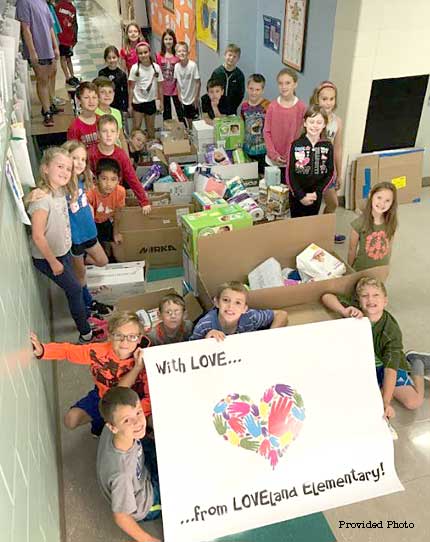
Loveland Elementary School students with supplies the Kindness Committee helped to collect for the district’s hurricane relief efforts.
Every building district-wide collected donations to send south
Loveland, Ohio –From a coin drive at Loveland Early Childhood Center (LECC) to thousands of items donated at Loveland Primary School (LPS), Loveland Elementary School (LES), Loveland Intermediate School (LIS), Loveland Middle School (LMS) and Loveland High School (LHS) – Tigers answered the call for help for hurricane survivors by joining together to support a collection drive for Matthew 25: Ministries.
“I want to personally recognize one of our high school students – Kailey Packer – for organizing the effort, and coordinating with all of the buildings in the district,” said LHS Principal Peggy Johnson. LHS had two truckloads of more than 500 baby items to deliver to Matthew 25.
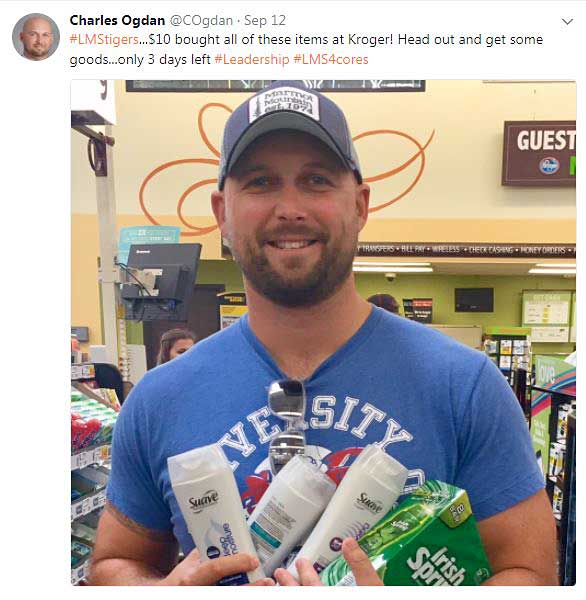
LECC raised nearly $350 dollars, LPS collected 10 large bins full of supplies, LES needed 10 flatbed carts to load up their donations, and LIS and LMS combined collected more than 2,700 personal care items. LMS Principal Chuck Ogdan promoted the effort through Twitter, using a photograph of his own donation purchase to motivate LMS students to also help.
Loveland Middle School Principal Chuck Ogdan supported the hurricane relief collection drive through social media by posting his own donation purchase on Twitter to help motivate students.
“Lead by example,” said Ogdan. “Social media can be a powerful tool to let students know you do more than talk the talk. This was a really important show of support for our neighbors who were devastated by the hurricanes, and a good teaching opportunity to show students a real-life example of Tiger Care – which is one of our district goals.”
“As always, our students and their families showed Loveland cares,” said Interim Superintendent Dr. Amy Crouse. “I couldn’t be prouder to be a part of this Tiger Family.”