Tag: Lt. Gov. Jon Husted

  • Ohio’s new U.S. Senator Jon Husted has a history of connections to energy and charter scandals

    Ohio’s new U.S. Senator Jon Husted has a history of connections to energy and charter scandals

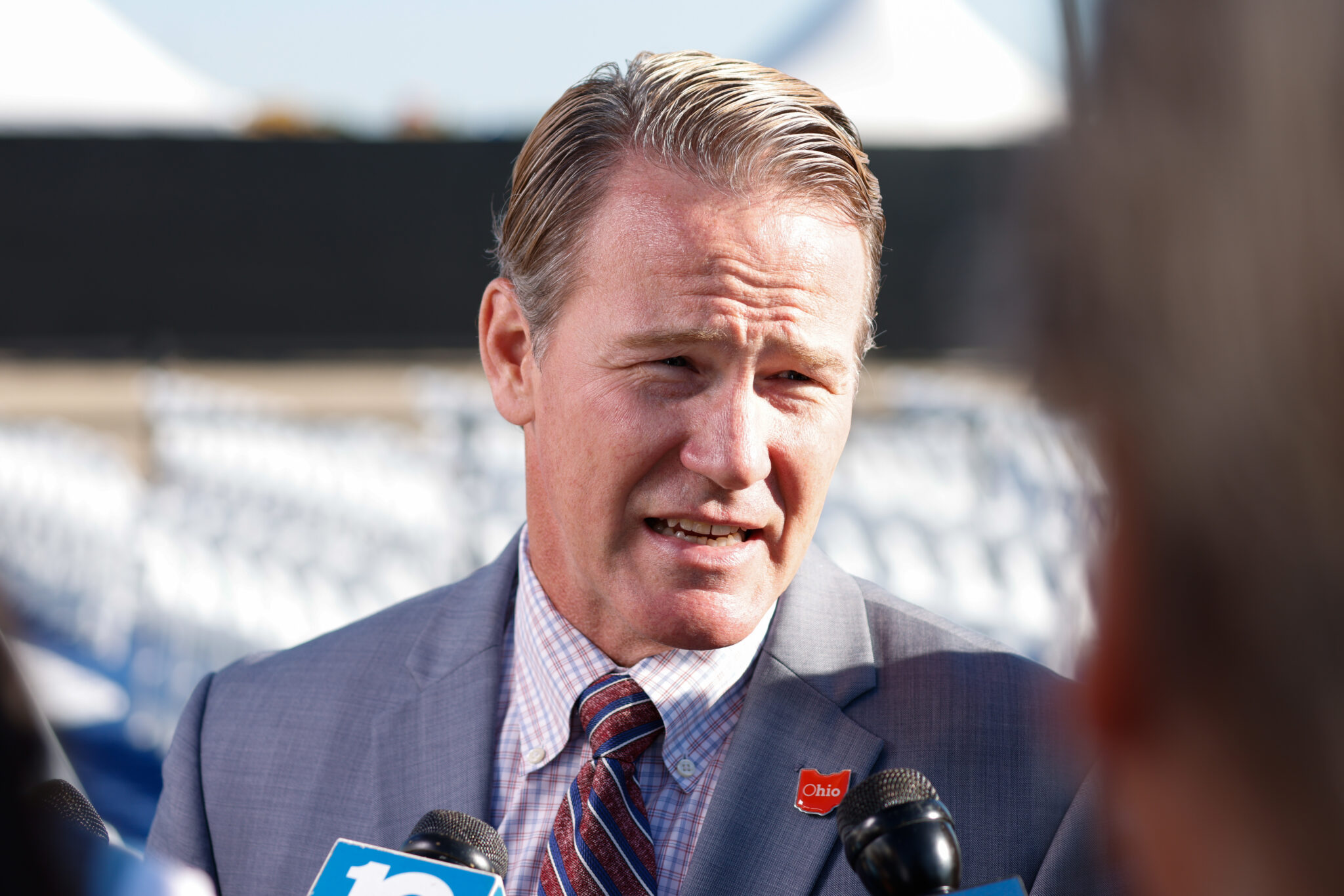
    Ohio’s next U.S. Senator, Jon Husted. (Photo by Graham Stokes for the Ohio Capital Journal. Republish photo only with original story.)

    Commentary

    The same day Jon Husted was tapped to be Ohio’s next U.S. Senator, former FirstEnergy executives were indicted on federal racketeering charges

    Marilou Johanek
    Marilou Johanek is a veteran Ohio print and broadcast journalist who has covered state and national politics as a longtime newspaper editorial writer and columnist.

    “No comment.” That’s all Ohio Gov. Mike DeWine said and walked away. Only at the tail end of DeWine’s press conference last Friday, to announce Lt. Gov. Jon Husted as his pick to replace J.D. Vance in the U.S. Senate, was the elephant in the room even acknowledged. What was the governor’s response to the federal indictments handed down (the same day) against two former FirstEnergy executives tied to the biggest public corruption scandal in state history?

    DeWine’s response was no response. His briefing was about Husted’s promotion not the stain of malfeasance on their watch that the federal indictments underscored. Both men revert to a predictable default setting when it comes to questions about their knowledge of or involvement in the FirstEnergy scheme to bribe lawmakers into giving it a massive state subsidy. Deny. Deflect. Dismiss. No comment.

    The pair insists, despite mounting evidence to the contrary, that they knew nothing about anything corrupt in the legislation written by and for FirstEnergy that they were instrumental in passing and signing into law. DeWine and his LG maintain they conducted themselves properly and did right by Ohio with energy policy that just happened to include an extravagant gift from the state to a utility that donated richly to their campaigns.

    They either outright refute the logged meetings, phone calls, emails and text messages shared with FirstEnergy brass before, during, and after the company’s billion-dollar nuclear plant bailout was enacted — or feign amnesia about their chumminess with generous GOP donors even as FirstEnergy’s devious pay-to-play arrangement was underway to enrich investors and hose ratepayers.

    But as court documents indicate — in the state and federal trials of defendants who got caught up in the nuclear bailout scam — DeWine, and especially Husted, had their fingerprints all over the dodgy FirstEnergy legislation while it was being created and passed through the legislature to benefit the utility and Republican sugar daddy. Like many Ohio Republicans, DeWine and Husted had lengthy relationships and intricate business dealings over the years with the head honchos at FirstEnergy.

    Their coziness with ex-FirstEnergy CEO Chuck Jones and Senior VP Mike Dowling appeared to reach its peak in 2019 with passage of House Bill 6 to prop up the utility’s two aging and uncompetitive nuclear power plants in Ohio. So when federal prosecutors announced that Jones and Dowling — at the center of a $60 million bribery plot to buy off state officials for a $1.2 billion bailout — had been slapped with federal racketeering charges, the top state officials who made that bailout happen must have squirmed.

    Their political patrons, already facing related charges on the state level, could well implicate the guv and his Senate-appointee in the developing federal cases. No wonder Husted is hightailing it out of Ohio before the boom lowers. But the senator-to-be, who has managed to skate around his deep entanglements in some of the state’s biggest scandals, (e.g., the notorious ECOT online charter school he championed without accountability that ripped-off a ton of taxpayer money for phantom students) may not be able to slide so deftly around his role as a pivotal player in the FirstEnergy scandal.

    Publicly released court records suggest Husted, in close contact with FirstEnergy execs, was leading the behind-the-scenes efforts to push the tainted HB6 through the legislature and onto the governor desk ASAP. Detailed evidence contains a slew of FirstEnergy texts referencing “State Official 2,” confirmed as Husted, that show how involved the LG was in not only lobbying for arguably the most corrupt piece of state energy legislation ever, but for making the nuclear bailout bill even beefier by extending the FirstEnergy payouts in the legislation a few extra years.

    Although Husted had to trim his sails on that front, FirstEnergy leaders chortled in text messages that the LG was in their corner “fighting to the end” to give the company everything it wanted and more. Who cared if Ohio ratepayers were on the hook for hundreds of millions in new monthly surcharges on their electricity bills? Husted wasn’t working for them. He was helping FirstEnergy boost its profit margin in an unprecedented bribery and money laundering fraud perpetrated on everyday Ohioans.

    Of course, Husted defaults to denial about any knowledge of the corruptness that permeated FirstEnergy’s bid for bloated state subsidies from the very beginning. It’s a dance he and DeWine do whenever pervasive state scandal threatens to puncture the governor’s folksy persona or the LG’s image as the telegenic GOP Golden Boy who checks off every box that matters to deep-pocketed powerbrokers lining up to make a killing on custom-made government policy.

    As Husted heads to Washington he takes a political skills set honed in shameless service to: an unscrupulous utility that tried to buy a gravy train ticket from the state with secretly-funded legislation, to a crooked for-profit charter that bilked taxpayers out of hundreds of millions of dollars, to a billion-dollar voucher boondoggle funding private religious schools in a scandal waiting to explode, to the fossil fuel industry’s anti-wind and anti-solar propaganda machine after publicly supporting renewable energy.

    Husted will fit right in with the Republican Senate majority carrying water for the highest bidder waving a campaign check, capitulating to the tyrant trashing the Constitution with impunity, and brushing aside telling stains of gathering malfeasance with “no comment.”
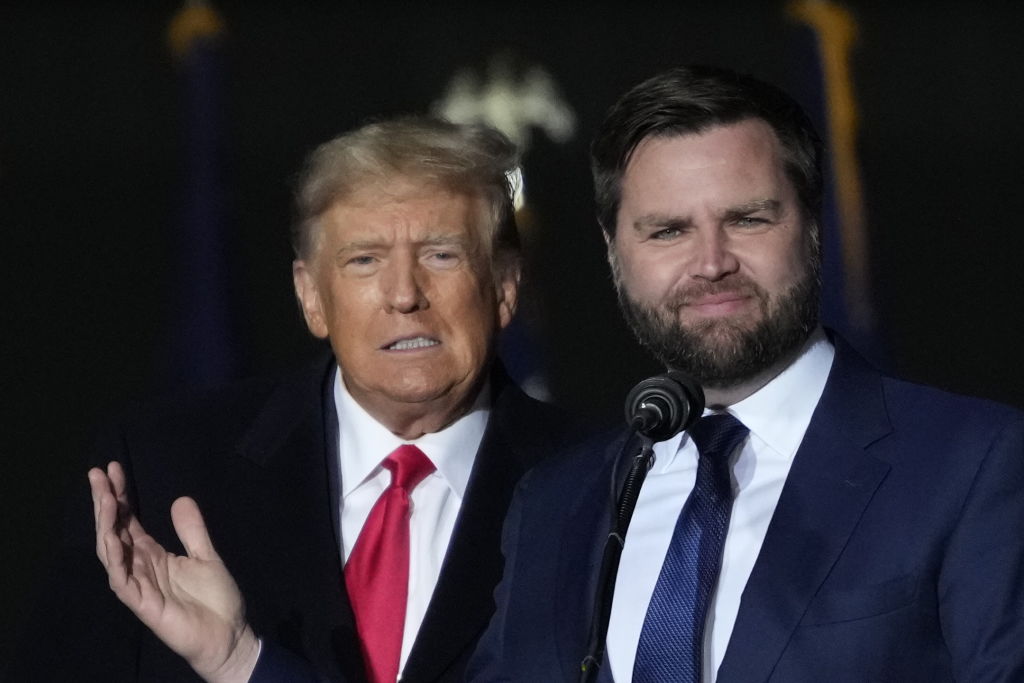
     

  • Donald Trump is a convicted felon. Some Ohio leaders react with fury, others silence

    Donald Trump is a convicted felon. Some Ohio leaders react with fury, others silence

    BY  Ohio Capital Journal

    A Manhattan jury made history Thursday when it convicted Donald Trump of 34 felonies. They relate to how he paid a porn star to stay quiet just before the 2016 election — and his actions cast doubt on Trump’s legitimacy during his one term as president.

    Despite now being a felon, Trump is for the third time the GOP nominee. Most of Ohio’s Republican leaders reacted with outrage to his conviction, while the governor didn’t have much to say, and the one statewide Democrat said the jury had spoken.

    Sen. J.D. Vance is on the shortlist to be Trump’s vice presidential pick and he took to the airwaves to call Trump’s prosecution political, and to say a lot of other stuff as well. On X Thursday, Vance falsely accused the Democratic Party of inventing a crime just to prosecute Trump and he made reference to a conspiracy theory with anti-semitic overtones.

    “This decision is a disgrace to the rule of law and our Constitution,” Vance wrote. “Dems invented a felony to ‘get Trump,’ with the help of a Soros funded prosecutor and a Biden donor Judge, who rigged the entire case to get this outcome. This isn’t justice, it’s election interference.”

    Actually, as the jury found, it was Trump who committed election interference. And legal experts pointed out that Trump’s lawyers helped pick the jury, put on witnesses and had input in the jury’s instructions. Trump himself could have taken the witness stand, but chose not to.

    Speaking from the White House Friday, President Joe Biden criticized Trump supporters for claiming that the justice system was rigged against Trump without providing any concrete evidence.

    “It’s reckless, it’s dangerous, it’s irresponsible for anyone to say this was rigged just because they don’t like the verdict,” Biden said.

    Ohio Attorney General Dave Yost, a likely contender for the GOP nomination to be governor in 2026, also slammed the proceedings that ended in Trump’s conviction.

    “This verdict is likely to be overturned. It is not the first unjust verdict, and it is why we have courts of appeals,” he said on X. “The aptly named (Manhattan District Attorney) Alvin Bragg picked his defendant and campaigned on prosecuting him — disreputable and unethical conduct that tarnished the justice system.”

    When it comes to courts of appeal, Yost has had his own difficulties. A panel of the 6th U.S. Circuit Court of Appeals on Wednesday ruled that Yost was improperly blocking signature gathering for a proposed amendment to the state Constitution that would reduce immunities the state has have from being sued. Yost on Thursday said he’d seek a ruling from the entire court.

    Some of the AG’s critics have accused him of stalling.

    He refused to approve a summary of the ballot language, which supporters need if they’re to gather 420,000 verified signatures from registered voters in time for the measure to make the November ballot. Yost is refusing to answer questions about a similar maneuver in 2019 that helped kill a voter-initiated repeal of a law at the center of the biggest bribery scandal in Ohio history.

    Lt. Gov. Jon Husted is likely to vie with Yost for the gubernatorial nomination. Like many other Ohio Republicans, he, too, said he was outraged over Trump’s conviction for having an extramarital tryst with a porn star, paying to silence her in order to improperly influence an election and then falsifying business records to cover it all up.

    “This quote from President Trump is ultimately the truth of the matter: ‘The real verdict is gonna be Nov. 5, by the people,’” Husted said on X. He then reposted that while saying further, “If you are mad about it, do something about it by donating, volunteering and voting.”

    Ever merciless, some commenters reminded the lieutenant governor that he was roundly booed at a 2020 Trump rally in Vandalia as he encouraged attendees to wear masks at the height of the coronavirus pandemic. Trump played a lead role in politicizing mask wearing and downplaying a scourge that has killed nearly 1.2 million Americans.

    Ohio’s top elections official also rushed onto social media to defend a newly minted felon who tried to overturn the results of the 2020 election and thereby steal the votes of 81 million Americans.

    “Partisan prosecutor,” Secretary of State Frank LaRose said on X. “Activist judge. Sham trial. Bogus verdict. It’s a sad day in America when a political party is so afraid of losing its grip on power that they’re willing to abuse justice to game an election. This will not stand.”

    LaRose is a key player in Ohio’s epic gerrymanderingquestionable voter purges and restriction of voting access, so it’s interesting that he’d accuse others of desperately clinging to power.

    One wag also pointed out that a jury had just found that Trump falsified numerous business records to further his conspiracy and that as Secretary of State, LaRose is in charge of Ohio’s business records. It’s unclear what — if anything — LaRose would have done if the former president faked them here in the Buckeye State.

    Cleveland businessman Bernie Moreno, who is challenging Democrat Sherrod Brown for Ohio’s other Senate seat, was also vociferous in his support of the only ex-president to also bear the title “felon.”

    “Today is a dark day for American democracy,” Moreno said on X. “Joe Biden and his leftwing allies engaged in election interference to prosecute their top political opponent on bogus charges. This verdict is representative of a banana republic, not a democracy. Sherrod Brown and DC Democrats should be ashamed of this weaponization of our justice system.”

    His statement ignores the fact that the Biden Justice Department declined to prosecute Trump on the charges of which the New York jurors found him guilty. It also ignores the fact that the Biden Justice Department is prosecuting the president’s own son and a sitting Democratic senator.

    Brown, his Democratic opponent, is facing a hard reelection in a Republican-leaning state. When asked to comment on Trump’s conviction Friday, Sen. Brown stuck to general principals.

    “I’m not a lawyer or a judge but I’ve said from the beginning that no one is above the law,” he said in an email. “Ultimately this is up to the legal system to sort out and for the American people to decide in November.”

    Gov. Mike DeWine’s office didn’t immediately respond to a request for comment. He’s a Republican who got on Trump’s bad side early in the pandemic, when DeWine implemented health orders that were recommended by experts.


    Marty Schladen
    MARTY SCHLADEN

    Marty Schladen has been a reporter for decades, working in Indiana, Texas and other places before returning to his native Ohio to work at The Columbus Dispatch in 2017. He’s won state and national journalism awards for investigations into utility regulation, public corruption, the environment, prescription drug spending and other matters.

    Ohio Capital Journal is part of States Newsroom, the nation’s largest state-focused nonprofit news organization.

    MORE FROM AUTHOR

  • Money paid, favors done. Messages detail relationship between Ohio regulator and energy executives

    Money paid, favors done. Messages detail relationship between Ohio regulator and energy executives

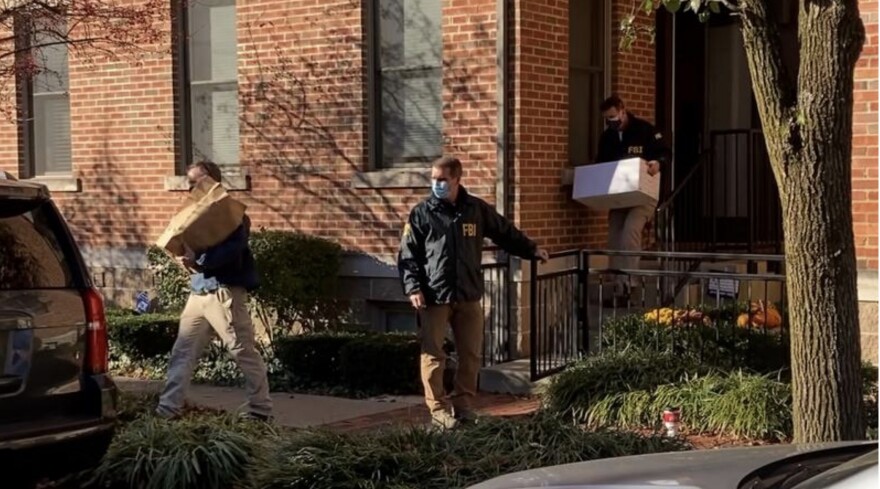
    FBI agents remove boxes of materials from PUCO Chairman Sam Randazzo’s condo in Columbus Nov. 17, 2020. Photo courtesy of Daniel Konik/Statehouse News Bureau.
    BY:  Ohio Capital Journal

    In early 2019, news of financial ties between Akron-based FirstEnergy and the man incoming-Gov. Mike DeWine had named to lead the Public Utilities Commission of Ohio began to spread. And as it did, FirstEnergy’s top executives feared they wouldn’t have a regulator they could control, according to documents filed in federal court late last week.

    “Great. Now we have none on the list” of nominees, then-CEO Chuck Jones texted Vice President Michael Dowling. Jones later added, ruefully, “Always need a backup plan.”

    As it happened, the nominee, Sam Randazzo, ended up being appointed to the commission after being paid $4.3 million by FirstEnergy. He proceeded to help draft a law providing the utility with a $1.3 billion bailout. The company spent another $60 million to pass and then to protect it from a citizen-initiated repeal in what law-enforcement officials have called one of the biggest bribery and money-laundering scandals in state history.

    Randazzo, Jones and Dowling haven’t been charged in the scandal, but after a jury trial that convicted two others, two guilty pleas, and a suicide, the three men could be the next targets as federal authorities continue their probe.

    If authentic, the communications filed on Friday indicate that the three met in Randazzo’s Columbus condo in December 2018. And they appear to show that the FirstEnergy executives agreed to pay Randazzo a large sum in exchange for favors when Randazzo became the state’s chief regulator.

    Another communication 23 months later — just after the FBI searched the condo in November 2020 — shows Randazzo providing a friend “the number for my home which the FBI does not have.”

    Demanding records

    Lawyers for Randazzo, Jones and Dowling didn’t immediately respond to requests for comment Monday, but attorneys for the former executives have said in separate court filings that they believe the feds are investigating their clients.

    The documents filed in federal court on Friday are part of a huge class-action suit against FirstEnergy, Jones, Dowling and a number of other defendants.

    In a deferred prosecution agreement, FirstEnergy in 2021 agreed to pay $230 million and admitted wrongdoing, including by bribing Randazzo. But the class-action plaintiffs — large pension and investment funds — are arguing that the company violated securities law by not disclosing its corrupt conduct. And, they argue, the company lost much of its value when that conduct came to light, leaving investors holding the bag.

    Randazzo has denied wrongdoing and he isn’t a defendant in the case, but the class-action plaintiffs want him to produce all communications relating to how he spent the $4.3 million he got from FirstEnergy just as he was poised to become its most powerful regulator.

    The plaintiffs have been accusing Randazzo since April of foot-dragging. They obtained the messages they filed Friday from a third party and are pointing to them as examples of Randazzo’s lack of cooperation.

    Early arrangements

    The earliest of the messages was on Dec. 18, 2018, and it appears that the three men had recently met in the residence that the FBI later searched.

    “Got it, Sam,” Dowling, then the FirstEnergy vice president, texted Randazzo. “Good seeing you as well. Thanks for the hospitality. Cool condo.”

    The “got it” was in response to a column of numbers Randazzo sent that appear to indicate that he was expecting payments from FirstEnergy through 2024:

    • 2019 — 1,633,333
    • 2020 — 600,000
    • 2021 — 600,000
    • 2022 — 600,000
    • 2023 — 600,000
    • 2024 — 300,000

    A seventh entry said “Total 4,333,333” — an amount equal to what FirstEnergy said was a bribe.

    The following day, Jones, the CEO, told Randazzo that he wouldn’t have to wait that long for the money, according to the filings. Jones also made it clear that he expected access to Randazzo.

    “We’re going to get this handled this year, paid in full, no discount,” the message says. “Don’t forget about us or Hurricane Chuck may show up on your doorstep! Of course, no guarantee he won’t show up sometime anyway.”

    Randazzo’s response seemed to be meant to reassure — and he linked the money to favors.

    “Made me laugh — you guys are welcome anytime and anywhere I can open the door,” he said. “Let me know how you want me to structure the invoices. Thanks.”

    Connections

    But on Jan. 30, 2019, problems popped up with Randazzo’s nomination.

    FirstEnergy’s nuclear-owning subsidiary, FirstEnergy Solutions, was going through bankruptcy and it had listed the Sustainability Funding Alliance of Ohio on one of its disclosures. Randazzo controlled the group and FirstEnergy had paid him millions through it in the past. Now the press was on to the matter.

    “Chuck — Sam Randazzo is going to pull out of the PUCO process ASAP and it’s related to a disclosure on a (FirstEnergy Solutions) bankruptcy filing,” Dowling texted Jones, according to the documents filed Friday. “Reporters called (FirstEnergy) today inquiring about the relationship between (FirstEnergy Solutions) and a group called the Sustainability Funding Alliance of Ohio. You can guess the rest.”

    That’s when Jones lamented not having a “backup plan” in the event that Randazzo was not seated on the utility commission. Dowling agreed.

    “This is awful,” he wrote. “The FirstEnergy Solutions bankruptcy filing names that group and Sam names the same group on a financial disclosure statement. Unreal. I don’t know why it was listed in the (FirstEnergy Solutions) bankruptcy filing. The payments we made year-end ’18 came from (FirstEnergy) Corp. Services.”

    Dowling was ready to throw Randazzo under the bus if the connection proved to be an embarrassment to the incoming DeWine administration.

    “They’re going to be mad at Sam (and hopefully not us) for not disclosing the financial relationship,” Dowling wrote. “That’s Sam’s responsibility.”

    A day later, however, the financial connection between FirstEnergy and Randazzo apparently wasn’t sufficiently embarrassing and he was picked to head up the PUCO.

    “A bullet grazed the temple,” Dowling told Jones, according to one of the texts filed last week.

    “Forced DeWine/Husted to perform battlefield triage,” Jones responded, referring to Lt. Gov. Jon Husted. “It’s a rough game.”

    A still rougher game

    In a trial held in Cincinnati from late January to mid-March, prosecutors put on witnesses and displayed communications describing Randazzo’s 2019 role in drafting House Bill 6, the bailout bill. Not only did it provide $1 billion to prop up two failing nuclear plants FirstEnergy was spinning off, it charged ratepayers about $100 million a year to insulate the company from an economic downturn. For FirstEnergy, it was easy money, in other words.

    In June, U.S. District Judge Timothy Black sentenced former Ohio House Speaker Larry Householder, R-Glenford, to 20 years in prison for orchestrating the racketeering scandal. Former state GOP Chairman Matt Borges got five years for his role.

    By November of 2019, HB 6 was on the books after FirstEnergy and a subsidiary plowed $36 million into a brutal, dishonest effort to turn back a citizen-initiated repeal. But the FirstEnergy executives weren’t done with Randazzo.

    On Nov. 10, 2019, Jones texted a coal executive that another cloud loomed for FirstEnergy.

    “And the (FirstEnergy) rescue project is not over,” Jones said, according to documents filed as part of the class-action suit. “At (Edison Electric Institute) financial conference. Stock is gonna get hit with Ohio 2024. Need Sam to get rid of the ‘Ohio 2024’ hole.”

    That was an apparent reference to a requirement that FirstEnergy file a “rate case” with the PUCO in 2024. In such a proceeding, regulators assess a utility’s operations and make a judgment about whether its rates and revenues are reasonable.

    FirstEnergy was apparently afraid they wouldn’t be. On Nov. 21, 2019, just 11 days after Jones expressed his concerns, the PUCO under Randazzo’s leadership issued an order saying it was “no longer necessary or appropriate” to require FirstEnergy to file a rate case.

    The next day, Jones wanted to express his appreciation to Randazzo. He did so by sending the erstwhile regulator a list of prices for six energy stocks that day. FirstEnergy stocks were up 1.5%. The next highest was Avangrid, which was up 0.86%.

    “Thank you!!” Jones wrote.

    Randazzo replied, “Ha — as you know, what comes up may come down… Thanks for the note. Spoke to Mike (Dowling) last night.”

    Then Jones said, “My Mom taught me to say Thank you.”

    Flying high

    By the start of 2020, things seemed to be going well for those who orchestrated the bailout.

    FirstEnergy Solutions would emerge from bankruptcy in February as a separate company, Energy Harbor. The class-action plaintiffs argue that one of FirstEnergy’s major goals in the scheme was to prop up the nuclear plants, get them off their books and shed the liability of having to pay for a decades-long process to close and clean up after them.

    At the same time, FirstEnergy was funneling millions more dark-money dollars into an effort to get the state’s legislature to put a constitutional amendment on the ballot. It would change the state’s term-limits so Householder could stay speaker for another 16 years — and presumably continue to do the utilities’ bidding.

    But then in July 2020, it all crashed down.

    On July 21, the FBI arrested Householder, Borges and other conspirators. By the next day, FirstEnergy stock had lost 34% of its value, the class-action plaintiffs contend.

    FirstEnergy fired Jones and Dowling the following October. And then in November, 2020, Randazzo was forced to resign from the PUCO after the FBI searched his condo.

    “Pretty stressful few days which started Monday at 6:00 when 10-12 FBI agents with their guns drawn announced their arrival at our home,” Randazzo emailed a friend on Nov. 21, according to the documents filed by the class-action plaintiffs. “But, Carol and I are handling it and doing better each day. Neighbors, friends (like you) family, PUCO staff and people I have worked for over the years have been great. Roger Sugarman (his attorney) is my new hero. So onward!”

    Then Randazzo encouraged the friend to call him on the number he believed that the FBI didn’t have.

    _________________________

    Marty Schladen
    MARTY SCHLADEN

    Marty Schladen has been a reporter for decades, working in Indiana, Texas and other places before returning to his native Ohio to work at The Columbus Dispatch in 2017. He’s won state and national journalism awards for investigations into utility regulation, public corruption, the environment, prescription drug spending and other matters.

    MORE FROM AUTHOR

  • Texts, calendars, emails link DeWine to FirstEnergy’s bribery scandal

    Texts, calendars, emails link DeWine to FirstEnergy’s bribery scandal

    BY: JAKE ZUCKERMAN – Ohio Capital Journal

    Gov. Mike DeWine and his administration played a hands-on role passing an allegedly pay-for-play nuclear bailout and appointing an industry-friendly regulator who has since been accused of taking a $4.3 million bribe, documents and messages show.

    Calendar records show DeWine, a Republican, met repeatedly to discuss energy policy with FirstEnergy Corp. officials and at least once with GOP House Speaker Larry Householder, who has been criminally accused of taking a separate, multimillion-dollar bribe from the company to pass the bailout.

    Despite a cautionary letter from environmental groups and a 198-page dossier from his former campaign staffer warning against the move, DeWine appointed Sam Randazzo in 2019 to the head of the Public Utilities Commission of Ohio. FirstEnergy last summer admitted it paid Randazzo a $4.3 million bribe. Randazzo has not been charged with a crime and denies wrongdoing.

    Newly released text messages show FirstEnergy executives describing an open line with the administration on the selection and inside support from Ohio’s chief executive.

    “When the Gov Elect asked me about attributes, I listed integrity, work ethic, creativity, thick skin, circumspection in public statements,” FirstEnergy’s then CEO texted Randazzo about the open PUCO seat in December 2018, just before DeWine took office.

    “You fit all of those.”

     Former FirstEnergy CEO Charles “Chuck” Jones. Source: FirstEnergy, via Flickr

    In one text, FirstEnergy executive Mike Dowling credits DeWine and Lt. Gov. Jon Husted with performing “battlefield triage” to save Randazzo’s appointment before a key vote. Both DeWine and Husted have previously denied that a redacted version of the text message that appeared in criminal documents referred to them.

    Federal prosecutors accused House Speaker Larry Householder of secretly controlling a nonprofit that took $60 million from FirstEnergy. He allegedly used the money to enrich himself personally and politically and to ensure the passage of House Bill 6, which provided a massive bailout to two nuclear plants owned at the time by FirstEnergy. Householder was charged with racketeering and awaits trial. Two alleged conspirators pleaded guilty.

    FirstEnergy admitted last summer to the $60 million payment as well as a separate $4.3 million bribe to Randazzo just before he started as Ohio’s top utility regulator. The payment topped off $22 million in consulting fees to Randazzo since 2010 from the company.

    Court documents from prosecutors reveal no focus on DeWine, who has not been charged with any crime. However, a review of records turned over in subpoenas, public records requests for his official calendars by the Energy and Policy Institute, text messages attached to regulatory filings, and others show DeWine and his staff repeatedly influencing and shepherding HB 6 into law.

    On the campaign trail in July 2018, DeWine visited one of the nuclear plants that would receive a bailout, his official calendar shows. A month later, he met with FirstEnergy executives at their Akron headquarters. In October of that year, DeWine met with FirstEnergy at a fundraiser for Republican governors.

    FirstEnergy contributed about $1 million in total to DeWine’s campaign, political organizations supporting it, and to another nonprofit supporting his daughter’s campaign for county prosecutor, according to the Dayton Daily News.

    After winning a close race, DeWine, Husted, Jones and Dowling celebrated over dinner at The Athletic Club in Columbus. The next day, Jones sent Randazzo the text message (above) indicating they discussed the open PUCO seat.

    In January of 2019, the FirstEnergy officials texted one another trying to fill not just one but two open PUCO seats, all the while mentioning phone calls with “DeWine guys” about it.

    “That’s their plan but nothing certain until Sam’s [Randazzo’s] meeting [with DeWine],” Jones texted Dowling. “Four people in DeWine world, you, Sam, and I know about this.” The PUCO seats would eventually be filled by Randazzo with another commissioner renewed.

    Dowling relayed to the other two men a message from Josh Rubin — a DeWine 2018 campaign adviser and a FirstEnergy lobbyist. He said once Randazzo takes office, DeWine will “lean on him on everything.”

    Several texts focus on HB 6. The bill (and eventual law) would bail out FirstEnergy’s nuclear plants, subsidize two coal plants owned by other Ohio utility companies, and create a “decoupling” mechanism that effectively put ratepayers on the hook to guarantee certain revenue streams of FirstEnergy’s. Prosecutors estimate the bill as worth about $1.3 billion to the company.

    Two days before the bill was introduced, DeWine’s calendar shows a slot for an “Energy Discussion” at the governor’s residence. Later that month, after the bill was repeatedly criticized during an opponent testimony hearing at the statehouse, DeWine, Husted, Randazzo and various staffers all met up at 5 p.m. for what the governor’s calendar calls a “Nuclear Bailout Bill Discussion.”

    Over the next month, DeWine’s calendars show two entries for energy policy meetings, plus a call with Householder about HB 6, and another call on the bill.

    On June 9, 2019, DeWine showed signs of wavering.

    “Sam, what do we know about whether nuclear plants need this boost?” DeWine, using his personal email, wrote to Randazzo. “One editorial suggested testimony was not conclusive.”

    Dowling paid a visit to the governor’s residence the next day. Randazzo responded to DeWine’s email on June 11, casting doubt on the studies referenced in the editorials.

    On July 1, Dowling texted Jones.

    “Just had a long conversation with JHusted just now,” he said, going on to explain that Husted sought to extend the length of the bailout. “All is well.”

    Court records contain another text from Jones stating that “State Official 2,” later confirmed to be Husted, joined with others in “fighting to the end” for a beefier bailout.

    After a long slog, lawmakers passed HB 6 on July 23, 2019. DeWine signed it into law mere hours later.

     FBI agents remove boxes of materials from PUCO Chairman Sam Randazzo’s condo in Columbus Nov. 17, 2020. Photo courtesy of Daniel Konik/Statehouse News Bureau.

    Loyalty to staff and HB 6

    As the FBI made its first arrests, DeWine began a pattern of defending HB 6 on the merits and showing unflinching loyalty to his staffers, some of whom have ties to FirstEnergy.

    Householder, his political strategist, a prominent GOP lobbyist, and two FirstEnergy lobbyists were arrested and charged with racketeering in connection with HB 6 on July 21, 2020. The next day, DeWine stood by the law he signed.

    “Because people did bad things does not mean that the policy is not a good policy,” he said.

    He reversed himself the next day and called for a repeal of the bill.

    In October, FirstEnergy fired Jones, Dowling, and fellow executive Dennis Chack as it waged an internal investigation. The company fired another two executives days later “due to inaction and conduct that the Board determined was influenced by the improper tone at the top.”

    At this point, the public remained unaware of the multimillion-dollar financial arrangement between the embattled FirstEnergy and Randazzo. However, on Nov. 16, 2020, FBI agents were seen raiding Randazzo’s condo and removing boxes of material from inside. The next day, FirstEnergy submitted a little-noticed securities filing outlining the $4.3 million payment.

    Despite the images of FBI agents entering Randazzo’s condo, DeWine publicly defended his appointee.

    “We have no indication he’s under investigation or he’s the target of an investigation. We’ll wait until we find additional facts,” he said in a Nov. 17, 2020 news conference. “Look, the FBI many times will indicate if someone is a target. They have not indicated he’s a target. I have no reason to think he’s a target. I don’t know. So, we’re waiting for additional information, quite candidly. I hired him. I think he’s a good person. If there is evidence to the contrary, then we’ll act accordingly, but not going to act without facts.”

    Randazzo would resign three days after that statement.

    Mid-summer 2021, FirstEnergy signed a deferred prosecution agreement with the U.S. Department of Justice. The company agreed to pay a $230 million penalty and cooperate with investigators to avert a charge of honest services wire fraud.

    The agreement contained a lengthy set of facts from the company, stating it paid the $64 million in bribes in exchange for official action from Householder and Randazzo.

    Days after the agreement was announced, DeWine held a press conference on anti-hazing legislation. Reporters asked questions afterward about the agreement, including a line that refers to “State Official 1” and “State Official 2” lobbying to ensure Randazzo’s appointment. DeWine said he’s “not aware” of anyone in his administration, including himself, appearing in the document. Husted, in a statement, said he too “does not believe” he’s referenced in the document.

    Texts obtained by the Ohio Consumers’ Counsel from FirstEnergy and attached to a regulatory filing contain the unredacted version of the text, identifying DeWine and Husted by name.

    In 2017, a lobbyist named Dan McCarthy created a nonprofit entity called Partners for Progress to engage in “advocacy in support of nuclear power,” tax records show. FirstEnergy would later admit to paying $25 million to Partners for Progress, some $15 million of which went to Householder’s nonprofit.

    DeWine hired McCarthy as his legislative director in 2019, around the time McCarthy stepped down from the organization’s board. In February 2021, after media reports identified McCarthy’s role with Partners for Progress, DeWine defended McCarthy.

    “As far as I know, Dan McCarthy has been well-respected for many, many years, long before he started working for me as our legislative director, and I have faith in his integrity,” DeWine said.

    McCarthy resigned in September 2021.

    DeWine response

    In a phone interview, DeWine spokesman Dan Tierney said the OCC-obtained text messages and meetings listed by the Ohio Capital Journal contain no new information.

    The texts, he said, in fact show the lack of a role from DeWine and Husted within the scandal. He said prosecutors have not subpoenaed him or any of his employees.

    “This all along has been a Larry Householder scandal and a FirstEnergy scandal,” he said.

    When asked whether DeWine, a former prosecutor and attorney general, detected any sense of impropriety during all his contacts with Householder and FirstEnergy leading up to the passage of House Bill 6, he declined comment.

    Husted offered a similar comment through a spokeswoman, stating that “there is nothing new here” in the texts, emails and meetings.

    “This kind of advocacy is well within his responsibilities as a public official, and, as we know, the bill was ultimately passed with bipartisan support,” he said.

  • FirstEnergy paid $4.3 mil to top energy regulator and reaped the benefits, court docs state

    FirstEnergy paid $4.3 mil to top energy regulator and reaped the benefits, court docs state

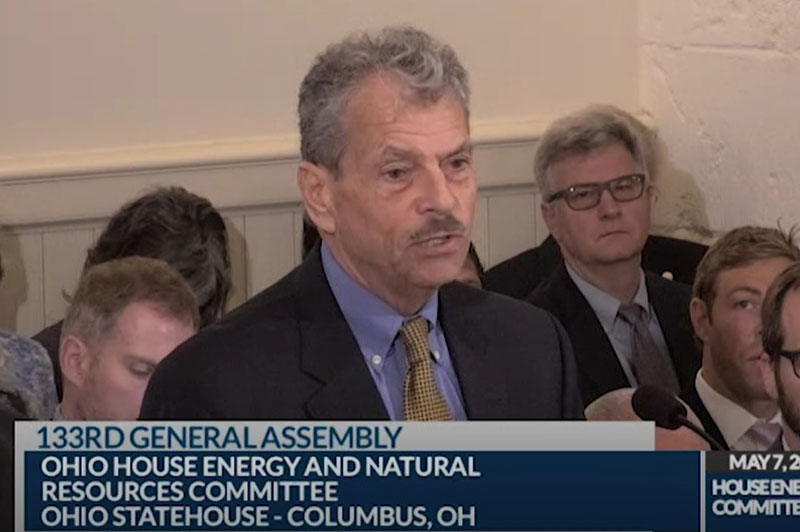
    Then-PUCO Chair Sam Randazzo testifies as an interested party regarding House Bill 6 on May 7, 2019.

    Source: Ohio Channel.

    “HB 6 F(***) ANYBODY WHO AINT US,” the executive wrote.

    BY: JAKE ZUCKERMAN and Ohio Capital Journal

    An energy lobbyist who Gov. Mike DeWine appointed as the state’s top regulator of public utilities received $22 million from FirstEnergy Corp. in the decade before his appointment — including $4.3 million paid just before assuming the post and specifically to execute official duties to benefit the Akron-based utility — court documents revealed Thursday.

    Sam Randazzo, who resigned as chairman of the Public Utilities Commission of Ohio after federal agents raided his Columbus home, used his PUCO chairmanship to scuttle a requirement that FirstEnergy undergo a rate review set for 2024, which company executives believed would hurt its bottom line, the documents state.

    FirstEnergy entered into a deferred prosecution agreement — in which the U.S. Department of Justice could drop the charge if the company meets certain conditions including a $230 million criminal penalty — on one count of wire fraud.

    It also agreed to a stipulation of facts detailing its nearly $61 million in payments to an account the former speaker of the Ohio House allegedly controlled and spent to pass House Bill 6, legislation worth an estimated $1.3 billion to the company.

    Thursday’s filing, however, is flush with new details about FirstEnergy’s long relationship with Randazzo, dating back to a contract in 2010 and a consulting deal inked in 2013.

    The agreement states one FirstEnergy executive texted another on Nov. 15, 2019 that Randazzo is “going to make the requirement [for a rate review] to file go away, but I do not know specifically how he plans to do it.” The document doesn’t directly identify the executives.

    On Nov. 21, 2019, PUCO issued an order finding it is “no longer necessary or appropriate” that three utilities owned by FirstEnergy file a new case when its current rate structure expires in 2024.

    Executive 1 thanked Randazzo via text the next day, according to prosecutors, attaching an image showing the company’s stock price increasing.

    An email for Randazzo on file with the Supreme Court is no longer in operation. In a statement obtained by the Cincinnati Enquirer, he said he executed his duties as chairman lawfully and denied performing any action to advance FirstEnergy’s interests. He said all payments to him were made under his consulting agreement with the utility.

    “In the fall of 2020, it became clear that issues surrounding House Bill 6 and a public attack on my background and character had escalated to a point that made it impossible for me to effectively perform my duties at the PUCO,” he said, explaining his choice to step down.

    According to prosecutors, Executive 1 and Executive 2 met Randazzo at his condo in late December 2018 to discuss remaining $4.3 million on his consulting agreement and a job posting for a PUCO seat. FirstEnergy had no legal requirement to make the payment but did so anyways.

    When a related court filing divulged Randazzo’s company accepted payments from FirstEnergy, executives worried the disclosure would torpedo the appointment. However, it only “grazed the temple,” they said, and forced “State Official 1” and “State Official 2” to perform “battlefield triage.”

    The governor nominates PUCO commissioners off a shortlist from a nomination council. A DeWine spokesman did not answer specific inquiries, including whether the governor is one of the unmentioned state officials.

    “As I have consistently said, we understood that Sam Randazzo had worked for manufacturing companies, energy companies, and consumers, and that he had done work for First Energy. Sam Randazzo was a well-known subject-matter expert in energy issues,” the governor said in a statement. “If, as stated in the court documents, Sam Randazzo committed acts to improperly benefit First Energy, his motives were not known by me or my staff.”

    Haley Carducci, a spokeswoman for Lt. Gov. Jon Husted, didn’t specifically answer whether Husted is one of the two state officials.

    “The Lt. Governor has not been contacted by any federal law enforcement officials regarding this case, so we have no reason to believe that he is mentioned in this document,” said Husted spokeswoman Haley Carducci.

    Along with Randazzo’s help on the regulatory side, the agreement states that he helped craft and review language of House Bill 6 including a “decoupling” provision, which created a ratepayer backed guarantee of FirstEnergy’s revenues at 2018 levels, a good year for the company. The bill also bailed out two nuclear plants owned by a former FirstEnergy subsidiary; bailed out two coal plants owned by a spread of different utility companies; and gutted the state’s renewable energy and efficiency standards.

    Randazzo has deep ties to the fossil fuel energy industry. He worked as a lobbyist and lawyer for the Industrial Energy users Ohio, which represents interests of energy-intensive manufacturing and commercial business before the PUCO.

    Lobbying records show he represented Greenwich Neighbors United, which fought off a potential wind farm development in Huron County; the Ohio Gas Company; and Vectren Corp., a natural gas company.

    As a donor, he contributed more than $282,000 to state candidates over 23 years, according to an analysis from the National Institute on Money and Politics. More than $194,000 went to Republicans, $36,000 to Democrats, and $48,000 to candidates of unspecified parties.

    When his name appeared on a short list of potential candidates for DeWine to choose, a spread of environmental groups wrote a letter outlining “serious concern” for Randazzo’s “extreme bias” against clean energy.

    “Mr. Sam Randazzo has worked earnestly to dismantle Ohio’s energy efficiency resource standard and renewable portfolio standard (RPS) since 2012 via multiple pieces of legislation,” they wrote. “He was supportive of the legislation that froze Ohio’s standards for two years, worked behind the scenes with the study committee that issued a faulty report allegedly assessing the costs and benefits of the RPS and EERS, and even continued to push the repeal and weakening of these standards after Governor Kasich’s veto of a bill that would have essentially eliminated the standards.”

    The Ohio Consumers Counsel, a state agency that represents residential ratepayers before PUCO, issued a statement after news broke of the filing.

    “The public got some justice today regarding the Ohio House Bill 6 scandal and FirstEnergy,” said agency director Bruce Weston. “But justice is also a longer road that requires state reforms to curb the utilities’ political influence that is costing Ohioans money on their utility bills.”

    Rep. David Leland, D-Columbus, said the information about Randazzo places the scandal right on DeWine’s doorstep.

    “This, combined with the significant money FirstEnergy gave to his campaign makes it clear that Governor DeWine needs to come clean to the people of Ohio about his role in this historic scandal,” he said.

    Catherine Turcer, director of Common Cause Ohio, which frequently advocates for anti-corruption and campaign finance reform legislation, said the entire episode highlights that current law allows some political entities to spend enormous sums of money without ever disclosing the source.

    “Clearly, Ohio legislators also need to create greater transparency so that voters can ‘follow the money’ and determine who is funding political spending by all entities including nonprofits. It’s not yet too late for us to pass new laws that will shine a light on ‘dark money,’” she said. “However, our state legislative leaders need to act with urgency and make transparency and accountability a top priority — or Ohioans will undoubtedly face yet another embarrassing scandal.”

    Shortly after HB 6 passed, a FirstEnergy executive texted Randazzo, according to prosecutors. Attached was an edited image of Randazzo’s face atop Mount Rushmore, with FirstEnergy executives and lobbyists alongside him on the iconic monument.

    “HB 6 F(***) ANYBODY WHO AINT US,” the executive wrote.

  • After financing xenophobic campaign, FirstEnergy deplores anti-Asian bigotry

    After financing xenophobic campaign, FirstEnergy deplores anti-Asian bigotry

    By Marty Schladen and Ohio Capital Journal

    There has been a terrifying surge in violence against Asians over the past year, prompting one Ohio company to take a stand on an issue it was arguably on the other side of in 2019.

    Meanwhile, Ohio’s lieutenant governor is digging in over comments he made last week. (Ohio Lt. Gov. bashes China on coronavirus, won’t address Trump)

    There has been a drumbeat of random violence against Asians throughout the coronavirus pandemic. 

    Earlier this month, a man went on a shooting rampage in the Atlanta area, killing eight. Six of those victims were Asian women. Then on Monday, sickening surveillance footage showed a man in New York kicking a 65-year-old Asian woman in the stomach and then twice kicking her in the head and saying “you don’t belong here.

    The attacks are part of an alarming trend. Nearly 3,800 instances of anti-Asian hate — most of them verbal — were reported to Stop AAPI Hate over the past year. The organization said many more unreported incidents have undoubtedly taken place.

    Researchers have linked the increase in anti-Asian hate to former President Donald Trump’s rhetoric regarding the coronavirus. He repeatedly referred to it as the “China virus” and the “Kung flu.”

    Last Friday, one Ohio company condemned violence against Asians.

    “FirstEnergy condemns the rise in violence across the country and stands firm in our support of the Asian-American community — which includes many of our employees, customers, suppliers and stakeholders,” the company said in a tweet.

    As Dave Anderson of the Energy and Policy institute flagged over the weekend, that’s a far cry from the tone of FirstEnergy-financed advertising during the 2019 fight over House Bill 6 — a $1.3 billion energy bailout that morphed into one of the biggest corruption scandals in Ohio history.

    After Gov. Mike DeWine signed the bailout law, FirstEnergy and related interests funded a furious fight to stop a citizen initiative to repeal it. Much of the campaign consisted of bogus claims that the repeal effort was really a Chinese conspiracy to take over Ohio’s power grid. Some of the rhetoric in the million-dollar campaign might even have surpassed Trump’s.

    “They took our manufacturing jobs,” one spot ominously opens. “They shuttered our factories. Now they’re coming for our energy jobs. The Chinese government is quietly invading our electric grid.”

    As the ad makes these assertions, it flashes video of Chinese President Xi Jinping at a Communist Party function.

    In another ad meant to scare Ohioans from signing the petition to repeal the bailout, the FirstEnergy-funded effort again falsely linked bailout opponents to China.

    “Warning!” it said. “Don’t give your personal information to the Chinese government. Don’t sign their petition allowing China control over Ohio.” 

    Asked about the contrast between the stance FirstEnergy took last week and the advertising campaign it helped fund in 2019, a spokeswoman said that the company is under new management.

    “FirstEnergy’s new leadership team is fully committed to diversity and inclusion and condemning violence and discrimination against Asian Americans,” the spokeswoman, Jennifer Young, said in an email. “We stand behind our statement and will continue to support and foster a workplace and world where all races, ethnicities and other targeted groups are valued and respected.”

    Indeed, in October the company fired CEO Chuck Jones and other top executives after an internal investigation found that the company had made a $4 million payment to DeWine’s appointee to Ohio’s utility regulator just before the HB 6 fight heated up. 

    As FirstEnergy works to move past the rhetoric of 2019, Ohio’s lieutenant governor is digging in on rhetoric from last week.

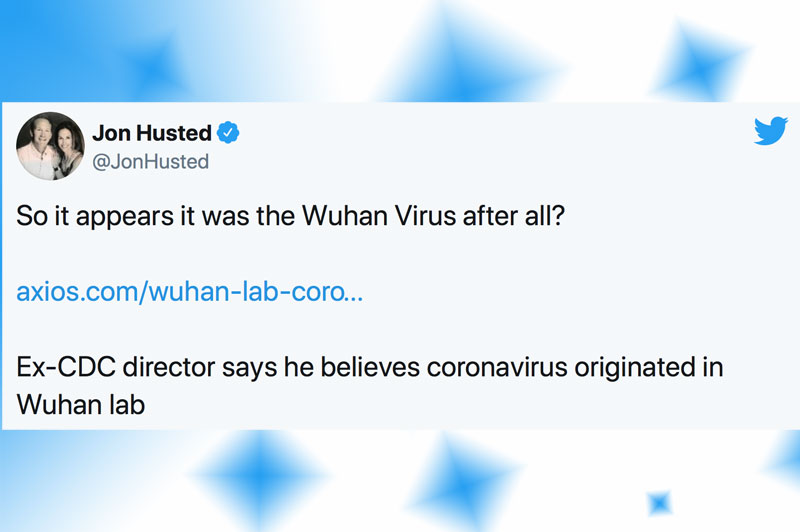
    On Friday, as FirstEnergy was denouncing anti-Asian violence, Lt. Gov. Jon Husted tweeted a story about Robert Redfield, former director of the U.S. Centers for Disease Control and Prevention. Without providing evidence, Redfield claimed that the coronavirus had escaped from a laboratory in Wuhan, China — a claim the World Health Organization called “extremely unlikely.”

    Despite that information being in the Axios story, Husted tweeted the story with the question, “So it appears it was the Wuhan Virus after all?

    Ohio Sen. Tina Maharath, D-Columbus, is the daughter of Laotian refugees. She told the Associated Press that Husted’s comments echoed Trump’s and only aggravated anti-Asian sentiment.

    Husted denied that.

    “I was just pointing out that this is an international crisis, in my opinion, that the Chinese government is responsible for and I wanted an independent investigation,” he told the AP. “So I wasn’t trying to accomplish anything that the political left or political right thinks that I might have from that tweet other than to draw attention to the issue.”

    In an article in the prestigious journal Nature Medicine, virologist Angela L. Rasmussen said that the “virus probably evolved in a bat host until an unknown spillover event into humans occurred.”

    She called claims that the pandemic started with a laboratory accident or intentional engineering “outright ridiculous conspiracy theories.”

    As for placing blame for the pandemic on government responses, there seems to be plenty of that to go around. 

    Deborah Birx, Trump’s coronavirus response coordinator, last weekend suggested to CNN that Trump’s bungled response to the pandemic may have cost hundreds of thousands of lives. A Trump supporter, Husted has avoided criticizing Trump’s coronavirus response.

  • DeWine, state leaders announce $430M in coronavirus relief

    DeWine, state leaders announce $430M in coronavirus relief

    Marty Schladen

    Marty Schladen has been a reporter for decades, working in Indiana, Texas and other places before returning to his native Ohio to work at The Columbus Dispatch in 2017. He’s won state and national journalism awards for investigations into utility regulation, public corruption, the environment, prescription drug spending and other matters.

    Ohio Gov. Mike DeWine and the state’s legislative leaders on Friday announced how they’d allocate almost half of what the state has left in federal coronavirus-relief dollars.

    The state has about $1 billion unexpended from its share of the $2.2 trillion CARES Act that Congress passed in March. At least until the feds change the rules, the funds have to be spent by Dec. 31.

    Social-service groups that deal with issues of homelessness and hunger have been clamoring for months for a share of the money, as have business groups and others. So it’s been up to DeWine and the legislature to decide what to do with the money while Congress appears stymied over further coronavirus relief.

    “We tried to look at what the needs were and what had already been put out,” DeWine said during a remote press conference. “We don’t know whether Congress will pass another bill or not.”

    The state is holding about half of the funds for coronavirus testing and contact tracing and other needs while it awaits a possible second round of relief — which may or may not include assistance to state and local governments.

    The expenditures announced Friday include:

    • $50 million for mortgage and rental assistance to families making 200% or less of the federal poverty level 
    • $125 million for businesses with up to 25 employees
    • $37.5 million for restaurants and bars
    • $100 million for colleges and universities to do testing, contact tracing and provide mental-health services
    • $62 million for rural and critical-access hospitals
    • $25 million for non-profits providing services such a food banks, homeless shelters and other social services
    • $20 million for the arts

    A good deal more of the money was focused on businesses than on assisting individuals who are suffering most. But several in Friday’s press conference said they hope by helping small businesses keep their doors open, people will be able to get or keep jobs.

    “We know some businesses are barely making it,” Lt. Gov. Jon Husted said of that portion of the package. “This is focused on them.”

    For their part, some leaders of social-service organizations said they were grateful for the help they will receive.

    “We’re pleased that Gov. DeWine finally deployed federal coronavirus relief funds to help people avoid getting evicted during this pandemic,” Bill Faith, executive director of the Coalition on Housing and Homelessness in Ohio, said in a written statement. “And we appreciate (Ohio) Controlling Board members’ support, especially Sen. (Matt) Dolan (R-Chagrin Falls) and Sen. (Jay) Hottinger (R-Newark) who took a personal interest in keeping struggling Ohioans safely in their homes. We look forward to seeing details on how the program will be implemented. Given the Dec. 31 deadline to use these funds, we would welcome the governor’s assistance in advocating for Congress to provide additional rental assistance into 2021.”

    The Ohio Poverty Law Center also released a statement praising state leaders for their action. But it warned that it won’t be enough.

    “As Ohioans continue to experience job and income loss due to the pandemic, additional federal and state resources will be needed to prevent evictions and keep Ohioans safe, especially as we get closer to the expiration of the Centers for Disease Control and Prevention’s eviction moratorium,” it said. “We hope housing assistance will be among the highest priorities for resources in the coming weeks and months.”

  • Ohio approved for $717M in federal pandemic unemployment supplement

    Ohio approved for $717M in federal pandemic unemployment supplement

    By Marty Schladen and Ohio Capital Journal

    The federal government has approved a $300-a-week supplement for unemployed Ohioans, Lt. Gov. Jon Husted said on Tuesday. He added that people should start receiving the funds before the end of the month.

    Given the amount the state is receiving — $717 million — and assuming that about 500,000 Ohioans are eligible, that’s enough for just under five weeks’ worth of benefits.

    Federal policymakers have been struggling to come up with a coronavirus-related unemployment supplement since an earlier, $600-a-week one expired at the end of July.

    The Democratically led U.S. House of Representatives in May passed a $3 trillion relief bill that would have extended the $600-a-week supplement. Senate Majority Leader Mitch McConnell, R-Kentucky, in July introduced a $1 trillion bill with a $200-a-week supplement, but he acknowledged that he didn’t have the votes to pass it.

    Amid the impasse and dire predictions that many unemployed Americans would go hungry or homeless, President Donald Trump took executive actions freeing up $44 billion in disaster-relief funds for a supplement. 

    The benefits will be awarded retroactively to Aug. 1. 

    “We’re still set for mid to late September,” Husted said during a Tuesday press conference when asked when Ohioans will begin seeing the funds. “We have been approved for $717 million. That will be paid out until the money’s gone and at that point in time we would need to see an action from Congress appropriating additional money to continue that program.”

    It’s unclear whether such action is forthcoming. 

    In negotiating with the White House last month, House Speaker Nancy Pelosi, D-Calif., and Senate Minority Leader Chuck Schumer, D-New York, agreed to come down to $2 trillion in their relief bill. But the Washington Post reported Tuesday that McConnell was moving in the opposite direction, planning to introduce a relief bill about half the size of his earlier one.

    In a piece of good news for some struggling Ohioans, Gov. Mike DeWine on Tuesday announced that another round of federal food assistance for children eligible for free or reduced-price meals is coming later this month. He said that the first round of such funding in the spring provided more than $200 million in food assistance to more than 800,000 children.

    The governor called on Ohio schools to share information about who is eligible for the program with state officials.

    “The goal is to ensure that every single child gets the benefit from this program,” DeWine said.

    Marty Schladen
    Marty Schladen has been a reporter for decades, working in Indiana, Texas and other places before returning to his native Ohio to work at The Columbus Dispatch in 2017. He’s won state and national journalism awards for investigations into utility regulation, public corruption, the environment, prescription drug spending and other matters.