Tag: Lt. Governor Jon Husted

  • Ohio first state to implement two technology tools from Connect Our Kids to help children services professionals

    Ohio first state to implement two technology tools from Connect Our Kids to help children services professionals

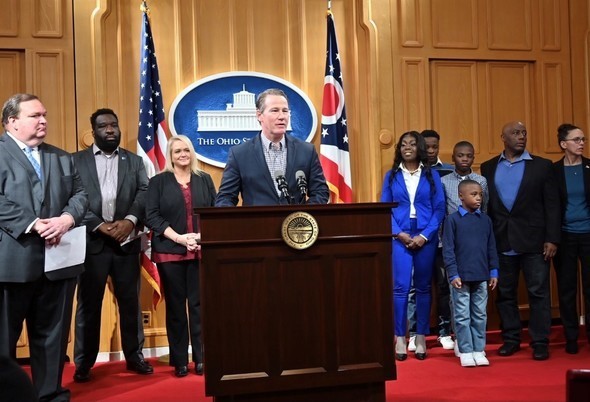
    Columbus, Ohio – Lt. Governor Jon Husted and Ohio Department of Job and Family Services Director Matt Damschroder announced Tuesday that Ohio is the first state to implement two technology tools from Connect Our Kids. The tools will help children services professionals connect Ohio’s 3,100 foster youth with their forever family. They were joined by partners from InnovateOhio, Kinnect, the Dave Thomas Foundation, and Ohio CASA.

    The Family Connections tool is a genogram or a digital diagram that illustrates an individual’s family members. Professionals can use the desktop or mobile app versions to build family trees, find family contact information and engage family and supporters of children in foster care. The People Search tool uses public information from over 300 sources and covers over 3 billion people to exponentially expand the pool of potential kinship caregivers, far beyond just those in current contact with the child’s parents.

    “Using this technology is data sharing at its best to help find forever homes for kids in foster care. It’s going to save children’s services professionals time and resources,” said Lt. Governor Jon Husted. “Gone are the days of them having to map out family trees and contact information on their own. This technology does it for them, and then makes it widely available to other professionals.”

  • Updates on Ohio’s response to the COVID-19 pandemic

    Updates on Ohio’s response to the COVID-19 pandemic

    Ohio Governor Mike DeWine and Lt. Governor Jon Husted today provided the following updates on Ohio’s response to the COVID-19 pandemic:

    WEATHER DELAY UPDATE

    Due to last week’s winter weather, the delivery of some Pfizer vaccines and all Moderna vaccines were delayed. Some providers used second doses that they had already received to avoid clinic cancelations. Those second doses will be backfilled with the shipments they receive this week.

    Additional delayed shipments of Pfizer and Moderna will arrive between today and Wednesday.

    For providers who canceled appointments last week, Governor DeWine is urging them to expand their appointment schedules to include evening and weekend hours to catch up.

    PROGRESSION OF VACCINE ELIGIBILITY

    Governor DeWine provided information on the progression of vaccine eligibility in Ohio. Because those ages 65 and older make up approximately 87 percent of all COVID-19 deaths in Ohio, no additional age groups are eligible for the vaccine at this time. Once the demand for the vaccine has been met for those 65 and older, those ages 60 and older will become eligible. After a period of vaccination for this age group, those ages 55 and older will become eligible, followed by those ages 50 and up.

    Individuals in specific small groups that could have an increased risk of exposure to the virus may also potentially be included in the 60 and older vaccination phase.

    PHASE 1B MEDICAL CONDITIONS

    Last week, vaccine eligibility opened up to those Ohioans born with or who have early childhood conditions that are carried into adulthood, which put them at higher risk for adverse outcomes due to COVID-19.  Today, Governor DeWine asked Ohio hospitals and doctors with access to the vaccine to begin to proactively reach out to these patients with the specific medical conditions outlined in Phase 1B to schedule vaccination. 

    OTHER PRIORITY POPULATIONS

    In Ohio’s eight state-operated developmental centers, more than 91 percent of residents have accepted their first vaccine. 

    More than 14,000 Ohioans living with developmental and intellectual disabilities who also have a certain health condition they were born with or developed in childhood and carried into adulthood have also received their first dose of vaccine.

    Ohio is working to complete the vaccination of residents and staff in congregate settings for residential treatment facilities, mental health residential care facilities, and recovery housing.

    CURRENT CASE DATA

    In total, there are 955,378 confirmed and probable cases of COVID-19 reported in Ohio and 16,874 confirmed and probable COVID-19 deaths. A total of 49,492 people have been hospitalized throughout the pandemic, including 7,044 admissions to intensive care units. In-depth data can be accessed by visiting coronavirus.ohio.gov

  • Record-Breaking Cases & Hospitalizations, Statewide High Incidence

    Record-Breaking Cases & Hospitalizations, Statewide High Incidence

    CURRENT COVID-19 DATA
    There are 235,170 confirmed and probable cases of COVID-19 in Ohio and 5,461 confirmed and probable COVID-19 deaths. A total of 20,015 people have been hospitalized, including 3,969 admissions to intensive care units. In-depth data can be accessed by visiting coronavirus.ohio.gov.  Video of today’s full update, including versions with foreign language translation, can be viewed on the Ohio Channel’s YouTube page.  For more information on Ohio’s response to COVID-19, visit coronavirus.ohio.gov or call 1-833-4-ASK-ODH.

    Columbus, Ohio – Ohio Governor Mike DeWine and Lt. Governor Jon Husted today provided the following updates on Ohio’s response to the COVID-19 pandemic. 

    RECORD-BREAKING CASES & HOSPITALIZATIONS
    DeWine announced today that Ohio is once again breaking records in regard to COVID-19 cases and hospitalizations.

    • Between yesterday and today, health officials have reported a total of 4,961 new positive coronavirus cases in Ohio, the highest number of new cases in a 24-hour period to date.

    • There are currently 2,075 patients hospitalized with COVID-19 which is a 55 percent increase in hospitalized patients compared to two weeks ago. 

    • Of the hospitalized patients, 541 people are in intensive care. The previous record for intensive care admissions was 533 in April. 


    “This virus is flaring up, and we have to push it down – the economy depends on it,” said Governor DeWine. “If the virus continues to aggressively spread, people will lose confidence in their ability to safely go to stores, restaurants, and other businesses. If we want to keep our economy moving, we must all live with this virus and we must all be more careful.”

    Governor DeWine stressed that the new record number of cases is not due to increased testing capacity in the state. Since September 24, the total number of tests in Ohio has increased by approximately 44 percent, but positive cases have increased 280 percent in the same time period. If a person is tested multiple times, they are only counted once.

    STATEWIDE HIGH INCIDENCE 

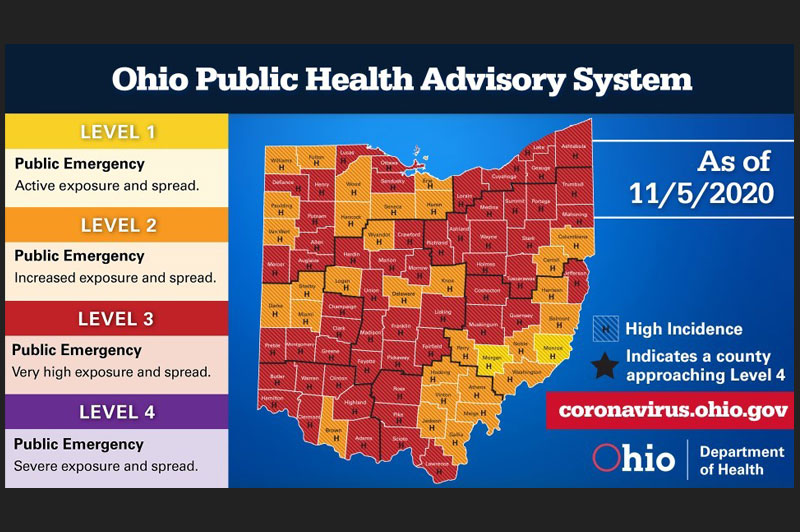
    New health data compiled by the Ohio Department of Health revealed today that all 88 counties in Ohio are now considered “high incidence” as defined by the Centers for Disease Control and Prevention. 

    “There have been so many cases in the past two weeks that the risk of catching this virus in every county of this state is very real and very concerning,” said Governor DeWine. “Again, I ask everyone to recognize their personal responsibility in slowing the spread of this deadly disease. It’s up to every citizen in Ohio to choose to slow the spread by wearing masks, distancing, and making overall smart decisions.”

    According to today’s updated Ohio Public Health Advisory System map, 56 counties are currently rated as having a very high risk of exposure and spread (Red Level 3), up from 43 counties last week. This represents the highest number of Red Level 3 counties since the launch of the advisory system in July. As of today, 86 percent of Ohioans are living in a Red Level 3 county. 

    A county-by-county breakdown outlining the presence of COVID-19 in all of Ohio’s 88 counties can be found on the Ohio Public Health Advisory System’s website.


    NEW OHIO DEPARTMENT OF HEALTH STRUCTURE

    Governor DeWine announced multiple key additions to the existing administration at the Ohio Department of Health (ODH). 


    Chief Medical Officer Dr. Bruce Vanderhoff: 
    Dr. Vanderhoff previously served for more than a decade as a Senior Vice President and as the Chief Medical Officer at OhioHealth. He has years of experience leading large teams in successfully dealing with important healthcare issues in Ohio and prepared OhioHealth to deal with the threat of Ebola and the H1N1 flu pandemic.  

    Director Stephanie McCloud: 
    Director McCloud previously served as Governor DeWine’s administrator of the Ohio Bureau of Workers’ Compensation, managing an agency of 1,800 colleagues and over $28 billion in assets. She has considerable experience in the area of mental health and addiction treatment which is a priority in Ohio’s health improvement plan. 

    Senior Deputy Lance Himes: 
    Himes had previously served as the interim director of ODH where he has played an integral role in running and managing many aspects of the pandemic response operation. He will lead the coordination of the state’s vaccine distribution plan and will continue to work directly with Ohio’s local health commissioners.

    Chief of Staff Kathleen Madden: 
    Madden had previously served as Assistant Director at the Ohio Office of Budget and Management and will now play a key role in keeping ODH’s pandemic and non-pandemic programs and operations on track. She will work to prioritize and resolve critical issues, provide oversight and guidance to ODH staff, and ensure that ODH funds are spent responsibly and strategically. Other key members of the ongoing COVID-19 response who will continue their roles in assisting ODH are: 

    Adjutant General Maj. Gen. John Harris, Ohio National Guard: 
    Maj. Gen. Harris will continue work to ensure complex operations, such as COVID testing and contact tracing, are well-coordinated, monitored, and improved when necessary.  He will also work directly with Senior Deputy Himes on the planning and logistics of the forthcoming vaccine distribution program.  

    Director Ursel McElroy, Ohio Department of Aging: 
    Director McElroy will continue to direct virus prevention efforts for older adults in the community and in long-term settings, including nursing homes and assisted living facilities.  

    Director Lori Criss, Ohio Department of Mental Health and Addiction Services: 
    Director Criss will continue to lead efforts to address the increasing mental health needs of citizens during the pandemic.

    NEW OHIO BWC ADMINISTRATOR
    Governor DeWine announced that John Logue, the Ohio Bureau of Workers’ Compensation’s (BWC) Chief of Strategic Direction, will become the new administrator of Ohio BWC effective on November 16. Logue has worked for 26 years in the industry. Before returning to BWC in 2019, he most recently served as the vice president of client services for International Absence Management Company where he focused on Ohio workers’ compensation.


  • # “Maskots”

    # “Maskots”

    #DaytonMASKots

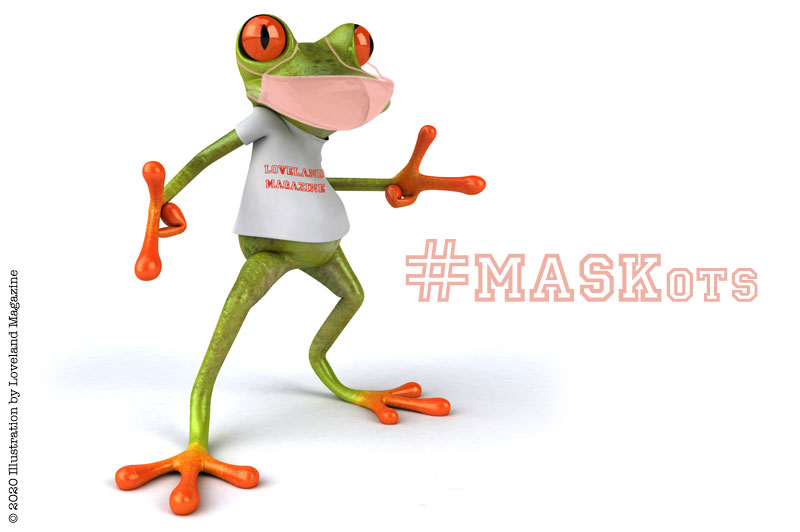
    Lt. Governor Jon Husted announced the launch of the “Dayton MASKots” campaign facilitated through the Dayton Area Chamber of Commerce to slow the spread of the coronavirus while supporting Ohio sports.

    This campaign challenges team mascots around the region and state to “mask up” and post a picture of their mascot with a mask on. This could be for a K-12 school, college or university, or other sports team.

    Or, even a local newspaper with a mascot?

    Ohioans can use the hashtag #DaytonMASKots to join this effort.

  • Lt. Governor Jon Husted issues employee face-covering exceptions and recommends when customers should wear them

    Lt. Governor Jon Husted issues employee face-covering exceptions and recommends when customers should wear them

    This story was up-dated at 9 AM 4/30

    “No mask, no work, no service, no exception,” Gov. Mike DeWine said on Monday, describing his administration’s safety regulations for manufacturers and retailers that will re-open in May. But as of Tuesday, Ohio Department of Health officials have modified their publications for businesses — saying now that the face masks are recommended, but not mandatory.

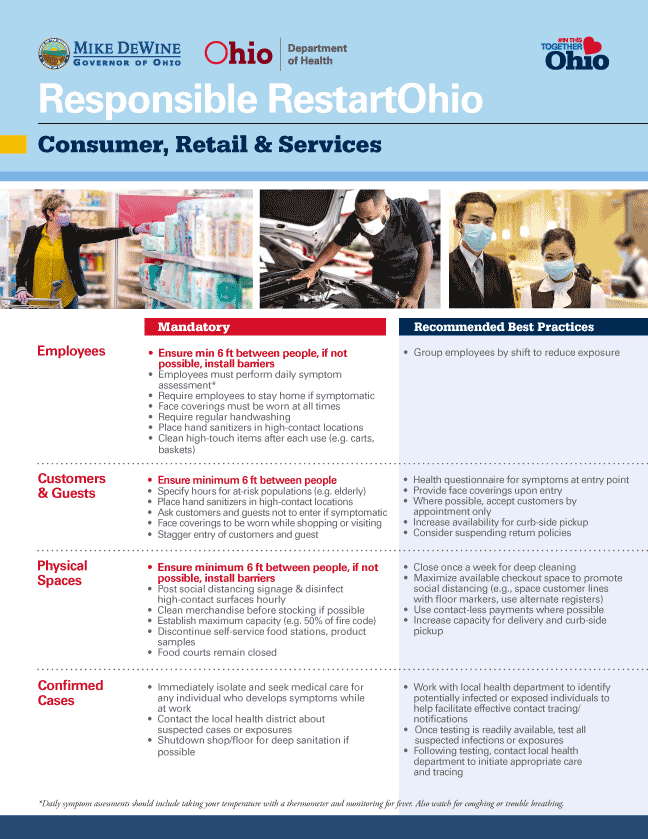
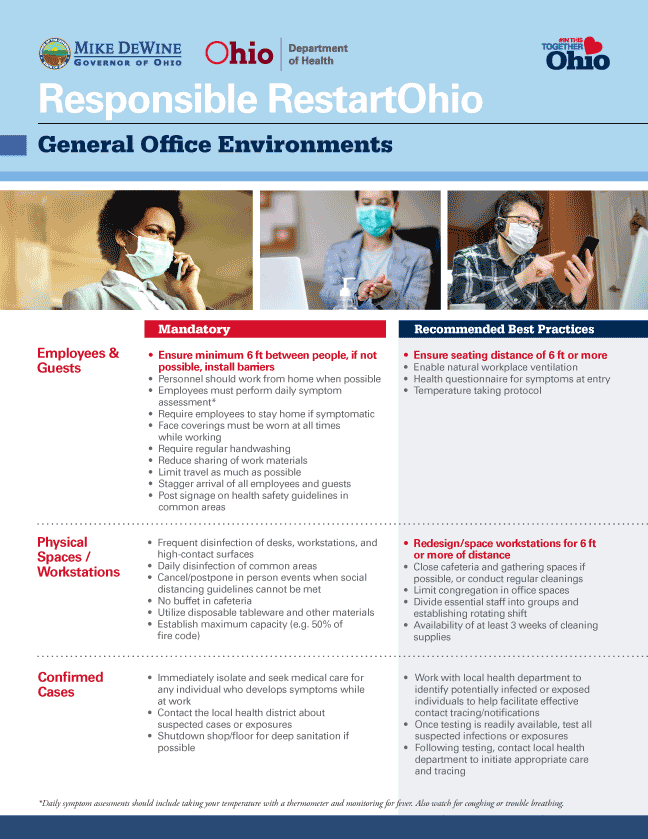
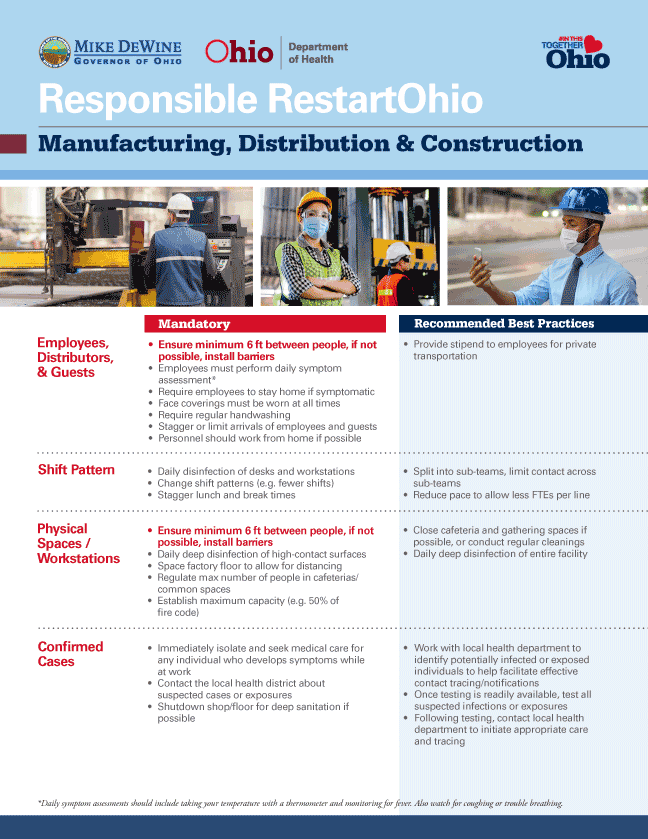
    This also means the state government has updated the PDFs and images which explain what each economic sector is supposed to do when they reopen. These updated images can be viewed below.

    Columbus, Ohio – Lt. Governor Jon Husted provided the following update on Ohio’s response to the COVID-19 pandemic yesterday, specifically guidelines for employee face-covering and when customers should wear them.

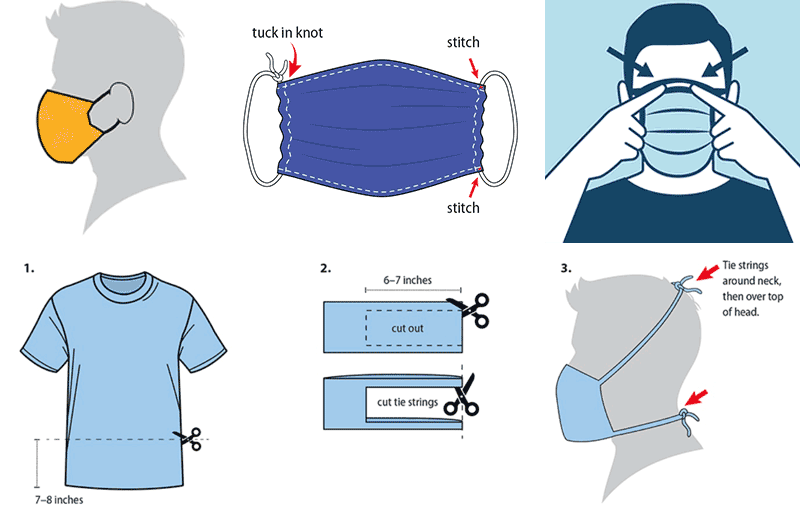
    Lt. Governor Husted today reemphasized that face coverings are required for employers and employees while on the job. Exceptions for employers and employees include when:

      • An employee in a particular position is prohibited by a law or regulation from wearing a face covering while on the job
      • Wearing a face covering on the job is against documented industry best practices
    • Wearing a face covering is not advisable for health purposes
    • If wearing a face covering is a violation of a company’s safety policies
    • An employee is sitting alone in an enclosed workspace
    • There is a practical reason a face covering cannot be worn by an employee

    If any of these exceptions apply to a business or employee, written justification must be provided upon request.

    “Wearing a mask is something we do out of mutual respect for one another,” said Lt. Governor Husted. “At work, you wear a mask because you want to protect your fellow employees and because you want to protect your customers. And when you are a customer, though it isn’t required, you should still wear a mask because it will help protect those around you.”

  • Details of Ohio’s “Responsible RestartOhio” plan

    Details of Ohio’s “Responsible RestartOhio” plan

    Columbus, Ohio – Ohio Governor Mike DeWine, Lt. Governor Jon Husted, and Director of the Ohio Department of Health Dr. Amy Acton, made several announcements yesterday regarding Ohio’s plan to restart Ohio’s economy during the ongoing COVID-19 pandemic.

    HEALTHCARE

    Beginning May 1, 2020, all medically necessary procedures that do not require an overnight stay in a healthcare facility or do not require inpatient hospital admission and minimize the use of personal protective equipment may move forward. This includes regular doctor visits, well-care checks, well-baby visits, out-patient surgeries, imaging procedures, and diagnostic tests. Dental services and veterinary services may also proceed if a safe environment can be established.

    Healthcare providers and facilities that plan to resume providing these services must adhere to infection control practices, have sufficient PPE, and talk with patients about the risk of contracting COVID-19.

    Surgeries and procedures that, if not performed, would cause a threat to a patient’s life, a threat of the spread of cancer or the permanent dysfunction of a limb or organ, the presence of severe symptoms causing an inability to perform activities of daily living, and/or the risk of rapidly worsening symptoms have always been permitted even if an overnight stay is necessary.

    “RESPONSIBLE RESTART OHIO”

    The “guiding principles” of the Responsible RestartOhio plan are protecting the health of employees, customers, and their families, supporting community efforts to control the spread of COVID-19, and responsibly getting Ohio back to work.

    “We put this plan together based on all the information we have about how dangerous COVID-19 still is right now, balanced with the fact that it’s also dangerous to have people not working,” said Governor DeWine. “COVID-19 is still out there. It’s still killing people. We’re asking Ohioans to be reasonable and rational. Please don’t take huge chances, and please use common sense when you go out and where you go out.”

    Are you finding this information is important to your daily life?

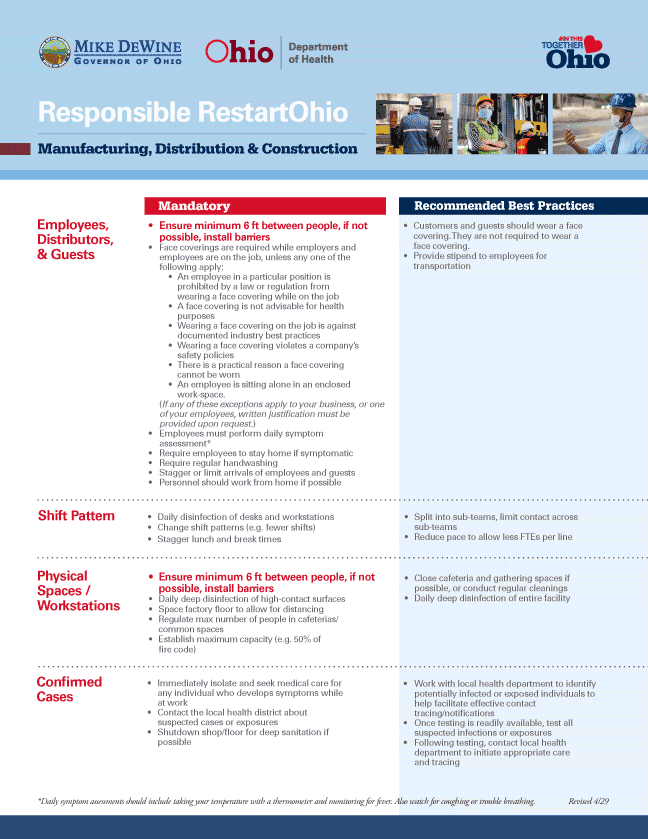
    Manufacturing, Distribution, and Construction Businesses

    Beginning on May 4, 2020, manufacturing, distribution, and construction businesses may reopen if these businesses can meet mandatory safety requirements (see graphic below) for customers and employees. The full Responsible RestartOhio plan for manufacturing, distribution, and construction can be found at coronavirus.ohio.gov/ResponsibleRestartOhio.

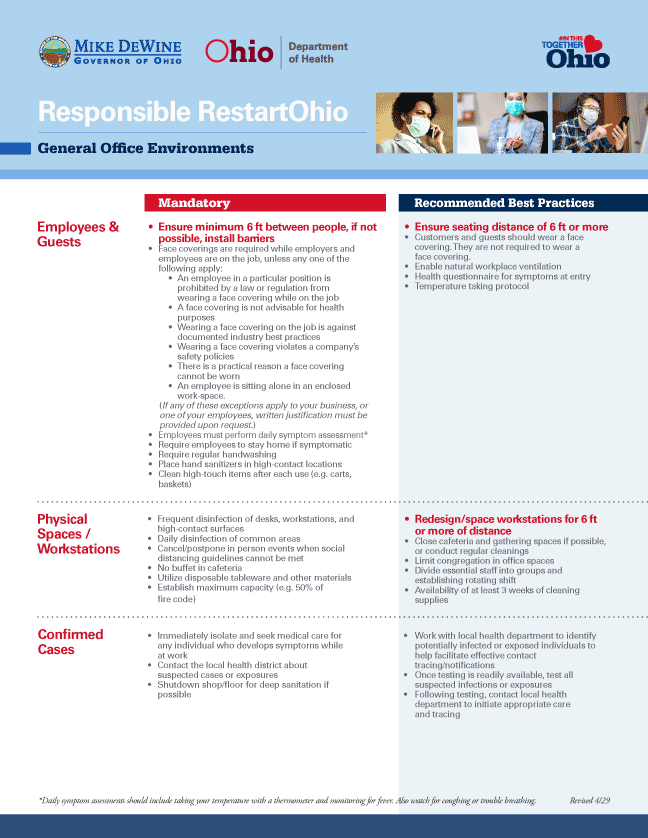
    General Office Environments

    Beginning on May 4, 2020, general office environments may reopen if these businesses can meet mandatory safety requirements (see graphic below) for customers and employees. The full Responsible RestartOhio plan for general office environments can be found at coronavirus.ohio.gov/ResponsibleRestartOhio.

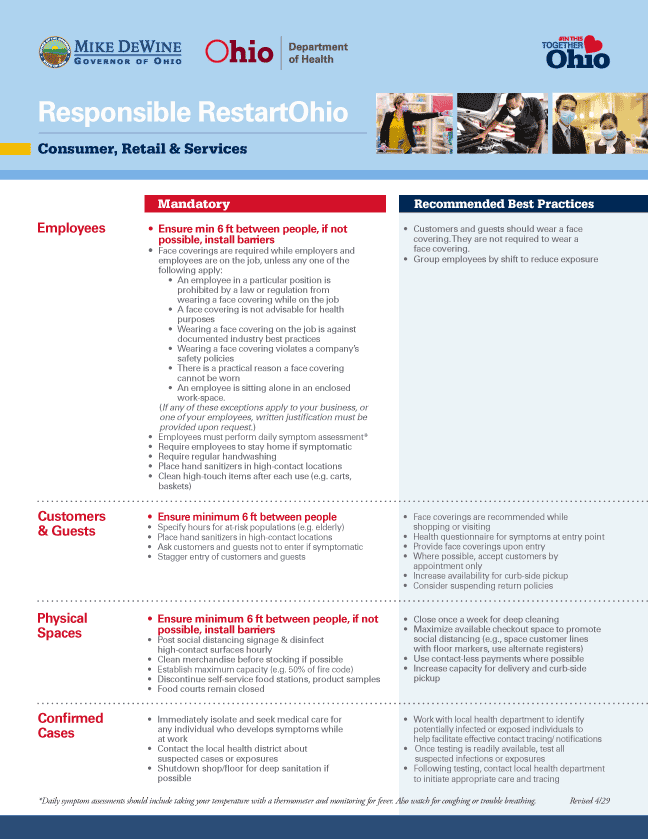
    CONSUMER, RETAIL, and SERVICES

    Beginning on May 12, 2020, consumer, retail and services, may reopen if these businesses can meet mandatory safety requirements for customers and employees. (see graphic below) The full Responsible RestartOhio plan for consumer, retail, and services can be found at coronavirus.ohio.gov/ResponsibleRestartOhio.

    ALL BUSINESSES

    The general safe business practices that all businesses must follow as they reopen are:

      • Requiring face coverings for all employees, and recommending them for clients and customers at all times
      • Conducting daily health assessments or self-evaluations of employees to determine if they should work
      • Maintaining good hygiene at all times such as hand washing and social distancing
      • Cleaning and sanitizing workplaces throughout the day and at the close of business or between shifts
      • Limiting capacity to meet social distancing guidelines

    “I have an obligation as the Governor of Ohio to get people back to work and keep them safe. Opening everything up at once would not be consistent with the obligation to keep people safe,” said Governor DeWine. “Our Responsible RestartOhio plan is the best guarantee that Ohioans will feel safe going to stores and employees will feel safe going to work. I’m optimistic about our future, but we can’t be reckless.”

    CONTINUED CLOSURES

    Continued Business Closures Graphic

    The following types of establishments are ordered to remain closed due to their increased risk of potential COVID-19 exposure:

        • Schools and daycares
        • Dine-in restaurants and bars (carry-out is still permitted)
        • Personal appearance and beauty businesses
        • Older adult daycare serveries and senior centers
        • Adult day support or vocational rehabilitation services in group settings
        • Entertainment, recreation, and gyms

    For greater detail on the types of businesses that must stay closed, visit coronavirus.ohio.gov/ResponsibleRestartOhio.

    STAY AT HOME ORDER / LARGE GATHERINGS

    Because the danger of COVID-19 still exists, Ohio’s Stay at Home order will remain in effect to encourage Ohioans to continue making reasonable, rational decisions about leaving home.

    Although anyone is susceptible to getting sick with COVID-19, those who are 65 or older are encouraged to be especially careful, as are those with high-risk conditions such as chronic lung disease, moderate to severe asthma, heart conditions, diabetes, chronic kidney disease, or liver disease, as well as those who are immunocompromised or obese.

    Large gatherings of more than 10 people are still prohibited.

    MORE INFORMATION

    More detailed information on the Responsible RestartOhio plan can be found at www.coronavirus.ohio.gov/ResponsibleRestartOhio.

    Current Ohio and Local Data

    There are 16,325 confirmed and probable cases of COVID-19 in Ohio and 753 confirmed and probable COVID-19 deaths. A total of 3,232 people have been hospitalized, including 978 admissions to intensive care units. In-depth data can be accessed by visiting coronavirus.ohio.gov.

    CLERMONT COUNTY

    72 confirmed cases. 4 probable cases. 76 total cases. 47 recovered. 21 hospitalizations. 2 deaths.

    HAMILTON COUNTY

    1048 Hamilton County confirmed cases. 241 hospitalizations. 56 deaths. (Includes Cincinnati, Norwood, and Springdale.)
    WARREN COUNTY
    124 confirmed cases. 22 hospitalizations. 11 deaths.

    Video of yesterday’s full update of the Statehouse briefing, including versions with foreign language closed captioning, can be viewed on the Ohio Channel’s YouTube page.


    Are you finding this information is important to your daily life?

  • Ohio Governor Mike DeWine’s Week in Review

    Ohio Governor Mike DeWine’s Week in Review

    The weekly press release from Ohio Governor Mike DeWine

    For the week ending April 24, 2020

    On Thursday, Governor DeWine and Lt. Governor Husted invited Mark Weir, Ph.D., an assistant professor of Environmental Health at The Ohio State University, to discuss how health risks change as changes are made to the environment.

    Dr. Weir explained that cough or sneeze droplets containing the virus spread through contact with others or contact with contaminated surfaces. He explained that minimizing the spread of the disease as Ohio begins the long process of reopening depends on personal and environmental controls. Personal precautions include interrupting the infection process by practicing good hand hygiene and wearing masks.

    Employers must take precautions by disinfecting surfaces often and maintaining distance between individuals. Finally, facility and building management can help interrupt the infection process by managing airflow and air filters.

    “Since COVID-19 can live up to 72 hours on plastics and stainless steel, it will take a combination of efforts from all of us to interrupt the disease process,” said Dr. Weir.

    On Friday, Governor DeWine announced that members of the newly formed Testing Strike Team, led by former Governors Celeste and Taft, have reached an agreement with Thermo Fisher, a company that makes reagent, that will substantially expand COVID-19 testing capacity in Ohio.

    As a result of collaborative efforts through the Ohio Manufacturing Alliance to Fight COVID-19, Governor DeWine announced that ROE Dental Laboratory in Cleveland will manufacture up to 1 million testing swabs to support Ohio’s testing efforts.

    This testing will dramatically increase Ohio’s ability to test in our priority areas, including nursing homes, hot spots, congregate living settings, food and grocery stores, and essential manufacturing facilities.

    As part of Ohio’s offense strategy, Governor DeWine announced that Ohio has started working with Massachusetts-based Partners in Health. Partners in Health will bring needed resources to Ohio to help increase the ability to trace contact exposure to the virus.

    Additionally, Governor DeWine announced that the state will cover the costs to keep more than 200 youth who are aging out of foster care in the foster care system until the COVID-19 pandemic ends.


    As of Friday afternoon, there were 15,169 confirmed and probable cases of COVID-19 in Ohio and 690 confirmed and probable COVID-19 deaths. A total of 3,053 people have been hospitalized, including 920 admissions to intensive care units. In-depth data can be accessed by visiting coronavirus.ohio.gov.

    For more information on Ohio’s response to COVID-19, visit coronavirus.ohio.gov or call 1-833-4-ASK-ODH.

    • EDITOR’S NOTE: Loveland school buildings are closed to the public, however remote learning is being conducted at the Loveland City School District.
  • Duke Energy Convention Center selected for “Enhanced Hospital Capacity” other local COVID 19 news

    Duke Energy Convention Center selected for “Enhanced Hospital Capacity” other local COVID 19 news

    Ohio’s new stay at home order goes into effect at midnight tonight.

    Columbus, Ohio – Ohio Governor Mike DeWine, Lt. Governor Jon Husted, and Dr. Amy Acton, MD, MPH, provided the following updates on Ohio’s response to the COVID-19 pandemic this afternoon. 

    HOSPITAL CAPACITY 

    The announcement said that Ohio must double its hospital capacity due to the oncoming COVID-19 surge, Ohio has developed a plan to expand healthcare services at alternative sites in addition to the traditional medical care facilities. Representatives from health care systems, local governments, county emergency management agencies, state agencies, the Ohio National Guard, among others, examined buildings across the state that could support large numbers of patients.

    The following sites have been selected based on considerations such as distance to an existing hospital, conditions safe for patients and health care professionals, and space to meet the region’s expected needs, including the Duke Energy Convention Center in downtown Cincinnati.

    1. Seagate Convention Center, Lucas County
    2. Case Western University’s Health Education Campus, Cuyahoga County
    3. Dayton Convention Center, Montgomery County
    4. Covelli Convention Center, Mahoning County
    5. Duke Energy Convention Center, Hamilton County
    6. Greater Columbus Convention Center, Franklin County

    These facilities would be used for the mildly ill, while the sickest patients will be housed in traditional hospitals.

    Assessments of other sites will continue if needed.

    The press release from the Governor’s office said that health care regions in southern and southeastern Ohio have determined the existing hospital facilities in their areas will, with additional equipment, be capable to handle a surge in patients without going to an off-site location.

    OHIO NATIONAL GUARD TO ASSIST FEDERAL PRISON

    Governor DeWine announced that he has authorized the Ohio National Guard to assist federal authorities in the Elkton Federal Correctional Institution in Columbiana County where seven inmates have tested positive for COVID-19, and three inmates have died from the disease.

    “To be clear, this is not a state facility, it is a federal prison – but, this prison is in Ohio. Ohio citizens work there, and their families live here,” said Governor DeWine. “As we’ve said for weeks, we’re all in this together, and providing state help for this federal prison is the right thing to do.”

    The Ohio National Guard’s mission will be focused on providing medical assistance. They will not be armed, nor will they be providing security.

    The guardsmen and women will assist in the prison’s infirmary with non-COVID-19 cases and with patients who are showing symptoms of the disease. These soldiers, who all work in the medical field, will have N-95 respirators for protection while they work to augment the current prison medical staff. They will treat those they can and triage others with serious symptoms for hospital care.

    The guard also stands ready to help with transporting the seriously ill patients to the hospital in the event of a surge of sick inmates. In addition to staff, the guard will bring equipment and ambulances with them as well.

    Governor DeWine also requested that the Federal Bureau of Prisons and U.S. Department of Justice cease accepting new inmates at the facility.

    DISPUTE RESOLUTION 

    Lt. Governor Husted announced that the administration’s Dispute Resolution Commission, which was initially announced last week, is now prepared to receive submissions from essential businesses as well as county health departments.

    The panel, which includes Ohio Department of Commerce Director Sheryl Maxfield, Development Services Agency Director Lydia Mihalik, and Public Utilities Commission of Ohio Chairman Sam Randazzo, will specifically seek to resolve disputes when two county health departments disagree on whether a type of business should or should not be deemed essential during the state of emergency. The purpose of the commission is to provide clarity and ensure that similarly-situated businesses are treated fairly, regardless of which side of a county line they operate.

    For more information, visit Coronavirus.Ohio.gov/BusinessHelp and select the “Businesses & Nonprofits” tab for more information.

    REMINDER – NEW STAY AT HOME ORDER

    Ohio’s new stay at home order goes into effect at midnight tonight. You can find the full order at coronavirus.ohio.gov.

    Retailers will be required to determine a maximum number of customers allowed in the store to account for proper physical distancing. That number must also be displayed at the businesses’ entrances.

    REMINDER – SNOWBIRDS MUST SELF-QUARANTINE 

    Governor DeWine today reminded “snowbirds” that they must quarantine for 14 days once they arrive in Ohio.

    “I know that many of our Ohio snowbirds will soon be returning from places like Florida, and we want to make sure that you remain healthy and that those around you remain healthy,” said Governor DeWine.

    In addition to those returning after spending winter elsewhere, anyone who has traveled outside of Ohio for any other reason must also self-quarantine for 14 days upon their return. This order excludes truckers, healthcare workers, other workers providing essential services, and those who live on the state border.

    CURRENT OHIO DATA

    There are 4,450 confirmed cases of COVID-19 in Ohio and 142 deaths. A total of 1,214 people have been hospitalized, including 371 admissions to intensive care units. In-depth data can be accessed by visiting coronavirus.ohio.gov.

    • 4,450 – Confirmed Cases in Ohio
    • 371 – Number of ICU admissions
    • 1,214 – Number of Hospitalizations in Ohio
    • 142 – Number of Deaths
    • <1–101 – Age Range
    • 54 – Median Age
    48%* – Sex – Males
    52%* – Sex – Females
    LAST UPDATED: 04/06/20 (UPDATED DAILY AT 2 P.M.) *<1% SEX NOT REPORTED

    In Clermont County there are 27 cases, 4 hospitalizations, and 1 death.

    In Hamilton County there are 394 cases, 66 hospitalizations, and 9 deaths.

    In Warren County there are 37 cases, 5 hospitalizations, and 0 deaths.

    In Butler County there are 75 cases, 29 hospitalizations, and 2 deaths.

    Video of today’s full update, including versions with foreign language closed captioning, can be viewed on the Ohio Channel’s YouTube page.

    For more information on Ohio’s response to COVID-19, visit coronavirus.ohio.gov or call 1-833-4-ASK-ODH.