Tag: mail-in votes

  • Early vote looks sluggish two weeks from Ohio’s primary election

    Early vote looks sluggish two weeks from Ohio’s primary election

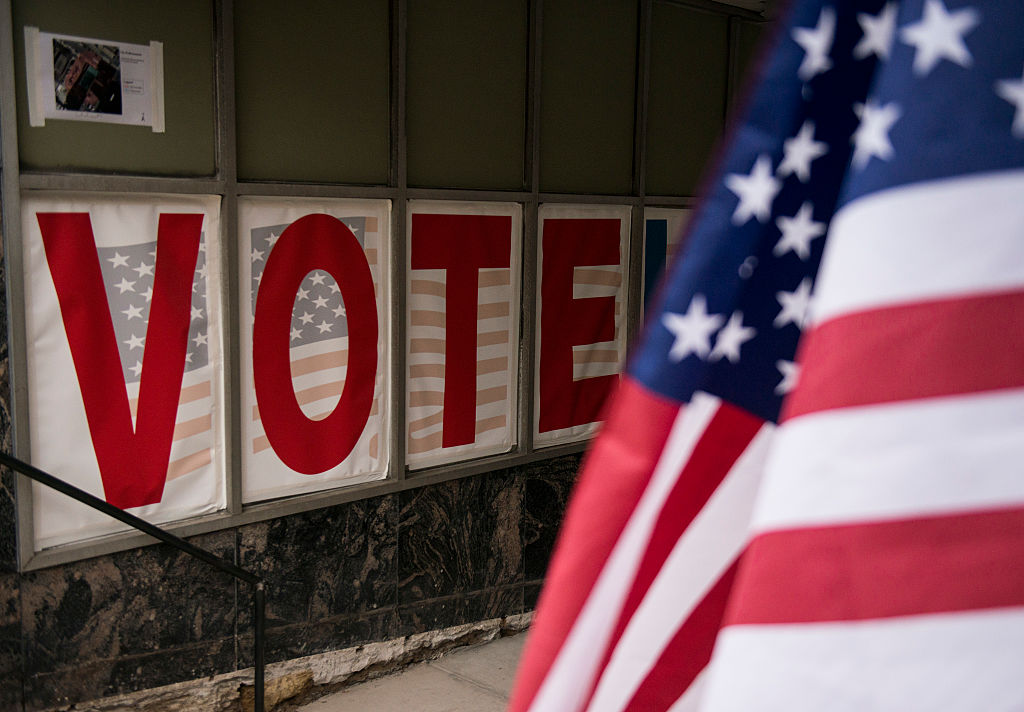
    (Photo by Stephen Maturen/Getty Images)

    Hamilton County’s early in-person voting traffic has been no lines, walk in-walk out.

    BY:  Ohio Capital Journal

    Two weeks ago early voting began in Ohio’s primary election. In two weeks more, the election will be decided. So far, county officials report turnout has been steady, but the figures have been far from overwhelming. By the end of last week, just shy of 60,000 voters had cast a ballot in-person and another 37,000 returned absentee ballots by mail or at their county board.

    Compared to the 2022 primary, early in-person voting is on track to finish slightly higher while mail-in votes are lagging. The thing is, 2022 didn’t have a presidential race at the top of the ticket.

    The presidential contest has yet to make a serious impression in Ohio. Without a serious rival to the Democratic incumbent, and a challenger well on his way to clinching the Republican nomination, it’s as if they’re skipping over the primary to focus on an increasingly likely rematch of the 2020 general election.

    That leaves the Ohio’s U.S. Senate race as the biggest game in town. But again, the Democratic incumbent isn’t facing a challenge, and for all the sharp elbows on the Republican side of the race, many voters remain undecided.

    This week, early voting runs 8:00 am-5:00 pm through Friday, and 8:00 am-4:00 pm Saturday. Next week, county boards will offer extended hours running from 7:30 am-7:30 pm, and they’ll offer limited hours on that Saturday and Sunday. The Secretary of State’s office has the full voting schedule posted on its website.

    The view from county boards

    Aaron Ockerman, who heads up the Ohio Association of Election officials, said so far the primary isn’t far off from expectations. “It’s not super crazy like it will be in November,” he said, noting he hasn’t heard stories about long lines, “but it’s not as slow as a typical primary.”

    In Franklin County, board of elections spokesman Aaron Sellers described early vote traffic as steady, “but it’s certainly on the lower end of turnout models.” He chalked up the sluggish turnout to a less than competitive presidential race.

    “People have an understanding of who is going to be running in November, so it feels like there’s not much for them to vote on,” he suggested.

    Sellers added it feels like a lull after enormous turnout in 2023. Those elections, led by high profile ballot measures, drove enormous early voting turnout around the state. In August, almost half a million Ohioans voted early in person. In November, they cleared that mark, finishing at more than 570,000 ballots cast.

    For comparison, on an average day about 7,400 Ohioans are voting early in-person in the current election. Last August, an average day saw more than three times that many voters.

    Licking County Board of Elections director Brian Mead described current turnout as “lower than what I expected.” He said early in-person voting will likely pick up, but he doubts mail-in ballots will match his expectations. Like Seller’s he pointed to a presidential race that seems all but decided.

    “The Senate (race) is going to push some,” he said, “but it’s a heavy lift.”

    In Hamilton County, board director Sherry Poland said, “primaries are hard to gauge.”

    She described her current turnout as roughly on par with the 2016 presidential primary and said part of the explanation is the lack of a county wide issue on the ballot. So far, Poland said, Hamilton County’s early in-person voting traffic has been no lines, walk in-walk out.

    Tonya Wichman, who heads up the Defiance County board, said they’ve had a “steady flow” of voters but acknowledged it’s “not the normal turnout we’d have in a presidential year at this point.”

    Like Poland she pointed to the lack of local ballot issues.

    Follow OCJ Reporter Nick Evans on Twitter.


    Nick Evans
    NICK EVANS

    Nick Evans has spent the past seven years reporting for NPR member stations in Florida and Ohio. He got his start in Tallahassee, covering issues like redistricting, same sex marriage and medical marijuana. Since arriving in Columbus in 2018, he has covered everything from city council to football. His work on Ohio politics and local policing have been featured numerous times on NPR.

    MORE FROM AUTHOR

  • Where Ohio’s GOP leaders are on the outcome of the election

    Where Ohio’s GOP leaders are on the outcome of the election

    By Marty Schladen – November 9, 2020 (Ohio Capital Journal)

    Some, but not all, Ohio Republican officials on Monday appeared to be distancing themselves from Donald Trump’s unsubstantiated claims that the Nov. 3 election is being stolen from him.

    Trump racked up early leads — particularly in some battleground states where Republican lawmakers refused to allow early processing of mail-in votes. A massive portion of the electorate was expected to take advantage of mail-in voting because of the coronavirus pandemic and some states, such as Ohio, were ready to start processing them weeks before Election Day.

    Also, Trump for months has been discouraging his supporters from voting by mail. So it was widely expected in states like Pennsylvania, Michigan and Wisconsin that most of the early results to come in would be from Election Day voting and would heavily favor Trump. Those would be followed by mail-in ballots heavily favoring former Vice President Joe Biden and would take days to count.

    That’s just what happened, and by late Saturday morning all major U.S. news organizations judged that Biden had built an insurmountable lead in Pennsylvania and projected him to be the winner of the election.

    By Monday afternoon Trump’s allies were talking about legal challenges to the vote in several states, but the Washington Post reported that there appeared to be no central strategy. Meanwhile, many others called on Trump to stop undermining the public faith in the electoral process and concede.

    “We all knew the counting process was going to take longer than usual this year because of the once-in-a-lifetime pandemic and higher voter turnout,” U.S. Sen Sherrod Brown, a Democrat, said over the weekend. “Counting votes and making sure every voice is heard is not fraud — it’s democracy at work. The President’s attacks on our democratic process are dangerous, but we will count every single vote.”

    U.S. Sen Sherrod Brown

    On Sunday, former President George W. Bush became the most prominent Republican to essentially declare the election over when he congratulated Biden.

    Early Monday afternoon, Ohio Gov. Mike DeWine, also a Republican, congratulated Biden, although he said Trump has every right to go to court if he wishes.

    “I congratulate Vice-President Biden,” DeWine said in a statement. “It would appear that President Trump’s legal team will be filing legal actions. The President’s lawyers have every right to present evidence in court on any legal issues or irregularities involving the election, and the courts are the proper place to hear evidence on these issues.  When lawsuits have concluded and election results are certified, it is important for all Americans to honor the outcome.”

    The office of Ohio’s top elections official, Secretary of State Frank LaRose, was more direct when asked if LaRose believed Biden had won.

    “Yes, he does,” his spokeswoman, Maggie Sheehan, said in an email.

    She pointed to an Oct. 6 statement LaRose had made on Fox News.

    “When the results on election night say one thing and then when the results change over the ensuing several weeks, that’s not a sign that something nefarious is happening,” he said. “In fact, quite the contrary. It’s a sign that the legal process is being allowed to play itself out so that every legally cast vote can be tabulated. That’s exactly what we need to do.”

    Meanwhile another Ohio Republican, Attorney General Dave Yost, is following Trump into court. Politico reported Monday that Yost’s office had filed a friend-of-the-court brief with the U.S. Supreme Court challenging a three-day extension for ballots to be received in Pennsylvania. That is one of the matters Trump and his allies are litigating.

    Attorney General Dave Yost

    Yost’s office didn’t respond when asked if the attorney general believed Biden had won the election. But Georgetown University Law Professor Josh Chafetz tweeted that the Supreme Court effort was pointless.

    Yost released a statement saying that the legal action transcends pollitics.

    “This constitutional question will come up again in future elections,” it quoted him as saying. “It is in the best interest of all Ohioans — all of America — to gain a definitive answer, regardless of politics.”

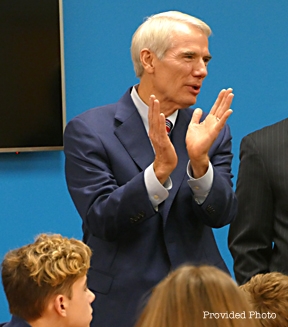
    The office of U.S. Sen. Rob Portman didn’t immediately respond when asked if he believed that Biden had won the election. But over the weekend, Portman refused to criticize Trump for appearing in the White House East Room early Wednesday morning to declare himself the winner.

    U.S. Sen. Rob Portman

    His office referenced a series of tweets posted on Friday that didn’t address whether it was right for a president to call himself the winner of an election in which vast numbers of votes hadn’t been counted.

    The office of Ohio Auditor Keith Faber, an ardent Trump supporter, didn’t respond when asked if he believed Biden had won the election.

    Ohio Treasurer Robert Sprague didn’t answer whether he thought Biden had won, but he urged patience.

    “While news organizations make projections, they do not determine the winner of the Presidential election — the people do,” he said in a statement issued by his office. “That’s why it’s important to allow the elections departments of all 50 states to continue completing their certification processes so the 2020 election can be finalized properly and in accordance with the states’ laws. This process takes time, and it’s in the best interest of our republic to ensure it’s done right, rather than done fast.”


    Marty Schladen

    Marty Schladen has been a reporter for decades, working in Indiana, Texas and other places before returning to his native Ohio to work at The Columbus Dispatch in 2017. He’s won state and national journalism awards for investigations into utility regulation, public corruption, the environment, prescription drug spending and other matters.