

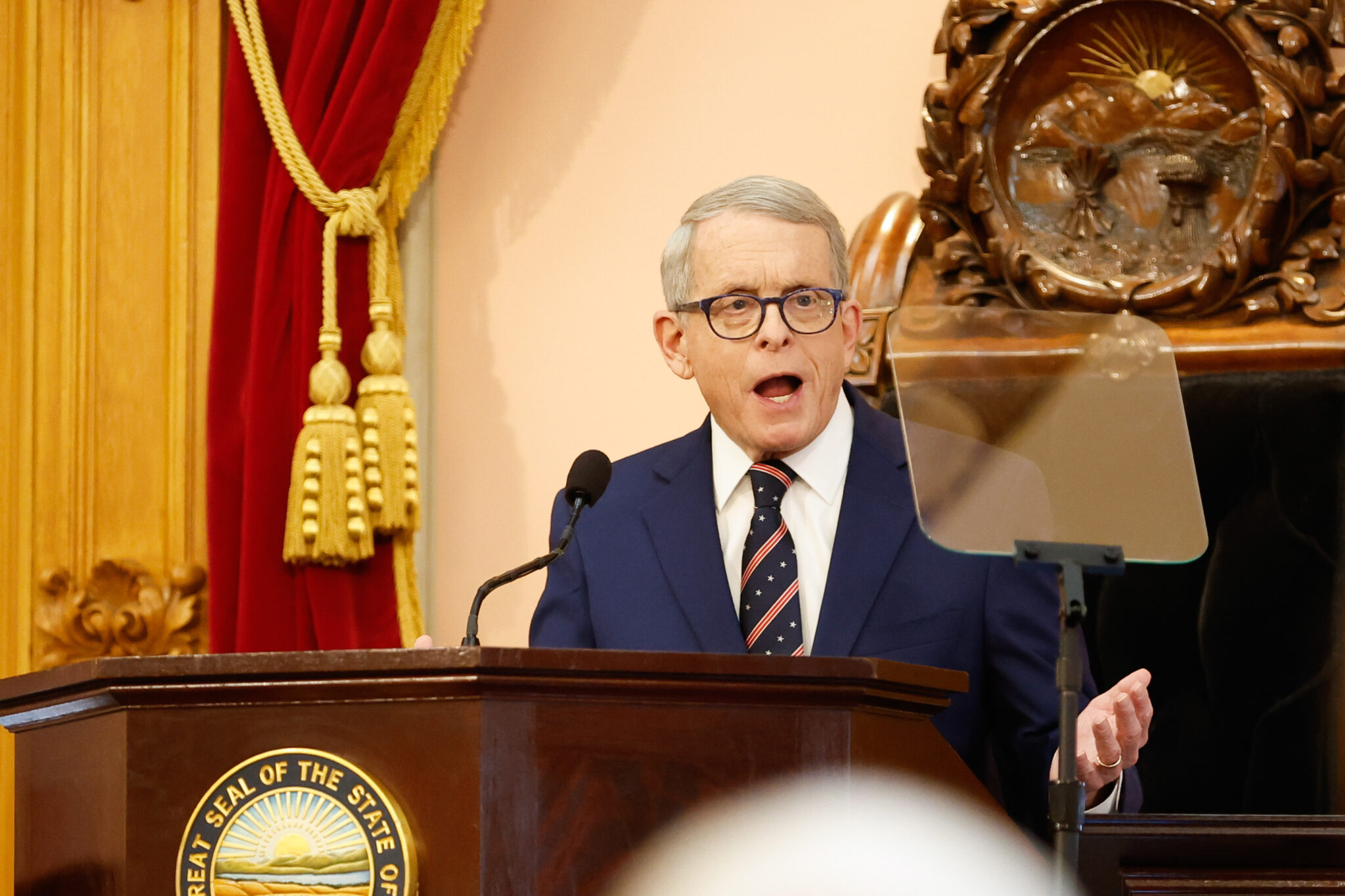
Tag: MARTY SCHLADEN –

  • FirstEnergy exec tried to keep DeWine aide’s name off of $10M transaction

    FirstEnergy exec tried to keep DeWine aide’s name off of $10M transaction

    BY: MARTY SCHLADEN – Ohio Capital Journal

    In October 2019, as a battle raged over an attempt to repeal a $1.3 billion utility bailout, a FirstEnergy executive worked to keep the name of a senior aide to Gov. Mike DeWine off of a $10 million infusion of corporate cash into the fight. 

    The executive, Vice President Michael Dowling, did so even after an assistant told him it would violate IRS rules to not list the DeWine aide on the transaction, according to text messages presented Tuesday in the federal corruption trial of former Ohio House Speaker Larry Householder and lobbyist Matthew Borges. The men are accused of racketeering in a scheme to use $61 million from FirstEnergy in exchange for the massive bailout, most of which went to prop up the company’s failing nuclear and coal plants in order to make them attractive to buyers.

    DeWine has denied involvement in the arrangement even though he met with FirstEnergy executives and visited one of its nuclear plants in 2018 as he was seeking the governorship and FirstEnergy was lavishly funding Householder’s effort to elect sympathetic Republicans who would then vote to make him speaker. For his part, DeWine received $23,000 from the Akron-based utility for his campaign and his inaugural celebration, according to Ohio Citizen Action. He vowed to donate the money to charity following revelations of the scandal.

    The governor appointed as chairman of the Public Utility Commission of Ohio a former FirstEnergy consultant who was paid $4.3 million by the utility just before taking his seat on the commission. Even though he was supposed to be regulating the utility, the official, Sam Randazzo, played a role in writing the bailout legislation, according to documents released by the Ohio House. 

    In early 2019, DeWine also appointed FirstEnergy lobbyist Dan McCarthy to be his legislative affairs director, meaning McCarthy was in charge of representing DeWine’s interests before the General Assembly.

    In early 2017, while McCarthy was still working for FirstEnergy, Householder and his son, along with FirstEnergy CEO Chuck Jones and others, flew corporate jets to Washington, D.C. for fancy dinners and Donald Trump’s inaugural

    Just after that, McCarthy formed a 501(c)(4) group called Partners for Progress. Also known as a “dark money” group, it received $5 million from FirstEnergy within a few weeks of when McCarthy founded it.

    In an affidavit supporting Householder’s arrest, FBI Special Agent Blane Wetzel said Partners for Progress was “designed to conceal the nature, source, ownership, and control of the payments” from FirstEnergy and associated companies. Through the rest of 2018, McCarthy continued as president of Partners for Progress as it pumped FirstEnergy money into a Householder-controlled dark money group and funded the effort to make Householder speaker.

    The following year, McCarthy resigned that role to work for DeWine in the legislature as Householder shepherded the bailout legislation, House Bill 6. When a final version passed in July 2019, DeWine signed it the same day.

    But opponents quickly started a campaign to circulate petitions to put a repeal on the ballot. That prompted FirstEnergy to pump even greater sums into a “decline to sign” campaign aimed at thwarting the petitions.

    It funded xenophobic mailers and broadcast ads claiming without evidence that the repeal effort was a Chinese plot.

    “Who is knocking at your door?” began a mailer read in court Tuesday. “Foreign enemies have infiltrated our energy grid,” it added and said, ominously, that circulators of repeal petitions “are asking for your information.”

    In October 2019, executives with FirstEnergy and its generation-owning subsidiary seemed panicked that the repeal effort might succeed and they were planning to pump $10 million more into the effort to stop it — through Partners for Progress, the dark money group started by McCarthy, who was now a DeWine aide.

    Dowling, the FirstEnergy vice president, seemed to think it wouldn’t be a good look for the name of a DeWine official to show up on paperwork accompanying the huge transaction.

    “Please make sure Dan McCarthy’s name is not on the filing,” Dowling said in a text message to Partners for Progress Treasurer Michael Vanburen that was presented in court Tuesday.

    Vanburen replied that even though McCarthy was no longer president of the dark money group, IRS rules required that his name be on the filing. Dowling didn’t accept that.

    “There must be a creative way to handle this,” he said. “It’s important that (McCarthy’s) name not be listed.”

    Asked if DeWine asked that McCarthy’s name not be used in paperwork regarding the money transfers, Press Secretary Dan Tierney in an email said, “No. Dan McCarthy resigned from Partners for Progress in December 2018. Dowling’s comments, as you have relayed them to me, do not match the timeline of McCarthy’s affiliation with Partners for Progress.”

    DeWine seems to have been in touch with FirstEnergy executives around the time of the repeal effort. Later in October 2019, FirstEnergy CEO Jones texted Vice President Dowling to say, “DeWine’s on board. I talked to him on Wednesday.”

    According to Jones, they talked about whether the repeal HB 6 effort would gather enough valid signatures to get the measure on the ballot.

    “He said their valid rate was less than 30%,” Jones said of DeWine.

    For his part, Tierney said, “The Governor does not have any recollection of such a conversation.”

    In a later text conversation, Jones said he’d received similar assurances from Secretary of State Frank LaRose.

    After arrests were made in the House Bill 6 scandal, DeWine staunchly defended McCarthy and kept him in his administration for more than a year, until Sept. 24, 2021.

    “As far as I know, Dan McCarthy has been well-respected for many, many years, long before he started working for me as our legislative director and I have faith in his integrity,” DeWine said in early 2021 as questions about the role McCarthy’s dark money group played in the bribery and money laundering scandal continued.

    In another trial-related matter, U.S. District Judge Timothy Black on Tuesday said that he had released a second juror, this time for testing positive for COVID. An earlier juror had been released for refusing to wear a mask.

    That brings the number of alternate jurors to two for a trial that is expected to last into early March.
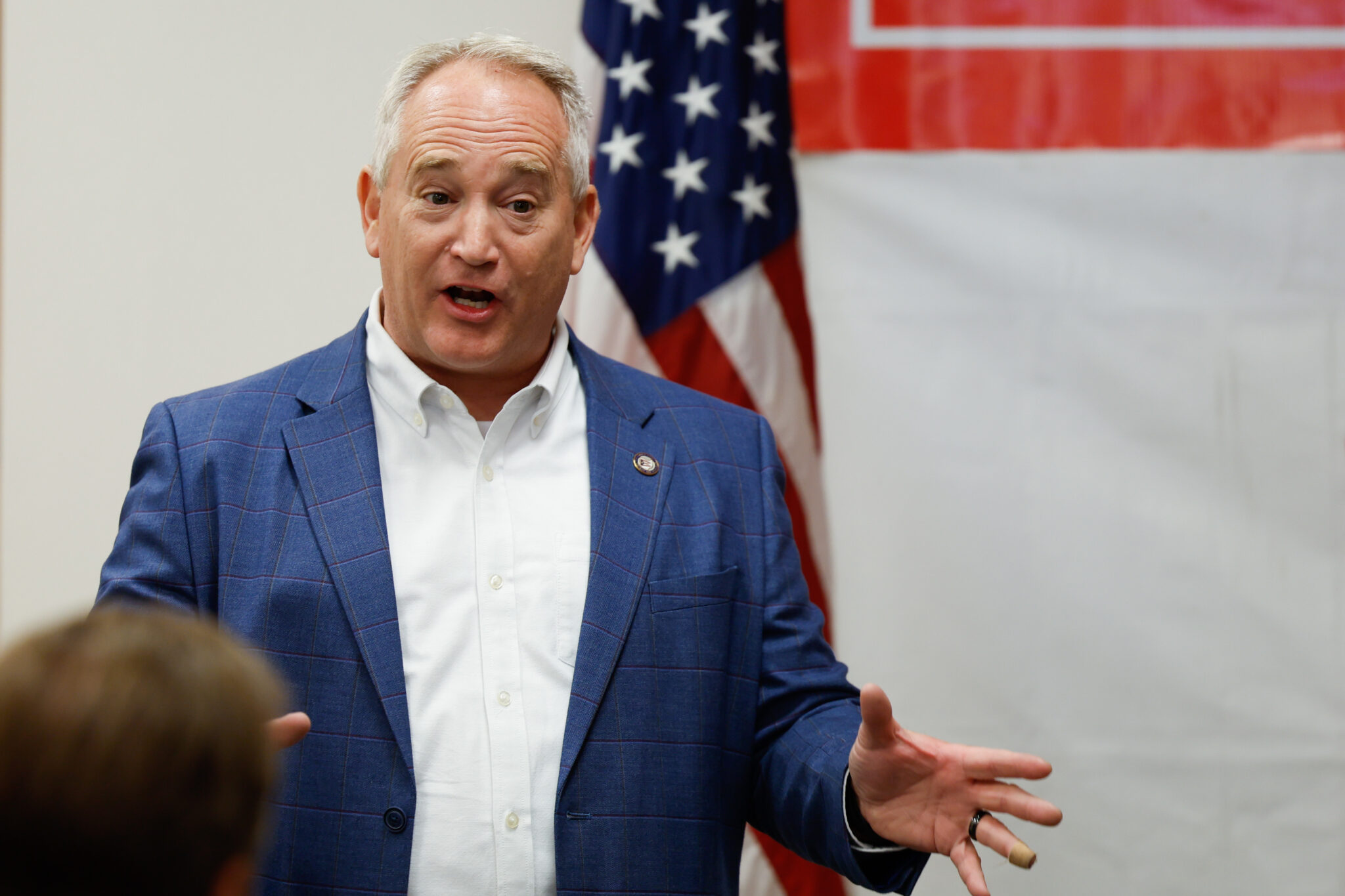
  • “Special paper.” Ohio Auditor floats theory of election fraud

    “Special paper.” Ohio Auditor floats theory of election fraud

    BY: MARTY SCHLADEN – Ohio Capital Journal

    Ohio Auditor Keith Faber last Tuesday told members of the Westerville Tea Party that it was unlikely that widespread fraud occurs in Ohio elections.

    But that didn’t stop him from holding out a sinister possibility: that the Cuyahoga County Board of Elections might be diverting special voting-machine paper to other states where unscrupulous elements might use them to produce unsolicited, fraudulent ballots.

    For his part, the director of the board of elections there said his office was doing no such thing and that the state auditor’s office had never contacted his agency about the matter.

    With Republicans holding all statewide offices except the U.S. Senate seat occupied by Sherrod Brown, a Democrat, officials like Faber are in a tight spot when it comes to election fraud.

    Former President Donald Trump continues to falsely claim that he was cheated out of the presidency in 2020 by a rigged election. And now, other Republican candidates are mimicking his past behavior by refusing to say whether they’ll accept the results if they lose on Nov. 8.

    Experts say such talk is crippling our democracy by undermining faith in its most basic process. Indeed, about 70% of Republicans believe the 2020 presidential election was rigged despite Trump’s epic failure to produce any evidence of that.

    So Ohio’s elected Republicans have a base that’s deeply skeptical of elections at the same time that those officials are running them. 

    Secretary of State Frank LaRose, the official responsible for administering elections, has hyped the possibility of cheating while simultaneously touting how extremely rare it’s been in elections he’s run. In February, LaRose slammed the media for supposedly downplaying voter fraud just after he found just the possibility of one fraudulent vote for every 222,000 cast in Ohio in 2020.

    Faber, the state auditor, seemed to be trying to take a similar tack last week when a member of the Tea Party audience asked him if he audited elections.

    According to an audio recording of the session, Faber said that it was the job of the secretary of state to audit elections, but the state auditor could look at other things handled by county boards of election, such as their money. He added that his office investigated some of those matters in the wake of the 2020 election.

    Faber told the crowd that while he believes it’s hard to cheat in Ohio elections, that might not be the case elsewhere.

    “What I found out is the paper, the paper we use to vote in Ohio, OK, is special paper,” he said. “You need special paper to run the machines. But there really wasn’t ever any inventory done on the paper, OK? And so that supply if you audit that, we’re going to start doing a count. If you ordered 100 (thousand) sheets of paper and you only voted 20,000 people, you better have 80,000 sheets left.”

    He added, “And so we started asking those questions. And I wasn’t really worried because of the difficulty in Ohio of creating extra fake ballots because of the controls. But there was nothing to say the Cuyahoga County Board of Elections who ordered a million sheets of paper didn’t somehow quietly drop off 50,000 of them over here in (another state.) Because the paper is the same from machine to machine and state to state and so we started asking those questions. And I talked to a number of people at local boards of elections and said if you’re going to cheat, what would you do? And so we started looking at that. So the short answer is no. I don’t audit the election.” 

    Faber’s office was asked if it will audit voting-machine paper used in the Nov. 8 election, and if it did, whether it would do so in all 88 Ohio counties. 

    “The Auditor of State’s Office regularly audits all of Ohio’s counties for fiscal and operational controls,” the emailed reply said. “These engagements include boards of elections. These most recent audits included an examination, after consultation with the Secretary of State’s Office, of a number of board of elections’ required policies and procedures. While no significant findings were issued, a number of minor discrepancies were identified at boards of elections across Ohio. Those discrepancies and the Auditor’s recommendations to address them are included in counties’ publicly accessible audit reports.”

    Faber’s staff was also asked whether he had any reason to suspect that Cuyahoga County — the most racially and ethnically diverse in Ohio — had or was planning to sneak voting-machine paper out of state for use in fraudulent voting.

    The communications staff didn’t address that question. Nor did it address whether there was any evidence that the kind of voting fraud Faber described had ever been done anywhere in the United States.

    Anthony Perlatti, director of Cuyahoga County Board of Elections, said in a phone interview Tuesday that his office isn’t handing ballot paper in the way Faber described. He said his agency uses a third-party vendor to print ballots.

    “In terms of having piles and piles of blank ballot stock at our offices, we don’t have that,” he said, explaining that the vendor prints off of massive rolls of paper. “I’ve never heard of people sending blank ballot stock elsewhere for people to try to manufacture ballots. It doesn’t make any sense to me. We definitely don’t do it in Cuyahoga County.”

    Perlatti added that his agency keeps track of the ballots it handles.

    “We send (the already-printed ballots) out to the polling locations,” he said. “When they come back, we do an inventory of what have that is unused and what we haven that is used, so this doesn’t really make a whole lost of sense to me.”

    Asked if Faber’s office contacted the Cuyahoga County Board of Elections to learn how it uses ballot stock, Perlatti said, “No. We really, from an elections standpoint, we really don’t have much interaction at all with the auditor’s office. The auditor’s office comes in more so with county in general on things like payroll and county procurement.”

    Faber’s office did say that the state auditor believed the 2020 presidential election was on the up and up. Faber “has consistently stated that Ohio’s elections are some of the best run in the country and that Joe Biden is the President of the United States,” his office said.

    To the Ohio Democratic Party, Faber’s statements to the Westerville Tea Party amounted to pandering.

    “Add Keith Faber to the list of GOP politicians who are pandering to MAGA Republicans and dabbling in conspiracy theories in order to further their own political ambitions,” spokesman Matt Keyes said in an email. “Keith Faber knows better, but is more focused on shamefully clinging to power than being honest with the voters of Ohio.” 

    Trump-driven falsehoods about election integrity have led to widespread attacks on election workers, including “terroristic threats.” But Perlatti said that elections officials are “unique people.”

    “We have tremendous pride in our work,” he said. “We have tremendous integrity in what we do. We know that we’re doing the right thing and doing it with the product we produce, which is an accurate, correct, open, accessible, fair election which is one of the fundamental things that this country is based upon.”

    Follow Marty Schladen on Twitter.