
Tag: Mask requirements

  • Loveland School Board: A homework Assignment

    Loveland School Board: A homework Assignment

    COMMENTARY

    David Miller is the Publisher and Editor of Loveland Magazine

    By David Miller

    Dear Loveland School Board.

    Given that COVID infections caused by the now predominant delta variant are likely to go undetected and children attending school with what appears to be a mild cold, what measures, if any, do you propose to use to prevent the spread of COVID-19 throughout the Tiger school community?

    The predominant delta variant is much more contagious than the version of COVID-19 Loveland school children faced last year.

    Here is a list of things to consider and do before your meeting on Tuesday, August 10 – eight days before classes begin for the school year. I have provided the resource materials below that you will need to complete your assignment.

    You know this but does it bear repeating? Loveland students eleven years old and younger cannot currently receive any benefit a vaccination will provide.

    Only approximately 18% of our students who are eligible for a vaccine are fully vaccinated.

    The tracking system of the Centers for Disease Control and Prevention (CDC) has now moved Clermont and Warren Counties to the highest level of warning for the transmission of COVID 19. Hamilton County remains in the “Substantial” range.

    There will be no remote learning opportunities (Remote Academy) for Loveland teachers or students as all school buildings will return to full capacity in-person classes in August. Find out how many more students will be attending each building and riding buses as classes begin.

    Find out how many students, staff, and teachers became infected and how many were quarantined last school year when there were far fewer persons in the buildings and on buses than there will be this year.

    Review the comprehensive study ($66K “Pandemic Preparedness and Planning” services) that you purchased before school began last year. Review which of the recommended COVID protocols were implemented and whether or not you are going to abandon them as school starts on August 18.

    Your current policy states that you will follow any “mandates” of a list of what you call your “Directing Entities”. Since none of these “Directing Entities” have mandated protocols and nothing in current Ohio law prevents you from adopting any recommendation you choose – review their recommendations and choose one.

    Below is a list of what your “Directing Entities” are currently recommending for K-12 schools.

    Also, below for your review, are the recommendations contained in the $66,000 report you purchased.

    With all due respect, none of you or your staff are smarter or have any greater insight as to what is the best way to start this school year than the medical and scientific community of your Directing Entities.

    And, with all due respect to the parents of the District, “parental choice” of your child wearing a mask or not – is not your decision to make. You can be the loudest voice in the classroom of social media, but just as the elected Board of this District relies on known experts to decide which textbooks teachers use or what is served in the cafeteria – providing a healthy classroom is in their job description.

    Board, please follow the latest advice from the health experts, your “Directing Entities” and from your own “consultant experts” that you hired in 2020.

    Let’s get back to school. Let’s do so in a way that fully protects our children, teachers, and our friends that work as District staff. Don’t allow any of them to be put in the potentially lethal classroom petri dish experiment of this new delta variant.


    Ohio Department of Health Releases Updated K-12 School Guidance

    Loveland Magazine –  Jul 28, 2021
    COVID-19 Guidance for Safe Schools from American Academy of Pediatrics

    Loveland Magazine –  Jul 28, 2021
    Cincinnati Children’s recommends all children wear masks at school

    Loveland Magazine –  Jul 28, 2021
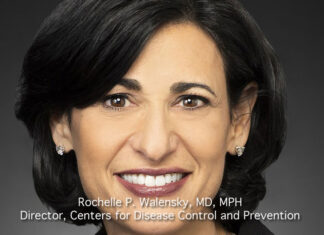
    Centers for Disease Control issues new guidance for return to school

    Loveland Magazine –  Jul 28, 2021
    Ohio Department of Health Releases Updated K-12 School Guidance

    Loveland Magazine –  Jul 28, 2021

    Hamilton County Public Health responds to request for back to school…

    Loveland Magazine –  Jul 29, 2021


    School Board gives go-ahead for $66K “Pandemic Preparedness and Planning” services

    “Pandemic Preparedness and Planning” report for Loveland Early Childhood Center

    Nov 9, 2020

    “Pandemic Preparedness and Planning” report for Loveland High School

    Nov 9, 2020

    “Pandemic Preparedness and Planning” report for Loveland Middle School

    Nov 2, 2020

    “Pandemic Preparedness and Planning” reports for Loveland Intermediate School

  • How an Ohio state senator and 33 family members caught COVID-19

    How an Ohio state senator and 33 family members caught COVID-19

    Senator Tina Maharath (Ohio Senate photo)

    Jake ZuckermanJake Zuckerman is a statehouse reporter. He spent three years chronicling the West Virginia Legislature for The Charleston Gazette-Mail after covering cops and courts for The Northern Virginia Daily.

    It started with a funeral.

    Tina Maharath, a Democratic state senator from Canal Winchester, attended a wake Aug. 9 after her brother-in-law’s funeral, who died of non-COVID-19 illness.

    Two of his family members, who Maharath said tested positive for COVID-19, came to the wake. Maharath described them as skeptical of the gravity of the COVID-19 pandemic.

    “Slowly, one by one, we started getting the phone calls from each one of our family members,” she said in an interview.

    Maharath comes from a big family — common, she said, among Laotians. Her husband has 19 siblings, she has 16. The new coronavirus, which causes COVID-19, left from the wake to invade 11 different family households, infecting 33 family members including a 9-month-old baby.

    As of Thursday, two have died: Maharath’s 44-year-old sister-in-law, who had been battling brain cancer for a year, and her sister-in-law’s father-in-law.

    Five family members were hospitalized, including one who Maharath said is likely to die soon from COVID-19. The five people hospitalized are between 34- and 76-years old. They were hospitalized anywhere from two to six weeks. Mahrath’s sister-in-law was ventilated for three weeks.

    All five had underlying health conditions like asthma, high blood pressure and diabetes, all common conditions in Ohio.

    The familial outbreak, Maharath said, is hopefully over. But uncertainty over longevity of symptoms or long term damage is frightening.

    “We’re concerned because of the five people who were hospitalized, they still have lingering symptoms too, and another sister-in-law who was pregnant, she has lingering symptoms too,” Maharath said. “I don’t have underlying conditions, I’m not pregnant. So why do I have symptoms?”

    Patient groups, calling themselves “long haulers,” have insisted they’ve been experiencing COVID-19 symptoms for month. The CDC has found COVID-19 can result in prolonged illness, even among younger and healthier adults.

    Six weeks out from the positive test result, Maharath said she still feels COVID-19’s symptoms. She said she feels dehydrated, experiences coughing spells, and headaches.

    Her lungs, she said, take most the heat.

    “I just feel weak,” she said. “My lungs feel like something is just punching them. Randomly, it feels like something is just stabbing my lungs.”

    Nearly 148,000 Ohioans have contracted COVID-19 according to state data, which officials believe to be an undercount. At least 4,715 have died.

    Maharath’s diagnosis drew headlines in August. On Wednesday, however, Maharath shared the story of the outbreak through her family in a floor speech opposing Senate Bill 311.

    The legislation, which Senate Republicans passed, would forbid the Ohio Department of Health from issuing anything like the stay-at-home order it issued in March, which closed “non-essential” businesses in an effort to slow the spread of the recently-detected coronavirus.

    It would also allow lawmakers — who have repeatedly expressed skepticism about the virus, ODH’s data tracking the virus, and non-pharmaceutical interventions to control the virus like masks and social distancing — to rescind ODH orders.

    However, a COVID-19 diagnosis did not prove to be a proxy vote against the legislation.

    Sen. Bob Peterson, R-Washington C.H., who contracted the disease earlier this month, voted in favor.

    Sen. Frank Hoagland, R-Adena, did as well. He contracted a mild case of the disease in August. According to a Herald Star report, Hoagland’s wife was hospitalized with the disease as well. Both his wife’s parents reportedly died from COVID-19.

    With what they hope to be the worst of the outbreak behind them, Maharath said her family is planning funerals for the deceased. They plan stricter social distancing and mask requirements.

    Maharath said she’s not planning to attend.

  • Reopening begins for Ohio’s colleges: Here’s how it looks

    Reopening begins for Ohio’s colleges: Here’s how it looks

    Susan Tebben

    By Susan Tebben – The Ohio Capital Journal

    Some of Ohio’s colleges and universities have begun moving students in, but the navigation of a school year amid a pandemic is still a balancing act.

    For Miami University, classes began this week, with all undergraduate courses online or remote. The plan is to keep it that way until at least Sept. 21, according to the plan posted to the school’s website. 

    “When we began planning last spring, we had hoped that the COVID-19 pandemic would be in significant decline before classes were scheduled to begin,” Miami president Greg Crawford told students. “Instead, cases are rising in many states. With 40% of our Oxford students coming from outside Ohio, we’ve been monitoring the situation closely.”

    Those that are on campus are required to wear masks, and as students come back, they can be reported to the Office of Community Standards if they repeatedly refuse to comply with an instructor’s direction to use a mask or face covering.

    Mask requirements are the norm among Ohio’s public colleges and universities, as are 14-day quarantines for students coming from states considered COVID-19 hotspots. 

    Also the norm this school year are phased reopenings, like those at The Ohio State University, Ohio University, Kent State University, Shawnee State University, Cleveland State University, and the University of Cincinnati.

    The first move-in dates for UC, Aug. 14 and 15 were considered “drop-off only,” meaning students could bring their stuff to campus, but then had to return home until the 16th. 

    Another regular part of public colleges’ and universities’ schedules is a return to at least some form of in-person class instruction that ends after Thanksgiving break. The last two weeks, including final exams, will be taken remotely at OSU, Central State University, UC, KSU and Wright State University, among others.

    Kent State and the University of Toledo have eliminated their fall break to allow students to receive a full semester despite adjusted opening dates.

    Toledo said they adjusted their Fall semester “based on the possibility of having a second wave of COVID-19 in late fall,” taking into account CDC data on the pandemic and state recommendations for higher education.

    Bowling Green State University went so far as to cancel their Winter 2021 session and provide a $1,500 credit for the first 2,000 students who cancelled their housing assignment before the school year began this week. 

    “It is important you understand that we are HIGHLY encouraging you not to live on campus this fall,” information on the university’s COVID-19 plan page stated.

    BGSU started their staggered move-in this week for those that had no other option than to take up residence, and are set to begin classes on Aug. 31. Students there will also be online only beginning Nov. 30. 

    OU phased in their reopening by allowing certain graduates and undergraduates “in a carefully selected set of academic programs” to begin their time on campus. Most students will begin remotely on Aug. 24, but students like third-year students in the College of Health Sciences and Professions’ nursing program and juniors and seniors in the Army Reserve Officer Training Corps (ROTC) are eligible to participate in the university’s first phase of schooling. 

    Universities throughout the state sticking with in-person instruction have instituted class-size reductions, along with “hybrid-remote” forms of teaching. Central State spelled out a “cohort attendance” model in its reopening plan, which would break large classes into groups, with the cohorts attending classes on alternating days. This model goes along with a 50% reduction in class sizes, something Wright State anticipates as part of its plan as well.

    “At this time, the university conservatively estimates that one-third of classes will have in-person components while the majority of in-person classes will also deliver all content remotely to provide flexibility to students who are unable or do not feel comfortable returning to campus,” said Wright State president Susan Edwards in a letter to the university community.

    Many of Ohio’s public higher education institutions have also created pledges for students connected to prevention of coronavirus, and in some cases can spur disciplinary action if not signed. 

    Testing and contact tracing for COVID-19 are a regular part of all public school plans, though the ways in which the testing is done vary from school to school

    The spring semester plan is still to be determined for most schools. The University of Akron plans to continue hybrid online and in-person instruction into the spring, but others are still watching the success of their fall semesters to plan for the future.

    “Decisions are forthcoming,” stated the UC reopening plan.


    Susan Tebben

    Susan Tebben is an award-winning journalist with a decade of experience covering Ohio news, including courts and crime, Appalachian social issues, government, education, diversity and culture. She has worked for The Newark Advocate, The Glasgow Daily Times, The Athens Messenger, and WOUB Public Media. She has also had work featured on National Public Radio.