Tag: May 3 primary

  • May 3rd election results for statewide and U. S. Senate and Congressional seats

    May 3rd election results for statewide and U. S. Senate and Congressional seats

    Loveland, Ohio – Here are the candidates voters chose to run against each other in statewide and U. S. Senate and Congressional seats in the November 8 General Election this Fall.

    Governor and Lieutenant Governor

    • Mike DeWine and Jon Husted (R)

    • Nan Whaley and Cheryl L. Stephens (D

    Attorney General

    • Jeffrey A. Crossman (D)

    • Dave Yost (R)

    Auditor of State

    • Taylor Sappington (D)

    • Keith Faber (R)

    Secretary of State

    • Chelsea Clark (D)

    • Frank LaRose (R)

    Treasurer of State

    • Scott Schertzer (D)

    • Robert Sprague (R)

    Chief Justice of the Supreme Court

    • Jennifer Brunner (D)

    • Sharon L. Kennedy (R)

    Justice of the Supreme Court – Term Commencing 01/01/2023

    • Terri Jamison (D)

    • Pat Fischer (R)

    Justice of the Supreme Court – Term Commencing 01/02/2023

    • Marilyn Zayas (D)

    • Pat DeWine (R)

    U.S. Senate

    • Tim Ryan (D)

    • JD Vance (R)

    1st Congressional District

    • Greg Landsman (D)

    • Steve Chabot (R)

    2nd Congressional District

    • Samantha Meadows (D)

    • Brad Wenstrup (R)

  • Ohio House Speaker says no primary election legislation coming soon

    Ohio House Speaker says no primary election legislation coming soon

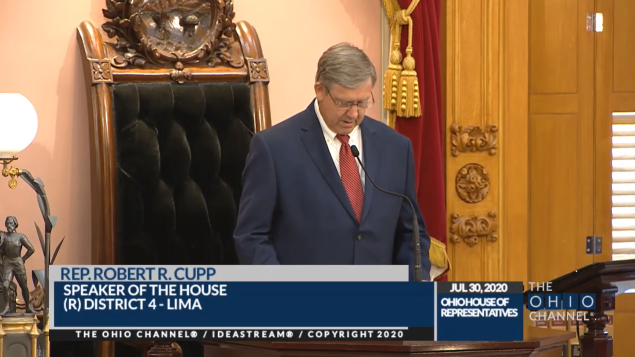
    Speaker of the House Bob Cupp addresses the chamber.

    BY: SUSAN TEBBEN – Ohio Capital Journal

    Ohio’s House Speaker said Wednesday legislation is not coming to change the May primary date.

    Speaker Bob Cupp said the process was “in the hands of the federal court,” despite various court documents in which he argued that the election is a legislative issue and any changes should be made in the General Assembly.

    The Ohio Capital Journal asked Cupp directly to confirm the House had no plans for legislation to set a new primary date in the next two weeks.

    “That is correct, we’re not in session,” Cupp said during a gaggle after Wednesday’s House session.

    He was asked about potential changes to the election earlier in the press gathering, and he deferred the job.

    “We’ll let the federal court process proceed,” Cupp said.

    federal lawsuit was filed by GOP voters earlier this year, claiming voters are losing their right to vote with the chaos surrounding redistricting. Originally, the plaintiffs, including Ohio Right to Life leader Michael Gonidakis, asked for the third map adopted by the Ohio Redistricting Commission to be forced into use by a three-judge panel of the U.S. District Court.

    That map was rejected by the Ohio Supreme Court before the federal lawsuit was filed, but the process of adopting a fourth version of legislative districts had not come to fruition.

    The fourth map ended up being a near-copy of the third, rejected version, with Senate President Matt Huffman acknowledging as he moved for its approval that the map had “97%” similarity to the third version.

    Because the process, which started in September, has taken so long, the Secretary of State’s Office was forced to remove legislative races from ballots for the May 3 primary, all but assuring a split primary.

    Lawsuits have been filed with the Ohio Supreme Court asking for the fourth map to be invalidated for many of the same reasons the third map was, and map challengers have also asked the court to hold GOP commission members in contempt for violating court orders.

    Cupp and Senate President Matt Huffman argued in previous court filings that the power for elections and drawing maps lies solely with the redistricting commission and legislators, seemingly contrary to Cupp’s Wednesday statements.

    “It is the commission and the general assembly who solely possess the legislative authority to create legislative and congressional districts,” attorneys for the legislative leaders wrote in a court filing for lawsuits on congressional districts.

    Secretary of State Frank LaRose in more recent court filings urged the judicial system to stay out of the process. In his filing countering objections to the most recent maps, he posited that the Ohio Redistricting Commission has more time to figure out legislative maps.

    “More importantly, there is still time for the legislature to take steps to extend the time within which such a decision must be made,” LaRose said. “This court should not give up on the constitutional process even if the petitioners have.”

    The federal court has chosen twice not to intervene in the state process to give it time to come to a resolution. The first time the court withheld judgment was just before the March 28 deadline for the commission to complete new maps.

    At a hearing before Chief Judge Algenon Marbley, Judge Benjamin Beaton and Judge Amul Thapar last Wednesday, parties from the Secretary of State’s Office gave Aug. 2 as a potential date for a second primary to include the legislative races.

    The judges entertained the idea of not just the third map, but also the map drawn by independent mapmakers during the latest redistricting commission hearings, and also debated whether or not the 2010 map could be used for one more year.

    They decided to give the state until April 20 to come up with an official map and to give the state’s highest court time to make its rulings. A status conference was scheduled for April 11.

    Jake Zuckerman contributed to this report.

  • Early voting starts today. Here are the basics

    Early voting starts today. Here are the basics

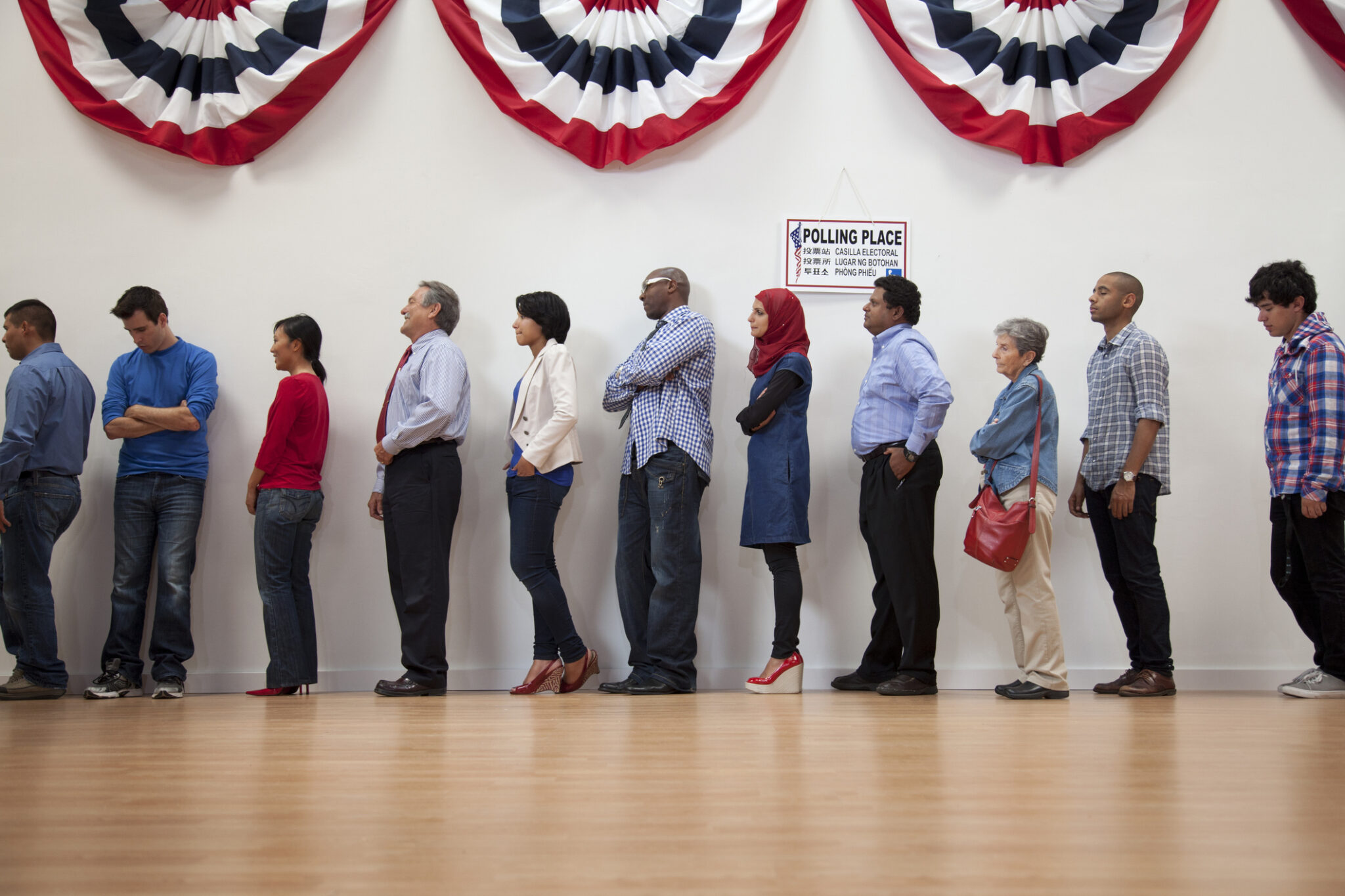
    Getty Images photo of voters in line.

    BY: JAKE ZUCKERMAN – Ohio Capital Journal

    Despite drawn out legal battles over district lines for state legislative and U.S. House seats, yes, there’s still a May 3 primary in Ohio.

    Monday was the final day to register to vote in time to participate in the May 3 primary. Early voting starts Tuesday. Here are some of the basics from there.

    What are we voting on?

    May’s election will finalize who will represent the Democratic and Republican political parties in the 2022 elections. That includes:

    • Governor
    • Statewide offices (attorney general, auditor, treasurer, secretary of state)
    • U.S. House and Senate
    • Ohio Supreme Court

    Some races, like the Republican primary for the U.S. Senate or Democratic gubernatorial primary, are hotly contested. Some, like the Supreme Court races, are uncontested. Depending on where you live, various political subdivisions have local judicial and municipal candidates and ballot issues like school levies on the ticket as well.

    What aren’t we voting on?

    Ohio House and Senate races. Those district lines, which form 99 state House seats and 33 Senate seats, are typically reconfigured every 10 years. However, in the maiden voyage of an anti-gerrymandering amendment added by voters into the state Constitution, the Ohio Supreme Court has rejected three maps proposed by the Ohio Redistricting Commission along party lines. State Central Committee elections for both parties missed the May 3 ballot as well.  Last week, Ohio Secretary of State Frank LaRose issued a directive calling for elections to proceed, minus the races caught in the redistricting quagmire.

    State lawmakers, who control when primary elections occur, have yet to set a date for the legislative primary contests.

    Read about the third rejection here and the latest fallout here.

    How can I vote absentee?

    Complete an absentee ballot request form by April 30 and mail it to your county board of elections. The board should then provide absentee ballots. The ballot can be sent by mail by May 2 but must be received by no later than 10 days after the election, so the earlier the better.

    Voters should ensure they fill their applications out accurately and thoroughly, include their email and phone number, and track their ballot online, to ensure it’s counted, according to Secretary of State Frank LaRose.

    It can also be delivered to the board in person.

    And early voting?

    Early, in-person voting in Ohio starts April 5. It runs weekdays from 8 a.m. until 5 p.m. in the first three weeks of April and for an extra two hours in the final week of the month. It is also available the Saturday and Sunday (April 30 and May 1) before the primary.

    Do I need identification to vote?

    Yes. Acceptable forms of identification include a current, federal or Ohio government-issued photo identification card; a military identification card; a utility bill; a bank statement; a government check; or a paycheck. The Ohio Secretary of State offers further guidance and specifics on its website. Identification issued by non-Ohio states, passports, insurance cards, birth certificates and social security cards do not suffice.

    People who vote at their precincts without such identification can vote provisionally. Their vote will be counted if they return within seven days to provide qualifying identification.

  • Ohio Supreme Court rejects GOP-drawn Statehouse district maps for the third time

    Ohio Supreme Court rejects GOP-drawn Statehouse district maps for the third time

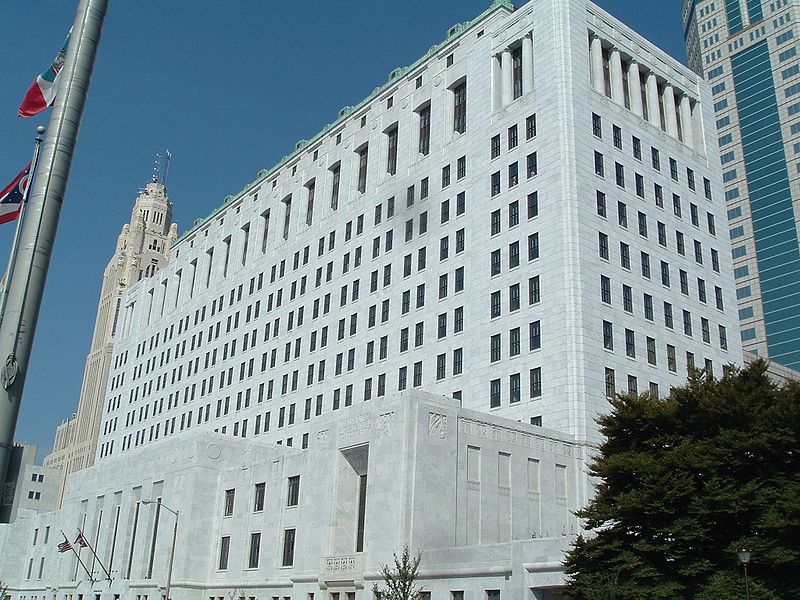
    Photo courtesy Wikimedia Commons..

    A bipartisan majority on the Ohio Supreme Court has for the third time rejected Statehouse district maps passed along partisan lines by Republicans on the Ohio Redistricting Commission.

    The most recent versions of legislative maps that had been approved by the ORC were struck down in a 4-3 decision Wednesday night by the state’s high court.

    A majority of the court justices said the map challengers had shown “beyond a reasonable doubt” that the most recent maps violated the constitution, particularly the provisions prohibiting partisan favoritism.

    “Substantial and compelling evidence shows beyond a reasonable doubt that the main goal of the individuals who drafted the second revised plan was to favor the Republican Party and disfavor the Democratic Party,” the majority wrote in its Wednesday opinion.

    The court sent the job back to the commission with a March 28 deadline to file an “entirely new” district plan for the General Assembly with the Ohio Secretary of State’s Office. A copy of the plan should then be sent to the court the next day.

    The breakdown of votes matched previous votes by the court striking down maps, with Chief Justice Maureen O’Connor, Justice Michael Donnelly, Justice Melody Stewart and Justice Jennifer Brunner forming the majority opinion. Justices Sharon Kennedy and Patrick Fischer dissented. Also dissenting was Justice Patrick DeWine, son of governor and commission member Mike DeWine.

    Justice DeWine recused himself from an issue in the case in which the commission members could be held in contempt of court for not filing new maps within the last deadline, but did not recuse himself from the entire case.

    The justices in the majority once again pointed to Senate President Matt Huffman and House Speaker Bob Cupp as controllers of the map-making process, saying the evidence in this case “is just as strong, if not stronger” than it was in previous map-making attempts.

    “The Democratic members of the commission had no opportunity to provide input in creating the second revised plan, and they had no meaningful opportunity to review and discuss it or to propose amendments once it was presented at the commission hearing on February 22, 2022,” the majority wrote.

    The court said they have “identified a flawed process” in all three of its rulings on the legislative maps, plans adopted after being the “product of just one political party.”

    “The evidence shows that the individuals who controlled the map-drawing process exercised that control with the overriding intent to maintain as much of an advantage as possible for members of their political party,” according to the ruling.

    With these new maps, the court agreed with arguments made by anti-gerrymandering groups who said a disproportionate number of so-called “Democratic-leaning” districts were actually toss-ups, with less than a 1% advantage for the Democrats.

    The newest plan had 19 House districts considered toss-ups, and seven Senate districts in the same toss-up range.

    “The result is that the 54 percent seat share for Republicans is a floor, while the 46 percent share for Democrats is a ceiling,” the court wrote (italics their own).

    That amount of toss-up districts, the court found, is “evidence of an intentionally biased map,” and is just one piece showing partisan lopsidedness on the part of the GOP.

    Justices also made a point to single out Huffman in saying he appears to have voted against a Democratic map proposal “based, at least in part, on a misunderstanding” of the constitutional provisions regulating redistricting in the state.

    Huffman called out the plan introduced by commission co-chair state Sen. Vernon Sykes and House Minority Leader Allison Russo because, according to him, the plan would have impacted the ability of Republican incumbents to keep their seats.

    “Making that observation demonstrates, beyond a reasonable doubt, that Senate President Huffman misunderstands the requirements of Article XI and the reasons for their adoption,” the majority stated. “Senator Huffman’s concern for protecting incumbents is not grounded in Article XI.”

    Kennedy and DeWine wrote their own dissent, that shamed the majority opinion for issuing a judgment “guaranteed to disrupt an impending election and bring Ohio to the brink of a constitutional crisis.”

    The Ohio Secretary of State, yet another member of the redistricting commission, has issued frequent warning about the lateness of the redistricting effort, though he has yet to go against the Republican majority vote.

    With the May 3 primary approaching quickly, Secretary Frank LaRose all but begged the General Assembly to approve extra money to speed up the delivery of absentee ballots to overseas and military Ohioans, and to extend the amount of time the county boards of elections have to send out the ballots, from 45 days before the election to 30.

    In previous court filings and public comments, LaRose said the primary likely couldn’t withstand another map delay.

    In shutting down the most recent map effort, the dissenting court justices say the majority of the court did much of what it did in previous rejections of redistricting maps by allegedly overriding the power of the constitution with its own interpretation.

    In previous dissents, Kennedy and DeWine accused the majority justices of “moving the goalposts” by putting requirements in the constitution where none could be found, but this time, they say, “the majority tears down those goalposts altogether.”

    “Through its actions today, the majority undermines the democratic process, depriving the voters of the constitutional amendment they enacted and leaving in its place only the majority’s policy preferences,” Kennedy and DeWine wrote. “In so doing, it threatens the very legitimacy of this court.”

    The majority of the court added a new level to the next steps in redistricting by ruling the map-drafting “should occur in public” and that the commissioners should “convene frequent meetings to demonstrate their bipartisan efforts to reach a constitutional plan within the time set by this court.”

    Dissenting justices say that the majority finding the most recent maps unconstitutional because this transparency method didn’t happen the first (or second) time “is ludicrous.”

    “Nothing in the constitution requires the seven commissioners to sit down together to draft the plan – effectively handing each one of them an unbridled veto power,” Kennedy and DeWine wrote in their dissent.

    The majority on the court also had a suggestion for the commission: “The commission should retain an independent map drawer — who answers to all commission members, not only to the Republican legislative leaders — to draft a plan through a transparent process.”

    After the Ohio Redistricting Commission passes a new plan, map challengers will once again have three days to object after the maps are submitted.

    The Secretary of State’s office declined to comment on the court ruling Wednesday night.

    The Ohio Supreme Court’s isn’t done: It is still considering court challenges to congressional maps passed earlier this month. The court also hasn’t said whether it will reschedule a contempt of court hearing it brought up after the ORC didn’t come up with legislative maps by its February 17 deadline.


  • Ohio State Leaders Must Allow Voter Education Collaboration

    Ohio State Leaders Must Allow Voter Education Collaboration

    CLEVELAND — In response to the Ohio Supreme Court’s rejection of the third proposed state map due to partisan gerrymandering, All Voting is Local Ohio State Director Kayla Griffin released the following statement: 

    Background: At the moment, state and local officials are preparing for a May 3 primary. On its face, Revised Code § 3501.054, known as the collaboration ban, purports to bar any public official responsible for administering or conducting an election from collaborating with any nongovernmental entity on activities related to voter registration, education, poll worker recruitment, or similar election-related activities.

    As there are no solidified maps at this time, elections officials are facing uncertainty while preparing for the upcoming primary, which is leaving voters in limbo. We are urging Senate President Matt Huffman and the Ohio Senate to allow elections officials and community groups to collaborate on voter education by repealing the collaboration ban immediately. Election officials and nongovernmental entities must not be held back from working together to mitigate the impact upon voters brought on due to the delay in finalizing congressional and state maps.  

    Voters all across the state could face last-minute poll consolidations, changes, and/or closures. As districts change, they will have little, if any, time to figure out what candidates are on the ballot. Our leaders and elections officials must allow for an all-hands-on-deck approach for accurate and fair preparation. This will only be possible if elections officials and community groups — including faith, service, and civic groups — are allowed to work together towards educating voters on last-minute changes and keeping voters up to date on information they may need to ensure they can accurately and fairly cast their ballot.