Tag: May primary

  • A perspective on the Loveland School District levy

    A perspective on the Loveland School District levy

    by Tom Allen

    I’d like to take a few minutes of your time to share my perspective on the school levy that will be on the May ballot.

    I’m a 60-year-old, 30-year Loveland area resident with a home in the Loveland school district. I’m semi-retired and our children, who attended Loveland schools from K-12, are grown. Being semi-retired means, like many of you, I watch my spending closely. As someone who has always been proud of the Loveland Schools’ reputation and performance, the divide in our community from the past few levies has been disheartening. I have friends and neighbors on both sides of this issue. I have voted no in the past and I understand why people feel as they do about the situation.

    The perspective I want to share is fairly simple, and one that as fellow property owners I hope you will consider. I firmly believe it’s in all of our best interests to be more aligned this May.

    The premise is this: I understand that property values are subject to a variety of factors. I believe that school district performance is among the leading considerations of families looking to move to a new community. The way l see it a school district that does not support reasonable funding requests is destined for declining property values over time, as school performance and reputation declines. The reality is that things do cost more over time and it does cost to attract and retain top talent.

    Let’s say for the sake of argument that property values drop 10 percent over the next ten years. If your Loveland home was valued at the current Zillow average of $355,000, you will take a $35,500 hit when you sell it. That is a very significant loss. I would prefer to pay a few hundred dollars more each year to help maintain the good reputation of our schools, protect our property values and provide our students with a well-rounded educational experience.

    While each of us has reasons that affect our decisions about these levies, I believe what we have in common is that we all prosper when we have a high performing school district. I would like our state to provide a better funding mechanism for our public schools, but unfortunately, it doesn’t. I trust that our current school leaders are good stewards of our hard earned tax dollars and I believe that they reacted appropriately to our feedback when the District overreached.

    After voting against the oversized levy a few years ago, I will be voting yes on the May levy that will be on the ballot, mostly to help protect our property values. I’m willing to find the additional hundreds of dollars per year as an investment in education, our community and in all of our property values.

    I appreciate you giving this issue further consideration and I respect that each of you has the right to vote for what you believe is best for your situation.

  • Ohio House Speaker says no primary election legislation coming soon

    Ohio House Speaker says no primary election legislation coming soon

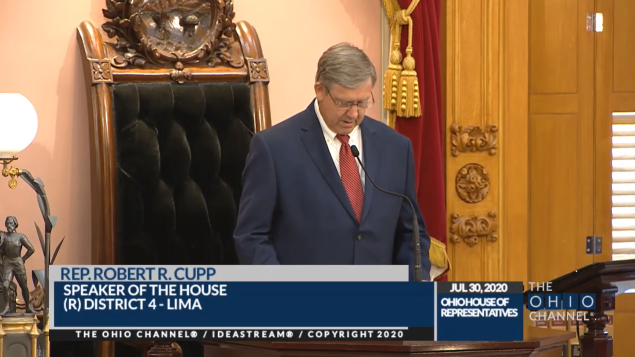
    Speaker of the House Bob Cupp addresses the chamber.

    BY: SUSAN TEBBEN – Ohio Capital Journal

    Ohio’s House Speaker said Wednesday legislation is not coming to change the May primary date.

    Speaker Bob Cupp said the process was “in the hands of the federal court,” despite various court documents in which he argued that the election is a legislative issue and any changes should be made in the General Assembly.

    The Ohio Capital Journal asked Cupp directly to confirm the House had no plans for legislation to set a new primary date in the next two weeks.

    “That is correct, we’re not in session,” Cupp said during a gaggle after Wednesday’s House session.

    He was asked about potential changes to the election earlier in the press gathering, and he deferred the job.

    “We’ll let the federal court process proceed,” Cupp said.

    federal lawsuit was filed by GOP voters earlier this year, claiming voters are losing their right to vote with the chaos surrounding redistricting. Originally, the plaintiffs, including Ohio Right to Life leader Michael Gonidakis, asked for the third map adopted by the Ohio Redistricting Commission to be forced into use by a three-judge panel of the U.S. District Court.

    That map was rejected by the Ohio Supreme Court before the federal lawsuit was filed, but the process of adopting a fourth version of legislative districts had not come to fruition.

    The fourth map ended up being a near-copy of the third, rejected version, with Senate President Matt Huffman acknowledging as he moved for its approval that the map had “97%” similarity to the third version.

    Because the process, which started in September, has taken so long, the Secretary of State’s Office was forced to remove legislative races from ballots for the May 3 primary, all but assuring a split primary.

    Lawsuits have been filed with the Ohio Supreme Court asking for the fourth map to be invalidated for many of the same reasons the third map was, and map challengers have also asked the court to hold GOP commission members in contempt for violating court orders.

    Cupp and Senate President Matt Huffman argued in previous court filings that the power for elections and drawing maps lies solely with the redistricting commission and legislators, seemingly contrary to Cupp’s Wednesday statements.

    “It is the commission and the general assembly who solely possess the legislative authority to create legislative and congressional districts,” attorneys for the legislative leaders wrote in a court filing for lawsuits on congressional districts.

    Secretary of State Frank LaRose in more recent court filings urged the judicial system to stay out of the process. In his filing countering objections to the most recent maps, he posited that the Ohio Redistricting Commission has more time to figure out legislative maps.

    “More importantly, there is still time for the legislature to take steps to extend the time within which such a decision must be made,” LaRose said. “This court should not give up on the constitutional process even if the petitioners have.”

    The federal court has chosen twice not to intervene in the state process to give it time to come to a resolution. The first time the court withheld judgment was just before the March 28 deadline for the commission to complete new maps.

    At a hearing before Chief Judge Algenon Marbley, Judge Benjamin Beaton and Judge Amul Thapar last Wednesday, parties from the Secretary of State’s Office gave Aug. 2 as a potential date for a second primary to include the legislative races.

    The judges entertained the idea of not just the third map, but also the map drawn by independent mapmakers during the latest redistricting commission hearings, and also debated whether or not the 2010 map could be used for one more year.

    They decided to give the state until April 20 to come up with an official map and to give the state’s highest court time to make its rulings. A status conference was scheduled for April 11.

    Jake Zuckerman contributed to this report.

  • House GOP leader on Justice Maureen O’Connor impeachment: ‘All options are on the table’

    House GOP leader on Justice Maureen O’Connor impeachment: ‘All options are on the table’

    BY: JAKE ZUCKERMAN AND NICK EVANS – Ohio Capital Journal

    Columbus, Ohio – A ranking House Republican left open the possibility of impeaching the chief justice of the Ohio Supreme Court, which this week rejected Republicans’ third proposed legislative redistricting map. 

    During a private GOP caucus phone call Thursday, House Majority Leader Bill Seitz and Rep. Jon Cross voiced support for impeaching Justice Maureen O’Connor, according to a person on the call. O’Connor, also a Republican, has acted as a swing vote on two high-stakes redistricting cases and sided with Democrats on the bench finding the maps disproportionately favored Republicans in violation of the Ohio Constitution. 

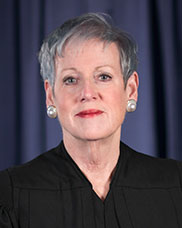
    Justice Maureen O’Connor

    Through a spokesman, Seitz, a longtime Cincinnati lawmaker and influential caucus member, declined to comment on caucus discussions but said Friday “nothing has been decided, and that all options are on the table.”

    Cross, a Kenton Republican, declined comment, noting “we (I) don’t comment about caucus meetings.”

    The call, held Thursday afternoon, lasted about 20 minutes, the source on the call said. In it, Seitz presented an argument that included old precedent for the House moving to impeach a justice after an unfavorable court decision. 

    When Cross offered what was described as a more fiery argument for impeachment, House Speaker Bob Cupp, R-Lima, ended the call, according to the source. Cupp’s office did not respond to requests for comment about the caucus call or his position on impeachment. 

    Cupp spent six years on the Ohio Supreme Court bench, serving alongside O’Connor for his entire tenure.

    On Facebook Thursday, hours before the caucus call, Cross wrote “enough is enough,” and that O’Connor had violated Ohio law related to altering the time, place or manner of an election.

    The claim about Seitz’ support marks the most senior legislator in favor of the possibility of impeaching O’Connor. Also Thursday, Rep. Scott Wiggam, R-Wooster, a committee chairman, said on social media “it’s time to impeach Maureen O’Connor now.

    https://twitter.com/Scott_Wiggam/status/1504496308584919044

    The hubbub comes in response to the court’s redistricting ruling late Wednesday evening. A four-justice majority found “beyond a reasonable doubt” that the most recent maps violated the constitution, particularly the provisions prohibiting partisan favoritism. While uncertainty remains, the ruling could force lawmakers to either move the May primary election date or create a second primary election date for non-statewide races. In a letter this week, Secretary of State Frank LaRose indicated the plan for now is to proceed with two separate primary elections.

    The decision on whether to pursue impeachment won’t be up to him, but Gov. Mike DeWine advised against the move Friday. 

    “This is an extraordinary measure to take,” he said. “I think we don’t want to go down that pathway, because we disagree with a decision by a court, because we disagree with a decision by an individual judge or justice. Not a good idea.”

    Three House Republicans publicly floated the concept of impeaching DeWine himself in 2020 for his COVID-19 response. The idea went nowhere. 

    The Supreme Court is currently reviewing a second, GOP-proposed congressional redistricting map after overturning the first effort on constitutional grounds. 

    Not long before the redistricting fiasco, O’Connor publicly broke from Republicans on judicial integrity. The Ohio Republican Party, with the 2020 presidential election looming, blasted a lower court’s ruling on election procedures and Franklin County Common Pleas Judge Richard Frye as a “partisan judge.” In an unusual move, O’Connor called the statement “disgraceful” and “deceitful” and emphasized the concept of judicial independence. 

    “This is a blatant and unfounded attack on the independence of the Ohio judiciary,” she wrote. 

    “To accuse a judge of deciding the matter before him on partisan politics and further accuse the judge of ‘obstruction of his judicial responsibility’ is without merit and is meant to further the false narrative that judges have no conscience, no legal responsibilities, and no capacity to decide what the law is beyond the raw politics of the issue.”

    An impeachment would be an extreme, though not unprecedented reaction. In fact, the Ohio Legislative Service Commission notes all eight impeachments in Ohio’s history were against judges. For instance, in 1808, members of the Ohio House grew angry enough at a ruling by Justice George Tod that they sought his impeachment. He survived via one vote in the state Senate, according to the court. Justice Calvin Pease was impeached and acquitted as well around the same time. 

    The Ohio Supreme Court gave state lawmakers until March 28 to submit a new proposal. The Ohio Redistricting Commission, a bipartisan panel of statewide and legislative officials, is scheduled to meet Saturday. 

    Morgan Trau contributed to this story.

  • GOP redistricting attorneys ask court to make decision on congressional map after 2022 election

    GOP redistricting attorneys ask court to make decision on congressional map after 2022 election

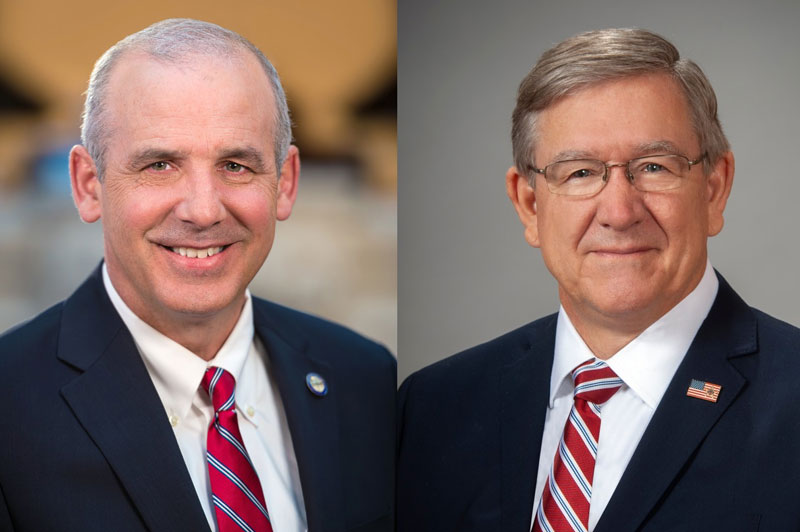
    Ohio Senate President Matt Huffman and Ohio House Speaker Bob Cupp, both Lima Republicans. Official photos.

    BY: SUSAN TEBBEN – Ohio Capital Journal


    Legislative leaders and the state’s chief elections officer dug their heels in on continuing on with the May primary election, even as Ohio groups seek invalidation of the latest congressional redistricting map.

    Secretary of State Frank LaRose, Senate President Matt Huffman and House Speaker Bob Cupp have responded to requests by the League of Women Voters and a group of Ohio citizens represented by the National Redistricting Action Fund that the Ohio Supreme Court invalidated the newest congressional district map.

    Huffman and Cupp submitted their response together, starting by saying the Ohio Redistricting Commission “does not exist to simply rubberstamp redistricting plans favored by (court challengers).”

    “It is entitled to exercise reasonable discretion in balancing the highly complex factors that go into congressional redistricting,” attorneys for Cupp and Huffman wrote.

    While also arguing that the congressional map passed at the beginning of March is constitutional, Cupp and Huffman’s attorneys took the stance that the commission is the only authority in map-making in the state.

    The LWV and NRAF had differing opinions on next steps if the court invalidated the map, with the NRAF asking the court to take over, but the LWV saying the map should be sent back to the courts for very specific revisions.

    The legislative leaders argued that the Ohio Redistricting Commission is a “creature of the Ohio Constitution,” but with duties provided to it “independent of any other branch of government in Ohio.”

    “It is the commission and the general assembly who solely possess the legislative authority to create legislative and congressional districts,” attorneys wrote.

    It’s not fair, nor is it in line with the law, to compare the commission-adopted map to other maps that may have been submitted to the commission, but were never brought up for a vote or formally considered, Cupp and Huffman state in their court filing.

    In their objections to the map, challengers had offered up maps from Stanford and Harvard political science professors as models for a replacement map.

    Republican leaders flatly disagreed with the idea.

    “It is now plainer than ever that it is dangerous and disingenuous to base Ohio constitutional law and the voting rights of millions of citizens on this untested and contradictory evidence conceived of by paid-for-hire mathematicians and social scientists,” Cupp and Huffman argued.

    LaRose echoed the comments made in Cupp and Huffman’s filings that the map is constitutional and “needs no revision.”

    But if the court rejected the map, LaRose said, it does not have the power to “unilaterally implement its own congressional district plan.”

    “Again, Secretary LaRose will administer the 2022 congressional primary and general elections in accordance with a constitutional congressional district plan,” attorneys for LaRose wrote.

    In this vein, Cupp and Huffman’s attorneys asked that the court “defer any action” on the congressional map until after the 2022 election.

    They blamed the new state redistricting process, along with “significant logistical challenges” and even the U.S. Census delays brought on by the COVID-19 pandemic for exacerbating an “already challenging scenario” and leading to the adoption of the new congressional plan only days before the candidate filing period for the May 3 primary.

    The Ohio Supreme Court is considering court challenges for not only the congressional map, but also the legislative maps. The ORC adopted the maps one week after the court-ordered February 17 deadline, risking contempt charges.

  • Dems: We’ll talk about primaries when fair maps are passed

    Dems: We’ll talk about primaries when fair maps are passed

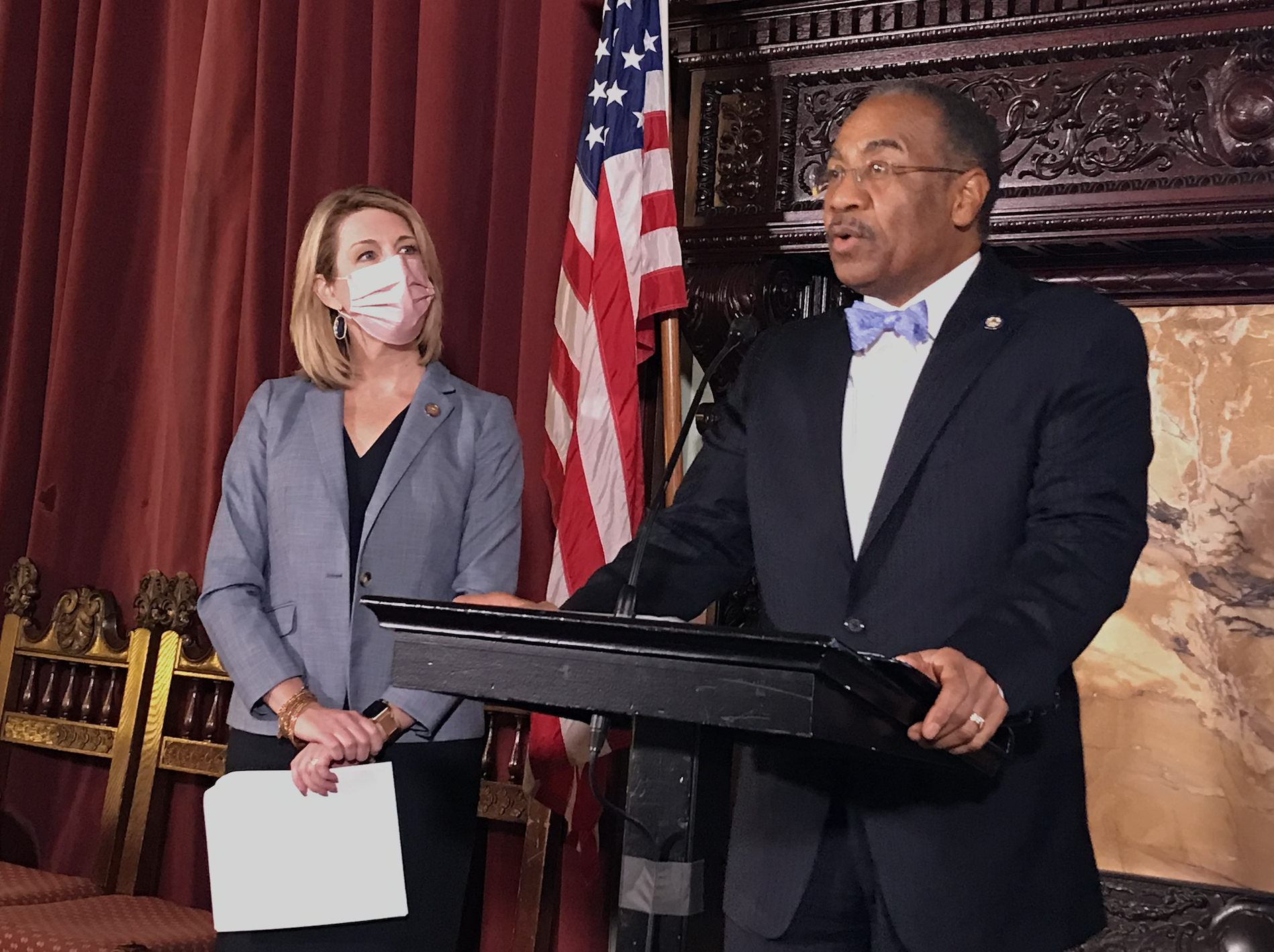
    State Sen. Vernon Sykes, D-Akron, speaks with press alongside House Minority Leader Allison Russo on Friday. The Dem caucuses pushed their maps and pushed for cooperation in the ongoing redistricting process. (Photo: Susan Tebben, OCJ)

    BY: SUSAN TEBBEN –  Ohio Capital Journal

    After making technical fixes brought up by GOP members of the Ohio Redistricting Commission, Ohio’s Democratic caucuses in the legislature are again pushing for their maps to be a model for redistricting in the state.

    Legislative leaders of the party also still believe a May primary is possible, but until maps are produced with bipartisan agreement, they say they can’t come to the table to talk about other election options.

    House Minority Leader Allison Russo, state Sen. Vernon Sykes, and Democratic redistricting mapmaker Chris Glassburn met at a press conference on Friday to bring up their versions of legislative maps, but also to give Republicans an ultimatum on the process.

    “It is not a lack of ability that is delaying the process, rather Republicans lack the will to do what is constitutionally required to deliver the fair maps that Ohioans overwhelmingly demanded not once, but twice,” Russo said.

    As of Monday evening, spokespeople for Senate President Matt Huffman, Secretary of State Frank LaRose, Auditor Keith Faber and Governor Mike DeWine said they had no information about when the commission would be meeting.

    “Check with the co-chairs,” said Huffman’s spokesperson when asked if Huffman had heard about the commission or provided his own schedule to the commission.

    “Secretary LaRose is ready and willing to meet at the call of the co-chairs,” LaRose’s spokesman told the OCJ. “He is focused on explaining to the General Assembly the risks associated with trying to run a secure, accurate and accessible election on the current timeline without the finality of new districts.”

    A spokesperson for House Speaker and commission co-chair Bob Cupp did not respond to requests for comment on Monday.

    The maps presented on Friday were the same that were released on Tuesday, which Glassburn said didn’t hold major substantive changes. Mostly the maps contained corrections to precinct lines or single census blocks, some of which were requested by Senate President Matt Huffman asked for in the most recent meetings of the Ohio Redistricting Commission.

    Sykes, D-Akron, is the co-chair of the Ohio Redistricting Commission with House Speaker Bob Cupp, R-Lima. The two previous times the ORC met on legislative redistricting, Sykes and the Democrats expressed their frustration with a lack of transparency and a lack of concessions they say the Republicans were willing to provide as the map-making process went on.

    The two legislative redistricting plans that came from the ORC were passed on purely Republican majorities, and each time, Sykes left the process feeling as though Democrats weren’t heard and the GOP was unmovable.

    Still, Sykes said he is “hopeful” about the newest process, now with a court-ordered deadline of February 17. He said staff members have been “exchanging some information.”

    But despite only days until the deadline, Sykes acknowledged getting the commission together is still an uncertainty.

    “Right now, the reason we’re not meeting is because (the Republican commission members) can’t get organized on a date and time and place to do that, so we have not received any indications of what they plan on doing,” Sykes said.

    Gov. Mike DeWine, who convenes the Ohio Redistricting Commission and serves as a member, went to Los Angeles this past weekend to watch the Cincinnati Bengals compete in the Super Bowl.

    He held a media availability in LA on Thursday, “to talk about Super Bowl LVI, all things Cincinnati Bengals, and all things Ohio ahead of the big game on Sunday,” according to his office.

    A spokesperson for fellow ORC member and Senate President Matt Huffman, R-Lima, wasted no time in releasing a statement on behalf of the majority party regarding the Dem maps and criticism of the process.

    “I’m sure at this point, Democrats believe they could draw House and Senate maps in crayon and watercolor and the same four members of the court would approve their unconstitutional maps,” Senate majority director of communications John Fortney wrote in a statement.

    The only specific criticism Fortney gave of the Dem plan was the 1st Senate district, saying the new plan “shoved it into districts that will not have another Senate election until 2024.”

    One thing Dems said they’d be willing to wait on is deciding whether or not a May primary is possible. Russo still believe a primary can be held on May 3 as scheduled “if we take the necessary steps to promptly pass fair, constitutional maps.”

    Republicans, including Huffman, brought up the idea of holding two primaries to take the pressure off the Ohio Secretary of State’s Office and local boards of election should the redistricting process take them past filing deadlines and administrative timelines for the election.

    In court filings with the Ohio Supreme Court asking them to uphold the previous maps, GOP members of the ORC asked the court to allow them to use the unconstitutional maps for the primary or wait to file a decision until after the 2022 general election.

    The Ohio Supreme Court did not move the primary, but reiterated in their rejection of the revised legislative maps that the General Assembly “has the authority to ease the pressure that the commission’s failure to adopt a constitutional redistricting plan has placed on the secretary of state and on county boards of elections by moving the primary election, should that action become necessary.”

    The secretary of state’s office, which both Republicans and Democrats say they’ve met with, has expressed hesitancy to postpone the May 3 election, or to have two separate primaries.

    The nearest deadline for the election is March 19, when the Uniformed and Overseas Citizen Absentee Voting Act says absentee ballots for eligible Ohioans should be sent out. April 5 starts the early voting period for the state under the current election timeline.

    Rob Nichols, spokesperson for Secretary of State Frank LaRose, said discussions on the election are “important, complex and ongoing.”

    “We continue to engage in negotiations over redistricting with those involved,” Nichols told the OCJ.

    The press conference ended a week that started with multiple committee meetings in the House and Senate to discuss congressional redistricting, all of which were canceled as House Speaker Bob Cupp said the GA didn’t have the support needed to pass new maps, as ordered by the Ohio Supreme Court. With the deadline for legislative approval set for Feb. 13, Cupp said the process will now move to the ORC. They will have another 30 days to come up with new maps.