Yesterday was beyond disheartening as legislators put politics over the safety of some of our most vulnerable children. The Senate passed an amended HB 68, and the House concurred. We applaud that lawmakers from both sides of the aisle voted no, but it was not enough to prevent passage.
We still have hope to block this from becoming law, but we have to act NOW.
Here is a sample text to personalize for your email to the Governor:
I am a business leader, and I urge you to veto HB 68, which would ban clinical best practices by prohibiting affirming healthcare to transgender youth and would ban transgender athletes from participating in sports. This bill harms Ohio’s youth and families—people who make up our workforce and whom we are trying to attract and retain as part of our workforce.
We are already seeing an exodus of LGBTQ+ and ally young adults who are seeking a more welcoming place to call home. Families of school-age children are making plans to leave Ohio in order to access essential medical care. HB68 is modeled after laws passed in other states — five of which have injunctions against their implementation. Legislation like HB68 will put Ohio in the national spotlight for all the wrong reasons, further harming employee recruitment and retention.
Additionally, the Ohio High School Athletic Association (OHSAA) has been regulating transgender individuals playing sports for years without incident or issue. This is government overreach at its worst; let all kids play sports via the existing OHSAA guidelines, which are working.
HB 68 will harm Ohio’s families, perception, and bottom line. Please use your power to stop this harmful bill from becoming law. Please VETO HB 68 and support Ohio’s families and a thriving economic workforce.
We know these bills are bad for business. It’s not too late to stop this.
Business voices matter. After you email, please call Gov. DeWine’s office at (614) 466-3555 or (614) 644-4357 to voice your opposition to this bill. You can also release an independent public statement condemning this bill, or have meetings and conversations directly with lawmakers.
If your business, organization, or association would like to make a statement condemning this legislation, please contact Policy@equalityohio.org for more information.
Thank you for being with us. We need your voice now more than ever.
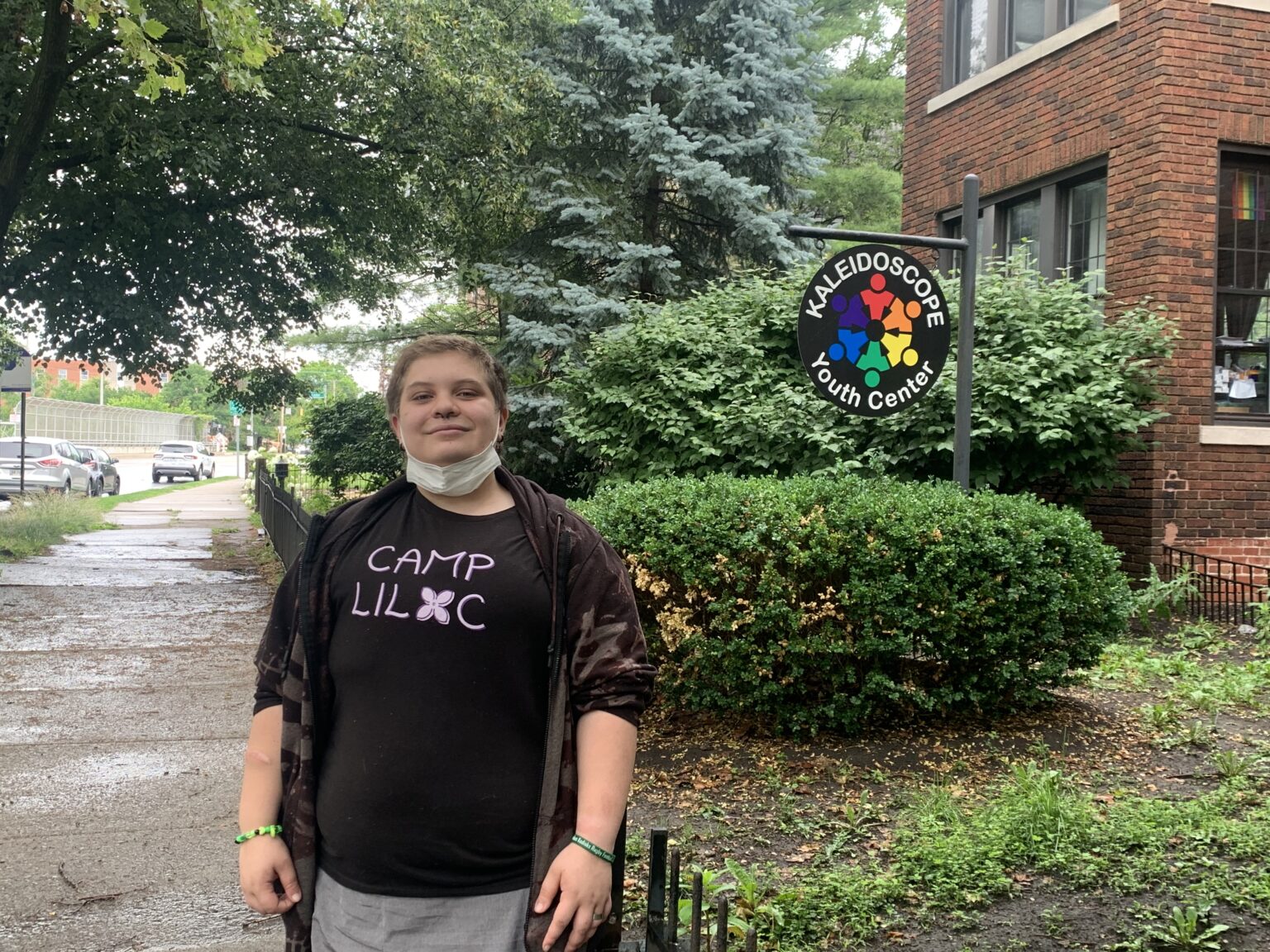
Nathan Alvarez, 15, stands outside Kaleidoscope Youth Center on June 23. He is worried about a bill that would require K-12 schools and colleges to mandate that students could only use the bathroom or locker room that matches their sex assigned at birth. (Photo by Megan Henry, Ohio Capital Journal) Ohio Capital Journal talked to three transgender youths who are concerned about these bills and their potential implications.
Nathan Alvarez is used to people laughing or snickering at him when he uses the men’s bathroom.
Despite that, the 15-year-old says his high school is one place he doesn’t have to worry about that happening because they have a couple of gender neutral bathrooms and anyone can use the men and women’s restroom.
State Reps. Beth Lear, R-Galena, and Adam Bird, R-New Richmond, recently introduced House Bill 183 which would require K-12 schools and colleges to mandate that students could only use the bathroom or locker room that matches their sex assigned at birth. HB 183 is still in House committee, awaiting sponsor testimony.
“It would be hell (if the bill were to pass),” Alvarez said, who uses he/him pronouns. “Hearing about it disgusted me. Like it violently disgusted me.”
HB 183 is one of a handful of anti-trans bills that have been introduced so far in the Ohio General Assembly.
Doctors wouldn’t be able to give puberty blockers and hormone therapy to trans youth, trans athletes wouldn’t be able to participate in women’s sports, educators would be forced to out students to their parents and require public schools to give parental notification before teaching “sexuality content” if these various anti-trans bills pass through the Republican-controlled Ohio Statehouse.
OCJ talked to three transgender youths who are concerned about these bills and their potential implications.
“It’s an attack on all trans people,” said Ko Rupert, who uses she/it pronouns. “They are all uniquely bad, but their uniqueness is important.”
Fifteen laws have been enacted banning gender affirming care for transgender youth and four additional laws have been passed that censor school curriculum like books, according to HRC.
“It’s very hard to see what’s been already happening in other states and how the bills that they are trying to pass here in Ohio are not even that different,” Jaylah Hollins, 19 said. “I feel like it’s not really in the interest of Ohioans, but only in the interest of anti-trans lobbyists from out of state.”
House Bill 8
Hollins is going to start attending Columbus State Community College this fall for social work and hopes to one day work for an organization that helps transgender people.
“Hopefully if these bills don’t pass, we can try and make Ohio a place where it can be a refuge for trans kids and trans adults,” Hollins, said, who uses she/her pronouns. “Ensuring that trans kids have access to medical care and that adults have access to the facilities that align with their gender identity shouldn’t be politicized in the first place.”
An advocate for the rights of trans children and their parents holds up a sign. Photo by Morgan Trau, WEWS.
While she said all the anti-trans bills are harmful, House Bill 8 stands out to her as the most damning.
“I feel like they don’t see it as putting children in harm’s way when it most likely is because you can’t expect a parent to be able to deal with knowing that their child is within an LGBT umbrella and not have to try and resort to what they may not see at the time as harmful approaches to their child’s identity,” Hollins said.
She said these bills would prevent children from learning more about themselves and make them feel as though they deserved to be punished because of how they identify.
“It won’t allow children to be able to understand others who are maybe different from them,” Hollins said. “It will encourage isolation and I think the most devastating would be suicidal ideation, especially with trans and non-binaries who already know that they are coming from families who are unaccepting of those identities.”
She’s said she’s still debating if she’ll stay in Ohio after college.
“It’s still hard for me to think about, but for me, I think I would want to stay in Ohio and fight for trans youth,” Hollins said.
Rupert, a 20-year-old Ohio State University graduate student, is also worried about HB 8 and the stripping away of youth rights.
“Young people can make decisions, can know their bodies and understand and have a deep relationship with their gender and sexuality and romantic orientations,” Rupert said.
“It’s upsetting to know that there are adults making choices for people to make choices about me. And I don’t have a choice,” Alvarez, of Reynoldsburg, said. “It’s scary.”
He hopes to move out of Ohio one day and relocate to Washington.
Anti-trans and anti-LGBTQ bills
House Bill 68, also known as the Save Adolescents from Experimentation Act (SAFE Act), would prevent doctors from giving puberty blockers and hormone therapy to trans youth. It would also ban physicians from performing gender reassignment surgery on a minor.
Megan Henry is a reporter for the Ohio Capital Journal and has spent the past five years reporting in Ohio on various topics including education, healthcare, business and crime. She previously worked at The Columbus Dispatch, part of the USA Today Network.
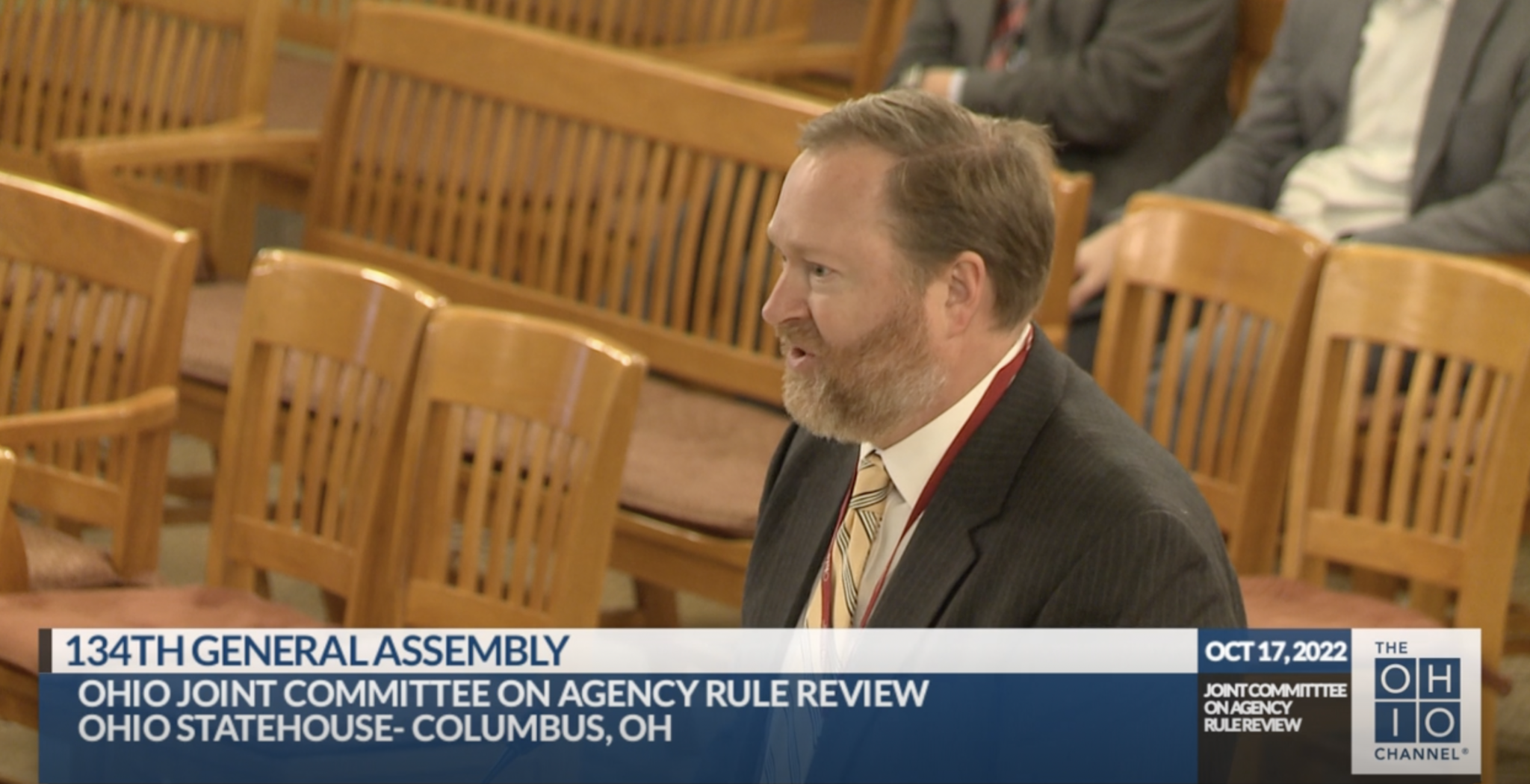
Ohio Department of Health Assistant Director Lance Himes answers questions from the Joint Committee on Agency Rule Review. Photo courtesy of The Ohio Channel
Rule passes despite court case holding back abortion ban and Dem objections
An Ohio legislative committee passed a rule on methods of identifying a fetal heartbeat that matched language in a previously passed abortion law, despite the fact that the law can’t currently be enforced.
The Joint Committee on Agency Rule Review passed an administration rule from the Ohio Department of Health entitled “appropriate methods for determining presence of fetal heartbeat,” despite Democratic efforts to invalidate the rule.
Democrats on the committee objected to the rule, saying it violated not only existing state rules for medical care related to abortions, but also case law about how a rule is passed.
In the rule, a fetal heartbeat is defined as “cardiac activity or the steady and repetitive rhythmic contraction of the fetal heart with the gestational sac.”
ODH Assistant Director Lance Himes said the definition of cardiac activity was taken “verbatim from Senate Bill 23.”
A physician should determine the presence of a fetal heartbeat in a method “consistent with the person’s good faith understanding of standard medical practice,” according to the rule.
This includes ultrasound equipment which allows the physician “to give the pregnant woman the option to view or hear the fetal heartbeat.”
What isn’t defined in the rule is when a “medical emergency exception” applies, a concern doctors have expressed with regard to the abortion law, even testifying to that effect in court hearings on the law.
“I would defer to the physicians who are interpreting this law and rule to determine, in their judgment, which is standard medical practices as defined in the statute and rule, for their determination as to whether it would be a medical emergency,” ODH Assistant Director Lance Himes told JCARR.
In writing this rule, Himes said the ODH was “not tasked with further defining medical emergency.”
The passage by JCARR this week represents the official passage of the rule, which was previously just an emergency rule put in place when Senate Bill 23 was implemented, hours after the U.S. Supreme Court decision in Dobbs, that overturned Roe v. Wade.
State Rep. Kristin Boggs, D-Columbus, took issue with the rule being passed without public input and said the passage of the rule as an emergency, then “stacking” the non-emergency rule on top was “in violation of our JCARR standards and in violation of (Ohio Revised Code).”
Himes acknowledged that no public hearing was held on the rule, but said Ohio Revised Code does not require one and “we did not have a stakeholder request out there for input.”
“The regular rule filing does offer forums like JCARR for individuals to come and make public comment … but a public hearing was not required,” Himes said.
Boggs also said the fact that SB 23 is currently unenforceable – a Hamilton County judge blocked the law indefinitely as the ACLU and Planned Parenthood clinics attempt to get the law thrown out – means there’s “no statutory authority to put forward this rule at this time.”
“So right now, as I see it, there are two reasons that have merit that would suggest that even passing this rule today would invalidate it in the future,” Boggs said.
State Sen. Andrew Brenner, R-Delaware, pushed back against the idea that the rule did not follow JCARR processes.
“This actually is going through the JCARR process, because that’s what we’re doing right now,” Brenner said. “So I don’t know how that would be a violation of doing something right now that we’re doing.”
State Rep. Michael Skindell, D-Lakewood, said the new rule conflicts with a Medicaid rule allowing for reimbursement of services if an abortion is the result of rape or incest and one from the Department of Veterans Services regarding abortion services when a pregnant person’s life is in danger or in the case of rape or incest. He argued the six-week ban would create a situation in which those services could not take place, therefore violating the Medicaid and Veterans Services rules.
“This (ODH) rule violates it once there’s a detectable heartbeat,” Skindell said.
Himes did not speak to the Medicaid rule, but said the ODH administrative rule “only sets forth the appropriate methods for determining a heartbeat. It does not speak to the legality of abortion related to rape or incest.”
Skindell entered a motion to invalidate the rule, which was defeated on a 5-4 vote along party lines.
David Miller is the Managing Editor of Loveland Magazine
by David Miller
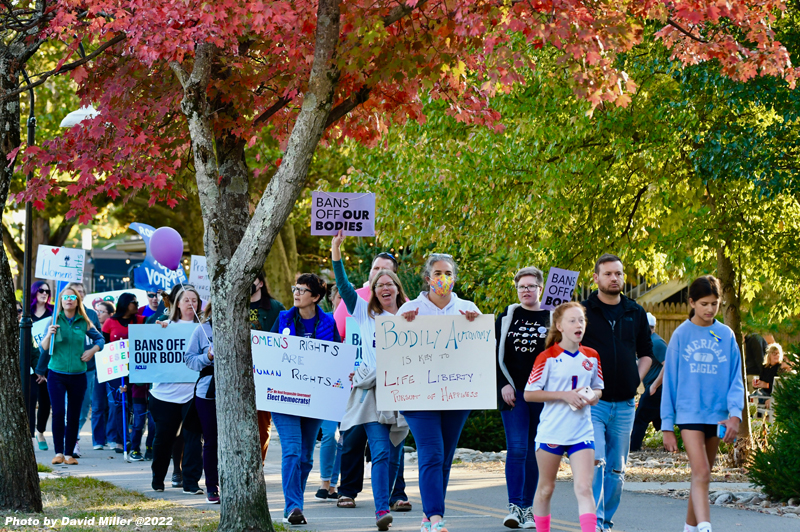
Loveland, Ohio – Adults and children from across the tri-state gathered in Nisbet Park along the Little Miami River in Historic Downtown on a sunny and warm Fall Sunday afternoon to be part of a “Women’s Wave” of activists out to change the course of voting patterns in our community. After speeches, they walked for an hour throughout our business district and along the Loveland Bike Trail engaging locals and tourists with the refrain of the sentiments they were so adamant about. It was a demonstration for human rights and as odd as that sounded throughout the streets of this quaint community nicknamed, “The Sweetheart of Ohio” it happened. “Human Rights” that have been taken away from themselves, their children, and those they love. The political agenda on most minds was the U.S. Supreme Court overthrowing Roe v Wade and a woman’s right to have an abortion, reproductive rights such as birth control, and how that decision led to even more extreme legislation and proposals from some elected officials at the Ohio Statehouse, and in D.C.
Health care, including the sometimes life-saving medical care of needed abortions and the tangled net that women and their healthcare providers are caught in, gun violence, mass shooting in schools, the right to gender equality, LGBTQ people’s rights, and a safer future for young girls were all talking points throughout the afternoon.
Many Democratic candidates for local and state offices spoke and a candidate for the U.S. House. Parts of Loveland are in Ohio Representative Jean Schmidt’s district and the local organizer, Bailey Moak, said that is why she chose downtown Loveland for the event location. She wants to show Schmidt where the unemployment line is. She believes that Schmidt and other currently serving politicians don’t align with Loveland’s values.
I asked organizer Moak on Monday to send me some of her thoughts after the event had ended. You can also watch her speaking at the event and watch a photo essay of photos from the event below. The rally was certainly an appeal for local “pro-choice” residents to get to the polls on November 8 and vote for “pro-choice” candidates, however, the photo essay will explain why so many people gathered in the park, their myriad reasons, and then marched.
I found the event to be a huge success. We met our goals to engage and educate voters, raise awareness to threats against women’s rights in our community and shed light on dangerous politicians like Jean Schmidt from Loveland who proposed legislation to ban medical care to women and children across Ohio (HB598), and ban access to curriculum on diversity and inclusion to students across our state (HB616).We rallied, we celebrated the promise of what new leadership can do to preserve and expand our freedoms, and we marched in protest of extremism and hate.During the March we disrupted some nice family dinners occurring on the patios of local businesses in Downtown Loveland with our passionate demonstration. This disruption is NECESSARY. All too often we side-step important discussions with our families, friends and community members to avoid feeling uncomfortable. The only way individuals, families and communities can grow is through engagement and vulnerability, which can result in a bit of discomfort. As demonstrators passed, families and friends breaking bread together were compelled to address important topics, which in my experience, leads to understanding and connection. This is why we Listen. This is why we Speak. This is why we Act. We do it for our communities and families.I want to thank our passionate volunteers and our speakers: Brian Flick, Dr. Jeanne Corwin, Dr. Vanessa Enoch, Dr. Nabila Babar, Joy Bennett, Jen Perez and Rep. Jessica Miranda, and our partnering organizations: Ohio Physicians for Reproductive Rights, Ohio ACLU, Ohio Red Wine and Blue, the Ohio Democratic Women’s Caucus and Democracy in Action for participating in this event.I also want to thank the City of Loveland, the Loveland Fire Department, and Loveland PD Chief, Michael Gabrielson for their support in working with event organizers to ensure this was a safe and successful event that this community can be proud of.
Loveland, Ohio – Loveland residents will have another choice for medical care when a new, $156 million 60-bed hospital and medical office complex is built near Kings Island and Kings High School.
The hospital will be built at the former College Football Hall of Fame site eighteen minutes from downtown Loveland.
Mercy Health – Cincinnati announced the health system will build the new, hospital on the 30-acre site along the I-71 “Innovation Corridor” in Mason at Kings Mills, exit 25 on I-71. They will break ground in the third quarter of 2021 and anticipates bringing 220 new jobs to Mason in 2024 with eventual growth to 275. Construction is expected to be complete in the third quarter of 2023 with Mercy Health beginning patient care shortly thereafter.
“Our leadership team identified an opportunity for serving unmet inpatient needs in Warren County, while developing a strong partnership with the City of Mason,” said Mercy Health – Cincinnati President Dave Fikse. “This investment aligns with our mission to promote accessible, community health and well-being.”
The new hospital, will be the first new hospital construction in Cincinnati since Mercy Health built West Hospital in 2014. In announcing their plans Mercy Health said that they will focus on providing emergency care and general and orthopedic surgery and offers opportunity for future campus expansion. It will include:
Emergency department
One level II cath lab
60 beds
Four operating rooms
Two procedure suites
The facility will also be home to a medical office building located adjacent to the hospital and offering specialist care, including cardiology, pulmonology, general surgery, gynecology, gastroenterology, and vascular services.
City of Mason Mayor Kathy Grossmann
“We’re very excited to welcome one of the largest health systems in the country and in the region, Mercy Health, to the City of Mason. It’s a great complement to our I-71 Innovation corridor. City Council’s priority is to foster a culture of wellness for our residents and this development aligns with that commitment,” said City of Mason Mayor Kathy Grossmann.
Mason City Council approved on Monday an “economic participation agreement” and incentive package that included a $600,000 forgivable loan and waiver of expedited permit fees, as well as a “mutual commitment” to explore a collaboration around bio innovation.
“Our strategies have much in common. We are energized by the large emphasis that Bon Secours Mercy Health places on research, innovation, and engagement with early-stage companies. Mason economic development has an ongoing track record of facilitating and adopting innovation through this model to grow the Mason BioHub. We are looking forward to having Mercy here as a partner,” said Michele Blair, director of economic development for the City of Mason.
The project architect is GBBN and Danis is the construction firm.
This new Mason facility will serve the northeast region of Cincinnati.
It’s the latest Mercy Health development in the area, following the July 2019 opening of Mercy Health – Deerfield Medical Center, an outpatient facility with diagnostics and physician offices. Deerfield Medical Center houses primary care practices and offers cardiology, women’s health services, and general surgery practices, in addition to diagnostic services on site, including lab draws, X-ray, MRI, mammography, ultrasound, and cardio/pulmonary testing.
Mercy Health – Cincinnati said they will announce two new primary care practices in Mason and Maineville later this month.



 Dear Business Leaders,