


Tag: medication abortion

  • Ohio abortion rights advocates prepare for more legal fights

    Ohio abortion rights advocates prepare for more legal fights

    Getty Image

    BY: SUSAN TEBBEN – Ohio Capital Journal


    With the abortion landscape changing in Ohio and around the country, one abortion rights group is building up its legal effort for those seeking or providing abortion care.

    Abortion Fund of Ohio recently announced the launch its Legal Access Program, through a partnership with law firm Friedman, Nemecek, & Long, L.L.C., that will provide free legal assistance and referrals to attorneys “for Ohioans facing criminal and civil penalties for reproductive health care.”

    “We’re building out a network of lawyers who will take on these cases, so that we have more lawyer power,” said Morgan Mitchell, legal access fellow for AFO.

    Mitchell said cases are popping up in the state where confusion and lack of knowledge of where abortion and procedures that could be connected to abortion (like miscarriage, medically called a “spontaneous abortion”) legally stands.

    In one such case, covered by NPR, a woman wondered if the six-week abortion ban was causing doctors to hesitate in treating her heavy bleeding at a Painesville emergency room, bleeding that had already been confirmed to be caused by a miscarriage.

    Currently, abortion is still legal up to 22 weeks in Ohio after a state court blocked a six-week ban indefinitely, but national fights against receiving medication abortion through the mail and a discussion of abortion bans on the federal level have advocates worried that reproductive healthcare may be fought for in the courts rather than medical clinics and hospitals.

    Ohio’s own Attorney General Dave Yost signed onto a letter with more than a dozen other state attorneys general warning CVS and Walgreens against distributing medication to induce abortions through the mail due to various state laws that prohibit it. Ohio’s law, passed in 2022, forbids abortion medication to be provided to patients without a physician present.

    A recent study published in the Journal of Health Politics, Policy and Law, co-authored by researchers from three Ohio universities, said even the regulations that are in effect involve working with state administration, and the bureaucracy has created an system where regulations “have become exceedingly difficult to comply with” for abortion providers.

    Even medical students in the state are left nervous and confused about what restrictions may mean for their education and future career, should they decide to provide reproductive healthcare.

    One group the legal access program is particularly hoping to help is minors who may want to use a legal method to get around needing the consent of their parents to obtain an abortion, a method called judicial bypass.

    According to the Ohio Supreme Court, a minor seeking consent to have an abortion can petition the juvenile court in their county of residence or in a border county, with the help of a court-appointed attorney if they don’t have one.

    A judge then determines if a minor “is sufficiently mature and well enough informed to decide intelligently whether to consent to an abortion or that the abortion is in the best interests of the (minor).”

    Judicial bypass has been on the books since before the fall of Roe v. Wade, but the legal access program is only including that as part of the legal options so that Ohioans know all their legal rights.

    “We’re just trying to let people know this exists, we’re not telling people to have an abortion, or telling their parents they’re bad parents,” Mitchell said.

    With the six-week ban (and other abortion bans that were attempted but not passed by Ohio legislators in previous years) not including any exceptions for rape or incest, and no standards for sex education present in the state, Mitchell said it’s frustrating that a minor has to go to court to prove maturity and intelligence, when some legislators would force them to bear a child, no matter their age.

    “It’s really an attack on bodily autonomy and it’s scary to see it be separated from health care, because this is a decision you’re making for your body,” Mitchell said. “We want to be able to give anyone regardless of age the opportunity to pursue whatever they want with their bodies.”

    The six-week ban pause is being appealed by the state.
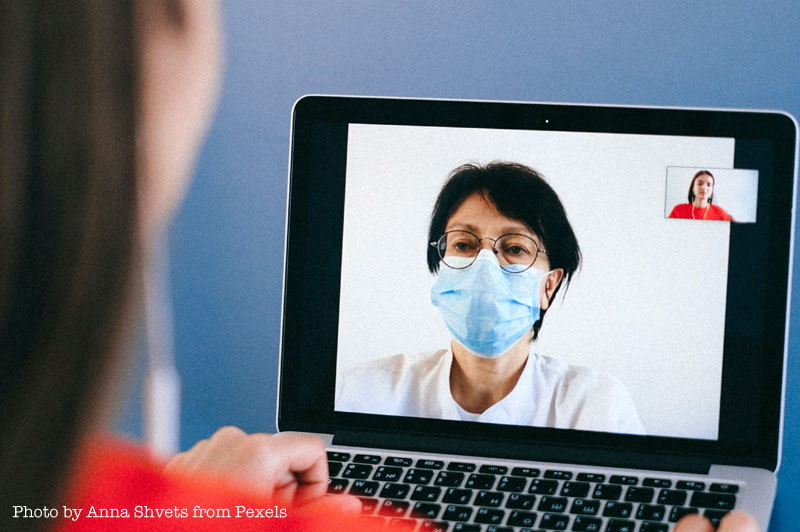
  • Planned Parenthood sues Ohio over telemedicine abortion law

    Planned Parenthood sues Ohio over telemedicine abortion law

    By Susan Tebben and Ohio Capital Journal

    The national and state chapters of Planned Parenthood sued the state of Ohio Thursday over a law set to go into effect in mid-April that prohibits abortion services conducted through telemedicine.

    The lawsuit regards Senate Bill 260, signed into law in January and banning an available telehealth option for what’s called a medication abortion. In a medication abortion, a two-pill regimen is given to a patient, as opposed to removing a fetus or fetal tissue surgically.

    The telemedicine abortion law prohibits physicians from conducting abortions or providing abortion-inducing drugs to a pregnant person without the physical presence of a physician. Violating the law could result in a fourth-degree felony charge for the physician.

    Currently, abortion in Ohio is legal up to 22 weeks gestation.

    Ohio currently requires at least two visits to a health center before an abortion can take place, once for an ultrasound and discussion with a physician about the procedure, and another at least 24 hours later for the actual abortion.

    With medication abortion, the second visit does not have to occur at one of Planned Parenthood’s ambulatory surgical clinics, but can instead happen at one of the health centers that may be closer to the patient, staffed with a nurse practitioner, midwife or advanced practice registered nurse on site, according to the clinics.

    “Once at a health center services as a telemedicine medication abortion site, a patient is connected by videoconference with a physician located in Cincinnati, or in East Columbus, or Bedford Heights,” the lawsuit states.

    The medicine is ingested “under observation by the physician,” and a health center staff member is present in person.

    According to Planned Parenthood, the telehealth option helps, as it does in other medical fields, with medical care that could be limited in certain communities.

    “Ohio is one of the most medically underserved states in the country, a problem particularly felt by Black communities, people of color, as well as the LGBTQ+ community in our state,” said Iris Harvey, president and CEO of Planned Parenthood of Greater Ohio, in a statement. “Telemedicine is key tool to address those disparities.”

    The suit, filed in Hamilton County Court of Common Pleas because of the Planned Parenthood Southwest Ohio Region listed as a party, claims the law “irrationally prohibits abortion providers from using telemedicine to provide medication abortion to Ohioans.”

    “SB 260 carries felony criminal penalties and draconian civil and professional sanctions for abortion providers who violate it,” the suit states.

    The suit was filed against the Ohio Department of Health, ODH director Stephanie McCloud, the State Medical Board of Ohio, along with prosecutors of Hamilton County, Franklin County and Cuyahoga County, all of which have Planned Parenthood clinic locations.

    The system of clinics is asking the court to prevent local prosecutors and state agencies from enforcing the law because it “blatantly violates the Ohio Constitution’s guarantees of substantive due process, equal protection and free choice in health care,” according to court documents.

    The suit even claims abortion access would be cut off completely in Butler, Mahoning and Richland counties, which would go against current Ohio law allowing abortions for pregnancies up to 22 weeks.

    The clinics also noted state officials’ praise of telemedicine in other types of medicine. The state has also passed legislation to lessen telemedicine regulations as they were attempting to ban the use of it in abortion services.

    Telemedicine has become a hot topic amid the pandemic, as use of the services for everything from primary care to dentistry increased during stay-at-home orders and precaution protocols.

    The lawsuit cited the federal Centers for Medicare and Medicaid Services, which called telemedicine “a cost-effective alternative” to traditional medical care.