Tag: mental health disorders

  • Loveland parents: “Hey all, It’s time to take our combined effort and show our Superintendent and School Board what is important.”

    Loveland parents: “Hey all, It’s time to take our combined effort and show our Superintendent and School Board what is important.”

    Loveland, Ohio – Loveland parents Leah Marcus and Becca Moates say, “Hey all, It’s time to take our combined effort and show our Superintendent and School Board what is important.” They wrote a template letter, a petition, with the help of who they call a super IT friend to solicit support to help them protect school children, teachers, and the community by performing the following COVID 19 related steps.

    1. Read the below letter.
    2. Open your email client and start a new email by clicking this link.
    3. Copy the contents of the below template and paste it into the body of the email message. 
    4. Add your name and additilal comment to the bottom of the document.
    5. Share your voice by hitting send.

    Moates adds, “I can’t stress enough how important it is as a community for us to come together around this. Our healthcare systems are drowning and we are hurting our most vulnerable if we don’t act.”

    Dear Superintendent and School Board Members,
    
    I am writing as a resident of the Loveland City School District to urge you, our Superintendent and elected School Board members, to maintain the all staff and PreK through 6th grade universal indoor masking requirements, scheduled to end January 18, 2021. I am also writing to request that the current universal indoor masking requirement be expanded to include students in grades 7 -12.
    
    This request is being made in consideration of the recent COVID-19 Omicron variant case surge, which has been shown to be more transmissible and contagious than previous variants.
    
    The Ohio Department of Health, the Ohio Department of Education, the American Academy of Pediatrics, the CDC, and locally, the Cincinnati Children’s Hospital Medical Center, recently provided clear guidance for universal masking in schools and in the community. Universal indoor masking, in addition to vaccination and boosters for those eligible, are strongly recommended as the best tools, especially when used in tandem, for mitigating the spread of COVID-19 and the current variant.
    
    The pandemic also continues to take a toll on our children’s and educators’ mental health. Since the pandemic began, rates of psychological distress among young people, including anxiety, depression, and other mental health disorders have increased substantially. There is much to be done and each of us has a part to play. Supporting the mental health of youth will require a community effort to address challenges, strengthen the resilience of young people, support their families, and mitigate the pandemic’s mental health impact.
    
    As a resident of the Loveland City School District, I am asking that you consider the following actions:
    
    1. Maintain universal indoor masking for all staff.
    2. Maintain Universal indoor masking for all students Pre-K through Grade 6.
    3. Expand universal indoor masking requirements to include students in grades 7 - 12.
    4. Identify a threshold for educator and/or student absence at which the district will move forward with a remote learning plan.
    5. Increase the frequency with which you report to the public student and educator absences as well as individuals positive for COVID.
    6. Create and promote safe, positive, and affirming school environments which are inclusive and supportive of student’s social, emotional, and cultural needs.
    7. Provide key administrative, educator, and paraprofessional staff with the necessary training to recognize signs of changes in mental and physical health among students.
    8. Provide Mental health gatekeeper training so that staff and peers take appropriate action when needed.
    9. Support the mental health of all school personnel, including providing competitive wages, time off, access to well paid substitute teachers, regularly assessing staff well-being, and integrating measures to help personnel maintain their own empathy, compassion, and ability to create positive environments for students.
    
    As superintendent and elected school board members, your roles include the evaluation of district operations, interpretations of public health policies, and health service delivery.
    
    My role as a district resident is to help our district leadership identify the areas in need of protection, prioritization, and planning to keep Loveland City School District safe and in school: Universal Indoor Mask Requirements and adequate Mental Health Support for Students and Staff. 
     
    Signature
    
    Add Additional Comment
    
    References for Information:
    
    https://www.scientificamerican.com/article/omicrons-effect-wont-be-as-mild-as-hoped1/
    https://www.reuters.com/world/us/us-coronavirus-cases-hit-record-high-2021-12-29/
    https://www.kcur.org/news/2021-12-17/kansas-city-hospitals-are-full-again-omicron-has-arrived-and-doctors-are-begging-for-your-help
    https://www.cdc.gov/mmwr/volumes/70/wr/pdfs/mm7046a4-H.pdf
    https://www.the-scientist.com/news-opinion/omicron-propagates-70-times-faster-than-delta-in-bronchi-study-69540
    https://www.med.hku.hk/en/news/press/20211215-omicron-sars-cov-2-infection
    https://edition.cnn.com/2021/12/28/health/chicago-childrens-hospital-surge-doctor-vaccines/index.html
    https://www.hhs.gov/sites/default/files/surgeon-general-youth-mental-health-advisory.pdf
    https://yourlocalepidemiologist.substack.com/p/our-youth-are-struggling-with-mental

    If you choose, please go to the original post: https://theweis01.github.io/?fbclid=IwAR05yFIugYOv7X3FjgC2wfho59WggZB7-_75SPbS777LcLykpWTBDXqDINE

  • Local counselor Tonya Schaeffer: How you can help prevent suicide 

    Local counselor Tonya Schaeffer: How you can help prevent suicide 

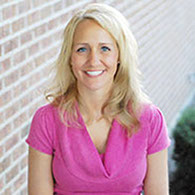
    Tonya Schaeffer, M.Ed, LPCC-S is a co-owner of Hope Restored Counseling Services, LLC in the West Loveland Historic District at 600 West Loveland Avenue. She can be reached at 513-683-HOPE (4673)

    by Tonya Schaeffer

    According to National Institute of Mental Health, suicide is a major public health problem and a leading cause of death in the United States. The effects of suicide go beyond the person who acts to take his or her life – it can have a lasting effect on family, friends and communities.

    Are Suicide Rates Increasing?

    The American College Health Association (ACHA) states that the suicide rate among young adults, ages 15-24, has tripled since the 1950’s.  On average, there are 129 suicides per day in the U.S. More males die from suicide than females (approximately four male deaths by suicide for each female death by suicide). However, females attempt suicide three times more often than males. 

    Some risk factors for suicide include: previous attempts; depression and other mental health disorders; family history of a mental health or substance disorder; family history of suicide; drug and alcohol abuse; family history of violence, including physical or sexual abuse; impulsivity and or poor self control; hopelessness; medical illness; firearms in the home; and being exposed to others’ suicidal behavior, such as a family member, peer or media figure.

    There are many other factors that could lead to suicide, too. Even among people who have risk factors for suicide, most do not attempt it. It remains difficult to predict who will act on suicidal thoughts.

    The following behaviors may be a sign that someone is thinking about suicide: talking about wanting to die or wanting to kill themselves, sharing feelings of hopelessness, or feeling empty or numb. Other behaviors include planning or looking for a way to kill themselves, such as searching online for ideas, stocking up on pills or newly acquiring potentially lethal items (firearms or ropes). In addition, talking about being a burden to others, giving away important possessions, displaying extreme mood swings, or suddenly changing from very sad to very calm or happy are telltale signs.  

    Often in my office, a parent might be confused about how serious they should take their child talking about suicide. They might think their child is just seeking attention. However, suicidal thoughts or actions are a huge red flag that the person is in distress and an alert they need help. Any warning sign or symptom of suicide should not be ignored. Threatening to die by suicide is not a typical response to stress and should not be taken lightly.  

    Addressing Some Common Myths of Suicide

    If I talk about suicide, then it might put the idea in their head.

    This is not true! Several studies examining this concern have demonstrated that asking people if they are having suicidal thoughts or behaviors does not induce or increase such thoughts or experiences. Asking someone directly, “Are you thinking of killing yourself,” can be the best way to identify someone at risk for suicide. Another myth is people believing that talking to the person directly can’t make a difference to them. Talking to the person can help tremendously – it opens up a line of communication. Ignoring or minimizing a person’s feelings, thoughts or actions surrounding suicide is not advisable.  

    Most of the time a family member or friend are the first people to notice the warning signs of suicide. If someone tells you they are going to kill themselves, do not leave them alone, and do not promise anyone you will keep their suicidal thoughts a secret. It is important to have a plan in place to make sure the individual is as safe as possible. But, you should seek professional help as soon as possible.  

    As a mental health professional, suicide is a major concern and we are quite often assessing for it. The amount of request for services related to suicide has increased dramatically over the years.

    If you have someone in your life who you believe is suicidal, don’t wait to reach out for help.  This is not something to take lightly. In fact, if they are displaying risk factors and have a plan, take them to a local emergency room to be assessed. All too often people are seeing warning signs and reach out to us for services, and due to demand we can’t accommodate them in their time of need.   

    Resources

    If you know someone in crisis, you can also call the toll-free NATIONAL SUICIDE PREVENTION LIFELINE at 1-800-273-TALK (8255), 24 hours a day, 7 days a week. The service is available to everyone. The deaf and hard of hearing can contact the LIFELINE via TTY at 1-800-799-4889. All calls are confidential.

    Contact social media outlets directly if you are concerned about a friend’s social media updates, or dial 911 in an emergency.

    The Crisis Text Line is another resource available 24 hours a day, 7 days a week. Text “HOME” to 741741.

    Tonya Schaeffer, M.Ed, LPCC-S is a co-owner of Hope Restored Counseling Services, LLC in the West Loveland Historic District at 600 West Loveland Avenue. She can be reached at 513-683-HOPE (4673)