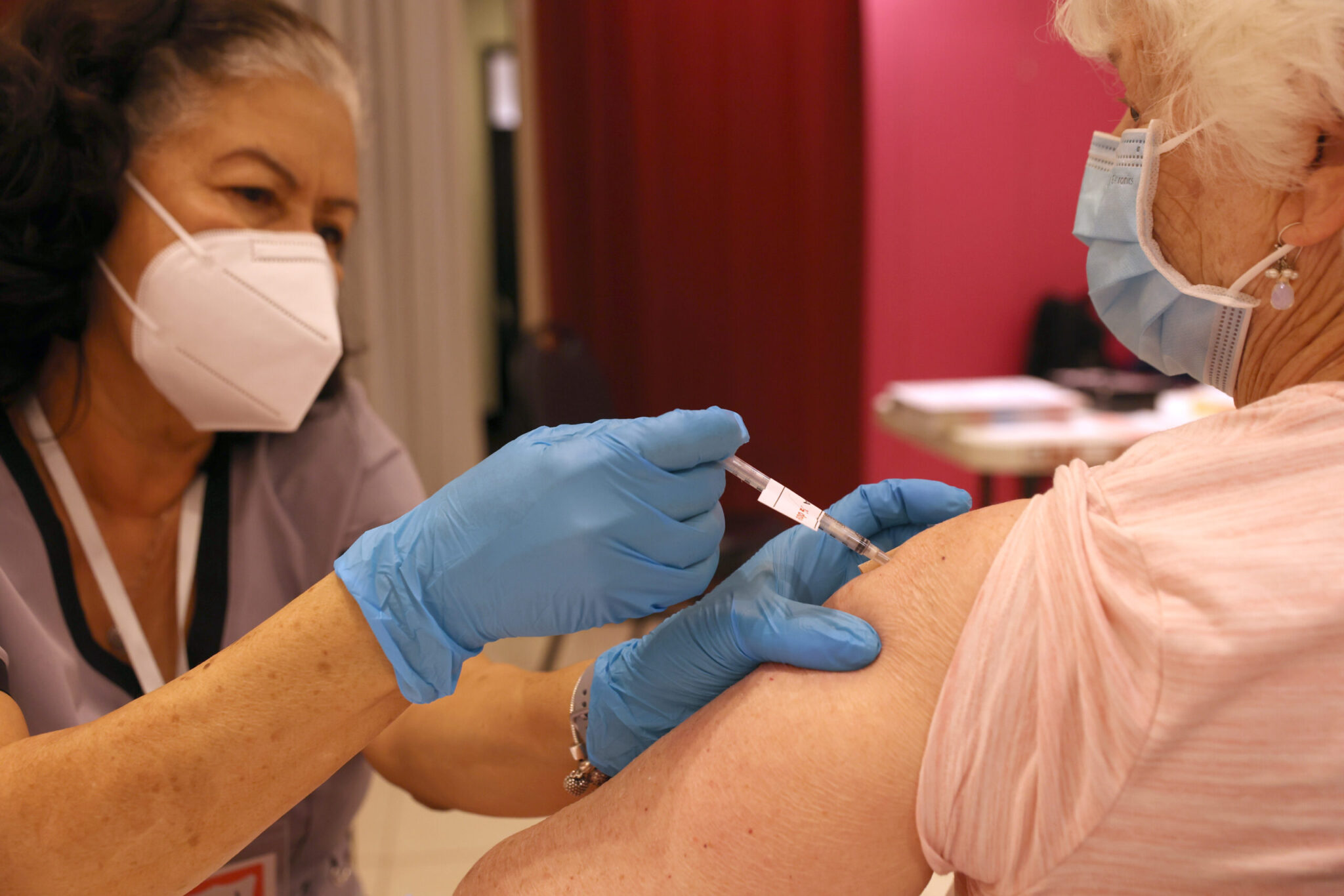
WASHINGTON — The U.S. Food and Drug Administration on Monday approved the latest round of COVID-19 boosters, as public health officials brace for another cold and flu season.
An advisory panel at the Centers for Disease Control and Prevention is scheduled to vote on recommendations Tuesday, the final step in the process before people will be able to get the shots.
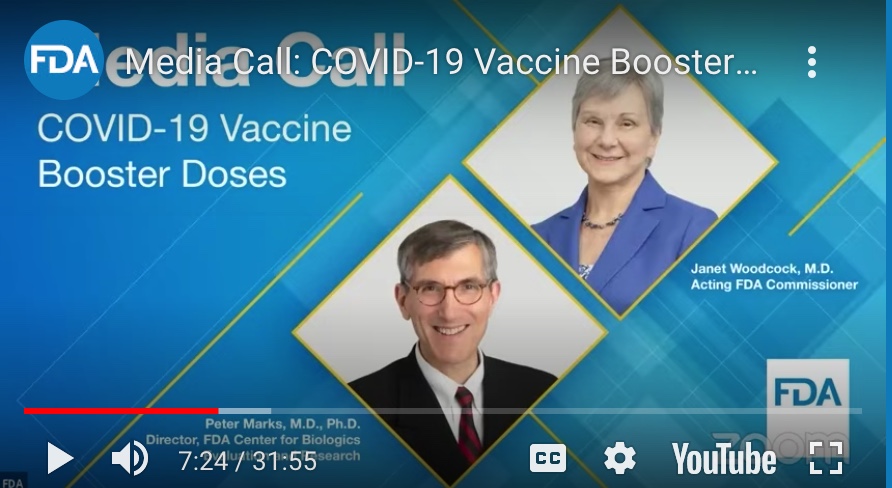
“Vaccination remains critical to public health and continued protection against serious consequences of COVID-19, including hospitalization and death,” said Peter Marks, director of the FDA’s Center for Biologics Evaluation and Research.
“The public can be assured that these updated vaccines have met the agency’s rigorous scientific standards for safety, effectiveness, and manufacturing quality,” Marks added. “We very much encourage those who are eligible to consider getting vaccinated.”
The updated COVID-19 booster shots are made by Moderna and Pfizer.
The FDA said in a statement that people 5 and older can get one dose of the updated mRNA COVID-19 vaccine as long as it’s been at least two months since their last dose of the vaccine.
Vaccinated children between six months and 4 years old can get one or two doses of the updated vaccine. Unvaccinated children in the same age range are eligible for three doses of the updated Pfizer-BioNTech vaccine or two doses of the updated Moderna shot.
“The updated vaccines are expected to provide good protection against COVID-19 from the currently circulating variants,” the FDA said in a statement. “Barring the emergence of a markedly more virulent variant, the FDA anticipates that the composition of COVID-19 vaccines may need to be updated annually, as is done for the seasonal influenza vaccine.”
Hospitalizations and deaths from COVID-19 have been trending upward in recent weeks, though officials aren’t expressing alarm at the rise in severe illness.
The number of hospitalizations has risen by nearly 16% while deaths increased by almost 11%, according to data from the CDC.
The percentage of Americans getting COVID-19 shots has steadily decreased since the first round of vaccinations rolled out in the last weeks of 2020.
More than 81% of the country got at least one dose of the original vaccine, but 70% completed the primary two-dose series. Just 17% of the U.S. population decided to get the bivalent vaccine that was approved last year, according to CDC data.
JENNIFER SHUTT
Jennifer covers the nation’s capital as a senior reporter for States Newsroom. Her coverage areas include congressional policy, politics and legal challenges with a focus on health care, unemployment, housing and aid to families.
In the coming weeks, CDC also expects to recommend updated COVID-19 boosters for other pediatric groups
by David Miller
Today, CDC Director Rochelle P. Walensky, M.D., M.P.H., endorsed the CDC Advisory Committee on Immunization Practices’ (ACIP) recommendations for use of updated COVID-19 boosters from Pfizer-BioNTech for people ages 12 years and older and from Moderna for people ages 18 years and older.
The CDC said today, “Updated COVID-19 boosters add Omicron BA.4 and BA.5 spike protein components to the current vaccine composition, helping to restore protection that has waned since previous vaccination by targeting variants that are more transmissible and immune-evading.”
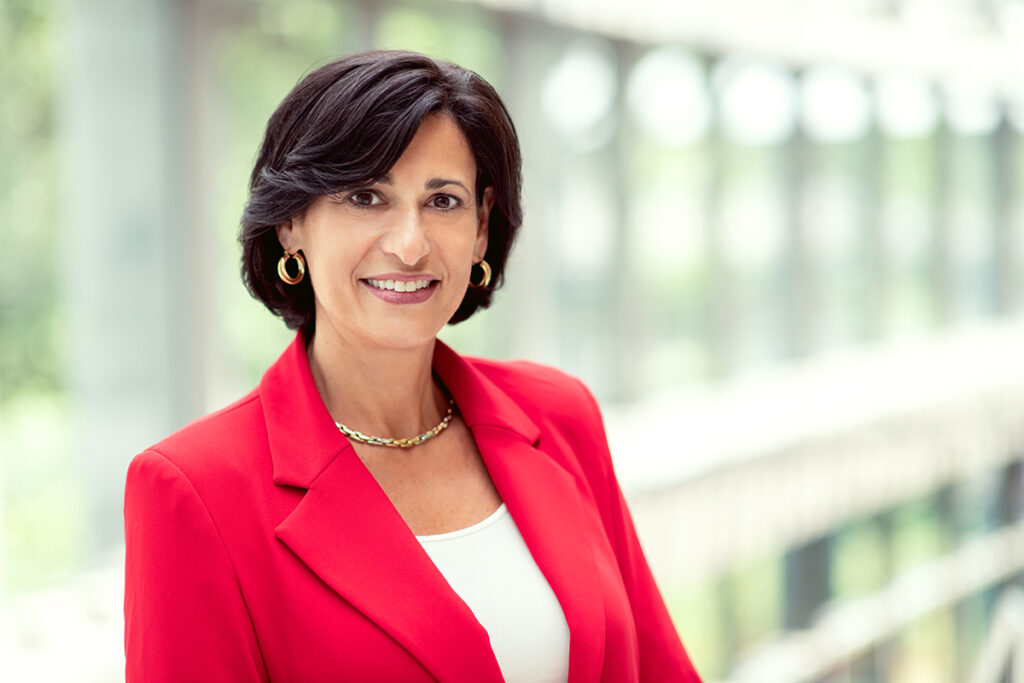
CDC Director Rochelle P. Walensky – CDC photo
In the coming weeks, the CDC is also expected to recommend updated COVID-19 boosters for other pediatric groups, per the discussion and evaluation of the data by ACIP on Sept. 1, 2022.
“When data are available and FDA authorizes these other types of COVID-19 boosters, CDC will quickly move to help make them available in the United States,” according to a press statement issued today.
The Food and Drug Administration’s (FDA) authorization of updated COVID-19 boosters, and CDC’s recommendation for use, are the next steps forward in our country’s vaccination program.
Dr. Walensky said today, “The updated COVID-19 boosters are formulated to better protect against the most recently circulating COVID-19 variant. They can help restore protection that has waned since previous vaccination and were designed to provide broader protection against newer variants. This recommendation followed a comprehensive scientific evaluation and robust scientific discussion. If you are eligible, there is no bad time to get your COVID-19 booster and I strongly encourage you to receive it.”
CDC Recommends COVID-19 Vaccines for Young Children
On Saturday, CDC Director Rochelle P. Walensky, M.D., M.P.H., endorsed the Advisory Committee on Immunization Practices’ (ACIP) recommendation that all children 6 months through 5 years of age should receive a COVID-19 vaccine. This expands eligibility for vaccination to nearly 20 million additional children and means that all Americans ages 6 months and older are now eligible for vaccination.
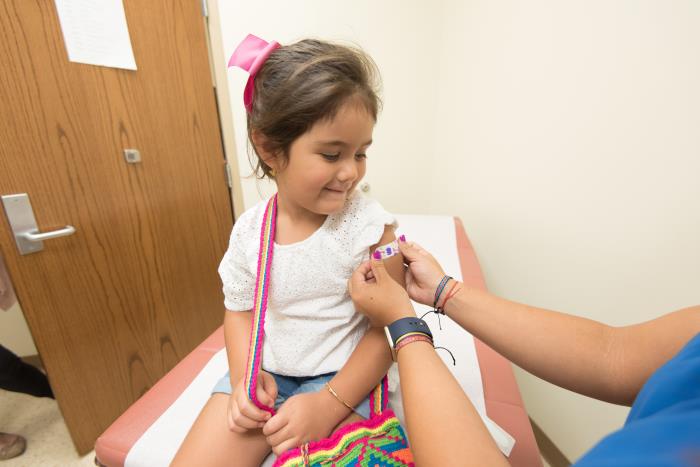
Parents and caregivers can now get their children 6 months through 5 years of age vaccinated with the Pfizer-BioNTech or Moderna vaccines to better protect them from COVID-19. All children, including children who have already had COVID-19, should get vaccinated.
COVID-19 vaccines have undergone—and will continue to undergo—the most intensive safety monitoring in U.S. history. Parents and caregivers can play an active role in monitoring the safety of these vaccines by signing their children up for v-safe – personalized and confidential health check-ins via text messages and web surveys where they can easily share with CDC how a child feels after getting a COVID-19 vaccine.
Distribution of pediatric vaccinations for these younger children has started across the country, and will be available at thousands of pediatric practices, pharmacies, Federally Qualified Health Centers, local health departments, clinics, and other locations this week. Children in this younger age group can be vaccinated with whichever vaccine is available (either Moderna or Pfizer-BioNTech). Parents can reach out to their doctor, nurse, local pharmacy, or health department, or visit vaccines.gov to see where vaccines for children are available.
“Together, with science leading the charge, we have taken another important step forward in our nation’s fight against COVID-19. We know millions of parents and caregivers are eager to get their young children vaccinated, and with today’s decision, they can. I encourage parents and caregivers with questions to talk to their doctor, nurse, or local pharmacist to learn more about the benefits of vaccinations and the importance of protecting their children by getting them vaccinated,” said CDC Director Dr. Rochelle P. Walensky.
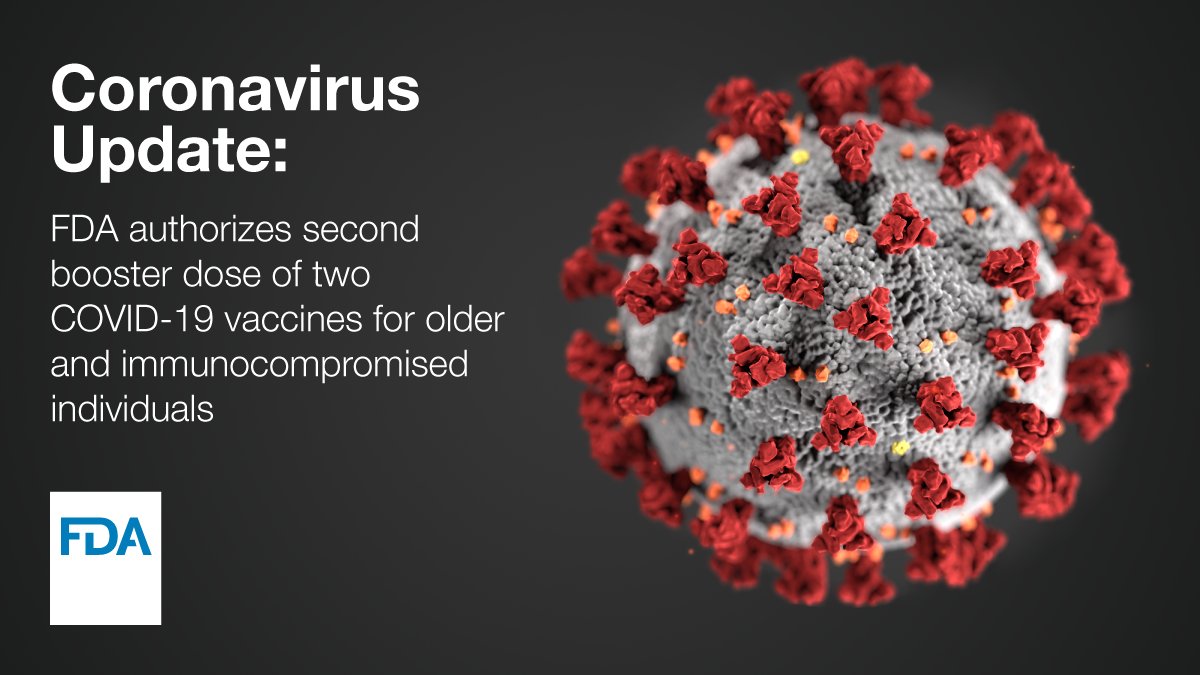
Today, the U.S. Food and Drug Administration (FDA). authorized a second booster dose of either the Pfizer-BioNTech or the Moderna COVID-19 vaccines for older people and certain immunocompromised individuals. https://bit.ly/3NuxvY6
They previously authorized a single booster dose for certain immunocompromised individuals following completion of a three-dose primary vaccination series.
This action will now make a second booster dose of these vaccines available to other populations at higher risk for severe disease, hospitalization and death according to a FDA news release.
The emergency use authorizations was amended as follows:
A 2nd booster dose of the Pfizer-BioNTech or Moderna COVID-19 vaccines may be administered to people 50+ years old at least 4 months after receipt of a 1st booster dose of any authorized or approved COVID-19 vaccine.
A 2nd booster dose of the Pfizer-BioNTech COVID-19 Vaccine may be administered to people 12+ years old with certain kinds of immunocompromise at least 4 months after receipt of a 1st booster dose of any authorized or approved COVID-19 vaccine.
A 2nd booster dose of the Moderna COVID-19 Vaccine may be administered at least 4 months after the 1st booster dose of any authorized or approved COVID-19 vaccine to people 18+ years old with the same certain kinds of immunocompromise.
Today’s announcement applies only to the Pfizer-BioNTech and Moderna COVID-19 vaccines, and the authorization of a single booster dose for other age groups with these vaccines remains unchanged.
On October 20, 2021 at 6:15 pm ET – FDA leaders discussed FDA’s authorization of booster doses for eligible populations of Moderna COVID-19 Vaccine and Pfizer-BioNTech COVID-19 Vaccine recipients and Janssen COVID-19 Vaccine recipients 18 and older, as well as the FDA’s authorization of the use of heterologous (“mix and match”) boosters.
CDC now recommends that certain people are now eligible to receive a COVID-19 booster shot, including those who received Moderna and Johnson & Johnson/Janssen COVID-19 vaccines. Get more information and read CDC’s media statement.
Top U.S. health officials announced a plan Wednesday to begin offering COVID-19 booster shots to Americans starting Sept. 20, with the scheduling of the additional shot to be based on when a person was fully vaccinated.
The new round of jabs will be extended to those who received the two-dose vaccine from either Pfizer or Moderna, and can be taken eight months after an individual’s second dose.
Dr. Vivek Murthy, the U.S. surgeon general, told reporters Wednesday that recent data makes clear that while the current COVID-19 vaccines have been highly effective against severe disease, hospitalization and death, the protection against mild and moderate disease has appeared to decrease over time.
“This is likely due to both waning immunity and the strength of the widespread delta variant,” Murthy said, adding that health officials are concerned that the decline in immunity could reduce protection against severe disease and death in the months ahead.
The more than 13 million Americans who received the one-dose shot from Johnson & Johnson may also need boosters, but will not yet be eligible.
Federal health officials said they are awaiting data from J&J in the next few weeks before urging additional doses. The J&J shot wasn’t approved until March, so those who received it will not hit eight months past inoculation until November.
The new booster rollout plan is subject to formal authorization from the Food and Drug Administration and the Centers for Disease Control and Prevention’s vaccine panel.
Those agencies will hold public meetings before the booster rollout can begin. But officials said they were detailing the booster plan ahead of those meetings in part to give state and local health officials time to prepare for another wave of vaccination logistics.
State and local health officials again under pressure
The plan for offering a third shot puts yet another layer of pressure on state and local health departments that have carried out the massive vaccination campaign.
Those officials are still seeking to boost vaccination rates that have lagged in certain regions amid skepticism and misinformation. Meanwhile, vaccine manufacturers are expected this fall to seek approval for administering shots to children under 12, who so far have not been eligible.
During Wednesday’s news briefing, Dr. Rochelle Walensky, the CDC director, cited several new studies that tracked vaccine effectiveness, including among New Yorkers across age groups and another following case counts from nursing homes.
Those studies have shown that protection against severe infection has held up but not against milder infections, she said, adding that other countries, such as Israel, also are starting to see “worsening outcomes.”
“In the context of all of these studies, different cohorts, different settings across the country, and our international colleagues, we’ve made the decision to plan for these booster doses,” Walensky said.
The booster shots will be available at roughly 80,000 sites nationally, including 40,000 local pharmacies. As with the other COVID-19 shots, the boosters will be free of charge.
The CDC had already approved a third COVID-19 shot for some immunocompromised individuals, who may not have received strong protection from the initial doses of the vaccine.
While the booster plan does not specifically mention other categories of individuals to receive a priority for boosters, the initial vaccine rollout did put certain groups first in line. So the first individuals to hit eight months after their second shot should be those in the earliest priority categories, such as health care workers and nursing home residents.
Nursing home workers are passing on their chance at early access to the COVID-19 vaccine, officials say, blowing a crosswind against a scarce supply of doses and a pandemic in a tailspin.
“I think in this case, [DeWine] is on target,” said Pete Van Runkle, executive director of an industry association representing Ohio’s long term care facilities.
“I talk to a lot of members on a regular basis. They are reporting a pretty low uptake among staff.”
Patrick Schwartz
Patrick Schwartz, a spokesman for Leading Age Ohio, an elder advocacy group, said he’s hearing mixed reports of some providers finding that 90% of staff chose to take the vaccine while others are “well below 50%.”
He attributed the shortfalls to misinformation and fear surrounding the potential for an adverse reaction to the vaccine.
“Many staff are simply ‘not yet ready,’ which will hopefully change as they see more and more colleagues vaccinated without side effects and confidence continues to build,” he said.
“By contrast, an overwhelming majority of residents seem willing to accept the vaccine, with many coming from the generation that saw polio and other deadly diseases wiped out by life-saving vaccines.”
The local Service Employees International Union surveyed its members on the issue, it said in a statement Monday.
The responses, according to SEIU 1199 President Becky Williams, indicate a trust problem between an exhausted, underpaid, underappreciated, and in many cases already-infected staff and health authorities.
She said this is a “substantial issue” that’s bigger than just the union and requires outreach and education from the state.
“Workers commented that the vaccine appeared rushed and unproven without enough data to show that it would be effective,” she said.
“Some workers are also concerned that the vaccine could cause fertility issues among women who may want to have a child. There are trust issues among frontline health care workers — some of which preceded the pandemic. These trust issues continue after so many nursing home workers have been on the frontlines of the pandemic without hazard pay and support such as needed personal protective equipment.”
Several news outlets have debunkedthisnotion of ‘fertility issues’ related to the vaccine. A quick scroll through the right Facebook group can deluge visitors with this and similar pieces of misinformation relating to the vaccine.
The Ohio Capital Journal called 13 state long-term care facilities Monday, who have each reported at least 100 COVID-19 cases among their residents, to discuss vaccination among their staffs. No administrators agreed to an interview.
Two vaccines (one from Moderna and one jointly from Pfizer and BioNTech) are currently approved for emergency use against COVID-19. They are both two-dose vaccines, taken several weeks apart.
Company data reviewed by the Food and Drug Administration shows both vaccines are about 95% effective preventing symptoms of COVID-19. While side effects (sometimes more intense than a standard flu vaccine) have been reported with both products, none of the vaccine trials have reported any serious safety concerns, according to information from Johns Hopkins University.
Before coming to market, both vaccines underwent large scale clinical trials over the course of months. They are now under review via continuous monitoring for problems and side effects from the FDA and the CDC.
The vaccine hesitancy comes as COVID-19 has infected 727,000 Ohioans, put about 39,000 in the hospital, and killed at least 9,143 since March.
At least 4,856 of those deaths occurred among residents of Ohio’s long-term care facilities.
There are several theories as to why nursing home workers would rebuff a vaccine dose, according to Tory Hogan, an Ohio State University professor who researches nursing homes and infection control.
She said some probably just don’t trust health authority; some have “been in the trenches” of the pandemic for a year now, prompting them to shrug off the unknown risk of vaccine for the better-known risk of infection; some probably just don’t want to be the guinea pigs.
“There has been so much misinformation about everything in this process,” she said.
Wood County Health Commissioner Ben Robison said he’s detected some vaccine hesitancy and refusal across all industries. However, some who deny at first are likely to come around.
“Anecdotally, we’ve heard among some of the populations we’re reaching with our vaccine, some have initially said no and then later said yes,” he said.
Some employers, especially in the health care industry, mandate the flu vaccine and other immunization. However, Van Runkle said the industry is already dealing with a widespread staffing shortage, only worsened by the pandemic.
He said most of Ohio’s nursing homes do not even mandate the flu vaccine. Mandating a COVID-19 vaccine would worsen staffing problems.
“We don’t need another reason for people not to work in our facilities,” he said.
A vaccine mandate would backfire
Hogan agreed that a vaccine mandate would backfire, and Williams, from SEIU, said education and outreach should drive universal vaccination.
The Ohio Department of Health has shipped 341,100 Moderna first-doses, as well as 9,750 Pfizer first-doses plus another 9,750 Pfizer second-doses, according to ODH spokeswoman Melanie Amato. Only about 162,942 Ohioans have started the vaccination process, which is prioritizing health care workers, first responders and nursing home staff and residents.
“We do not have visibility to how many staff members at a facility decline to be vaccinated,” said CVS Health Spokesman Charlie Rice-Minoso.
“While we aren’t provided with full staff rosters, based on feedback from our teams in the field we’re seeing more vaccine hesitancy among staff when compared with residents.”
Walgreens, another company administering the vaccines, did not respond to inquiries.
Looking at the bigger picture, Hogan said governments from the federal to local level need to do a better job understanding why some are declining vaccination. Similarly, she said they need to emphasize, as they did during the polio years, that vaccination is the patriotic thing for Americans to do.
“It takes consistently pushing the right message, the correct and accurate information,” she said. “That takes money, a federal response, all levels. We’re struggling with that a lot.”
If approvals go according to plan, Ohio will get more than a half-million doses of coronavirus vaccine between Dec. 15 and the end of the month, Gov. Mike DeWine said on Friday.
While more than expected, the amount is far from adequate in a state with a population approaching 12 million.
“The race has started and it’s started in a very robust way,” said Bruce Vanderhoff, medical director for the Ohio Department of Health.
Even so, officials had to make some painful choices about who would be first in line for a first dose, to be followed by a booster either three or four weeks later, depending on the vaccine, DeWine said.
That means prisons and jails, where inmates and staff have been dying of covid since the start of the pandemic, will not be among the first to be vaccinated. Nor will service workers such as grocery store clerks, who potentially are exposed to the virus every day.
Health care workers and staff caring for covid patients
Emergency medical responders
People with underlying health conditions living close to each other and their caregivers. They include people and workers in nursing homes, assisted living centers, veterans homes and the like.
DeWine stressed that the exact number of doses won’t be known until the week they’re due to arrive. He added that as initial rounds are doled out, they’ll be paired with boosters to be sent later.
Joseph Gastaldo, director of infectious diseases at OhioHealth, said the vaccines awaited in Ohio are being made by Pfizer and Moderna. They still are awaiting final approval by independent panels of experts working under the auspices of the U.S. Food and Drug Administration and the Centers for Disease Control and Prevention. That approval is expected in the next two weeks.
Approvals of other vaccines are hoped for, but there are a few factors that make it hard to predict when a big enough portion of the Ohio population will have been vaccinated to it difficult for the virus to spread.
One is that about half of Ohioans are reluctant to get it, DeWine said. He said he hopes public information campaigns and news of the vaccines’ safety and efficacy will counteract the skepticism.
Also, it’s unclear what other vaccines might be coming online, how quickly, or how fast production and distribution can be scaled up. Add those together and it’s uncertain when average folks can line up for a shot in the arm.