Tag: nausea

  • Hamilton County/Ohio Public Health/FDA advises consumers not to use hand sanitizer products manufactured by Eskbiochem

    Hamilton County/Ohio Public Health/FDA advises consumers not to use hand sanitizer products manufactured by Eskbiochem

    Hamilton County, Ohio – Jamie Higley, the Administrator of Food Safety Programs at the Ohio Department of Health and Mike Samet the Public Information Officer for Hamilton County Public Health issued the following FDA Advisory this morning.
    FDA advises consumers not to use hand sanitizer products manufactured by Eskbiochem

    FDA advises consumers not to use hand sanitizer products manufactured by Eskbiochem

    [6/19/2020] FDA advises consumers not to use any hand sanitizer manufactured by Eskbiochem SA de CV in Mexico, due to the potential presence of methanol (wood alcohol), a substance that can be toxic when absorbed through the skin or ingested. FDA has identified the following products manufactured by Eskbiochem:

    • All-Clean Hand Sanitizer (NDC: 74589-002-01)
    • Esk Biochem Hand Sanitizer (NDC: 74589-007-01)
    • CleanCare NoGerm Advanced Hand Sanitizer 75% Alcohol (NDC: 74589-008-04)
    • Lavar 70 Gel Hand Sanitizer (NDC: 74589-006-01)
    • The Good Gel Antibacterial Gel Hand Sanitizer (NDC: 74589-010-10)
    • CleanCare NoGerm Advanced Hand Sanitizer 80% Alcohol (NDC: 74589-005-03)
    • CleanCare NoGerm Advanced Hand Sanitizer 75% Alcohol (NDC: 74589-009-01)
    • CleanCare NoGerm Advanced Hand Sanitizer 80% Alcohol (NDC: 74589-003-01)
    • Saniderm Advanced Hand Sanitizer (NDC: 74589-001-01)

    FDA tested samples of Lavar Gel and CleanCare No Germ. Lavar Gel contains 81 percent (v/v) methanol and no ethyl alcohol, and CleanCare No Germ contains 28 percent (v/v) methanol. Methanol is not an acceptable ingredient for hand sanitizers and should not be used due to its toxic effects.

    Consumers who have been exposed to hand sanitizer containing methanol should seek immediate treatment, which is critical for potential reversal of toxic effects of methanol poisoning. Substantial methanol exposure can result in nausea, vomiting, headache, blurred vision, permanent blindness, seizures, coma, permanent damage to the nervous system or death. Although all persons using these products on their hands are at risk, young children who accidently ingest these products and adolescents and adults who drink these products as an alcohol (ethanol) substitute, are most at risk for methanol poisoning.

    On June 17, 2020, FDA contacted Eskbiochem to recommend the company remove its hand sanitizer products from the market due to the risks associated with methanol poisoning. To date, the company has not taken action to remove these potentially dangerous products from the market. Therefore, FDA recommends consumers stop using these hand sanitizers and dispose of them immediately in appropriate hazardous waste containers. Do not flush or pour these products down the drain.

    FDA reminds consumers to wash their hands often with soap and water for at least 20 seconds, especially after going to the bathroom; before eating; and after coughing, sneezing, or blowing one’s nose. If soap and water are not readily available, the Centers for Disease Control and Prevention (CDC) recommend consumers use an alcohol-based hand sanitizer that contains at least 60 percent ethanol.

    FDA remains vigilant and will continue to take action when quality issues arise with hand sanitizers. Additionally, the agency is concerned with false and misleading claims for hand sanitizers, for example that they can provide prolonged protection such as 24-hours against viruses including COVID-19, since there is no evidence to support these claims.

    To date, FDA is not aware of any reports of adverse events associated with these hand sanitizer products. FDA encourages health care professionals, consumers and patients to report adverse events or quality problems experienced with the use of hand sanitizers to FDA’s MedWatch Adverse Event Reporting program:

    • Complete and submit the report online; or
    • Download and complete the form, then submit it via fax at 1-800-FDA-0178.


  • Loveland yoga enthusiast’s unique practices empower community

    Loveland yoga enthusiast’s unique practices empower community

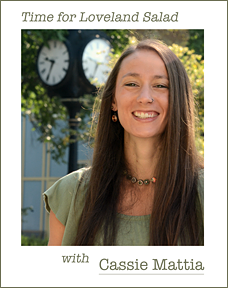
    Cassie Mattia lives in Historic Downtown Loveland

    Loveland, Ohio – Stressed? Can’t sleep? Experiencing body pain you can’t explain? Unfortunately, these are all symptoms that we feel every day due to the constant pressure we put on ourselves to succeed at work, at school, at the gym or even within our own families. People are constantly trying to find that one unique escape route where they can relieve their daily stresses, without having to necessarily partake in a vigorous 30-minute run or a trip to the bar for some happy hour cocktails. Loveland Resident Linda Becker offers an escape route for those everyday stresses that is not only unique but promotes healing and a sense of well-being mentally and physically.

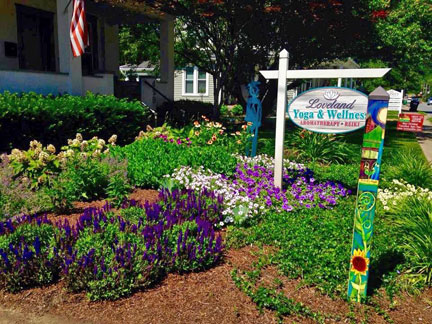
    Linda opened Loveland Yoga and Wellness in 2014 in the West Loveland Historic District only one block west of the Little Miami River on West Loveland Avenue. “I have lived in Loveland since 1981. I knew if I owned a business, I wanted it to be a part of the Loveland community. When I saw the For Sale sign and scheduled a viewing of the property, I fell in love with the house/location,” Linda said. 

    According to Linda, it wasn’t always her plan to open her own studio, but claimed that she always had a passion for the art of yoga. 

    “My daughter was home from college and took me to a couple of classes in the early 2000s. It was love at first breath. It made me feel so good afterward. I began practicing as much as I could and enrolled in my first teacher training in 2007. I took the teacher training to delve deeper into my own personal practices. I had no intention of teaching others! But with encouragement from my teachers, I began teaching at YogahOMe in Symmes Township (no longer in operation). I eventually taught a variety of classes there 5 times a week. I became increasingly interested in yoga therapy and in 2013 I completed a 300hr advanced training in Urban Zen Integrative Therapy. I never wanted to own a studio, but when YogahOMe closed their doors, I thought it might be the right time to offer more therapeutic services. So I opened Loveland Yoga and Wellness in 2014.”

    Over the past few years, Linda has racked up quite a number of certifications. Becker is not only a Yoga Teacher at the 500-hour level registered with Yoga Alliance, but she is also certified as an Urban Zen Integrative Therapist, a Yoga Therapist with The International Association of Yoga Therapists, a Master Reiki, and an Oil Therapist who makes custom solutions for sleep.
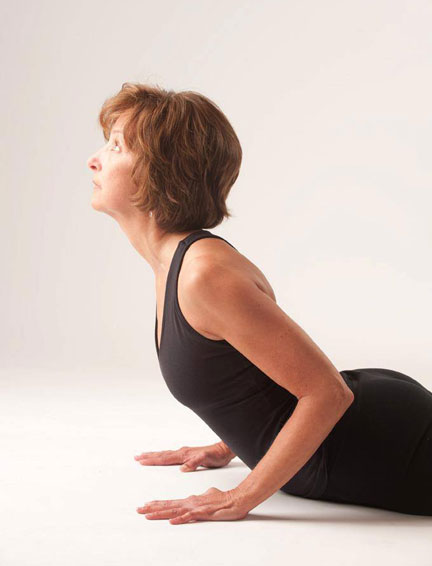
    So what exactly makes Loveland Yoga and Wellness unique? “Loveland Yoga and Wellness is not a typical yoga studio. I think of it as a wellness center with many options to meet students where they are. Class sizes are kept small with plenty of individual attention to develop safe practices. It’s a community with everyone supporting each other,” Linda said. 

    Linda’s wellness studio offers a variety of unique therapy techniques indeed! Of course the center provides both Yoga and Yoga Therapy, but in addition to that Linda also offers Urban Zen Integrative Therapy, which mixes the healing modalities of gentle yoga such as gentle movements, restorative positions, guided meditation and breathing techniques, Reiki Therapy, a Japanese healing practice that is associated with the benefits of deep relaxation, stress reduction, more restful sleep, and enhanced immune functioning, Aromatherapy, which uses essential oils made from plant materials to promote relaxation, relieve stress, anxiety and lessen symptoms from acute and chronic health conditions, and lastly Raindrop Technique Therapy, which is an energizing technique where oils are layered on the neck, back and feet bringing about balance and electrical alignment. 
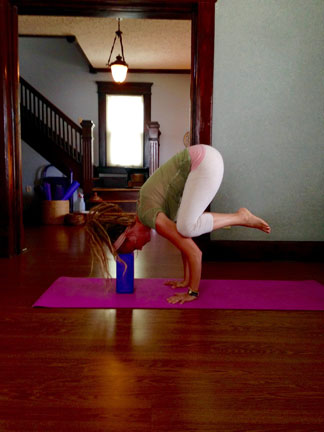
    With the wellness center providing so many different types of therapy it attracts a wider audience than most Yoga studios ranging from young professionals to senior citizens. “I am passionate about yoga practices being accessible to everyone,” Linda said. 

    Loveland Yoga and Wellness offers a plethora of classes that integrates different types of therapy according to what health or physical challenges you’re encountering as well as training classes/series, such as Reiki Level 1, Yoga series for Osteoporosis, Yoga series for Chronic Back Pain and 200-hour Level Yoga Teacher training, for anyone seeking certification in a particular therapy.  
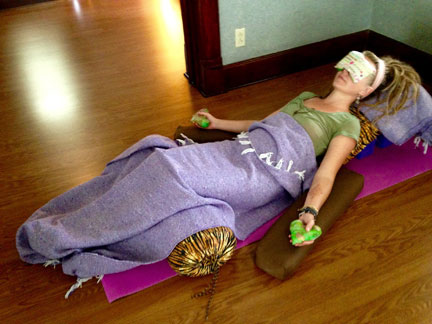
    “In addition to typical mixed level yoga classes, I offer therapeutic and chair yoga classes appropriate for anyone. Urban Zen classes address symptoms of pain, anxiety, nausea, insomnia, constipation, and exhaustion. Private sessions address specific individual needs. I want to empower students to be proactive in their health care. I also offer private Reiki treatments and Essential Oil Therapy,” Linda said. “I am beginning a 200-hour teacher training immersion 9/17. This is for anyone wanting to learn how to be their own teacher and share the practices with others. Also, 9/26 I am offering a very popular chronic low back pain series. Last year this 12-week series sold out,” Linda added.

    As off current on Monday’s at 3 PM Chair Yoga is offered, which uses a chair for comfort for seated positions as well as for standing postures. This class is meant to help increase flexibility, strength,and a sense of calm. On Tuesday’s at 9 AM, Wednesday’s at 8:30 AM and Saturday’s at 9 AM Mixed Levels Yoga classes are given. This class is designed for yogis of all levels! The class uses props and modifications so that everyone can complete the postures effectively. Also offered on Tuesday’s are Therapeutic Yoga classes which are held at 6 PM. This class requires no previous yoga experience and places a strong focuses on gentle and slow movements that build strength to support your spine and joints. Therapeutic Yoga is ideal for beginners, those recovering from a surgery or people who suffer from joint pain. On Thursday’s at 9:30 AM and 6 PM Urban Zen classes are held which incorporates both Essential Oils and Reiki while using simple movements, breath awareness techniques, guided meditations and restorative positions. 
    Over the past few years, Yoga studios have been popping up left and right as it has become extremely popular as a form of exercise as well as a way of uniting mind, body, and spirit. Loveland Yoga and Wellness is far from your average Yoga studio as it not only offers the most unique therapeutic practices but it also invites anyone and everyone to take classes regardless of their age, weight or current health status. Not to mention Yoga pants aren’t required!

    If you are interested in partaking in classes or training series’ at Loveland Yoga and Wellness, located at 429 West Loveland Avenue, Loveland, Ohio, 45140, you may visit the website at https://lovelandyogaandwellness.com, the Facebook page at www.https://facebook.com/lovelandyogaandwellness, email the center at lovelandyogaandwellness@gmail.com or simply call 513-604-1798.


    Loveland Sweets is a purveyor of hand-crafted chocolates, caramels, marshmallows, and ice creams. Our house-made candies are prepared in small batches
  • With the Arrival of Warm Weather in Ohio, Be Sure  to Prevent Tick, Mosquito Bites and the Diseases They Carry

    With the Arrival of Warm Weather in Ohio, Be Sure to Prevent Tick, Mosquito Bites and the Diseases They Carry

    Diseases spread by ticks and mosquitos include Lyme disease and West Nile virus

    As Ohioans spend more time outdoors with the arrival of warm weather, the Ohio Department of Health (ODH) is urging people to take precautions to prevent bites from ticks and mosquitos and the diseases they may carry.

    There were 270 Lyme disease cases and 34 Rocky Mountain spotted fever cases reported in Ohio last year.

    Most diseases in Ohio that are caused by the bite of infected ticks and mosquitos happen between spring and fall when they are most active during warmer months. The most common diseases caused by tick bites in Ohio include Lyme disease and Rocky Mountain spotted fever. There were 270 Lyme disease cases and 34 Rocky Mountain spotted fever cases reported in Ohio last year. The most common diseases caused by mosquito bites in Ohio include West Nile virus and La Crosse virus. There were 34 West Nile virus cases including five deaths, and 13 La Crosse virus cases reported in Ohio last year.

    “You can take some simple precautions at home and when traveling to prevent potentially serious diseases caused by the bite of infected ticks and mosquitos,” said ODH Medical Director Dr. Clint Koenig. He recommends that people who get sick after being bitten by a tick or mosquito contact their healthcare provider, particularly if they have symptoms like a fever, headache, nausea, vomiting, joint pain, muscle aches, fatigue or a rash.

    Here are some tips to avoid tick bites: 

    • Walk in the middle of trails. Avoid tall grass, brush and leaf litter.
    • Use EPA-registered repellents labelled for use against ticks on skin. Always follow the label instructions. EPA-registered repellents are safe and effective, even for pregnant and breastfeeding women. 
    • Treat clothing and gear such as pants, boots, socks and tents with a product containing permethrin, or buy permethrin-treated clothing and gear. Do not apply permethrin directly to skin.
    • Wear long pants, long sleeves and long socks. Tuck pant legs into socks.
    • Wear light colors to make it easier to see ticks.

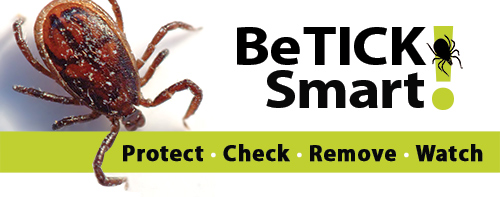
    Check yourself, your children and pets thoroughly for ticks after spending time in areas that may contain ticks.  If you find a tick attached to the body, here are some tips for safely removing them:Tick removal diagram

    • Use fine-tipped tweezers to grasp the tick as close to the skin’s surface as possible.
    • Pull it away from your skin with steady, even pressure.
    • Do not twist or jerk the tick which can cause the mouth-parts to break off and remain in the skin.  If this happens, remove the mouth-parts with tweezers.  If you are unable to remove the mouth-parts easily with clean tweezers, leave it alone and let the skin heal.
    • Do not use petroleum jelly, a hot match, nail polish or any other “folk” remedies to remove a tick as these methods do not work.
    • Dispose of a live tick by putting it in alcohol, placing it in a sealed bag/container, wrapping it tightly in tape or flushing it down the toilet.  Never crush a tick with your fingers.
    • Wash your hands and the bite area with soap and water.

    Mosquitoes can live indoors and outdoors, and some types bite during the day while others bite at dusk and dawn. Here are some tips to avoid mosquito bites:

    • Use EPA-registered repellents according to label instructions.  
    • Wear long sleeves, long pants and long socks when outdoors.
    • Mosquitoes may bite through thin clothing, so spraying clothes with an EPA-registered repellent will give extra protection. 
    • Treat clothing and gear such as pants, boots, socks and tents with a product containing permethrin, or buy permethrin-treated clothing or gear. Do not apply permethrin directly to skin.
    • Mosquito-proof your home:
      • Install or repair screens on windows and doors to keep mosquitoes outside.
      • Help reduce the number of mosquitoes around your home by emptying standing water on a regular basis from flowerpots, gutters, buckets, pool covers, pet water dishes, discarded tires and birdbaths.

    Additional information and resources are available on the ODH website at “Ohio.gov/ticks” and “Ohio.gov/mosquitos.”


    StartTalking

    Did You Know: Children of parents who talk to their teens about drugs are up to 50% less likely to use. Start the conversation:StartTalking.Ohio.Gov