Tag: Neil Clark

  • Ohio’s HB 6 utility scandal gets true-crime treatment in HBO film

    Ohio’s HB 6 utility scandal gets true-crime treatment in HBO film

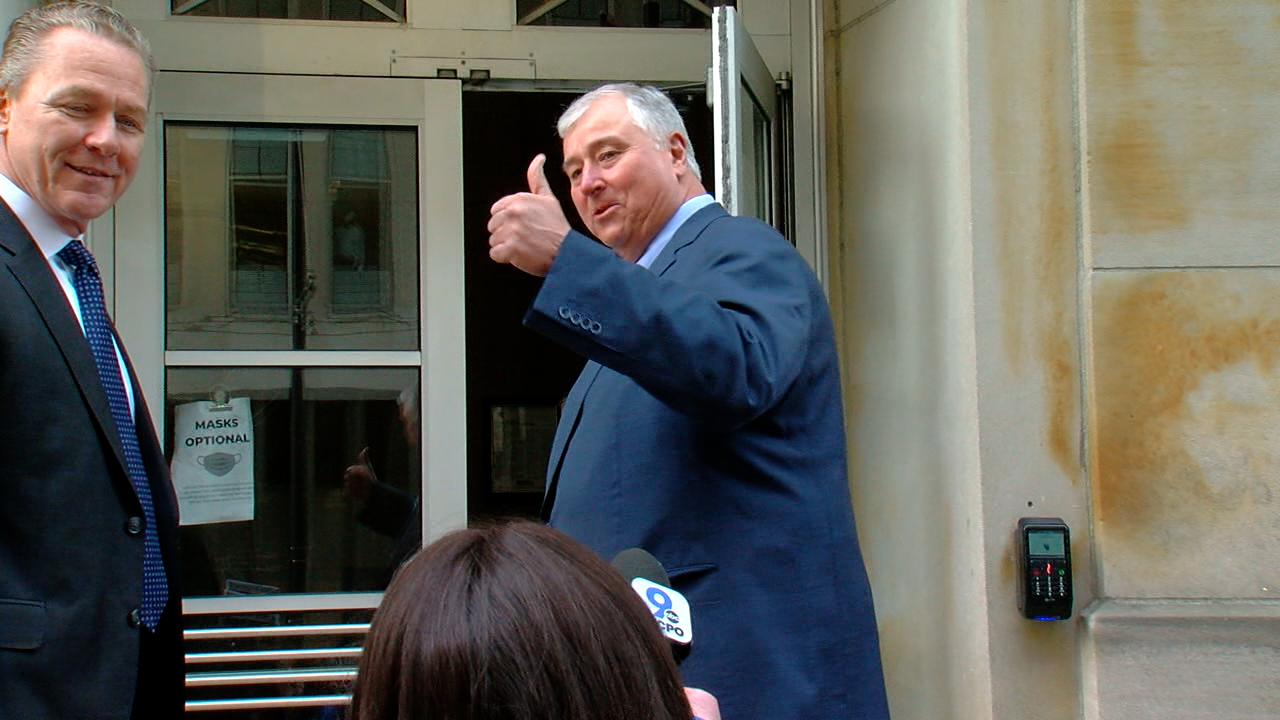
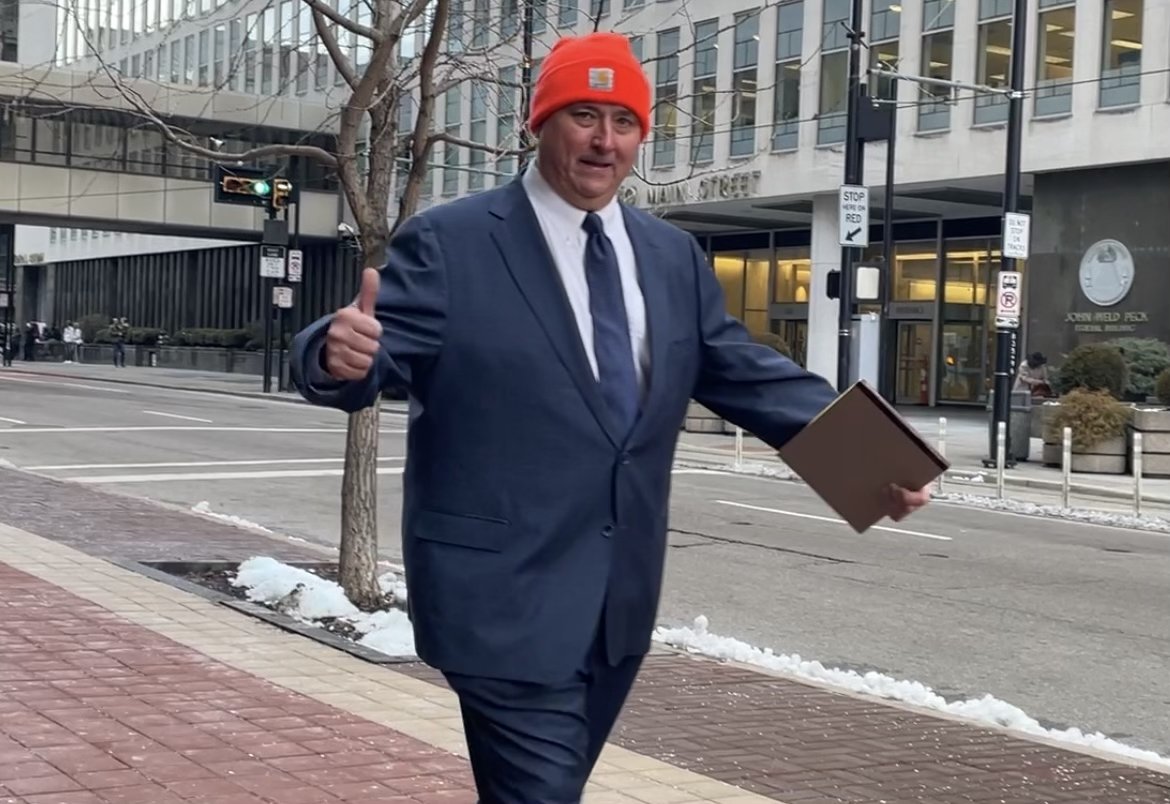
    Former Ohio House Speaker Larry Householder gives the thumbs up as he enters a federal courthouse in Cincinnati. (Photo from WEWS.)

    By:  and  Ohio Capital Journal

    This story was originally published by Canary Media.

    One of the largest utility scandals in U.S. history has remained largely unknown outside Ohio — until now.

    Last week, HBO released a documentary that covers the long, sordid saga, which led to the federal criminal convictions of a former speaker of the Ohio House of Representatives and a former head of the Ohio Republican Party.

    The Dark Money Game: Ohio Confidential” follows the story of how utility companies used roughly $60 million in bribes to public officials to secure more than $1.5 billion in ratepayer subsidies for aging, uneconomical coal and nuclear plants.

    Canary Media contributing reporter Kathiann Kowalski has spent more than a decade covering the House Bill 6 saga and Ohio utilities’ other efforts to get ratepayer-funded bailouts. Dan Haugen, a senior editor at Canary Media, recently spoke with Kowalski about her reactions to the new film.

    The following transcript has been edited slightly for length and clarity.

    Haugen: So, you watched this new HBO documentary ​Ohio Confidential” the other day. What about it is still on your mind today? 

    Kowalski: I was struck by the focus they used of how dark money and gerrymandering undermined voters’ will in the wake of a 2010 Supreme Court case that opened the door for unlimited corporate spending on political campaigns, subject to few conditions.

    Haugen: Was there any factual information that wasn’t previously reported by you or others?

    Kowalski: A lot of it was very familiar, given the fact that I had read through most of the exhibits, read Neil Clark’s book, gone to part of the trial, and been following this for years. There was an interesting scene where they were able to get footage of the FBI observing a private detective that former Ohio GOP Chair Matt Borges and company had apparently retained to follow Tyler Fehrman, who was a witness in the federal criminal case.

    Haugen: Did the film change your understanding of the HB 6 story in any way? 

    Kowalski: They did a decent job connecting some dots. I had not thought through how former Ohio House Speaker Larry Householder’s actions also enabled a far-right coalition in the Legislature to push through an anti-abortion law in 2019. It gave me a broader perspective on the anti-democracy angle of the public corruption, but my understanding of the basic story did not change.

    Haugen: Where did the abortion legislation appear on the timeline?

    Kowalski: The way that the filmmaker presents it is that once Householder helped these people get the anti-abortion legislation passed, he then had people who felt they owed him something. I looked at the timing, and Gov. Mike DeWine signed the anti-abortion legislation the day before House Bill 6 was introduced.

    Haugen: One of the biggest unknowns still today is what, if any, role the governor’s office had in all this. You and others have reported on a December 2018 dinner with FirstEnergy executives, DeWine, and Jon Husted, just weeks before the latter two took office as governor and lieutenant governor. Neither has been charged nor accused of any wrongdoing. Does the film shed any new light on their connections?

    Kowalski: The filmmakers include an allegation of $5 million going from FirstEnergy to help elect DeWine. And they note a disclaimer from DeWine’s office that it was all within the confines of what was allowed under the law. That’s basically about all they did. It was not a deep dive into the governor’s actions or Husted, who was recently appointed to fill Vice President JD Vance’s U.S. Senate seat. I think maybe they wanted to keep their story tightly focused on the legislature and what has been proven in the first federal criminal case. That also avoids having to include more disclaimers about how nothing’s been proven against others, everybody denies wrongdoing, etc., etc.

    Haugen: So is this something you would recommend that your readers watch? 

    Kowalski: Yes. It’s compelling storytelling. It does a good job of explaining things in plain terms. There’s a limited cast of characters, and you can follow the story. If House Bill 6 is new to you, it’s definitely worth watching. And it’s certainly important now as we’re looking at not only the continued use of dark money in politics through either nonprofits or limited liability corporations, but also, with technology, likely more ways to cover up potential bribes. So, yes, people should be aware of this.

    ________________

    Kathiann M. Kowalski, Canary Media
    Kathiann M. Kowalski, Canary Media

    Kathiann M. Kowalski is a contributing reporter at Canary Media who covers Ohio. She reports on energy, science, and policy issues and is the author of 25 books. In addition to her journalism career, Kathi is an alumna of Harvard Law School and has spent 15 years practicing law. She is a member of the Society of Environmental Journalists, the National Association of Science Writers, and the Society of Professional Journalists.

    MORE FROM AUTHOR

    Dan Haugen, Canary Media
    Dan Haugen, Canary Media

    Dan Haugen is a senior editor at Canary Media. He joined Canary Media as part of its 2025 merger with the Energy News Network, where he was managing editor and oversaw state and local reporting on clean energy policy. He previously worked as a newspaper reporter, freelance writer, and watchdog editor at a Gannett-owned newsroom in South Dakota. He currently lives with his wife and two kids in Minneapolis, where he enjoys reading books, collecting vinyl, and watching baseball.

    MORE FROM AUTHOR

  • Ohio Attorney General Dave Yost settles with FirstEnergy for $20 million

    Ohio Attorney General Dave Yost settles with FirstEnergy for $20 million

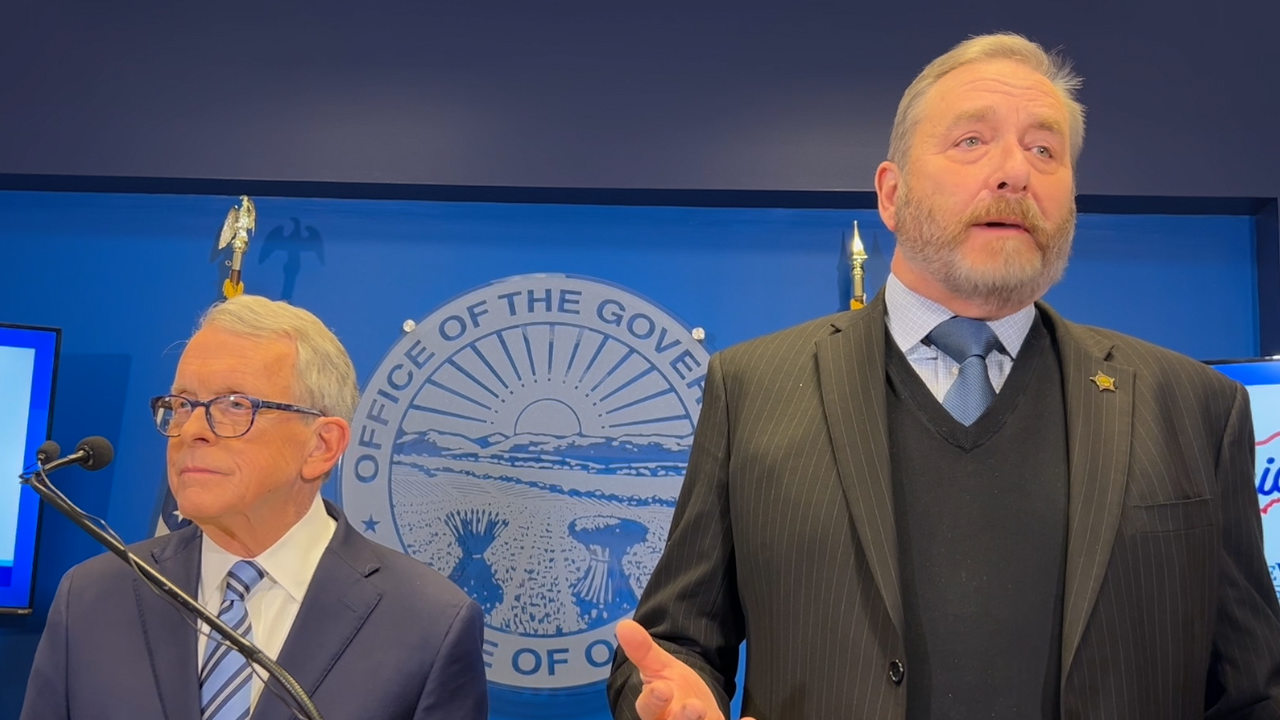
    Ohio Governor Mike DeWine (left) and Ohio Attorney General Dave Yost (right) answer questions during a press conference. (Photo by WEWS).

    Unannounced amount dwarfed by scale of epic utility ripoff that featured more than $61 million in bribes and a $1.3 billion bailout

    By:  Ohio Capital Journal

    Ohio Attorney General Dave Yost has agreed to settle the largest bribery and money laundering scandal in state history with the massive utility that funded it.

    At just $20 million, the settlement amounts only to less than a third of the bribes Akron-based FirstEnergy paid and it is dwarfed by the benefits Ohio utilities have received from ratepayers as a consequence of the corrupt legislation those bribes paid for.

    Yost’s office sends out frequent press releases, but not one regarding Monday’s settlement, which was first reported by the Cincinnati Enquirer, citing an SEC filing by FirstEnergy.

    In response to questions, his office said Yost had “voluntarily walled himself off from the case months ago to avoid any suggestion that the case was politically driven or any outcome was influenced by politics or political decision making.” But it didn’t explain how.

    The statement comes after more than a year of questions about the attorney general’s own involvement in the fight to pass and protect the $1.3 billion ratepayer bailout that mostly went to FirstEnergy.

    Yost’s office added that the company was cooperating in state prosecutions of two former executives, and that the company had reformed in the years since the scandal.

    “The non-prosecution agreement signed between FirstEnergy, the Ohio Attorney General’s Office and the Office of the Summit County Prosecuting Attorney requires FirstEnergy to provide evidence, access to witnesses and testimony in the ongoing criminal cases against (former CEO) Chuck Jones and (former Vice President) Michael Dowling, as well as in civil proceeding relating to the passage of” the corrupt bailout bill, spokesman Steve Irwin said in an email.

    By agreeing to the pact, FirstEnergy won’t be charged criminally. The company paid the federal government $230 million in 2021 to get criminal charges dropped in that instance.

    In dropping the charges, the state and federal governments allowed FirstEnergy to dodge a big financial hit. Consultants told the company it could face nearly $4 billion in fines if indicted, the Cleveland Plain Dealer reported Tuesday.

    According to weeks of testimony in federal court in Cincinnati last year, FirstEnergy executives began wooing Larry Householder and other state leaders in late 2016. The executives had bet heavily on coal and nuclear generation that was losing money because they failed to anticipate that the fracking boom would make gas-fired electricity generation cheaper.

    So the executives — CEO Jones and Vice President Dowling — undertook a frantic search for a bailout.

    They flooded $61 million in corporate money into 501(c)(4) dark money groups. From there, the money went to elect friendly Republicans who would vote to make Householder speaker of the Ohio House at the start of 2019.

    From that perch, Householder shepherded the corrupt bailout, House Bill 6.

    Sam Randazzo, Gov. Mike DeWine’s pick to chair the Public Utilities Commission, helped write and lobby for the bailout even though he was supposed to be a neutral regulator. FirstEnergy later said it paid a $4.3 million bribe to Randazzo, who died by suicide in April.

    DeWine, whose administration had several senior officials connected to FirstEnergy, signed the bill the same day that it passed. But it ran into instant opposition in the form of a fierce campaign to repeal the bailout.

    The FirstEnergy executives — who are now under state indictment — were so alarmed at the repeal effort that they put up $36 million to stop it. The resulting campaign included false, xenophobic TV commercials, bullying people gathering signatures to put a repeal on the ballot and even allegations of assault.

    Yost gave HB 6 supporters a big assist in the heat of the repeal fight.

    Before a repeal could go on the ballot, supporters had to gather 1,000 valid signatures from registered voters and submit a ballot summary to the attorney general. Yost had to approve that before repeal advocates could start gathering the necessary 265,000 additional voter signatures. And they had just 90 days after DeWine signed the corrupt bailout on July 23, 2019 to do it.

    The summary and 1,000 signatures were submitted within 10 days. But then Yost rejected the ballot language on the first go-round. By the time they had submitted different language and more signatures — and Yost approved it — their time to gather more than a quarter-million signatures had been cut by 40% and the repeal failed.

    While Yost — a hopeful to become governor in 2026 — hasn’t commented on his conduct during this period, some of the conspirators did.

    During last year’s trial, federal prosecutors presented messages between former Ohio GOP Chairman Matt Borges, who is serving a five-year prison sentence for his involvement, to Juan Cespedes, who has pleaded guilty to his.

    In one, Borges said the attorney general told him that he thought the bailout was a bad law, but he wasn’t speaking publicly as a favor to Borges and FirstEnergy. Yost “‘would be out front (in opposition) if not for (FirstEnergy) support and your involvement,’” Borges quoted Yost as supposedly saying.

    In another, Borges — who had run some of Yost’s past campaigns — said of the repeal summary, “If there’s any way the law will allow him to reject the language, he will do it.”

    Irwin, Yost’s spokesman, justified the settlement by saying FirstEnergy had reformed.

    “FirstEnergy today is not the company it was five years ago – the corporation has undertaken, and continues to undergo, reforms to strengthen its internal ethics programs, to increase transparency, and promote reporting of questionable conduct by its employees and leadership,” Irwin said. “It has also restructured its board and leadership to remove the individuals responsible for the conduct that gave rise to the House Bill 6 scandal. This is an important step in bringing the disgraced corporate leaders who used their positions of power to betray FirstEnergy’s ratepayers and employees and the people of Ohio to account for their crimes.”

    However, institutional investors are in court arguing that FirstEnergy is trying to limit the blast radius of the scandal. They accuse the company of trying to protect other executives and board members who might have been culpable — or at least might have known of the scheme.

    Indeed, the company is battling furiously not to turn over an internal investigation it commissioned in the wake of the scandal. After being denied an attempt to appeal an order to turn it over, the company filed a risky petition for a writ of mandamus on July 30.

    After the HB 6 scandal broke in 2020, Yost donated $24,000 in contributions from FirstEnergy and Cespedes to charity. It’s an open question when he’ll explain what he knew and did in a scandal that imprisoned Householder for 20 years and led to two suicides — including that of indicted lobbyist Neil Clark.

    Meanwhile, ratepayers are still paying big money as a consequence of HB 6. Its provisions solely benefitting FirstEnergy were repealed after the scandal broke. But the state’s leadership has refused to repeal the rest of the bill.

    It includes a measure that has so far paid $343,000,000 to subsidize two aging coal plants owned by a group of Ohio utilities. One’s not even in Ohio.


    Marty Schladen
    Marty Schladen

    Marty Schladen has been a reporter for decades, working in Indiana, Texas and other places before returning to his native Ohio to work at The Columbus Dispatch in 2017. He’s won state and national journalism awards for investigations into utility regulation, public corruption, the environment, prescription drug spending and other matters.

    Ohio Capital Journal is part of States Newsroom, the nation’s largest state-focused nonprofit news organization.

    MORE FROM AUTHOR

  • Ohio Lt. Gov. Husted won’t say if he knew about $1M dark-money contribution

    Ohio Lt. Gov. Husted won’t say if he knew about $1M dark-money contribution

    Donation came from utility behind massive bribery scandal

    BY:  – Ohio Capital Journal

    Ohio Lt. Gov. Jon Husted is refusing to say whether he was aware of a $1 million contribution in 2017 to a political group that was supporting his bid for governor. Instead, his office is only reiterating that the group wasn’t affiliated with the Husted campaign.

    The massive donation came from Akron-based FirstEnergy, which over the next two years ponied up more than $60 million in bribes in exchange for a $1.3 billion ratepayer bailout — a law that Gov. Mike DeWine signed just hours after it passed.

    The donation was discovered among a trove of documents that a group of news organizations including the Capital Journal requested from the Office of Ohio Consumers’ Counsel.

    As reported last week by the Energy News Network and Floodlight, the documents also contained emails indicating that Husted was lobbying DeWine to support the bailout. The lobbying came just 11 days after Husted abandoned his gubernatorial bid and joined DeWine’s ticket on Dec. 1, 2017.

    “Jon Husted called me to say he was meeting with DeWine on our issue to try and get him aligned to help keep the plants open,” a Dec. 12, 2017 email by FirstEnergy lobbyist Joel Bailey said.

    The plants were money-losing nuclear and coal plants that FirstEnergy wanted to prop up with the bailout and then spin off.

    FirstEnergy in 2021 signed a deferred prosecution agreement in which it admitted to paying bribes to elect a friendly Republican majority to the state House, which would elect a friendly speaker who would pass and protect the corrupt bailout.

    The company also admitted to paying a $4.3 million bribe to Sam Randazzo, DeWine’s pick to chair the Public Utilities Commission of Ohio, who died by suicide last week. A state indictment said that FirstEnergy executives arranged the bribe with Randazzo the same night they discussed his suitability as a regulator at a dinner meeting with Gov.-elect DeWine and Lt. Gov.-elect Husted on Dec. 18, 2018.

    The ensuing scandal has landed former House Speaker Larry Householder, R-Glenford, in federal prison for 20 years, and former Ohio GOP Chair Matt Borges for five. Two others have pleaded guilty and await sentencing. Another defendant, lobbyist Neil Clark, also died by suicide — clad in a “DeWine for Governor” T-shirt.

    DeWine and Husted haven’t been charged in case, and they adamantly deny wrongdoing.

    However, they haven’t publicly discussed just what they knew about Randazzo’s long-standing relationship with FirstEnergy, or what they knew about the torrent of dark money flooding from FirstEnergy into Capitol Square to pass and protect the bailout. They also haven’t discussed what senior administration officials with close ties to FirstEnergy might have known.

    Among the documents turned over once FirstEnergy made its agreement with federal prosecutors was a spreadsheet listing 501(c)(4) political contributions the company made in 2017.

    Such donations are called “dark money” because recipients don’t have to disclose their sources. By law, dark-money contributions can’t go directly to candidates, but they can go to groups that support them, but aren’t supposed to directly coordinate with them.

    The FirstEnergy spreadsheet is only now becoming public because the FBI investigated the scandal and the U.S. Department of Justice brought a prosecution. During the battle over the bailout law in 2019, there were suspicions that FirstEnergy was bankrolling the effort, but the press and public couldn’t know because the money was being funneled through dark-money groups — without which U.S. Attorney David DeVillers said the conspiracy would have been impossible.

    Now that FirstEnergy’s 2017 donation to a Husted-aligned group is known, it raises new questions.

    Special interests sometimes piously claim that they spend millions on politics solely in the interests of “good government.” But as was shown in Householder’s lengthy trial last year, corporate political donations are often — if not usually — intended to buy influence with people in government.

    In order for that to happen, a government official would have to know that a special interest had contributed on his or her behalf. But Husted — who is eyeing a 2026 gubernatorial run — won’t say whether he knew that FirstEnergy in 2017 gave a million bucks to a group supporting his earlier bid.

    His spokeswoman, Hayley Carducci, was asked if Husted knew of the contribution and if he did, when he learned of it. She was also asked if Husted persuaded DeWine to support the FirstEnergy bailout; what Husted knew about Randazzo’s links to FirstEnergy when he was picked to regulate the company; and whether he knew that FirstEnergy was flooding Cap Square with dark money in its effort to pass and preserve the bailout.

    In an email, Carducci repeated her earlier statement: “The Husted campaign never received this donation and is not affiliated with any of these groups.”

    She added, “As for your other questions, we will not be commenting.”


    Marty Schladen
    MARTY SCHLADEN

    Marty Schladen has been a reporter for decades, working in Indiana, Texas and other places before returning to his native Ohio to work at The Columbus Dispatch in 2017. He’s won state and national journalism awards for investigations into utility regulation, public corruption, the environment, prescription drug spending and other matters.

    Ohio Capital Journal is part of States Newsroom, the nation’s largest state-focused nonprofit news organization.

    MORE FROM AUTHOR

  • FirstEnergy gave $1 million to boost Ohio Lt Gov Husted’s campaign before scandal, document shows

    FirstEnergy gave $1 million to boost Ohio Lt Gov Husted’s campaign before scandal, document shows

    Records show Jon Husted worked behind the scenes to bail out the company’s nuclear power plants. The million dollar donation was secret — until now.

    BY:  AND 

    Versions of this story were published by Floodlight, Energy News Network and the Ohio Capital Journal.

    A surge in FirstEnergy political spending ahead of the utility’s push to secure a legislative bailout for its nuclear power plants included a $1 million dark money contribution to support the campaign of Ohio Gov. Mike DeWine’s eventual running mate.

    The previously unreported gift linked to Lt. Gov. Jon Husted’s 2017 primary bid was revealed as part of a raft of documents obtained under Ohio’s public records law by a coalition of news organizations, including Floodlight, Energy News Network, and the Ohio Capital Journal.

    Among the documents are company emails describing behind-the-scenes efforts by Husted to persuade DeWine to support House Bill 6, the utility-backed legislation at the heart of the state’s ongoing $60 million public bribery scandal.

    Neither Husted nor DeWine, whose campaign also benefited from a previously reported $1 million in dark money from the utility, has been implicated in the scheme in which eight people, including the state’s former House Speaker Larry Householder, have been indicted.

    Two of those charged in the multi-million-dollar scandal surrounding the passage of HB 6 may have taken their own lives, including Sam Randazzo, the former chairman of the Public Utilities Commission of Ohio, who was found dead earlier this week of an apparent suicide.

    ‘Confidential’ email details campaign gift

    One of the documents from the Office of the Ohio Consumers’ Counsel Office is a spreadsheet attached to a January 2020 message labeled “confidential.” It shows $1 million went from FirstEnergy to the conservative group Freedom Frontier in 2017, with “Husted campaign” noted as the reason.

    That group backed Husted during his 2017 primary campaign for governor. The group then supported DeWine after Husted dropped out of the race to become his running mate.

    Husted is considered among possible front runners for the Republican nomination for governor in 2026. A January report by the Jon Husted for Ohio campaign committee shows it got roughly $1.7 million last year.

    Husted was also dubbed the “‘Golden Boy’ for FirstEnergy” by lobbyist Neil Clark, a co-defendant with Householder and others in the federal government’s criminal corruption case. Clark died by suicide in 2021.

    In several of the recently released records, Husted is mentioned in the same breath as Householder, the convicted House speaker, and Randazzo, the former PUCO commissioner, by FirstEnergy leadership as they sought to pass and then defend HB 6, the nuclear and coal bailout law at the heart of Ohio’s ongoing corruption scandal.

     FirstEnergy records released via public records request show how executives at the power company relied on Ohio Lt. Gov John Husted and convicted former House Speaker Larry Householder to help them pass a $1.3 billion nuclear bailout bill. 

    Husted has maintained that his support for the 2019 law stemmed from his belief that nuclear energy is an important part of Ohio’s energy portfolio. Parties in HB 6-related shareholder litigation have subpoenaed Husted to answer questions under oath, although a new date needs to be set.

     FirstEnergy records released via public records request show how executives at the power company relied on Ohio Lt. Gov John Husted and convicted former House Speaker Larry Householder to help them pass a $1.3 billion nuclear bailout bill. 

    “The Husted campaign never received this donation and is not affiliated with any of these groups,” said spokesperson Hayley Carducci. By law, candidate campaigns are not supposed to coordinate with groups like Freedom Frontier, which can spend unlimited amounts to support or attack them.

    The document and others reflect a major commitment by FirstEnergy to Husted’s political future. Before 2017, the company’s reported political spending to support Husted was less than $25,000 per campaign, according to data from OpenSecrets.

    Dark money spending rises sharply

    More broadly, the document also indicates a major increase in FirstEnergy’s political spending through nonprofit groups exempt from taxes under Section 501(c)(4) of the Internal Revenue Code. Those, along with privately held corporations, are common structures for dark money organizations — groups that aren’t required by law to disclose the ultimate source of their funding.

    The company’s giving to such groups jumped to more than $12 million in 2017, after much lower levels of $200,000 in 2016 and $100,000 in 2015, according to the spreadsheet.

    Starting in 2014, FirstEnergy had sought bailouts for noncompetitive coal and nuclear plants. And in late 2016, regulators approved a $456 million consumer surcharge that ultimately was held unlawful. Yet the company claimed it needed more.

    The document details once-secret contributions to groups supporting “everyone from the mayor of Akron to President Trump that FirstEnergy made to secure bailouts for its soon-to-be bankrupt coal and nuclear plants and to gain influence on other key issues,” said Dave Anderson, policy and communications manager for the Energy and Policy Institute.

     A spreadsheet details dark money expenditures by northeastern power company FirstEnergy as it sought to secure a $1.3 billion bailout for its struggling nuclear power plants. The sheet reveals a previously unreported $1 million donation to benefit the candidacy of Ohio Lt. Gov. Jon Husted. 

    Anderson added that the spreadsheet also “provides some key new evidence for utility regulators and consumer advocates to use to ensure that every dollar of ratepayer money that FirstEnergy misused to fund its secret political spending is publicly disclosed and refunded, with interest and ideally serious financial penalties.”

    At the time, the author of the document that details the donations, Kristina Housley, was executive assistant to FirstEnergy’s Mike Dowling, who is now a defendant in a state criminal case along with former CEO Chuck Jones.

    Finding out all the details about the dark money spending behind HB 6 is like peeling back the layers of an onion, said Catherine Turcer, executive director of Common Cause Ohio.

    “The reason that transparency matters so much is that money that is spent in the shadows influences elections, and it influences really important policy decisions that impact us every day,” Turcer said. “And we have the right to know what is going on in government and how decisions are being made and who’s attempting to influence those decisions.”

    The ‘Golden Boy’ for FirstEnergy

    A December 2017 email from former FirstEnergy lobbyist Joel Bailey said Husted was working to get DeWine on board with FirstEnergy’s “issues.” FirstEnergy also supported other pro-DeWine/Husted efforts during the election cycle.

     Former FirstEnergy CEO Chuck Jones (top left), former FirstEnergy VP Michael Dowling (top right), former PUCO Chair Sam Randazzo (bottom middle). Graphic by WEWS. 

    After the election, Husted and DeWine dined with Jones and Dowling on December 18, 2018. Later that night, FirstEnergy agreed to pay $4.3 million to energy lawyer Randazzo, who went on to become DeWine’s first pick for chair of the Public Utilities Commission of Ohio. FirstEnergy later identified Jones and Dowling as the two people responsible for paying alleged bribes.

    Husted’s office has been evasive about his recollections, despite Jones noting in texts to Randazzo that the PUCO chair position was discussed in at least general terms. Another text by Jones in 2019 said the DeWine/Husted team was forced “to perform battlefield triage” to secure Randazzo’s nomination after a 198-page dossier provided to DeWine’s staff threatened to derail it.

    Evidence from last year’s criminal trial of Householder, the former Ohio House speaker, and lobbyist Matt Borges also included messages between former FirstEnergy executives Jones and Dowling about Husted working behind the scenes to build support for the bill. Among the actions were efforts to extend the bailout period for the company’s former nuclear power plants in Ohio.

    Husted long a friend of utilities

    Husted had been Ohio’s secretary of state immediately before becoming lieutenant governor. Before that, he served as House speaker in the General Assembly. In that role, he played a pivotal part in securing passage of another major energy bill, Senate Bill 221.

    At the time, Husted supported the law’s clean energy standards that were ultimately gutted by HB 6. However, SB 221 set the stage for so-called electric security plans. Those have let FirstEnergy and other utilities avoid full rate cases for more than a decade, while allowing cross-subsidies and adding multiple additional charges to consumers’ bills.

    “That bill upset the balance” of energy regulation in Ohio, said Ashley Brown, a former PUCO commissioner. “It was a humongous gift for the utilities.”

    Lawmakers repealed HB 6’s $1 billion-plus in subsidies for FirstEnergy’s former nuclear power plants and its recession-proofing provisions in 2021, eight months after the arrests of Householder and others.

    Earlier this year, Husted told NBC4 in Columbus the rest of HB 6 “needs to be completely removed.” He did not respond to Energy News Network questions this week about whether that includes both the law’s subsidies for two 1950s-era coal plants and its gutting of Ohio’s renewable energy and energy efficiency standards.

    FirstEnergy spokesperson Jennifer Young declined to comment on the company’s 2017 donation to Freedom Frontier due to ongoing litigation. However, she added, “FirstEnergy will post information regarding its support of 501(c)(4) social welfare organizations on the company’s website on a quarterly basis.”

    Those disclosures are currently required under the company’s July 2021 deferred prosecution agreement. That agreement expires later this year.

    Meanwhile, FirstEnergy still has not disclosed its dark money spending for the years 2018 through 2020. And proposals for reforms that would require such disclosures from all electric utilities remain stalled in the General Assembly.

    “It’s incredibly frustrating that Ohioans can be aware that dark money impacted decision-making at the statehouse,” Turcer said, “and yet we still haven’t gotten the legislators to create greater transparency.”

    The Energy News Network is a nonprofit news site dedicated to keeping influencers, policymakers and citizens informed of the important changes taking place in the transition to a clean energy system. Floodlight is a nonprofit newsroom that investigates the powerful interests stalling climate action. 

    This article first appeared on Energy News Network and is republished here under a Creative Commons license.

    _____________

    Mario Alejandro Ariza, Floodlight
    MARIO ALEJANDRO ARIZA, FLOODLIGHT

    Mario Alejandro Ariza is an investigative reporter and a Dominican immigrant. His byline has appeared in publications like the South Florida Sun Sentinel, The New Republic, and The Atlantic. Mario wrote a book called “Disposable City: Miami’s Future on the Shores of Climate Catastrophe,” which was published by Bold Type Books. His essays have been featured in The Believer and selected for Best American Essays. He lives in South Florida with a cat, a dog, and a sturdy pair of waterproof boots.

    MORE FROM AUTHOR

    Kathiann M. Kowalski, Energy News Network
    KATHIANN M. KOWALSKI, ENERGY NEWS NETWORK

    Kathi is the author of 25 books and more than 600 articles, and writes often on science and policy issues. In addition to her journalism career, Kathi is an alumna of Harvard Law School and has spent 15 years practicing law. She is a member of the Society of Environmental Journalists and the National Association of Science Writers. Kathi covers the state of Ohio.

    MORE FROM AUTHOR

  • Corruption trial witness: Householder called them “loans” but wouldn’t sign documents

    Corruption trial witness: Householder called them “loans” but wouldn’t sign documents

    Former Ohio House speaker Larry Householder arrives for day two of his racketeering trial. Photo by Morgan Trau, WEWS.

    Former House speaker received $500K in bailout scandal and called them loans, but never paid any of it back

    BY: MARTY SCHLADEN Ohio Capital Journal

    CINCINNATI — In Washington, D.C. during Donald Trump’s January 2017 inauguration, then-Ohio Rep. Larry Householder had a dinner meeting with the top executives with Akron-based FirstEnergy. The executives stressed their likely need for a state bailout — and their need for a way to make unlimited, untraceable contributions to Householder’s bid for speaker, Householder’s top lieutenant testified Wednesday.

    By late 2019, scores of millions in FirstEnergy dollars had passed through the 501(c)(4) “dark money” account that had been set up at the executives’ request. Householder had won the speaker’s gavel. And the state had passed a $1.3 bailout that mostly benefited a FirstEnergy subsidiary. 

    In addition, Householder had gotten more than $500,000 for personal expenses that had originated with the utility. The speaker agreed to call them “loans,” but he never quite got around to signing legal documents that were prepared — much less to paying back any of the money, the witness, Jeffrey Longstreth, testified Wednesday.

    If true, it and other events described Wednesday illustrate widespread ratepayer-financed malfeasance that threatened to make Householder speaker in alliance with Ohio utilities almost indefinitely.

    Four weeks into the blockbuster corruption trial, Longstreth’s testimony could prove crucial. Because he set up the dark money group and handled much of Householder’s political business, Longstreth is likely to have had one of the best views into whether the former speaker enriched himself in exchange for championing the bailout.

    Showing that Householder personally enriched himself as he rammed through an unpopular corporate bailout could go a long way to convincing the jury that the former speaker participated in an illegal conspiracy. 

    He and former Ohio Republican Party Chairman Matt Borges are being tried on charges of racketeering. Federal prosecutors have said the $61 million in utility money that was used to pass the billion-dollar bailout is likely the largest bribery and money laundering scandal in Ohio history.

    Longstreth, who functioned as Householder’s political strategist and general fixer, has pleaded guilty and is cooperating with prosecutors in exchange for a favorable sentencing recommendation. On Wednesday, he explained to jurors that by the time of the dinner meeting during Trump’s inauguration, it was clear to him that Householder was well familiar with then-FirstEnergy CEO Chuck Jones and what Jones wanted for his company.

    Meetings with FirstEnergy executives

    In late 2016, as Householder captured a House seat that he held in the early 2000s, FirstEnergy was drowning in debt from its money-losing nuclear and coal plants. The company was laying the groundwork to send the subsidiary that owned the plants into bankruptcy, and executives calculated that state or federal subsidies would make it attractive to buyers.

    In December 2016, the newly elected Householder hired Longstreth to spearhead his plan to elect enough sympathetic Republicans in 2018 that they would make Householder speaker at the start of 2019.

    A month later, Householder and Longstreth were in D.C. for Trump’s inaugural — and to meet with Jones and FirstEnergy Vice President Michael Dowling. At one steakhouse dinner, Longstreth was seated at the end of a long table with Dowling, and Jones and Householder were seated at the other.

    Dowling “said they were going to get going, get your organization set up,” Longstreth testified, explaining that he understood “organization” to mean a limited liability corporation or a dark money group that could receive FirstEnergy money. “He said (the money) needed to be undisclosed and unlimited contributions.”

    The next night, the dinner at another D.C. steakhouse was more intimate, with just Householder, Jones, Dowling, Longstreth and maybe one other in attendance. Jones, the FirstEnergy CEO, explained the company’s financial woes and that they were working on a federal solution to them.

    “They said, ‘If not, we’re going to need something on the state level,’” Longstreth quoted Jones as saying.

    He added that Householder mostly sat quietly through that part of the discussion because he “already knew everything that was being said, it seemed to me.”

    Longstreth said he didn’t know about all of Householder’s previous dealings with Jones, but said the men were well enough acquainted that they attended a World Series game together in Cleveland the previous October.

    The political strategist testified that it was clear to him that FirstEnergy’s enormous contributions were expressly in exchange for a bailout.

    “I knew their donations were (predicated) on the expectation that something like House Bill 6 would happen,” Longstreth said.

    Money for Householder

    Householder didn’t just get money from FirstEnergy to advance his political ambitions, Longstreth said.

    In spring of 2017, Householder called Longstreth into his office to complain of financial problems. He was head of a group of investors in an Alabama coal mine that had defaulted on a loan, he was having problems with his Perry County farm and he had a house in Florida that was badly in need of repair.

    Longstreth said Householder told him that he needed to solve some of those problems or he’d be forced to drop his bid for speaker. And, he said, because Householder was his only client, that would be a big problem for Longstreth, too.

    Using money out of an account that was funded by the dark money group that FirstEnergy paid into, Longstreth said he paid lawyers, settled the Alabama lawsuit and financed the repair of Householder’s Naples, Fla., home.

    Longstreth had a loan agreement drawn up, but Householder never signed the papers, he said.

    “We had multiple discussions, but it was a kick-the-can-down-the-road type of scenario,” Longstreth said.

    In late 2019 when the issue came up, Householder “asked me in the course of our conversation, ‘Are you whole?’” Longstreth said, explaining that he interpreted the question to mean that Householder wanted to know if somebody other than Longstreth had ultimately paid Householder’s debts. 

    “It was one of those hair-on-the-back-of-your-neck situations,” Longstreth said, adding they both knew the arrangement the speaker was suggesting was illegal. 

    At another meeting at the Buckeye Lake AMVETS post, Householder requested help with credit card bills, Longstreth said. Earlier in the trial, prosecutors displayed bank records showing that the debt was about $20,000.

    Longstreth said he stressed to Householder that they needed to stay on the right side of the law. 

    “I said it had to be something we can do legally because you can’t get something for nothing,” Longstreth said.

    Testimony on widespread corruption

    Wednesday’s testimony about Householder’s loans was against a backdrop of widespread corruption that threatened to become endemic.

    Before Longstreth took the stand, Pat Tully testified that within weeks he moved from a senior position at the state’s utility regulator, the Public Utilities Commission of Ohio, to being a senior advisor to the House Republican Caucus. In early 2019, Tully said, Householder met with him, Rep. Nino Vitale, R-Urbana, and Sam Randazzo, Gov. Mike DeWine’s nominee to chair the PUCO — and who around that time received a $4.3 million payment from FirstEnergy.

    Tully described how he worked with Randazzo to help draft the utility bailout, House Bill 6, and to reconcile it with draft legislation submitted by FirstEnergy. He wasn’t asked about the propriety of a current and very recent regulator writing a law in which one of the state’s largest utilities had such an obvious interest.

    In Longstreth’s testimony, he said that after HB 6 passed in 2020, he and Householder mounted an effort that could make him speaker for the foreseeable future in a kind of permanent alliance with Ohio’s big utilities.

    Earlier in the trial, prosecutors played recordings of Householder ally Neil Clark saying that thanks to dark money, utilities like FirstEnergy could contribute vast sums to politicians and keep their origin secret. In that way, Clark said, supposedly regulated utilities could exercise huge influence behind the scenes.

    Ohio law currently limits lawmakers to eight years in either house, but they’re free to run for the other chamber after that — and can do so as long as they like. So Householder’s speakership would at least have been interrupted in 2024.

    But Longstreth found that the idea of passing a law limiting lifetime service to 16 years polled well. And it had a huge silver lining for Householder — it would reset the clock so the speaker was free to stay in the House and be its leader for the next 16 years if he could keep getting the votes.

    Longstreth estimated that it would cost $15 million to $20 million to buy ads selling the idea to voters. For the money, Householder and Longstreth decided to turn to utilities FirstEnergy and AEP, both of which reaped millions from the bailout. Their interest in keeping Householder in the speaker’s chair was clear, Longstreth said.

    “It kind of went without saying that they would support anything that was good for the speaker because anything that was good for the speaker was good for them,” Longstreth said.

    After meetings with top executives with both companies in February 2020, Householder secured pledges of support from each, Longstreth said. Then reality intervened.

    “COVID started in March and then we were arrested in July,” Longstreth said.

  • DeWine refuses to explain aide’s role in bailout scandal

    DeWine refuses to explain aide’s role in bailout scandal

    By Marty Schladen and Ohio Capital Journal

    If you asked most people to start up a dark money group and then funnel more than $1 million through it and into another such group, they’d probably want to know what it was going to be used for.

    But now that the second 501(c)(4) dark-money group, Generation Now, has pleaded guilty to being at the heart of one of the biggest bribery and money laundering scandals in Ohio history, Gov. Mike DeWine is refusing to discuss what one of his top aides was told when he formed the first dark money group, Partners for Progress.

    Generation Now pleaded guilty earlier this month to being the major conduit of money between Akron-based FirstEnergy and related organizations and the effort to pass House Bill 6, a $1.3 billion bailout that mostly went to two nuclear plants FirstEnergy started spinning off in 2016. DeWine signed the bill into law in 2019.

    Last summer, federal authorities arrested then-Speaker Larry Householder and four associates as part of the scandal and two of the associates later pleaded guilty.

    As he announced the arrests, U.S. Attorney David DeVillers stressed that the dark money made the massive scandal possible.

    “I don’t see how (the conspiracy) could possibly have happened” without it, DeVillers said.

    The feds haven’t accused DeWine’s aide, Legislative Affairs Director Dan McCarthy of wrongdoing, but they refer to his dark-money group in an affidavit supporting Householder’s arrest as “Energy Pass-Through.”

    Among the activities Generation Now pleaded guilty to was engaging in transactions “designed to conceal the nature, source, ownership and control of the payments” from FirstEnergy and associated companies.

    But DeWine and McCarthy don’t want to discuss whether McCarthy intended to obscure that FirstEnergy was bankrolling an effort to prop up nuclear plants it was spinning off.

    Asked last week about the matter, DeWine Press Secretary Dan Tierney pointed to a statement McCarthy issued last summer when The Cincinnati Enquirer first reported that he’d started a dark money group that helped fund the HB 6 effort.

    In it, McCarthy explained that in addition to his lobby work for FirstEnergy, he had also worked with people who had adversarial relationships with Householder and one of his indicted associates, Neil Clark, so “any insinuation I was involved in this disgusting scheme is without merit.” 

    But he didn’t explain why he founded Partners for Progress two days after the founding of Generation Now, or why a week later his dark money group got $5 million from FirstEnergy and within a month it was forwarding some of that money to Generation Now. 

    In early 2019, McCarthy stopped lobbying for FirstEnergy and resigned as president of Partners in Progress to become DeWine’s legislative affairs director. The following October, while McCarthy was advocating for HB 6 in that capacity, FirstEnergy and associates wired $20 million to McCarthy’s former money group and it forwarded $10 million of that to Generation Now the same month, the federal affidavit said.

    Despite these and other revelations about DeWine appointees, DeWine on Tuesday declined to give a more complete explanation of what McCarthy believed he was doing when he started Partners for Progress and began funneling money into a now-guilty dark money group.

    “As far as I know, Dan McCarthy has been well-respected for many, many years, long before he started working for me as our legislative director and I have faith in his integrity,” DeWine said.

  • Ohio House speaker, four others arrested amid massive dark-money, pay-to-play allegations

    Ohio House speaker, four others arrested amid massive dark-money, pay-to-play allegations

    All are charged with racketeering

    Make no mistake – the $61 million came from Company A’s ratepayers and ultimately extorted from every residential and commercial electrical utility user in Ohio. The racketeering scheme of lies and deception corrupted Ohio citizen’s ability to overturn corrupt legislation at the ballot box. – David Miller, Loveland Magazine Publisher

    By Marty Schladen The Ohio Capital Journal and David Miller/LovelandMagazine
    ddd

    Cincinnati, Ohio – Ohio House Speaker Larry Householder, four political operatives and a dark-money group were charged Tuesday in a criminal complaint that an Ohio energy company paid them $61 million to get a $1.5 billion nuclear bailout from taxpayers.

    Read the Press Release issued by the Department of Justice

    Neil Clark, a lobbyist who owns Grant Street Consulting – Photo from Grant Street Consulting who exclaim, “Clark’s decades of experience and role in shaping Ohio’s political landscape makes him an indispensable resource to Ohio’s elected leaders, to whom he often serves as a trusted and highly sought after campaign advisor.”

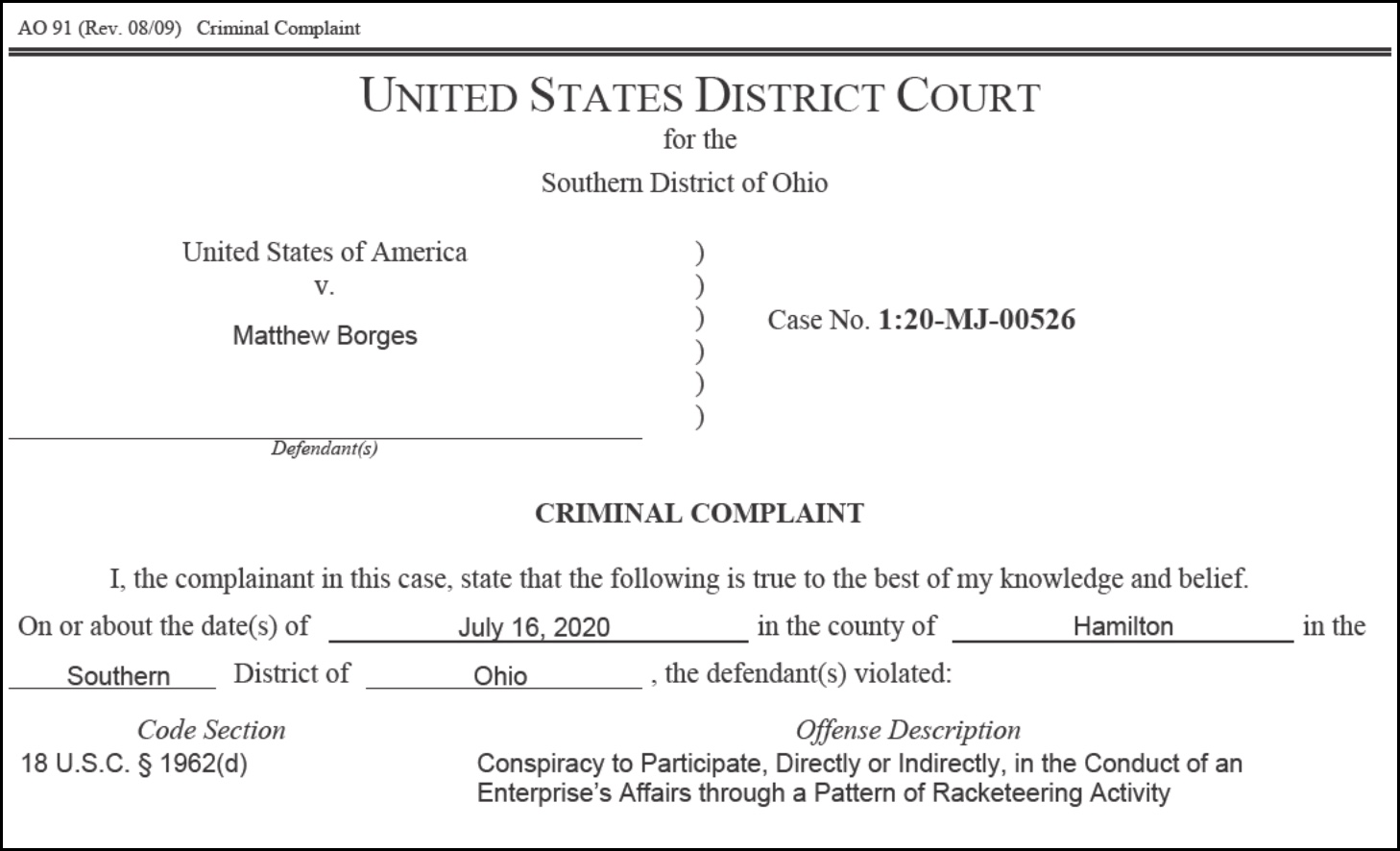
    Charged along with Householder were Matt Borges, a lobbyist who was formerly chairman of the Ohio Republican Party, Neil Clark, a lobbyist who owns Grant Street Consulting, Juan Cespedes, also a lobbyist, and Householder’s aide, Jeffrey Longstreth.

    All are charged with racketeering, which carries a prison sentence of up to 20 years.

    David M. DeVillers, U.S. Attorney for the Southern District of Ohio

    The alleged conspiracy, which revolved around the bailout of two failing nuclear plants in Northern Ohio, is “likely the largest bribery and money-laundering scheme ever in the state of Ohio,” David M. DeVillers, U.S. Attorney for the Southern District of Ohio, said at a Tuesday afternoon press conference.

    Shortly after the press conference, Ohio Gov. Mike DeWine called on his fellow Republican to step down.

    “I am deeply concerned about the allegations of wrongdoing in the criminal complaint issued today by the U.S. Attorney’s Office,” DeWine, who last year signed the bailout into law, said in a written statement. “Every American has the presumption of innocence until proven guilty.  Because of the nature of these charges, it will be impossible for Speaker Householder to effectively lead the Ohio House of Representatives; therefore, I am calling on Speaker Householder to resign immediately. This is a sad day for Ohio.”

    Read the Criminal Complaint

    ccc

    The criminal complaint says that “Company A,” the former FirstEnergy Solutions of Akron, worked to save its failing nuclear plants by funneling $61 million into Generation Now, a 501(c)(4) “dark money” group controlled by Householder.

    On September 9, 2019, President Donald Trump nominated DeVillers for the United States Attorney in the Southern District of Ohio. The Senate confirmed the nomination in October, and DeVillers took his oath on November 1, 2019.

    “Make no mistake, this is Larry Householder’s 501(c)(4),” the U.S. attorney said.

    The money was used for three general purposes, the complaint said. First it was used to build “Team Householder” through campaign contributions and other measures that helped Householder win the speakership in 2019.

    “In exchange for payment from Company A, Householder’s enterprise helped pass House Bill 6, legislation described by an enterprise member as a billion-dollar ‘bailout’ that saved from closure two failing nuclear power plants in Ohio affiliated with company A,” the complaint said

    The money was also used for the personal benefit of Householder and the other conspirators, DeVillers said. Householder got about $500,000, he said.

    Despite the companies claims of poverty, the interests behind the bailout spent millions — much of it in the form of hard-to-trace dark money on campaign contributions, a xenophobic ad campaign and then on an aggressive effort to stymie a petition drive to repeal the bailout DeWine signed into law a year ago.

    And the money was used to fend off a petition effort to repeal HB6, going so far as to buy plane tickets for and pay $1,000 each to people circulating it to get out of town, DeVillers said.

    The federal prosecutor said that it was crucial to keep the investigation secret until Tuesday. Now it begins a new phase that might be causing some lawmakers, energy executives and some others to lose sleep.

    “We are not done with this case,” he said. “There were things we couldn’t do before. People we couldn’t interview. People we couldn’t subpoena. Documents and search warrants we couldn’t execute. 

    “As of this morning there are a lot of FBI agents knocking on a lot of doors asking a lot of questions, serving lots of subpoenas. That’s going to go on for days.”

    “It takes courage for citizens to assist law enforcement in the ways detailed in the affidavit,” U.S. Attorney David M. DeVillers said. “We are grateful to those who felt a moral duty to work together with agents in bringing to light this alleged, significant public corruption.”

    House Bill 6 is adding $1.5 billion in additional taxpayer bailouts to the $10.2 billion that Akron-based FirstEnergy Solutions and its former parent company, FirstEnergy Corp, have received from taxpayers since 1999. Most of the funds have gone to prop up the Davis-Besse and Perry nuclear power plants in Northern Ohio.

    The company that owns the plants was renamed Energy Harbor after emerging from bankruptcy earlier this year.

    Despite the companies claims of poverty, the interests behind the bailout spent millions — much of it in the form of hard-to-trace dark money on campaign contributions, a xenophobic ad campaign and then on an aggressive effort to stymie a petition drive to repeal the bailout DeWine signed into law a year ago.

    The interests behind the nuclear bailout also contributed heavily to the effort at the beginning of 2019 to elect Householder speaker. He ended up winning the support of 26 Republicans and 26 Democrats, His opponent, Ryan Smith, R-Bidwell, got the votes of 34 Republicans and 12 Democrats.

    The Ohio Republican Party didn’t respond Tuesday to requests for comment.

    The Ohio Democratic Party didn’t respond when asked about the fact that Householder wouldn’t have worn the speakership without Democratic votes. However, the party chairman, David Pepper called on Householder to step down as speaker.

    “As the U.S. attorney indicated, this investigation is ongoing, and we will wait to hear all the facts as they emerge. However, given what was revealed in today’s complaint and the taint of corruption over Ohio legislative activity, we believe Speaker Householder should step down from leadership immediately as he avails himself of his due process rights,” Pepper said in a written statement.

    House Bill 6, which passed 51-38, was quickly signed into law by Gov. Mike DeWine. Under the bill, from 2021 until 2027, every Ohio electricity customer will have to pay a new monthly surcharge that ranges from 85 cents for residential customers to $2,400 for large industrial plants. Ratepayers around the state would also have to chip in up to $1.50 monthly (and up to $1,500 per month for commercial and industrial users) to subsidize coal plants in Ohio and Indiana run by the Ohio Valley Electric Corporation.- cleveland.com

    Starting next January, ratepayers around the state would also have to chip in up to $1.50 monthly (and up to $1,500 per month for commercial and industrial users) to subsidize coal plants in Ohio and Indiana run by the Ohio Valley Electric Corporation.

    This isn’t Householder’s first encounter with federal law enforcement. 

    In 2006, the Justice Department told the FBI that it wouldn’t pursue charges against Householder. The FBI had been told two years earlier that Householder had used his post as head of the House Republican Campaign Committee to overpay some vendors in exchange for kickbacks from them.

    Nor is Householder, 61, of Glenford, the first Ohio House speaker to find himself in the FBI’s crosshairs. In 2018, Speaker Cliff Rosenberger, a Republican, resigned amid an FBI probe of his overseas travel. He has not been charged, but the investigation remains open.

    cccc