Doug Evans exercised, “complete control over Ergon’s operations to ensure that the fruits of the fraud benefitted Evans Landscaping.”
Evans faces twenty-one months in jail
Loveland, Ohio – Defendant Doug Evans, a White male, and Evans Landscaping Inc. were tried and convicted of two counts of conspiracy to commit wire fraud and three counts of wire fraud arising out of their scheme to secure government contracts through a shell company.
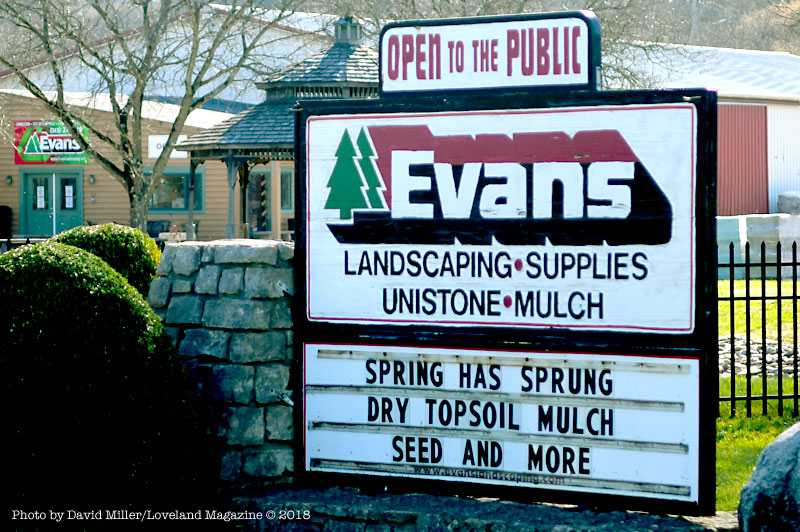
Evans Landscaping based in Newtown has a satellite location on East Kemper Road just outside of Loveland in Symmes Township.
In a decision issued yesterday, the United States Sixth Circuit Court of Appeals denied Evans’ motion to suppress, various evidentiary rulings made at trial, and a jury instruction given by the district court.
“We find no merit in the first two issues. Regarding the jury instruction, we conclude that
the district court erred by instructing the jury that it could find that a defendant knowingly and
voluntarily joined the conspiracy through deliberate ignorance. However, defendants did not preserve this issue for review below and cannot satisfy the demanding plain-error standard on appeal. Accordingly, we affirm the judgment of the district court.”
Defendant Evans Landscaping Incorporated is an Ohio corporation engaged in transportation, demolition, and excavation services. The company is controlled by its president, defendant Doug Evans. It is also wholly owned by a trust to which Doug Evans is the sole beneficiary.
Around 2006, Evans Landscaping began bidding on contracts for demolition work that
were offered by government entities including the State of Ohio and the City of Cincinnati. The
company found success in this niche and was awarded several contracts. However, the government entities began to include goals for “minority participation” as one criterion for evaluating bids for public works, and those goals later became mandatory bid components. In state contracts, minority inclusion was generally expressed as a percentage of the work that would be performed by a certified “EDGE” subcontractor that met Ohio’s definition of a Minority Business Entity (MBE).
The City of Cincinnati similarly considered whether a bid was made by a business designated
as a Small Business Enterprise (SBE) when administering municipal contracts. Evans Landscaping could not qualify for EDGE or SBE status. Therefore, to skirt local
and state inclusion requirements, Evans Landscaping employees sought a “go-to” minority
contractor to work with on public contracts. To that end, Doug Evans, Evans Landscaping’s Chief Financial Officer Maurice Patterson, and other Evans Landscaping managers held a meeting to discuss setting up a new company, which they called Ergon Site Construction.
At that meeting, Doug Evans told Patterson to “go ahead and set [Ergon] up” because “Evans Landscaping needed whatever help [it] could get in securing contracts.” Accordingly, Patterson, in coordination with Evans Landscaping’s in-house counsel, filed the necessary paperwork to bring Ergon Site Construction into being in 2008.
Ergon’s organizing documents established that it was ostensibly owned by an African
American IT consultant named Korey Jordan who had done work for Evans Landscaping. But
Jordan had no experience running a construction company and invested no funds of his own into Ergon’s operations. Jordan understood that Ergon “was set up between [him]self and Evans to go after government contracts” and that his role was to “handle all the paperwork” for Ergon. In exchange for his work, Jordan received $1,000 a month (later increased to $2,000), and Evans Landscaping “received basically the profits from the contracts that were secured with the participation of Ergon.”
Evans Landscaping and Jordan spent the next two years building up Ergon’s resume with
a few small jobs that were completed using Evans Landscaping resources. But in 2010, Jordan
was informed that “for Ergon to exist,” he had to secure EDGE certification from the State and
SBE certification from the City of Cincinnati. He applied first for SBE status from the City and
falsely represented that he wholly owned Ergon and personally handled the company’s finances.
The City approved Ergon’s application in 2011, and it began bidding as an SBE for contracts
offered by the City at Evans Landscaping’s direction. By 2014, the City had awarded
approximately 170 contracts to Ergon with a value of around $2,000,000. Ergon also applied for and received EDGE certification from the State of Ohio. Thereafter, Evans Landscaping began including Ergon as an EDGE subcontractor on its bids, but Ergon rarely, if ever, performed the work Evans Landscaping represented it to be doing.
The respective schemes began breaking down between 2013 and 2014 when local officials
grew suspicious of the relationship between Evans Landscaping and Ergon. The Appeal Court said in its ruling, “In truth, it did not require Holmesian sleuthing to deduce the relationship between the companies.” For instance, Ergon sometimes used heavy machinery that bore the Evans Landscaping logo. Ergon also stored and dispatched its two work trucks from an Evans Landscaping facility—even after Patterson suggested to Doug Evans that doing so was inconsistent with making Ergon an “independent” operation. The ruling continues, “Thus, it was only a matter of time before public officials became suspicious of the cozy
relationship between the companies, and they acted on their suspicion by auditing Ergon several times.”
The increased scrutiny, in turn, drew the attention of the FBI, which opened its own
investigation in 2013. As part of that investigation, FBI Special Agent Matthew DeBlauw
executed search warrants for several Evans Landscaping properties including the Symmes township location and additional search warrants for email accounts associated with Doug Evans and Korey Jordan.
In 2017, the FBI’s investigation bore fruit when a grand jury returned an indictment
charging Evans Landscaping Inc., Doug Evans, and Jim Bailey (the Vice President of Evans
Landscaping) with two counts of conspiracy to commit wire fraud in violation of 18 U.S.C. § 1349 (one each for the Cincinnati SBE and State of Ohio EDGE schemes), and three counts of wire fraud in violation of 18 U.S.C. § 1343. The government also obtained pre-indictment plea
agreements from Jordan, Patterson, and two other Evans Landscaping executives for their role in the Ergon scheme.
After four weeks of trial, the jury returned a guilty verdict on all counts. The court
sentenced Doug Evans to twenty-one months’ imprisonment and imposed $500,000 in fines upon Evans Landscaping, among other criminal penalties.
In the ruling the court found, “Thus, the evidence shows that Doug Evans—as someone without any documented ownership or managerial interest in Ergon—was personally involved in all aspects of the company’s operations. He was everywhere: approving Ergon’s logos and business cards, authorizing minor expense requests submitted by Ergon’s supposed owner, and directing where Ergon’s trucks be kept.”
The judges added, “Beyond the day-to-day, Doug Evans also made the big decisions. It was his word that put the scheme into action, and his direction that kept Ergon in business as time went on and the government contracts rolled in. In short, Doug Evans entered the conspiracy at its founding and furthered the purpose of the conspiratorial agreement in two respects: (1) by maintaining and bolstering Ergon’s façade to deceive government officials about the relationship between it and Evans Landscaping; and (2) by exercising complete control over Ergon’s operations to ensure that the fruits of the fraud benefitted Evans Landscaping.”



 Dr. Dewey Cornell, Professor at the University of Virginia and developer of the Comprehensive School Threat Assessment Guidelines, (CSTAG), will present on School Threat Assessment as a Safe Fair, and Effective Practice in Ohio Schools, which will describe how to implement best practices and resolve student threats, while maintaining a fair and equitable manner.
 Dr. Amanda Nickerson, Professor and Director of the Alberti Center for Bullying Abuse Prevention at the University at Buffalo, the State University of New York, will speak about Bullying Prevention and Intervention, including solutions, strategies, and resources to promote a safe school climate.
 Sgt. William Chapman, a member of the Newtown, Conn. police department, uses his experiences as a Sandy Hook first responder and School Resource Officer to help school districts and law enforcement to develop best practices and will present on Navigating the Unthinkable: A First Responder’s Perspective.
 olence Prevention Office at Nova Southeastern University, will discuss School Crisis and Liability, including issues involving obtaining parental consent, failure to notify parents, and legal consequences of inadequate threat assessments in schools.

 Affectionately called the “Loveland Bike Trail” it is the Little Miami State Park and it is 70 miles long with connections to well over 100 miles.