
By Ginger Christ and Rachel Dissell
Data analysis and Graphics by Cid Standifer
This article provided to Loveland Magazine was edited by David Miller and is by by Eye on Ohio, the nonprofit, nonpartisan Ohio Center for Journalism. Please join their free mailing list as this helps us provide more public service reporting.
In early March, just as Ohioans were learning about the first cases of novel coronavirus in the state, Anna Bondar’s grandfather fell at his Cleveland home.
Luckily, the 92-year old, who lives with dementia, wasn’t injured badly.
The tight-knit family started to discuss the possibility of a nursing home, though they had serious reservations.
Their tough choice was made even more difficult by mounting fears about the coronavirus. In nearly four months, COVID-19 has infected more than 31,191 people statewide and has proven particularly deadly for residents of long-term care facilities in Ohio.
Seventy percent of the reported deaths in Ohio due to COVID-19 complications have been in long-term care facilities, which is among the highest in the country.
Nationally the portion of COVID-19-related deaths in long-term care facilities has hovered just over 40%, though the amount of testing done in nursing homes varies significantly by state.
Every day, families like Bondar’s are making what can feel like an impossible choice – whether to send a loved one to a nursing home where they will receive around-the-clock specialized care but face a greater risk of contracting COVID-19, or to care for that person at home where risk of transmission is lower but providing care can be more challenging.
Even before the pandemic, sorting through the myriad of quality ratings and measures was daunting enough. Then, COVID-19 deaths started to soar.
Now, families and seniors agonize over what could be life or death choice using confusing numbers on infection “hotspots” and without the ability to visit nursing homes to observe how the staff cares for residents – which is the number one recommendation of most advocates.

State officials, including Dr. Amy Acton, the former director of the Department of Health, have emphasized that “congregate” settings like nursing homes are at highest risk of infection. Staff, who often travel between facilities, need to be in close contact with residents to provide care. And residents, who are primarily older and have multiple medical conditions, are more susceptible to COVID-19-related complications.
“All of this makes it high risk. At the same time, it’s really necessary for many patients to be there,” said Dr. Steven Schwartz, a geriatric physician at the Cleveland Clinic who travels to nursing homes as part of the Clinic’s Center for Connected Care.
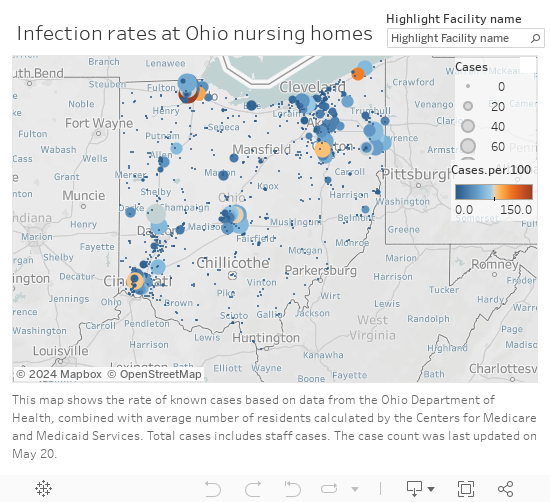
Ohio National Guardmembers will begin testing all staff members and any residents who likely were exposed to COVID-19 in the state’s nursing homes, Gov. Mike DeWine announced May 27. What are being called Congregate Care Unified Response Teams will focus on facilities where confirmed or assumed positive cases are reported in hopes of reducing the number of COVID-19 cases and deaths in Ohio’s nursing homes, which as of May 27 was 5,324 resident cases and more than 1,442 deaths.
Infection rates in Ohio Nursing Homes
Making an educated decision
Last month, state officials began to release the numbers of reported infections and deaths in long-term care facilities, which include nursing homes, rehabilitation centers, and assisted living centers.
But it’s unclear how much the numbers – which are reported weekly and are also tracked cumulatively – matter for families currently trying to choose a facility.
The state, on its coronavirus website, says the infection and death numbers shouldn’t replace a thoughtful conversation with a nursing facility about infection control practices and that “residents and family members should understand that the presence of COVID-19 at a facility is [in] no way an indicator of a facility that isn’t following proper procedures.”
Yet many in the health care industry say infection information should be considered, along with other factors, when deciding which site to choose.
“If you see a nursing home with a large outbreak, that’s something to worry about. If you see a nursing home with a small outbreak, I’m not sure it means anything but bad luck.”
“If you see a nursing home with a large outbreak, that’s something to worry about. If you see a nursing home with a small outbreak, I’m not sure it means anything but bad luck,” said Dr. James Campbell, department chair of geriatric medicine at MetroHealth.
The infection information provided by the state can be useful, for instance, if a family is choosing between two similar facilities, said Nate Cyrill, a Long Term Care Ombudsman for Cuyahoga, Geauga, Lake, Lorain and Medina counties.
Since information on the virus changes rapidly, most families still rely on the quality measures that were available before COVID-19, including existing state and federal online guides Cyril said.
One of the commonly-used ranking systems, maintained by the Centers for Medicare and Medicaid Services, assigns ratings – from 1 to 5 “stars” – to facilities based on performance on quality measures, staffing and inspections.
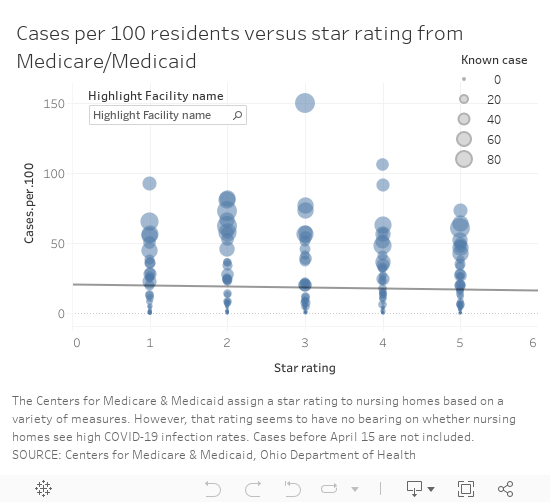
The number of “stars” Ohio’s nursing homes received, however, does not appear to have a correlation to the number of infections reported to the state, based on a comparison of the publicly available information. The analysis did not include assisted living facilities.
Cases vs. Star rating
“You want to look for a nursing home that’s four of five stars preferably but even that doesn’t tell you the whole story,” Steven Schwartz said.
There are numerous 1-star rated facilities that have reported few infections, like Whetstone Gardens and Care Center in Columbus, which has reported 9 cases or 8 per 100 residents.
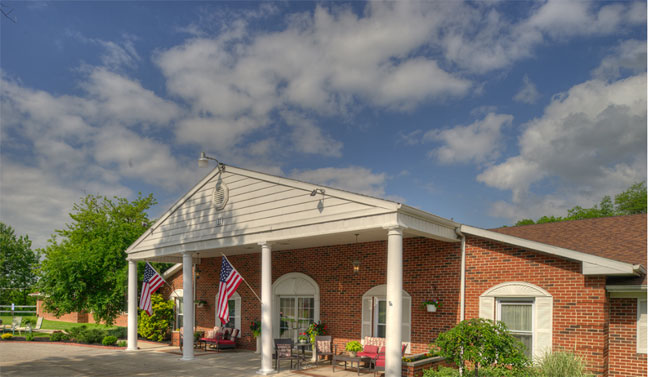
Salem North Healthcare Center in northern Columbiana County had 51 patients test positive for the virus as of May 20, as well as five staff, according to the state. It is rated a 5-star facility, the highest rating from CMS.
It’s one of four 5-star facilities with an infection rate over 50 cases per 100 residents, based on Medicare’s calculation of each facility’s average number of residents. (The rate does not include infections among staff because the number of staff in each facility was not available.)
Since April, the focus on high numbers of reported infections, often referred to as clusters, in long-term care facilities has intensified. In some cases, those numbers are a reflection of the level of testing, said Fred Stratmann, general counsel and chief compliance officer for CommuniCare Health Services. It doesn’t mean all of the residents with a positive test had symptoms of COVID-19. The state infection numbers also don’t show the residents who have recovered from the virus, he said.
CommuniCare, which operates close to 90 health care facilities in seven states has been proactive about testing, Stratmann said. When COVID-19 cases started to appear at the North Salem facility, the company enlisted the state’s “strike team” to proactively test all of the residents. It has since re-tested all of the residents who were initially negative and purchased 3,000 testing kits to supplement what the state could provide.
“We wanted to be certain of the extent of COVID in this center in order to be able to properly treat it and to fight back against it,” Stratmann said. The facility does that by isolating any COVID-19-postive patients in a separate unit with its own dedicated staff and by admitting new residents to an observation unit for 14 days to make sure they have no symptoms of infection, he said.
Restrictions on visits make choices harder
The most effective way to scout out a facility typically is to visit it, preferably unannounced, said Dr. James Campbell, department chair of geriatric medicine at MetroHealth. However, because visitors aren’t permitted in nursing homes right now, the next best thing is to ask detailed questions about care, any COVID-19 cases and infection control measures, he said.
Campbell also suggested turning to hospital staff, who work with nursing homes regularly, for advice. Social workers can place five people in a week, while most individuals face that decision, at most, only a few times in their lives, he said.
Cyrill said his agency can also provide information that can’t be found online for families trying to choose between facilities.
Cyrill said his agency can also provide information that can’t be found online for families trying to choose between facilities.
The agency, along with other similar independent agencies across the state, investigates complaints in long-term care, skilled nursing, group homes and rehabilitation facilities and can share what are called “verified complaints” that aren’t otherwise available publicly.
Most of the complaints investigated in relation to COVID-19, Cyrill said, have been related to visitation or the ability of families to get information on a loved one’s condition.
It’s been harder, though, for Cyrill and his colleagues to investigate complaints with COVID-19 restrictions in place.
It’s been harder, though, for Cyrill and his colleagues to investigate complaints with COVID-19 restrictions in place.
Under normal circumstances, an ombudsperson would go to the facility and talk to patients and could do so without announcing the visit in advance. Since visits are restricted for infection control reasons, they have to work through staff to speak to residents or to ask questions, which isn’t optimal. And they aren’t able to make direct observations.
“It makes our job much more challenging,” Cyrill said.
At the North Salem facility, which has had about a dozen new residents admitted or transfered from other facilities, the staff has given “virtual tours” over the phone to family members or prospective residents who were in the hospital, Stratmann said. The company also invested in technology that won’t replace face-to-face visits but enables more family contact and the ability and for staff to help keep residents’ spirits up by making videos of activities, like dancing and singing, to keep them connected with the local community.
In addition, Stratmann said they walk families through the infection control procedures and share techniques they have implemented to improve health outcomes for patients with COVID-19 including, when appropriate:
- Treating residents with anticoagulant medications to reduce the risk of blood clots and strokes, which has been a factor in some COVID-19-related fatalities.
- Using Amino Acid supplements, which emerging studies show may inhibit virus replication.
- Practicing “proning” or positioning residents, while awake, flat on their belly and chest to reduce the buildup of fluid in lung tissue and reduce the risk of Acute Respiratory Distress Syndrome, which has been associated with many COVID-19 fatalities.
The idea of putting their beloved grandfather in a nursing home was gut-wrenching
Choosing home
For Bondar’s family, the idea of putting their beloved grandfather in a nursing home was gut-wrenching, especially as visitation was curtailed to limit the virus’ spread. He speaks Russian, his native language, and would not have been able to communicate well with the staff caring for him.
Medicare Nursing Home Compare Search
“It felt like admitting him [to a facility] would be like saying goodbye,” Bondar said. “Like leaving him to die.”
Bondar’s family ultimately decided to care for her grandfather at home, in his Mayfield Heights senior highrise, where they could limit his exposure to the virus.
Before his fall, an aide visited for about eight hours a week. After the Ohio’s “stay at home” order was put in place March 23, Bondar and her mother were able to work from home and pitch in with care.
The advice of the Clinic’s Steven Schwartz led them to a hospice program, which helped the family find additional aides, including one who speaks Russian, as well as a hospital bed for safer sleeping and a wheelchair.
The home care route isn’t the easiest but Bondar said the family feels like they have more contact and control over the quality of care.
The home care route isn’t the easiest but Bondar said the family feels like they have more contact and control over the quality of care.
“We’ll do this as long as we can manage it,” Bondar said.
Anecdotally, it is a choice more families are making: the decision to use home care or even pull family members out of nursing homes out of fear or because they miss them and can’t visit, Steven Schwartz said.
“Sometimes it’s appropriate. But sometimes, even given everything, it may be safer to have your family member there to get stronger and get the necessary care,” said Steven Schwartz. “I would really try to balance the benefit of going to a nursing home versus the risk.”
Patients with dementia or Alzehimer’s may be unsafe going back home.
Patients with dementia or Alzehimer’s may be unsafe going back home, he said, and families may need to decide if a nursing home really is the safer place.
One of the first orders Ohio put in place to prevent the spread of COVID-19 was to halt in-person visitation in more than 900 nursing and long-term care facilities. The state is not yet ready to lift those restrictions and resume visits in those settings, Gov. Mike DeWine said, but on June 8 will start allowing outdoor visits at assisted living facilities care centers for individuals with disabilities.
“We are not to nursing homes yet and I know that causes anguish for a lot of people who are watching this but we’re trying to do this so that we don’t increase the COVID inside the nursing homes or the assisted living or the immediate care facilities,” DeWine said during a May 28 briefing.
Decisions made harder
Figuring out what kind of care might be best for a patient has become more challenging, too.
Previously, nurses and social workers would visit clients in their homes to assess how they functioned – whether they could independently bathe, cook and grocery shop, said Theresa Foster, a nurse and licensed social worker at Western Reserve Area Office on Aging.
They relied on conversations with clients and family and also observations of the environment in the home and possible risks, said Foster, who runs the agency’s resource center.
 Those assessments were used to determine whether a person could safely remain at home with community support or whether they needed facility-level care and what resources, whether subsidized or private, existed to pay for the services.
Now, those assessments are done by phone and can be done successfully, but it is more difficult, Foster said.
At UH’s hospitals, medical staff use a scoring system to determine the best place for a patient being discharged, said Dr. Sean Cannone, UH’s medical director for population health.
Patients are assessed on their ability to perform daily tasks and on their cognitive abilities.
“We’re trying as much as we can to get patients home if at all possible,” he said. The goal is to provide patients with resources so they can receive care in whichever setting they prefer.
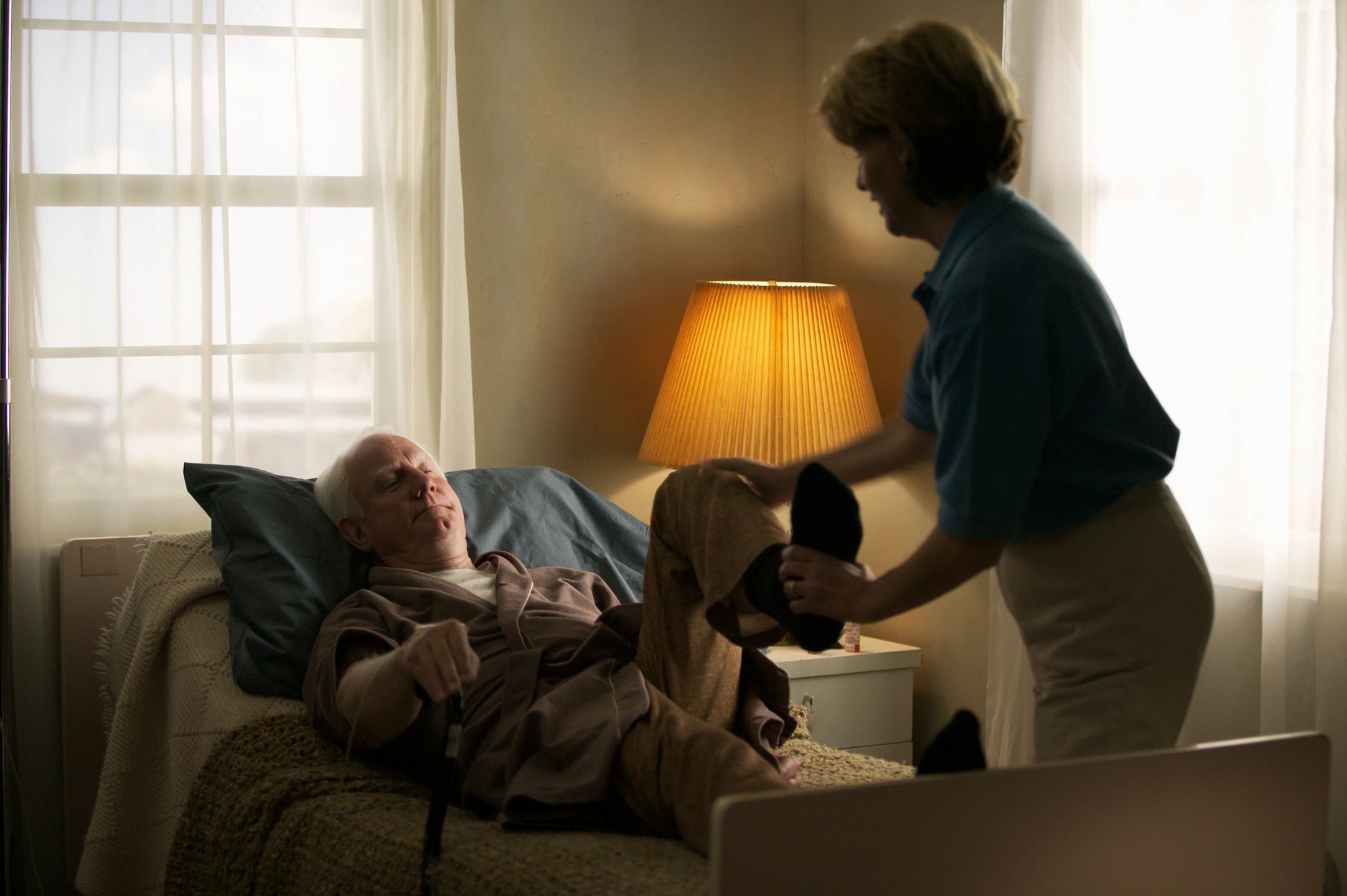
“We want to respond to what people really want for their own care,” Cannone said.
The shift started before COVID-19 cases surfaced but has accelerated as more families worry about potential exposure to the virus in congregate living situations.
As technology has advanced, the capabilities of what can be done in a patient’s home has also increased. In March, UH introduced a new patient management system, Massimo SafetyNet, for remote monitoring.
When patients are released from the emergency room or from a COVID-19 floor, providers now put a bluetooth sensor on their wrist — it looks like an Apple Watch — that streams data about a patient’s vitals to a central monitoring center, said Jonathan Sague, UH’s vice president of clinical operations. That way, providers can make sure a patient is safe at home.

Douglas Beach, chief executive officer at Western Reserve Area Office on Aging, has had firsthand experience weighing care decisions amid COVID-19 worries. His mother is rehabilitating in a nursing home after a six-week hospital stay related to a heart condition.
Not being able to visit her in the hospital or the facility has been hard, Beach said. He and his brother, who is a doctor, had to make all of the arrangements by phone, including figuring the best way to transport her that would have the lowest risk of exposure to the virus.
“Home and community-based services is what I do,” Beach said. Part of his mission is to advocate for the setting that allows for any person, whether they are older adults or live with a disability, to be as independent as possible .
But for his mother, a nursing facility was the right choice because she needed 24-hour care that her family could not provide at home.
Beach said nursing homes have had to deal with an unprecedented set of circumstances: a new virus, initial unknowns about transmission and populations at extremely high risk for complications.
Nursing homes will continue to play a vital role and will remain the best option for people who need more care than can be safely provided at home, Beach said.
For the more than 9,500 clients his agency serves in Cuyahoga, Geauga, Lake, Lorain and Medina counties, delivering care at home, with health aides, nurses and community and family supports, has proven a low risk. As of mid-May only 35 clients had tested positive for the virus, he said. That is roughly 0.3% of clients, though not all clients are tested.
Managing COVID-19
Cuyahoga County nursing homes have been paired with one of the area’s three largest hospital systems during the pandemic, Campbell said. The hospitals help the facilities both prepare for and respond to COVID-19 cases.
“The goal is when you have one patient in a nursing home with COVID is to make sure you don’t end up with 30 patients with COVID,” Campbell said.
UH developed what is being called a playbook for local nursing homes. The playbook gives facilities a plan for how to respond if there’s a COVID-19 outbreak on-site, said Sague, who works as a firefighter and medic on the weekends.
“It can be pretty startling and pretty alarming if they’re not ready for it,” Sague said.
The playbook gives guidelines on screening, triaging, determining exposure, testing and isolating those who test positive, as well as how to get personal protective equipment, increase staffing and to eventually reopen safely, Sague said.
Once a case is identified at a facility, what is known as an intercept team is dispatched — either virtually or in person — to help a nursing home handle it, he said.
Patrick Schwartz, director of strategic communications for LeadingAge Ohio, a long-term care trade association, said access to testing and safety equipment has been a consistent problem for Ohio’s nursing homes.

But in the past month or so, the state has made “a definite shift” and started prioritizing testing at nursing homes, which is helping, he said.
Patrick Schwartz said he hoped the expanded testing would enable facilities to test their entire population— of residents and staff — so they can better limit the spread of the virus.
Throughout Ohio, populations that have received mass testing — health care workers, first responders, those incarcerated and those in nursing homes — have had higher numbers of positive cases. Many people with COVID-19 are asymptomatic, so it is unknown if they have the virus until they are tested.
“Since this pandemic first reared its head, it was clear to long-term care providers that the front lines would be in long-term care,” Patrick Schwartz said. The populations at those congregate living facilities, many of whom are older and have multiple medical conditions, are among the most vulnerable for complications from COVID-19, he said.
In Cuyahoga County, and elsewhere, local health departments have deployed limited testing resources to nursing homes quickly in hopes of limiting spread in and between facilities and given guidance to homes about how to isolate patients and trace exposures between facilities to limit the spread of infection.
Cuyahoga County Health Commissioner Terry Allan said nursing homes try to guard against outbreaks but have varying degrees of resources. The assistance from the National Guard will allow more residents and staff at facilities in Northeast Ohio to be tested, he said.
Support for this project was provided by the Center for Community Solutions.
Questions to ask:
- How can family members stay in touch with residents while visiting is restricted?
- Does staff facilitate video visits? Is window visiting allowed?
- How often will the facility provide updates on a resident’s condition?
- How much COVID-19 testing is being done? Is the facility proactively testing patients or only those with symptoms?
- Are private rooms available?
- Do staffing ratios allow for residents to be taken outside?
- Are residents currently restricted to rooms?
- Are separate units and staffs used for COVID-19-positive patients and COVID-19-negative patients?
- How does the facility work to limit COVID-19 complications?
Additional Resources
6 Questions to Ask if Your Loved One Is in a Quarantined Facility
Senior Comfort Guide
Ohio Long Term Care Consumer Guide
Medicare Nursing Home Compare Search
Nursing home information
|
Overall RatingSelect to sort Ascending or Descending
|
Health inspectionsSelect to sort Ascending and Descending
|
StaffingSelect to sort Ascending and Descending
|
Quality measuresSelect to sort Ascending and Descending
|
DistanceSorted ascending, Select to sort descending
|
|---|---|---|---|---|---|
|
6405 SMALL HOUSE CIRCLE
LOVELAND, OH 45122 (513) 833-0472 |
2 out of 5 starsfootnote
Below Average |
2 out of 5 starsfootnote
Below Average |
4 out of 5 starsfootnote
Above Average |
1 out of 5 starsfootnote
Much Below Average |
1.4 Miles |
|
501 NORTH SECOND STREET
LOVELAND, OH 45140 (513) 605-6000 |
4 out of 5 starsfootnote
Above Average |
4 out of 5 starsfootnote
Above Average |
1 out of 5 starsfootnote
Much Below Average |
5 out of 5 starsfootnote
Much Above Average |
2.6 Miles |
|
409 WARDS CORNER ROAD
LOVELAND, OH 45140 (513) 630-1140 |
5 out of 5 starsfootnote
Much Above Average |
4 out of 5 starsfootnote
Above Average |
2 out of 5 starsfootnote
Below Average |
5 out of 5 starsfootnote
Much Above Average |
3.4 Miles |
|
5900 MEADOWCREEK DRIVE
MILFORD, OH 45150 (513) 248-1655 |
1 out of 5 starsfootnote
Much Below Average |
1 out of 5 starsfootnote
Much Below Average |
2 out of 5 starsfootnote
Below Average |
1 out of 5 starsfootnote
Much Below Average |
4.2 Miles |
|
934 STATE ROUTE 28
MILFORD, OH 45150 (513) 831-1770 |
2 out of 5 starsfootnote
Below Average |
2 out of 5 starsfootnote
Below Average |
2 out of 5 starsfootnote
Below Average |
4 out of 5 starsfootnote
Above Average |
4.2 Miles |
|
1650 STATE ROUTE 28
LOVELAND, OH 45140 (513) 722-0700 |
4 out of 5 starsfootnote
Above Average |
4 out of 5 starsfootnote
Above Average |
1 out of 5 starsfootnote
Much Below Average |
5 out of 5 starsfootnote
Much Above Average |
4.4 Miles |
|
9370 UNION CEMETERY ROAD
LOVELAND, OH 45140 (513) 677-4900 |
4 out of 5 starsfootnote
Above Average |
4 out of 5 starsfootnote
Above Average |
3 out of 5 starsfootnote
Average |
4 out of 5 starsfootnote
Above Average |
5.2 Miles |
|
8211 WELLER ROAD
CINCINNATI, OH 45242 (513) 489-2444 |
4 out of 5 starsfootnote
Above Average |
3 out of 5 starsfootnote
Average |
2 out of 5 starsfootnote
Below Average |
5 out of 5 starsfootnote
Much Above Average |
6.3 Miles |
|
201 MARGE SCHOTT WAY
MAINEVILLE, OH 45039 (513) 309-5650 |
3 out of 5 starsfootnote
Average |
2 out of 5 starsfootnote
Below Average |
4 out of 5 starsfootnote
Above Average |
3 out of 5 starsfootnote
Average |
6.7 Miles |
|
9840 MONTGOMERY ROAD
CINCINNATI, OH 45242 (513) 247-1301 |
5 out of 5 starsfootnote
Much Above Average |
5 out of 5 starsfootnote
Much Above Average |
5 out of 5 starsfootnote
Much Above Average |
5 out of 5 starsfootnote
Much Above Average |
6.8 Miles |
|
S.E.M. HAVEN HEALTH CARE CENTER 225 CLEVELAND AVENUE
MILFORD, OH 45150 (513) 248-1270 |
5 out of 5 starsfootnote
Much Above Average |
5 out of 5 starsfootnote
Much Above Average |
3 out of 5 starsfootnote
Average |
5 out of 5 starsfootnote
Much Above Average |
7.0 Miles |
|
7450 KELLER ROAD
CINCINNATI, OH 45243 (513) 793-2255 |
2 out of 5 starsfootnote
Below Average |
2 out of 5 starsfootnote
Below Average |
3 out of 5 starsfootnote
Average |
3 out of 5 starsfootnote
Average |
7.5 Miles |
|
4900 COOPER ROAD
CINCINNATI, OH 45242 (513) 793-3362 |
1 out of 5 starsfootnote
Much Below Average |
1 out of 5 starsfootnote
Much Below Average |
Much Below Average |
3 out of 5 starsfootnote
Average |
7.7 Miles |
|
7777 COOPER ROAD
CINCINNATI, OH 45242 (513) 793-5092 |
1 out of 5 starsfootnote
Much Below Average |
1 out of 5 starsfootnote
Much Below Average |
1 out of 5 starsfootnote
Much Below Average |
3 out of 5 starsfootnote
Average |
7.7 Miles |
|
SANCTUARY POINTE NURSING & REHABILITATION CENTER 11501 HAMILTON AVENUE
CINCINNATI, OH 45231 (513) 648-7000 |
3 out of 5 starsfootnote
Average |
2 out of 5 starsfootnote
Below Average |
3 out of 5 starsfootnote
Average |
5 out of 5 starsfootnote
Much Above Average |
7.7 Miles |
|
7100 DEARWESTER DRIVE
CINCINNATI, OH 45236 (513) 984-7274 |
5 out of 5 starsfootnote
Much Above Average |
3 out of 5 starsfootnote
Average |
4 out of 5 starsfootnote
Above Average |
5 out of 5 starsfootnote
Much Above Average |
8.1 Miles |
|
6940 STIEGLER LANE
CINCINNATI, OH 45243 (513) 561-6400 |
3 out of 5 starsfootnote
Average |
3 out of 5 starsfootnote
Average |
3 out of 5 starsfootnote
Average |
4 out of 5 starsfootnote
Above Average |
8.5 Miles |
|
3889 EAST GALBRAITH ROAD
CINCINNATI, OH 45236 (513) 793-5222 |
2 out of 5 starsfootnote
Below Average |
1 out of 5 starsfootnote
Much Below Average |
Much Below Average |
5 out of 5 starsfootnote
Much Above Average |
8.6 Miles |
|
3875 EAST GALBRAITH ROAD
CINCINNATI, OH 45236 (513) 793-5222 |
1 out of 5 starsfootnote
Much Below Average |
2 out of 5 starsfootnote
Below Average |
Much Below Average |
4 out of 5 starsfootnote
Above Average |
8.6 Miles |
|
5467 CEDAR VILLAGE DRIVE
MASON, OH 45040 (513) 754-3100 |
3 out of 5 starsfootnote
Average |
3 out of 5 starsfootnote
Average |
3 out of 5 starsfootnote
Average |
3 out of 5 starsfootnote
Average |