Tag: nuclear reactors

  • Bill that would expand fracking leases on state property is going to Ohio Gov. Mike DeWine

    Bill that would expand fracking leases on state property is going to Ohio Gov. Mike DeWine

    By:  Ohio Capital Journal

    A bill that would expand fracking leases in state public lands, parks, and wildlife areas from three years to five is going to Ohio Gov. Mike DeWine’s desk for his signature.

    Once he receives the bill, DeWine will have 10 days to sign the bill into law or veto it.

    State Reps. Dick Stein, R-Norwalk, and Patrick Brennan, D-Parma, introduced House Bill 308 last year and it originally defines nuclear energy as green energy in Ohio.

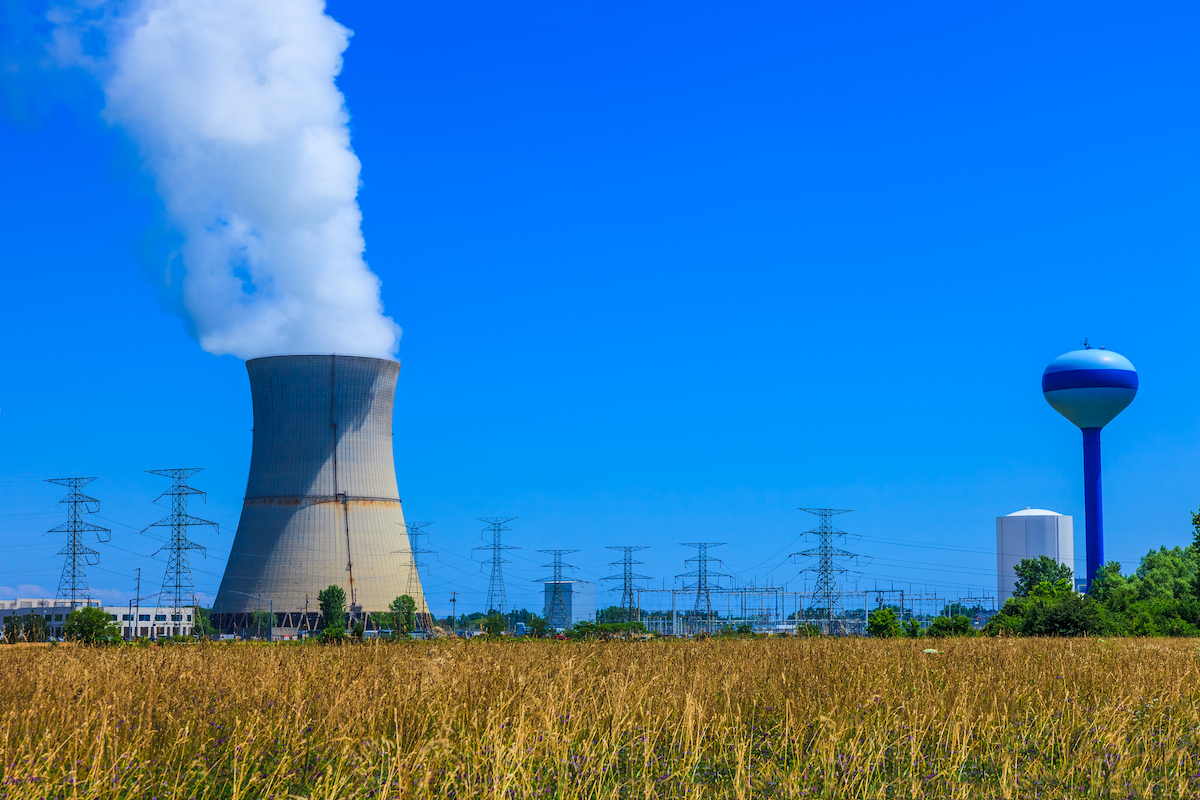
    Ohio has two nuclear reactors — Davis–Besse Nuclear Power Station in Northwest Ohio and the Perry Nuclear Power Plant in Northeast Ohio.

    The bill passed the Ohio House this summer, with ten Democrats voting against it.

    The Ohio Senate added a few amendments to the bill — including one that increases a standard lease for fracking under state parks to five years. The current law is three years.

    “We need to continue to frack, and allowing the extension of that is also important,” Sen. Andrew Brenner, R-Delaware, said during last week’s Senate session.

    State Sen. Kent Smith, D-Euclid, had many issues with the bill.

    “This is perhaps the least popular thing that we will do in the entire General Assembly,” Smith said. “Why are we extending the lease in this amendment again without public consideration?”

    The U.S. Department of Energy defines renewable energy as coming from “unlimited, naturally replenished resources, such as the sun, tides, and wind.”

    “This bill would designate nuclear energy as green energy, which is kind of mystifying to me, because it’s clearly not,” Smith said. “It has so much radioactive waste, it’s clearly not clean. It’s certainly not renewable.”

    H.B. 308 passed last week in the Ohio Senate with a 24-6 vote. Sen. Catherine Ingram was the only Democrat to vote for the bill.

    House concurrence

    The Ohio House voted 65-26 to concur with the changes made to the bill later that same day. Brennan voted against concurrence on his own bill, saying he hoped it would play out in conference committee.

    “I remain steadfast in favor of nuclear expansion in the state of Ohio,” he said. “… I am not anti-fracking, but I believe our state parks are sacrosanct,” he said. “I think when we created our state parks, we created a contract with the people that we would leave our state parks alone. I’m just a purist when it comes to our state parks.”

    Only three Democrats voted for concurrence — state Reps. Richard Dell’Aquila, Joe Miller, and Elgin Rogers, Jr.

    GET THE MORNING HEADLINES.


    State Rep. Don Jones, R-Freeport, lives where fracking takes place in eastern Ohio and said the fracking process has been refined over the years.

    “You will never know where fracking has occurred,” he said. “We’re not going to damage our state parks. We’re not going to hurt our state parks.”

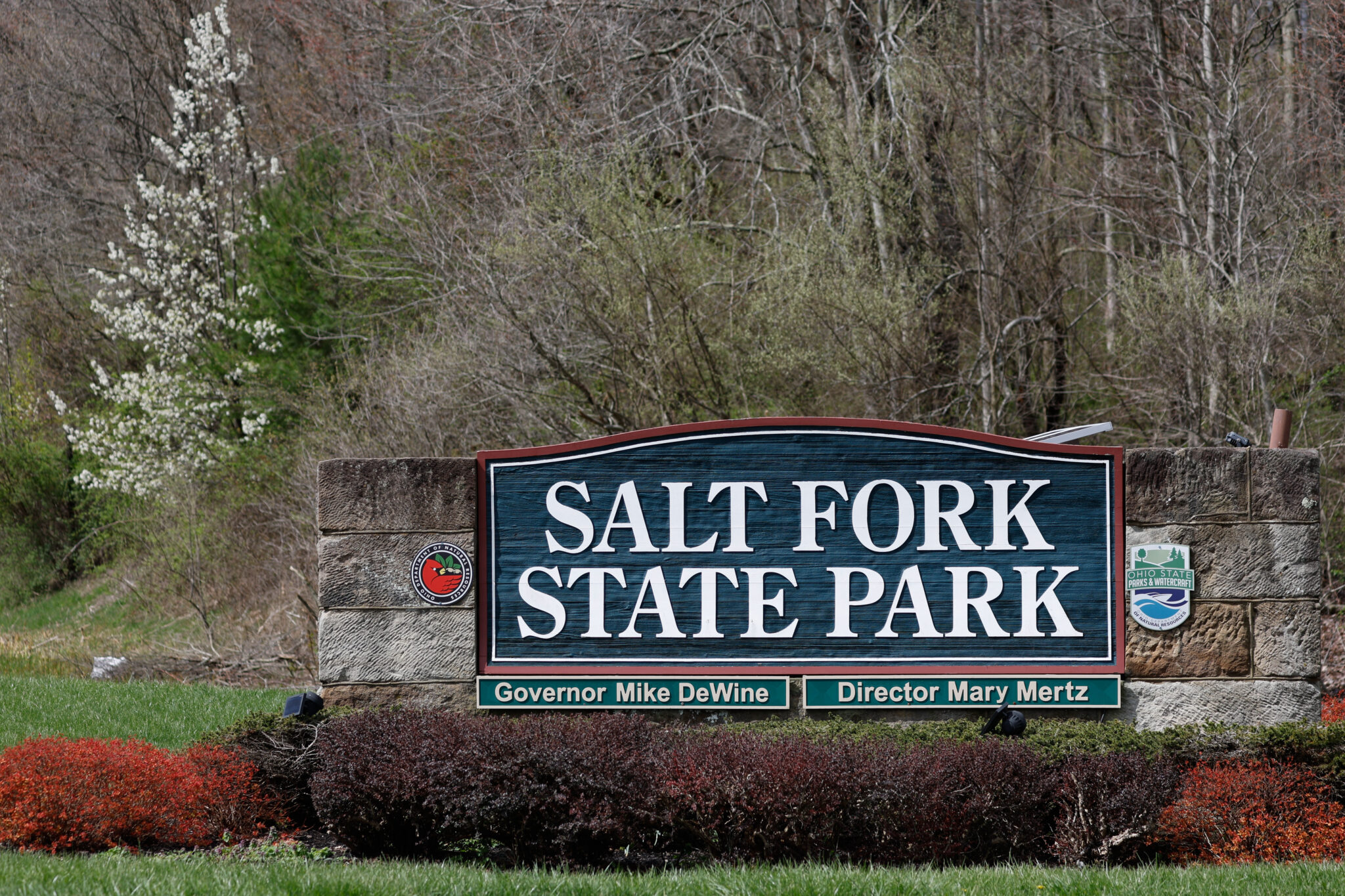
    The Ohio Oil and Gas Land Management Commission has selected various bidders to frack Salt Fork State Park, Valley Run Wildlife Area and Zepernick Wildlife Area. The vote on this bill comes days after OGLMC selected an Oklahoma-based company to lease about 30 acres of land in Egypt Valley in Belmont County for fracking.

    “This expansion of fracking is going to industrialize our beautiful parks and transform them into places people avoid, not enjoy,” Cathy Cowan Becker, steering committee member of Save Ohio Parks, said about H.B. 308.

    Former Ohio Gov. John Kasich signed a law allowing drilling companies to frack in state parks in 2011. Potential drillers need to get permission from the Oil and Gas Commission, but Kasich never appointed anyone to the committee.

    A fracking amendment was added to a bill during the last lame duck two years that passed and Gov. Mike DeWine signed it into law in January 2023. The law requires the Ohio Department of Natural Resources to allow fracking for natural gas in Ohio’s public land and state parks.

    “Ohio legislators have once again sold out our state parks and public lands to the oil and gas industry through an amendment to an unrelated bill during the lame duck session, with no notice or chance for public testimony,” Becker said.

    Follow OCJ Reporter Megan Henry on Bluesky.


    Megan Henry
    Megan Henry

    Megan Henry is a reporter for the Ohio Capital Journal and has spent the past five years reporting in Ohio on various topics including education, healthcare, business and crime. She previously worked at The Columbus Dispatch, part of the USA Today Network.

    Ohio Capital Journal is part of States Newsroom, the nation’s largest state-focused nonprofit news organization.

    MORE FROM AUTHOR

  • Never needed? Senate president predicts little opposition to nuclear bailout repeal

    Never needed? Senate president predicts little opposition to nuclear bailout repeal

    By Marty Schladen and Ohio Capital Journal

    A billion-dollar nuclear subsidy was the subject of an intense fight in 2019 and great controversy since. But the president of the Ohio Senate this week predicted that a repeal will make it through the House, Senate and that Gov. Mike DeWine will sign it.

    The reason: The company that owns the nuclear reactors no longer wants the money, he said. And that raises serious questions about whether the subsidies were needed in the first place.

    The subsidy was the product of House Bill 6. The legislation was passed in 2019 after a nasty fight which led to federal criminal charges against then-House Speaker Larry Householder, four associates and a dark-money group. 

    Prosecutors said $61 million from Akron-based First Energy and associated groups was used in the corrupt effort to pass the bailout. Two of Householder’s associates and the dark money group have pleaded guilty, FirstEnergy’s CEO was fired and Gov. Mike DeWine’s appointee to chair the Public Utility Commission of Ohio has resigned as part of the scandal. 

    Despite intense calls for a full repeal of HB 6, it remains in place — although a Franklin County Judge has temporarily stopped collection of the money by the owner of the nuclear plants, FirstEnergy successor Energy Harbor.

    DeWine and others have said they want a repeal, but they want to continue to subsidize the Northern Ohio nuclear plants for environmental reasons.

    “We were for nuclear power,” he said Tuesday, referring to his initial support for HB 6. “Nuclear power was the only way in this state, today, that we can have very much non-carbon production. It’s the only way we can do it.”

    But early this month, Sens. Jerry C. Cirino, R-Kirtland, and Michael Rulli, R-Salem, introduced legislation, Senate Bill 44, to get rid of the subsidies. On Wednesday it received a hearing by the Senate Energy and Public Utilities Committee.

    Despite the governor’s statements, Senate President Matt Huffman, R-Lima, said he expects the repeal legislation to become law.  

    “I think that provision will likely get passed out of the Senate and I think it will pass out of the House and get signed by the governor,” Huffman told the governing board of the Ohio Consumers’ Counsel, the state’s official utility watchdog. “When I say the House and the governor, I’m not speaking for them, nor have I spoken to them about this. But if a large company that got a subsidy in a dubious way… says ‘We don’t want it,’ that seems to me to be a pretty easy call.”

    Energy Harbor, the owner of the plants, didn’t respond to requests for comment on Wednesday. But Huffman was apparently referring to a December 2019 ruling by the Federal Energy Regulatory Commission and Energy Harbor’s response to it. 

    The ruling said, in essence, that the company that would become Energy Harbor would have to cut its prices if it was going to sell its subsidized nuclear energy onto the massive grid that serves all or part of 13 states, including Ohio. 

    It would “threaten the competitiveness” of the long-term, or “capacity,” marketplace if companies like Energy Harbor could sell subsidized power on the same basis as power that wasn’t subsidized. So Energy Harbor and the others have to discount it according to a formula, the ruling said.

    Recent developments appear to be a sharp reversal from 2019.

    As proponents pushed HB 6, they threatened that closure of the Ohio nuclear plants was imminent if they didn’t get a bailout — and quickly. But Huffman’s statements on Tuesday indicate that Energy Harbor has no plans to shutter the plants even now that it isn’t getting the money. 

    “I don’t want the nuclear power plants to close,” he said. “However, it’s been made clear to me that the plants will not close if this subsidy is removed. In fact, they’re better off because of machinations at another level. In fact, these subsidies will likely harm these power plants.”

    There’s other evidence that Energy Harbor’s pre-bankruptcy predecessor, FirstEnergy Solutions, might not have been as broke as it claimed in 2019. 

    Shortly after emerging from bankruptcy in early 2020, it did an $800 million stock buyback. Such buybacks typically raise stock values, in this case enriching shareholders just months after pleading poverty and winning a $1 billion bailout from Ohio ratepayers.

    The federal ruling also raises questions about whether it was wise even to start the bailout fight, which has caused so much damage in Ohio. On June 29, 2018, more than a year before DeWine signed HB 6 into law, FERC issued a ruling strongly foreshadowing what it later did: effectively erase the subsidies bailout supporters had gained if they wanted to sell power into the long-term market.