

Tag: OCJ

  • Ohio politicians used redistricting for gerrymandered horse-trading. Kick them out of the process

    Ohio politicians used redistricting for gerrymandered horse-trading. Kick them out of the process

    COMMENTARY

    by David DeWitt

    It should be abundantly clear to all fair-minded Ohioans at this point that politicians have no business being involved in the redistricting process after lawmakers used the latest round of Ohio House and Senate district mapmaking to strike a bipartisan deal that amounts to little more than gerrymandered horse-trading.

    Fittingly under the cover of darkness late Tuesday night, Ohio Republican and Democratic politicians conducted a shrewd, self-serving negotiation to once again gerrymander Ohio’s Statehouse maps in behalf of their own short-term political power interests, instead of all working earnestly toward fair, representative maps.

    Ohio Democratic commissioners had a choice of whether to get whatever they could for now and hope voters pass reform, or to get raked by Republicans on the commission with worse maps than we have now, but this time likely destined to be rubber-stamped by a partisan right-wing Ohio Supreme Court. They chose the former.

    The Ohio Redistricting Commission’s bipartisan agreement among politicians show a Republican advantage of 61 to 38 in the Ohio House under the new map, with eight competitive Democratic toss-up seats and three competitive GOP toss-ups.

    In the Ohio Senate, the new map shows a 23 to 10 Republican advantage, with three competitive Republican toss-up seats and one competitive Democratic toss-up seat.

    Compare this to Ohio’s current unconstitutionally gerrymandered maps forced upon voters in 2022. Before the 2022 Election, the current gerrymandered districts showed a Republican advantage in 56 House seats. In the Ohio House, all 19 competitive districts under the current maps were Democratic, with zero competitive Republican districts.

    That meant that Democrats had to spend money and resources in 19 House districts and win every single one in order to maximize their House seats. Republicans didn’t have to “defend” a single seat, and could focus all of their money and resources on “pick-ups” — taking seats that lean Democratic on-paper.

    The Republicans’ unconstitutionally partisan mapmaking paid off. The 2022 Election saw Ohio Republicans winning 67 state House seats.

    In the Ohio Senate under the current maps, Republicans before the election looked to hold an edge in 18 Senate seats, and there were seven competitive toss-ups. Republicans ended up winning 26 Senate seats last November, while Democrats won seven seats total.

    So what are we looking at here with Tuesday night’s agreement among the bipartisan politicians?

    Democrats don’t have to spend the money and resources to defend nearly as many seats in the Ohio House. Instead of defending 19 seats, they will be defending eight seats and targeting three GOP seats. Essentially, their political resource management and allocation will be easier. Same thing in the Senate. They will be able to focus their resources on attempting to defend one seat and to pick up three GOP seats.

    Best case scenario for Democrats under the new maps: They pick-up six Senate seats total over their current number of seven, for a 20-13 Republican chamber; and/or they pick up nine seats total in the Ohio House over their current 32 seats by protecting their eight competitive seats and winning three GOP-leaning targets, for a 58-41 Republican chamber.

    That best case scenario for Democrats would break the GOP’s supermajorities; however, if Democrats were to not win the competitive Republican-leaning seats, the GOP would retain supermajorities of 61-38 in the Ohio House and 23-10 in the Ohio Senate.

    The best case scenario for Republicans would be not only to hold on to their supermajorities, but to win as many competitive Democratic-leaning districts as possible. If they were to defend their three competitive seats and win six out of the eight Dem-leaning competitive districts in the House, for instance, they would retain their current 67-32 advantage. Keep in mind that in 2022, they won 11 Dem-leaning competitive House seats.

    So by striking this deal on more gerrymandered maps, Democratic politicians gave themselves an easier time with money and resource allocation in 2024 and a very difficult but still possible shot to take away GOP supermajorities, and the GOP gave themselves a good chance to retain their supermajorities in both chambers while still having the opportunity to possibly expand them even further than the maps suggest now on-paper.

    But there’s more.

    Beyond this gerrymandered horse-trading on the Ohio House and Senate numbers, Democrats are indicating they are putting faith in the idea that the impact of gerrymandering lessens over time as the data used to draw the maps become outdated — so this deal prevents the GOP from both punishing Democrats severely right now, and from coming back for another redraw with fresh data to more efficiently gerrymander the maps again. Democrats also advocated Tuesday night for 2024 anti-gerrymandering reform, indicating they see this deal as a stop-gap measure before real reforms can take place thanks to voters.

    Republicans meanwhile have obtained a strong political cudgel to wield against that very effort to replace the Ohio Redistricting Commission made up of politicians with an Ohio Citizens Redistricting Commission that kicks the politicians out of the process. Republicans will say that the process worked, they obtained bipartisan agreement just as voters in 2015 intended with redistricting reform, that these maps are not gerrymandered, and in 2024, they’ll say something along the lines of, “Far-left special interests want to hijack the constitution and put power in the hands of unelected bureaucrats.”

    This process did not work.

    Redistricting in Ohio has been a two-year travesty with an ignominious conclusion for everyone involved, Republican and Democratic politicians alike.

    The prevailing motivation of every politician Tuesday night was shrewd political self-interest, not sacred obligation and duty to the public.

    No matter what anybody thinks of the advantages or disadvantages of the deal that was struck, it’s clear that these incentives for political horse-trading must be removed.

    The only incentive for mapmakers should be fair and representative maps that evenly maximize competitiveness.

    The way to remove these bad incentives to make these kind of damned-if-you-do, damned-if-you-don’t deals is to kick all of these politicians out of the process.

    Whether it’s partisan or bipartisan, gerrymandering must end. On Tuesday night in Ohio, it did not.


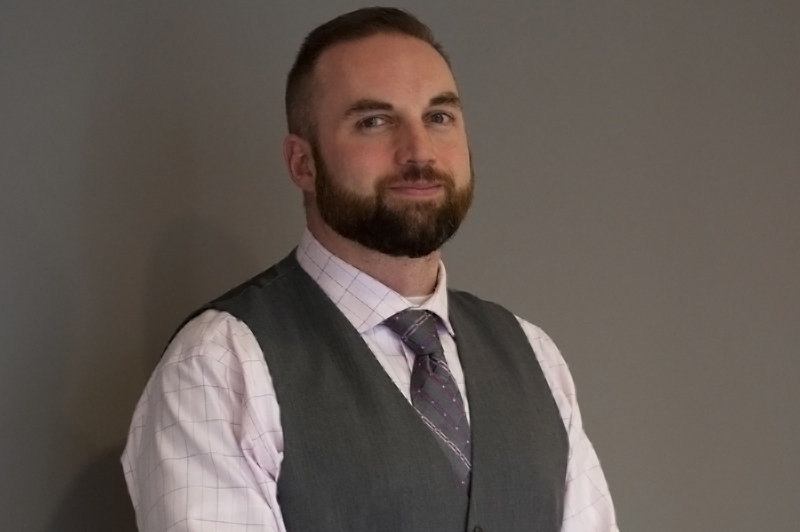
    David DeWitt
    DAVID DEWITT

    Ohio Capital Journal Editor-in-Chief and Columnist David DeWitt has been covering government, politics, and policy in Ohio since 2007, including education, health care, crime and courts, poverty, state and local government, business, labor, energy, environment, and social issues. He has worked for the National Journal, The New York Observer, The Athens NEWS, and Plunderbund.com. He holds a bachelor’s degree from Ohio University’s E.W. Scripps School of Journalism and is a board member of the E.W. Scripps Society of Alumni and Friends. He can be found on Twitter @DC_DeWitt

    MORE FROM AUTHOR

  • New doctors want abortion training, struggle under regulations

    New doctors want abortion training, struggle under regulations

    BY: SUSAN TEBBEN – Ohio Capital Journal

    Students and in-training physicians say they are looking to other states for medical abortion education they need to do their jobs and finish their degrees. Medical schools, meanwhile, are doing what they can to link the students with that training.

    Shreekari Tadepalli began her final year in medical school at Ohio State thinking of how she would specialize, as most medical student do in their last year.

    “I knew I wanted to provide reproductive health care,” Tadepalli said.

    A Michigan native, she came to Ohio State specifically to go to medical school. She plans to stay, because she wants to fight for her patients as an OB/GYN, and advocate for abortion care as a normal part of medical care.

    “To me, medicine is like the ultimate form of advocacy, and I think physicians should be advocates for care,” Tadepalli told the OCJ.

    When the pandemic hit, Tadepalli headed back home to live with her parents, but she looked for ways to help. She heard a private clinic in Detroit needed staff, and she had the skills she needed to be of service there. While helping staff the clinic, she talked to the OB/GYNs about why they chose their profession, helping bolster her desire to become one herself.

    Tadepalli was upset, though unsurprised, when the U.S. Supreme Court overturned Roe v. Wade, sending the issue of abortion legality back to the states. Hours after the decision was made, she watched Ohio move forward with an abortion ban after six-weeks gestation, which had previously been tied up in court for years.

    “I think there was a certain amount of frustration that we’ve allowed ourselves to get to this point, when every poll says a majority of Americans support (legalized abortion),” Tadepalli said.

    June poll from Suffolk University and the Cincinnati Enquirer showed 53% of Ohio voters supported abortion rights, and the Pew Research Center has consistently shown majorities of Ohioans as supporters of legal abortion.

    In August, the ACLU announced their own survey of Ohio voters, showing an 82% support rate for abortion legality in some form.

    A new set of complications arose for Tadepalli, in that she now had to figure out how to get training in abortion procedures and services after six-weeks, something that’s growing hard to find in a state where one clinic has already announced its closure due to regulations surrounding it.

    “One of the hardest things right now is because so few of these laws are based in medical practice,” Tadepalli said, “it has implications beyond the level of elective abortions.”

     COLUMBUS, OH — AUGUST 31: The Ohio State University College of Medicine Richard L. Meiling Hall, August 31, 2022, on the campus of Ohio State University in Columbus, Ohio. (Photo by Graham Stokes for the Ohio Capital Journal / Republish photo only with original story)

    Ohio State said in a statement to the OCJ that they are working with professional organizations and medical groups as changes to training are reviewed nationwide.

    “We intend to continue offering the full spectrum of training in reproductive care for those residents who do not opt out of the requirement,” Mary Fiorino, spokesperson for the Ohio State University Wexner Medical Center. “In order to ensure we are meeting national accreditation standards on this topic, we are exploring ways for our trainees to do that outside of the state of Ohio.”

    Another of Ohio’s medical schools, Ohio University’s Heritage College of Osteopathic Medicine, also said they are keeping up with recommendations from medical groups and monitoring judicial and legislative changes in the state, but they still plan to train their students.

    “We believe it is important to continue to offer training related to the full spectrum of women’s health care so that students have the knowledge and skills they need to practice medicine and provide the best medical care possible in any community they choose to live and work,” Lisa Forster,  HCOM’s chief communication officer, said in a statement.

    Tadepalli also has residencies to consider, and while she wants to stay in Ohio, she said the questions she’s asking medical schools have changed somewhat.

    “If you’re in a state like Ohio, what is your guarantee that I can be the full physician that I should be?”

    Medical resident Alexandra Stiles is wondering the same thing as she reaches her last year of training before becoming a OB/GYN generalist. 

    A Virginia native who was a first-generation college student, Stiles said she wants to be able to develop medical relationships with her patients, from their first child to any other reproductive needs on down the line.

    That includes abortion care, which she emphasizes means more than just pregnancy termination, but the fetal anomalies that are fatal, or when a pregnant person’s water breaks, meaning the fetus won’t be able to make it to term.

    “People don’t really see that side of things,” Stiles said. “That in putting up that barrier to access, you’re not just preventing a woman from getting an abortion, you’re preventing us from caring for those people.”

    The fact that legislation is being used to regulate medical care, specifically for those that can become pregnant, makes Stiles want to “use my advocacy hat” for her patients, even if it means looking to other states and nonprofits for help.

    She worried recruitment to Ohio’s medical schools will be reduced without the ability to learn certain procedures, which would be a shame because she came to Ohio specifically because of the reputation Ohio State’s medical school had.

    In the future, Stiles hopes those making laws and deciding on the health care landscape in the state defer to the experts, the patients, and the doctors who work with them.

    “I’m not going to NASA and telling them how to fly their astronauts, and NASA wouldn’t come to me and tell me how to perform a hysterectomy,” Stiles said.

    Tadepalli sees politics as a “zero-sum game,” but advocacy for her patients as the way to effect change in their lives.

    “One of the things that helps me stay sane is reminding myself that most Americans are not behind a total ban on all abortions,” Tadepalli said. “I think it reminds me that there is some common ground on such a charged issue.”

    Follow OCJ Reporter Susan Tebben on Twitter.