Tag: ODE

  • Ohio public education supporters look to 2024, lawsuit to hold private voucher system accountable

    Ohio public education supporters look to 2024, lawsuit to hold private voucher system accountable

    Getty Images

    BY:  Ohio Capital Journal

    While marijuana legislation and other bills still sit on the horizon in the second year of this term’s General Assembly, education policy can always be counted on to be a part of the discussion. 2024 should be no different.

    Ohio’s private school voucher program has been a source of strong debate among legislators and education advocates of all kinds since the 1990s, when the program began as a way to allow lower-income students to access private schools, proposed as an effort to improve education outcomes in poor-performing public school districts.

    But as public school advocates still hope to see full funding of the Fair School Funding Plan for districts across the state, they saw eye-popping increases in private school funding through vouchers that worry them almost as much as the foot-dragging that they believe has occurred when talking of public school funding.

    “You should be funding the public schools,” said Stephen Dyer, former state representative and former chair of the Ohio House Primary and Secondary Education subcommittee for the House Finance Committee. “If you want to fund the private schools, fund the private schools, but there’s no reason you can’t do both.”

    Private school voucher expansion by the numbers

    The Ohio Department of Education reported 23,272 participants in the voucher expansion for the 2023 fiscal year, up from the 20,702 reported in 2022 and even more from the year prior, when 17,155 students participated in the state-subsidized program.

    In 2021, 85% of the voucher expansion participants were below 200% of the federal poverty line, and 93% of 2022 participants were below 250% of the poverty line.

    In 2023, language on the ODE data changed to “low-income qualified” to “not low-income qualified,” removing the breakdown of federal poverty percentages. In this year’s report, 67% of participants were “low-income qualified” and 32% were “not low-income qualified.”

    With the most recent state budget, passed this summer, a GOP-led effort to expand eligibility for private school vouchers led to a ballooning of the poverty level allowed for the voucher program to 450% of the poverty line, or a household income of $135,000 or less for a family of four.

    Those receiving a scholarship can move to a private school with $6,165 in state funding for K-8 students, and $8,407 for high schoolers.

    Families with incomes above the $135,000 threshold can still be eligible for at least 10% of the maximum scholarship, even with a higher income, Senate President Matt Huffman’s office said when the budget was passed.

    Public school advocates took issue with the expansion, saying the Fair School Funding Plan, seeking to support public school districts based on their individual needs, should be the focus, considering the vast majority of students in Ohio attend traditional public schools.

    ‘A perversion of the idea behind a voucher’

    Since the most recent voucher participation numbers were released, Dyer did his own analysis of the voucher program, finding “a very different goal” compared to when it began.

    “It’s now going to wealthier, white families to subsidize the decisions they’d already made to send their kids to private schools,” Dyer told the OCJ.

    In an analysis he posted to his blog, Dyer said ODE data showed nearly nine in 10 new applications to the voucher expansion went to white students, and more new vouchers for high schoolers went to families making more than $150,000 annually than went to families making less.

    Dyer also makes an argument that has been made before by those opposing the voucher expansion: increasing private school voucher program causes “resegregation” in the public schools, with the number of white students who are leaving for private schools, vouchers in hand.

    “It’s frankly a perversion of the idea behind a voucher, which was sold as allowing poor students, students of color, students who haven’t traditionally had access to private schools, to have access,” Dyer said in an OCJ interview.

    The most recent data on Ohio’s EdChoice voucher expansion showed 66.4% of participants are white, with the Black population of voucher recipients coming in at 15%, the second highest number reported.

    In 2022, 65.9% of expansion vouchers went to white students, up from 64.1% in 2021.

    A vast majority – 9 in 10 – vouchers come from just 31 school districts, according to Dyer.

    “Those districts’ racial makeup is, on average, 21% white,” he writes in his analysis. “Yet 46% of EdChoice voucher recipients are white – more than double the percentage of white students than attend the 31 public school districts where nine in 10 voucher students would otherwise attend.”

    At the very least as the voucher program continues in Ohio, Dyer hopes a plan to audit the program is forthcoming for the billions of dollars spent to subsidize it. He pointed to an audit of the defunct Electronic Classroom of Tomorrow (ECOT), which exposed false enrollment numbers and led to court battles to claw back more than $60 million in state funding from the online charter school.

    “It’s all of our dollars, so we have a right to say what happens with all of our dollars, and we certainly have a right to audit where our dollars are going,” Dyer said.

    The lawsuit

    With a Republican supermajority in both chambers of the legislature, support of private school vouchers and “school choice” seems assured at least for the foreseeable future, so public school advocates are looking to other avenues to make change.

    Another court battle is still simmering in the Franklin County Court of Common Pleas, a lawsuit that seeks to tamp down on the voucher program in favor of the constitutional obligations the legislature has to properly fund public schools.

    The lawsuit was filed in Jan. 2022, accusing the state of Ohio of improperly and unequally funding private schools, specifically targeting the growth of the voucher program as a drain on public school resources.

    “The legislature has only moved to further expand private school vouchers in Ohio,” the leading group in the lawsuit, Vouchers Hurt Ohio, wrote in a recent statement on the program. “We do not stand a chance of changing their minds or direction so we are forced to sue to get a fair hearing in a court of law where the Ohio Constitution is respected and means something.”

    Amidst the nearly two years the case has been ongoing, time extensions have been granted and Ohio Senate President Matt Huffman has asked to be excused from a deposition due to “legislative privilege,” also arguing the testimony sought from Huffman “is neither legally relevant nor necessary.”

    Franklin County Judge Jaiza Page has not ruled on Huffman’s subpoena, but allowed subpoenas for 42 “non-party private schools” in Ohio as part of the case, selected, according to the lawsuit filers “as a representative sample based on their location, demographics, percent of EdChoice students enrolled and total EdChoice funds received.”

    Parties standing against the public school advocates in the case said the passage of the state budget, including an increase in funding for the Fair School Funding Plan along with the voucher expansion should allow for the dismissal of their complaints on funding of public schools.

    “And while plaintiffs presumably still take issue with the new, amendment program, that does not change the fact that their current complaint challenges legislation that ‘is no longer the operative legislation governing EdChoice,” attorneys arguing for dismissal stated.

    A deadline for documents and evidence in the case was Nov. 30, and the court has requested “expert reports” from both sides by Feb. 23 of next year, with a trial date set for Nov. 4, 2024.



    Susan Tebben
    SUSAN TEBBEN

    Susan Tebben is an award-winning journalist with a decade of experience covering Ohio news, including courts and crime, Appalachian social issues, government, education, diversity and culture. She has worked for The Newark Advocate, The Glasgow (KY) Daily Times, The Athens Messenger, and WOUB Public Media. She has also had work featured on National Public Radio.

    MORE FROM AUTHOR

  • Public school funding set for court battle in 2023

    Public school funding set for court battle in 2023

    BY: SUSAN TEBBEN – Ohio Capital Journal

    While the trial of former Ohio House speaker Larry Householder will hold the attention of many this year, the battle over public school funding will also be subject to court drama.

    Public school districts, some individual students in public schools, and the Ohio Coalition for Equity and Adequacy of School Funding, spent the last year fighting to keep a lawsuit on the books in Franklin County Common Pleas Court. That lawsuit aims a direct hit at Ohio’s EdChoice private school voucher program, which plaintiffs say takes away needed funding from the public schools attended by a vast majority of Ohio students.

    The private school voucher system goes against the Ohio Constitution’s demand for a “thorough and efficient system of common schools throughout the state,” the schools and their advocates say.

    Late in 2022, Franklin County Common Pleas Judge Jaiza Page denied attempts by the Ohio Department of Education, the state Board of Education, and a group of “Catholic school family intervenors” and other individuals, hoping to quash the lawsuit.

    “Plaintiffs have adequately pleaded that the difference in funding levels has resulted in students in the public-school districts being denied adequate facilities and learning supports,” Page wrote in denying the private school advocates’ request to end the case.

    The ODE and the state board argued the public school group didn’t have standing to sue, but Page rejected that argument as well, saying the problem in the case is “unique to students within the districts and is not experienced by the general public,” and could be rectified by the state.

    EdChoice, first implemented in 2005, has been a point of contention for the state legislature and public/private school advocates across the state for decades, since the first time the Ohio Supreme Court deemed the state’s education funding system unconstitutional.

    That case, DeRolph v. State of Ohio, was ruled on multiple times by the state’s highest court, but the rulings were the same: the state’s public school funding system doesn’t meet the requirements of the state constitution.

    While both the public school advocates who filed the suit and private school supporters who discredit the case use DeRolph to argue their sides, Page found the private school supporters’ interpretation that a court does not have the authority to establish per pupil funding without merit.

    “This ignores the fact that the DeRolph court held that the level of funding was unconstitutional and was a violation of the ‘thorough and efficient system’ clause,” Page wrote.

    In all the decisions, the General Assembly was ordered to come up with a new system of education funding. Ohioans have yet to see a plan come to full fruition.

    Another former House speaker, Bob Cupp, worked with fellow legislator John Patterson to put together an education plan that would later be called the Fair School Funding Plan. But the plan requires a six-year phase-in, something legislative leadership wasn’t willing to do when the budget came up in the last General Assembly.

    “For the 2023 school year, only 33% of the Fair School Funding Plan will be funded,” Page wrote in her most recent decision in the case.

    Public school students in the districts represented in the case are funded at $340, $1,700 and $2,800 per pupil, based on their grade level, in core funding from the Ohio Department of Education.

    Currently, the vouchers allow students who choose to attend private schools instead of their public school district to receive $5,500 for kindergarten through eighth grades and $7,500 for high schoolers.

    The program has seen expansions over the years, and with the passage of House Bill 110 in 2021, private school vouchers were directly funded through the state, rather than filtered through adjacent public school districts.

    A new expansion was proposed last month, though it didn’t make it through the end of the General Assembly, and will have to be reintroduced. That could be possible in the new year with a bolstered GOP supermajority full of “school choice” advocates.

    With a new budget cycle upcoming, public school advocates are hopeful more funding for the plan may be ahead, though Senate President Matt Huffman has said one priority on the topic of education for this General Assembly will be an overhaul of the entire education system in the state.

    That overhaul could include a restructuring of the Ohio Department of Education and a changing of roles for the state Board of Education, which could add a layer of fog to the state’s educational future and delay funding changes as the potentially brand new department finds its footing.

    The 134th General Assembly saw the legislation in the waning hours of their term, but the legislation ultimately fell short as amendments and the 2,000-page volume of the bill tripped up its success.

    Meanwhile, the department and the other state education leaders named in the lawsuit have until Jan. 20 to file responses in the case.

  • ‘Blended learning’ bill passes committee

    ‘Blended learning’ bill passes committee

    .

    BY: SUSAN TEBBEN and Ohio Capital Journal

    A new bill specifying “blended learning” for the 2021-2022 school year has been approved by an Ohio Senate committee.

    Senate Bill 229 is yet another bill meant to address the impact of the COVID-19 pandemic on student success and education, and was favorably passed in Senate Primary & Secondary Education Committee on Tuesday.

    In the bill, school districts, including traditional public schools, STEM schools and community and charter schools, would have to have approval by the Ohio Department of Education to implement or discontinue a “blended learning model” by April 20, 2022. This is an extension of current law, which required the approval through July 1 of this year.

    The blended learning model requires a school district to provide internet access and devices to each student using the model, and monitor and assess student achievement and progress while also communicating with parents or guardians about the progress.

    A report must be submitted to the ODE by March 15 showing each school district’s total number of students in blended learning in 2021-22.

    The bill also resets a measure passed through the budget bill, House Bill 110, which discounted standardized testing because of the pandemic’s disruption to education. Under current law, e-schools are required to disenroll a student who fails to take a state assessment for two consecutive years.

    Under H.B. 110, that standardized testing rule was set aside and under the new bill, the exception would be extended through the 2022-2023 school year. This applies to any school who has an online school component.

    Sen. Theresa Fedor, D-Toledo, accused legislators of creating the standardized testing amendment for e-schools as “problematic double-standard e-school favoritism.”

    “If we’re going to provide flexibility and exemptions from standardized testing, it must be for all students no matter where they attend school,” Fedor said.

    She brought up the latest court ruling requiring the defunct Electronic Classroom of Tomorrow (ECOT) to pay back $60 million in state funding it received after an investigation showed student engagement amounted to about an hour a day.

    Fedor was the leader of a bill that attempted to change education laws in response to the pandemic, but her bill didn’t make it past the Ohio Senate.

    She also attempted to add a provision to the blended learning bill on Tuesday that would allow public bodies, including school boards, to meet virtually if they chose to, but that measure was quickly tabled by the committee.

    “I think people should be meeting in person,” state Sen. Andrew Brenner, R-Powell, the committee’s chair said. “I think that is pretty much what we’ve had conversations internally about, so I think we should leave it as it is.”

    The amendment was tabled along party lines, but the bill itself was passed unanimously.

    The bill now moves on for House consideration.

  • State education testing shows declines, may be waived in new legislation

    State education testing shows declines, may be waived in new legislation

    Ohio state Rep. Lisa Sobecki testifies before the House Primary & Secondary Education Committee on Tuesday, on a bill seeking waivers on state and federal testing.

    by Susan Tebben and Ohio Capital Journal

    As state officials look for solutions to an education gap caused by the COVID-19 pandemic, two pieces of legislation introduced Tuesday hope to give more leniency on state and federal testing.

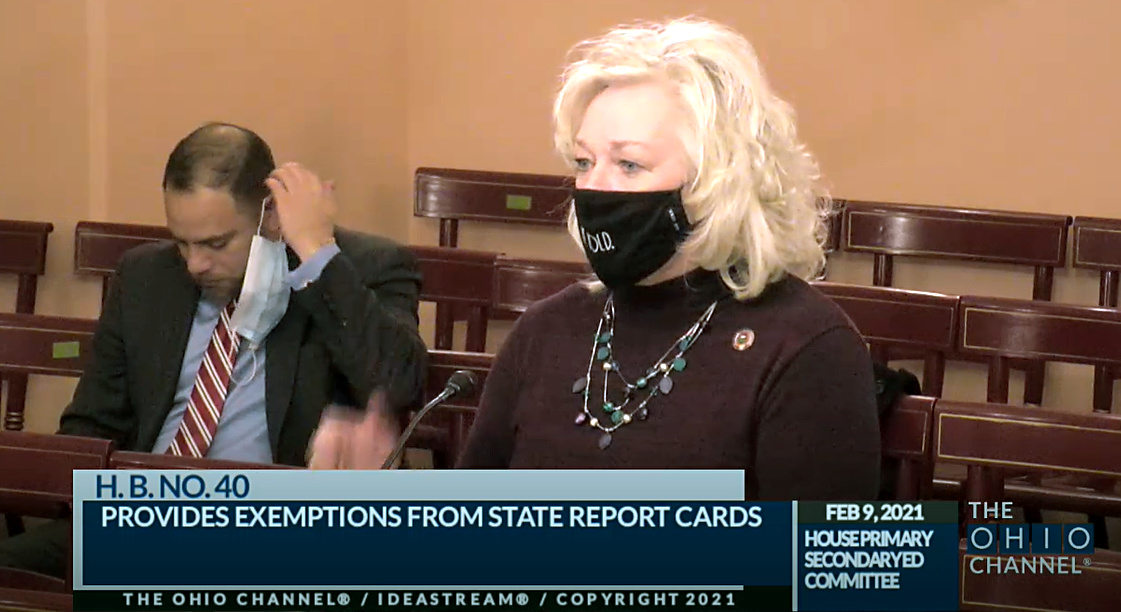
    Rep. Lisa Sobecki, D-Toledo, is a co-sponsor with Rep. Jeffrey Crossman, D-Parma on House Bill 40, to make exemptions for students in taking state report cards.

    The bill would waive state testing for the 2021-2022 school year and direct the Ohio Department of Education to seek a waiver for federal testing, as well as holding school districts harmless on state report cards to determine funding levels and eligibility for EdChoice private school vouchers and academic distress commissions.

    “We do need to see where our kids have been left behind, but I don’t need a test that’s going to tell us something after the kids have left,” Sobecki told the House Primary & Secondary Education Committee.

    She said the waiver of testing “appears to have broad, bipartisan support” within the legislature.

    Bipartisan support for state testing waivers came in the same Tuesday meeting, in the form of a separate bill brought by Republican state reps. Kyle Koehler and Adam Bird, to ask for many of the same things, including state and federal testing exemptions.

    “I am not asking to waive test requirements because we don’t need to know how testing will go,” Koehler told the committee. “I think we know it’s not going to go well. Students are going to be behind.”

    In further support of testing pressure relief, State Board of Education member Dr. Christina Collins released a proposed resolution directing the ODE limiting the use of state testing, and to “include a district designation of online, hybrid, or in-person on school building and district level report cards.”

    In the resolution, Collins writes that COVID-19 “has affected every student in Ohio, disrupting the structure of teaching and learning and emphasizing children’s dependency upon adults for nurture, protection and providing for health and well-being.”

    Along with the district designation, the board member asks that a disclaimer on state reports say that data “are for the purpose of understanding how learning was impacted as a result of extreme circumstances.”

    Earlier in the day, ODE Superintendent Paolo DeMaria said the test scores coming out of a pandemic’s worth of learning styles emphasize the need for students to get back to in-person instruction.

    DeMaria acknowledged a lower participation rate in the state testing, saying the ODE promoted a “safety first” mentality in taking the tests. But from the testing that did occur, the state saw an 8% increase in kindergarten-readiness scores considered “not on track.”

    Third-grade English Language Arts proficiency scores were also lower, which was also shown in a study released by the Ohio State University’s John Glenn College of Public Affairs.

    This third-grade test is set to occur this year starting from March 22 to April 23, part of why Sobecki said their legislation needs to be quickly moved through the statehouse and set up to be signed by the governor.

    “It’s February, folks,” Sobecki said.

    DeMaria, and the study itself, noted that the declining scores were even lower in minority and economically disadvantaged groups.

    State reports also showed a decrease in enrollment of 3%, particularly in pre-school and kindergarten.

    DeMaria spoke during Gov. Mike DeWine’s Tuesday press conference, in which he spent most of the time presenting the progress of vaccinating school teachers and personnel, something that the state started this month. While the state continues to vaccinate those 70 and older, they set aside some of the approximately 100,000 per week the state receives to give to school districts.

    Also on Tuesday, DeWine added a new project for school districts across the state, asking them to come up with an individualized plan to help students catch up on last year’s losses.

    “We need to be bold in our ideas, and we need to work with the Ohio General Assembly,” DeWine said, adding that a total of $2 billion in federal funding has been made available to schools to help with this problem.

    DeWine left the decisions up to the individual districts, but offered examples such as longer school years, longer school days, summer classes, tutoring, or even remote options as ways to fill the education gap.

    Districts have until April 1 to make their plans public and accessible to the General Assembly.

  • Treasurer Hawley talks about State funding reductions for the Loveland District

    Treasurer Hawley talks about State funding reductions for the Loveland District

    Loveland, Ohio – The first week of May, Ohio Governor Mike DeWine announced budget cuts to balance the State budget.

    Loveland City School District Treasurer Kevin Hawley

    Due to the economic impact of COVID-19, Governor DeWine said that $775 million in reductions to Ohio’s General Revenue Fund are needed for the remainder of the Fiscal Year 2020 which ends on June 30.

    DeWine said that Ohio is mandated to balance its budget each year, and in addition to identifying areas of savings, the following budget reductions will be made for the next two months:

      • Medicaid – $210 million
      • K12 Foundation Payment Reduction – $300 million
      • Other Education Budget Line Items – $55 million
      • Higher Education – $110 million
      • All Other Agencies – $100 million

    Loveland Magazine reached out to the Loveland City School District Treasurer Kevin Hawley asking him to comment on the impact of the State cutting revenue to the District.

    Thank you for reaching out. I can confirm pieces of this information. For your convenience, I have attached the list from The Ohio Department of Education (ODE) outlining the data for all districts in the state of Ohio. (K-12_Education (2)-1) The amount of the state revenue reduction is $1,010,855. The percentage you are referencing is how much the reduction in revenue is to our ODE calculated overall operating expenditures as stated on the form attached. The percentage decrease of our state revenue for this year is just below 8% and is a decrease of 2% from our overall operating revenue.

    The current state funding cuts are for this fiscal year (July 2019 – June 2020) and will be deducted in the next couple months on our last three state payments. School districts receive their annual state revenue in 24 payments, twice a month. We have been instructed that these payments will be taken out equally from our second May payment and both of our payments in June to finish out the fiscal year. At this point in time there is not clarification from the state of Ohio as to whether there will be further revenue cuts for next year. The state’s budget is primarily funded through sales and income tax and those numbers are announced monthly around the 10th of every month. I have not seen the April numbers at this point in time but my guess is that this current reduction is due to those numbers being much lower than projected pre-COVID. The May and June reports on sales and income tax revenue will be very revealing for how the state’s budget may be impacted next year and ultimately how that impacts K-12 education.

    The Governor has stated that there is federal funding that may benefit local school districts. At the present time, there is approximately $300k in additional money through the state from the CARES Act. Ultimately, this will help with the reductions in state funding but does not close the gap.

    We were anticipating news of potential revenue cuts from the state but were unsure of the size or which fiscal year it would impact. We are always evaluating ways to make our district more efficient and find ways to save and we will continue to do that work. Having just received the specific amount of the revenue cuts Wednesday morning (May 6) we were not factoring this decrease into the budget for next year’s planning and the Board of Education has not had the opportunity to discuss any potential cuts due to this. As we work through the overall financial impact and implications of this budget reduction, recently failed levy and other factors due to COVID-19 the Board will discuss if any future budget cuts are necessary.


  • Loveland Early Childhood Center Earns Top Rating From the Ohio Department of Education

    Loveland Early Childhood Center Earns Top Rating From the Ohio Department of Education

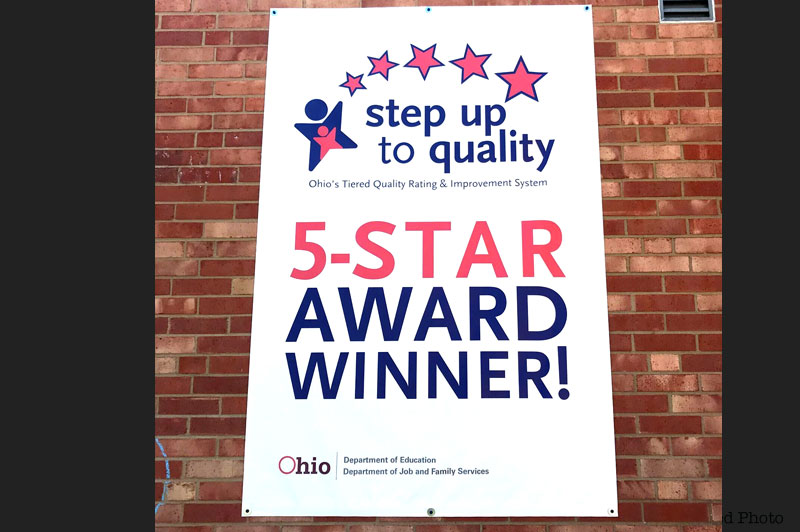
    LECC receives five-star “Step Up To Quality” rating for its preschool program

    Loveland, Ohio – The Loveland Early Childhood Center (LECC) has once again earned the five-star Step Up To Quality rating. The award is presented in recognition of meeting the quality standards and exceeding the health and safety regulations established by the Ohio Department of Education (ODE) and the Ohio Department of Job and Family Services (ODJFS).

    LECC Principal Jesse Kohls

    “It is very exciting that LECC has maintained the highest Step Up To Quality ranking possible, recognizing all the effort that goes into running a top-notch preschool program,” said LECC Principal Jesse Kohls. “I am very proud of our preschool staff members who go above and beyond to create an engaging and enriching experience for our youngest students every day.”

    All Ohio Early Childhood Education (ECE) and Preschool Special Education (PSE) programs funded by the ODE are mandated to participate in the Step Up To Quality system. In order to maintain their state funding, they must achieve a ranking of at least “3.” They must also administer and report early learning assessments.