Tag: Office of Management and Budget

  • Senate confirms Project 2025 architect to head OMB

    Senate confirms Project 2025 architect to head OMB

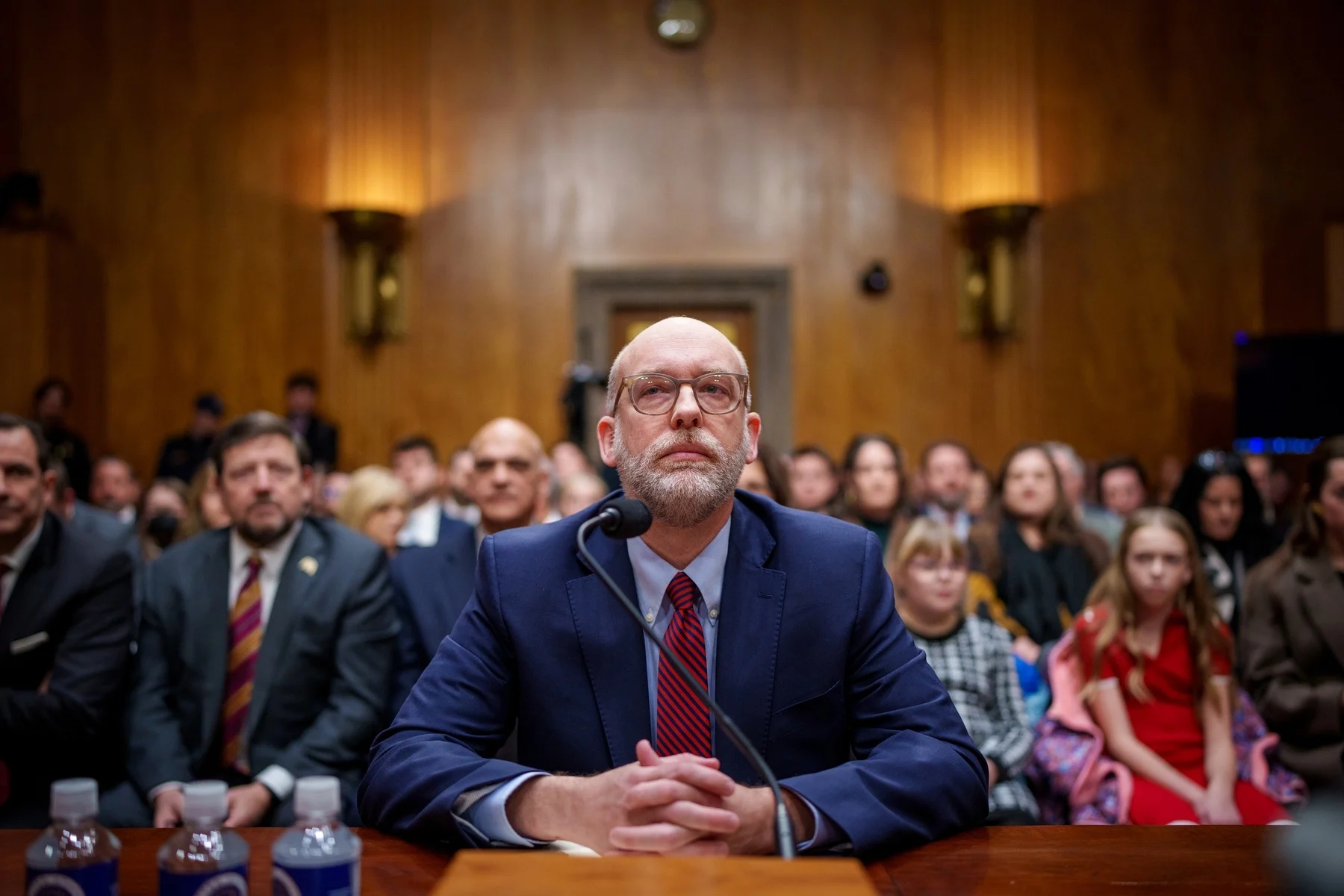
    Russell Vought sees the Office of Management and Budget as a “nerve center” that can be used to curtail DEI programs and purge the federal workforce of Trump’s perceived enemies.

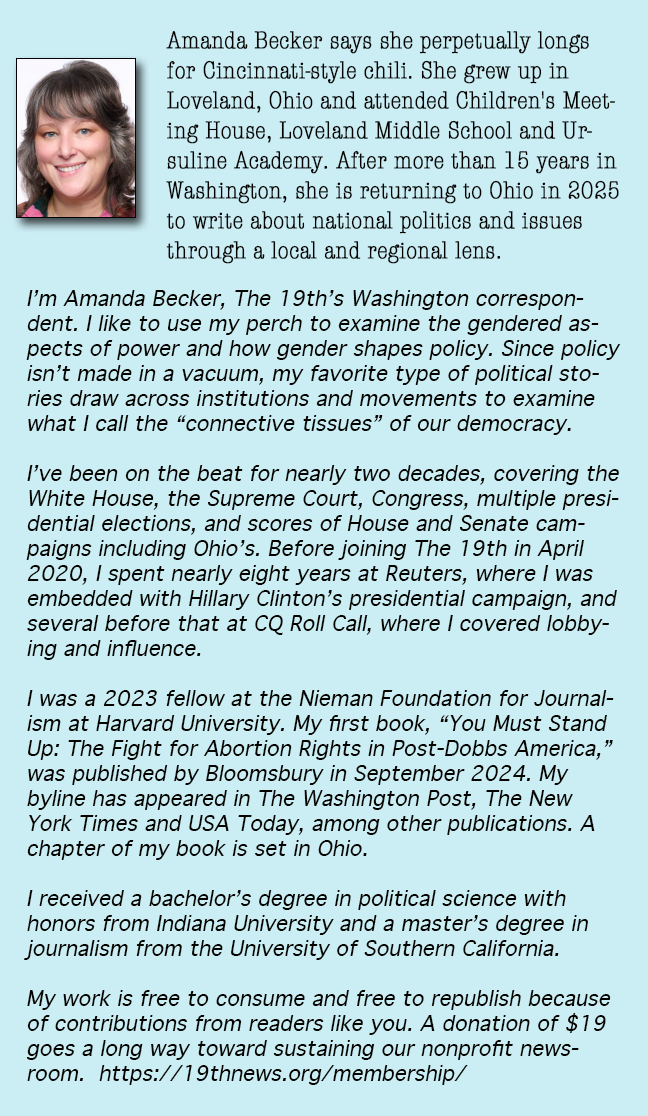
    Read Amanda Becker’s Loveland connection in her Bio below.

    This story was originally reported by Amanda Becker of The 19th. Meet Amanda and read more of her reporting on gender, politics and policy.

    ________________

    The U.S. Senate on Thursday approved Project 2025 architect Russell Vought to lead the Office of Management and Budget (OMB) on a party-line vote after Democrats held the floor overnight in an attempt to delay the confirmation since they did not have the numbers to block it.

    Vought was confirmed by a vote of 53-47.

    For 30 hours, starting on Wednesday afternoon and into Thursday evening, Democrats took turns on the Senate floor to protest Republican President Donald Trump’s nomination of Vought, who also led OMB at the tail end of Trump’s first administration.

    “This is really important, that we raise the alarm as to what is happening,” said Sen. Chris Murphy of Connecticut, who spoke from 2-5 a.m., longer than most of his colleagues.

    During his first stint at OMB, an under-the-radar entity that wields immense influence over the federal government by crafting the president’s budget, Vought helped Trump come up with a plan to jettison job protections for thousands of federal workers and assisted with a legally ambiguous effort to redirect congressionally appropriated foreign aid for Ukraine. In the years since, Vought founded two pro-Trump groups whose work has focused on discrediting structural racism and curtailing diversity, equity and inclusion (DEI) programs. The chapter that Vought wrote for Project 2025 detailed how the budget agency could be used to withhold money appropriated by Congress and eliminate dissent within agencies by purging them of employees.

    Trump said repeatedly during his campaign that he had not read Project 2025 and did not know its authors, though at least 60 percent of its more than 350 contributors were linked to the president. These include appointees and nominees from his first administration, members of his prior transition team and unofficial advisers.

    Project 2025 is a 920-page roadmap from the conservative Heritage Foundation about how Trump’s second administration could use the federal government to enact a far-right Christian agenda. If implemented — and some of the Trump administration’s earliest moves track the blueprint’s objectives — it has the potential to redefine rights long held by all Americans, with disproportionate impacts for women, LGBTQ+ people, people of color and vulnerable populations like the elderly and disabled.

    “What was in Project 2025 that made it so widely hated across the political spectrum? A few things: firing civil servants, weaponizing the Department of Justice and the Federal Bureau of Investigation, unleashing force onto protestors, and targeting political opponents, restricting abortion nationwide, ripping retirement and health care benefits from seniors, dismantling public education,” Sen. Elizabeth Warren said Wednesday evening on the Senate floor in a speech opposing Vought’s nomination.

    Warren noted that Vought has called on Congress to outlaw medication abortion and encouraged discrimination against transgender people in the workplace. She continued: “Now, Donald Trump has named the lead architect of Project 2025, Russ Vought, to oversee the federal government’s entire budget office … to carry out the Republican blueprint to make our government force people to live in the image that Russ Vought and other extremist Republicans approve of.”

    Last week an OMB letter sent by acting director Matthew Vaeth instructing federal agencies to pause “all activities related to obligation or disbursement of all Federal financial assistance” sent shock waves across Washington. The White House moved to quell the backlash. A federal judge earlier this week issued a temporary restraining order, extending a pause on implementing the directive.

    Vought, in an interview with conservative activist Tucker Carlson shortly after Trump’s reelection, discussed how the incoming administration could force federal agencies to “come to heel and do what the president has been telling them to do.” He likened OMB to the “nerve center” through which Trump could ensure his policy directives trickle down through the federal agencies that employ more than 2 million Americans.

    Many of these federal workers received an email last week from the Office of Personnel Management (OPM), which acts as the federal government’s human resources department, with the subject line “Fork in the Road.” The email offered them a chance to opt into a “deferred resignation” program intended to trim the federal workforce and set an acceptance deadline of February 6. Already, federal employees identified as working on DEI programs had received letters notifying them that they were placed on leave and could be fired. Some have sued the administration.

    Labor unions representing federal employees also sued over the resignation offer and deadline, and a federal judge on Thursday blocked OPM from enforcing it. White House press secretary Karoline Leavitt said that about 40,000 workers had already accepted the offer and the White House expected that number to grow. Leavitt said she was not part of discussions about next steps or whether layoffs would follow if enough employees did not resign.

    “Americans need to know that OMB is extremely powerful, with oversight over the president’s budget and functionally all federal agency actions, including regulatory decisions,” Democratic Sen. Mazie Hirono of Hawaii said Thursday.

    “With such responsibility, the person leading this office needs to be level-headed and impartial. They need to put loyalty to the Constitution above loyalty to the President,” she added. “Mr. Vought, however, is the ultimate yes-man.”
    Read Project 25
    [pdf-embedder url=”https://lovelandmagazine.com/wp-content/uploads/2025/02/project-2025.pdf”]

  • Federal Office on Violence Against Women removes funding opportunities from website

    Federal Office on Violence Against Women removes funding opportunities from website

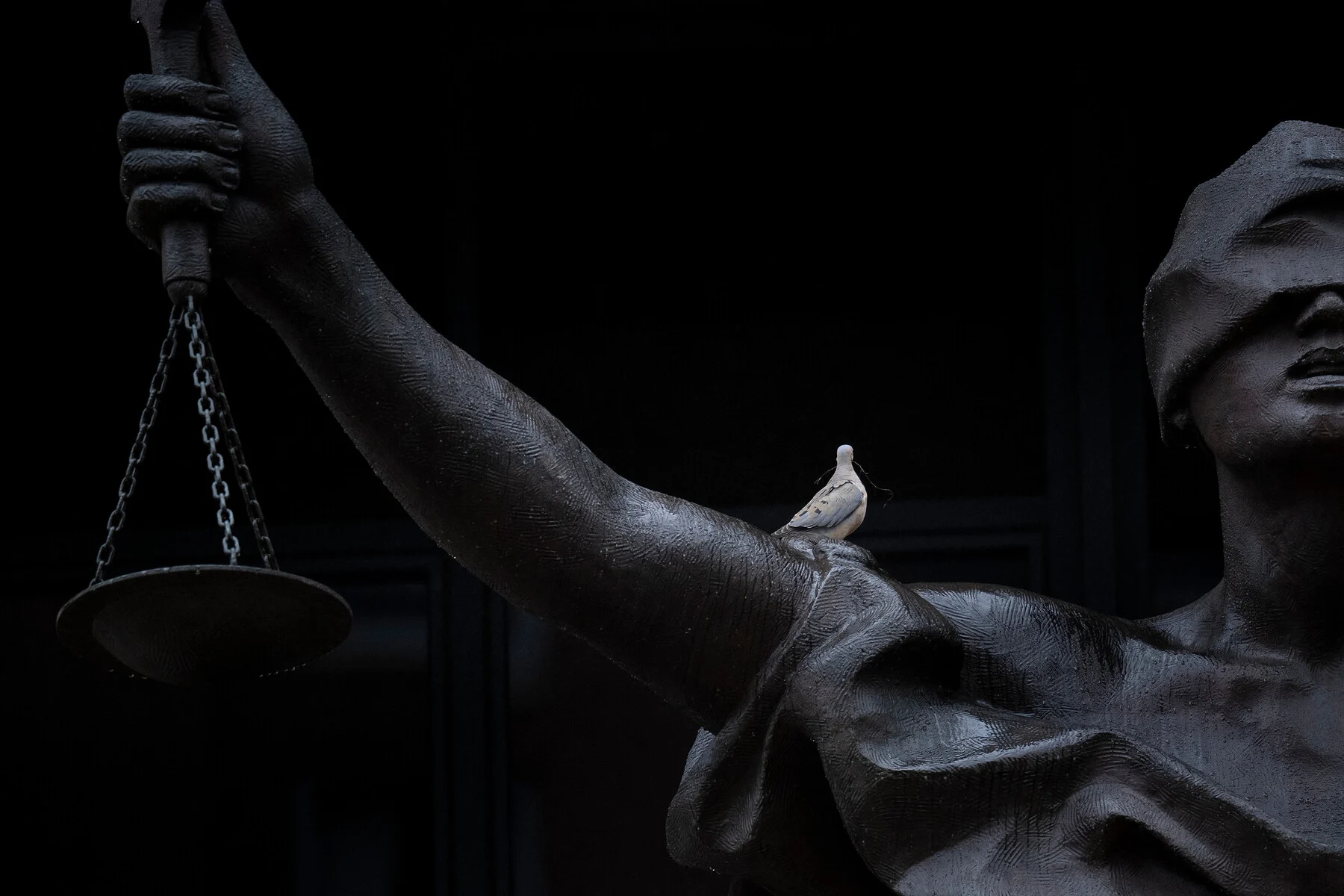
    A bird rests on a statue of Justice at the US District Court for the Eastern District of Virginia April 7, 2022, in Alexandria, Virginia. (Brendan Smialowski/AFP/Getty Images)

    This story was originally reported by Jasmine Mithani of The 19th. Meet Jasmine and read more of her reporting on gender, politics and policy.

    The Department of Justice Office on Violence Against Women (OVW) has removed from its website all information on current funding opportunities and directs visitors not to finalize any applications. This adds to the fear of nonprofits that work to help victims of gender-based violence that a major funding source may dry up.

    It is unclear whether this pause is temporary. OVW did not return a request for comment on Friday afternoon.

    Last week, the Centers for Disease Control and Prevention took parts of its website down for several days to check for compliance with President Donald Trump’s executive orders.

    Users looking for information about funding from OVW are directed to the homepage, which on Friday showed a message to grantees saying that a funding freeze announced January 27 by the Office of Management and Budget (OMB) was not in effect due to a judge’s restraining order. OMB had directed agencies to pause funds pending a review of their compatibility with executive orders related to immigration, “illegal DEI” and “woke gender ideology.”

    The notice of the court order says “agencies may exercise their own authority to pause awards or obligations, provided agencies do so purely based on their own discretion” and in accordance with agreements and not solely due to the rescinded OMB memo or the executive orders.

    An archived version of the OVW funding opportunities webpage from January 24, and viewable on the Internet Archive, shows 10 grants open for applications, with deadlines varying from January to May 2025. The update about withdrawing grant opportunities is dated February 6. Grants previously listed included ones aimed at ending abuse later in life, providing housing for victims of domestic violence and helping local law enforcement stop cybercrimes.

    Websites for other Justice Department offices, including Community Oriented Policing Services and Office of Justice Programs, continue to show available funding opportunities.

    OVW is one of largest funders of programs for survivors of gender-based and domestic violence.

    Many nonprofits that work with victims of domestic or intimate partner violence edited their websites in the wake of the funding freeze, providing static pages with just phone numbers or removing resources for LGBTQ+ people.

  • Second federal judge seems to be prepared to block Trump spending pause

    Second federal judge seems to be prepared to block Trump spending pause

    President Donald Trump attends inauguration ceremonies in the rotunda of the U.S. Capitol on Jan. 20, 2025, in Washington, D.C. (Photo by Chip Somodevilla/Getty Images)

    By:  Ohio Capital Journal

    WASHINGTON — A second federal judge appears ready to issue an order blocking the Trump administration from freezing funding on grant and loan programs, despite a move by the Office of Management and Budget to rescind a controversial memo Wednesday just before the hearing.

    Chief Judge John J. McConnell Jr. of the U.S. District Court in Rhode Island opted not to issue his ruling during the virtual hearing, saying that he first wanted the Democratic attorneys general who filed the suit to suggest how such an order might be worded. He then wants to hear from the Justice Department lawyer arguing the case on behalf of the Trump administration about the scope of that possible order.

    McConnell, who was appointed by former President Barack Obama, said the state attorneys general had convinced him that the Trump administration was likely to continue with the funding halt detailed in the now-revoked OMB memo in some way, based on a social media post from White House press secretary Karoline Leavitt.

    “That hasn’t changed based on comments by the president’s press secretary,” McConnell said. “And so I’m inclined to grant the restraining order, though I’m struggling with how it would be worded and what effect it would have.”

    A ruling from McConnell would be the second order blocking the Trump administration from implementing a spending pause on certain grant and loan programs.

    District Judge Loren L. AliKhan on Tuesday issued a short-term administrative stay preventing President Donald Trump’s administration from starting the spending freeze. She then set a hearing in that case, brought by organizations that receive federal funding, for Feb. 3.

    The original memo, released Monday evening by the Office of Management and Budget, led to widespread confusion and frustration among organizations like Meals on Wheels and grantees that rely on funding from the Department of Veterans’ Affairs, as well as members of Congress from both political parties.

    Memo rescinded

    The Trump administration’s Office of Management and Budget rescinded that memo Wednesday, though comments from Leavitt just afterward led to even more confusion just before the hearing began.

    Leavitt wrote in a social media post that OMB rescinding the memo was “NOT a rescission of the federal funding freeze.”

    “It is simply a rescission of the OMB memo,” Leavitt wrote. “Why? To end any confusion created by the court’s injunction.”

    “The President’s EO’s on federal funding remain in full force and effect, and will be rigorously implemented,” she added.

    Separately, Leavitt issued a written statement to reporters that seemed to suggest rescinding the OMB funding freeze memo was meant to get around AliKhan’s order.

    “In light of the injunction, OMB has rescinded the memo to end any confusion on federal policy created by the court ruling and the dishonest media coverage,” Leavitt wrote in a statement. “The Executive Orders issued by the President on funding reviews remain in full force and effect and will be rigorously implemented by all agencies and departments. This action should effectively end the court case and allow the government to focus on enforcing the President’s orders on controlling federal spending. In the coming weeks and months, more executive action will continue to end the egregious waste of federal funding.”

    Appropriators praise withdrawal of memo

    Maine Republican Sen. Susan Collins, chairwoman of the Senate Appropriations Committee, welcomed OMB’s action before Leavitt’s post and the hearing.

    “I am pleased that OMB is rescinding the memo imposing sweeping pauses in federal programs,” Collins wrote in a statement. “While it is not unusual for incoming administrations to review federal programs and policies, this memo was overreaching and created unnecessary confusion and consternation.”

    Senate Appropriations Committee ranking member Patty Murray, D-Wash., released a statement that the Trump administration reversal was the right decision. That was also before Leavitt weighed in.

    “This is an important victory for the American people whose voices were heard after massive pressure from every corner of this country — real people made a difference by speaking out,” Murray wrote. “Still, the Trump administration — through a combination of sheer incompetence, cruel intentions, and a willful disregard of the law — caused real harm and chaos for millions over the span of the last 48 hours which is still ongoing.”

    White House assurances

    OMB’s decision to rescind the memo Wednesday followed the White House making public assurances Tuesday that the spending freeze wouldn’t impact Social Security, Medicare, Medicaid and direct food assistance programs like the Supplemental Nutrition Assistance Program, or SNAP.

    Two separate lawsuits seeking to block the OMB memo from taking effect on Tuesday evening at 5 p.m. were filed in federal district court.

    The lawsuit filed by the National Council of Nonprofits, American Public Health Association and Main Street Alliance led to federal District Court Judge AliKhan placing a temporary hold on the planned spending freeze until Feb. 3 at 5 p.m.

    The second lawsuit, heard Wednesday, was filed by Democratic attorneys general from New York, Arizona, California, Colorado, Connecticut, Delaware, Hawaii, Illinois, Maine, Maryland, Massachusetts, Michigan, Minnesota, Nevada, North Carolina, New Jersey, New Mexico, Oregon, Rhode Island, Vermont, Washington, Wisconsin, and the District of Columbia.

    Last updated 5:42 p.m., Jan. 29, 2025


    Jennifer Shutt
    Jennifer Shutt

    Jennifer covers the nation’s capital as a senior reporter for States Newsroom. Her coverage areas include congressional policy, politics and legal challenges with a focus on health care, unemployment, housing and aid to families.

    Ohio Capital Journal is part of States Newsroom, the nation’s largest state-focused nonprofit news organization.

    MORE FROM AUTHOR

  • Trump’s ‘pause’ on government assistance could put early learning and nutrition programs in danger

    Trump’s ‘pause’ on government assistance could put early learning and nutrition programs in danger

    (Photo by Anna Moneymaker/Getty Images)

    Originally published by The 19th

    As widespread confusion continues over the funding freezes, programs serving women and children could be hit particularly hard.

    Read Amanda Becker’s Loveland connection in her Bio below.

    by Amanda Becker

    Editor’s note: The Office of Management and Budget on Wednesday rescinded its memo directing a freeze on federal grants and loans, one day after a federal judge temporarily blocked it. White House Press Secretary Karoline Leavitt said on X of Wednesday’s OMB memo: “This is NOT a rescission of the federal funding freeze. It is simply a recession of the OMB memo. Why? To end any confusion created by the court’s injunction. The President’s EO’s on federal funding remain in full force and effect, and will be rigorously implemented.”

    The Trump administration tried to quell backlash on Tuesday to a directive that all federal agencies should “temporarily pause” all federal assistance, which advocates worried would hit social safety net programs like early learning and nutrition assistance programs.

    Programs serving women and children would be hit particularly hard by a funding pause, advocates said, since nearly all of them are part of the government’s discretionary spending and are frequently put on the chopping block by fiscal conservatives.

    Trump’s Office of Management and Budget (OMB) sent a letter Monday to federal agencies directing them to pause “all activities related to obligation or disbursement of all Federal financial assistance” by 5 p.m. Tuesday. The pause, the letter continued, “will provide the Administration time to review agency programs and determine the best uses of the funding for those programs consistent with the law and the President’s priorities,” specifically President Donald Trump’s initial executive orders, including those related to diversity, equity and inclusion (DEI) and “woke gender ideology.”

    6 ways you can positively impact your community. Read it now -->


    The OMB letter, which was first reported by independent journalist Marisa Kabas and later reviewed by The 19th, unleashed chaos across Washington. Calls flooded into Capitol Hill offices from both constituents and federal workers as agencies tried to sort out what the totality of its impacts might be in the coming weeks. On Tuesday, a second OMB memo, obtained by The Washington Post, attempted to clarify Monday’s letter but did little to reduce confusion.

    Tuesday’s memo stated that “the pause does not apply across the board. It is expressly limited to programs, projects and activities implicated by the President’s Executive Orders.” It stated that the Supplemental Nutrition Assistance Program  (SNAP), colloquially known as food stamps, will not be paused, nor will Medicaid, the government’s health insurance program for low-income people. The Tuesday memo was not signed, however, and experts told The 19th that agencies were still operating with a high degree of uncertainty, given that it also stated that “funds for small business, farmers, Pell grants, Head Start, rental assistance and other similar programs will not be paused” unless they related to Trump’s executive orders, which have wide-ranging application.

    Specifically, programs “implicated by the executive orders, including, but not limited to, financial assistance for foreign aid, nongovernmental organizations, DEI, woke gender ideology, and the green new deal,” according to Monday’s letter.

    The White House did not respond to a request to discuss which programs will be most affected by the pause or to confirm that Tuesday’s unsigned directive superseded Monday’s, which was signed by OMB’s acting director, Matthew Vaeth.

    Democrats are already preparing to challenge the pause directive in court. A coalition of nonprofit organizations that includes the American Public Health Association and SAGE, which advocates for older LGBTQ+ people, filed for a temporary restraining order.

    Any pause could have outsized impacts on some initiatives. Nutrition programs for women and kids, SNAP and WIC, are likely to run into funding issues within 60 to 90 days if subjected to the pause, experts said.

    Another program that could potentially be immediately impacted is Head Start, the early learning program for children from birth to age 5, experts said Tuesday.

    Federal funds go directly to specific Head Start programs, which provide early childhood education via public preschool programs, as well as at home by offering support for expectant parents. These programs are funded for a year at a time but staggered, typically tied to the start of each school year in a given state. If a program received its year’s worth of funding on January 1, it is good for 11 more months, but if a program is due to receive its yearly funding on February 1, that money will likely be delayed or not show up if there are funding pauses.

    At this point in the calendar year, states are also reporting back to the federal government, which partially funds the Head Start program, to balance their books by refunding unspent money or requesting reimbursement. A pause could impact those reimbursements, according to those familiar with the funding process. It is also the time of year when programs begin budgeting and hiring for the next school year, and having unfunded programs could lead to problems recruiting and retaining both educators and students.

    “Some facilities will be fine, others will have to shutter — unless a billionaire comes forward to help them out,” said Bobby Kogan, a senior director of federal budget policy at the liberal-leaning Center for American Progress, who worked at the OMB during the Biden administration.

    Amid the Trump administration’s attempt to clarify the scope of impact, Democratic Sen. Chris Murphy claimed the reimbursement system for the Head Start program in his home state of Connecticut had been shut down.

    “Preschools cannot pay staff and will need to start laying off staff very soon and sending little kids home,” he wrote on X.

    Some grantees under the federal Title X program, which supports family planning clinics that serve low-income people, are already preparing for a possible lapse in funding. Title X was created under President Richard Nixon and disburses hundreds of millions of dollars each year to fund clinics reaching millions of Americans, largely women.

    “We will rely on private resources for the time being, but this is not a long-term solution,” said George Hill, president of Maine Family Planning, the state’s sole Title X grantee. “If there is litigation on this matter, we will collaborate in whatever useful way we can.”

    Senate Minority Leader Chuck Schumer and other Democratic leaders called for their Republican colleagues in the Senate to hit pause on confirmation proceedings for OMB nominee Russell Vought, who helped Trump withhold congressionally appropriated funds during the Republican president’s first term. Vought has taken the position that presidents have the authority to redirect or refuse to spend funds appropriated by Congress, which under the Constitution holds the power of the purse.

    White House press secretary Karoline Leavitt said during a briefing Tuesday with reporters that she had spoken with Vought, “and he told me to tell all of you that the line to his office is open for other federal government agencies across the board, and if they feel that programs are necessary and in line with the president’s agenda, then the Office of Management and Budget will review those policies.”

    When a reporter at the briefing asked if any Medicaid recipient would see a cutoff because of the funding pause, Leavitt said: “I’ll check back on that and get back to you.”

    Medicaid was not expected to be immediately affected by the pause, even before Tuesday’s follow-up memo, because its funding mechanism makes it a de facto entitlement program like Social Security or Medicare, though the long-term impacts of the pause are unknown, experts said.

    Even still, Democratic Sen. Ron Wyden said that his staff had confirmed that Medicaid portals were down in all 50 states following the Monday night pause directive. The White House said they were aware of the outage and the portals should be back online shortly.

    “This is funding that communities are expecting and this memo is creating chaos and confusion about whether these resources will be available to them,” Democratic Sen. Patty Murray said during the news conference. “Entire budgets and payrolls across the country are carefully hinging on these resources, we’re talking about our small towns, our cities, our school districts, our universities and a lot more: Will local Head Start facilities get their funding?”

    Additional reporting by Shefali Luthra

  • Clermont County Commissioners approved a 2020 General Fund operating budget of $61.5 million

    Clermont County Commissioners approved a 2020 General Fund operating budget of $61.5 million

    Batavia, Ohio – Clermont County Commissioners approved a 2020 General Fund operating budget of $61.5 million at their Dec. 11 session. The non-operating budget of $9.7 million includes one-time expenses for capital and economic development projects within the General Fund.

    The General Fund is the largest discretionary source of funds in the county and finances 20 of 21 elected offices in Clermont County. The Engineer’s Office is funded through state gasoline taxes and driver license fees. Clermont County Commissioners also appropriated $199.2 million in 2020 for the other 114 special purpose funds under their budgetary control.

    As required by law, the budget is balanced, with expenses not exceeding projected revenues plus unobligated cash.

    Sales tax revenue, which provides nearly 47 percent of General Fund revenue, is estimated to be $30 million in 2020. The next two largest streams of revenue include charges for services ($10 million) and property taxes ($9 million)  included within the General Fund.

    In 2020, General Fund program areas will be funded as follows:

    Criminal justice: $26.8 million

    Judicial services: $14.7million

    General government: $12.3 million

    Public safety: $4.5 million

    Health and human services: $3.3 million

    Personnel costs account for the largest share of the total General Fund budget — $49.6 million, or 70% of the budget, with $21.6 million going to other expenses.

    For questions, contact Office of Management and Budget Director Mary Rains, mrains@clermontcountyohio.gov, 513.732.7988.