The executive director of the Ohio Association of Foodbanks is trying to get the word out: If the budget passed by the U.S. House of Representatives becomes reality, it could trash the state budget and make many, many Ohioans go hungry.
The matter goes next to the U.S. Senate. But the members of the Ohio delegation aren’t talking.
The House-passed Republican reconciliation budget — President Donald Trump’s “One Big Beautiful Bill” — would hand out $4.6 trillion in tax cuts over 10 years. In an analysis, Trump’s alma mater, the University of Pennsylvania’s Wharton School, estimated that 70% of the benefit would go to the “top 10% of the income distribution.”
Meanwhile, the “Department of Government Efficiency” — led by the world’s richest man — has been looking to cut services for average Americans. One place the Republican House budget seeks to achieve some of those cuts is to the Supplemental Nutrition Assistance Program, or SNAP.
Also known as food stamps, the program provides debit cards for food. To qualify, Ohio recipients generally have to have net income at or below federal poverty guidelines — $32,150 a year for a family of four.
Benefits awarded under the program are pretty modest, $6.28 per person, per day on average last year. And, as a reflection of the high level of poverty in the state, one in nine Ohioans — or 1.4 million — received them last year.
Whether Ohio’s poorest will get those food benefits in future years is an open question in light of the One Big Beautiful Bill.
“The House-passed Republican reconciliation plan would cut nearly $300 billion from the Supplemental Nutrition Assistance Program (SNAP) through 2034, based on Congressional Budget Office (CBO) estimates — by far the largest cut to SNAP in history,” the Center on Budget and Policy Priorities wrote last week. “As a result of these cuts and other policies in the legislation — which are being used to pay partly for trillions in tax cuts skewed to the wealthy — millions of people would lose some or all of the food assistance they need to afford groceries, when many low-income households are struggling to afford the high cost of food and other basic needs.”
The bill would force states to take up the slack by forcing them to pay based on error rates. In other words, they’d have to pay at least 5% more and then go up a sliding scale based on how often they were found to pay recipients too little or too much in benefits. It also would greatly increase error rates by eliminating the current tolerance for small errors — those up to $57.
This all might sound technical, but the consequences for Ohio would be huge.
If it had an error rate of 6% or less (which it doesn’t, even under the current, more-tolerant system), the state would have to pay $158 million more a year into the program, according to the Center for Budget and Policy Priorities. At the top end, with an error rate of 25% or more, Ohio would have to pay $790 million more a year.
Under the Republican bill, error rates would surely go sharply up. But even under Ohio’s most recent rate, the state would take a massive hit. At 15% errors, the state would have to come up with $473 million a year.
“That’s almost $500 million in new state revenue that they would have to come up with just to maintain current levels of benefits,” said Joree Novotny, executive director of the Ohio Association of Foodbanks. “That’s roughly equivalent to the entire state investment in the Ohio Department of Job and Family Services” which administers SNAP in addition to many other programs.
“We know that we can’t ever make up for the value that SNAP benefits provide to low-income working families, seniors and people with disabilities,” she said. “We’re not designed to be a first-line grocery store. SNAP invests directly in local economies. Benefits are spent at local grocers. The removal of this investment in that supply chain… I’m not only concerned about access to affordable food for people with lower resources, but also sustainability and resilience in the food-supply sector as a whole.”
Novotny said two bad-but-likely results would be bigger food deserts and less access to healthy nutrition. Those outcomes would be particularly devastating to low-income families who have seen food prices grow 27% between mid-2020 and the beginning of this year.
Asked whether Gov. Mike DeWine opposed the SNAP cuts in the Republican bill, his press secretary, Dan Tierney, was noncommittal.
“As we have seen, these proposals can change dramatically as the process proceeds,” Tierney said in an email. “We have generally reserved comments until after final proposals have been adopted.”
The offices of Sens. Jon Husted and Bernie Moreno were asked if they would support the cuts when the House bill came before them. Neither replied.
For her part, Novotny said she has an even deeper concern than overwhelmed food banks and growing food deserts.
Asked what would happen if states can’t or won’t find the money the House budget is demanding for SNAP, she said, “We can’t get a good answer to that.”
“Fundamentally, will SNAP remain an entitlement? Will states have to administer the program at all?” she asked. “Fundamentally, it’s hard to understand how it would be required of a state to participate in the program if there’s such a significant cost burden.”
The question, at bottom, is whether the already huge number of poor Ohioans will swell and whether they’ll be pushed even deeper into poverty and food insecurity.
“I’m most concerned about what it would mean for the structure of the federal nutrition safety net,” Novotny said. “SNAP is and always has been an entitlement program. If you’re a worker who, through no fault of your own, loses your job and while you’re seeking work you need help affording groceries so that you can stay in your house… SNAP is there. Or if you’re a person who receives a really serious cancer diagnosis and you have to use some (Family and Medical Leave Act benefits) to come and get treatment, SNAP is there. If you’re a low-wage working family, or if you’re a senior on a fixed income, SNAP is there and the benefit has always been fully federally funded.”
Marty Schladen
Marty Schladen has been a reporter for decades, working in Indiana, Texas and other places before returning to his native Ohio to work at The Columbus Dispatch in 2017. He’s won state and national journalism awards for investigations into utility regulation, public corruption, the environment, prescription drug spending and other matters.
Ohio Capital Journal is part of States Newsroom, the nation’s largest state-focused nonprofit news organization.
In March, The Ohio Association of Foodbanks notified more than 150 farms that supplied Ohio’s food pantries with fresh produce, meat, and dairy that the USDA’s Local Food Purchase Assistance program was ending. The pandemic-era assistance initiative gave local governments federal aid to connect food banks with farms in a 400-mile radius.
The program connected food pantries with local producers until it was ended earlier this year.
Cincinnati Edition airs every weekday during the noon hour, bringing you all the new and noteworthy reporting from NPR’s Cincinnati affiliate, with a focus on the entire Tri-State metro area in Ohio, Indiana and Northern Kentucky. Covering topics ranging from local and regional government to business and economics, science and technology, the arts, education and health, Cincinnati Edition is a grab bag of the interesting and important things going on around town, with context and analysis from experts, insiders and the investigative reporters from NPR Cincinnati station WVXU’s local beats as well as NPR News.
Share your thoughts with producers by emailing talk@wvxu.org or calling 513-419-7100
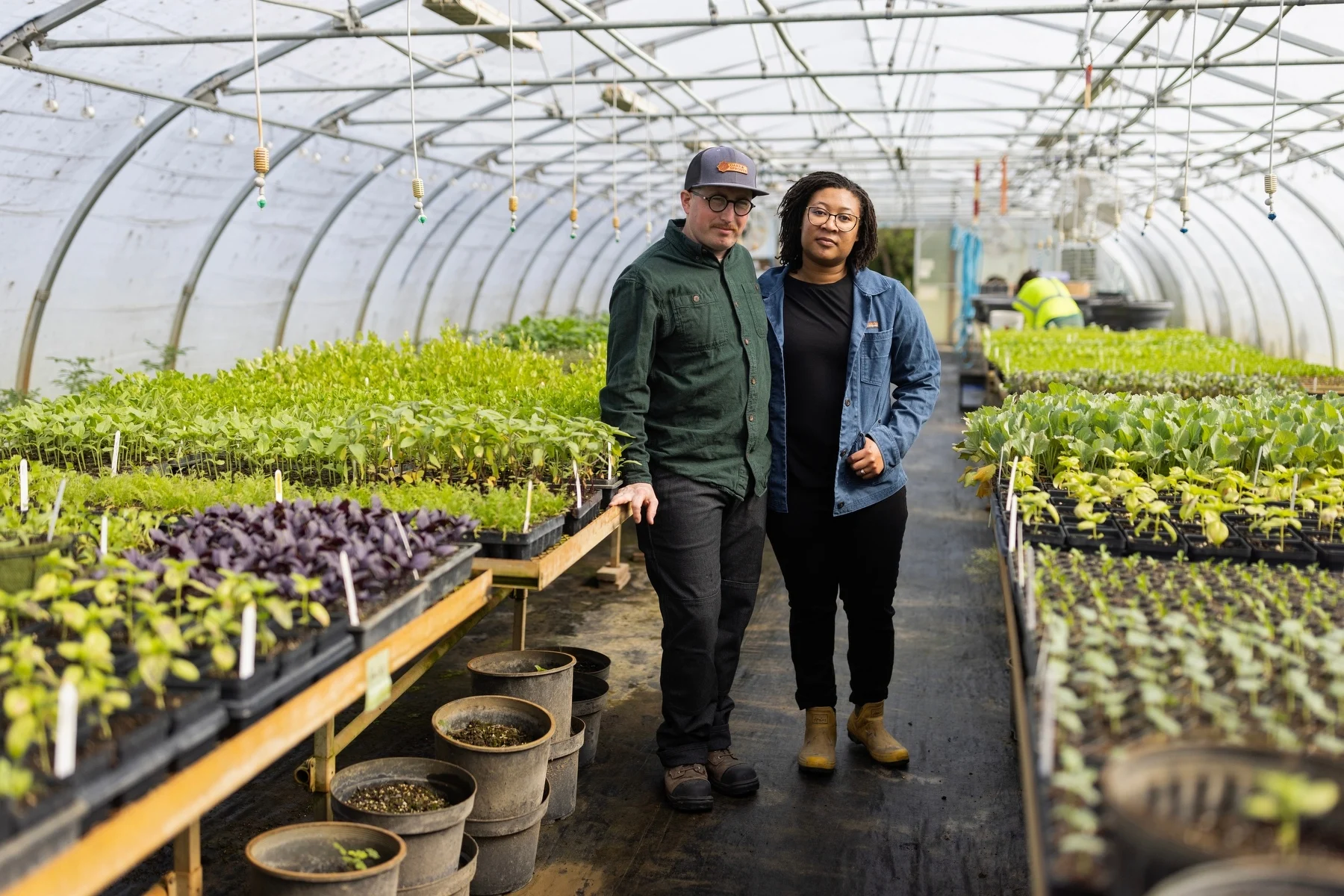
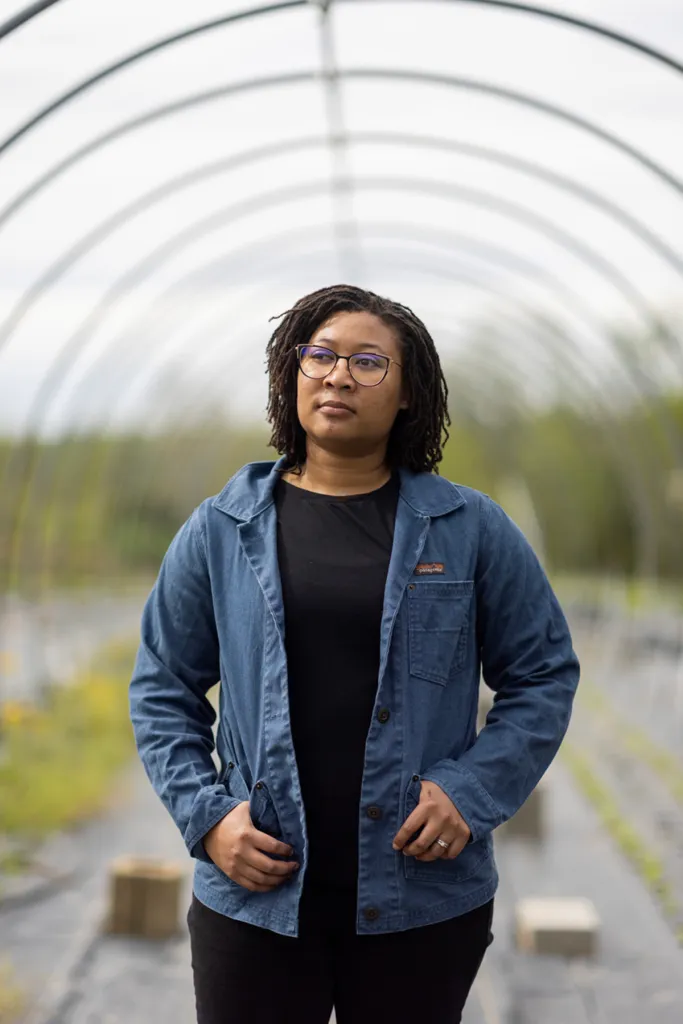
Graham and Tonni Oberly say the goal of their Ohio farm Oak and Sprouts is to grow food in a way that is good for the land, their employees and their customers. (Maddie McGarvey for The 19th)
by Amanda Becker
Read Amanda Becker’s Loveland, Ohio connection in her Bio below.
The Trump administration is ending a USDA assistance initiative as the country’s food pantries are “stretched to the breaking point” and a hunger crisis looms.
URBANA, OHIO — Oaks and Sprouts, Tonni and Graham Oberly’s family farm, got the email from the Ohio Association of Foodbanks just after five o’clock on the first Friday in March.
The U.S. Department of Agriculture, or USDA, had notified the Ohio Department of Job and Family Services that it was ending a program that gave state, tribal and territorial governments federal dollars to stock food pantries from farms within a 400-mile radius. The Ohio Association of Foodbanks, in turn, shared the notice with the more than 150 farms that supplied the state’s food pantries with fresh produce, meat and dairy. One of them was Oaks and Sprouts, whose younger and diverse owners are just the type of growers the USDA’s Local Food Purchase Assistance program aimed to connect to food-insecure Americans.
Last growing season, Oaks and Sprouts had a contract worth up to $25,000 with the program, a significant amount for the small farm. The produce made its way to food pantries in nearby Springfield and Dayton and, from there, to the Ohioans who rely on them to feed themselves and their families. For Tonni Oberly, a trained doula with a background in public health, joining that distribution chain connected her work at the farm to the focus of the city and urban planning doctorate she had recently completed: how place impacts the health of Black mothers and children.
“Food is such an important part of that — access to food in your neighborhood, access to healthy food, the affordability of food — how food impacts our maternal and child health outcomes is really crucial,” Tonni explained on a crisp April day as she and Graham walked through the hoop house where they were germinating seeds for spring planting.
The federal program had also allowed the Oberlys to diversify their farm’s revenue stream beyond the traditional sales to restaurants and at farmer’s markets. It had given them a measure of predictability as they built a regenerative farm on land previously cultivated by Graham’s aunt and uncle and, before that, his grandparents.
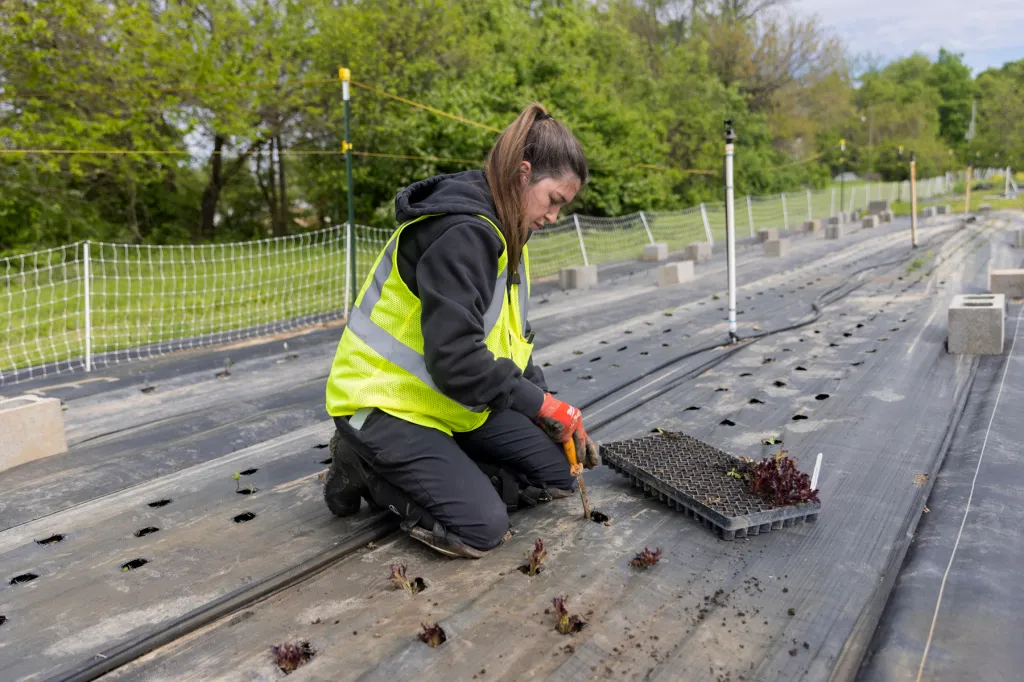
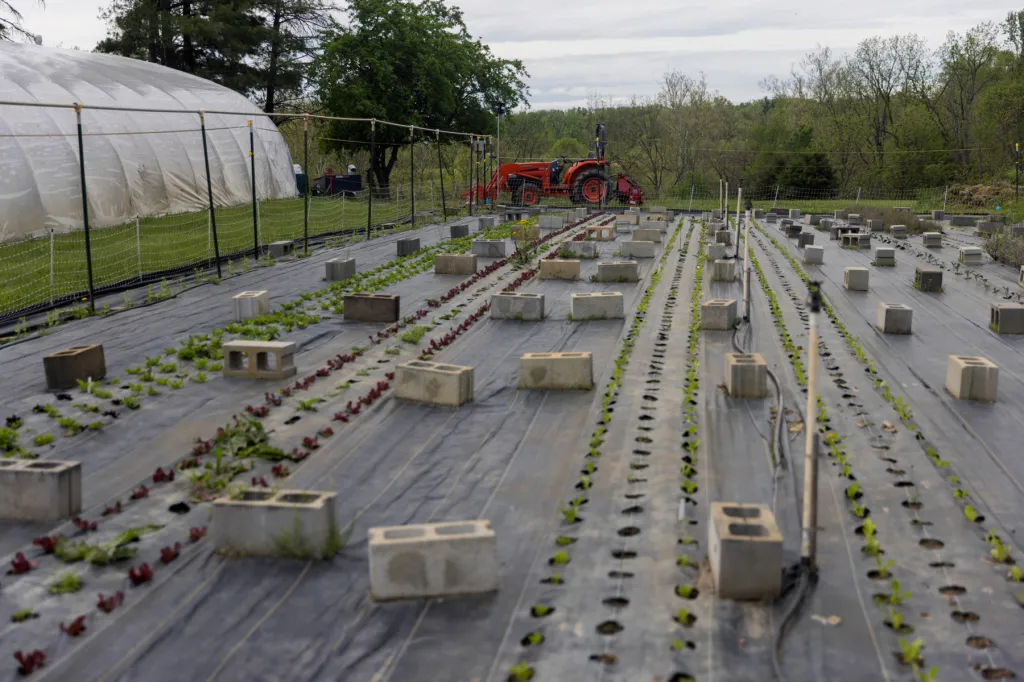
“We can plant seeds and know that they’re sold, versus with the farmer’s markets, you plant and you hope people buy it — or even selling to restaurants, they don’t preorder months ahead of time,” Graham explained as he and Tonni stood on the acre of land where they grow garlic, tomatoes, patty pan squash and lettuce varietals that include romaine, butterhead and salanova.
The Oberlys estimate that they were able to hire two of their four seasonal employees last year because of their contract with the Local Food Purchase Assistance program, known as LFPA. They try to pay a good wage for the work — $17 an hour. That’s a decent amount for a place like rural Champaign County, where the median household income is about $20,000 less than nationally and the poverty rate is just over 10 percent. The farm’s goal, they explained, was to grow food in a way that is good for the land, their employees and their customers. Tonni named Oaks and Sprouts for a passage of scripture in Isaiah: “They will be called oaks of righteousness, a planting of the Lord for the display of his splendor.” It is a metaphor for living a righteous life.
The Oberlys estimate that they have been able to hire some of their seasonal employees because of their contract with the Local Food Purchase Assistance program.
(Maddie McGarvey for The 19th)
The email from the Ohio Association of Foodbanks landed as Oaks and Sprouts was in the thick of planning for its fifth growing season — the third in which the Oberlys planned on participating in the LFPA program. It attached a USDA notice saying that the Trump administration had “determined this agreement no longer effectuates agency priorities and that termination of the award is appropriate.” After the current contract year closes on June 30, the LFPA program, which authorized $900 million worth of locally raised healthy foods for anti-hunger organizations, would end.
Created by the Biden administration in 2021, the Local Food Purchase Assistance program was at once an attempt to support small local farms and an acknowledgement that one of the most direct ways to bring healthy food to hunger-vulnerable populations is to buy it from underserved farmers nearby.
But a USDA press release announcing its creation featured words like “equity” and “climate,” targets of President Donald Trump and his Department of Government Efficiency in their efforts to root out so-called “woke” federal programs. Even before Trump took office, the Oberlys’ program coordinator with Ohio CAN (Community + Agriculture + Nutrition), as LFPA is branded in this midwestern state, had warned them that its renewal could be in jeopardy.
Still, Oaks and Sprouts, like the vast majority of the farms participating in Ohio CAN, began planning for the 2025 growing season. There were reasons to be hopeful. For starters, while the Local Food Purchase Assistance program was part of the Biden administration’s broader COVID-19 relief effort, its funding stream was first used for direct food purchases during Trump’s first term. Ohio CAN, like many state-level local food purchase programs, is also widely popular. Independent experts who analyzed its first year in the Republican-led state concluded that it was a “success by any measure.”
Tonni Oberly sees her farm as a way to expand her work caring for Black mothers and children. Indigenous and Black Americans experience the highest rates of food insecurity, with Black children twice as likely as White children to face hunger.
(Maddie McGarvey for The 19th)
Trump’s picks to lead key federal agencies in his current term also seemed to be working in the program’s favor. Take Agriculture Secretary Brooke Rollins. One of the first things she did upon confirmation was to send state, local and tribal governments a letter that outlined her “vision for the Department’s 16 nutrition programs,” including a commitment to “create new opportunities to connect America’s farmers to nutrition assistance programs.”
Then there’s Department of Health and Human Services Secretary Robert F. Kennedy Jr., a former environmental lawyer, the figurehead of the “Make America Healthy Again” movement and an outspoken critic of processed foods. One of his top priorities is encouraging states to prohibit the more than 40 million low-income Americans participating in the USDA’s Supplemental Nutrition Assistance Program, or SNAP, from using benefits to purchase soda and candy; so far this year, more than a dozen states have been considering such legislation. Many experts say a more effective way to encourage healthier eating is to improve access to fresh foods, exactly the type that LFPA farms were producing and selling to food pantries.
More than 1.3 million Ohioans participated in SNAP during fiscal year 2024, or about 12 percent of the state’s population, according to a Center of Budget and Policy Priorities analysis of USDA data. While the majority of SNAP recipients are White, Black Ohioans are overrepresented when compared to the overall state population. An anonymous survey by the Ohio Association of Foodbanks showed that more than 40 percent of people who visited emergency food distribution centers in 2023 had at least one household member under the age of 18 and nearly as many reported living in a household with someone who is disabled.
The country’s safety net to prevent hunger is a complicated web of federal programs. Most are housed within the USDA and many are jointly administered by federal and state governments. These include SNAP, previously known as food stamps; the Supplemental Nutrition Program for Women, Infants and Children, known as WIC; school meal programs; Meals on Wheels, focused on seniors; commodities purchases for food banks; and the Local Food Purchase Assistance program that Tonni and Graham Oberly’s farm participated in.
Pulling on the thread of one program puts tension on the others. For example, once a family exhausts their SNAP benefits for the month, they may rely on one of the country’s more than 60,000 food pantries and emergency meal centers to feed themselves. As the USDA is ending programs like the LFPA, Congress is looking at other food assistance programs to find the $1.7 trillion in savings over the next decade needed to renew Trump’s 2017 tax package, which primarily benefited corporations and the wealthy.
The confluence of cuts and changes, coming as more Americans than ever rely on government help for food, has hunger-relief advocates worried the safety net will unravel.
Congress has proposed changes to SNAP that include recalibrating the formula used to calculate benefits, adding work requirements for some parents and forcing states to take on a larger portion of the funding. Rollins, for her part, sent a letter to states in April reminding them that it is ultimately the USDA that has the authority to grant their requests to waive the time limit on able-bodied adults receiving SNAP benefits unless they meet work requirements.
Earlier this month, the Trump administration also ordered states to hand over SNAP recipients’ personal data, including their Social Security numbers, addresses and, in at least one state, citizenship status, National Public Radio reported. The directive came amid the administration’s broader push to amass Americans’ personal data and target immigrants.
Though people in the country illegally are not eligible for SNAP benefits, their U.S. citizen children might be. Last month, USDA directed states to enhance identity and immigration status verification as part of Trump’s broader immigration crackdown, even though there is no evidence that immigrants are improperly participating in the program at significant levels. Advocates worry that in the current climate, using the SNAP program to collect participants’ data could have a chilling effect on seeking food assistance.
The USDA also recently paused $500 million from a separate program that buys large quantities of food from farmers for food pantries, with food banks in Ohio, Wisconsin, Massachusetts and elsewhere losing millions of dollars worth of shipments as a result. When the administration ended the LFPA, it also terminated a $660 million program that linked local farms to schools and child care centers.
The changes and uncertainty are coming at what Vince Hall, the head of government relations for Feeding America, the nationwide foodbank network, called an already “very precarious moment for food banks because there’s no resiliency left in the system.”
“They’re stretched to the breaking point. They are serving unprecedented high demand, the highest in over a decade. They are dealing with a decline in donation revenue from the pandemic highs that has been quite steep. The decline of financial donations from the pandemic highs, combined with some of the highest — in fact, record — levels of demand at food distributions has just stretched them to the breaking point,” Hall said.
“If we have policy adjustments that disqualify people from the SNAP program, or if we have a recession and unemployment goes up, or if we have a series of natural disasters, there are any number of things that can work to increase demand, and the food banks just aren’t ready,” he added.
In an emailed statement, a USDA spokesperson noted that as of mid-May, states still had $246 million in unspent LFPA funds. “The secretary encourages states to utilize these dollars for schools, charitable feeding organizations, and other programs that serve those in need,” the statement said.
Alabama has exhausted its funds; Ohio had about $435,000 left from $26.6 million allocated; just $1,500 remained in Tennessee’s coffers, according to an official tally.
The spokesperson added: “On any given day, the Department issues more than $405 million worth of nutrition benefits across its 16 nutrition programs. There is no need for new programs, but perhaps more efficient and effective use of current.” These are not reassuring words to many of the program’s participating farmers and food pantry operators, whose best-case-scenario path forward is for the program to be revived under the administration’s own branding.
Graham and Tonni Oberly had to pivot quickly.
After they received the email from the Ohio Association of Foodbanks, they secured a spot for this season in a farmer’s market in Dayton that is larger than the one where they used to sell their produce nearby. They are adding cut flowers to their lineup and growing Chinese Cabbage for the first time, while also trying to expand the number of local restaurants to which they sell what they grow.
But the modicum of predictability that the Local Food Purchase Assistance program gave this new farm for the past two seasons — the USDA considers farmers and ranchers “beginning” for their first decade and eligible for special assistance — will be gone this year. As will the direct line for Oaks and Sprouts to help address food insecurity in their own community.
Graham Oberly grew up on the Ohio-West Virginia border in a family that fought mountaintop removal mining in Appalachia, earned a degree in natural resources management and worked as a sustainability coordinator for The Ohio State University before moving into farming.
Oaks and Sprouts is a marriage of the Oberlys’ passions. The regenerative farm is a way for Graham to tend the land of his ancestors and preserve it for future generations. With the Local Food Purchase Assistance program, the farm was also a way that Tonni could expand her work caring for Black mothers and children.
Graham and Tonni Oberly’s Ohio farm Oaks and Sprouts serves a state where the rate of food insecurity is slightly higher than the national average.
(Maddie McGarvey for The 19th)
More than 47 million Americans — including one in five children — are considered food insecure, meaning they do not have enough food to eat or access to healthy foods. Rural Americans are more likely to face hunger due to lack of transportation, lower wages and racial discrimination. The highest rates of food insecurity are among Indigenous and Black Americans, according to a Feeding America analysis, with Black children twice as likely as White children to face hunger. USDA research also shows that households with children headed by a single mother are more likely to be food insecure. And food-insecure women are more likely to be obese than food-insecure men or children, with all of the related health issues, in part because they prioritize providing healthy foods for their children instead of themselves, according to the Food Research & Action Center.
In Ohio, the food insecurity rate is slightly higher than the national average. In 2023, Ohioans visited the state’s food banks 14.7 million times, up more than a third over the year before. Ohioans are eligible for food bank use if their household is at or below 200 percent of the federal poverty level — and more than a quarter in the state qualify, or about 3.4 million people. Of the 43 percent who were also receiving SNAP benefits, nearly all of them — 93.4 percent — reported exhausting those benefits within the first three weeks of the month, according to the Ohio Association of Foodbanks.
Biden’s $1.9 trillion COVID-era stimulus package provided direct assistance to taxpayers, $350 billion for state and local governments, and $130 billion to help safely reopen schools, among other provisions. The plan also earmarked $1 billion for USDA programs to build capacity in the country’s food-banking system amid unprecedented need and global supply chain disruptions.
Half of that money went to additional purchases via The Emergency Food Assistance Program — and that is the $500 million canceled by Trump’s USDA in March. Another $400 million was slated for what became the Local Food Purchase Assistance program. Biden’s USDA renewed both pandemic-era programs due to their popularity.
While more than 90 percent of all U.S. farms qualify as “small,” with gross cash annual farm incomes of $250,000 or less, they account for just 17 percent of the total value of food produced in the country, according to USDA statistics. Still, they play a critical role in diversifying the overall food ecosystem by supplying produce, dairy and meat that are not available from large-scale agribusiness. Many grow a variety of crops instead of focusing on one or two. Since they are often serving their own communities, they are less vulnerable to disruptions to complex global supply chains.
In 1973, as global demand for U.S. farm exports exploded, Earl Butz, the agriculture secretary under Republican President Richard Nixon, told American farmers to “get big or get out.” Farmers mostly listened. In the years since, while the number of farm acres has remained roughly constant, the number of farms has continued to decline. When Tom Vilsack, the agriculture secretary under Biden, released data from the 2022 Census of Agriculture, he noted that in over five years, the country had lost 142,000 farms — a roughly 7 percent decline. “As a country, are we okay with losing that many farms? … Or is there a better way?” Vilsack asked.
The Local Food Purchase Assistance program was an acknowledgement that one of the most direct ways to bring healthy food to hunger-vulnerable populations was to buy it from underserved farmers nearby. More than 95 percent of American farmers are White. They are also older — the average age of a U.S. farmer is just over 58, according to USDA statistics — and predominantly male; women make up only 36 percent of farm operators. Under Vilsack, who also served for the entirety of Democratic President Barack Obama’s two terms, agriculture policy aimed to address the decline in small farms by extending credit and other types of support to people historically less likely to farm — namely women and people of color.
White men’s dominance over U.S. farming is not happenstance. It’s the result of more than 200 years of official government policy that reflects the fraught relationships the country has with race and land.
In the 1830s, the U.S. government forcibly relocated thousands of Indigenous Americans from their ancestral lands in the east, where they had cultivated for generations, to a different climate in the west. Thousands of them died from disease, starvation, exhaustion and exposure to the elements during a brutal journey that came to be known as the Trail of Tears. In the 1860s, in the waning months of the U.S. Civil War, General William Sherman pledged that when the Union won, formerly enslaved Black people, who had farmed for White enslavers, would be eligible to receive 40 acres and a mule to farm their own land. President Andrew Johnson reversed course after he took office, returning the land to White people.
Two centuries of discriminatory lending practices and American federal policies that privileged white men has made owning a farm often inaccessible to women and people of color. The Local Food Purchase Assistance program addressed that issue and worked to bring healthy food to hunger-vulnerable populations by buying it from underserved farmers nearby.
(Maddie McGarvey for The 19th)
People of color — and women — struggled to access credit, including via the USDA, to buy the land and equipment needed to start even a small farm in the decades of Reconstruction that followed the Civil War, throughout the Civil Rights and feminist movements, and into the 1990s. Between 1999 and 2010, the USDA paid settlements in three class actions brought on behalf of Black, Latinx and Indigenous peoples — Pigford v. Glickman, Garcia v. Vilsack and Keepseagle v. Vilsack — arguing that the agency had discriminated against them when they sought loans and other assistance. In 2022, Biden’s Inflation Reduction Act created a $2.2 billion fund to compensate farmers and ranchers who experienced past discrimination, including women.
The federal judge in the Pigford case, Paul L. Friedman, noted that “[a]s the Department of Agriculture has grown, the number of African American farmers has declined dramatically,” and the USDA and “the county commissioners to whom it has delegated so much power bear much of the responsibility for this dramatic decline.”
“The Department itself has recognized that there has always been a disconnect between what President Lincoln envisioned as ‘the people’s department,’ serving all of the people, and the widespread belief that the Department is ‘the last plantation,’ a department ‘perceived as playing a key role in what some see as a conspiracy to force minority and disadvantaged farmers off their land through discriminatory loan practices,’” Friedman wrote.
This history — and a tacit recognition of the role USDA played via its discriminatory practices — underpinned the ethos of the Local Food Purchase Assistance program.
In its first year in Ohio, the program bought from 164 growers. A majority of them were classified as “socially disadvantaged,” which for the LFPA, the USDA defined as women; Black, Indigenous and other people of color; LGBTQ+ people; veterans; and small, emerging and disabled farmers. That year, nearly 12,000 pounds of grains, 223,000 pounds of dairy and milk, 39,000 pounds of eggs and more than 2.5 million pounds of produce that these farmers produced went into the state’s food pantries. The more than $9 million worth of food was distributed via five hubs and 12 regional food banks, according to a report independent researchers produced for the Ohio Association of Foodbanks.
The researchers noted: “Overall, producers were drawn to participate in the Ohio CAN program because sharing high quality products with communities in need was often central to their core mission and personal values.” A farmer called the program a “godsend” and said they felt like they were on the “front lines of food insecurity and food instability.” One foodbank representative in a historically redlined area, where banks discriminated against residents of certain neighborhoods because of their race and ethnicity, said it was the first time a farmer had offered them okra and they hoped “we’ll be able to work more closely with her to get larger, larger quantities in next year.”
The USDA’s decisions to end the Local Food Purchase Assistance program and to cancel planned commodities purchases for food banks have not been popular. The Iowa Farmers Union helped small farms facing lost contracts send press releases about the impact. Singer-songwriter Willie Nelson, a founder of the annual Farm Aid concert, penned an open letter to farmers encouraging them to protest the cuts. Food bank administrators from Oregon to Maryland to Florida have warned it will stress their ability to meet still-historic demand that has not diminished since the pandemic.
There have also been public spats between Trump’s USDA and Democratic governors like Pennsylvania’s Josh Shapiro, who accused the agency of reneging on a three-year deal; Rollins said he didn’t have his facts right and was “trying to make this a political issue.”
For the Oberlys in Ohio, the politics are personal. Their five-year-old farm was just starting to be woven into the constellation of state and federal programs that fed food-insecure neighbors while giving Oaks and Sprouts a toehold in a precarious industry that employs one in eight Ohioans, either directly or indirectly, and generates billions in the state each year.
The end of the Local Food Purchase Assistance program severed the Oberlys’ direct path to care for the people in their community, along with their land. Or as Tonni Oberly put it: “Supporting the local food system is one of the best ways to support the local economy, it supports farmers and community members — it’s a win-win.”
Anti-hunger advocates saw a mixed bag with the final Ohio House version of the state budget, and they’re hoping to claw back some losses via the Senate’s draft.
It maintained some reductions to a children’s hunger initiative, and gave food banks across the state only “core funding,” without an increase that they say they need as the number of people asking for food continues to increase. And federal food assistance through the Supplemental Nutrition Assistance Program (SNAP) often doesn’t cover the needs of Ohio residents.
The final House budget draft still includes SNAP work requirements and regulations, some of which were in Gov. Mike DeWine’s executive budget, and some were added by the House.
GET THE MORNING HEADLINES.
The Children’s Hunger Alliance will still fight against cuts to its programs as the budget moves to the Senate. DeWine’s proposal asked for $3.75 million each year in federal Temporary Assistance for Needy Families (TANF) funds to be given to the alliance. The House reduced that amount to $2.5 million.
The cut could cause major problems for children in Ohio who need the help, according to the alliance. They include 2.8 million fewer meals and a doubling of the number of schools on a waitlist to join the program.
The hunger alliance’s president and CEO, Michelle Brown, said Columbiana and Athens counties would lose 150,000 meals in an Appalachian region that sees significant food insecurity already.
“We are urging the Senate to honor their commitment to children and by increasing CHA’s funding by $2.5 million over the biennium, to restore flat funding as proposed by the governor,” the alliance said in a statement after the House budget was passed.
The Hunger Network in Ohio criticized not only the hunger program cuts, but also cuts to the Fair School Funding Plan and the Housing Trust Fund. The network pressed the Senate to “adopt fiscally responsible investments to create a stronger Ohio that prioritizes Ohio neighbors who are struggling to make ends meet.”
The House-passed version of the bill didn’t include a provision of DeWine’s budget that would have provided free breakfast or lunch to school districts that participate in federal school meal programs and have a student population with at least 25% eligible for free or reduced-priced meals.
The measure removed from the budget by the House used the federal Community Eligibility Provision, something that also could be up for cuts on the federal end. The provision allows schools to participate based on the percentage of students in a school district who participate in other assistance programs like SNAP and TANF. Currently, schools are eligible if they have up to 40% participation in such programs.
Earlier this year, a congressional committee proposed changing the eligibility level for the provision. It would raise the participation percentage to 60%, a change that hunger relief advocates said could impact more than 280,000 Ohio children, and millions nationwide.
The House budget did retain DeWine’s language on the state’s school meal programs. It would reimburse districts to allow those eligible for reduced-priced meals to receive them for free. The previous state operating budget included $4 million for that purpose.
For the Ohio Association of Foodbanks, an earmark from TANF dollars of up to $24.5 million a year made it from the governor’s budget proposal to the House’s draft. The association is expected to use the money for food distribution, summer meal programs, SNAP outreach and even free tax filing services, according to budget documents. The provision also mentions “capacity building” equipment as part of the earmarked funding.
But the group still sees the need to fight for more on the Senate side, especially amid increasing demand and potential cuts to federal food assistance. The U.S. House passed a budget on Thursday, with funding cuts that could number in the trillions. They could include at least $880 billion in programs such as the SNAP program.
The Center on Budget and Policy Priorities stated at least $230 billion in federal cuts have been proposed through 2034 from the U.S. House Agriculture Committee, overseers the SNAP program, and reductions could come “largely or entirely” from SNAP.
The association’s executive director, Joree Novotny, said the group plans to ask the Senate to add $4.93 million per fiscal year to help offset rising food costs and allow the food banks to continue to source food locally.
“Since 2020, food prices have surged by nearly 24%, meaning the same level of funding buys significantly less, both in consumers’ grocery carts and in our own purchasing power as a statewide hunger relief network,” Novotny said in a statement. “…With modest additional support, Ohio’s foodbanks will continue to stretch every dollar to maintain access to healthy foods when seniors and working families are forced to turn to us for help.”
YOU MAKE OUR WORK POSSIBLE.
_______________
Susan Tebben
Susan Tebben is an award-winning journalist with a decade of experience covering Ohio news, including courts and crime, Appalachian social issues, government, education, diversity and culture. She has worked for The Newark Advocate, The Glasgow (KY) Daily Times, The Athens Messenger, and WOUB Public Media. She has also had work featured on National Public Radio.
Ohio Capital Journal is part of States Newsroom, the nation’s largest state-focused nonprofit news organization.
Those on the ground trying to eradicate hunger in Ohio say the new budget proposal from the state Senate would only exacerbate the problem.
After finding out that many of Ohio’s foodbank clients are forced to choose between paying for food and things like utilities and medicine, the Ohio Association of Foodbanks urged the state legislature to include increased funding to the Ohio Food Program and Agricultural Clearance Program (OFPACP), along with hopes that the federal government would make positive changes to the Supplemental Nutrition Assistance Program.
“Clearly (the study’s) findings had the reverse impact on the Senate Republicans,” OAF executive director Lisa Hamler-Fugitt, told the OCJ. “If enacted, (the Senate’s budget proposal) will make hunger, insecurity, and poverty worse than it is now.”
The Ohio Senate’s version of the budget, headed to the chamber’s finance committee, would reduce the OFPACP funding and added a request for the Department of Medicaid to establish work reporting requirements for Medicaid.
The House version of House Bill 33, the official title of the budget bill, included $15 million per year for the next two years to the food and agricultural clearance program, and created free-lunch eligibility for any student who qualified for the reduced lunch program as well.
Neither of those are included in the Senate version.
“Eliminating increased funding to help workers, families, older adults, disabled Ohioans and marginalized people put food on the table, when the state of Ohio has incredible resources at its disposal, is cruel and short-sighted,” the OAF said in a statement.
The Hunger Network in Ohio disparaged the GOP version of the budget for cutting funding not only to the hunger efforts, but also to K-12 education and free and reduced lunches in schools.
“We cannot continue to balance our budget on the backs of hardworking and hungry Ohioans,” said Nick Bates, director of the network. “This proposal will leave Ohioans hungry, our schools under-resourced, and families without the resources to get ahead.”
According to Hamler-Fugitt, the association of foodbanks provided take-home groceries to more than 3 million state residents in the last quarter, over 30% more than the same time last year.
In the research study by the OAF, two in three Ohio households who come to the foodbanks have had to cut the size of meals or skip meals due to a lack of money, which could be attributed to rising food costs and a reduction in SNAP monies boosted during the pandemic.
The association study also found that only 5% of SNAP participants’ benefits lasted a full month since the end of the pandemic-expanded program, which stopped in March.
Ending the program resulted in a monthly loss of about $90 per person on average, according to the OAF.
The Senate Finance Committee will hold hearings on the budget and conduct a floor vote on the bill. The deadline for passage is the end of June.
SUSAN TEBBEN
Susan Tebben is an award-winning journalist with a decade of experience covering Ohio news, including courts and crime, Appalachian social issues, government, education, diversity and culture. She has worked for The Newark Advocate, The Glasgow (KY) Daily Times, The Athens Messenger, and WOUB Public Media. She has also had work featured on National Public Radio.
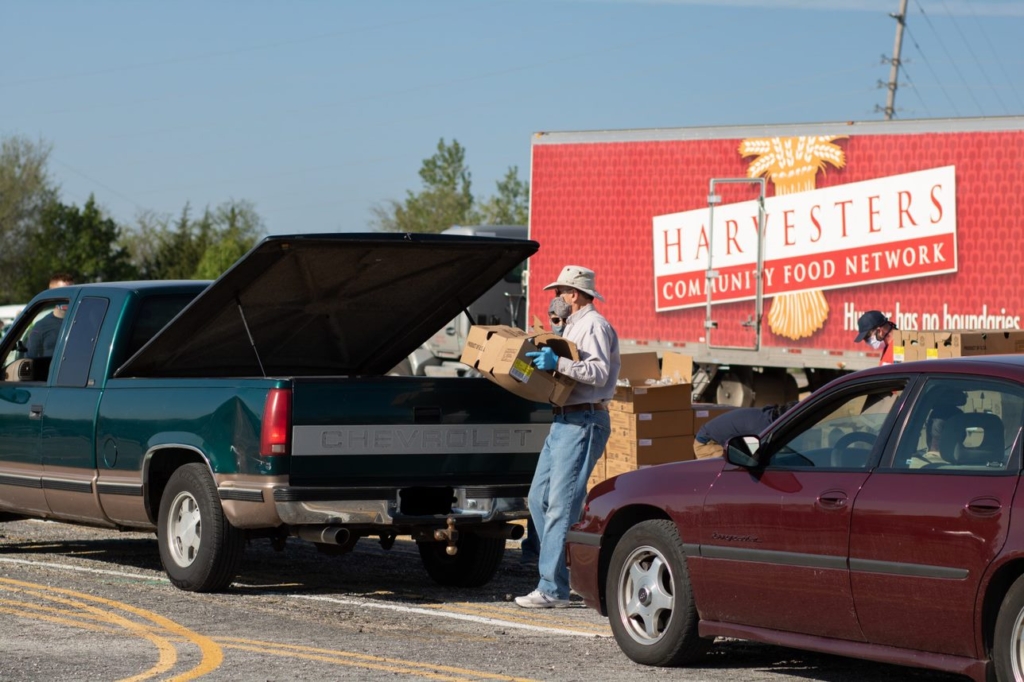
Throughout the pandemic, families have turned to food banks for help. Harvesters, a private food bank, saw the amount of food distributed increase from 54 million pounds in 2019 to 65 million in 2020. In this picture, food is distributed at a drive-in in Kansas City, Kansas. (Harvesters — The Community Food Network).
After Congress ended pandemic food assistance in February, 70,000 older Ohioans have seen food benefits slashed to $23 a month, in some cases down from $280.
That has many making excruciating choices between food, medicine and utilities like electricity and gas, Lisa Hamler-Fugitt, executive director of the Ohio Association of Foodbanks, said Wednesday.
And while it’s dire for anybody to live in hunger, that’s especially true the older you are, she said, because insufficient nutrition exacerbates conditions such as diabetes and depression and can take away seniors’ ability to live on their own. The end of COVID-era enhancements to benefits under the Supplemental Nutrition Assistance Program — or SNAP — has added to the already increasing number of older Ohioans seeking help at Ohio’s groaning food pantries, Hamler-Fugitt said.
“They’re the canaries in the hunger coal mine,” she said, explaining that because most older Ohioans live on fixed incomes, they can’t earn their way out of food insecurity. “When they join the food line, they’re not leaving until they go into the nursing home or they pass away.”
To help low-income people deal with the economic shocks from the coronavirus epidemic, Congress and the Trump administration in 2020 enhanced benefits under SNAP, the program formerly known as food stamps, and it eased eligibility to include households with somewhat higher incomes. And by literally putting food on the table, it had a big effect on poverty, the Center on Budget and Policy Priorities reported.
“The temporary benefits pushed back against hunger and hardship during COVID,” the report said. “A study estimated that (enhanced allotments) kept 4.2 million people above the poverty line in the last quarter of 2021, reducing poverty by 10 percent — and child poverty by 14 percent — in states with (enhanced allotments) at the time. The estimated reduction in poverty rates due to (enhanced allotments) was highest for Black and Latino people.”
But last December, Congress and the Biden administration decided to end the enhancements effective in February.
“This change was made as part of a bipartisan compromise that created a permanent Summer Electronic Benefit Transfer (EBT) program to provide grocery benefits to replace school meals for some 30 million children in low-income families when schools are closed in the summer — a time when families with school-aged children are at higher risk for food insecurity,” the Center on Budget and Policy Priorities reported.
Hamler-Fugitt said that in Ohio, the group over 60 was particularly hard hit in part because it’s an aging state. It has the 18th-highest percentage of residents over 65, for example.
In some cases, seniors don’t have support systems and some are even supporting others, such as grandchildren and great-grandchildren. And the older one becomes, the more health complaints accumulate, often making it impossible to perform many of the jobs that are available.
Hamler-Fugitt said her agency has been hearing about the real-life consequences of cutting back food benefits to older Ohioans.
“You just can’t even believe these horror stories,” she said. “We’re interviewing them now about what their coping strategies are and it’s really, really scary. Before they had about $2 a meal — that was a best-case scenario. Now it’s 75 cents a day. That’s 25 cents a meal.”
She explained that the permanent fix to the problem is at the federal level, where providing the U.S. Department of Agriculture with more resources could make the enhanced benefits permanent.
But over the short term, advocates for the poor are asking the Ohio General Assembly to pony up $21 million for each of the next two years to ensure that every eligible Ohio household has at least a $50 monthly SNAP benefit.
“The economic consequences of this for an aging state like Ohio are just huge,” Hamler Fugitt said.
_____________________________
MARTY SCHLADEN
Marty Schladen has been a reporter for decades, working in Indiana, Texas and other places before returning to his native Ohio to work at The Columbus Dispatch in 2017. He’s won state and national journalism awards for investigations into utility regulation, public corruption, the environment, prescription drug spending and other matters.
In addition to overseas wars and continuing supply-chain disruptions, diseases and climate-driven storms are making it hard to feed the hungriest Ohioans, Ohio’s top food bank official said Friday.
And that’s even as continuing inflation is creating ever more of them, she said.
“We’re just not seeing a return to normal at all,” said Lisa Hamler-Fugitt, executive director of the Ohio Association of Foodbanks.
Throughout the pandemic, Ohio’s food banks have seen record demand. Now, with costs of essentials like food and utilities continuing to increase, things are only getting worse.
“We thought we were at the high-water mark for demand,” Hamler-Fugitt said. “We’re way past that.”
She said that in the quarter ending Sept. 30, Ohio’s overstretched food banks saw 50% more children than they had in the same quarter of an unusually busy 2021. They also saw 31% more seniors, she said.
“Once people start getting these high heating costs, this will continue,” she said. “Seniors are just outliving their resources.”
In addition, Putin’s war in Ukraine continues to keep grain and other agricultural products off the market and while gas prices are coming down, prices for the fuel mostly used to transport food — diesel — remain high. All those factors increase food prices at the same time that food banks are having to buy more because USDA food donations have been cut substantially.
To help with those purchases, Gov. Mike DeWine in October announced that food banks would get $15 million in unexpended federal coronavirus funds — money that Hamler-Fugitt said is going to buy protein-rich food like beef, ham, poultry, eggs and dairy products. Last week, the legislature announced another $25 million for the food banks, which Hamler-Fugitt said would be evenly split between proteins and plant-based foods.
But as the food suppliers of last result scramble to meet demand, mother nature seems to be conspiring against them.
“Most of our vegetable production this time of year shifts to the South and the West Coast,” Hamler-Fugitt said.
In addition, the coronavirus isn’t the only disease increasing food costs. An avian flu outbreak has impacted more than 44 million birds, trebled egg prices and also inflated the cost of Thanksgiving and Christmas turkeys.
All of which adds to the burden shouldered by foodbanks. Hamler-Fugitt acknowledged that she’s been appealing for help since the start of the pandemic and said she understands that covid fatigue set in long ago. But she said the number of hungry Ohioans is still growing.
“We’re just bracing and hoping that something else doesn’t happen,” she said.
Ohio’s foodbanks say they’re desperate as summer is turning to fall. Demand has skyrocketed with increasing food costs at the same time that their resources have evaporated. And with current supply chain disruptions, they need to order food now if they hope to have it when winter comes.
And even though the state is sitting on unprecedented fund balances of $7.4 billion and another $1.3 billion in unexpended American Rescue Plan Act funds, the administration of Gov. Mike DeWine so far hasn’t answered the foodbanks’ entreaties for $50 million in emergency assistance.
The U.S. Department of Agriculture partially answered that call on Wednesday when it announced that it would put up nearly $1 billion nationally to purchase food for emergency providers such as foodbanks. Another $500 million will go to emergency food systems so they can buy commodities themselves. And $500 million will go to school lunch and breakfast programs, the USDA announced.
“Food banks and schools are the backbone of our nutrition safety net, serving tens of millions of children and families,” Stacy Dean, Deputy Under Secretary for Food, Nutrition, and Consumer Services, said in a statement. “The Biden administration understands that supply chain disruptions and high food costs have created uncertainties for these crucial partners, and we are committed to equipping them with the resources they need to keep communities fed, strong, and healthy.”
In a joint statement, the Ohio’s Foodbanks said that Ohio will get $50 million worth of help starting next year.
“For many months, our foodbanks have been strained nearly to a breaking point,” the foodbanks said. “Some are operating in deficit budgets, purchasing food just to keep enough balanced products on the shelves for our hunger-relief partner organizations and the people we serve together. We have been buying more privately purchased food than ever before, at record prices. Just like Ohio families, foodbanks have been paying higher rates to keep our coolers on, our day-to-day operations afloat, and our trucks moving.”
In an email, Ohio Association of Foodbanks Executive Director Lisa Hamler-Fugitt stressed that the federal assistance likely won’t come until January and Ohio foodbanks’ needs are immediate.
“We need food now to meet the increasing need,” she said. “We have also requested that (Agriculture Secretary Tom) Vilsack send letters to the governors urging them to use ARPA funding to support foodbanks and emergency food assistance programs.”
In their joint statement, the foodbanks made a similar appeal.
“We want to be ready to distribute this food to Ohio families and balance the limited menu of USDA commodities with Ohio-grown, raised, and produced foods, and that’s where the state of Ohio can join with us,” it said. “By matching this $50 million investment by USDA with $50 million in the state of Ohio’s ARPA funds, Gov. DeWine and members of the Ohio General Assembly can ensure that the Ohioans hardest hit by the pandemic and ongoing economic uncertainty can count on us for the help they need in the future.
“Immediate ARPA funds will prevent a bleak holiday season, as well as help our network reinforce its storage and distribution capacity for the months ahead and support Ohio agriculture. We look forward to working with our state and federal partners to continue to keep our communities’ needs met.”
For millions of Ohioans, world events are making it harder to fill their pantries and refrigerators, an official who helps oversee the state’s food banks said on Wednesday. Those pressures will only increase pantries’ need for state assistance, she said.
The coronavirus pandemic had already put pressure on the state’s food banks as demand increased and supply-chain disruptions made it harder and more expensive to get food. Now the Russian invasion of Ukraine is poised to further squeeze global flows of wheat and fuel, exacerbating those trends, said Lisa Hamler-Fugitt, executive director of the Ohio Association of Foodbanks.
Further complicating the picture is that the new scarcity of food is slashing commercial contributions to organizations that supply the neediest Ohioans, making them desperate for help.
“I would say that is an understatement,” Lisa Hamler-Fugitt said. “Overall, donations are down substantially. Before we went into the pandemic, private-sector donations from food manufacturers, wholesalers, retailers and local food and fund drives would range from 45% to 50 % of all we had to distribute. Since the pandemic that has declined dramatically.”
Lisa Hamler-Fugitt
Now the portion donated by commercial suppliers is closer to 33% at the same time that costs to purchase and transport food are growing. Consider:
Eggs that cost food banks 40 cents a pound in 2019 now cost 94 cents, a 135% increase.
Ground beef that cost $2.14 a pound in 2019 costs $2.84, a 33% increase.
Pasta has gone from 42 cents a pound in 2019 to 70 cents now, a 66% hike.
Also, a $2,000 per-child tax credit expired in December, plunging an estimated 10 million American children and 280,000 in Ohio back into poverty. Hamler-Fugitt said that of families receiving the credit, 59% said food was their No. 1 expense, so its expiration is increasing demand at Ohio food banks even as costs go up.
“Families that were standing in grocery store lines are back in our food pantries,” she said.
Federal data appear to support that claim. The Census Bureau’s Household Pulse Survey estimated that about a month after the credit expired, 339,000 Ohio families with children sometimes or often didn’t have enough to eat in the past seven days.
Compare that to the period from Sept. 15-27 when the credit was in full force. Then an estimated 264,000 Ohio families with children sometimes or often didn’t have enough to eat, the survey said.
If those estimates are accurate, that means food insecurity for families with children has leapt 28% since the expiration of the child tax credit.
In addition to all the other inflationary pressures on food, Hamler-Fugitt said she suspected another: price gouging.
“I hear from the farmers saying, ‘We’re not making any more money.’ How is that possible?” she said.
In his State of the Union Address Tuesday, President Joe Biden echoed that suspicion. He said concentration in the meatpacking industry is alarmingly high.
“Guess what, you got four basic meat packing facilities,” he said. “That’s it. You play with them or you don’t get to play at all. And you pay a hell of a lot more. A hell of a lot more because there’s only four.”
The White House estimates that those four companies — JBS, Cargill, National Beef Packing and Tyson Foods — control 85% of beef packing in the United States, 54% of poultry and 70% of pork. The administration says it’s making an effort to promote competition in those sectors and across the economy.
But even if those efforts are eventually successful, Hamler-Fugitt said Ohio food banks need help more quickly. She praised the support they’ve gotten from Gov. Mike DeWine throughout the pandemic, but said the food centers need $183 million for supplies, operating costs and to upgrade their infrastructure.
Ohio has more than $600 million in unexpended funds from the American Rescue Act and about $500 million more is on the way, Hamler-Fugitt said. A DeWine spokesman didn’t immediately respond to a request for comment.


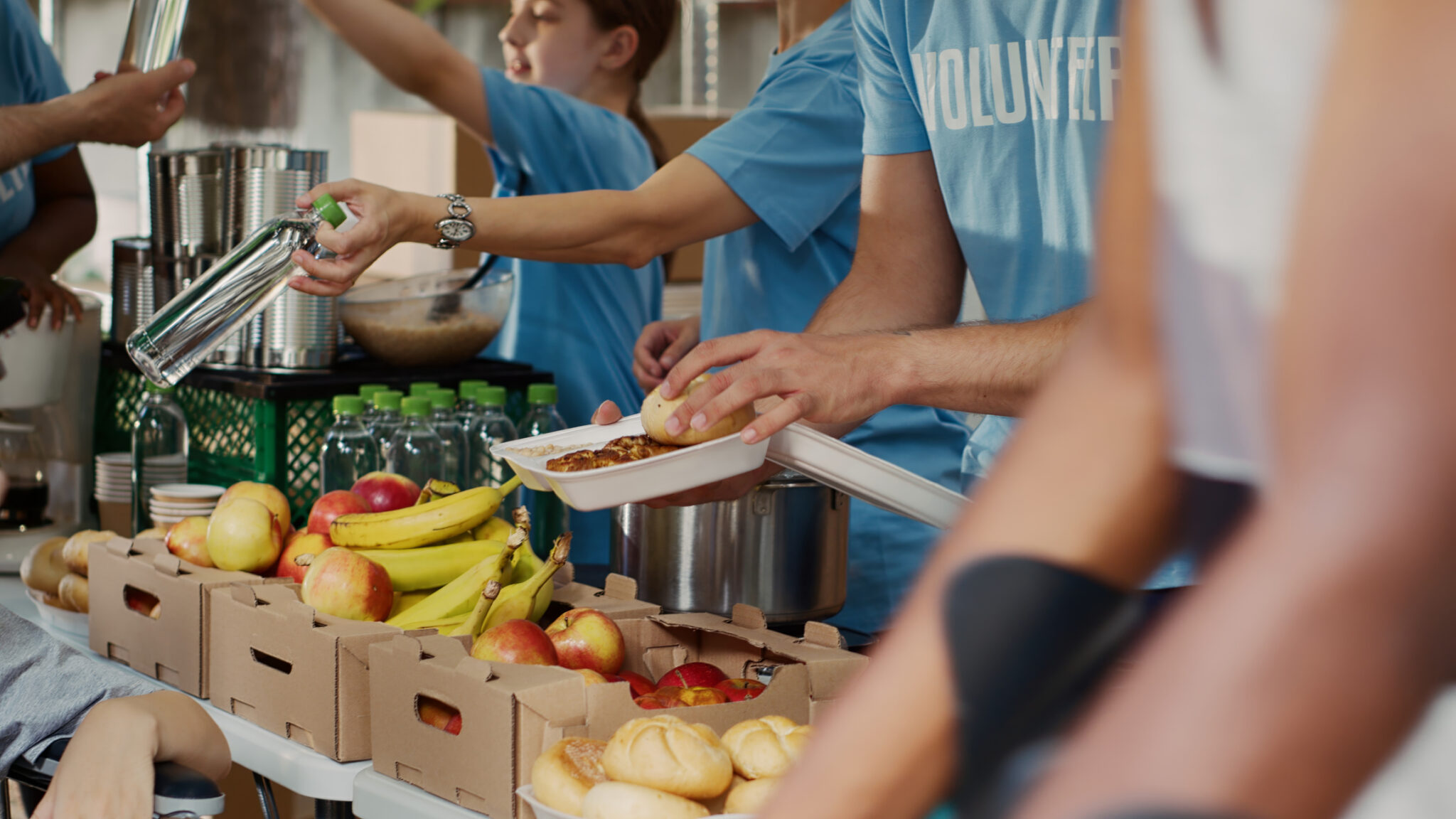


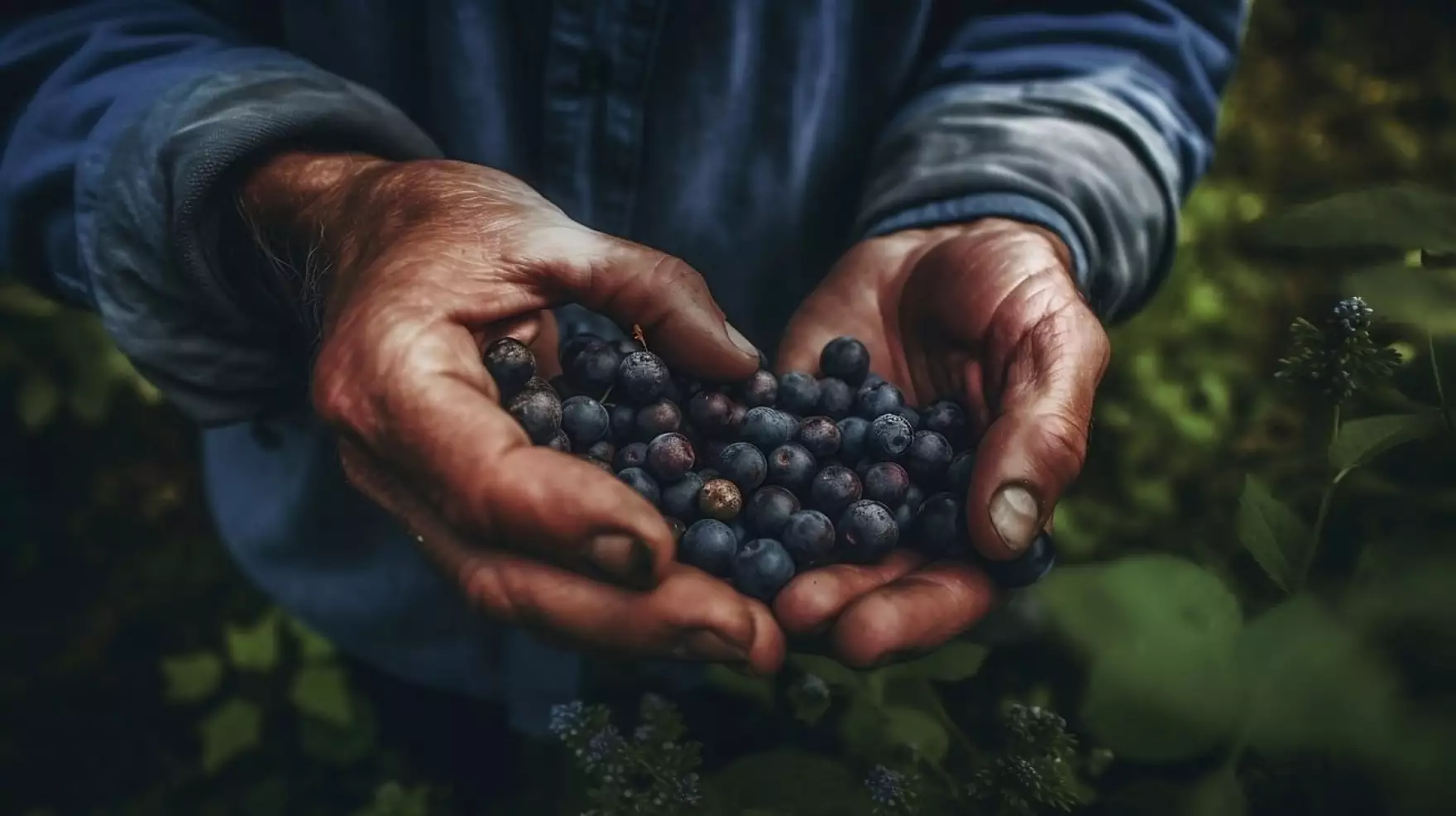




 The researchers noted: “Overall, producers were drawn to participate in the Ohio CAN program because sharing high quality products with communities in need was often central to their core mission and personal values.” A farmer called the program a “godsend” and said they felt like they were on the “front lines of food insecurity and food instability.” One foodbank representative in a historically redlined area, where banks discriminated against residents of certain neighborhoods because of their race and ethnicity, said it was the first time a farmer had offered them okra and they hoped “we’ll be able to work more closely with her to get larger, larger quantities in next year.”

 MARTY SCHLADEN