Tag: Ohio Attorney General Dave Yost

  • Ohio attorney general appeals decision that struck down state’s six-week abortion ban

    Ohio attorney general appeals decision that struck down state’s six-week abortion ban

    By:  Ohio Capital Journal

    Ohio Attorney General Dave Yost will appeal a Hamilton County court’s decision to strike down the state’s six-week abortion ban with no exceptions for rape or incest that was put into effect for several months after Roe v. Wade was overturned in 2022.

    Yost, along with Ohio Department of Health director Bruce Vanderhoff and the State Medical Board of Ohio’s Kim Rothermel and Bruce Saferin, were listed in the notice of appeal filed this week in the 1st District Court of Appeals. The 1st District is the appellate court that oversees Hamilton County.

    GET THE MORNING HEADLINES.


    Ohio Attorney General Dave YostThe state attorney general is appealing Hamilton County Judge Christian Jenkins’ decision in October which struck down a 2019 law that banned abortions after six weeks gestation, a time at which supporters of the law said fetal cardiac activity could be detected.

    The law was blocked in court almost from the moment it was enacted, with abortion rights advocates suing to stop enforcement of the law.

    When the U.S. Supreme Court overturned Roe v. Wade in the summer of 2022, Yost asked a federal court the same day for the law to be released from its injunction.

    The law then went into effect for several months, but was then tied up in court again after abortion rights advocates like Preterm Cleveland and Planned Parenthood Southwest Ohio Region asked the Ohio Supreme Court, and then a Hamilton County court, to stop the law once again.

    When 57% of Ohio voters approved a reproductive rights constitutional amendment in November 2023, attorneys for the abortions rights groups sought to get the law permanently overturned, with the rights enshrined in the new amendment.

    During the case, after the amendment was passed by voters, Yost argued that the law shouldn’t be thrown out entirely. He argued that some provisions didn’t conflict with the amendment passed by voters and should be kept, such as mandatory waiting periods and multiple appointments required for abortion care.

    This past October, Jenkins agreed with the groups, saying the new amendment “now unequivocally protects the right to abortion” and that the law should be permanently overturned “to give meaning to the voice of Ohio’s voters.”

    “Unlike the Ohio Attorney General, this court will uphold the Ohio Constitution’s protection of abortion rights,” Jenkins wrote in his decision. “The will of the people of Ohio will be given effect.”

    Jenkins used Yost’s own legal analysis of the amendment (written prior to its passage) against him in the ruling. Yost wrote in the analysis that the amendment “would give greater protection to abortion to be free from regulation than at any time in Ohio’s history.”

    “Ohio would no longer have the ability to limit abortions at any time before a fetus is viable,” Yost wrote. “Passage of Issue 1 would invalidate the Heartbeat Act, which restricts abortions (with health and other exceptions) after a fetal heartbeat is detected, which is usually at about six weeks.”

    Jessie Hill, cooperating attorney for the ACLU of Ohio, who represented abortion rights groups in the case, said they intend to “keep fighting to ensure that the amendment is enforced, and Ohioans’ rights are protected.”

    “We are disappointed that the attorney general continues to spend taxpayer money on this lawsuit and disregard the very clear message that Ohioans sent when an overwhelming majority approved the Reproductive Freedom Amendment to our constitution,” Hill said in a statement Tuesday afternoon.

    The Capital Journal has reached out to the Attorney General’s Office for comment.

    YOU MAKE OUR WORK POSSIBLE.

    __________
    Susan Tebben
    Susan Tebben

    Susan Tebben is an award-winning journalist with a decade of experience covering Ohio news, including courts and crime, Appalachian social issues, government, education, diversity and culture. She has worked for The Newark Advocate, The Glasgow (KY) Daily Times, The Athens Messenger, and WOUB Public Media. She has also had work featured on National Public Radio.

    Ohio Capital Journal is part of States Newsroom, the nation’s largest state-focused nonprofit news organization.

    MORE FROM AUTHOR

  • Ohio AG Yost allows voting amendment to proceed, other proposals might not be far behind

    Ohio AG Yost allows voting amendment to proceed, other proposals might not be far behind

    Ohio Attorney General Dave Yost. (Photo by Morgan Trau, WEWS.)

    By:  Ohio Capital Journal

    Last week, Ohio Attorney General Dave Yost allowed a state constitutional amendment to go forward after previously rejecting it.

    His approval was a formality — the Ohio Supreme Court recently ruled he could not reject the Ohio Voters Bill of Rights simply because of its title — but it could open to door to another amendment Yost has repeatedly blocked.

    In Ohio’s ballot initiative process the Attorney General plays a crucial gatekeeping role. After a committee has drafted its amendment and collected an initial 1,000 signatures, the AG gets to decide if what they’ve got down on paper represents a “fair and truthful” statement of what their proposal would actually do.

    It gives the AG significant power over whether a petition eventually winds up on the ballot.

    His approval, under court order, of the Ohio Voters Bill of Rights came after two previous rejections. A different measure to end qualified immunity received rejection letters seven times. But following the recent decision, the AG and the committee pushing to restrict legal protections for public employees like police officers are asking the state Supreme Court how its ruling impacts their proposal.

    The Ohio Voters Bill of Rights

    The amendment covers all the basics — voting is a fundamental right for anyone 18 years and older who is citizen of the U.S. and Ohio — and enshrines them in the state constitution. By establishing those rights in the state charter, procedures like early voting or absentee voting couldn’t be rolled back by a simple act of the General Assembly; those rights would become the floor rather than the ceiling.

    GET THE MORNING HEADLINES.


    However, the bill of rights goes a few steps further to make voter registration and casting a ballot far easier. The amendment would establish an automatic voter registration process which would update or register eligible voters anytime they interact with the Ohio Bureau of Motor Vehicles.  In addition, the proposal would establish same-day voter registration and grant counties the ability to open up additional ballot drop boxes or early voting sites.

    Although Republican Secretary of State Frank LaRose previously supported the idea of automatic voter registration, he derided the proposed amendment late last year.

    “Let me be clear: there will be nothing secure and fair about the way we vote in this state if this amendment is passed,” he said in a press release. “It’s a direct assault on the integrity of our voting process and the safeguards we’ve put in place to hold that process accountable.”

    Yost objected to the use of “bill of rights” to describe a series of provisions related to voting administration rather than “an articulation of specific, discrete rights that may be enforced by individuals against the government.” The Supreme Court wasn’t buying it, and noted in 2014 then-AG Mike DeWine advanced a proposal with the exact same name.

    But Yost didn’t give his approval without a parting shot. In his letter to the committee, he insisted, “the fact that the recent decision of the Supreme Court of Ohio concludes the relevant statute does not grant me authority to review the title does not change my determination that it is misleading.”

    “The Court did not reach a decision on the merits of that determination,” he went on. “I stand by it. I urge you to consider a more accurate and less misleading title.”

    The amendment formerly known as…

    Qualified immunity is a judicial doctrine holding that public officials should have protection from personal liability for their official conduct. Essentially, if an official is operating in good faith in murky legal waters they should be given the benefit of the doubt. The idea has been around since the late-1960s, but in recent years it has been used to shield police officers in excessive force cases.

    The Ohio Coalition to End Qualified Immunity has been working to get an amendment on the ballot, and in the last two years the state attorney general has rejected seven iterations of their amendment. The most recent proposal, submitted last July, has no title at all after Yost criticized the “Protecting Ohioans’ Constitutional Rights” name they’d given the earlier proposal.

    Yost rejected the untitled amendment, too — insisting the title “is an indispensable piece to determining whether the summary of it is fair and truthful.”

    But following the Ohio Supreme Court ruling that Yost couldn’t reject the Ohio Voters Bill of Rights based solely on the title, the AG and the committee backing the qualified immunity rollback are asking the court how the decision impacts their case.

    Last week both parties filed a joint motion with court to set aside the existing fight over the title and order the attorney general to go forward with his “fair and truthful” review of the underlying amendment summary.

    Last Wednesday, the court put briefing on hold for that underlying case, while it decides whether to order Yost go forward with his review.

    Follow OCJ Reporter Nick Evans on Twitter.


    Nick Evans
    Nick Evans

    Nick Evans has spent the past seven years reporting for NPR member stations in Florida and Ohio. He got his start in Tallahassee, covering issues like redistricting, same sex marriage and medical marijuana. Since arriving in Columbus in 2018, he has covered everything from city council to football. His work on Ohio politics and local policing have been featured numerous times on NPR.

    Ohio Capital Journal is part of States Newsroom, the nation’s largest state-focused nonprofit news organization.

    MORE FROM AUTHOR

  • Yost Seeks Freeze on EPA emissions rule

    Yost Seeks Freeze on EPA emissions rule

    Columbus, Ohio – Ohio Attorney General Dave Yost has asked the U.S. Supreme Court to pause a federal rule that forces states and power plants to comply with “unrealistic” and “unlawful” regulations targeting air pollution.

    In a filing with the court, Yost and the attorney general of Kansas oppose a recent Environmental Protection Agency rule that gives coal-fired power plants an ultimatum: Capture and store 90% of carbon emissions or shut down within eight years.

    “The EPA has resorted to ‘take it or leave it’ tactics to force its climate agenda on states and their power industries,” Yost said. “Protecting the air we breathe shouldn’t cost us our rights.”

    The attorneys general assert that the EPA lacks authority under the Clean Air Act to impose such regulations, noting a court ruling in a separate case that blocked the agency from forcing power plants to shift from fossil-fuel power to other types of energy.

    The EPA is taking an indirect approach to achieve the same unlawful outcome, the filing says, by giving states and power plants “impossible choices” that inevitably favor the agency’s climate agenda and strip states of their rights.

    Under the rule, the filing says, the EPA presents power plants with the no-win option to either risk billions of dollars on unproven emissions technology to meet unachievable benchmarks or shut down.

    Likewise, states can choose to immediately expend significant resources to comply with a rule that is likely to prove illegal or stand by as the federal government infringes on their sovereignty, the attorney generals write.

    In July, the U.S. Court of Appeals for the D.C. Circuit allowed the EPA’s rule to take effect as legal challenges continue. Yost and Kansas Attorney General Kris Kobach seek a stay from the U.S. Supreme Court to put a hold on the rule while the case proceeds.

  • Ohio AG Yost and three other AGs push for grocery mega-merger between Kroger and Albertsons

    Ohio AG Yost and three other AGs push for grocery mega-merger between Kroger and Albertsons

    By:  Ohio Capital Journal

    Ohio Attorney General Dave Yost and his counterparts in Alabama, Georgia and Iowa went to court Wednesday to urge that the merger between Kroger and Albertsons go through.

    Opponents of the merger — including the Federal Trade Commission and eight state attorneys general — say that such a huge merger in a consolidating marketplace will drive up prices and drive down the wages of people who work there.

    But Yost and his colleagues argue the opposite — that the merger of the grocery giants will actually increase competition by allowing the resulting company to compete with giants like Walmart, Amazon and Costco in what is a highly competitive marketplace. But as part of that marketplace, their friend-of-the-court brief cites players such as dollar stores and pharmacies, which are not generally considered to be good alternatives to a full-service grocery.

    Blockbuster deal

    The attempted merger is playing out against a backdrop in which the inflating price of groceries is a top election-year issue.

    The New York Times on Tuesday reported that inflation in the sector has eased, rising 1.1% this year through June, but prices are up a whopping 20% over the past four years. The story cited polls showing that 64% of Americans believe inflation is a very serious problem and that grocery prices were the type of inflation that most concerned them.

    While the rate of inflation in the grocery aisle might be dropping, consumers could be forgiven for asking: If the coronavirus was to blame for price spikes, why haven’t prices dropped with the end of the supply problems caused by the pandemic?

    The FTC might have shed some light on that in March when it issued a report that looked at what happened during the pandemic. It said players like Kroger, Walmart and Amazon used their huge size to gain unfair advantage with suppliers, securing better prices and getting first dibs on scarce items.

    The dynamic seems to persist. Profits spiked with prices, and they both stayed high into 2024, the report said.

    With the merger, Kroger and Albertsons would have even more clout with suppliers. They operate a combined 5,000 stores and approximately 4,000 retail pharmacies and employ nearly 700,000 employees across 48 states, the FTC said.

    Cincinnati-based Kroger has a larger national footprint, while Boise, Idaho-based Albertsons is mostly confined to the West. Arkansas, Louisiana and Texas are home to both chains and they say they’ll sell stores to other grocers in markets where both chains are present.

    Who’s harmed and how?

    In a press release announcing the effort to block the merger, the FTC said the proposed deal “will eliminate fierce competition between Kroger and Albertsons, leading to higher prices for groceries and other essential household items for millions of Americans. The loss of competition will also lead to lower quality products and services, while also narrowing consumers’ choices for where to shop for groceries.”

    Saying that the companies’ divestiture plans were inadequate, it added, “For thousands of grocery store workers, Kroger’s proposed acquisition of Albertsons would immediately erase aggressive competition for workers, threatening the ability of employees to secure higher wages, better benefits, and improved working conditions.”

    In response, Yost and the merger supporters argue that the marketplace would become more competitive after a merger.

    “The acquisition would likely increase, not restrain, competition in the market for grocery sales, benefiting consumers,” their friend-of-the-court brief said. “It promises to strengthen Kroger’s ability to compete effectively for consumer dollars in an already crowded field of retailers, and there is no factual or legal basis for the (FTC) to claim otherwise.”

    Who are the other retailers Yost and his colleagues say are crowding the field?

    “… club stores (Costco, Sam’s Club); limited assortment stores (Aldi, Lidl); premium natural and organic stores (Whole Foods); dollar stores (Dollar General, Family Dollar); and online retailers…” the amicus brief said.

    Whether all those stores would meet the needs of distressed communities is questionable. In Austin, where Whole Foods is headquartered, some mockingly call it “Whole Paycheck” because of its cost, and dollar stores are not known for their healthful offerings.

    In an interview Thursday, Yost said he “hasn’t been the biggest fan of dollar stores.” In February, he announced a million-dollar settlement with Tennessee-based Dollar General over allegations that the chain was overcharging at the cash register.

    However, Yost said, dollar stores sell food, so they count as competition to grocers.

    The core of the problem

    Along with the findings in the FTC’s pandemic-pricing report, others have said smaller competitors are squeezed out because they just can’t get supplies at the cheap rates the big boys — including dollar stores — do. That can create food deserts in distressed communities, where existing health conditions are made worse by limited access to proper nutrition.

    The phenomenon is literally killing people. JAMA Oncology last year published a study finding that mortality from breast cancer and colorectal cancer is elevated in food deserts, for example.

    Last week ProPublica and Capitol News Illinois published an investigation into the fate of government-supported stores in food deserts. It looked at 24 stores in 18 states that received government funds in 2020 and 2021. As of June, five had closed and six never opened.

    Some of their struggles have to do with cynical competition.

    Cairo, at the southern tip of Illinois, had Dollar General stores. They’re known to locate in struggling communities, push out healthier food options and have been accused of being magnets for crime.

    When a government-supported store opened offering fresh produce, one of the Cairo dollar stores put in a produce aisle of its own. Now the downtown grocery is struggling to hang on.

    But back in 2018, when U.S. Sen. Tammy Duckworth, D-Ill., asked Dollar General to add produce at one of its Cairo stores, the company wasn’t interested, the story said.

    Beyond such bare-knuckled practices, the investigation found, is a deeper problem. Stores like the Cairo grocery just couldn’t get the same deals from suppliers that bigger businesses could.

    Alvaro Bedoya, the newest member of the FTC, in 2022 said a 21-store chain that operates in and around South Dakota Indian suffers from the same problem — even though it buys through a cooperative comprising hundreds of such stores.

    “They often don’t get access to the same products,” Bedoya said in an interview with the Capital Journal.

    Seeking solutions

    As he awaited Senate confirmation, Bedoya spent his time reading congressional debates and otherwise digging at the roots of antitrust laws passed in the late 19th and the first half of the 20th century. He said the goal of the laws was fairness for consumers and small businesses — particularly in small towns and on farms.

    In 1936, Congress passed a law — the Robinson-Patman Act — that seems to go to the heart of the issue facing small grocers. In 1998, the FTC described its intent.

    “Congress believed that large firms could dominate markets through predation and other forms of economic warfare directed against smaller firms, and felt that ‘power buyers’ such as large retailers could use their market power to extract price concessions from manufacturers and other sellers that were unavailable to their smaller competitors,” the agency said. “As the Commission has stated, ‘[t]he major legislative purpose behind the Robinson-Patman Act was to provide some measure of protection to small independent retailers and their independent suppliers from what was thought to be unfair competition from vertically integrated, multi-location chain stores.’”

    However, the FTC doesn’t appear to be deploying the law in its quest to stop the Kroger-Albertsons merger. “Robinson-Patman” doesn’t even appear in the FTC complaint.

    Yost said that’s because it’s too difficult under the law to prove that seemingly unfair practices caused the outcomes it seeks to stop.

    Saying he doesn’t subscribe to the “big-is-always-bad” school of antitrust enforcement, Yost said scale can help consumers.

    “How do we get our food?” he asked. “If Kroger and Albertsons merge and become a larger entity, they are not going to be the only ones with that kind of scale. Walmart, for example, has a big, big scale, and huge numbers of Americans shop for their food at Walmart.”

    Yost added, “If places like Kroger and Albertsons are not permitted to achieve scale for what they’re doing… you’re going to have the same effect we had with local grocers going out of business. By allowing this merger, you’re putting Kroger and Albertsons (on par) with places like Walmart.”

    However, the National Grocers Association — which represents independent grocers — took a different stance in February, when the FTC sued to stop the merger. It praised the suit and urged the agency to go further.

    “NGA appreciates the FTC’s commitment to a competitive grocery industry, and we look forward to the FTC taking further action to level the playing field, including enforcing antitrust laws like the Robinson-Patman Act that prohibit economic discrimination against independent grocers and their customers,” Chris Jones, NGA’s chief government relations officer and counsel said in a statement.

    Antitrust positions

    Yost’s stance on allowing the Kroger merger might seem perplexing.

    Since he was state auditor, he’s taken on huge pharmacy middlemen that are part of even larger health conglomerates. The FTC is going after the same businesses.

    As attorney general, Yost sued one of the middlemen, Express Scripts, and a sister company under Ohio’s antitrust law. He called pharmacy benefit managers “modern gangsters” and said Express Scripts, its sister organization and others were colluding to fix drug prices.

    The suit also says the companies improperly retaliated — against Kroger, ironically — because the Cincinnati-based grocer pulled out of what it believed was a bad deal for employee benefits.

    There are big differences between the FTC action against the Kroger merger and Yost’s actions against the pharmacy middlemen. Also, Yost’s actions against the pharmacy middlemen predate the proposed grocery merger by five years.

    But Yost is planning a run for governor in 2026, and his intervention in the merger case begs a question: Is the attorney general currying political favor with Ohio’s second-largest corporation? Yost said that’s not the case.

    A quick perusal of state and federal campaign-finance databases seemed to indicate that Kroger isn’t very active politically.

    However, secretary of state’s records show that Kroger’s political action committee gave $7,000 in 2022 to Gov. Mike DeWine and Lt. Gov. Jon Husted — Yost’s biggest rival for the GOP gubernatorial nomination. Kroger also contributed $10,000 to the Mike DeWine Jon Husted Transition Fund in February 2023.

    For his part, Yost said he wants to keep the FTC from blocking the merger because it’s a misuse of antitrust law.

    “Scale has long been recognized in American economics and American law. If I was a small guy competing against Amazon, would I be angry? Yes,” he said, describing a shoe store in his hometown of Delaware that was driven out of business by Walmart. “Whether that should be is a fine policy argument to have. That is not an antitrust argument.”


    Marty Schladen
    Marty Schladen

    Marty Schladen has been a reporter for decades, working in Indiana, Texas and other places before returning to his native Ohio to work at The Columbus Dispatch in 2017. He’s won state and national journalism awards for investigations into utility regulation, public corruption, the environment, prescription drug spending and other matters.

    Ohio Capital Journal is part of States Newsroom, the nation’s largest state-focused nonprofit news organization.

    MORE FROM AUTHOR
  • Ohio Attorney General Dave Yost settles with FirstEnergy for $20 million

    Ohio Attorney General Dave Yost settles with FirstEnergy for $20 million

    Ohio Governor Mike DeWine (left) and Ohio Attorney General Dave Yost (right) answer questions during a press conference. (Photo by WEWS).

    Unannounced amount dwarfed by scale of epic utility ripoff that featured more than $61 million in bribes and a $1.3 billion bailout

    By:  Ohio Capital Journal

    Ohio Attorney General Dave Yost has agreed to settle the largest bribery and money laundering scandal in state history with the massive utility that funded it.

    At just $20 million, the settlement amounts only to less than a third of the bribes Akron-based FirstEnergy paid and it is dwarfed by the benefits Ohio utilities have received from ratepayers as a consequence of the corrupt legislation those bribes paid for.

    Yost’s office sends out frequent press releases, but not one regarding Monday’s settlement, which was first reported by the Cincinnati Enquirer, citing an SEC filing by FirstEnergy.

    In response to questions, his office said Yost had “voluntarily walled himself off from the case months ago to avoid any suggestion that the case was politically driven or any outcome was influenced by politics or political decision making.” But it didn’t explain how.

    The statement comes after more than a year of questions about the attorney general’s own involvement in the fight to pass and protect the $1.3 billion ratepayer bailout that mostly went to FirstEnergy.

    Yost’s office added that the company was cooperating in state prosecutions of two former executives, and that the company had reformed in the years since the scandal.

    “The non-prosecution agreement signed between FirstEnergy, the Ohio Attorney General’s Office and the Office of the Summit County Prosecuting Attorney requires FirstEnergy to provide evidence, access to witnesses and testimony in the ongoing criminal cases against (former CEO) Chuck Jones and (former Vice President) Michael Dowling, as well as in civil proceeding relating to the passage of” the corrupt bailout bill, spokesman Steve Irwin said in an email.

    By agreeing to the pact, FirstEnergy won’t be charged criminally. The company paid the federal government $230 million in 2021 to get criminal charges dropped in that instance.

    In dropping the charges, the state and federal governments allowed FirstEnergy to dodge a big financial hit. Consultants told the company it could face nearly $4 billion in fines if indicted, the Cleveland Plain Dealer reported Tuesday.

    According to weeks of testimony in federal court in Cincinnati last year, FirstEnergy executives began wooing Larry Householder and other state leaders in late 2016. The executives had bet heavily on coal and nuclear generation that was losing money because they failed to anticipate that the fracking boom would make gas-fired electricity generation cheaper.

    So the executives — CEO Jones and Vice President Dowling — undertook a frantic search for a bailout.

    They flooded $61 million in corporate money into 501(c)(4) dark money groups. From there, the money went to elect friendly Republicans who would vote to make Householder speaker of the Ohio House at the start of 2019.

    From that perch, Householder shepherded the corrupt bailout, House Bill 6.

    Sam Randazzo, Gov. Mike DeWine’s pick to chair the Public Utilities Commission, helped write and lobby for the bailout even though he was supposed to be a neutral regulator. FirstEnergy later said it paid a $4.3 million bribe to Randazzo, who died by suicide in April.

    DeWine, whose administration had several senior officials connected to FirstEnergy, signed the bill the same day that it passed. But it ran into instant opposition in the form of a fierce campaign to repeal the bailout.

    The FirstEnergy executives — who are now under state indictment — were so alarmed at the repeal effort that they put up $36 million to stop it. The resulting campaign included false, xenophobic TV commercials, bullying people gathering signatures to put a repeal on the ballot and even allegations of assault.

    Yost gave HB 6 supporters a big assist in the heat of the repeal fight.

    Before a repeal could go on the ballot, supporters had to gather 1,000 valid signatures from registered voters and submit a ballot summary to the attorney general. Yost had to approve that before repeal advocates could start gathering the necessary 265,000 additional voter signatures. And they had just 90 days after DeWine signed the corrupt bailout on July 23, 2019 to do it.

    The summary and 1,000 signatures were submitted within 10 days. But then Yost rejected the ballot language on the first go-round. By the time they had submitted different language and more signatures — and Yost approved it — their time to gather more than a quarter-million signatures had been cut by 40% and the repeal failed.

    While Yost — a hopeful to become governor in 2026 — hasn’t commented on his conduct during this period, some of the conspirators did.

    During last year’s trial, federal prosecutors presented messages between former Ohio GOP Chairman Matt Borges, who is serving a five-year prison sentence for his involvement, to Juan Cespedes, who has pleaded guilty to his.

    In one, Borges said the attorney general told him that he thought the bailout was a bad law, but he wasn’t speaking publicly as a favor to Borges and FirstEnergy. Yost “‘would be out front (in opposition) if not for (FirstEnergy) support and your involvement,’” Borges quoted Yost as supposedly saying.

    In another, Borges — who had run some of Yost’s past campaigns — said of the repeal summary, “If there’s any way the law will allow him to reject the language, he will do it.”

    Irwin, Yost’s spokesman, justified the settlement by saying FirstEnergy had reformed.

    “FirstEnergy today is not the company it was five years ago – the corporation has undertaken, and continues to undergo, reforms to strengthen its internal ethics programs, to increase transparency, and promote reporting of questionable conduct by its employees and leadership,” Irwin said. “It has also restructured its board and leadership to remove the individuals responsible for the conduct that gave rise to the House Bill 6 scandal. This is an important step in bringing the disgraced corporate leaders who used their positions of power to betray FirstEnergy’s ratepayers and employees and the people of Ohio to account for their crimes.”

    However, institutional investors are in court arguing that FirstEnergy is trying to limit the blast radius of the scandal. They accuse the company of trying to protect other executives and board members who might have been culpable — or at least might have known of the scheme.

    Indeed, the company is battling furiously not to turn over an internal investigation it commissioned in the wake of the scandal. After being denied an attempt to appeal an order to turn it over, the company filed a risky petition for a writ of mandamus on July 30.

    After the HB 6 scandal broke in 2020, Yost donated $24,000 in contributions from FirstEnergy and Cespedes to charity. It’s an open question when he’ll explain what he knew and did in a scandal that imprisoned Householder for 20 years and led to two suicides — including that of indicted lobbyist Neil Clark.

    Meanwhile, ratepayers are still paying big money as a consequence of HB 6. Its provisions solely benefitting FirstEnergy were repealed after the scandal broke. But the state’s leadership has refused to repeal the rest of the bill.

    It includes a measure that has so far paid $343,000,000 to subsidize two aging coal plants owned by a group of Ohio utilities. One’s not even in Ohio.


    Marty Schladen
    Marty Schladen

    Marty Schladen has been a reporter for decades, working in Indiana, Texas and other places before returning to his native Ohio to work at The Columbus Dispatch in 2017. He’s won state and national journalism awards for investigations into utility regulation, public corruption, the environment, prescription drug spending and other matters.

    Ohio Capital Journal is part of States Newsroom, the nation’s largest state-focused nonprofit news organization.

    MORE FROM AUTHOR

  • Milford City Manager resigns after investigation for allegedly attempting to purchase sex from a 15-year-old girl

    Milford City Manager resigns after investigation for allegedly attempting to purchase sex from a 15-year-old girl

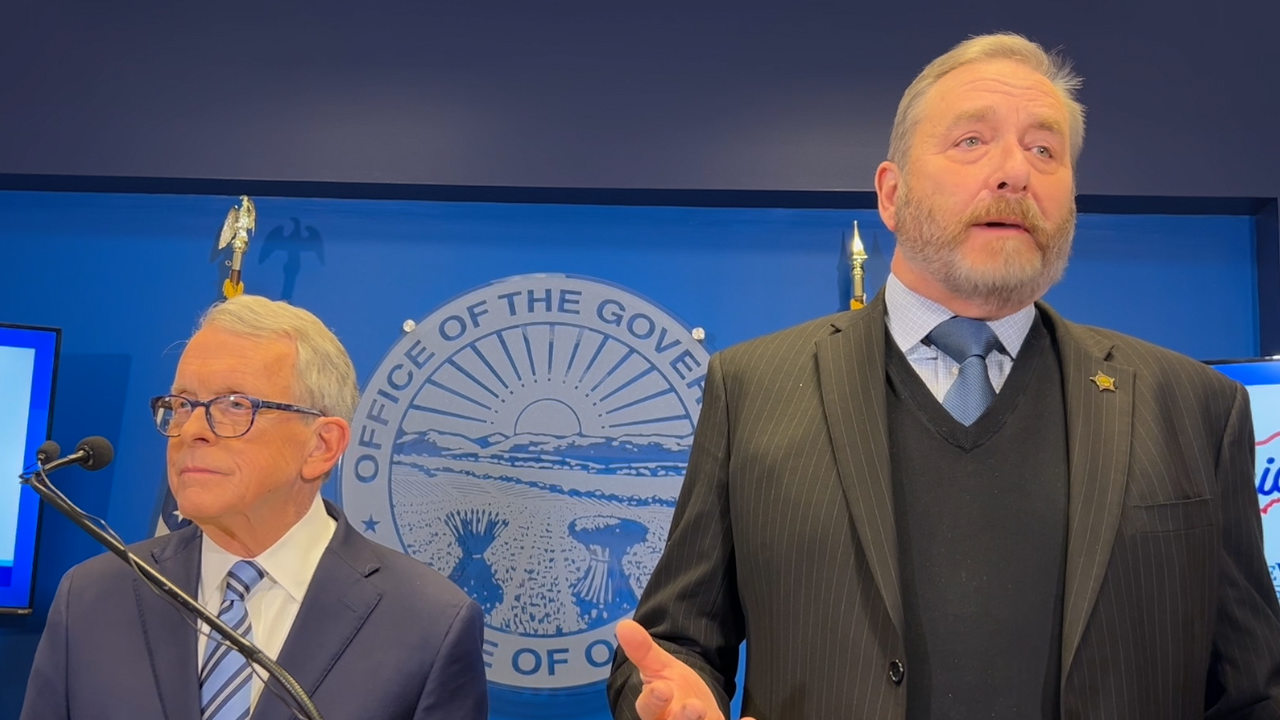
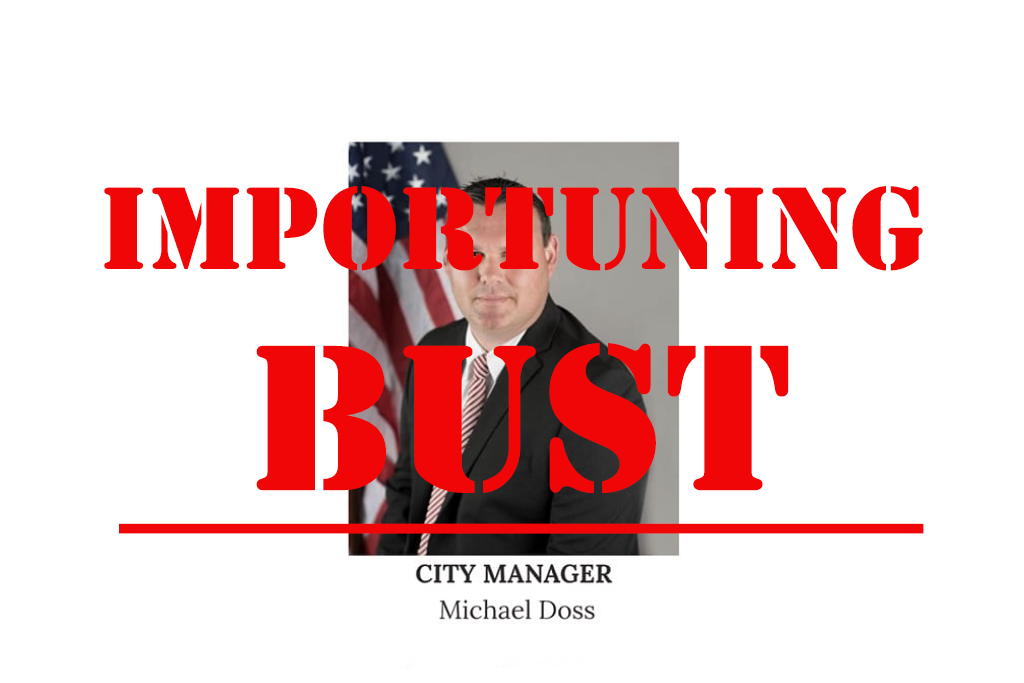
    Milford, Ohio – The former city manager of Milford in Clermont County has been charged with importuning, Ohio Attorney General Dave Yost and Montgomery County Sheriff Rob Streck announced on August 12.

    Michael Doss was charged in the Montgomery County Court of Common Pleas with one count of importuning, a fifth-degree felony.

    An undercover investigation by the Miami Valley Human Trafficking Task Force revealed that Doss allegedly attempted to purchase sex from an individual he believed was a 15-year-old girl. Additional charges are anticipated in the case according to a news release from Yost’s office.

    Doss recently resigned as Milford’s city manager after he was confronted about the allegations. He was Milford’s Manager for roughly 8 years.

    The Miami Valley Human Trafficking Task Force is formed under the attorney general’s Ohio Organized Crime Investigations Commission and is led by the Montgomery County Sheriff’s Office. The task force includes resources from the Butler Township Police Department, Oakwood Police and Homeland Security Investigations.

    _________________

    Section 2907.07 Ohio Revised Code Importuning.

    (A) No person shall solicit a person who is less than thirteen years of age to engage in sexual activity with the offender, whether or not the offender knows the age of such person.

    (B)(1) No person shall solicit another, not the spouse of the offender, to engage in sexual conduct with the offender, when the offender is eighteen years of age or older and four or more years older than the other person, and the other person is thirteen years of age or older but less than sixteen years of age, whether or not the offender knows the age of the other person.

    (2) No person shall solicit another to engage in sexual conduct with the offender, when the offender is eighteen years of age or older and four or more years older than the other person, the other person is sixteen or seventeen years of age and a victim of a violation of section 2905.32 of the Revised Code, and the offender knows or has reckless disregard of the age of the other person.

    (C) No person shall solicit a person who is less than sixteen years of age to engage in sexual activity with the offender when the person who is less than sixteen years of age is substantially impaired because of a mental or physical condition.

    (D) No person shall solicit another by means of a telecommunications device, as defined in section 2913.01 of the Revised Code, to engage in sexual activity with the offender when the offender is eighteen years of age or older and either of the following applies:

    (1) The other person is less than thirteen years of age, and the offender knows that the other person is less than thirteen years of age or is reckless in that regard.

    (2) The other person is a law enforcement officer posing as a person who is less than thirteen years of age, and the offender believes that the other person is less than thirteen years of age or is reckless in that regard.

    (E) No person shall solicit another by means of a telecommunications device, as defined in section 2913.01 of the Revised Code, to engage in sexual activity with the offender when the offender is eighteen years of age or older and either of the following applies:

    (1) The other person is thirteen years of age or older but less than sixteen years of age, the offender knows that the other person is thirteen years of age or older but less than sixteen years of age or is reckless in that regard, and the offender is four or more years older than the other person.

    (2) The other person is a law enforcement officer posing as a person who is thirteen years of age or older but less than sixteen years of age, the offender believes that the other person is thirteen years of age or older but less than sixteen years of age or is reckless in that regard, and the offender is four or more years older than the age the law enforcement officer assumes in posing as the person who is thirteen years of age or older but less than sixteen years of age.

    (F) Divisions (D) and (E) of this section apply to any solicitation that is contained in a transmission via a telecommunications device that either originates in this state or is received in this state.

    (G)(1) Whoever violates this section is guilty of importuning.

    (2) A violation of division (A), (C), or (D) of this section is a felony of the third degree on a first offense, and, notwithstanding division (C) of section 2929.13 of the Revised Code, there is a presumption that a prison term shall be imposed as described in division (D) of section 2929.13 of the Revised Code. If the offender, in addition to soliciting the other person, arranged to meet the other person for the purpose of engaging in sexual activity, the court shall impose upon the offender as a mandatory prison term one of the prison terms prescribed in division (A)(3)(b) of section 2929.14 of the Revised Code for a felony of the third degree.

    If the offender previously has been convicted of a sexually oriented offense or a child-victim oriented offense, a violation of division (A), (C), or (D) of this section is a felony of the second degree, and the court shall impose upon the offender as a mandatory prison term one of the definite prison terms prescribed in division (A)(2)(b) of section 2929.14 of the Revised Code for a felony of the second degree, except that if the violation is committed on or after March 22, 2019, the court shall impose as the minimum prison term for the offense a mandatory prison term that is one of the minimum terms prescribed in division (A)(2)(a) of that section for a felony of the second degree.

    (3) A violation of division (B) or (E) of this section is a felony of the fifth degree on a first offense, and, notwithstanding division (B) of section 2929.13 of the Revised Code, there is a presumption that a prison term shall be imposed as described in division (D) of section 2929.13 of the Revised Code. The court shall impose upon the offender as a mandatory prison term one of the prison terms prescribed in section 2929.14 of the Revised Code for a felony of the fifth degree if both of the following apply:

    (a) Either of the following applies:

    (i) The offender is ten or more years older than the other person.

    (ii) Regarding a violation of division (E)(2) of this section, a law enforcement officer posed as a person thirteen years of age or older but less than sixteen years of age and the offender is ten or more years older than the officer claimed to be.

    (b) In addition to soliciting the other person, the offender arranged to meet the other person for the purpose of engaging in sexual activity.

    (4) If the offender previously has been convicted of a sexually oriented offense or a child-victim oriented offense, a violation of division (B) or (E) of this section is a felony of the fourth degree, and the court shall impose upon the offender as a mandatory prison term one of the prison terms prescribed in section 2929.14 of the Revised Code for a felony of the fourth degree that is not less than twelve months in duration.

  • Donald Trump is a convicted felon. Some Ohio leaders react with fury, others silence

    Donald Trump is a convicted felon. Some Ohio leaders react with fury, others silence

    BY  Ohio Capital Journal

    A Manhattan jury made history Thursday when it convicted Donald Trump of 34 felonies. They relate to how he paid a porn star to stay quiet just before the 2016 election — and his actions cast doubt on Trump’s legitimacy during his one term as president.

    Despite now being a felon, Trump is for the third time the GOP nominee. Most of Ohio’s Republican leaders reacted with outrage to his conviction, while the governor didn’t have much to say, and the one statewide Democrat said the jury had spoken.

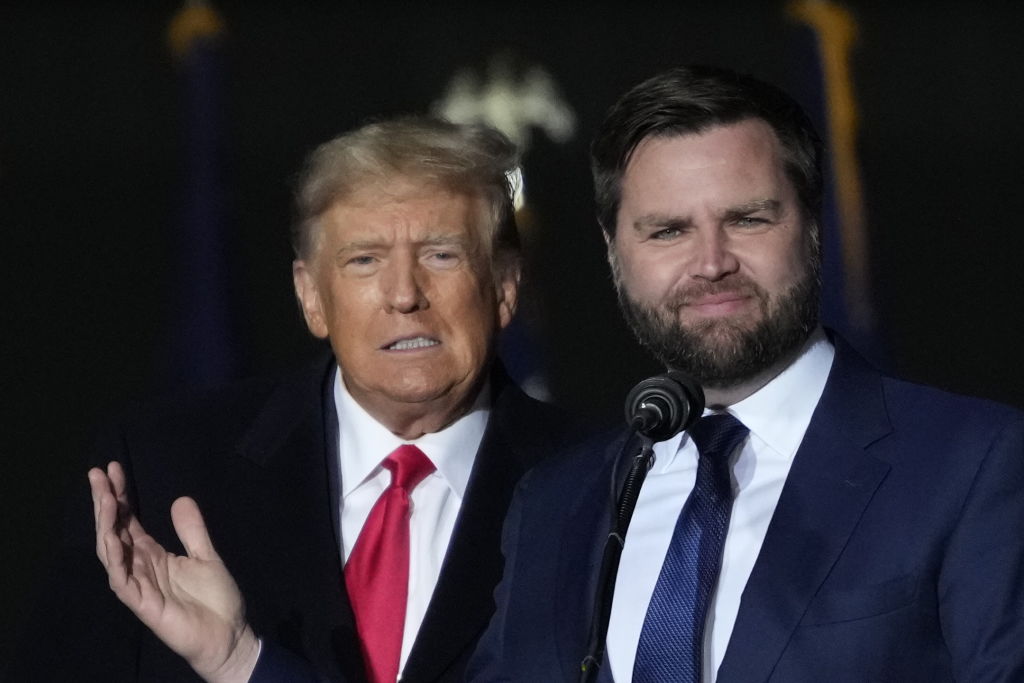
    Sen. J.D. Vance is on the shortlist to be Trump’s vice presidential pick and he took to the airwaves to call Trump’s prosecution political, and to say a lot of other stuff as well. On X Thursday, Vance falsely accused the Democratic Party of inventing a crime just to prosecute Trump and he made reference to a conspiracy theory with anti-semitic overtones.

    “This decision is a disgrace to the rule of law and our Constitution,” Vance wrote. “Dems invented a felony to ‘get Trump,’ with the help of a Soros funded prosecutor and a Biden donor Judge, who rigged the entire case to get this outcome. This isn’t justice, it’s election interference.”

    Actually, as the jury found, it was Trump who committed election interference. And legal experts pointed out that Trump’s lawyers helped pick the jury, put on witnesses and had input in the jury’s instructions. Trump himself could have taken the witness stand, but chose not to.

    Speaking from the White House Friday, President Joe Biden criticized Trump supporters for claiming that the justice system was rigged against Trump without providing any concrete evidence.

    “It’s reckless, it’s dangerous, it’s irresponsible for anyone to say this was rigged just because they don’t like the verdict,” Biden said.

    Ohio Attorney General Dave Yost, a likely contender for the GOP nomination to be governor in 2026, also slammed the proceedings that ended in Trump’s conviction.

    “This verdict is likely to be overturned. It is not the first unjust verdict, and it is why we have courts of appeals,” he said on X. “The aptly named (Manhattan District Attorney) Alvin Bragg picked his defendant and campaigned on prosecuting him — disreputable and unethical conduct that tarnished the justice system.”

    When it comes to courts of appeal, Yost has had his own difficulties. A panel of the 6th U.S. Circuit Court of Appeals on Wednesday ruled that Yost was improperly blocking signature gathering for a proposed amendment to the state Constitution that would reduce immunities the state has have from being sued. Yost on Thursday said he’d seek a ruling from the entire court.

    Some of the AG’s critics have accused him of stalling.

    He refused to approve a summary of the ballot language, which supporters need if they’re to gather 420,000 verified signatures from registered voters in time for the measure to make the November ballot. Yost is refusing to answer questions about a similar maneuver in 2019 that helped kill a voter-initiated repeal of a law at the center of the biggest bribery scandal in Ohio history.

    Lt. Gov. Jon Husted is likely to vie with Yost for the gubernatorial nomination. Like many other Ohio Republicans, he, too, said he was outraged over Trump’s conviction for having an extramarital tryst with a porn star, paying to silence her in order to improperly influence an election and then falsifying business records to cover it all up.

    “This quote from President Trump is ultimately the truth of the matter: ‘The real verdict is gonna be Nov. 5, by the people,’” Husted said on X. He then reposted that while saying further, “If you are mad about it, do something about it by donating, volunteering and voting.”

    Ever merciless, some commenters reminded the lieutenant governor that he was roundly booed at a 2020 Trump rally in Vandalia as he encouraged attendees to wear masks at the height of the coronavirus pandemic. Trump played a lead role in politicizing mask wearing and downplaying a scourge that has killed nearly 1.2 million Americans.

    Ohio’s top elections official also rushed onto social media to defend a newly minted felon who tried to overturn the results of the 2020 election and thereby steal the votes of 81 million Americans.

    “Partisan prosecutor,” Secretary of State Frank LaRose said on X. “Activist judge. Sham trial. Bogus verdict. It’s a sad day in America when a political party is so afraid of losing its grip on power that they’re willing to abuse justice to game an election. This will not stand.”

    LaRose is a key player in Ohio’s epic gerrymanderingquestionable voter purges and restriction of voting access, so it’s interesting that he’d accuse others of desperately clinging to power.

    One wag also pointed out that a jury had just found that Trump falsified numerous business records to further his conspiracy and that as Secretary of State, LaRose is in charge of Ohio’s business records. It’s unclear what — if anything — LaRose would have done if the former president faked them here in the Buckeye State.

    Cleveland businessman Bernie Moreno, who is challenging Democrat Sherrod Brown for Ohio’s other Senate seat, was also vociferous in his support of the only ex-president to also bear the title “felon.”

    “Today is a dark day for American democracy,” Moreno said on X. “Joe Biden and his leftwing allies engaged in election interference to prosecute their top political opponent on bogus charges. This verdict is representative of a banana republic, not a democracy. Sherrod Brown and DC Democrats should be ashamed of this weaponization of our justice system.”

    His statement ignores the fact that the Biden Justice Department declined to prosecute Trump on the charges of which the New York jurors found him guilty. It also ignores the fact that the Biden Justice Department is prosecuting the president’s own son and a sitting Democratic senator.

    Brown, his Democratic opponent, is facing a hard reelection in a Republican-leaning state. When asked to comment on Trump’s conviction Friday, Sen. Brown stuck to general principals.

    “I’m not a lawyer or a judge but I’ve said from the beginning that no one is above the law,” he said in an email. “Ultimately this is up to the legal system to sort out and for the American people to decide in November.”

    Gov. Mike DeWine’s office didn’t immediately respond to a request for comment. He’s a Republican who got on Trump’s bad side early in the pandemic, when DeWine implemented health orders that were recommended by experts.


    Marty Schladen
    MARTY SCHLADEN

    Marty Schladen has been a reporter for decades, working in Indiana, Texas and other places before returning to his native Ohio to work at The Columbus Dispatch in 2017. He’s won state and national journalism awards for investigations into utility regulation, public corruption, the environment, prescription drug spending and other matters.

    Ohio Capital Journal is part of States Newsroom, the nation’s largest state-focused nonprofit news organization.

    MORE FROM AUTHOR
  • Ohio AG Yost is prosecuting others in utility scandal, but he won’t discuss his own involvement

    Ohio AG Yost is prosecuting others in utility scandal, but he won’t discuss his own involvement

    Ohio Attorney General Dave Yost. (Photo by Morgan Trau, WEWS.)

    BY:  Ohio Capital Journal

    Ohio Attorney General Dave Yost this year brought criminal charges against four figures who were involved in the biggest bribery scandal in state history.

    Many thought they were long overdue. That’s especially true of cases filed against men accused of funding the conspiracy, but who still hadn’t been charged by federal prosecutors four years after the last of the alleged wrongdoing took place — and almost a year after two others began lengthy prison sentences.

    But Yost’s own name came up several times in the federal trial and his office last week again ignored detailed questions about the matter.

    The attorney general played an important role in the defeat of an attempted repeal of the corrupt bailout. And there were claims that he believed that the bailout was a bad law, but kept his mouth shut out of loyalty to one of the conspirators — and to the law’s major beneficiary.

    The issue is politically fraught for Yost because the state charges he filed this year have raised new questions about Lt. Gov. Jon Husted’s involvement in the scandal. Yost and Husted are widely expected to face each other in the 2026 race to be Ohio’s Republican nominee for governor.

    New charges

    Former House Speaker Larry Householder, R-Glenford, was sentenced to 20 years in federal prison last June for his role in a scheme in which Akron-based FirstEnergy paid more than $60 million to make him speaker in 2018 and to pass and protect a $1.3 billion ratepayer bailout the following year. It’s one of the biggest scandals in Ohio history, and so far it has also sent former GOP Chairman Matt Borges to prison for five years, resulted in two more guilty pleas — and seen two defendants die by suicide.

    But U.S. Attorney Kenneth Parker sidestepped a pretty important question last June when he stood in front of the federal courthouse in Cincinnati and boasted to the press about the convictions and sentences his assistants had just won. He was asked, what about the people who paid the bribes? Would they be charged? If so, when?

    All Parker would say was that the investigation was ongoing.

    In December, his team indicted Sam Randazzo, Gov. Mike DeWine’s nominee to be Ohio’s top utility regulator. In a deferred prosecution agreement, FirstEnergy said it paid Randazzo a $4.3 million bribe just before he became regulator. From that post, he did a number of lucrative favors for the company related to the bailout and he improperly helped with other matters as well, according to the indictment.

    But still uncharged by the feds are former FirstEnergy CEO Chuck Jones and Vice President Michael Dowling, the executives alleged to have directed truckloads of company money into 501(c)(4) dark money groups that financed the scandal.

    In February, a team of state prosecutors led by Yost stepped into the void by securing a grand jury indictment against Jones, Dowling and Randazzo. The charges relate to the bailout scandal, and also to a decade’s worth of shady dealings that allegedly paid Randazzo more than $10 million and ripped off industrial energy users and residential customers alike.

    In April, Randazzo died by suicide.

    Other questions

    The state indictment also raised new questions about the cozy relationships between the DeWine/Husted administration, FirstEnergy and Randazzo.

    Weeks before they were inaugurated, DeWine and Husted had dinner in downtown Columbus with Jones and Dowling — FirstEnergy’s top leadership — and discussed whether Randazzo would be acceptable to regulate the company. Jones and Dowling then drove about a mile to Randazzo’s German Village residence and negotiated the $4.3 million payoff, according to text messages that are being used in multiple court proceedings.

    The state indictment alleges that DeWine’s chief of staff, Laurel Dawson, knew about the payoff before the governor appointed Randazzo to chair the Public Utilities Commission of Ohio. But Dawson — whose husband was a FirstEnergy lobbyist who allegedly received a $10,000 loan from Randazzo — isn’t talking publicly about what she knew or what she told her boss.

    DeWine also continues to stand behind his former governmental affairs director, Dan McCarthy, who lobbied the legislature on DeWine’s behalf to pass the bailout law.

    Just before taking that job, McCarthy, too, was a FirstEnergy lobbyist — a job in which he set up a dark-money group that became a conduit for tens of millions in funding for the scandal. In last year’s trial, the prosecution presented evidence that FirstEnergy VP Dowling in 2019 ordered a subordinate to keep the then-DeWine aide’s name off of a $10 million infusion into the corrupt bailout even after being told that it would violate IRS rules to do so.

    DeWine and his staff haven’t explained what McCarthy and Dawson knew about the corrupt machinations as the bailout law was in the works — or when DeWine signed it mere hours after its passage.

    DeWine, Husted and their administration also haven’t explained what they knew about the long, shady relationship between Randazzo and FirstEnergy described in the state indictment. The governor’s spokesman has tried to suggest that it was common knowledge, but extensive evidence shows that Randazzo and FirstEnergy went to great lengths to conceal it.

    DeWine also has said he didn’t know about millions in dark money contributions FirstEnergy made in 2018 to support his gubernatorial bid. But a University of Cincinnati political scientist said it’s simply not believable that a company would make that kind of an expenditure and not make sure the beneficiary knew about it. That seems especially true for a company that subsequently admitted that it paid millions more in outright bribes.

    For his part, Husted won’t comment on the $1 million in dark money FirstEnergy spent supporting his 2018 bid for governor, or whether he  promoted Randazzo for the regulatory job when he dropped his bid and joined DeWine’s ticket.

    The two had history. As House speaker in 2007, Husted appointed Randazzo to the PUCO Nominating Council — a position he held until DeWine nominated him to chair the agency.

    Questions for the Attorney General

    Husted and Yost, the attorney general, are widely regarded as the frontrunners for the 2026 GOP gubernatorial nomination in a state that hasn’t elected a Democrat to that job since 2006.

    There hasn’t been any suggestion that Yost brought charges in the bailout scandal as a way of embarrassing his likely opponent. But at the same time, Yost’s office has avoided questions about his own involvement in the bailout controversy.

    According to text messages presented at last year’s federal court trial, Yost was drawn into the fight at a critical time. The bailout passed the Householder-run House at the end of May 2019, but a month later, opposition was growing in the state Senate.

    Borges, the former GOP chair who had run some of Yost’s political campaigns, had a June 26, 2019 text conversation with Juan Cespedes, who was also being paid to push the corrupt bailout law. Borges intimated that Yost believed that the law was a bad one.

    The AG “‘would be out front (in opposition) if not for (FirstEnergy) support and your involvement,’” Borges quoted Yost as saying.

    A spokesperson for Yost declined to comment at the time, citing the fact that he’d been subpoenaed in the case.

    Regardless of the AG’s view, so many people agreed that the bailout was a horrible law that an effort to undertake the cumbersome repeal process was getting underway even before it passed. Borges noted to Cespedes that Yost would have to give his approval before a repeal could get on the ballot. The AG would try to help them there, too, Borges said.

    If there’s any way the law will allow him to reject the language, he will do it,” Borges texted.

    Regardless of why, Yost ended up doing just that.

    Crucial lost time

    DeWine signed the bailout, House Bill 6, the day the Senate passed it — July 23, 2019. Six days later, repeal advocates had gathered 1,000 signatures from registered voters and submitted a summary of the repeal to Yost for his approval.

    Time was of the essence because under Ohio law, repeal advocates had to gather another 265,000 voters’ signatures within 90 days of the law’s passage to get it on the ballot. But first they had to wait for Yost to approve the ballot summary.

    The attorney general waited the full 10 days allotted him and then issued a rejection letter that seems at odds with any concept of “summary.”

    It was a six-page, 1,535-word document that picked apart the summary in excruciating detail.

    “He listed a lot of different things,” said Rachael Belz, CEO of Ohio Citizen Action, which was strongly opposed to the bailout. “It seemed like a lot to overcome. It didn’t seem very neutral.”

    The repeal was a referendum — the only one for which Yost has considered summary language since he’s been attorney general. Of the 26 other summaries he’s rejected, the vast majority were for proposed constitutional amendments and the rest were for initiated statutes.

    His rejection of the summary for the bailout repeal stands out for its length. It’s more than twice as long as his other rejections are on average, according to information available on the attorney general’s website.

    In the event, Yost’s initial rejection did heavy damage to the repeal effort.

    Proponents on Aug. 16, 2019 submitted a new summary, which Yost certified on Aug. 29, 2019. But by that time, the repeal team had only 54 days left of the original 90 to gather and submit more than a quarter-million valid signatures. Their time to complete the gargantuan task was cut almost in half, in other words.

    What followed was a lying, xenophobic and sometimes-violent campaign to defeat the repeal into which FirstEnergy plowed $36 million in dark money. Perhaps unsurprisingly, the repeal couldn’t get enough signatures and parts of the corrupt bailout law are still on the books.

    Yost’s office didn’t respond to questions about his role in the repeal — or Borge’s statements that were presented at the former political boss’s criminal trial. But for Belz of Citizen Action, there’s plenty of blame to spread among Ohio’s statewide leaders.

    “I don’t think Yost’s hands are clean,” she said. “I don’t think Husted’s hands are clean. I don’t think DeWine’s hands are clean. I don’t know whose hands are clean. Frankly, that’d be a shorter list.”


    Marty Schladen
    MARTY SCHLADEN

    Marty Schladen has been a reporter for decades, working in Indiana, Texas and other places before returning to his native Ohio to work at The Columbus Dispatch in 2017. He’s won state and national journalism awards for investigations into utility regulation, public corruption, the environment, prescription drug spending and other matters.

    Ohio Capital Journal is part of States Newsroom, the nation’s largest state-focused nonprofit news organization.

    MORE FROM AUTHOR

  • [BREAKING] Ex-First Energy executives, Ohio utility regulator charged by state in bailout and bribery scandal

    [BREAKING] Ex-First Energy executives, Ohio utility regulator charged by state in bailout and bribery scandal

    From left to right: Former PUCO Chair Sam Randazzo, former FirstEnergy CEO Chuck Jones, former FirstEnergy VP Michael Dowling. (Mugshots from the Summit County Sheriff’s Office. Graphic by WEWS.)

    BY:  AND  Ohio Capital Journal

    Ohio law enforcement authorities on Monday filed numerous felony charges against two former First Energy executives and a former top utility regulator in what has been called the biggest bribery and money-laundering scandal in Ohio history.

    Ohio Attorney General Dave Yost announced scores of felony charges against a former regulator who also has been charged federally, and against two people who haven’t — former top executives for Akron-based FirstEnergy whom the company admitted paid more than $60 million in bribes between 2016 and 2020 in exchange for a $1.3 billion ratepayer bailout.

    Charged were Sam Randazzo, former chairman of the Public Utilities Commission. Already facing felony charges in federal court, the state indictment charges him with 22 more, including grand theft, bribery, and money laundering. The indictment accuses him of taking bribes from FirstEnergy from 2010 until just before he became chairman of the commission in 2019.

    Also charged were former FirstEnergy CEO Chuck Jones and Vice President Michael Dowling. Between them, they face 22 felony charges similar to those faced by Randazzo.

    “This indictment is about more than one piece of legislation,” Yost said Monday. “It is about the hostile capture of a significant portion of Ohio’s state government by deception, betrayal, and dishonesty.”

    The state charges that were announced Monday didn’t deal with much of the activity addressed in the federal case. They instead focused on the relationship between Jones, Dowling, and Randazzo between 2010 and early 2019, when they paid him $4.33 million just as he was becoming the state’s top utility regulator.

    The House Bill 6 scandal

    Back in 2019, former Ohio House Speaker Larry Householder took $61 million in bribes in exchange for legislation to give FirstEnergy a $1 billion bailout, named House Bill 6, all at the expense of the ratepayers.

    The scheme was revealed in three main ways — two separate whistleblowers and a phone wiretap.

    In March 2023, a jury found Householder and former Ohio Republican Party leader Matt Borges guilty beyond a reasonable doubt for their involvement in the racketeering scheme that left four men guilty and another dead by suicide.

    In late June that year, federal judge Timothy Black sentenced Householder to 20 years in prison. Borges got 5 years. The two surviving defendants took plea agreements early on, helping the FBI, and are still awaiting their sentencing. The feds are asking for 0-6 months for them.

    Until Monday, only federal indictments had been handed out.

    HB 6 mainly benefited FirstEnergy’s struggling nuclear power plants, but those provisions were later repealed. There are aspects of the bill still in place, though.

    The Ohio Valley Electric Corporation (OVEC) got a handout from the scheme. It expanded a bailout of the OVEC plants and required Ohioans to pay for two 1950s-era coal plants— one in the Southern area of the state and the other in Indiana. The main beneficiaries of this are American Electric Power Company (AEP), Duke Energy and AES Ohio.

    Despite this scandal becoming public years ago, ethics laws in the state have not changed to prevent schemes like this from happening.

    There are numerous bipartisan efforts to repeal HB 6 totally and to put forward ethics laws. None are going anywhere, it seems.

    Monday’s indictments

    AG Yost was joined by Summit County Prosecutor Sherri Bevan Walsh and Sheriff Kandy Fatheree for the announcement Monday.

    “The crimes committed by these individuals impacted the pocketbooks of every hard working Ohioan and further shook our faith in the institutions and organizations that we count on to represent us and to provide us with essential services,” Fatheree said. “Today, we take another important step in ensuring that justice is served for these crimes and that those who took advantage of the public’s trust are held accountable.”

    FirstEnergy as a company has already admitted in a deferred prosecution agreement to bribing public officials in Ohio, including a $4.3 million bribe to Randazzo. Jones and Dowling allegedly paid this to him.

    Randazzo pleaded not guilty to the federal charges against him in December.

    The Sustainability Funding Alliance of Ohio and IEU-Ohio Administration Company are also named in the filing. Randazzo controlled each of them, and they were allegedly shell companies created to further his criminal activity.

    Reactions

    While Monday was probably not the best day for Randazzo, Jones and Dowling, it was a great day for whistleblower Tyler Fehrman.

    Fehrman is the Republican operative-turned-FBI informant who is credited with exposing this mass public corruption at the Statehouse — and he is cheering the AG and Summit County for these arrests.

    “These guys deserve to have everything taken away from them,” Fehrman said. “They deserve it.”

    Borges attempted to bribe Fehrman, and threatened him, to be a part of the scandal — even at one point telling him that if he snitches, Borges would “blow up his house.”

    That conversation was actually set up and recorded by the feds. Instead of staying quiet, Fehrman testified, helping the jury to return guilty verdicts in the federal trial.

    Fehrman ended up having to change careers and flee the state due to fears of retaliation — and because he was ostracized — but now he gets to watch as the scheme continues to unravel.

    “You can hide your actions in the dark for a little bit,” Fehrman said Monday. “But the sun always rises and the truth always comes out. Every time one of these guys gets indicted, especially the people that made it possible for Matt and Larry to have the opportunity to do what they did to me — to see them get in trouble, it’s extremely vindicating.”

    He agreed with Yost’s statement that there can be no justice without holding the check-writers and the masterminds accountable.

    Case Western Reserve University law professor Mike Benza believes these charges are going to be hard to fight. When asked the best possible scenario for them, other than pleading guilty, he said their best bet could be to argue this is politics as usual.

    “It seems that the focus from the defense side is going to be much like the focus from Householder and Borges — this is just how things get done in Columbus,” Benza said. “This is just the normal sausage-making of public policy and it may not be pretty and you may not like it, but this is the reality and it doesn’t equal corruption.”

    Clearly, that wasn’t a winning argument in federal court.

    Part of the reason why it may have worked so poorly in Black’s federal courtroom is because Householder went against the advice of the vast majority of criminal defense attorneys and decided to testify in his defense.

    The now-convicted felon used the bribe money to put himself and his allies into power, demolishing and threatening anyone in his path, as well as paying off credit card debt and renovations to his home in Florida.

    Benza believes Randazzo, Jones, and Dowling are facing difficult days ahead.

    “Randazzo is probably going to be looking at dying in prison,” Benza responded. “Jones and Dowling are probably in that same boat.”

    Ferhman is hoping for more indictments, including high-profile names.

    “The clock is ticking for the other people that were involved,” Fehrman said.

    He named Gov. Mike DeWine Lt. Gov. Jon Husted as people of interest for him.

    DeWine has been complying with a subpoena he received in a civil case connected to the scandal, he said.

    FirstEnergy investors are suing for being negatively impacted financially by the scandal. They have subpoenaed documents from DeWine, and they’re scheduling a sworn deposition with Husted.

    In a one-on-one interview with the governor, DeWine was asked if he was nervous about the scandal, or, more importantly — if was he worried for Husted. DeWine said no to both.

    Randazzo has been named as the mastermind behind HB 6, due to him being one of the creators of it — according to the feds. But DeWine was how he came into power.

    DeWine was asked in the same interview if he regretted naming Randazzo the state’s top utility regulator.

    “Oh, look, if I knew what I know now, if I knew that — I certainly would not have appointed Sam Randazzo to that position,” DeWine responded.

    DeWine said he was the best person for the job, claiming that he wasn’t aware that Randazzo was FirstEnergy’s handpicked man.

    “While our office was not privy to the indictment and have not yet reviewed it, the indictment alleges very serious acts,” DeWine’s spokesperson Dan Tierney said Monday afternoon. “Our office has full faith in the criminal justice system to adjudicate these serious allegations in an appropriate manner.”

    ________________

    Marty Schladen
    MARTY SCHLADEN

    Marty Schladen has been a reporter for decades, working in Indiana, Texas and other places before returning to his native Ohio to work at The Columbus Dispatch in 2017. He’s won state and national journalism awards for investigations into utility regulation, public corruption, the environment, prescription drug spending and other matters. MORE FROM AUTHOR

    Morgan Trau
    MORGAN TRAU

    Morgan Trau is a political reporter and multimedia journalist based out of the WEWS Columbus Bureau. A graduate of Syracuse University’s S.I. Newhouse School of Public Communications, Trau has previously worked as an investigative, political and fact-checking reporter in Grand Rapids, Mich. at WZZM-TV; a reporter and MMJ in Spokane, Wash. at KREM-TV and has interned at 60 Minutes and worked for CBS Interactive and PBS NewsHour. MORE FROM AUTHOR

  • Ohio’s AG Yost wants to “kickstart” the state’s stalled capital-punishment system

    Ohio’s AG Yost wants to “kickstart” the state’s stalled capital-punishment system

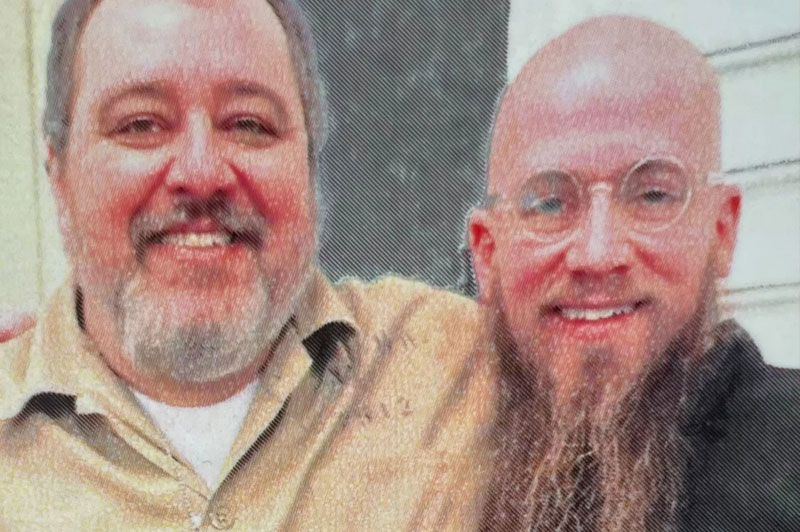
    Kenneth Smith, left, embraces his spiritual advisor, the Rev. Jeff Hood. (Courtesy Rev. Jeff Hood)

    After an experimental execution of inmate, Kenneth Smith, and he was pronounced dead at the William C. Holman Correctional Facility in Atmore, Alabama just six days ago, Ohio Attorney General Dave Yost today issued a press release urging “kickstarting” the execution of Ohio Death Row inmates.

    After the Alabama execution, Alabama Attorney General Steve Marshall said, “Alabama has done it, and now so can you. And we stand ready to assist you in implementing this method in your states”.

    Smith’s spiritual adviser, the Rev. Jeff Hood, who’d previously expressed concern that the method could be inhumane, witnessed the execution and described it in more graphic terms, saying it was “the most horrible thing I’ve ever seen.”

    Smith, wearing a tight-fitting mask that covered his entire face, convulsed when the gas was turned on, “popped up on the gurney” repeatedly, and gasped, heaved and spat, Hood said.

    “It was absolutely horrific,” he said. – (CNN)

    A Press Release from Ohio Attorney General Dave Yost:

    AG Yost, Other Elected Officials Propose Legislation to Address Issues in Ohio’s Capital-Punishment System

    Ohio Attorney General Dave Yost

    (COLUMBUS, Ohio) — Ohio Attorney General Dave Yost, together with state Reps. Brian Stewart and Phil Plummer and Executive Director Lou Tobin of the Ohio Prosecuting Attorneys Association, today announced the introduction of legislation to permit the use of nitrogen hypoxia as a method for carrying out the death penalty.

    The bill is aimed at kickstarting the state’s stalled capital-punishment system.

    “There must be accountability for offenders convicted of the most heinous crimes and prisoners who continue to flout the law behind bars,” Yost said. “The pursuit of justice is a journey, and closure remains elusive for victims’ families until a sentence is fully executed. Ensuring that the consequences align with the severity of an offense is essential to providing solace to grieving relatives.”

    Nitrogen hypoxia drew national attention last week when Alabama used this method to carry out the death sentence of murderer Kenneth Eugene Smith – the first state to employ nitrogen, a colorless and odorless gas, in an execution. With this procedure, a condemned inmate breathes only nitrogen, leading to oxygen deprivation, which results in rapid unconsciousness and death.

    Ohio last carried out an execution by lethal injection on July 18, 2018, more than five years ago. Multiple reprieves have been granted, in part due to the reluctance of pharmaceutical suppliers to provide lethal injection drugs to the Ohio Department of Rehabilitation and Correction for executions.

    Attorney General Yost hopes that nitrogen — widely available and easily sourced — can break the impasse of unavailability of drugs for lethal injection.

    Under the new legislation — sponsored in the House by Stewart, R-Ashville, and Plummer, R-Dayton — manufacturers, suppliers, and distributors that provide lethal injection drugs to the state would receive indefinite confidentiality, instead of the current two-year confidentiality. Suppliers of nitrogen for executions would receive similar confidentiality.

    “As long as capital punishment remains the law in Ohio, the law should be followed – and duly enacted sentences should be carried out to give victims’ families the justice and finality they deserve,” Stewart said. “Providing an additional method for carrying out capital punishments is necessary to ensure Ohio can continue to impose these sentences in response to the most heinous crimes committed in our state.”

    Added Plummer: “By using nitrogen hypoxia, we are giving the system an additional resource for holding accountable those who have committed heinous crimes. It is time that we stop postponing executions and give the families of victims the closure that they deserve.”

    Tobin echoed those thoughts.

    “We will continue to work to ensure that the death penalty is fair, that it is accurate, and that defendants receive the due process that they deserve,” he said. “We want fairness and justice for the victims also. This legislation is about providing closure for victims and for their families.”

    Yost highlighted shortcomings in the state’s capital-punishment system in the “2022 Capital Crimes Report,” released last year. An annual mandate under state law, the report provides a procedural history and other details on every case resulting in a death sentence since 1981, the year Ohio reinstated the death penalty.

    From 1981 to Jan. 30, 2024, a total of 336 criminals convicted in Ohio received a combined 341 death sentences, the report said. Only 56 sentences — one in six — have been carried out.

    In releasing the report, Yost emphasized the need to broaden the death penalty conversation and give a voice to victims’ families. Among those he has engaged in the discussion is Norman Stout, husband of Mary Jane Stout, who was murdered by David Stumpf during a May 1984 robbery near the couple’s home in New Concord, Ohio.

    The Stouts allowed Stumpf and Clyde Wesley into their home to use their phone. While Wesley ransacked the house, Stumpf shot Mr. Stout twice in the head, leaving him seriously wounded, and then shot Mrs. Stout four times, killing her.

    Mr. Stout, now 93, has been seeking justice for his wife for nearly four decades, only to see Stumpf’s execution postponed several times. Mr. Stout has said he plans to witness Stumpf’s execution — currently scheduled for Aug. 13, 2024 — but he worries that his advanced age might preclude him from seeing justice prevail.

    –30–