$137,500 – will be awarded to Loveland-based Little Miami Conservancy
by David Miller
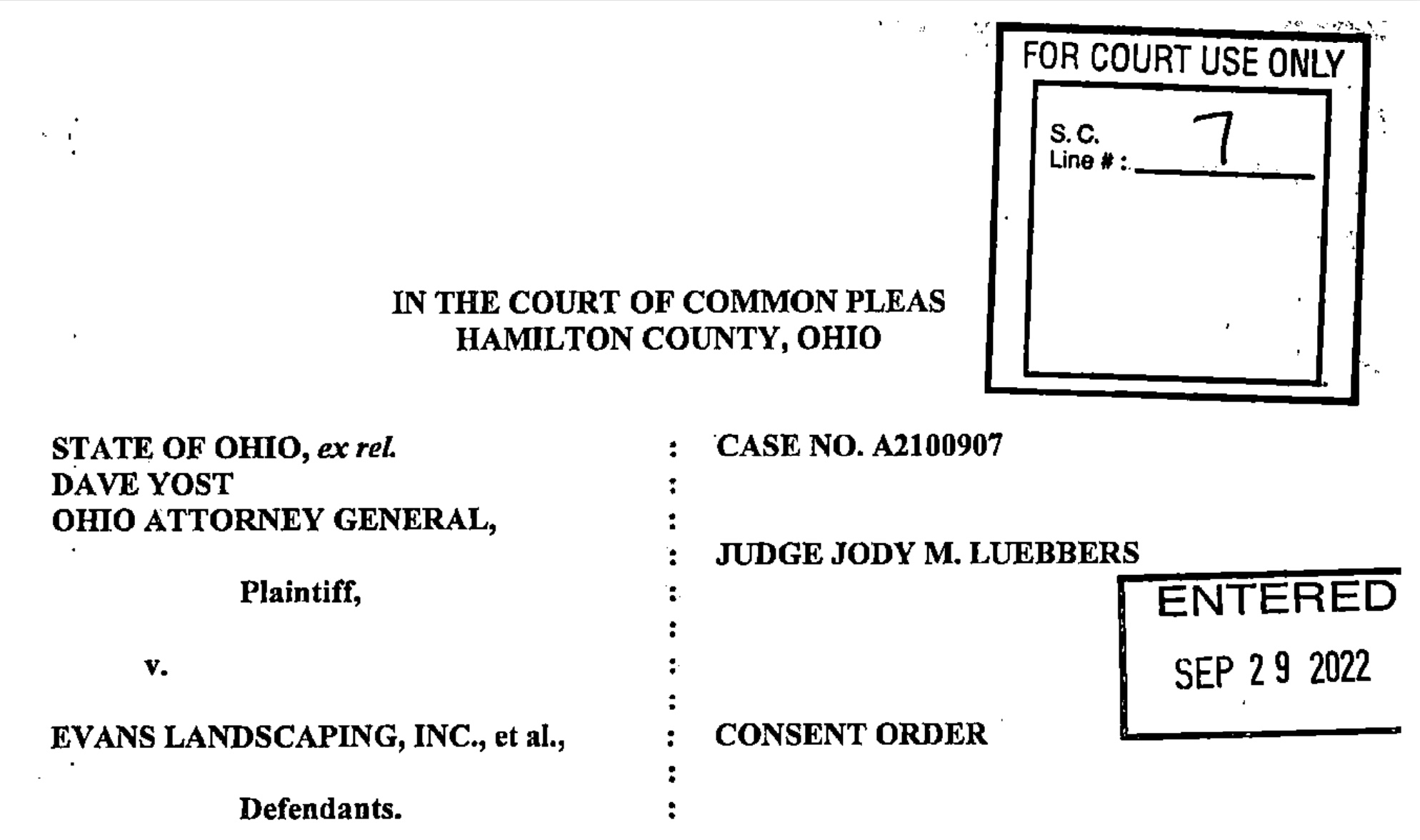
Symmes Township, Ohio – A Cincinnati business owner with a location in Symmes Township just on the outskirts of Loveland, who used his four companies to illegally discard waste at three sites – and whose dumping may have polluted the Little Miami River – has been ordered to pay a civil penalty of $550,000 and clean up his mess, Attorney General Dave Yost announced on September 30. (Read the Consent Order)
One-fourth of the penalty – $137,500 – will be awarded to the Loveland-based environmental organization, Little Miami Conservancy. The order did not involve polluting the Little Miami River in Symmes Township or Loveland. The illegal dumping occurred near Newtown and Terrace Park. The Little Miami River has State and National “Scenic and Wild River” designations.
“When it comes to protecting the state’s waterways, we do not just go with the flow,” Yost said. “Illegally dumped waste doesn’t just sit there on the land – it breaks down into toxins that find their way into the water. This remedy will make sure that doesn’t happen, and the fine will hit him hard where it hurts – his wallet.”
The civil penalty stems from a lawsuit filed by the Ohio Attorney General’s Office (AGO) in Hamilton County Common Pleas Court. The suit maintains that Douglas Evans – through Evans Landscaping and three other businesses he owns – violated Ohio laws regulating the disposal of solid waste and construction and demolition debris at properties on Mount Carmel Road, Broadwell Road, and Round Bottom Road.
The case was referred to the AGO from the Ohio Environmental Protection Agency and the Hamilton County Public Health District.
During multiple inspections over several years, health district officials saw that parts of demolished buildings, garbage, and other solid wastes had been dumped or buried at the three sites, none of which is licensed as a facility for disposal.
As part of the consent order worked out with the AGO and approved by the court, Evans agreed to clean up his properties and correct violations according to a plan authorized by Ohio EPA and the Hamilton County health district.
At the Mount Carmel site, he will build a cap over areas where construction and demolition debris were illegally disposed – to prevent water from reaching the debris and causing harmful chemicals to leach out.
At the Broadwell site, under the supervision of the Ohio EPA and health district, he will dig out and remove illegally disposed waste.
At the Round Bottom site, he will conduct groundwater monitoring to ensure that waste from his property is not affecting groundwater quality or the Little Miami River. If it is, Evans will perform the necessary remediation.
If Evans fails to comply with any requirements of the order, he will immediately be liable and have to pay additional penalties.
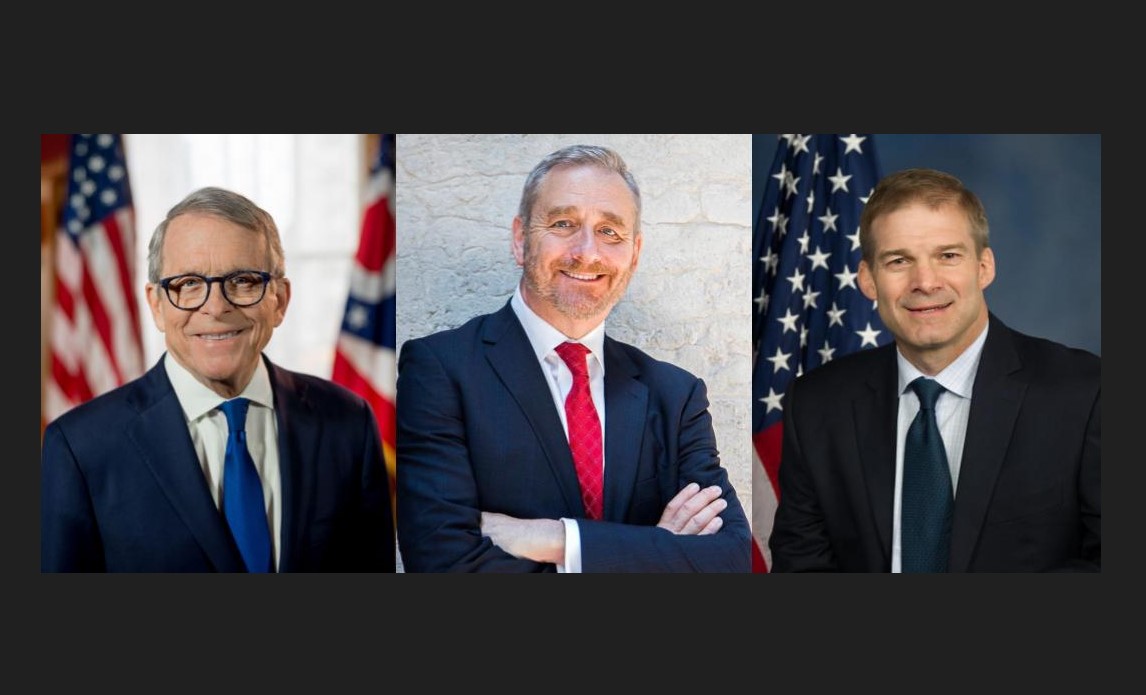
Left to right: Republican Ohio Gov. Mike DeWine, Republican Ohio Attorney General Dave Yost, and Republican U.S. Congressman Jim Jordan. Official photos.
Ohio Capital Journal Editor-in-Chief David DeWitt
A Guest Column by David Dewitt
The first and most important thing to recognize right now is that a heinous, violent crime was committed on a 10-year-old Ohio child, and thankfully justice has now found the alleged perpetrator.
A Columbus man was indicted Wednesday in a case that made national and international headlines about 10-year-old girl who had to travel to Indiana for an abortion after Ohio’s abortion ban went into effect following the U.S. Supreme Court overturning Roe v. Wade.
The story is horrifying and tragic. She has experienced enormous trauma. My heart breaks for her, and I’m very grateful to all the hard-working professionals out there providing her and her family assistance in what must be a truly awful time.
Republican Ohio Gov. Mike DeWine and his spokesman responded to the story by ignoring questions about whether children should be forced to have their rapists’ babies. Then DeWine allies contacted members of the press, asking how sure they were that the case of the pregnant 10-year-old even happened.
The Washington Post, the conservative Daily Caller and other media outlets published stories saying that the case was unverified. The Wall Street Journal Editorial page suggested the story was a “fanciful tale.” The National Review’s Michael Brendan Dougherty referred to the case as “a fictive abortion and a fictive rape.”
Republican Ohio Attorney General Dave Yost went on Fox News Monday to raise further doubts. He said he works closely with law enforcement authorities and he’d gotten “not a whisper” about the case.
None of them had the patience to verify for themselves with certainty the truth of the matter before going public on a massive, self-serving scale.
The propaganda erasing this 10-year-old’s existence was so swift it spread out over right-wing social media like a blanket. Those advocating the truth of her story — privately already confirmed for some of us, and crushing to hear about — were subjected to wild-eyed mockery and ridicule.
It’s incredibly disturbing that the default position of so many sick and twisted people — including Ohio’s most prominent Republican elected officials — is to very vocally and very publicly question whether the rape and impregnation of a 10-year-old child ever happened.
DeWine, Yost, and other Ohio Republicans hurt a traumatized child once by forcing her to flee the state in order to receive health care; then they hurt her again by peddling propaganda erasing her; now they’re hurting her a third time by refusing to acknowledge and apologize for their actions.
This case was never implausible. In 2020, the most recent year for which statistics are available, 52 girls aged 14 and younger had abortions in Ohio, according to the state department of health. A review of just the city of Columbus’ police log since March 15 uncovered 59 reports of sexual assaults of girls 15 and younger that, based on the information available, could have resulted in pregnancy.
But after the confirmation broke Wednesday, DeWine’s spokesman, Dan Tierney, again refused to comment on whether child rape victims should be forced to carry their pregnancies to term.
Ten-year-olds who become pregnant are by definition rape victims. But Ohio’s abortion law signed by DeWine doesn’t make exceptions for rape and incest.
Yost’s office didn’t respond Wednesday when asked whether he believes child rape victims should be forced to carry pregnancies, nor whether it was important to believe stories about sexual violence. Instead he put out a statement applauding the arrest.
Yost offered no correction, no apology, and showed no contrition for going on national television to try to erase the lived experience of a child rape victim.
They behave on a base level so repugnant and removed from the general good-heartedness of most Ohioans it’s almost unfathomable.
DeWine, Yost, and other Ohio Republicans hurt a traumatized child once by forcing her to flee the state in order to receive health care; then they hurt her again by peddling propaganda erasing her; now they’re hurting her a third time by refusing to acknowledge and apologize for their actions.
These powerful Ohio Republican politicians have thoroughly and completely shed themselves of any sense of shame or conscience.
They’re disgusting and disgraceful; callous, careless and cruel.
This is a matter of basic human decency, good faith and sensitivity on the most fundamental level of society.
If they are willing to try to erase the traumatic story of a 10-year-old rape victim, whose pain and suffering will they not try to ignore and erase?
They behave on a base level so repugnant and removed from the general good-heartedness of most Ohioans it’s almost unfathomable.
I honestly don’t know how they sleep at night, or look at themselves in the mirror in the morning.
Loveland, Ohio – Here are the candidates voters chose to run against each other in statewide and U. S. Senate and Congressional seats in the November 8 General Election this Fall.
Governor and Lieutenant Governor
• Mike DeWine and Jon Husted (R)
• Nan Whaley and Cheryl L. Stephens (D
Attorney General
• Jeffrey A. Crossman (D)
• Dave Yost (R)
Auditor of State
• Taylor Sappington (D)
• Keith Faber (R)
Secretary of State
• Chelsea Clark (D)
• Frank LaRose (R)
Treasurer of State
• Scott Schertzer (D)
• Robert Sprague (R)
Chief Justice of the Supreme Court
• Jennifer Brunner (D)
• Sharon L. Kennedy (R)
Justice of the Supreme Court – Term Commencing 01/01/2023
• Terri Jamison (D)
• Pat Fischer (R)
Justice of the Supreme Court – Term Commencing 01/02/2023
The arrest of former Ohio House Speaker Larry Householder and others in July revealed how the use of dark money organizations enabled an alleged $60 million conspiracy to sway elections and provide costly bailouts to noncompetitive nuclear and coal plants.
As federal and state court cases move forward, questions remain about what can be done to restore confidence in the legislature and to prevent similar situations in the future.
“Dark money is really how special interests win right now,” said Jay Costa, executive director at Voters’ Right To Know. When corporations use shell groups to hide their political spending, they “gain a level of credibility they wouldn’t otherwise have,” he explained. “I like to think of it as the ‘Wizard of Oz’ effect.”
In other words, voters don’t get to see who’s behind the curtain.
Two months after the federal government’s criminal complaint and indictment in July, Ohio Attorney General David Yost has filed a state court lawsuit. The complaint alleges a “pattern of corrupt activity,” and seeks injunctive relief to prevent FirstEnergy, FirstEnergy Solutions, Energy Harbor and others from reaping benefits from the bailouts under House Bill 6. A hearing on a preliminary motion for that relief is currently scheduled for Friday, Oct. 2.
Meanwhile, it’s unclear whether Ohio lawmakers will actually repeal House Bill 6, the bailout law passed as a result of the alleged conspiracy. Both Democratic and Republican lawmakers called for a swift repeal in late July and early August. However, leadership in the Ohio House has so far refused to allow a full House vote on any pending repeal bills.
‘Dragging their feet’
Rep. David Leland, D-Columbus
“They’re just dragging their feet,” said Rep. David Leland, D-Columbus. “We have 58 members of the legislature who are willing to repeal HB 6 right now.”
Instead, Speaker Robert Cupp, R-Lima, has referred the bill to a House Select Committee on Energy Policy and Oversight. So far, those hearings have largely been a general review of the pros and cons of HB 6, rather than a focused oversight of the alleged corruption that led to its passage and whether it should be repealed in order to repair any claimed harm to public trust in the legislature’s integrity.
“The only way that we can prove that Ohio is not for sale is by repealing HB 6,” Leland said. “The polling we’ve seen shows that people by an overwhelming margin are going to punish those people who have voted for HB 6 and have done nothing to repeal it.” Early and absentee voting in Ohio begins on Oct. 6.
“Our legislators are supposed to act in the public interest,” said political scientist Leah Stokes at the University of California at Santa Barbara. Corporations’ interests may sometimes conflict. But, she adds, “it’s really politicians’ and regulators’ job not to be listening to those special interests. That basic responsibility of democracy has failed in Ohio with House Bill 6.”
A straight repeal would mostly restore Ohio energy law to before HB 6 became effective, subject to some follow-up regulatory matters before the Public Utilities Commission of Ohio. A quick replacement could potentially reenact all or much of the law, which also gutted the state’s clean energy standards.
Advocates say that rushing to ram through anything more than a simple repeal this year would either just repeat bad policy or create more problems, even aside the alleged conspiracy’s past influence on the current makeup of the Ohio House of Representatives. Even at that, a repeal bill would now need either an emergency clause or an injunction sought by the state attorney general in order to stop the nuclear subsidies slated to start in January. The committee adjourned on Sept. 30 and no additional meetings are currently scheduled.
HB 6 “is so questionable at this moment. The vehicle itself and the way it was sold is all just a pack of lies,” said Rachael Belz, executive director of Ohio Citizen Action. “We need them to repeal it, and then we need to go from there.” And that second step will take time, she said.
“It’s complicated and complex legislation and policy. And we have to get it right,” said Chris Neme, a principal and co-founder of Energy Futures Group. “Passing a bill in less than a couple of months like the way HB 6 was just leads us down the road of unintended consequences.”
Shining a light on dark money
The bigger question is how to prevent similar abuses in the future. Utilities and fossil fuel interests have given heavily to Ohio political campaigns since the state enacted a 1999 law calling for competition in electricity generation. And the level of giving went up dramatically once a competitive market actually began to develop in the state.
Utilities’ political spending has continued during this election season. FirstEnergy spokesperson Jennifer Young said that its political action committee has since canceled campaign donations it had originally reported as going out in July shortly before Householder’s arrest.
Campaign donations shown for August have in fact been sent out, Young said. FirstEnergy has denied any wrongdoing in connection with its political donations or the alleged Householder scandal.
Meanwhile, a 2010 Supreme Court case, Citizens United, “really opened up the floodgates of fossil fuel and electric utility influence over politics,” Stokes said. Utilities’ political spending is “particularly pernicious,” in her view, because customers “have to buy from these companies” to get electricity delivered to their homes.
At the same time, reporting requirements currently apply only to immediate spenders on political issues and campaigns. They don’t reach all the way up the chain to the original source of the money.
“It’s basically this Russian nesting doll scenario, where you have one donor giving to another donor, giving to another donor, to get to the person who finally spends the money to influence the voters,” Costa explained.
In the case of HB 6, money flowed into Generation Now from multiple sources, with a lion’s share allegedly originating with Company A — understood to be FirstEnergy — and its subsidiaries, according to the federal complaint.
Some of the money in turn then went to a political action committee. Or, it went to other organizations that directly funded pro-HB 6 ads. One such ad claimed a debunked Chinese conspiracy was behind last year’s failed effort to put a referendum on the law on the ballot this fall. A for-profit group called Ohioans for Energy Security paid for that ad. When asked last year, lawyers at the firm that set up the corporation, Isaac Wiles, would not answer questions about the source of its funding.
“The notion that dark money is something some people don’t like is not part of the elements of the crime,” Mark Weaver, an attorney at that firm, said at a Columbus Metropolitan Club forum after news broke about the Householder arrest.
Asked if there was too much money sloshing around at the statehouse, he said it’s “a lot of money, no doubt,” but it “pales in comparison” to the amount that Americans spend on Halloween candy and costumes every year. And he said that the First Amendment protects the right to conduct political speech anonymously.
“Of course, state and local governments may (depending on how they draft) pass additional 501(c)4 disclosure requirements that could meet constitutional scrutiny,” Weaver later added.
Ian Vandewalker, Ian PHOTO CREDIT: Courtesy of Brennan Center for Justice
“There is no absolute right to anonymous speech,” said attorney Ian Vandewalker at the Brennan Center for Justice at New York University School of Law. Elections are treated differently from general speech, because of the overriding interest in making sure elections function properly, he explained at a panel organized by the League of Women Voters of Ohio.
“That requires informed voters. And it requires policies to not be able to cheat the public,” Vandewalker said. “And so those interests require that there be a level of transparency.”
“No regulation, no law, no set of ethical rules substitutes for American voters paying attention to who’s running for office — pressing them hard on what they stand for, looking closely at the issues, and going into the ballot box having done your homework,” Weaver said.
“The reason that information is important and transparency is important is so that voters are educated,” said Catherine Turcer, executive director of Common Cause Ohio. “You can’t make the argument that voters need to be better educated but you shouldn’t give them actual education. It doesn’t make any sense.”
Moreover, disclosure needs to be timely, said Heather Taylor-Miesle, executive director for the Ohio Environmental Council. In the case of HB 6, Generation Now didn’t report its 2017 spending to the Internal Revenue Service until late 2019. By then, millions more had been spent to influence the 2018 elections, the passage of HB 6, and the failed referendum effort against it.
Pending bills
Several bills introduced by Democratic and Republican lawmakers could make a strong start toward improved disclosure, including HB 737, HB 739, and SB 347. Those bills should be broadened to include digital media, as well as more traditional campaign spending, Turcer said.
The bills should also call for disclosure not only of the name of an organization, but the identity of the top three original donors of funding, Turcer added in her Sept. 16 testimony in support of SB 347. “Otherwise, wealthy special interests will attempt to avoid disclosure by creating pop-up shell groups,” she said.
And while Ohio voters won’t know who’s behind all the groups funding attack ads or other political spending this election season, information is available about how lawmakers voted on HB 6. The Akron Beacon Journal has also compiled some information on how some funds were used in the 2018 Ohio House campaigns.
“People should contact their legislators about HB 6” if they want to speak out about the issue, Stokes said, noting that the law passed with support from a mix of both Republicans and Democrats.
“When the public is outraged about an issue and really shows up, these issues get reversed,” Stokes added. “There’s a lot of leverage right now.”
[Note: the original version of this story took additional comments made by Mr. Weaver and summarized them to help the story flow better and to highlight the most relevant points. Mr. Weaver contacted Eye on Ohio and the Energy News Network after publication expressing his concern that the summary was not an accurate representation of his public comments. While we do not share that view, we are happy to share the full text from which that summary was taken. We know our readers are smart and can draw their own conclusions regarding their meaning. Beneath this article is that text, as well as a link to the entire video.]
Mark Weaver: Blaming Citizens United for this I think is wrongheaded. The New York Times, it’s sort of been proven that their collusion story about Russia has fallen completely apart and yet I don’t blame the First Amendment for the right to print what they printed. I think they had a right to print all that. I think it was substantively wrong, but I wouldn’t go after their ability to print that stuff.
And so what the Supreme Court said in Citizens United was, if a few of us get together and want to form a group to communicate, we ought to have a right to do that under the First Amendment.
And a lot of donors are looking at what’s happening in America right now with the doxxing, or the releasing of personal information and targeting people for shame. So that’s why some donors don’t want to give. Now some may have less noble notions for wanting to keep their money and their name private. But we saw what happened to Amy Acton for example where her personal home was targeted by protesters– that’s just wrong.
The notion that- I disagree with you so I’m going to personally vilify you and show up at your house where your family or your children are- so many donors see that as part of 2020 current affairs and so many of them want to avoid that. And I know not everyone has that reason.
Mike Thompson: But the problem comes in not just that somebody gives $500 to a candidate or a cause they believe in. It’s that somebody gives– $61 million or $35 million, let’s be conservative, and we don’t know that’s happening. Is there a middle ground where we can say, okay I can protect your identity, your First Amendment rights, but you can’t have THAT much influence?
Weaver: Well, not Constitutionally, no. It’s not just Citizens United. There was a case out of Ohio called McIntyre vs. the Ohio Elections Commission. This is the 7-2 Supreme Court case that said it’s legal to keep yourself anonymous when spending politically, based out of Ohio, in Westerville, Mrs. McIntyre. I used to teach the case. This morning I looked at it again and I had forgotten about this quote. This is not a close call. 7-2. This is Supreme court on anonymous speech: “It’s not a pernicious, fraudulent practice but an honorable tradition of advocacy and of dissent.”
And they pointed to the Federalist Papers that were written anonymously, to avoid scrutiny of the authors and focus on the ideas. So this notion of anonymous speech is one that’s protected by Supreme Court precedent.
Thompson: Laura, there are efforts at the statehouse to make it more transparent. Is it just lip service or are they serious efforts?
Laura Bischoff: You know it’s interesting. I do think the conditions are probably better now for reform than they were six months ago. So, there’s a couple of different bills pending. One is House Bill 737, which is sponsored by Gayle Manning, a Republican from North Royalton, and Jessica Miranda, a Democrat from Cleveland. And it’s got the support of the Ohio Secretary of State, Frank LaRose. And it would require, if you’re going to have a 501c(4) that’s spending in Ohio on political matters then it would require reporting through the state. Louis Brandeis said that the best disinfectant is sunshine. And so, this kind of works on that premise– transparency and disclosure will help clean it up.
Thompson: Derrick, It comes down to the Supreme Court. And the courts have said money equals speech. How much money? We have unlimited amounts of Free Speech. We can stand on a street corner, 24 hours a day, 7 days a week, and as long as we don’t yell fire in a crowded theatre we can do all we want. Should that same apply to the amount of money someone can give to a campaign? Or to a political cause?
Derrick Clay: Well you know if you have the money to give it, that’s your discretion whether you want to give that money to a c(4). You know, right now we’re under the law from that Citizens United case where people can give unlimited amounts of money to a c(4) nonprofit. So until that court case is overturned or challenged, then that’s the law of the land that we all have to abide by unfortunately.
Thompson: Is it too much money sloshing around at the statehouse? And you guys [points at Weaver and Clay] have both advocated for groups, and helped raise money and spent money that’s been raised. I mean, you’re part of the system-
Weaver: It’s a lot of money, no doubt. But when you look at what America spends on Halloween candy and costumes every year it pales in comparison. There’s lots of money done for lots of things.
Halloween candy and costumes don’t have the protection of the First Amendment. Remember, the Supreme Court has been very clear: the speech that aggravates us the most gets the most protection. And when you’re laying out what’s protected, political speech is the highest. And so whatever laws get passed, and I’m interested to read the details, and I’m interested in whatever laws are being put out there, they will have to withstand First Amendment scrutiny just like the news organizations represented today.
This article first appeared on Eye on Ohio and is republished here under a Creative Commons license.
London, Ohio – Ohio Attorney General Dave Yost, members of the Ohio Peace Officer Training Commission and law enforcement officers from across the state gathered on May 2 for the annual Ohio Peace Officers’ Memorial Ceremony to honor the 799 Ohio peace officers who have died in the line of duty since 1823.
“Public safety doesn’t happen by accident, it depends on the vigilance, actions and courage of real people who wear a badge,” Yost said. “We honor those who made this choice, and paid the ultimate price for it.”
Among those honored today are four officers who died in 2018:
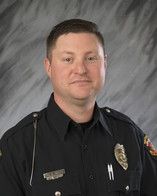
Officer Eric J. Joering | Westerville Division of Police
On Feb. 10, 2018, Officer Eric J. Joering, 39, and Officer Anthony P. Morelli were dispatched to a home on a domestic-violence call. After they were let in, a man opened fire. Both officers were hit and fired at the shooter, wounding him. Joering died at the scene. Joering, who served as a K9 officer with Sam, a Belgian Malinois, had served Westerville since 2001 as a training officer, firearm trainer, and a street cop. Joering is survived by his wife and three young daughters. Sam retired from the Westerville Police Division and resides with the family. Click here for more information about Officer Joering.
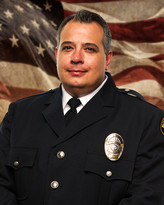
Officer Anthony P. Morelli | Westerville Division of Police
On Feb. 10, 2018, Officer Anthony “Tony” Pasquale Morelli, 54, and Officer Eric J. Joering, were dispatched to a home on a domestic-violence call. After they were let in, a man opened fire. Both officers were hit and fired at the shooter, wounding him. Morelli died at The Ohio State University’s Wexner Medical Center. Morelli began his career with the Westerville Division of Police in 1988 and was proud to protect Westerville, where he also lived. In his 30 years with the police division, he was voted officer of the year in 2003 and 2012, was honored with a Medal of Valor and received many other awards. Morelli is survived by his wife, daughter and son-in-law, son, his parents and many loving family members and friends in Westerville and Massillon. Click here for more information about Officer Morelli.
Officer Mathew J. Mazany | Mentor Police Department
On June 24, 2018, Officer Mathew J. Mazany, 41, arrived to assist a Mentor Police Officer who had pulled over a person wanted in another jurisdiction. As he approached the vehicle, he was struck by another vehicle. Officer Mazany served the Mentor Police Department for 14 years, was honored with the department’s Exceptional Service Award and received many accolades from Mentor residents for his professionalism and compassion. Mazany is survived by his wife and son, father, and many loving family members and friends. Click here for more information about Officer Mazany.
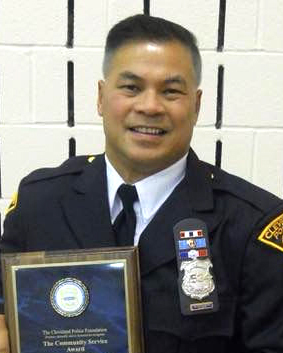
Officer Vu X. Nguyen | Cleveland Division of Police
On July 2, 2019, Officer Vu X. Nguyen, 50, collapsed in 90-degree heat during a canine-officer training exercise. He passed away on July 6 at Cleveland Clinic. A 20-year veteran of the Cleveland Police Department, Officer Nguyen was a popular officer, with commendations in his file including a Medal of Heroism and a special thanks from the FBI’s Joint Terrorism Task Force. He is survived by his wife and two children, and, as one of 14 siblings, a large extended family across the country. Click here for more information about Officer Nguyen.
Also honored today were four officers who were nominated for historical induction to the memorial after their departments discovered that the officers had made the ultimate sacrifice for their communities in the past.
Deputy Sheriff George W. Rockwell | Logan County Sheriff’s Office
Chief Deputy Martin L. Myers | Tuscarawas County Sheriff’s Office
Officer Clark Teeple | Napolean Police Department
Special Officer Joseph B. Mumford | East Liverpool Police Department
Click here for more information about these officers.
A moment of silence was held for Colerain Township Police Officer Dale Woods and Clermont County Sheriff’s Deputy William Brewer, who gave their lives in the line of duty earlier this year. In keeping with Ohio Peace Officers’ Memorial Ceremony tradition, Officer Woods and Deputy Brewer will receive full honors during the 2020 ceremony.
Law enforcement agencies from Butler, Cuyahoga, Fayette, Franklin, Hamilton, Lake, Lucas, Madison, Montgomery, Richland, Shelby and Summit counties were among those that participated in the ceremony.
With the high Mega Millions and Powerball jackpots, Ohio Attorney General Mike DeWine is warning consumers to beware of phony claims that they’ve won millions. Sweepstakes and lottery scams have been reported throughout Ohio in recent weeks.
The Ohio Attorney General’s Consumer Protection Section has logged over 80 complaints involving sweepstakes or prizes in 2018. The average reported loss is more than $13,000..
The scams often begin with a call or letter claiming a person has won millions of dollars in a lottery or sweepstakes. The person is asked to wire a few hundred dollars or more to cover processing fees or taxes in order to receive the winnings. In reality, there is no prize and any money the person sends will go to a scam artist.
“If you get a call saying you’ve won millions but you have to pay to receive it, it’s just not true,” Attorney General DeWine said. “You shouldn’t have to pay to receive a prize you’ve already won. Even if the person claims to be affiliated with a real lottery, don’t believe the claims, and don’t send your own money.”
The Ohio Attorney General’s Consumer Protection Section has logged over 80 complaints involving sweepstakes or prizes in 2018. The average reported loss is more than $13,000.
While the scams often begin with a call or letter, they also may start on social media. A con artist may pose as a person’s friend and send a message saying the person has won money. The claim may seem more believable because it appears to come from a friend, but it is actually part of a scam.
Tips to avoid sweepstakes and lottery scams include:
Don’t send money to receive a prize. Legitimate sweepstakes or lotteries will not charge you to receive your prize. Don’t trust people who contact you unexpectedly, claim you’ve won a lottery or sweepstakes, and ask you to pay to receive the prize. If you truly won, you shouldn’t need to send your own money in advance to receive your winnings.
Be skeptical if a “friend” sends you a message saying you’ve won a lot of money. The message may be part of a scam.
Be wary of requests for wire transfers, money orders, or gift cards. These payment methods are used frequently in scams. Once the money is sent, it is difficult to trace or recover it. Also, be wary if you receive an unexpected check in the mail. It may be a counterfeit check used as part of a scam.
Talk to friends and family about scams. Older adults can be especially vulnerable to lottery and sweepstakes scams. If you have older relatives, talk to them about scams and look for signs that they have been targeted. Red flags include unusual banking activities, wire transfer receipts, and an increased number of phone calls made to them.
Consumers who suspect a scam or an unfair business practice should contact the Ohio Attorney General’s Office at www.OhioProtects.orgor 800-282-0515.
AG DeWine, OCHA, Ohio AAP announce third phase of Ohio children’s hospitals’ collaboration
Columbus, Ohio —Today Ohio Attorney General Mike DeWine and the Ohio Children’s Hospital Association (OCHA) announced a new collaboration to further spread interventions and findings to reduce the occurrence of child abuse in infants six months and younger by enlisting pediatric practices.
Eight large pediatric practices across Ohio, representing more than 30,000 patients and families and recruited through a partnership with the Ohio Chapter of the American Academy of Pediatrics, will be joining children’s and community hospitals in implementing proven interventions to identify potential signs of abuse and prevent further abuse in Ohio’s youngest and most vulnerable children.
Ohio Attorney General Mike DeWine funded the Timely Recognition of Abusive Injuries (TRAIN) Collaborative with a $1 million grant from settlement funds to OCHA in 2015. The purpose of TRAIN is to prevent repeat child abuse in the most vulnerable population, infants six months and younger.
The TRAIN Collaborative analyzed what the medical community refers to as “sentinel injuries.” Sentinel injuries are minor injuries known to the medical provider that should prompt concern that the child is being abused. Unfortunately, sentinel injuries are often missed by medical providers placing the infant at risk for further abuse. The TRAIN Collaborative identified the specific injuries that should be suspect and developed a specific process – or “bundle of care” that reduces repeat instances of child abuse. If a medical provider discovers a sentinel injury, they use the prescribed “bundle,” to assist in the identification of abuse and to ensure the infant receives appropriate follow-up care. The “bundle” includes a skeletal survey of the infant, psychosocial assessment of the caregivers and pediatric consultation.
In 2016, children’s hospitals in Ohio determined that one in 10 Ohio children seen for child abuse has been seen previously with a sentinel injury.
In 2016, children’s hospitals in Ohio determined that one in 10 Ohio children seen for child abuse has been seen previously with a sentinel injury and less than one in three receives the necessary physical examination and follow-up. They worked together to create and test the “bundle” within their own hospitals, and then spread the process to 19 community hospitals across the state. This third phase will teach eight pediatric practices about the “bundle” and help them implement it within their practice.
Sentinel injuries are often missed by medical providers placing the infant at risk for further abuse.
“We have some of the best minds in pediatric healthcare in the country right here in Ohio. I am proud that we could bring these minds together to identify a proven process to help children who are too young to understand their injuries or even to speak for themselves,” said DeWine. “Spreading this important process to more pediatricians throughout Ohio will mean more children are spared from further abuse – and that has been my goal with this program from day one.”
The learning here in Ohio has been spread beyond the state’s borders, as leaders from TRAIN have been asked to present their findings at national conferences, including the Court Appointed Special Advocate/Guardian Ad Litem conference.
“Attorney General DeWine has always been a strong advocate for Ohio’s children, and this initiative would not have been possible without his commitment and support. We are grateful to be able to take our learning into a third phase to spread this valuable process even further in our state and beyond,” said Nick Lashutka, President and CEO of OCHA.
Columbus, Ohio – Ohio Attorney General Mike DeWine today released the following statement regarding the Senate passage of Senate Bill 220, the Data Protection Act sponsored by State Senators Bob Hackett (R-London) and Kevin Bacon (R-Westerville):
“This commonsense legislation would be a win-win for both Ohio business owners and Ohio consumers,” said Attorney General DeWine. “Encouraging businesses to take the appropriate steps to protect their customers’ personal information could avoid costly data breaches for companies and give customers peace of mind that their personal information is protected.”
The Data Protection Act is the first piece of legislation introduced as a result of Ohio Attorney General Mike DeWine’s CyberOhio Initiative. The measure would encourage businesses to voluntarily adopt strong cybersecurity controls to protect consumer data. The legislation identifies ten different industry-recognized cybersecurity frameworks on which businesses can base their security programs.
Launched in September 2016, the goal of CyberOhio is to help foster a legal, technical, and collaborative cybersecurity environment to help Ohio businesses thrive. In addition to promoting legislation, other parts of the initiative include training opportunities for businesses, development of cybersecurity workforce personnel, and expansion of the Ohio Attorney Generals’ Identity Theft Unit.
The bill will now go to the Ohio House of Representatives for consideration.
“Ohio communities today are saying, We don’t have a fracking, pipeline, or development problem. We have a democracy problem!” – Tish O’Dell
Columbus, Ohio – The Ohio Ballot Board today certified two proposed constitutional amendments, one regarding Ohio Community Rights and the other regarding Initiative and Referendum for Counties and Townships, as single ballot issues. Both respective amendments had previously been certified by the Ohio Attorney General’s Office.
Petitioners will now need to collect 305,591 signatures, which is equal to 10 percent of the total vote cast for governor in 2014, for each issue in order to place the issues on the ballot.
As state government and industry attempt to strip local self-governing authority from communities across the state, residents refuse to surrender their democratic and environmental rights. Working through the Ohio Community Rights Network (OHCRN), they submitted the two proposed state constitutional amendments.
It also secures the authority of communities to put in place stronger environmental rights and protections than those recognized at the state, federal, or international level, according to a statement from OHCRN.
After submitting initial petitions to the State, Greg Pace, a member of the OHCRN said, “For years we have tried to protect our communities from harmful corporate projects. Today, we understand why we can’t get what we want: We are blocked by a system designed to force the harms in against our will. It is a system that refuses to recognize our right to govern our own communities. The Community Rights Amendment is the people’s way to change that.”
Today, only city and village residents can exercise their inalienable right to propose and repeal laws, which is recognized under Article 2, Section 1b of the Ohio Constitution. However, nearly 39% of Ohio’s population resides in townships and counties. They do not have the same constitutional right to legislate. This amendment extends equal rights to local self-government to all Ohio residents, regardless of jurisdiction within the state.
As part of the total number of signatures needed to place the measure on the ballot, petitioners must collect signatures from at least 44 of Ohio’s 88 counties, and within each of those counties, collect enough signatures equal to five percent of the total vote cast for governor in the most recent gubernatorial election, 2014.
“This goes beyond fossil fuel industries,” stated Tish O’Dell, CELDF’s Ohio organizer. “The right to pass local laws regarding fracking, gun control, predatory lending, minimum wage, and more, are thwarted by state preemptive laws. And those laws are often written by industry.”
She continued, “Ohio communities today are saying, ‘We don’t have a fracking, pipeline, or development problem. We have a democracy problem!’
The Ohio Attorney General’s ninth-annual Take Action Video Contest gives Ohio high school students the opportunity to learn about cybersecurity and a chance to win up to $2,500 in college scholarships.
To enter the contest, Ohio high school students (grades 9 through 12) must produce and submit a 60-second informational video on one of the following cybersecurity topics:
Privacy on your smartphone
Social networking scams
Creating strong passwords
The top three winning individuals or teams of two students will receive college scholarships of $2,500, $1,500, and $1,000, respectively, and their videos may be featured on the Attorney General’s website.
The deadline to submit a video is Dec. 8, 2017. Winners will be announced in March 2018 during National Consumer Protection Week.
Visit www.OhioAttorneyGeneral.gov/TakeActionContest to view last year’s winning videos, the official guidelines, and the 2017 Take Action Contest flier. Teachers are encouraged to print out and display a copy of the flierin their schools.