Tag: Ohio Ballot Board

  • Ballot measure making it harder to amend Ohio’s Constitution facing second lawsuit

    Ballot measure making it harder to amend Ohio’s Constitution facing second lawsuit

    The organization One Person One Vote has filed a second lawsuit, challenging the language recently approved by the Ohio Ballot Board

    BY:  – 

    The organization One Person One Vote has filed a new Supreme Court case related to an August amendment proposal looking to make it more difficult to change Ohio’s constitution. The organization has already challenged lawmakers’ attempt to place the question, which would raise the bar for voters to pass amendments from 50% to 60%, on the August special election ballot. The latest complaint has to do with the ballot language Ohioans will see when they cast their vote.

    The filing claims the ballot board adopted “a misleading, prejudicial ballot title and inaccurate, incomplete ballot language that improperly favor the Amendment in flagrant violation Ohio’s Constitution and laws and this Court’s jurisprudence.”

    The plaintiffs want to court to order revisions or substitute the full text of the amendment as the ballot language.

    The Ballot Board’s language

    It’s the board’s job to cut through the legalese and craft a neutral, easily understood description of what a given proposal will do. The secretary of state leads the five-member body, and due to constraints on members’ partisanship, the secretary effectively holds the deciding vote.

    At a hearing last week, an attorney for One Person One Vote brought up numerous critiques of the proposed language. The drafts made no mention of existing constitutional standards, employed words like “elevate” to cast the changes in a positive light, and even included factual inaccuracies about signature gathering.

    Nevertheless, the majority Republican board approved the language along party lines without any changes.

    The court challenge

    In its complaint, One Person One Vote elaborated on the shortcomings it identified in the ballot board hearing. Again, the group’s chief complaint had to do with the language identifying only the end result, rather than how the amendment changes existing law.

    Instead of explaining the threshold for approving constitutional amendments would rise from a simple majority to a 60% supermajority, the ballot board’s language only identifies the 60% threshold.

    “As a consequence, a voter might take the ballot language to mean that the people of Ohio do not presently get to vote on proposed amendments at all,” the complaint reads, “and might even understand the amendment itself to create that right in the first instance.”

    “Such a blatantly misleading omission contravenes fifty years of this Court’s precedents,” it adds.

    In addition to setting a higher threshold for passage, the amendment requires organizers collect signatures from all 88 counties instead of the 44 required now. It also eliminates a period in which organizers can collect additional signatures if their first submission falls short.

    The complaint found fault in how the ballot language explains both of those provisions, as well.

    One Person One Vote criticized the ballot language for saying the amendment “specif(ies)” that there won’t be a cure period, rather than explaining the amendment would eliminate it.

    On signature collection, the group argued the ballot language “does not clear even the minimal bar of factual accuracy.” It describes the requirement as 5% of a county’s eligible voters instead of the 5% who voted in that county in the previous gubernatorial election.

    “This is a considerable difference,” the complaint noted, “amounting in Hamilton County, for example, to a difference of nearly 15,000 signatures using 2022 figures.”

    Ask and outlook

    The plaintiffs want the court to direct the board to come up with new ballot language. They argue the new version must “must fully and accurately describe the status quo,” including that it has been the standard since 1912. Alternatively, they argue, the board could submit the proposed amendment’s text in full to voters.

    They also call on the court to direct Secretary LaRose to come up with a new title. “Elevating the standards,” they argue “implies that Ohio’s standards to amend its Constitution are currently too low.” The choice of ‘elevating’ rather than value neutral words like change or modify creates a “prejudicial” impression among voters.

    One Person One Vote claims they’re entitled to a rewrite because state law prohibits the ballot title and language misleading voters. The group notes the court’s case law establishes a three-part test. Voters have a right to know what they’re voting on, language that would persuade for or against the proposal is prohibited and the cumulative effect of any deficiencies dictates whether the language is valid.

    A spokesman for Secretary LaRose declined to weigh in on the lawsuit, saying only that “we don’t comment on litigation.”

    Follow OCJ Reporter Nick Evans on Twitter.

    ________________________

    Nick Evans
    NICK EVANS

    Nick Evans has spent the past seven years reporting for NPR member stations in Florida and Ohio. He got his start in Tallahassee, covering issues like redistricting, same sex marriage and medical marijuana. Since arriving in Columbus in 2018, he has covered everything from city council to football. His work on Ohio politics and local policing have been featured numerous times on NPR.

    MORE FROM AUTHOR

  • Ohio Ballot Board approves language for August amendment proposal despite objections

    Ohio Ballot Board approves language for August amendment proposal despite objections

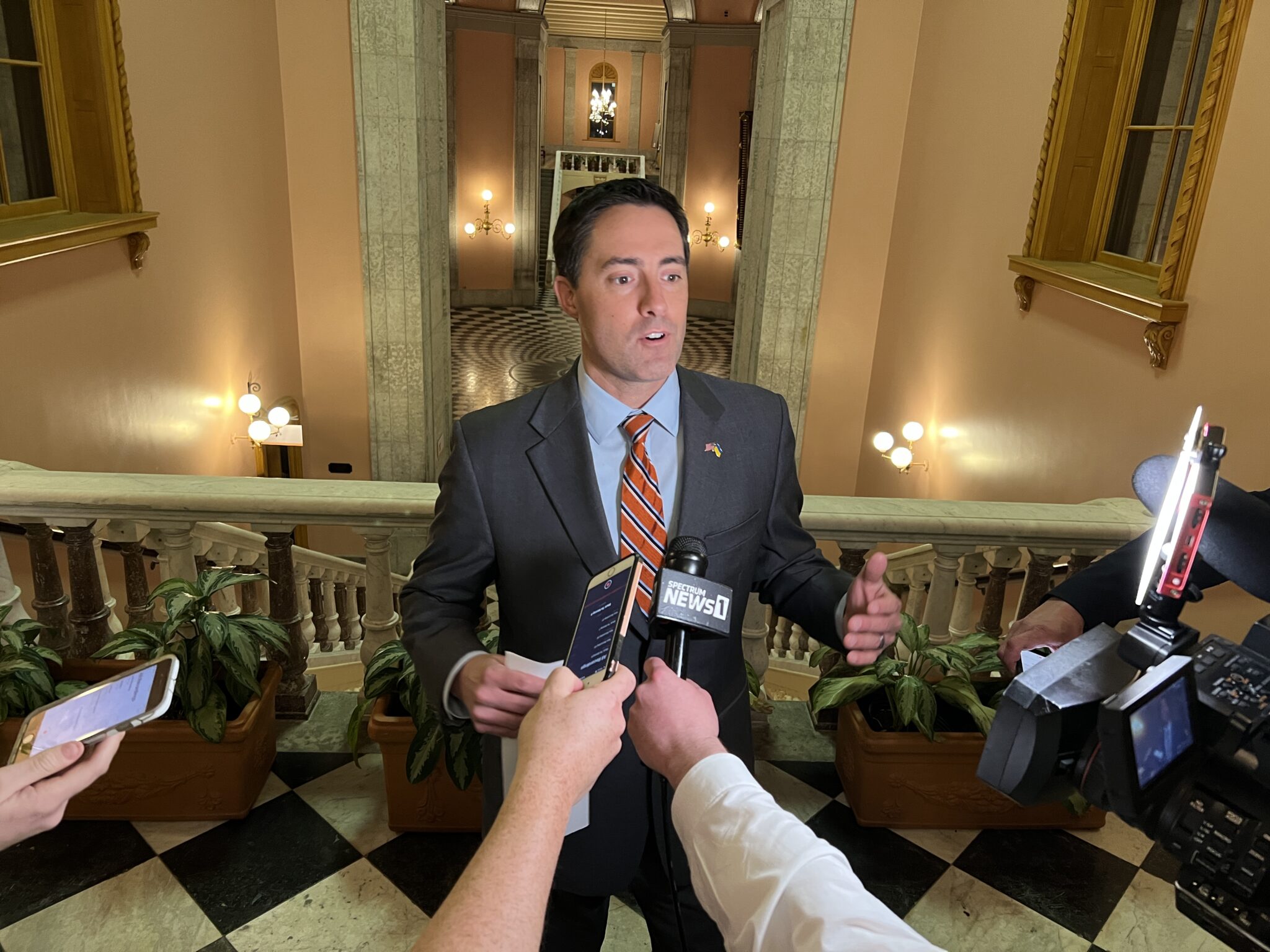
    Ohio Secretary of State Frank LaRose talks to reporters. (Photo by Susan Tebben, OCJ.)

    Republican lawmakers’ proposal would make it harder for voters to amend Ohio Constitution by raising bar to 60%

    BY:  Ohio Capital Journal

    The Ohio Ballot Board has approved language for an August ballot measure from Ohio Republican lawmakers. The proposal asks voters whether to make it harder to pass future constitutional amendments by requiring 60% of the vote. The board’s two Democrats and an outside organization currently suing to block the August election criticized the ballot language and it’s explanation.

    What’s the ballot board and what does it do?

    The five-member panel determines what exactly voters will read when they get their ballot. The Ohio Secretary of State chairs the board consisting of four other members selected by legislative leaders in the Ohio House and Senate. No more than two of those selections can be from the same party.

    In addition to drafting the exact ballot language, the board also comes up with an explanation of what the proposal would do. However, the board’s secretary Jeff Hobday explained that wording carries very specific requirements.

    “If a condensed version of the proposal is used, the ballot language must not omit substance of a proposal that is material,” Hobday said. “Additionally, if the proposed amendment is condensed, the resulting language must not result in or imply a persuasive argument.”

    The board also set the terms for disseminating information about the proposal, and designated the groups responsible for drafting arguments for and against the measure.

    Pushback

    Attorney Don McTigue, who’s representing the organization One Person One Vote, pointed to numerous passages in the ballot board’s draft language that fail to give a neutral presentation.

    “None of the bullet points explain what the current constitutional provision is,” he argued. “It’s not telling the voters what change they’re being asked to make.”

    He repeatedly argued voters should see the current requirements and how they’d change — rather than just the changes the amendment offers. Voters should know the requirement is going from a simple majority to 60%; they should know signature requirements will expand from 44 to all 88 counties.

    McTigue added that one line is flatly untrue.

    “The statement about at least 5% of the eligible voters of each county is actually not accurate,” he explained. “It’s 5% of the most recent gubernatorial vote in that county.”

    He also took issue with the title Secretary LaRose came up with for the proposal: “elevating the standards to qualify for and to pass any constitutional amendment.” State law requires the title be “true and impartial,” McTigue argued, and not likely to “create prejudice for or against” the proposal.

    “We believe that there is an egregious violation of those standards with regard to the first three words that say elevating the standards,” McTigue said. “Elevating is a word that has connotations, that most people would say, meaning to raise up in status, raise up in honor.”

    He argued the title should instead use a value neutral term like “change” or “modify.”

    The Democrats’ take

    Board member Rep. Elliot Forhan, D-South Euclid, took up McTigue’s argument about needing to describe current law as well as the change. He brought up the state supreme court’s comparison to local zoning changes.

    “You wouldn’t ask a subdivision or a municipality to approve a change in the zoning law if you didn’t explain to them exactly what the change in the zoning was,” he explained. “Our state supreme court said, something of this nature has a far greater effect than a change in the zoning law.”

    “The omission of what the existing law is,” he added, “that it, at the moment, only requires a simple majority, that indeed fails to meet that standard.”

    Another board member, Sen. Bill DeMora, D-Columbus, criticized the ballot description’s use of the phrase “proposed by a 2/3 majority” of state lawmakers. The standard to make the ballot is a 3/5 majority in each chamber.

    “I’ll point out that 88 members of the 132 members of the General Assembly voted for it, which is exactly two thirds and that’s why we use that language,” LaRose explained.

    LaRose only arrives at that figure because the state Senate’s lopsided GOP majority. In the House, the margin was much narrower.

    “In the House actually 62 people voted in the affirmative for the amendment,” DeMora argued, “and two thirds would be 66 out of 99, so two thirds is clearly incorrect.”

    The margin of victory in the General Assembly, of course, is irrelevant to the proposal once it goes before voters. For instance, none of the past three general assembly initiated amendments’ explanations made any mention of vote margin. Its inclusion, regardless of how LaRose calculated it, only underscores critics’ concerns about “prejudicial” language.

    The Republican side

    The board’s GOP members were remarkably quiet throughout the hearing. Aside from LaRose explaining his math and introducing agenda items, the only times they piped up was to second his motions to approve.

    Despite the objections of Democrats, the board voted along party lines to approve the draft ballot language and explanation. They made no changes.

    Follow OCJ Reporter Nick Evans on Twitter.

    __________________________

    Nick Evans
    NICK EVANS

    Nick Evans has spent the past seven years reporting for NPR member stations in Florida and Ohio. He got his start in Tallahassee, covering issues like redistricting, same sex marriage and medical marijuana. Since arriving in Columbus in 2018, he has covered everything from city council to football. His work on Ohio politics and local policing have been featured numerous times on NPR.

    MORE FROM AUTHOR

  • Ohio Ballot Board fights back against abortion amendment lawsuit

    Ohio Ballot Board fights back against abortion amendment lawsuit

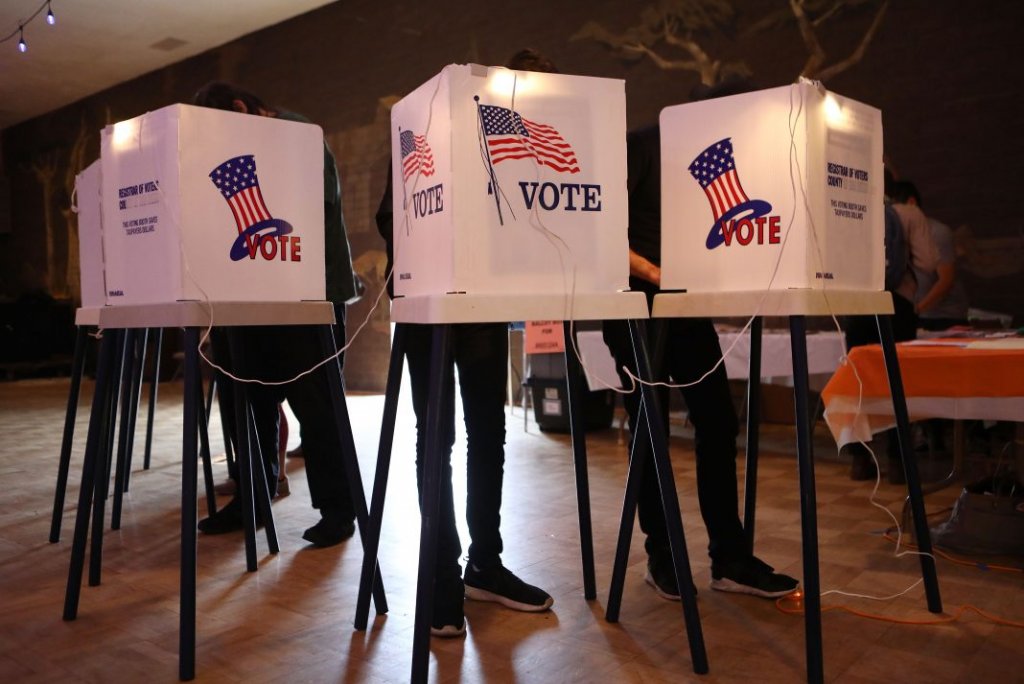
    Voters casting ballots. | Mario Tama/Getty Images

    BY:  Ohio Capital Journal

    The Ohio Ballot Board submitted its comments to the Ohio Supreme Court, pushing back against claims they abused their power in verifying a proposed abortion amendment to the state constitution.

    The Ohio Attorney General’s Office wrote a brief on behalf of the ballot board, saying its members “correctly refused to usurp the people’s power by splitting the petition … into multiple amendments.”

    The lawsuit, filed on behalf of two members of Cincinnati Right to Life, argued that the amendment contains more than one constitutional issue, therefore should be split, and should not have been unanimously approved by the ballot board.

    The ballot board’s OK allowed pro-abortion rights groups to move forward with signature collection, in which they must collect more than 400,000 valid voter signatures by July 5.

    Because the proposed amendment mentions reproductive health and abortion, attorney Curt Hartman argued the ballot measure involved two different issues, a claim pro-abortion rights groups and the Ohio Ballot Board members deny.

    “The weakness of (Right to Life members Margaret DeBlase and John Giroux’s) claim is best exemplified by their failure to argue how many proposed amendments are supposedly included within the petition and what those amendments are,” Assistant Attorney General Julie Pfeiffer wrote on behalf of the ballot board.

    The ballot board is made up of legislative members, citizens, and the Ohio Secretary of State, who chairs the board. Currently, the legislative members are state Sen. Theresa Gavarone, R-Bowling Green; state Sen. Paula Hicks-Hudson, D-Toledo; and state Rep. Elliot Forhan, D-South Euclid.

    Secretary of State Frank LaRose is the chair, and Stoutsville resident William Morgan completes the board.

    One of the arguments made in the lawsuit is that no discussion was held when the board met to consider the amendment. LaRose asked for discussion before he asked for a vote, and none happened.

    Gavarone was the only one to make a comment, speaking against the amendment, but voting yes to the move, calling it a “procedural” vote.

    “(Giroux and DeBlase) fail to show how any alleged failure by the ballot board members to conduct a fulsome discussion amongst themselves before voting to certify the proposed amendment led to a decision that was ‘unreasonable, arbitrary or unconscionable,” the AG’s office wrote in defense of the board.

    LaRose made several comments during the meeting explaining that the vote did not represent any comments on the merits of the initiative, and instructed the public not to speak on the merits, as the vote was only to decide whether the measure only involved one constitutional issue.

    In response to the lawsuit, Pfeiffer brought up Giroux, who spoke during the public comment portion of the meeting. Giroux called the amendment “intentionally unjust and misleading,” but he “did not offer any specific proposal splitting up the petition or further opine as to the number or content of the separate amendments contained therein,” the board argued to the court.

    The ballot board did not need to analyze facts in the case, Pfeiffer argued, only whether the petition contains one amendment “on the face of the document.”

    ____________________________

    Susan Tebben
    SUSAN TEBBEN

    Susan Tebben is an award-winning journalist with a decade of experience covering Ohio news, including courts and crime, Appalachian social issues, government, education, diversity and culture. She has worked for The Newark Advocate, The Glasgow (KY) Daily Times, The Athens Messenger, and WOUB Public Media. She has also had work featured on National Public Radio.

    MORE FROM AUTHOR

  • Ohio Ballot Board sued over approval of proposed abortion rights constitutional amendment

    Ohio Ballot Board sued over approval of proposed abortion rights constitutional amendment

    Gavel,” a sculpture by Andrew F. Scott, outside the Supreme Court of Ohio. Credit: Sam Howzit / Creative Commons.

    Meanwhile, Ohio Senate president eyes August for proposal to raise threshold for voters to pass constitutional amendments

    BY: SUSAN TEBBEN – Ohio Capital Journal

    A new lawsuit claims the Ohio Ballot Board made the wrong call when they approved the validity of a constitutional amendment proposal on abortion.

    In the lawsuit, filed this week with the Ohio Supreme Court, Cincinnati attorney Curt Hartman asks the court to demand the ballot board vacate their March 13 decision, in which they said the proposed ballot language to cement abortion rights in the Ohio Constitution attempts to make changes to only one constitutional issue.

    The lawsuit also wants the state Ballot Board to “issue a determination that the foregoing initiative petition contains more than one proposed amendment to the Ohio Constitution,” divide the petition into separate initiatives and certify those with the Ohio Attorney General.

    To prove the separate issues, the lawsuit cites the overturned legalization of abortion in Roe v. Wade, in which abortion was described as “inherently different” than other personal rights. Because abortion is “inherently different,” parties in the lawsuit argue it represents a different issue than “one’s own reproductive decisions,” which is part of the ballot initiative, therefore “does not and cannot relate to a single general object or purpose.”

    The lawsuit acknowledges in a footnote that supporters of the ballot initiative “have not, to date, provided any explanation of the distinction between a decision concerning ‘continuing one’s own pregnancy’ versus concerning ‘abortion.’

    Ohio Attorney General Dave Yost saw the initiative before the board, and certified the amendment proposal in a separate process. In his letter confirming that the proposal could then move on to the ballot board, Yost made his own comments on the issue.

    “I cannot base my determination on the wisdom or folly of a proposed amendment as a matter of public policy,” Yost wrote in his letter on the amendment proposal.

    The lawsuit now sets the state, specifically Yost, up to defend the decision of the ballot board, despite any personal feelings he may have on the initiative itself.

    The board made no decisions on the merits of the issue, though state Sen. Theresa Gavarone, R-Bowling Green, made a point to speak out against the issue during the board meeting, saying she was “horrified at the thought of this amendment.”

    Hartman is representing Margaret DeBlase and John Giroux, both members of the Cincinnati Right to Life. Giroux spoke during the Ohio Ballot Board meeting.

    “If this is about one issue, this amendment is about abortion, and that’s plain and simple,” Giroux told the board. “They want to advance abortion in our state constitution.”

    In the lawsuit, Hartman argues there was “absolutely no discussion or debate whatsoever” by the members of the board, other than Gavarone’s comments.

    Parties challenging the decision say the ballot board’s action, or lack thereof, “constitutes an abuse of discretion and/or an act in clear disregard of applicable legal provisions.”

    The Ohio Supreme Court has not decided whether or not they will accept the lawsuit for review.

    Pro-abortion rights groups are facing a July 5 deadline to gather signatures in support of placing the petition on the ballot in November. That deadline might also lie in the shadow of an August special election now, with Senate President Matt Huffman expressing interest in placing a measure on the ballot that month to increase the threshold needed to amend the constitution by changing it to 50% plus one vote to 60%.

  • Ohio Ballot Board moves abortion amendment initiative forward

    Ohio Ballot Board moves abortion amendment initiative forward

    Supporters now set sights on collecting enough signatures by July to put the measure to Ohio voters in November

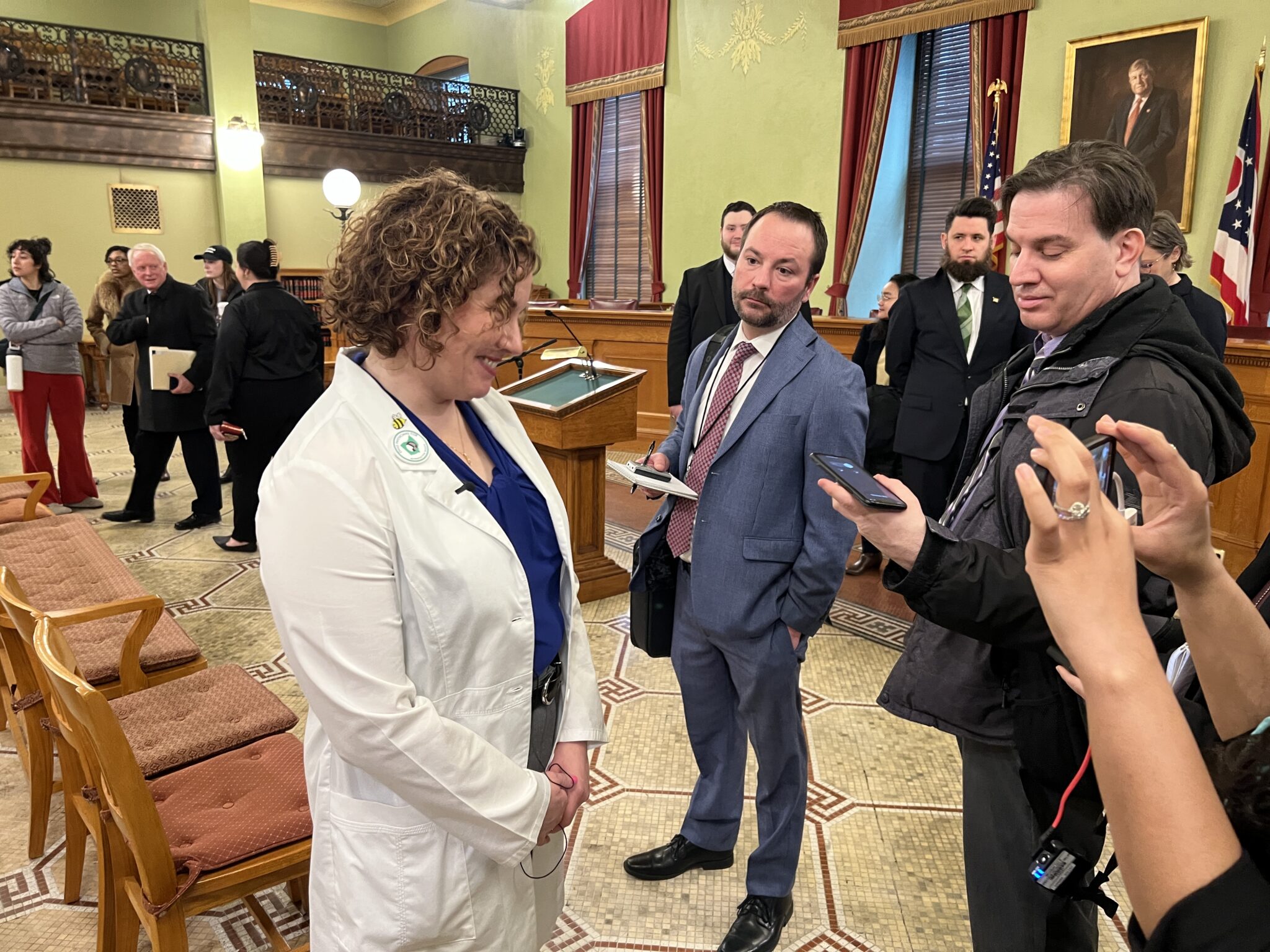
    Dr. Amy Burkett, OB/GYN and member of Ohio Physicians for Reproductive Rights, speaks to media Monday following the Ohio Ballot Board’s vote to verify the language of a proposed constitutional amendment on abortion. Photo: Susan Tebben, OCJ

    This article has been updated to include the proposed constitutional amendment (bottom)

    BY: SUSAN TEBBEN – Ohio Capital Journal

    The Ohio Ballot Board verified Monday that a proposed amendment for the November ballot to cement abortion rights in the Ohio Constitution can now move forward to the full signature-gathering stage.

    In a short Monday meeting, the board, composed of Secretary of State Frank LaRose; Republican state Sen. Theresa Gavarone, Democratic state Sen. Paula Hicks-Hudson, Democratic state Rep. Elliot Forhan, and Bill Morgan, voted unanimously that the proposed ballot initiative only involved one constitutional issue.

    The board only heard from two people outside of the board after LaRose insisted that content be kept away from the merits of the amendment or opinions about abortion itself.

    John Grove, of Cincinnati Right to Life, still took time to try to discredit the amendment itself, called it “intentionally unjust and misleading.”

    Attorney Don McTigue spoke on behalf of the groups proposing the amendment, choosing not to dive into the legal aspects of the amendment, instead saying the “common purpose of the amendment” was individuals having control of one’s own reproductive decisions.

    Gavarone acknowledged that the purpose of the Ballot Board business was “procedural,” but still input her opinion before the unanimous vote was recorded.

     COLUMBUS, OH — FEBRUARY 22: State Sen. Theresa Gavarone, R-Bowling Green, during the Ohio Senate session, February 22, 2023, at the Statehouse in Columbus, Ohio. (Photo by Graham Stokes for Ohio Capital Journal. Republish photo only with original story.)

    “I am horrified at the thought of this amendment, I mean, the right to kill babies being put into Ohio’s constitution,” Gavarone said.

    Now that the proposal has been certified by the Ohio Attorney General and verified by the Ohio Ballot Board, groups attempting to get the measure on the ballot can move forward with collecting the more than 400,000 valid signatures needed to officially get the measure to statewide voters.

    Laura Strietmann, executive director for Cincinnati Right to Life, said pro-life organizations throughout the state have joined together as well, with a full strategy to fight against the measure.

    “We are unified in protecting women in Ohio, in stopping this bill from becoming law,” Strietmann said after the vote.

    Abortion rights groups say they are prepared to go forward with field planning, volunteers and petition circulators as early as the end of this week, according to Jordyn Close, deputy director for the Ohio Women’s Alliance and board president for Abortion Fund of Ohio.

    The organizations are planning to hit the ground running to get more than enough signatures in a short amount of time. The deadline to submit signatures so the proposal can appear on the November ballot is July.

    Part of the plan to bring support to the measure includes informing voters about the true aims of the constitutional amendment on which they would be voting. Claims have already been made by opposition groups that the amendment would bar all abortions, including for baby’s who have reached full term, something supporters of the amendment say won’t happen.

    “We are not interested in doing full-term abortion,” said Dr. Amy Burkett, board-certified OB/GYN in northeast Ohio, and member of Ohio Physicians for Reproductive Rights. “This is about protecting the rights to reproductive health care including abortion, up to viability.”

    Viability, Burkett said, should be determined by the physician and patient “based on the technology that is available at the time.”

    Amendment supporters aren’t shying away from their pro-abortion stance, despite the trend toward using “pro-choice” as a way of including all options.

    “When we talk about reproductive freedom and bodily autonomy, we have to be really specific about what (opposition groups) are attacking,” Close said. “And that is abortion access.”

    ————————-

    Amendment Summary and Text:

    TITLE: The Right to Reproductive Freedom with Protections for Health and Safety

    SUMMARY
    The Amendment would amend Article I of the Ohio Constitution by adding Section 22, titled “The Right to Reproductive Freedom with Protections for Health and Safety.”

    The Amendment provides that:
    1. Every individual has a right to make and carry out one’s own reproductive decisions, including but not limited to decisions on contraception, fertility treatment, continuing one’s own pregnancy, miscarriage care, and abortion.
    2. The State shall not, directly or indirectly, burden, penalize, prohibit, interfere with, or discriminate against either an individual’s voluntary exercise of this right or a person or entity that assists an individual exercising this right, unless the State demonstrates that it is using the least restrictive means to advance the individual’s health in accordance with widely accepted and evidence-based standards of care.
    3. However, abortion may be prohibited after fetal viability. But in no case may such an abortion be prohibited if in the professional judgment of the pregnant patient’s treating physician it is necessary to protect the pregnant patient’s life or health.
    4. As used in this Section, “Fetal viability” means “the point in a pregnancy when, in the professional judgment of the pregnant patient’s treating physician, the fetus has a significant likelihood of survival outside the uterus with reasonable measures. This is determined on a case-by-case basis”; and “State” includes any governmental entity and political subdivision.
    5. This Section is self-executing.

    FULL TEXT OF PROPOSED AMENDMENT

    Be it Resolved by the People of the State of Ohio that Article I of the Ohio Constitution is amended to add the following Section: Article I, Section 22. The Right to Reproductive Freedom with Protections for Health and Safety

    A. Every individual has a right to make and carry out one’s own reproductive decisions, including but not limited to decisions on:

    1. contraception;
    2. fertility treatment;
    3. continuing one’s own pregnancy;
    4. miscarriage care; and
    5. abortion.

    B. The State shall not, directly or indirectly, burden, penalize, prohibit, interfere with, or discriminate against either:

    1. An individual’s voluntary exercise of this right or
    2. A person or entity that assists an individual exercising this right, unless the State demonstrates that it is using the least restrictive means to advance the individual’s health in accordance with widely accepted and evidence-based standards of care. However, abortion may be prohibited after fetal viability. But in no case may such an abortion be prohibited if in the professional judgment of the pregnant patient’s treating physician it is necessary to protect the pregnant patient’s life or health.

    C. As used in this Section:

    1. “Fetal viability” means “the point in a pregnancy when, in the professional judgment of the pregnant patient’s treating physician, the fetus has a significant likelihood of survival outside the uterus with reasonable measures. This is determined on a case-by-case basis.”
    2. “State” includes any governmental entity and any political subdivision.

    D. This Section is self-executing.

  • Ohio citizen-led abortion rights amendment takes next step after petition language certified

    Ohio citizen-led abortion rights amendment takes next step after petition language certified

    Getty Image

    BY: OHIO CAPITAL JOURNAL STAFF 

    The Ohio Attorney General’s Office has certified petition summary language for a proposed amendment to protect abortion rights in the state constitution, which organizers hope to place on the November ballot.

    The Ohio Ballot Board will now determine whether or not the initiative only involves changing only one amendment, as required. If approved by the Ballot Board, it gets sent back to the Attorney General, who turns it in to the Ohio Secretary of State’s Office, at which point full signature-gathering can begin.

    Advocates must collect signatures from 44 out of 88 counties equal to at least 5% of the total vote cast for the office of governor in that county at the last gubernatorial election. Overall, the petition must gather at least 10% of the total vote cast statewide for the office of governor at the last gubernatorial election. This math means that the group needs at least 442,958 valid signatures.

    The drive to protect access to abortion care in Ohio is being spearheaded by Ohioans for Reproductive Freedom and Ohio Physicians for Reproductive Rights.

    Right now, Ohio’s six-week abortion ban is unenforceable due to a Hamilton County judge blocking it indefinitely as the lawsuit against it continues. The bill does not have an exception for rape or incest.

    However, once it gets out of court, it will likely head to the Ohio Supreme Court. An OCJ/WEWS investigation revealed how those justices already told Right to Life groups that abortion isn’t a Constitutional right.

    If the proposed amendment gets to the ballot and is approved by voters, this amendment wouldn’t change existing laws automatically, but it would be the law that applies in all of the pending litigation.

    If passed by voters, Article 1 of the Ohio Constitution would be amended to allow “the right to reproductive freedom,” in a change similar to one approved by Michigan voters last year.

    The groups supporting the ballot initiative are racing to bring the issue before voters before any changes can be made to the threshold needed to place a measure on the ballot. A GOP effort to raise the bar from 50% plus one to 60% plus one has been ongoing, though it’s unclear how long that might take.

    Michigan’s amendment passed with 56.6% of the vote.

    Percentage abortion was protected in other states last year:

    • Kentucky — 52.3%
    • Montana — 52.5%
    • Michigan — 56.6%
    • Kansas — 59%
    • California — 66%
    • Vermont — 76.7%

    Reporting from OCJ’s Susan Tebben and WEWS’ Morgan Trau contributed to this article.

  • Ohio Ballot Board certifies proposed constitutional amendments as single ballot issues

    Ohio Ballot Board certifies proposed constitutional amendments as single ballot issues

    “Ohio communities today are saying, We don’t have a fracking, pipeline, or development problem. We have a democracy problem!” – Tish O’Dell
     
    Columbus, Ohio – The Ohio Ballot Board today certified two proposed constitutional amendments, one regarding Ohio Community Rights and the other regarding Initiative and Referendum for Counties and Townships, as single ballot issues. Both respective amendments had previously been certified by the Ohio Attorney General’s Office.
     
    Petitioners will now need to collect 305,591 signatures, which is equal to 10 percent of the total vote cast for governor in 2014, for each issue in order to place the issues on the ballot.
     
    As state government and industry attempt to strip local self-governing authority from communities across the state, residents refuse to surrender their democratic and environmental rights. Working through the Ohio Community Rights Network (OHCRN), they submitted the two proposed state constitutional amendments.
     
    It also secures the authority of communities to put in place stronger environmental rights and protections than those recognized at the state, federal, or international level, according to a statement from OHCRN.
     
    After submitting initial petitions to the State, Greg Pace, a member of the OHCRN said, “For years we have tried to protect our communities from harmful corporate projects. Today, we understand why we can’t get what we want: We are blocked by a system designed to force the harms in against our will. It is a system that refuses to recognize our right to govern our own communities. The Community Rights Amendment is the people’s way to change that.”
     
    Today, only city and village residents can exercise their inalienable right to propose and repeal laws, which is recognized under Article 2, Section 1b of the Ohio Constitution. However, nearly 39% of Ohio’s population resides in townships and counties. They do not have the same constitutional right to legislate. This amendment extends equal rights to local self-government to all Ohio residents, regardless of jurisdiction within the state.
     
    As part of the total number of signatures needed to place the measure on the ballot, petitioners must collect signatures from at least 44 of Ohio’s 88 counties, and within each of those counties, collect enough signatures equal to five percent of the total vote cast for governor in the most recent gubernatorial election, 2014.
     

    “This goes beyond fossil fuel industries,” stated Tish O’Dell, CELDF’s Ohio organizer. “The right to pass local laws regarding fracking, gun control, predatory lending, minimum wage, and more, are thwarted by state preemptive laws. And those laws are often written by industry.”

    She continued, “Ohio communities today are saying, ‘We don’t have a fracking, pipeline, or development problem. We have a democracy problem!’