Tag: Ohio Capital Journa

  • Another private equity group is buying an Ohio coal plant. Will anything change?

    Another private equity group is buying an Ohio coal plant. Will anything change?

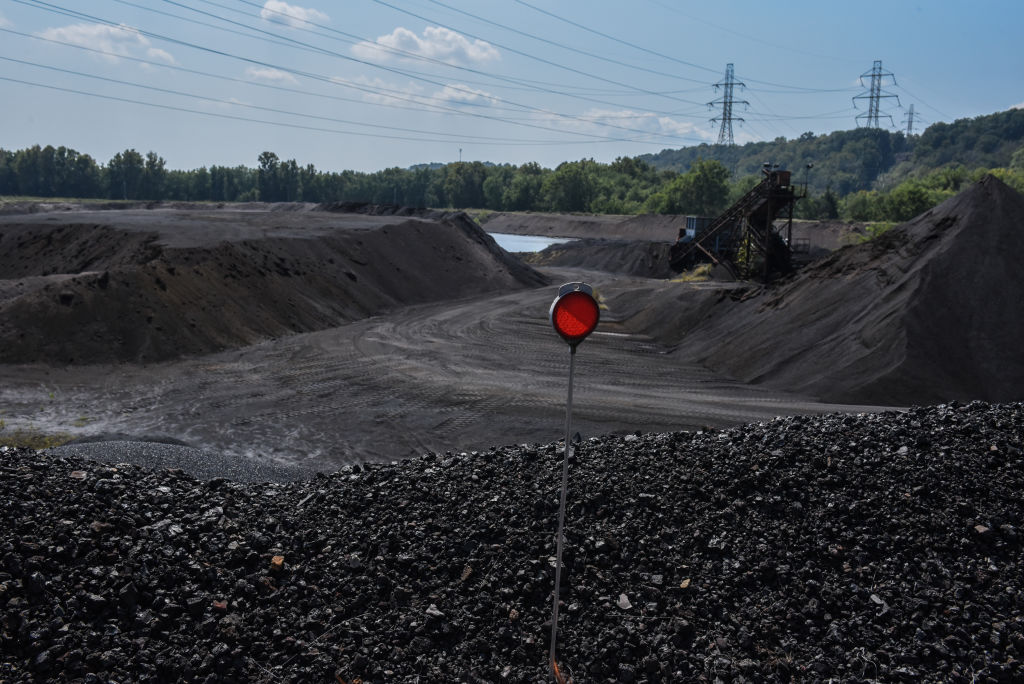
     A field of coal is seen near the Gavin Power Plant in Cheshire, Ohio. (Photo by Stephanie Keith/Getty Images)

    By:  Ohio Capital Journal

    Another private equity group is in the process of buying a coal-fired generation plant along the Ohio River that is estimated to be the nation’s most deadly via pollution.

    The prospective owners boast of a focus on helping fossil fuel plants make the transition to sustainability. But it’s unclear that anything will change at the 50-year-old facility.

    Presently owned by Blackstone and ArcLight Capital Partners, the 2,600 megawatt Gavin plant in Cheshire is in the process of being purchased by two other private equity firms, Energy Capital Partners and Javelin. Because the plant is estimated to produce the deadliest emissions in the United States — and because it has a $40 million liability to clean up toxic coal ash — watchdogs are concerned about ongoing health threats. They’re also worried that taxpayers will have to pay for any cleanup.

    Private equity groups have long been accused of the most ruthless moneymaking. They often buy assets in deals that quickly recoup their investments, then frequently sell off the most valuable parts of an enterprise, and then walk away either by selling or declaring bankruptcy. Whether people needlessly lose jobs or consumers lose choices is not a consideration, critics say.

    Such firms are heavily invested in fossil fuel-powered electricity generation.

    Earlier this month, Private Equity Climate Risks — a consortium of clean-energy advocates — published a scorecard. It said the annual emissions of private-equity owned fossil fuel plants exceed those of the global airline industry and is on a scale with the catastrophic Canadian wildfires of 2023.

    Ohio’s Gavin Plant is a particular polluter.

    A 2023 analysis by the Sierra Club looked at coal-plant emissions and weather patterns. It concluded that because it sends a plume of toxins over populous areas in the eastern United States, the Gavin plant is the deadliest in the country, killing an estimated 244 people a year.

    Blackstone, one of its current owners, has ties to the Republican presidential ticket. CEO Stephen Schwarzman in May endorsed former President Donald Trump, and it’s the 10th-largest contributor to Ohio Sen. J.D. Vance’s PAC, Working for Ohio, according to OpenSecrets.com.

    Blackstone in August disputed critics’ assertions that it was seeking political influence to avoid compensating for the harms caused by the plant. To the contrary, it said it had spent $1 billion on air quality improvements.

    But now that it appears poised to be sold to yet another private-equity group, critics continue to worry that the Gavin Plant will keep on spewing toxins and that its $40 million coal-ash problem will go unaddressed.

    “I think we’ve seen over the past several years how unpopular and deadly coal is,” said Alissa Jean Schafer, climate director of the Private Equity Stakeholder Project, a group critical of private equity practices. “You’ve certainly had a front-row seat to that in Ohio. Increasingly, coal is being seen as, A) a really bad investment, and B) a poisonous form of energy.”

    Indeed, companies are retiring coal-fired power plants or converting them to cleaner natural gas even faster than the federal government estimates, the Institute for Energy Economics and Financial Analysis reported on Tuesday.

    According to its research, 69,000 megawatts of coal generation will be retired or converted between 2025 and 2030 — nearly double the 36,000 megawatts estimated by the U.S. Energy Information Administration in September.

    “Blackstone wasn’t completely able to ignore that, so Blackstone now is following the typical (private equity) playbook where they swooped in, took (the Gavin Plant), tried to see what profit they could get out of it, didn’t respond to any of the pressure to retire the plant or invest in a clean-energy transition,” Schafer said. “Now Blackstone is passing the buck to the next firm. We’ll see what (Energy Capital Partners) does with it.”

    Schafer and her colleagues at the Private Equity Stakeholders Project said the sale of the Gavin Plant is under consideration by the Federal Energy Regulatory Commission, and details of the deal and its timeline for the deal to close are unknown.

    On its website, Energy Capital Partners says it focuses on converting facilities to cleaner generation.

    “Energy Capital Partners (ECP) is a leading credit and equity investor across energy transition infrastructure, with a focus on investing in electricity and sustainability infrastructure, providing reliable, affordable clean energy,” it says.

     A photo of the coal ash pond at the James Gavin Power Plant in Cheshire, Ohio included in documents to the EPA. 

    However, the firm didn’t respond when asked whether it planned to convert or retire Gavin, or what might be done about the plant’s coal ash.

    The scorecard published earlier this month by Private Equity Climate Risks said that ECP is invested in 14 energy companies and that 64% of them have fossil fuel generation. The consortium — which includes the Private Equity Stakeholders Project — gave ECP a grade of C when it comes to such things as transparency in disclosing emissions and political spending, having a clear plan to transition to clean energy, and plans to do its part to meet the global goal of limiting global warming to 1.5 degrees celsius by the end of the century.

    One of the major critiques of private equity firms is that they use average people’s money to invest in things like fossil fuels that harm those same people. That’s so, the argument goes, because much of the money comes from institutional investors such as public pension funds.

    According to data used in the Private Equity Climate Risks scorecard, at least six of Ohio’s public pensions are invested in private equity funds that support fossil fuels. By far the biggest investor is the State Teachers Retirement System at nearly $1.3 billion.

    Already under fire for paltry benefit increases, big staff bonuses and high-fee “alternative” investments, the pension system is invested in at least three private equity funds that support coal or natural gas:

    • $812 million with Ares Management, which owns 14 fossil fuel companies that spew 55 million tons of carbon dioxide equivalents each year. The scorecard gave it a grade of C, when it comes to meeting climate and transparency goals.
    • $450 million with Apollo Global Management, which owns three fossil fuel companies that emit 3.5M tons of carbon dioxide equivalents. It received a grade of B.
    • $10 million with EnCap Investments. It’s invested in 34 fossil fuel companies that emit 92 million carbon dioxide equivalents a year. It received a D grade on the Private Equity Climate Risks scorecard.

    At least one official is trying to end investments by public pensions in fossil fuels. On Tuesday, New York City Comptroller Brad Lander proposed ending investments by city employee pensions in fossil fuel infrastructure.

    ________

    Marty Schladen
    Marty Schladen

    Marty Schladen has been a reporter for decades, working in Indiana, Texas and other places before returning to his native Ohio to work at The Columbus Dispatch in 2017. He’s won state and national journalism awards for investigations into utility regulation, public corruption, the environment, prescription drug spending and other matters.

    Ohio Capital Journal is part of States Newsroom, the nation’s largest state-focused nonprofit news organization.

    MORE FROM AUTHOR

  • Ohio utilities could resume energy efficiency programs under bipartisan bill

    Ohio utilities could resume energy efficiency programs under bipartisan bill

    Getty Images.

    BY:  Ohio Capital Journal

    A bipartisan proposal advancing in the Republican-controlled Ohio House would allow gas and electric utilities to reintroduce programs designed to help customers save energy.

    Prior utility-run programs to reduce electricity use ended after Ohio’s energy efficiency standard was gutted as part of House Bill 6, the 2019 law at the heart of the state’s still unfolding bribery and corruption scandal.

    House Bill 79 would let utilities bring back some of those programs, but on a voluntary basis with capped monthly charges and smaller expectations for energy savings.

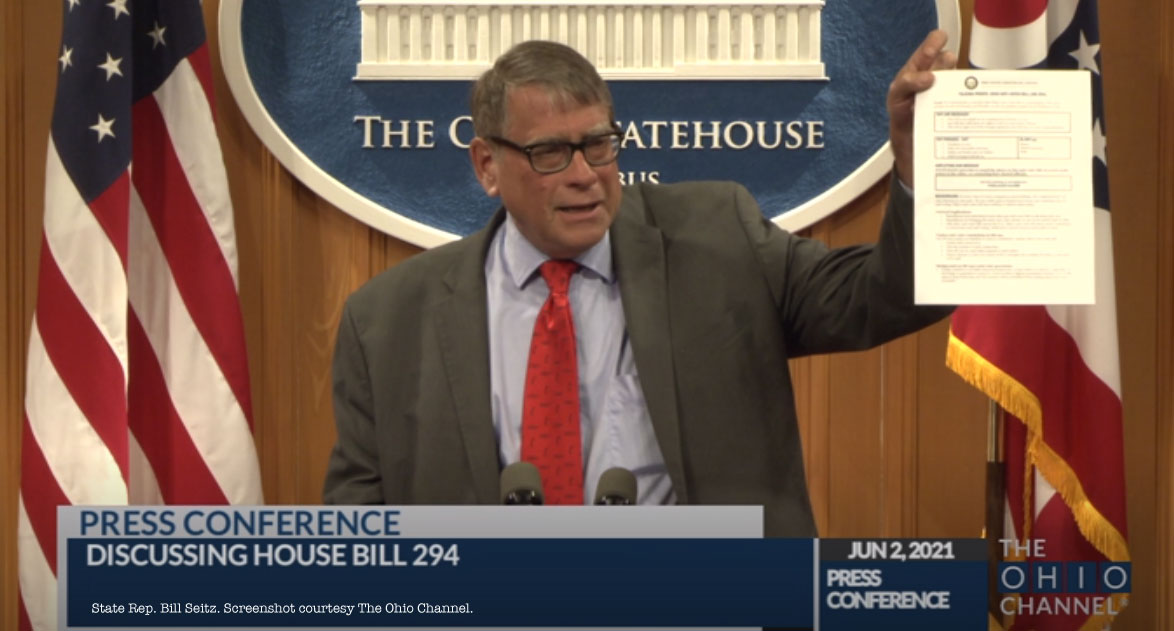
    The legislation is co-sponsored by House Majority Floor Leader Bill Seitz, a Cincinnati Republican who was a perennial critic of the programs before HB 6 passed in 2019.

    “The wide support that this bill has received from both sides of the aisle, all utilities, and all the environmental groups is a testimony to the fact that we have built a better mouse trap as we reintroduce responsible energy efficiency programming targeted to those who most need it — residential customers and small businesses,” Seitz said.

    The other lead sponsor is a Democrat, Rep. Bride Rose Sweeney of Westlake.

    While the bill has broad support, it has critics, too, including customer advocates who worry the programs will lack accountability and become another cash grab for utilities.

    What’s in the bill

    Under the new legislation, utilities would get to choose whether to offer a portfolio of energy efficiency programs. Utilities would need approval from the Public Utilities Commission of Ohio before offering their group of programs for a period of up to five years.

    Residential customers would automatically be included unless they opt out, and their monthly charges would be capped at $1.50. Small commercial customers would also be automatically included, with a cap on monthly charges of $7.50. Mercantile customers would be automatically excluded unless they take action in writing to opt in.

    Any portfolio of programs must be cost-effective. In other words, the charges to participating customers must be less than the programs’ combined savings on energy costs, reductions in energy market prices from lower demands, and other quantifiable system benefits. Utilities would have to make yearly filings with the PUCO to show if their portfolios were in fact cost-effective.

    Any portfolio offered under HB 79 would have to be designed to achieve at least 0.5% of yearly energy savings, based on the prior year’s retail sales to participating customers. But for HB 6, utility energy efficiency programs would have had to show 2%  savings per year from 2021 through 2027.

    Additionally, at least one program and 15% of the proposed costs for residential customers must be geared toward low-income residential customers.

    “The bill offers a balanced approach to lower energy use and is the result of the hard work of many parties,” said Scott Blake, a spokesperson for AEP Ohio. HB 79 would help “lower energy use for individual customers and the overall cost of energy.” Beyond that, “it creates economic opportunities and jobs through selling and installing energy-efficient equipment and offers opportunities for efficient new construction.”

    Energy efficiency after HB 6

    The lower targets mean the overall program savings and emissions reductions would be less than what utilities would have had to do without HB 6, but more than what’s been achieved in the last four years. Although some argue that Ohio law still allows voluntary energy efficiency programs, the PUCO rejected a voluntary plan by Duke Energy in June 2020, and agency staff balked about a proposed AEP plan that was ultimately withdrawn.

    In some ways, though, HB 79 would improve on earlier programs, said attorney Rob Kelter of the Environmental Law & Policy Center. The bill would prohibit utilities from sending out energy savings kits to customers who don’t request them, and steps would be taken to avoid counting activities that customers would already take on their own.

    “Moreover, HB 79 specifically emphasizes smart technologies that will help drive market changes,” Kelter said. In contrast to earlier programs that pushed customers to use different types of light bulbs, “today, the programs focus on innovative technologies that not only reduce overall usage, but reduce usage at peak times when prices are high.”

    HB 79 would also complement federal rebates under the Inflation Reduction Act, said Nolan Rutschilling, managing director of energy policy for the Ohio Environmental Council Action Fund. For example, a 30% credit, subject to income restrictions, is already available for certain equipment, such as qualified heat pumps.

    “Utility-run programs are easily accessible and navigable to consumers, establishing a ‘low hanging fruit’ that is necessary to create long-term buy-in,” Rutschilling said in his testimony on the bill. Without those programs, however, “only the most knowledgeable and experienced homeowners will enjoy the household benefits of efficiency.”

    Critics are concerned about certain language in the bill and think the state should play a bigger role in connecting residents and businesses with efficiency funding and opportunities.

    “Under the new federal programs, Ohio is receiving huge grants to administer its own programs,” attorney Thomas Hays said in his testimony for the Northwest Ohio Aggregation Coalition. “These programs are voluntary, the customer keeps every penny of the rebate or tax credit, and no charge is added to any electric bill.”

    Rep. Sean Brennan, D-Parma, is among a dozen lawmakers who signed on as additional co-sponsors to the bill, but he became concerned after hearing opponent testimony from the aggregation coalition and the Office of the Ohio Consumers’ Counsel and voted against the bill in committee. Among other things, the groups object to provisions for utilities to collect “utility incentives” and “lost distribution revenue.” Vagueness or loopholes in the bill could turn energy efficiency programs into profit centers at customers’ expense, the groups fear.

    Seitz said the bill won’t let utilities get incentives if they merely facilitate participation in the new federal programs. And allowing weather-normalized decoupling or lost distribution revenue aims “to keep the utilities whole against the declining sale of electrons brought about by the programs.”

    But loose definitions for terms like “behavioral energy savings” are a problem, testified Lindsey Short, director of public policy services for the Ohio Manufacturers’ Association. “Moreover, electric utilities are already guaranteed to recover all of their costs through base distribution rates.”

    The bill’s language calling for plans to improve “utility control to reduce demand or impacts of intermittent resources on the grid” also “stands out as odd,” Short said, noting that some types of renewable energy are intermittent resources.

    The legislation cleared the Ohio House Public Utilities Committee on June 21. The next step would be a full House vote. The timing depends on whether Speaker Jason Stephens, R-Kitts Hill, schedules a vote right after negotiations on Ohio’s two-year budget wrap up, or if he opts to wait until September.

    This article first appeared on Energy News Network and is republished here under a Creative Commons license.


    ____________________

    Kathiann M. Kowalski
    KATHIANN M. KOWALSKI

    Kathi is the author of 25 books and more than 600 articles, and writes often on science and policy issues. In addition to her journalism career, Kathi is an alumna of Harvard Law School and has spent 15 years practicing law. She is a member of the Society of Environmental Journalists and the National Association of Science Writers. Kathi covers the state of Ohio.

    MORE FROM AUTHOR

  • Utility regulator accused of taking a bribe helped write bill targeting watchdog

    Utility regulator accused of taking a bribe helped write bill targeting watchdog

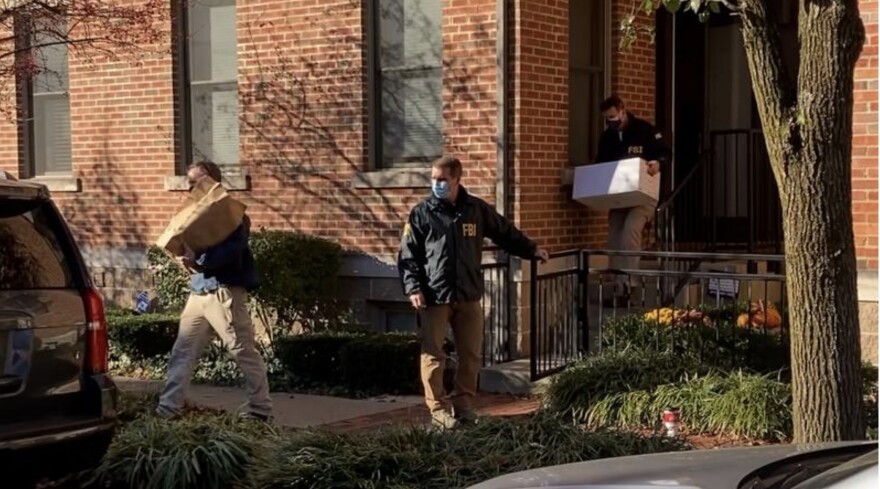
    FBI agents remove boxes of materials from PUCO Chairman Sam Randazzo’s condo in Columbus Nov. 17, 2020. Photo courtesy of Daniel Konik/Statehouse News Bureau.

    BY: JAKE ZUCKERMAN Ohio Capital Journal

    Ohio’s former top utility regulator, who was accused of taking a $4.3 million bribe, quietly spent months helping write a sweeping energy bill that targeted a state watchdog agency that advocates for Ohio’s residential electric customers, records show.

    Emails that the Public Utilities Commission of Ohio gave in response to two FBI subpoenas show its former chairman, Sam Randazzo, conferred with the bill sponsor and helped draft legislative language. The bill would have limited the reach of the Ohio Consumers’ Counsel and given often-hostile state legislators control of its board.

    The OCC appears at PUCO cases and advocates for residential ratepayers’ interests, which often run counter to those of investor-owned utility companies and industrial-scale energy customers. The agency’s efforts have led to millions in refunds to consumers, including $306 million from FirstEnergy Corp. last year to settle a lawsuit against the company for charging an unlawful profit margin on its customers.

    Akron-based FirstEnergy told prosecutors last summer that it paid a business owned by Randazzo $4.3 million before his 2019 appointment in exchange for “official actions.” The company also said it gave a nonprofit secretly controlled by then-GOP House Speaker Larry Householder $60 million to help pass House Bill 6 — energy legislation worth an estimated $1.3 billion to FirstEnergy. Householder has pleaded not guilty and awaits trial. Randazzo has not been charged with a crime.

    Records released earlier this year showed some of Randazzo’s behind-the-scenes lobbying work on HB 6. The records released last week show his influence spanned further.

    In May 2020, Rep. Nino Vitale, R-Urbana, introduced the text of House Bill 246. The bill would have narrowed the scope of cases the OCC can join and subject the agency to “any reasonable conditions that the commission deems necessary to avoid duplication, repetition or delay.” It also gives state lawmakers appointment power over six of nine seats on the OCC’s board.

    The legislation contained a sweep of other changes as well, including creating new ways for utilities to set their prices, modifying setback rules for wind farms, and allowing the Ohio Power Siting Board to create new setback requirements for solar energy sites.

    In the six months before Vitale unveiled the bill, Randazzo and PUCO staff met with Vitale, drafted elements of the legislation, and helped edit Vitale’s introductory testimony to lawmakers, the subpoenaed emails show. The emails don’t show Randazzo addressing the OCC provisions directly. But in a statement through his attorney, Randazzo equivocated when asked if he drafted or advised on the section.

    “If so but having no recollection of either writing or advising any such language, it would only have been as the result of a request from the legislature,” he said. “It is likely that the utilities had input.”

     Sam Randazzo, then a private sector attorney, testifies before the PUCO in March 2018. Source: The Ohio Channel.

    The PUCO released the emails after the Ohio Capital Journal filed a public records request and an eventual lawsuit seeking them.

    Around Thanksgiving of 2019, Randazzo asked to meet with Maura McClelland, a policy adviser and attorney at the PUCO, to meet and discuss the language of the bill’s “ratemaking piece.”

    HB 246 created a new option for utilities to set prices called “alternative rate plans.” According to nonpartisan analysts with the state Legislative Service Commission, the plans can take into account aspects of fair energy pricing that the current model misses like efforts for energy efficiency or cash flow problems from the companies.

    “In general, alternative rate plans could lead to higher prices paid by ratepayers,” the LSC analysts wrote. “But presumably, PUCO would only approve those higher costs after examining aggregate effects in accomplishing its policy objectives.”

    HB 246 would also allow the PUCO to consolidate parties that it determines have “sufficiently common interests” to speed up cases.

    In a memorandum opposing the bill, the Ohio Manufacturers’ Association said the legislation would block its members from meaningful participation at the PUCO. The manufacturers argued the bill in several areas consistently gives utilities the upper hand over their customers, especially via the ratemaking proposal.

    “The bill is opaque and no clear reasoning exists for why its proposed changes are needed,” the memorandum states.

    Roger Sugarman, an attorney representing Randazzo, said via email that neither Randazzo nor the PUCO were the driving force behind the bill. He said he couldn’t determine if the LSC’s analysis is correct without more details.

    “Without knowing what type of alternative rate plan, or the object of your question and the statutory conditions required to secure PUCO approval, it is not possible to evaluate the LSC analysis,” he said. “In general, rate applications filed by utilities, whether alternative or traditional, lead to higher rates; the question is usually about how much higher.”

    He said some pieces of the bill wouldn’t have affected much change versus current law. Plus, the bill all but died after its first hearing. Randazzo’s time “was occupied by more pressing and important things than HB 246.”

    FBI agents arrested Householder and charged him with racketeering in June 2020. He awaits trial. Agents raided Randazzo’s condo months later. In July 2021, FirstEnergy signed a deferred prosecution agreement with the U.S. Department of Justice. It agreed to pay a $230 million penalty and cooperate with the ongoing investigation into HB 6 to possibly avert a charge of wire fraud.

    In a statement of facts paired with the agreement, FirstEnergy said it paid companies controlled by Randazzo $4.3 million in exchange for official action. The company said it hired Randazzo as a consultant and paid him a total of about $22 million since 2010.

    Before starting in state government, Randazzo represented industrial scale energy users before the PUCO. He spent years fighting against Ohio energy policies that forced utilities to include more renewable energy in their mixes or make their customers’ homes more energy efficient. He also represented subsidiaries of both CenterPoint Energy and Dominion Energy as a lobbyist, as well as a group of citizens opposing a wind farm in Huron County.

    Vitale drew significant media attention via outrageous claims including that Bill Gates invented the novel coronavirus or that Gov. Mike DeWine was bringing “FEMA Concentration Camps” to Ohio in relation to the pandemic. (Randazzo said his position on COVID “pulled in a very direction” than Vitale’s.)

    Vitale also, perhaps more subtly, helped guide HB 6 from legislation to law. He co-sponsored the bill and chaired the House Energy and Natural Resources committee that reviewed it. He first won office with $7,700 in financial backing from Householder’s campaign committee. He voted for HB 6 in 2019 and against repealing it after Householder’s arrest. He was one of 21 lawmakers who voted against expelling Householder from office.

    Vitale didn’t respond to a phone call or emails to his personal and official accounts.

     State Rep. Nino Vitale, R-Urbana. Photo from Ohio House website.

    “As you all know, anyone can be indicted for anything. Anything,” he said in a floor speech last year defending Householder.

    “However, that person deserves to go in front of a jury of their peers and prove their case. They might be guilty, they might not … That’s what makes us different from a communist country.”

    Federal prosecutors alleged that Householder secretly controlled a nonprofit organization that received $60 million from FirstEnergy. He used the money to elect a slate of candidates who would vote him into the House Speaker’s office and in turn support HB 6. He’s also accused of spending the money for personal use. Two alleged conspirators, including Householder’s former political adviser, have pleaded guilty.

    When the anti-OCC bill dropped, few knew or suspected of either Randazzo’s financial ties with FirstEnergy or his lobbying work on the bill. However, after Householder’s arrest and the raid on Randazzo’s home, some raised interest in ensuring the bill’s quick death.

    “This bill is a danger to anyone in Ohio who pays a utility bill and it remains on the Ohio House docket as a direct attack on the OCC and all Ohio residential utility customers,” wrote former Democratic State Senator Leigh Herington in a November 2020 op-ed in the Columbus Dispatch.

    He suggested the legislation was simple retaliation for the OCC’s opposition to House Bill 6 and another bill that allows FirstEnergy a more favorable accounting formula to determine if its collections from customers are “significantly excessive.” (The OCJ previously reported Randazzo lobbied on that legislation as well.)

    Utility companies spend big and wield considerable sway in Ohio politics. As Herington noted, the OCC has seen its size dwindle over the years. Its budget dropped from $9.3 million in 2011 to $5.5 million in 2020.

    The OCC also suggested the bill was retaliatory in nature due to its opposition to HB 6. Vitale’s bill, the agency said in a resolution, would “weaken the independence” of the board as well as its “utility watchdog role.”

    A PUCO spokesman said the emails only show the PUCO working on language related to the agency and the state Power Siting Board. He said he didn’t know why Randazzo and Vitale communicated through personal email accounts.

    “The PUCO does not take a position on proposed legislation,” he said. “We will always be responsive to inquiries from members of the General Assembly as they go through the legislative process.”

  • Both FirstEnergy and its shareholders seek secrecy around company’s bribes

    Both FirstEnergy and its shareholders seek secrecy around company’s bribes

    BY: JAKE ZUCKERMAN – Ohio Capital Journal

    Both FirstEnergy Corp. and its shareholders argued to a federal judge that they shouldn’t be forced to publicly disclose which executives ordered the payment of political bribes that the company admitted to in a related criminal case.

    The two parties are awaiting judicial approval of a proposed settlement from a derivative lawsuit filed by FirstEnergy’s shareholders. The settlement would call for FirstEnergy’s insurers to pay the company $180 million for damages incurred via the company’s role in what prosecutors have described as the largest public corruption manifestation in state history.

    In an agreement with prosecutors reached in July 2021, FirstEnergy as a company admitted to a $60 million bribery scheme anchored by the then-Speaker of the Ohio House, and another $4.3 million bribe to Ohio’s then top utility regulator.

    The statement of facts in that agreement, however, anonymizes the FirstEnergy officials involved in the scandal. The agreement also called for FirstEnergy to pay a $230 million penalty and cooperate with investigators to possibly avert a charge of wire fraud against the company.

    Delaying any possible approval in the shareholder’s derivative case, U.S. District Judge John A. Adams asked the shareholders’ attorneys last week to state who at FirstEnergy ordered the bribe payments,

    Jeroen van Kwawegen, an attorney representing the plaintiffs, demurred and didn’t answer the question, prompting Adams to cut short the hearing. Adams then issued an order calling for any “interested parties” to either provide an answer to his question or offer a good reason why they can’t divulge the information. He threatened the lawyers with contempt and possible expulsion from the case for failure to answer.

    The shareholders, in arguments submitted Wednesday, offered to privately tell the judge who at FirstEnergy ordered the bribes. They said they couldn’t do so publicly because doing so would breach confidentiality rules associated with discovery (the pre-trial evidence exchanging process) and mediation.

    The shareholders’ lawyers said their obligations are to their clients and to FirstEnergy itself — not the public.

    “Such public disclosure could also be harmful to FirstEnergy considering the myriad related criminal and civil proceedings, the ongoing regulatory investigations, and the securities class action pending in the Southern District of Ohio where FirstEnergy is a defendant,” they wrote.

    Kwawegen attached emails attached to the filing showing he asked lawyers FirstEnergy and its former executives if they’d agree to voluntarily disclose some of the information. He was rejected by the company, its former CEO Chuck Jones, Dennis Chack, and Mike Dowling (whose lawyer said they are not inclined to provide a “blanket waiver” but asked for specifics). Jones, Chack and Dowling were all fired in October 2020 amid an internal investigation.

    FirstEnergy made similar arguments. The lawsuit and settlement, its lawyers said, are aimed to recover for harm done to the company because of its actions. Any public accountability, they argued, “risks harm to the interests of FirstEnergy and its stockholders, which is exactly the opposite of what a derivative litigation is supposed to do.”

    Notably silent on the issue: federal prosecutors. They didn’t weigh in either way before the court. A spokeswoman for U.S. Attorney for the Southern District of Ohio Kenneth Parker didn’t respond to an inquiry.

    The derivative lawsuit traces back to the passage of House Bill 6 in 2019. The energy overhaul legislation, among other provisions, provided a massive bailout of two nuclear power plants owned at the time by a FirstEnergy subsidiary. Federal prosecutors said the legislation was worth $1.3 billion to the company.

    To ensure it passed and thwart a referendum attempt to repeal it, FirstEnergy admitted to providing $60 million to a nonprofit secretly controlled by then House Speaker Larry Householder, R-Glenford. Householder allegedly used the funds to elect a slate of candidates that would support his bid to become the House Speaker, engineer the bill’s passage, thwart a repeal effort, and enrich himself personally. He has pleaded not guilty and awaits trial, scheduled for January 2023.

    FirstEnergy also admitted to secretly paying $4.3 million to energy attorney Sam Randazzo just before Gov. Mike DeWine named him chairman of the Public Utilities Commission of Ohio. Randazzo has not been accused of a crime and has denied wrongdoing.

  • House GOP leader on Justice Maureen O’Connor impeachment: ‘All options are on the table’

    House GOP leader on Justice Maureen O’Connor impeachment: ‘All options are on the table’

    BY: JAKE ZUCKERMAN AND NICK EVANS – Ohio Capital Journal

    Columbus, Ohio – A ranking House Republican left open the possibility of impeaching the chief justice of the Ohio Supreme Court, which this week rejected Republicans’ third proposed legislative redistricting map. 

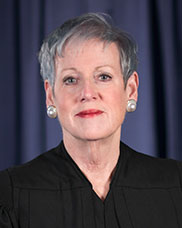
    During a private GOP caucus phone call Thursday, House Majority Leader Bill Seitz and Rep. Jon Cross voiced support for impeaching Justice Maureen O’Connor, according to a person on the call. O’Connor, also a Republican, has acted as a swing vote on two high-stakes redistricting cases and sided with Democrats on the bench finding the maps disproportionately favored Republicans in violation of the Ohio Constitution. 

    Justice Maureen O’Connor

    Through a spokesman, Seitz, a longtime Cincinnati lawmaker and influential caucus member, declined to comment on caucus discussions but said Friday “nothing has been decided, and that all options are on the table.”

    Cross, a Kenton Republican, declined comment, noting “we (I) don’t comment about caucus meetings.”

    The call, held Thursday afternoon, lasted about 20 minutes, the source on the call said. In it, Seitz presented an argument that included old precedent for the House moving to impeach a justice after an unfavorable court decision. 

    When Cross offered what was described as a more fiery argument for impeachment, House Speaker Bob Cupp, R-Lima, ended the call, according to the source. Cupp’s office did not respond to requests for comment about the caucus call or his position on impeachment. 

    Cupp spent six years on the Ohio Supreme Court bench, serving alongside O’Connor for his entire tenure.

    On Facebook Thursday, hours before the caucus call, Cross wrote “enough is enough,” and that O’Connor had violated Ohio law related to altering the time, place or manner of an election.

    The claim about Seitz’ support marks the most senior legislator in favor of the possibility of impeaching O’Connor. Also Thursday, Rep. Scott Wiggam, R-Wooster, a committee chairman, said on social media “it’s time to impeach Maureen O’Connor now.

    https://twitter.com/Scott_Wiggam/status/1504496308584919044

    The hubbub comes in response to the court’s redistricting ruling late Wednesday evening. A four-justice majority found “beyond a reasonable doubt” that the most recent maps violated the constitution, particularly the provisions prohibiting partisan favoritism. While uncertainty remains, the ruling could force lawmakers to either move the May primary election date or create a second primary election date for non-statewide races. In a letter this week, Secretary of State Frank LaRose indicated the plan for now is to proceed with two separate primary elections.

    The decision on whether to pursue impeachment won’t be up to him, but Gov. Mike DeWine advised against the move Friday. 

    “This is an extraordinary measure to take,” he said. “I think we don’t want to go down that pathway, because we disagree with a decision by a court, because we disagree with a decision by an individual judge or justice. Not a good idea.”

    Three House Republicans publicly floated the concept of impeaching DeWine himself in 2020 for his COVID-19 response. The idea went nowhere. 

    The Supreme Court is currently reviewing a second, GOP-proposed congressional redistricting map after overturning the first effort on constitutional grounds. 

    Not long before the redistricting fiasco, O’Connor publicly broke from Republicans on judicial integrity. The Ohio Republican Party, with the 2020 presidential election looming, blasted a lower court’s ruling on election procedures and Franklin County Common Pleas Judge Richard Frye as a “partisan judge.” In an unusual move, O’Connor called the statement “disgraceful” and “deceitful” and emphasized the concept of judicial independence. 

    “This is a blatant and unfounded attack on the independence of the Ohio judiciary,” she wrote. 

    “To accuse a judge of deciding the matter before him on partisan politics and further accuse the judge of ‘obstruction of his judicial responsibility’ is without merit and is meant to further the false narrative that judges have no conscience, no legal responsibilities, and no capacity to decide what the law is beyond the raw politics of the issue.”

    An impeachment would be an extreme, though not unprecedented reaction. In fact, the Ohio Legislative Service Commission notes all eight impeachments in Ohio’s history were against judges. For instance, in 1808, members of the Ohio House grew angry enough at a ruling by Justice George Tod that they sought his impeachment. He survived via one vote in the state Senate, according to the court. Justice Calvin Pease was impeached and acquitted as well around the same time. 

    The Ohio Supreme Court gave state lawmakers until March 28 to submit a new proposal. The Ohio Redistricting Commission, a bipartisan panel of statewide and legislative officials, is scheduled to meet Saturday. 

    Morgan Trau contributed to this story.

  • Senate passes congressional map that continues GOP stronghold over state

    Senate passes congressional map that continues GOP stronghold over state

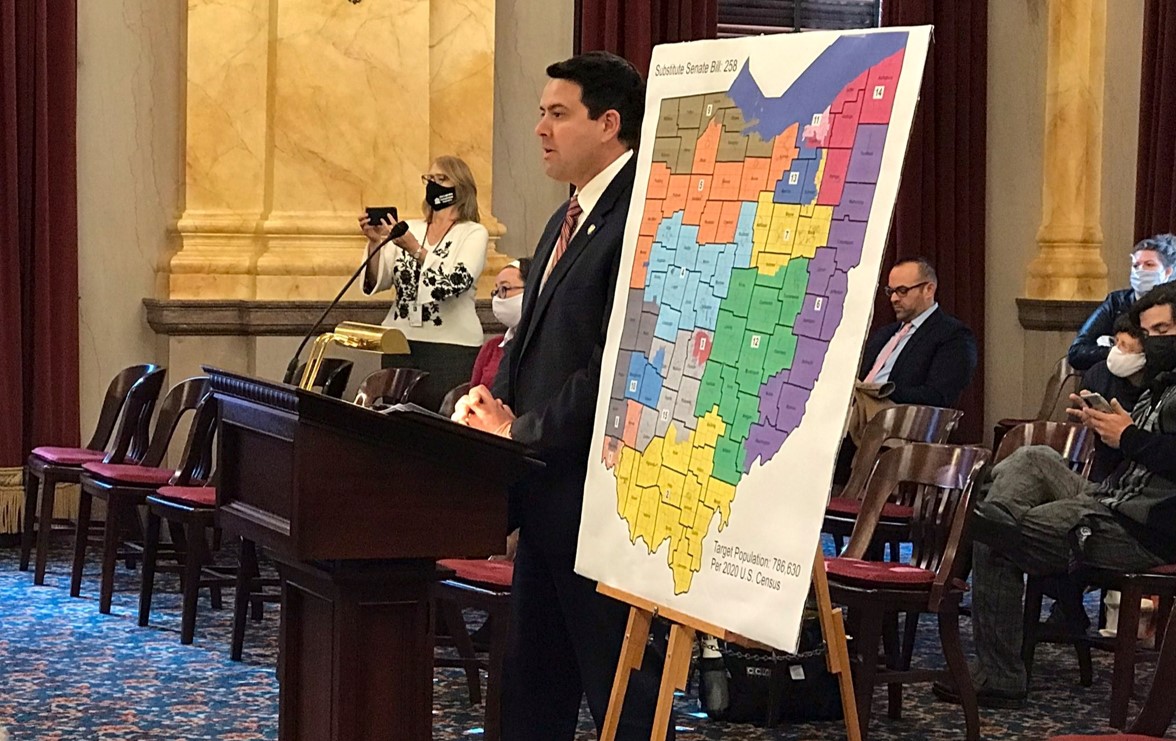
    State Sen. Rob McColley, R-Napoleon. Photo by Susan Tebben, OCJ.

    BY: SUSAN TEBBEN – Ohio Capital Journal

    Ohio Senate Republicans rushed through a congressional redistricting map Tuesday introduced to the public less than 24 hours before.

    It was passed out of committee 5-2 along partisan lines before being passed by the whole chamber later in the day 24-7, also along partisan lines.

     The GOP congressional map passed through the state Senate on Tuesday afternoon. (Right-click to open new tab and enlarge)

    The passage came on the same day a committee who had been considering a different map as part of Senate Bill 258, substituted the map that state Sen. Rob McColley, sponsor of the bill, said was spearheaded by Senate President Matt Huffman, along with House Speaker Bob Cupp.

    An analysis of the map on Dave’s Redistricting App shows seven Republican districts, two Democratic districts and six districts listed as competitive for being within a 54-46 margin. Five in six of the “competitive” districts lean Republican, and the one that leans Democratic, Ohio’s 13th district, does so by 0.88%.

    Senate President Matt Huffman said negotiations had been going on since the census data came out, but that in terms of congressional redistricting, Dems and the GOP were “at loggerheads.”

    Huffman accused Democrats of gerrymandering, saying their demand was for a map that had six Dem districts and six Republican ones, which he didn’t think was “within the spirit of the reforms.”

    “I think we all pretty much knew where we were at,” Huffman said on Tuesday.

    Minority Leader Sen. Kenny Yuko, D-Richmond Heights, had previously said on the Senate floor that he had hoped for better.

    “I was hoping for a little more compromise. I was hoping there would be a little more conversation,” Yuko said.

    State Sen. Cecil Thomas, D-Avondale, said in an argument against the maps on the Senate floor that it was obvious that the 13-2 maps were gerrymandered in favor of the GOP, and even the Democratically leaning Hamilton County was drawn in favor of Republicans in terms of the next election.

    “This supposed competitive district leans Republican by more than 3 points…making it an automatic uphill battle for the Democrat,” Thomas said.

    The constitution’s “plain language” was the most important part of determining district lines, as McColley argued on the floor of the Senate. Huffman said there were things they had to interpret, such as the shapes of districts, but issues not explicitly stated in the redistricting rules had to take a back seat.

    “In the end, the constitution comes first, and those aspirational things come second,” Huffman said.

    Thomas and other Democrats criticized the lack of racial data used in determining the maps, just as supporters of Democratic maps had said GOP maps unfairly split communities, particularly communities of color. Huffman doubled down on the fact that Republicans didn’t use racial data, saying it’s illegal for them to do so unless “there is appropriate evidence presented which requires that.”

    He said the maps were drawn with race in mind as a divisive factor.

    “(Thomas) is wrong that we simply tried to draw lines having to do with race in this case,” Huffman said.

    In Senate Local Government and Elections Committee Tuesday morning, McColley defended the map, Huffman and Cupp by saying he supports it as drafted.

    “(Cupp and Huffman) have done an awful lot of due diligence and have done an awful lot of discussions on this map, so anything that I’m going to do is going to be deferring to them,” McColley said.

    McColley also seemed to suggest that Ohio could be a swing state in saying district lines shouldn’t be the “end all, be all arbiter” for determining political power and the results of future elections.

    “You can look in the legislature, you can look in Congress, you can look other places and realize that in many cases, the shifting sands of politics and the issues of the day ultimately are what decide elections, it’s not just simply because you are a 50.1 (percent lean) or a 49.9,” McColley said. “Given a period of time, these seats could switch back and forth potentially over the course of a decade.”

    The map was universally panned by anti-gerrymandering groups like All On the Line and the League of Women Voters and Ohioans who have spoke up in committee hearings since the beginning of the process.

    Many complaints, as in previous map hearings, rested on procedure, with testimonies that were put in ahead of the 24-hour advance submission rule being tossed out by their authors, because they pointed to a map that was no longer on the table.

    Fair Districts Ohio member Trevor Martin said the abbreviated timeline of last night didn’t allow for a comprehensive review of the maps, only an “eyeball test” of the district lines and shapes.

    “We have no idea what we’re looking at, what we’re looking at is a mess,” Martin told the Senate committee. “It’s like you don’t hear us, and it’s infuriating.”

    Jen Miller, executive director of the League of Women Voters of Ohio, asked in vain for more hearings because without shape files to look at, zooming on a PDF was their only option, and not the ideal way.

    Katy Shanahan, of the Ohio chapter of All On the Line responded for several testifiers when state Sen. Jerry Cirino, R-Kirtland, said the anger and accusations of cheating by the Senate GOP expressed by advocates was “a unique method of persuasion on the part of those who are opposing this bill.”

    “So, you’re right, a lot of what you’re hearing today is exasperation, it’s frustration and it’s righteous anger that we have to stand here and beg you to care enough about our democracy to do the right thing and deliver on your campaign promises to give us a fair map and a fair redistricting process,” Shanahan said.

  • Butler County Judge orders West Chester Hospital to treat COVID-19 patient with Ivermectin, despite CDC warnings

    Butler County Judge orders West Chester Hospital to treat COVID-19 patient with Ivermectin, despite CDC warnings

    BY: JAKE ZUCKERMAN  and Ohio Capital Journal

    A Butler County judge ruled in favor of a woman last week who sought to force a hospital to administer Ivermectin — an animal dewormer that federal regulators have warned against using in COVID-19 patients — to her husband after several weeks in the ICU with the disease.

    Butler County Common Pleas Judge Gregory Howard ordered West Chester Hospital, part of the University of Cincinnati network, to treat Jeffrey Smith, 51, with Ivermectin. The order, filed Aug. 23, compels the hospital to provide Smith with 30mg of Ivermectin daily for three weeks.

    The drug was originally developed to deworm livestock animals before doctors began using it against parasitic diseases among humans. Several researchers won a Nobel Prize in 2015 for establishing its efficacy in humans. It’s used to treat head lice, onchocerciasis (river blindness) and others.

    Both the U.S. Food and Drug Administration and the Centers for Disease Control and Prevention have warned Americans against the use of Ivermectin to treat COVID-19, a viral disease. It’s unproven as a treatment, they say, and large doses of it can be dangerous and cause serious harm. A review of available literature conducted earlier this month by the journal Nature found there’s no certainty in the available data on potential benefits of Ivermectin.

    The drug has grown in popularity among conservatives, fueled by endorsements from allies of former President Donald Trump like U.S. Sen. Ron Johnson, R-Wisc. or Fox News personalities Laura Ingraham and Sean Hannity. The CDC warned reports of poisoning related to use of Ivermectin have increased threefold this year, spiking in July.

     Estimated number of outpatient ivermectin prescriptions dispensed from retail pharmacies — United States, March 16, 2019–August 13, 2021. Data are from the IQVIA National Prescription Audit Weekly (NPA Weekly) database. NPA Weekly collects data from a sample of approximately 48,900 U.S. retail pharmacies, representing 92% of all retail prescription activity. Source: CDC.

    Julie Smith filed the lawsuit on behalf of her husband of 24 years. He tested positive for COVID-19 July 9, was hospitalized and admitted to the ICU July 15, and was sedated and intubated and placed on a ventilator Aug. 1. He later developed a secondary infection he’s still wrestling with as of Aug. 23, court records say.

    The lawsuit doesn’t mention whether Jeffrey Smith is vaccinated against COVID-19. However, overwhelming majorities of people currently hospitalized with COVID-19 are unvaccinated — data from the Ohio Department of Health shows of roughly 21,000 Ohioans hospitalized with COVID-19 since Jan. 1, only about 500 were vaccinated.

    Julie Smith found Ivermectin on her own and connected with Dr. Fred Wagshul, an Ohio physician who her lawsuit identifies as “one of the foremost experts on using Ivermectin in treating COVID-19.” He prescribed the drug, and the hospital refused to administer it.

    A hospital spokeswoman said she can’t comment on litigation and federal patient privacy laws prevent her from commenting on any specifics of patient care.

    Smith is represented by New York attorney Ralph Lorigo, the chairman of New York’s Erie County Conservative Party, who has successfully filed one similar case against a Chicago area hospitaland two more in Buffalo. He did not respond to an email or phone call.

    The Ohio lawsuit makes reference to the Front Line Covid-19 Critical Care Alliance, a nonprofit of which Wagshul is listed as a founding physician. The organization touts Ivermectin as both a preventative and treatment for COVID-19. Its “How To Get Ivermectin” section includes prices and locations of pharmacies that will supply it, from Afghanistan to Fort Lauderdale to Pennsylvania to Sao Paulo, Brazil.

    In an interview, Wagshul said the science behind Ivermectin’s use in COVID-19 patients is “irrefutable.” The CDC and FDA engaged in a “conspiracy,” he said, to block its use to protect the FDA’s emergency use authorization for COVID-19 vaccines. He said the mainstream media and social media companies have been engaging in “censorship” on Ivermectin’s merits, and that the U.S. government’s refusal to acknowledge its benefits amounts to genocide.

    “If we were a country looking at another country allowing those [COVID-19] deaths daily … we would have been screaming, ‘Genocide!’” he said.

    Wagshul said he had no financial interest in the sale of Ivermectin.

    Dr. Leanne Chrisman-Khawam, a physician and professor at the Ohio University Heritage College of Osteopathic Medicine, called the FLCCCA “snake oil salesmen.” She reviewed the association’s research on the drug’s uses and said there are some serious problems with its cited studies: many of them don’t show positive results, and those that do bear design flaws like small control groups, unaccounted for variables, non-blinded studies, not accounting for mitigations like vaccines and masking practices, and others.

    “Based on evidence-based medicine and my read on this large number of small studies, I would find this very suspect, even the positive outcomes,” she said.

    Several state authorities declined to comment on the matter. Cameron McNamee, a spokesman for the state Board of Pharmacy, referred inquiries to the state Medical Board, the attorney general, and the Ohio Hospital Association.

    A spokesman for the state Medical Board, which licenses physicians, said its jurisdiction is over the practice of doctors and how they uphold standards of care — not lawsuits.

    A spokeswoman for Attorney General Dave Yost declined comment and referred inquiries to the Board of Pharmacy and Veterinary Board.

    An Ohio Hospital Association spokesman called the lawsuit “interesting” but said he’d need to confer with his legal team before commenting.

    It’s unclear why the hospital didn’t mount any defense under a new law passed in the state budget this summer that grants health care providers the “freedom to decline to perform” any service which violates their “conscience,” as informed by moral, ethical or religious beliefs.

    No attorney information for West Chester Hospital was available on the court docket as of Friday afternoon.

  • Ohio’s COVID-19 vaccination slows ‘dramatically’

    Ohio’s COVID-19 vaccination slows ‘dramatically’

    Photo from the U.S. Department of Defense.

    By Jake Zuckerman and Ohio Capital Journal– May 4, 2021

    One month ago, nearly 475,000 Ohioans over seven days marched into small pharmacies and mass clinics alike around the state to get vaccinated against COVID-19.

    Each week since, the number of newly “vaccine-started” Ohioans has tumbled. Just 152,000 Ohioans were vaccinated during the week ending April 25, according to data from the Ohio Department of Health.

    As the vaccine rollout pace slows, only about 4.7 million of Ohio’s 11.7 million residents have begun the vaccination process.

    “We clearly have a lot more vaccine than we have demand,” Gov. Mike DeWine said to reporters Monday.

    The week ending April 25, the most recent with complete data, shows vaccine uptake at its lowest rate since mid-February, when a nasty winter storm swept the country and temporarily closed vaccination sites.

    https://datawrapper.dwcdn.net/1jYQd/2/

    Vaccines protect individuals against COVID-19 but, at a certain threshold, can protect those in a population who haven’t yet or cannot receive the vaccine. Experts have estimated this threshold, known as herd immunity, to be somewhere between 70% and 90%.

    While the first four months of the vaccine rollout were defined by scarcity, uptake rates began to plunge nationally in April.

    DeWine, noting the uptake has declined “dramatically,” said herd immunity is more of a gradient than a black-and-white concept. The formula, he said, is simple.

    “The more people that get vaccinated, the harder it is for this virus to spread,” he said. “The more people that get vaccinated, the fewer people that are going to die.”

    All told, more than 19,200 Ohioans have died from COVID-19, and nearly 57,000 have been hospitalized. The Ohio Department of Health reports more than 1 million residents have been infected, though the true count is likely much higher.

    Ohio is in the middle of the pack in terms of states and percentage of the population who have received at least one dose.

    On the low end: Mississippi (31%), Louisiana (32%), Alabama (33%), Wyoming (34%) and Idaho (34%) according to New York Times Vaccine Tracker data.

    On the upper end: New Hampshire (61%), Massachusetts (58%), Vermont (57%), Connecticut (56%) and Maine (55%).

    The U.S. Census Bureau has been surveying Americans’ attitudes about the COVID-19 vaccine. As of March 29, nearly 20% of Ohioans expressed hesitancy toward the vaccine, compared to about 15.6% nationally. The bureau is slated to release fresh data later this week that will give a sense of whether the trend is improving or worsening.

    Similarly, polling data from Kaiser Family Foundation estimates 13% of Americans will “definitely not” get the vaccine and another 7% only will if they’re required to. Other data from Gallup estimates that 26% of Americans are unwilling to take the vaccine, down from about 35% when they were authorized for use in December.

  • How ODH undershot the COVID-19 death toll by 34%

    How ODH undershot the COVID-19 death toll by 34%

    By Jake Zuckerman – and Ohio Capital Journal

    Human error, bureaucracy, and an abrupt crush of COVID-19 deaths this fall all factored into a critical accounting mistake obscuring Ohio’s full pandemic death toll, officials said Thursday.

    Ohio Department of Health Director Stephanie McCloud said the blunder traces back to a single employee who was tasked with resolving differences in death tolls between two databases the department uses to track mortality data.

    In correcting the error, Ohio’s pandemic death toll is set to leap from about 12,000 to 16,000 over the course of the next few days.

    ODH is not the only one to apparently miss the mistake. Ohio Auditor of State Keith Faber has been investigating the department’s COVID-19 data since July and promised to immediately notify the public of any “alarming” findings. ODH officials say they will continue to work with Faber.

    McCloud said a single employee was responsible for squaring real time death data from the Ohio Disease Reporting System — comprised of data from health providers, urgent care centers and public health departments that’s reflected on the state’s coronavirus website — with death certificate data, which can take up to six months after a person’s death.

    “Manual processes result in manual errors,” she said. “We are working very hard to review all of our processes, all of our quality assurance checks.”

    While the state website relied on ODRS data, a health department staffer cross-checked it against the death certificate data to add or remove cases accordingly.

    McCloud said the system worked until a death surge began in October. At that point, the unidentified employee began to fall behind.

    “The individual responsible didn’t understand how far behind he was or the gravity of that,” she said.

    While Ohio’s state government underestimated the death toll of the pandemic by about 34%, state officials rebuffed the idea they undershot the policy response on a commensurate scale.

    “This is a past issue that I don’t think affects today,” McCloud said.

    ODH Medical Director Bruce Vanderhoff agreed.

    “This is one data point among many data points we look at,” he said.

    The finding comes amid mistrust from conservative politicians, including state lawmakers all the way up to Former President Donald Trump, who have accused health officials of inflating COVID-19 infection and death counts for political gain. The criticism has festered since the spring, despite thin evidence to support the claims.

    Faber has been auditing ODH’s COVID-19 data processes since July, specifically seeking documentation that would indicate an overcount. In September, Faber denied requests for records or information on the scope of the audit.

    Faber spokeswoman Allie Dumski said in September any “alarming” findings would be publicized immediately. She did not respond to an interview request with Faber, but claimed the auditor could not have caught the death discrepancy.

    “The AOS Performance Team would not have been able to identify this miscount as HIPAA prevents auditors from accessing one of the databases that enabled this discovery,” she said.

    Staff within ODH’s Bureau of Infectious Diseases first voiced concerns about potential reporting error Feb. 2, according to McCloud. This began a process of sifting through ODH data systems and how the error occurred.

    “If there’s any solace to take in this, I was glad we were not overreporting the deaths. That through that manual verification, we had not inadvertently overreported and exaggerated the problem.”

    ODH announced the error Wednesday evening, as McCloud was addressing state lawmakers on the Ohio House Finance Committee at a budget hearing. McCloud did not bring up the issue to lawmakers, even as she discussed state data infrastructure and complications of real time data reporting, as opposed to ODH’s more standard annual or quarterly reporting.