Tag: Ohio Capital News

  • Ohio senators mulling major revisions to medical marijuana system

    Ohio senators mulling major revisions to medical marijuana system

    BY: NICK EVANS – Ohio Capital News

    Ohio senators have filed legislation that represents a broad revision of the state’s medical marijuana system. Among the changes is language expanding access to the drug if a physician “reasonably” believes their patient’s symptoms would be relieved or they would otherwise benefit from marijuana.

    It’s a potentially massive expansion of eligibility for patients after years of piecemeal additions to the list of qualifying conditions. But for the bill’s sponsor, Sen. Steve Huffman, R-Tipp City, a streamlined regulatory structure is the measure’s primary aim.

    “The biggest example is the Department of Pharmacy regulates dispensaries, and the Department of Commerce regulates cultivators,” Huffman described. “So if you own one of each you have to go to each one to make business decisions.”

    He notes the Department of Pharmacy will still manage a database of prescriptions through the Ohio Automated Rx Reporting System, or OARRS, but most oversight will fall under the purview of a new Division of Marijuana Control housed in the Commerce Department. Huffman also believes the measure will encourage the department to offer more licenses as the market grows and put pressure on license holders to bring product to market rapidly.

    Senate Minority Leader Kenny Yuko has signed on as cosponsor of the bill. It doesn’t cover everything on his wish list — he notes it lacks employment protections for people prescribed the drug — but he sees it as an important step forward.

    “I know the need. I know what we did in 2016 was just the smallest of fractions of what was needed here in Ohio,” Yuko said. “What this bill does is trying to move us in the right direction. Is it all inclusive? Not even close. Does it cover all the issues I want covered? Not yet.”

    Meanwhile, the proposal is competing for attention with three recreational marijuana proposals — two in the Statehouse and the third at the ballot box. Huffman and Yuko both draw a distinction between medical and recreational pot, insisting that their measure and the other ideas are completely different conversations. But as the universe of qualifying patients expands, the distinction between recreational and medicinal gets blurry.

    One notable aspect left out of Huffman and Yuko’s measure are provisions for home cultivation. Both measures in the House make allowances for it. Democratic Reps. Casey Weinstein of Hudson and Terrence Upchurch of Cleveland would allow up to 12. Meanwhile Republican Reps. Jamie Callender of Concord and Ron Ferguson of Wintersville would allow six plants with up to two of them flowering. The ballot measure would allow home grown marijuana as well, capping the amount at six plants per person and no more than 12 per residence.

    Yuko doesn’t oppose giving Ohioans latitude to grow their own, noting some constituents have complained about long drives to a dispensary.

    “I think it’s fair,” Yuko said. “I think it’s fair.”

    As for a specific amount, Yuko said he’d leave that determination to “the experts.”

    But Huffman is skeptical of home cultivation. He worries it might support illicit sales or become a magnet for theft. He also contends restricting production to regulated growers is a consumer safety consideration.

    “I don’t know what other medicine you grow or make yourself at home,” Huffman says. “And so that’s why we’re staying away from home grown. It’s to keep the quality up.”

  • U.S. attorney general defends FBI probe of threats against school board members

    U.S. attorney general defends FBI probe of threats against school board members

    BY: ARIANA FIGUEROA and Ohio Capital News

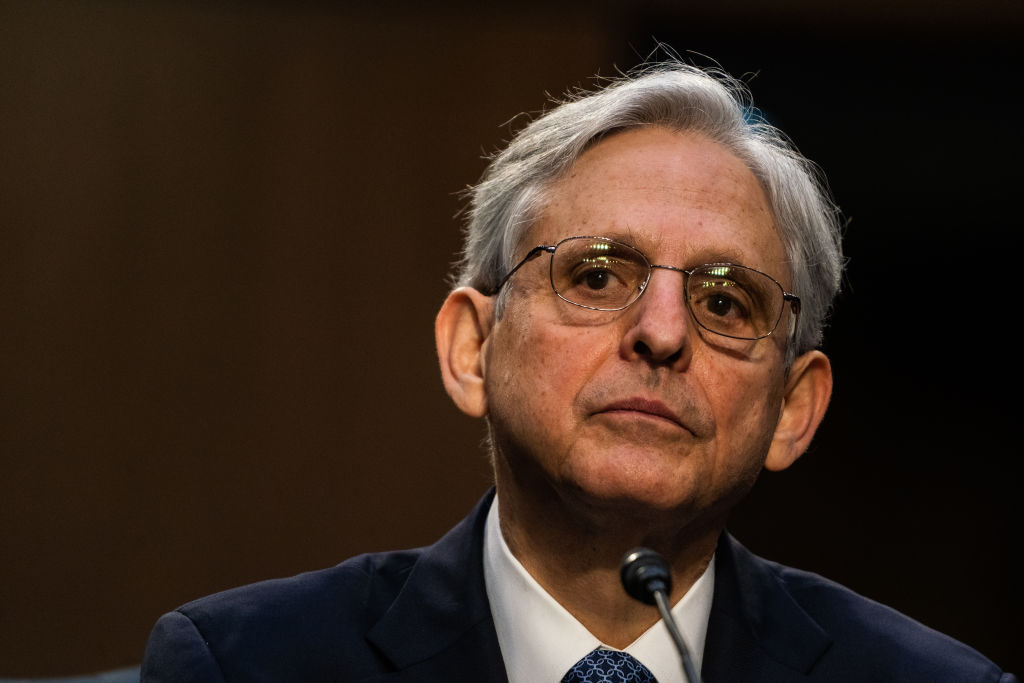
    Washington, DC – U.S. Senate Republicans grilled Attorney General Merrick Garland for more than four hours on Wednesday about a Justice Department investigation into threats made to local school board members in multiple states.

    Garland at the Senate Judiciary Committee hearing declined to revoke a memo he wrote asking the FBI to meet with local law enforcement to look into threats, intimidation and harassment directed at school officials, teachers, administrators and staff.

    He told the top Republican on the committee, Sen. Charles Grassley of Iowa, that the Oct. 4 DOJ memo — which followed an appeal for help from the National School Boards Association — only responds to “concerns about violence, threats of violence, other criminal conduct.”

    “All it asks is for federal law enforcement to consult with, meet with local law enforcement to assess the circumstances, strategize about what may or may not be necessary to provide federal assistance,” he said.

    But Grassley and other senators during the oversight hearing repeatedly pressed Garland to renounce the memo and accused DOJ of relying on the school boards group to characterize parents as domestic terrorists, although his memo did not mention terrorism.

    “Mothers and fathers have a vested interest in how schools educate their children,” Grassley said in his opening statement. “They’re not, as the Biden Justice Department apparently believes them to be, national security threats.”

    Missouri Sen. Josh Hawley told Garland he should resign, and Utah Sen. Mike Lee said that there have been no “explicit death threats” cited by Garland or the national school boards group as a reason for the federal government to take action. Lee said that not every outburst “by neighbors among neighbors” deserves an investigation.

    Garland directed the FBI to coordinate with local law enforcement to investigate threats and harassment by conservative protestors and some parents, often provoked by mask requirements or discussions of race in schools. Many protests have centered around critical race theory, an academic subject which is not generally taught in K-12 schools.

    Garland’s move came after the National School Boards Association sent a letter to President Joe Biden citing harassment and disruption in school board meetings in Georgia, Florida, Michigan, Ohio, New Jersey, Virginia, Wisconsin, Tennessee and Nevada. The organization has since apologized for the letter, although it did not ask that DOJ halt its probe.

    NSBA’s initial letter asking for aid has caused a firestorm among Republicans and conservatives because the group asked the Justice Department to determine if those threats violate a variety of laws, including the PATRIOT Act, which is aimed at deterring terrorism. NSBA affiliates in Ohio, Missouri and Pennsylvania have separated from the parent group, saying they were not consulted before the letter was sent.

    Republican lawmakers have argued that these are simply parents raising their concerns about masking requirements and discussions in public schools about race, which some school districts initiated after the massive Black Lives Matter protests following George Floyd’s murder last summer.

    But school board officials have documented how their personal cell phone numbers have been inundated with threatening messages, and how school board meetings have been derailed by protestors.

    For example, the Florida Phoenix reported that several school board members detailed the harassment they continue to face over masking requirements amid the pandemic.

    Garland pushed back against Republicans’ charges that the Justice Department was infringing on parental rights to free speech.

    “The Justice Department protects that kind of debate,” he said. “The only thing we are concerned about, Senator, is violence and threats of violence against school officials, school teachers, school staff.”

    The committee’s Democratic chairman, Sen. Dick Durbin of Illinois, defended Garland’s move and cited his home state as an example where he is also seeing this pattern.

    “Free speech does not involve threats and violence,” Durbin said. “Those who argue that school board meetings across America are not more dangerous and not more violent than the past are ignoring reality. We are seeing violence at these school board meetings in an unprecedented number.”

    “This memorandum is not about parents being able to object to their school boards. They are protected by the First Amendment. As long as there are no threats of violence, they are completely protected.”

    – U.S. Attorney General Merrick Garland

    In his opening statement, Garland did not give an update on the agency’s investigations into local school board threats. He outlined the Justice Department’s work on combating cyber crimes, violent crimes, the persecution of those who attacked the U.S. Capitol on Jan. 6, civil rights enforcement and increasing accountability in law enforcement with the extended use of body cameras by federal officers.

    Sen. Amy Klobuchar, a Minnesota Democrat, said that she was not only concerned about the threats to school officials but also to election officials.

    “I just want to have a functioning democracy,” she said.

    Klobuchar asked what actions the Justice Department was taking to protect those election officials and what kind of threats they face.

    Garland said he virtually met with numerous election administrators and secretaries of state to listen to their accounts of violence and threats of violence. He said it led him to create a task force to coordinate with federal agencies and state and local law enforcement.

    But most of the hearing, ostensibly for general oversight of DOJ, was taken up by a string of Republicans continuing to press Garland about the federal government getting involved in local school board incidents.

    Lee argued the move will “have a natural tendency to chill free speech.”

    “The memo is aimed only at violence and threats of violence,” Garland said. “It states on its face that vigorous debate is protected. That is what this is about and that is all this is about.”

    Lee asked if harassment and intimidation were federal crimes, which Garland said they were.

    Lee, Grassley and Hawley all asked if Garland would rescind his memo in light of the NSBA apology letter, although school board officials didn’t make that request.

    Garland said he would not because there were news reports of threats of violence at school board meetings from media reports regardless of NSBA’s letter.

    NSBA “apologizes for language in the letter, but it continues its concern about the safety of local officials and school staff,” he said.

    Garland added that the federal government’s role is mostly to help aid local law enforcement.

    “I’m hopeful that many areas of local law enforcement will be well able to handle this on their own, which is what the Justice Department does every day,” he said. “We consult with our local and state partners and see whether assistance is necessary.”

    Hawley asked if “a parent makes a phone call to a school board member that she has elected, that that school board member deems annoying, should (she) be prosecuted?”

    Garland said no, and said that “the Supreme Court has made quite clear that the word intimidation, with respect to the constitutional protection, is one that directs a threat to a person with the intent of placing the victim in fear of bodily harm or death.”

    “I wish, if senators were concerned with this, they would quote my words,” Garland said. “This memorandum is not about parents being able to object to their school boards. They are protected by the First Amendment. As long as there are no threats of violence, they are completely protected.”

    Sen. John Kennedy, a Louisiana Republican, asked if Garland was “just a vessel” for NSBA.

    “The White House is the prophet here, you’re the vessel, isn’t that correct?” asked Kennedy.

    Garland said he did not speak with anyone from the White House when he wrote his memo.

    “This memorandum reflects my views that we need to protect public officials from violence and threats of violence, while at the same time protecting parents’ ability to object to policies they disagree with,” Garland said.


  • Ohio Republicans slammed over coronavirus enforcementBy Marty Schladen – July 13, 2020

    Ohio Republicans slammed over coronavirus enforcementBy Marty Schladen – July 13, 2020

    Columbus, OhioThe coronavirus is raging in Ohio, but the state’s Republican leaders seem disinclined to enforce rules intended to protect against it. (How does Hamilton County avoid Level 4 Alert)

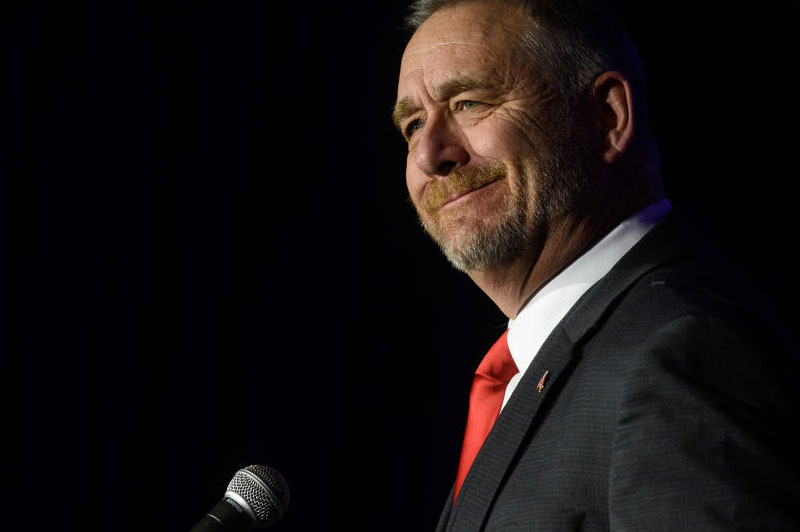
    Attorney General Dave Yost won’t say whether he’ll support enforcement of new orders to wear masks in the state’s hardest-hit counties. And the official who issued them, Gov. Mike DeWine, has made several statements indicating that he doesn’t want to see anybody punished for not following measures intended to slow the spread of the deadly disease.

    Mike Samet the Public Information Officer for Hamilton County Public Health told Loveland Magazine on Friday that from an enforcement perspective, as a county agency, the Health Department is not able to issue citations. “Nobody wants to be the mask police. This is education over enforcement, he said. Samet added that he wants people to understand why masks are important now, not punish them for non-compliance.

    Ohio set a record for new cases Friday — 1,525 — after seeing them trend sharply upward over the past few weeks. The case count was nearly triple the three-week average of 531.

    Gov. Mike DeWine, has made several statements indicating that he doesn’t want to see anybody punished for not following measures intended to slow the spread of the deadly disease.

    The news comes as six other states — Alabama, Idaho, Missouri, Montana, Oregon and Texas — set new single-day records of their own on Thursday. It also was the sixth day out of the past 10 in which the United States set one-day records for new cases of the coronavirus, which now has killed more than 3,000 in Ohio and more than 130,000 nationwide.

    Also last week, a New York Times data analysis showed that the disease in the United States is taking on a disturbing racial dimension, with Blacks and Latinos around three times as likely as whites to get the new coronavirus.

    The World Health Organization and the U.S. Centers for Disease Control both have said that widespread mask wearing would reduce the spread of the disease. One study indicated that if 80% of people wore them, the spread would plummet to one twelfth what it would be if nobody did.

    Yet Yost, the state’s top law-enforcement officer, last week didn’t respond to questions about whether he supports enforcement of last week’s orders that people in Ohio’s 12 hardest-hit counties must wear masks inside public buildings.

    In late March, Yost ordered that many abortions be halted in Ohio, arguing that the move was intended to conserve healthcare resources in the face of the coronavirus pandemic.

    In June, he urged a municipal court to drop charges against a couple accused of opening their Cambridge-area restaurant in defiance of an earlier, DeWine-issued health order that it remain closed.

    Then earlier this week, Yost said that the Columbus city government doesn’t have the power to enforce mask orders in state buildings — places where many Republican lawmakers have refused to wear them.

    On Monday, a spokeswoman for Yost explained that the attorney general can’t have any official involvement in cases relating to health orders unless asked by local prosecutors. “We don’t have the authority,” the spokeswoman, Bethany McCorkle, said in a text message.

    She added, however, that Yost has worn a mask since before there was a health order and encourages others to do the same.

    The attorney general and his staff haven’t responded to subsequent questions about the order DeWine issued on Wednesday evening requiring masks in the worst-hit counties.

    David Pepper (Photo from Ballotpedia)

    Ohio Democrats are already up in arms about Republican legislative leaders’ refusal to share details about the spread of coronavirus in the Statehouse and surrounding office towers. David Pepper, the party chairman, on Friday slammed the attorney general for his apparent reluctance to support the enforcement of mask orders.

    “As far as Dave Yost is concerned, refusing to enforce health orders is just one more example that the Ohio GOP has become the party of Donald Trump, Nino Vitale and John Becker,” Pepper said in a text message. “Sadly Ohio COVID cases are spiking because of it.”

    “Even though initially it appeared that Mike DeWine was being guided by scientists and public health experts, it seems that politics and the desires of the business community are driving more of the governor’s decision making now,” party chairman David Pepper said.

    President Donald Trump has repeatedly downplayed the pandemic, floated unproven cures for it and refused to appear in public wearing a mask. Among his other statements, Ohio Rep. Nino Vitale, R-Urbana, last Tuesday took to Facebook to urge Ohioans to stop even getting tested for coronavirus. And Ohio Rep. John Becker, R-Union Township, has introduced legislation that would strip state officials of the power to enforce any health order.

    Meanwhile, in the absence of much support from his party, DeWine has said he doesn’t plan to use his authority under his mask order to arrest people for not following it.

    Ohio Governor Mike DeWine

    “We’re not talking about throwing people in jail,” DeWine said during a press conference Thursday. “This is a law to advise people what to do.”

    DeWine has enjoyed overwhelming, bipartisan support over his handling of the coronavirus. But at least for Ohio’s top Democrat, patience might be wearing thin.

    “Even though initially it appeared that Mike DeWine was being guided by scientists and public health experts, it seems that politics and the desires of the business community are driving more of the governor’s decision making now,” Pepper said. “Even with fewer cases, even West Virginia and Kentucky are being more proactive in addressing the pandemic.”


    The Ohio Capital Journal is a hard-hitting, independent, nonprofit news organization dedicated to connecting Ohioans to their state government and its impact on their lives. The Capital Journal combines Ohio state government coverage with relentless investigative journalism, deep dives into the consequences of policy, political insight and principled commentary.