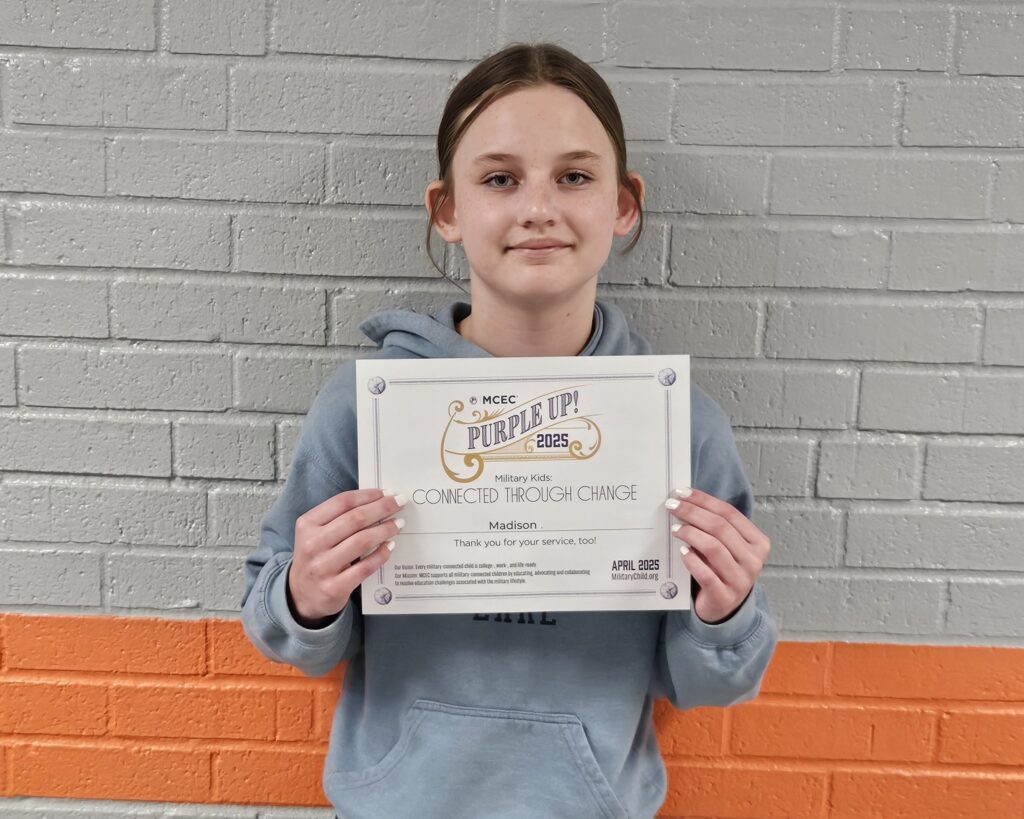
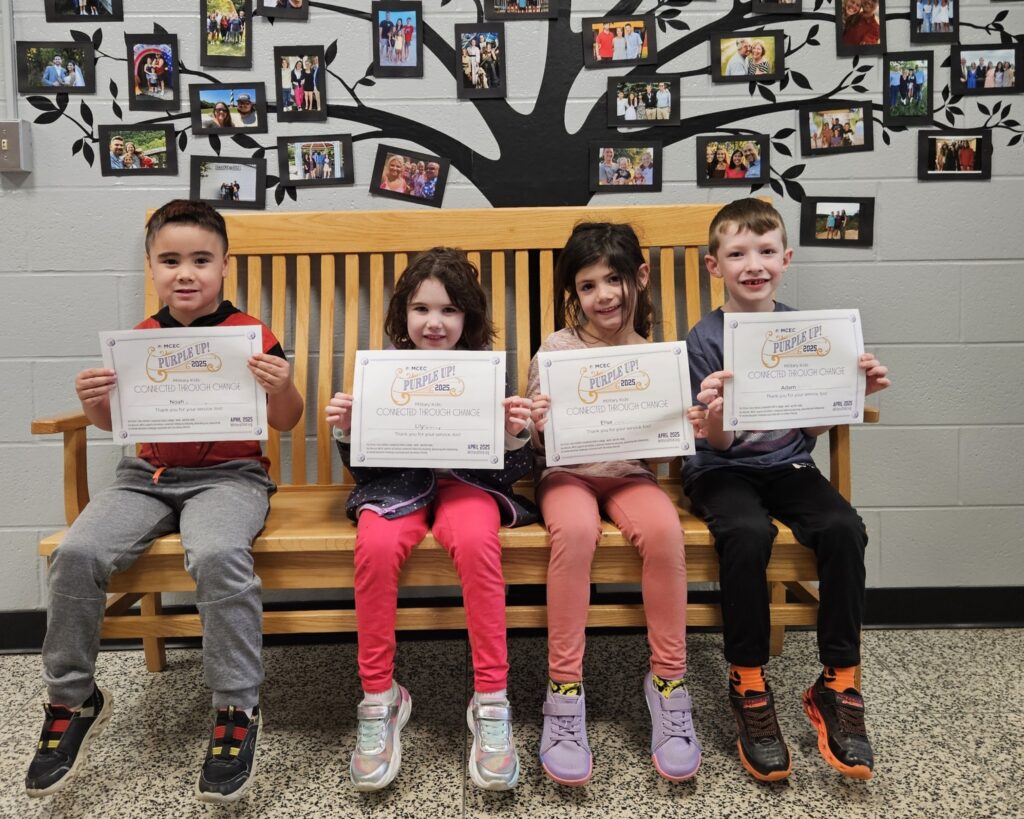
Loveland, Ohio – April is the Month of the Military Child and Loveland City Schools honored students who have a close family member serving in the armed forces by wearing purple on Tuesday, April 15, for Purple Up! Day.
The Ohio Department of Education and Workforce announced that Loveland Middle and High Schools received Purple Star designations as members of the Purple Star Class of 2025. Purple Star schools show a significant commitment to serving students and families connected to our nation’s armed forces.
Loveland Middle and High Schools first earned their Purple Star Award in 2024.
The Purple Star Award recognizes schools that show a major commitment to students and families connected to our nation’s military. Schools that earn the award will receive a special Purple Star recognition to display.
A school will be honored with the Purple Star Award if it completes all the required activities, plus one optional activity. The Purple Star Advisory Board helps decide a school’s eligibility for the award.
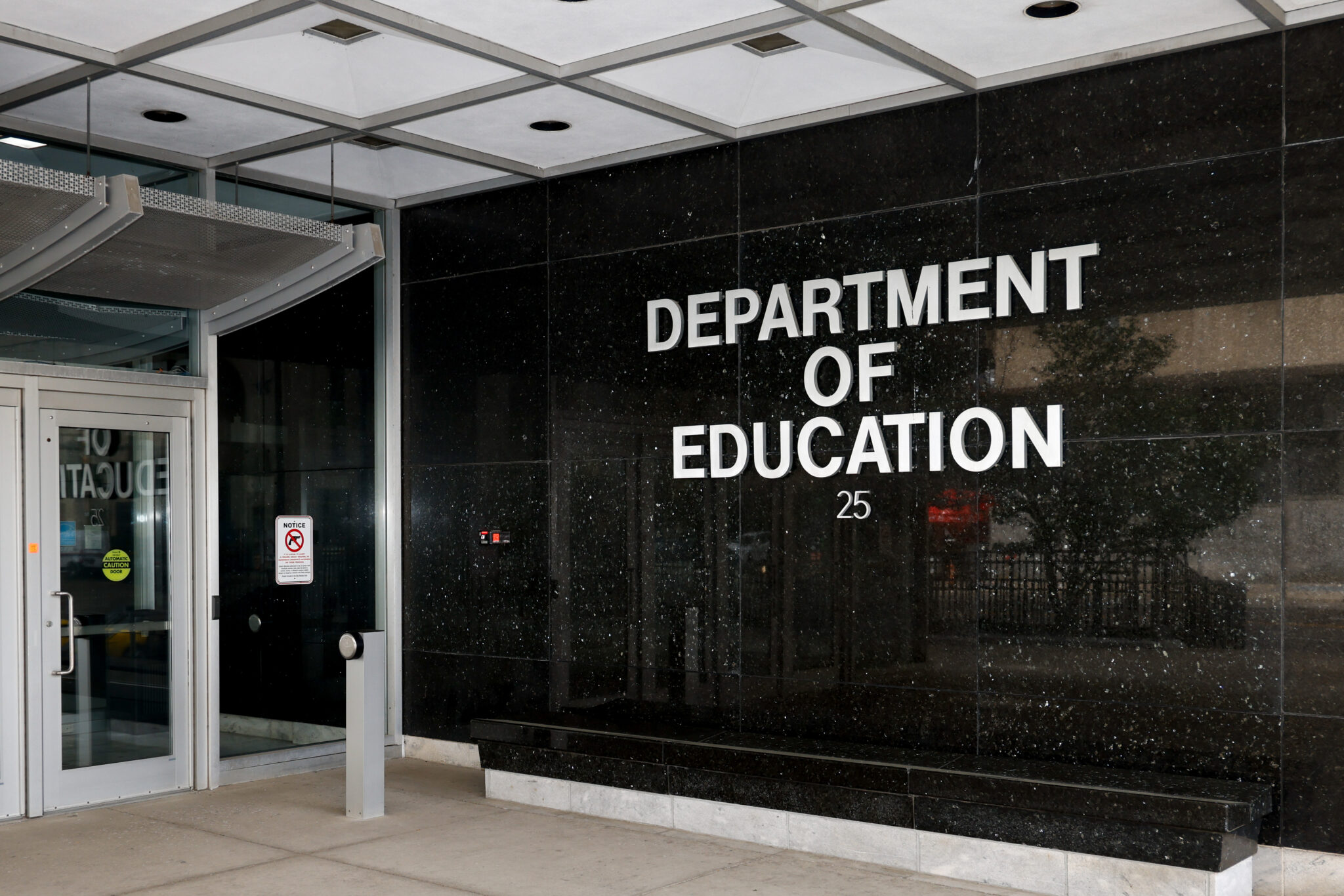
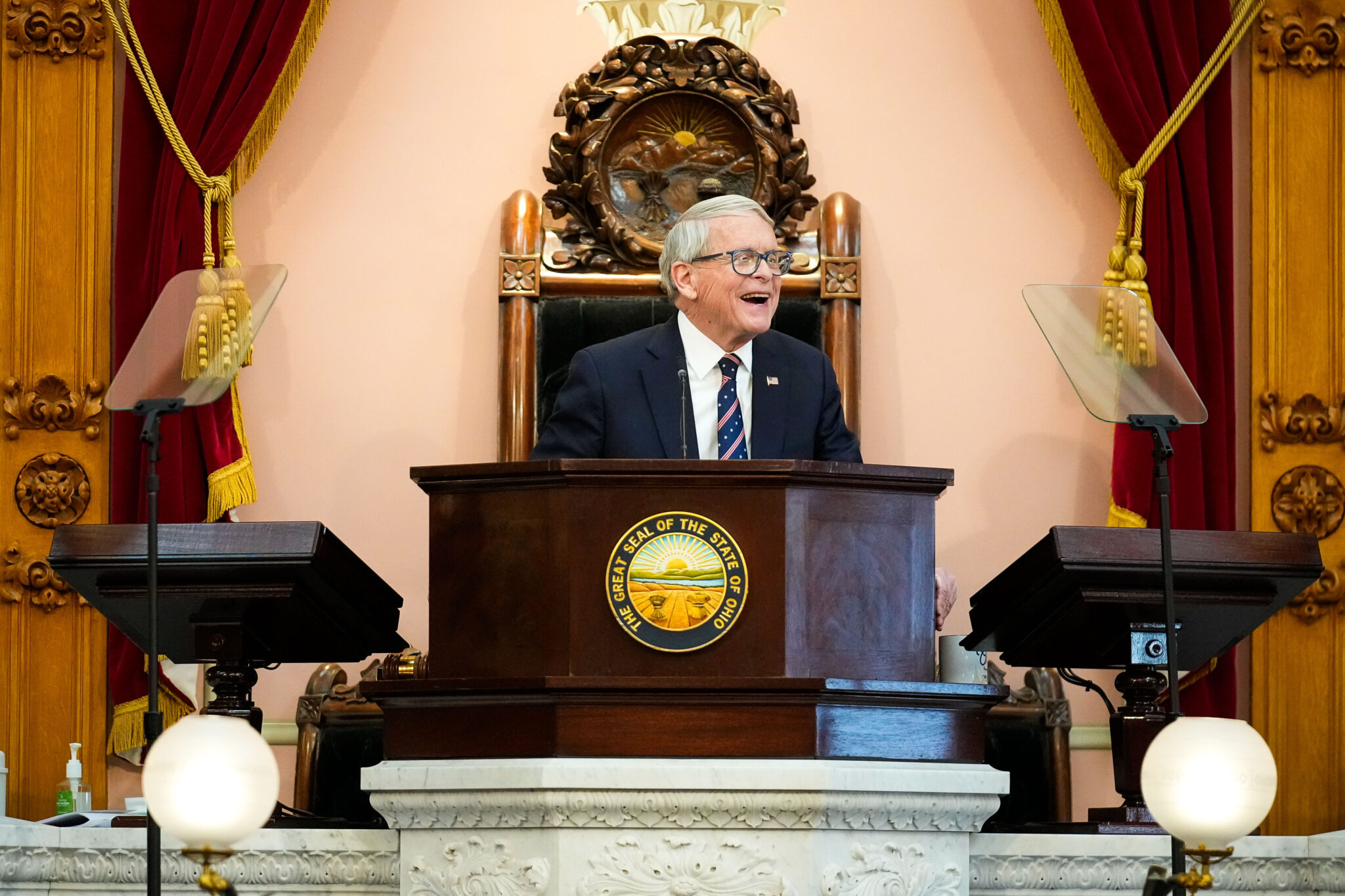
Ohio Gov. Mike DeWine joined other Republican governors in attending Trump’s signing of the executive order Thursday afternoon at the White House. The executive order does not automatically close the department since eliminating a federal agency requires congressional approval.
“I joined President Trump and several fellow governors at the White House in support of the president’s proposal to return education back to the states,” DeWine said in a statement posted on X, formerly known as Twitter. “By giving states more authority over education, we will have the flexibility to focus our effort on tailoring an educational experience that is best for our children and meets Ohio’s needs, rather than trying to chase federal priorities.”
The Ohio Department of Education and Workforce said the department agrees with DeWine’s statement, said ODEW spokesperson Lacey Snoke.
“Education policy belongs in the states and the federal government’s ‘one size fits all’ meddling has hurt our country for decades,” McColley said in a statement. “President Trump’s order will allow our 50 laboratories of democracy to deliver innovative solutions that meet each state’s unique needs.”
The Department of Education was established as a cabinet-level agency by Congress in 1979 under President Jimmy Carter and it doesn’t determine what is taught in schools. Instead, learning standards are set at the state level and curriculum is adopted by local school boards.
The department allocates Title I funds, which are federal funds given to school districts with a high percentage of low-income students, and administers the Individuals with Disabilities Education Act (IDEA), a law guaranteeing a free public education for children with disabilities.
Ohio school districts on average receive about 10% of their revenue from the federal government, Ohio Education Association President Scott DiMauro said. About 90% of Ohio students attended public school during the 2023-24 school year, according to the Ohio Department of Education and Workforce.
“Every single student in Ohio will pay the price for the move to dismantle the U.S. Department of Education,” DiMauro said in a statement. “Any measures to stop the vital work of Department employees to serve Ohio’s students or to reduce federal education funding will cause terrible harm to our students, our state, and our future.”
About 16% of Ohio public school students had a disability during the 2023-24 school year, according to the Ohio education department.
“Anyone who cares for a child who has struggled in school because of a disability or had to advocate for access to school services or opportunities should be concerned with the actions of the federal and state governments, regardless of political affiliation or how one voted in the last election,” Policy Matters Ohio Executive Director Hannah Halbert said in a statement.
Abolishing the Department of Education will mean chaos and uncertainty for Ohio schools, Ohio Federation of Teachers President Melissa Cropper said.
“The need for federal funding and support for public education will be even more critical if our upcoming state budget cuts school funding, as Governor DeWine’s own budget proposal does with $103 million in cuts to public school districts,” she said in a statement.
Megan Henry is a reporter for the Ohio Capital Journal and has spent the past five years reporting in Ohio on various topics including education, healthcare, business and crime. She previously worked at The Columbus Dispatch, part of the USA Today Network.
Ohio Capital Journal is part of States Newsroom, the nation’s largest state-focused nonprofit news organization.
Local public school leaders from all around the state filled the Ohio House Education Committee’s hearing room on Tuesday to explain to lawmakers how full state funding is critical to their districts.
Christopher Edison, superintendent of Pymatuning Valley Local School District, described the pride in the district’s diversity and resilience. At the Northeast Ohio district, 76% of the students are considered economically disadvantaged and there’s been an increase in the need for specialized services. Edison also highlighted the successes in academic achievement, career and workforce readiness, and mental health supports at the district.
“However, the sustainability of these programs is increasingly at risk due to rising operational costs,” Edison told the committee in Tuesday testimony. “Inflation has significantly increased expenses for essential resources such as transportation, instructional materials, and staffing.”
Without an increase in base funding, Pymatuning’s ability to “maintain and expand these successful initiatives is severely threatened,” Edison said.
GET THE MORNING HEADLINES.
Hits have already come to districts because of inflation and increasing costs not reflected in the funding model that looks to see its final funding phase-in this year, if the legislature includes it in the operating budget set to be passed by July 1.
Montgomery County’s Northmont City Schools — a district with rural, suburban, and urban areas — has seen state funding cuts and defeats of school levies that resulted in the need to cut more than 40 district positions in May 2023, and the closure of one of their elementary schools, according to Superintendent Tony Thomas.
“I understand that members of the General Assembly passed a budget two years ago that increased funding across the state, and we are thankful,” Thomas told the education committee. “But unfortunately for Northmont, those dollars are not reaching our school buildings and we are doing more with less.”
It’s stories like these that the Fair School Funding Plan workgroup, which was created along with the state’s public school funding model, is hoping will flood both the education and finance committees, along with the offices of state legislators, to inform them about the importance of proper public school funding in Ohio.
“It’s our responsibility to ensure that every member of the Ohio legislature and the General Assembly be made fully aware of these facts, their implications, and the legislative decisions that led to these circumstances as they contemplate this important budget,” said Mike Hanlon, Jr., superintendent of Chardon Local Schools, and Fair School Funding Plan workgroup member.
The workgroup met recently, along with more than 600 other education community members, to discuss upcoming legislative meetings about the budget, what the governor’s proposal would mean for districts, and how to engage with lawmakers.
“In my visits to Columbus … one message was very clear with the legislators that we met with: ‘We need to hear from constituents on the issue of school funding,’” Hanlon said.
Members of the workgroup said they’ve heard another message from the lawmakers: resources are limited in the budget.
In the governor’s executive proposal, the Fair School Funding Plan’s final phase-in was included, but inputs that would account for inflation costs at districts were not, something the governor’s office has “remained silent” on in all budgets that included the public school funding plan, workgroup members said.
“First and foremost, this is not our ideal proposal from the governor,” said Jared Bunting, CFO and treasurer of the Athens City School District. “However, this is in line with what the governor has done in the past and we’re thankful that the governor has included the Fair School Funding Plan in his budget, even though it falls woefully short of our expectations.”
In the governor’s budget for the next two years, the budget would decrease funding for traditional public schools by 0.9%, according to a workgroup analysis. Community and STEM schools will receive an 11.3% increase in the governor’s proposal, while joint vocational school districts receive a 14.1% increase. Voucher programs including the EdChoice private school program would see a 15.8% increase.
“So 90% of the students in the state are seeing a reduction in funding,” Bunting said, referring to the enrollment numbers in the state, which show the vast majority of students attend traditional public schools.
Alternately, last year, the state funded private school voucher scholarships with nearly $1 billion in one year, according to the Ohio Department of Education and Workforce.
Source: Ohio Fair School Funding Plan Workgroup
School administrators on the workgroup noted that the funding simulations used in the governor’s budget proposal show an intention to “continue to update capacity each year without any input updates.”
Without inputs to account for rising costs and inflation, the state not only won’t meet the workgroup’s ideal of a 50% state share of education costs, but will drop below the share of funding before 1995, when the Ohio Supreme Court first ruled in DeRolph v. State of Ohio that the state’s education funding violated the state constitution, falling short of the “thorough and efficient” system of schools directed in the founding document.
With talk of addressing property taxes in Ohio, something that school funding has relied on for decades, workgroup members said updating cost inputs could help with that issue as well.
“When we talk about property tax relief, we would like to argue that … updating all inputs consistently is a form of property tax relief to our community members,” said Jenni Logan, treasurer for the Sycamore Community Schools.
Now, as the budget process continues, educators, and administrators not only plan to push for proper education supports in committees considering the budget document, but also want to get district stories to all legislators, including newly elected GA members, who haven’t had a front-row seat to the public school funding model fight.
Those who are new to school funding are also faced with “competing interests in other areas that are not related to school funding,” according to Hanlon. He said legislators who talked to him said they “haven’t heard from anyone” on school funding.
“As a result, it’s very likely that they need to hear from us, and from someone that they trust and are confident in, that will provide them with the necessary facts to shape their understanding of school funding,” Hanlon said.
YOU MAKE OUR WORK POSSIBLE.
________________
Susan Tebben
Susan Tebben is an award-winning journalist with a decade of experience covering Ohio news, including courts and crime, Appalachian social issues, government, education, diversity and culture. She has worked for The Newark Advocate, The Glasgow (KY) Daily Times, The Athens Messenger, and WOUB Public Media. She has also had work featured on National Public Radio.
Ohio Capital Journal is part of States Newsroom, the nation’s largest state-focused nonprofit news organization.
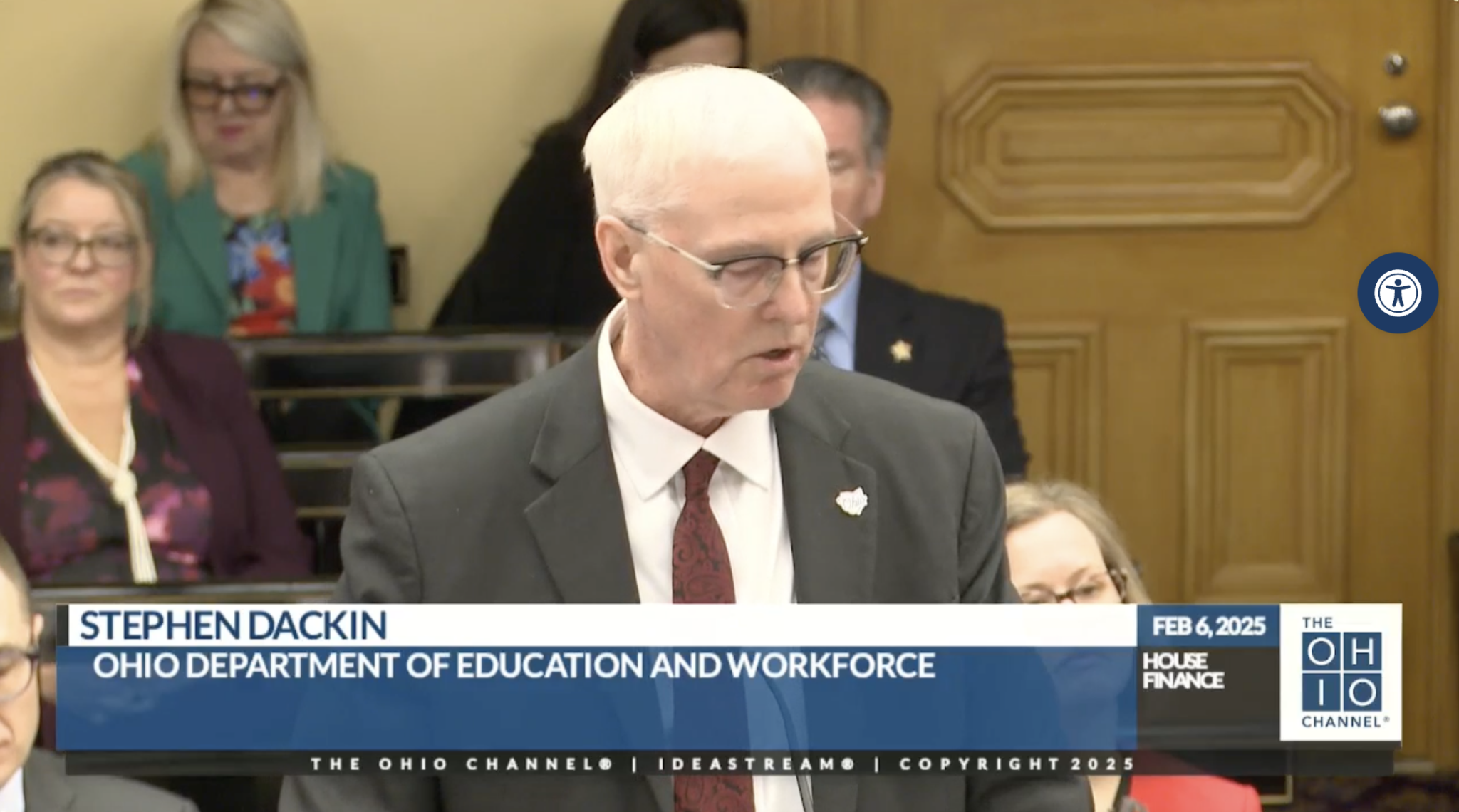
Ohio Department of Education and Workforce Director Stephen Dackin speaks to the Ohio House Finance Committee on a new education operating budget. Photo courtesy of Ideastream/The Ohio Channel
Hearings have begun in the Ohio House Finance Committee to dissect Gov. Mike DeWine’s executive budget proposal, including a lengthy discussion on Thursday with regard to the education provisions included in it.
“This budget takes the next steps toward fulfilling our key policy priorities,” said Ohio Department of Education and Workforce Director Stephen Dackin.
DeWine’s proposal recommends $12.4 billion in funding to state schools in fiscal year 2026, and another $12.6 billion in 2027. That recommendation includes the final two years of a public school full fair funding formula that has been a point of contention for legislative leaders, particularly House Speaker Matt Huffman, who has called the funding model “unsustainable.”
The governor’s proposal also gives community schools an increase in per-pupil funding and “continues access to Ohio’s five scholarship programs,” including the state’s private school voucher program.
Many members of the House Finance Committee asked about the foundational funding for state school districts, for which the executive budget recommends a state share of 35%, with no adjustment for inflation to the “inputs” of the education costs in the formula.
Some Republicans on the committee questioned the continued use of the Cupp-Patterson funding formula (also called the Fair School Funding Plan), along with the burden of property taxes in their districts used to pay for schools.
“The school funding formula is inadequate and it’s inequitable,” claimed state Rep. Tom Young, R-Washington Twp. “We do not award the merit of outcomes in the funding formula.”
While Dackin said he is “a fan of performance-based funding,” he reemphasized comments DeWine made about the overall budget when he introduced it: that the document was a starting point from which to build the final budget, with room for adjustments.
Dackin also pushed back on concerns from Democratic members about a lack of oversight for private schools receiving significant state monies compared with the oversight public schools receive.
“The concern for a lot of people is, what are we getting for those dollars, because we have very little oversight in how that money is being used at these schools,” said House Minority Leader Allison Russo, D-Upper Arlington.
Dackin said there is “some measure” for schools accepting scholarship money, but he has a higher measure that he takes into account.
“Every day, parents make a decision where to send their kids, and parents make decisions based on a variety of issues,” Dackin told the committee. “The ultimate accountability is where the parents send their kids.”
Literacy
Literacy is a main tenet of the governor’s education proposal, with objectives that included continuing the ReadOhio program and implementation of an Ohio Literacy Coaching Model by the Department of Education and Workforce, and further training on the Science of Reading model.
“The department supports the use of high-quality core and intervention instructional materials, provides educator professional development and supports literary coaches who provide targeted support to schools and districts,” the budget document states.
GET THE MORNING HEADLINES.
The executive budget notes nearly 72,000 teachers and administrators have completed one of six “Science of Reading Professional Development pathways” as of Jan. 15 of this year, and 84 “literary coaches” were used during the 2024-2025 school year in 93 school districts in Ohio.
Dackin told the finance committee reading is a “lynchpin skill” that is vital to successful outcomes for Ohio’s students.
“I feel like that is our moral obligation as adults, to make sure that (bad outcomes don’t) happen in Ohio,” Dackin said. “I see no reason why Ohio can’t lead the country in literacy rates, zero.”
The science of reading is also a priority in executive budget proposals for the Ohio Department of Children and Youth. DeWine noted a goal to improve state kindergarten readiness through a 40% increase in the number of children in licensed early care and education settings “with a curriculum aligned to the science of reading and early learning and development standards,” according to the budget document.
A spokesperson for the governor did not elaborate on what would be expanded about the program, but a representative of the Department of Children and Youth said the program currently uses monthly payments directly to approved licensed child care providers. Families apply for the voucher through their local county Job and Family Services Department, and eligibility for the program is determined by income, family size, and job or education status.
Families with children enrolled in licensed child care programs and monthly incomes between 146% and 200% of the federal poverty level are eligible for the voucher program, according to Kari Akins, of the children and youth department. For a family of four, that’s between $45,552 and $62,400 a year.
Federal education uncertainty
The Lyndon Baines Johnson Department of Education Building pictured on Nov. 25, 2024. (Photo by Shauneen Miranda/States Newsroom)
Legislators brought up a possible federal issue during the discussions of the executive budget: whether the U.S. Department of Education will be able to provide the usual funding, or whether the department will even exist in the near future, based on President Donald Trump’s potential executive order and comments that he plans to dismantle the department.
“We hear occasionally, from time to time in the news that there might be consideration in Washington, D.C., to change the (U.S.) Department of Education,” said state Rep. Adam Bird, R-New Richmond. “I’m curious as to whether you’ve heard whether any changes to the U.S. Department of Education might come with changes to funding for Ohio schools.”
Dackin had a simple answer to the committee.
“We don’t know, to be honest,” Dackin said. “We’ve received no guidance at this point, no direction from the US DOE on anything related to funding.”
Prior to the budget discussion, Dackin joined education administrators from 10 other states in a Jan. 28 letter to “Administrator McMahon,” seemingly the currently-unconfirmed Trump nominee for Secretary of Education, Linda McMahon, asking the new administration to “prioritize … policies that trust and empower state educational agencies to shape education systems that meet the unique needs of their students.”
Those priorities include state control of education funds and “guidance aligned with congressional intent that defers to state law and policy,” according to the letter, provided by the the Department of Education and Workforce.
“We know that the department must work with Congress to achieve many of these changes to (the Elementary and Secondary Education Act) but, in the meantime, please defer to state and local decision-making as much as possible in your actions,” stated the letter, signed by Dackin and administrators from North Dakota, Alaska, Idaho, Wyoming, Florida, Utah, Mississippi, Indiana, Arkansas, Iowa and South Carolina.
The executive budget will continue through hearings in education and finance committees within the Ohio House before a legislative budget document is created, and the Ohio Senate begins its own consideration. A final budget is due by July.
YOU MAKE OUR WORK POSSIBLE.
_________________
Susan Tebben
Susan Tebben is an award-winning journalist with a decade of experience covering Ohio news, including courts and crime, Appalachian social issues, government, education, diversity and culture. She has worked for The Newark Advocate, The Glasgow (KY) Daily Times, The Athens Messenger, and WOUB Public Media. She has also had work featured on National Public Radio.
Ohio Capital Journal is part of States Newsroom, the nation’s largest state-focused nonprofit news organization.
Ohio’s State Board of Education will still be living lean on a bare-bones budget, but an influx of cash from the state will keep it going through the fiscal year.
The Ohio Controlling Board, which directs appropriations and funding to state agencies, approved a $4.66 million emergency funding request last week for the board of education, to avoid having to raise teacher licensure fees and to cover a $3 million shortfall that may have impacted school staff background checks.
“4.66 (million) is a number that gets us through this fiscal year,” State Superintendent of Public Instruction Paul Craft told the Capital Journal. “We’re still going to have some tough times.”
The controlling board approval was amended from the original request made by the state’s Office of Budget and Management, which asked for only $1.85 million after working with the board of education on service sharing and funding cuts to get them through the year.
“We completely were supportive of what OBM was doing,” Craft said. “That certainly keeps us where we are right now, which is extremely tight.”
The funding they receive from the licensure fund isn’t year-round revenue, causing blocks of time during the year when the board has to sustain itself on very little incoming funds.
“While we continue to strive for operational savings, because the majority of the revenue for this fund is received in the spring, the fund is projected to run a deficit starting this fall and continue until spring, when it will be back in a positive position,” the request to the controlling board stated.
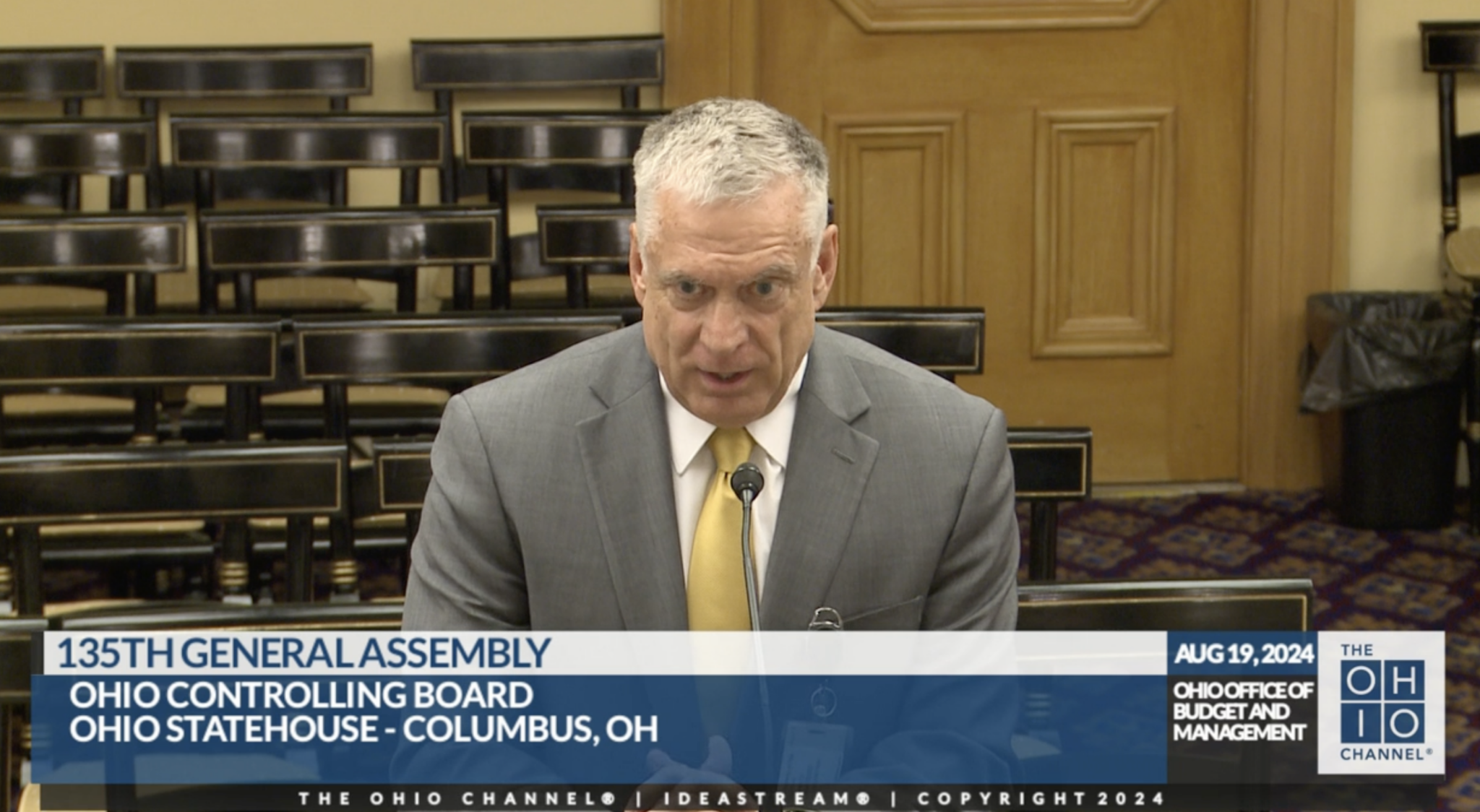
The split from the ODEW caused the board to reduce staffing by almost 20%, which included payroll and budget personnel, Craft told the Controlling Board at their Aug. 19 meeting to consider the emergency funds.
“(Payroll and budget) are now being done as shared services through the Office of Budget and Management,” Craft said. “None of the money we requested brings back any of those staff.”
The SBOE has also reduced board meetings to one day, instituted freezes on travel expenses and out-of-state conference costs. But the emergency funding is still needed to make sure teacher licensure fees can stay at their current rates, and the contract for Retained Applicant Fingerprint Database (RAPBACK) background checks can be paid.
“I’ll tell you, I’ve never seen an agency in my 35 years in state government and military that’s running as lean as we are,” Craft said. “I’m so proud of what our staff has done in terms of making sure that Ohio’s 1.6 million kids interact with educators every day who are well-qualified and who show good moral character and judgment.”
Some legislators on the controlling board expressed hesitation in using the funds from the controlling board’s “emergency purpose fund,” with state Sen. Shane Wilkins, R-Hillsboro, worrying that approving the emergency funds could cause the agency to come back next year for a request of the same amount.
“For me, I would feel better if I knew, ‘hey, we really gave this a shot, the $1.8 (million original request) is not going to cut it,’” he said at the controlling board meeting.
State Sen. Bob Hackett, R-London, questioned the need to push the funds specifically for the background checks, when Craft said the background checks would continue with or without the funding, and with the SBOE in contact with the Ohio Attorney General to find a solution to the funding shortage impacting the background check service.
“It doesn’t really change our day-to-day at all,” Craft told Hackett and the controlling board. “On the other hand, I’ve signed (memorandums of understanding) with these agencies, and it would make me sleep better at night knowing that I agreed to these and they’re being made whole.”
In offering the amendment that raised the funding provided for the SBOE to $4.66 million, state Rep. Jay Edwards, R-Nelsonville, said discussions have been going on for months about a solution to the SBOE funding issues. With the work the SBOE has already done to make cuts, the proposed funding number went from $10 million down to the $4.66 million that was eventually approved. He said it was incumbent upon state leaders make sure the funds were there to hold teacher licensure fees at current levels and maintain background checks.
“The people that have been part of the discussion have heard that we will figure out how to pay for the background checks later,” Edwards said. “I don’t think it’s responsible of the people who hold the purse strings to allow the background checks to be figured out later.”
He said the “mistake that was done during the budget … of the transfer to the Department of Education and Workforce,” should be corrected, not to mention he didn’t want “to be hearing from angry school teachers” if licensure fees increased.
“We’re a conservative legislature that is constantly trying to cut taxes and cut fees and cut regulations for people out there,” Edwards said. “I don’t think teachers are getting rich in our state, I don’t want to see us raising teacher licensure fees.”
Ohio House Democrats, including controlling board member state Rep. Beryl Brown Piccolantonio, D-Gahanna, said the funding “is a crucial lifeline that staves off a potential 75% increase in mandatory licensure fees.”
“I look forward to addressing the remaining SBOE budget uncertainty on a more permanent basis in the next budget,” Piccolantonio said in a statement.
Craft said the funding approval now allows the SBOE and the OBM to work together over the course of the fall to put together a plan for next year, as they await the governor’s executive budget plan and the state operating budget numbers.
“It’s pretty early in the process and we’re looking at some other approaches, but this should get us through,” Craft told the Capital Journal.
Susan Tebben
Susan Tebben is an award-winning journalist with a decade of experience covering Ohio news, including courts and crime, Appalachian social issues, government, education, diversity and culture. She has worked for The Newark Advocate, The Glasgow (KY) Daily Times, The Athens Messenger, and WOUB Public Media. She has also had work featured on National Public Radio.
Ohio Capital Journal is part of States Newsroom, the nation’s largest state-focused nonprofit news organization.
Another cloudy financial outlook has the State Board of Education of Ohio looking at further ways to make cuts, though the options are dwindling, according to leadership.
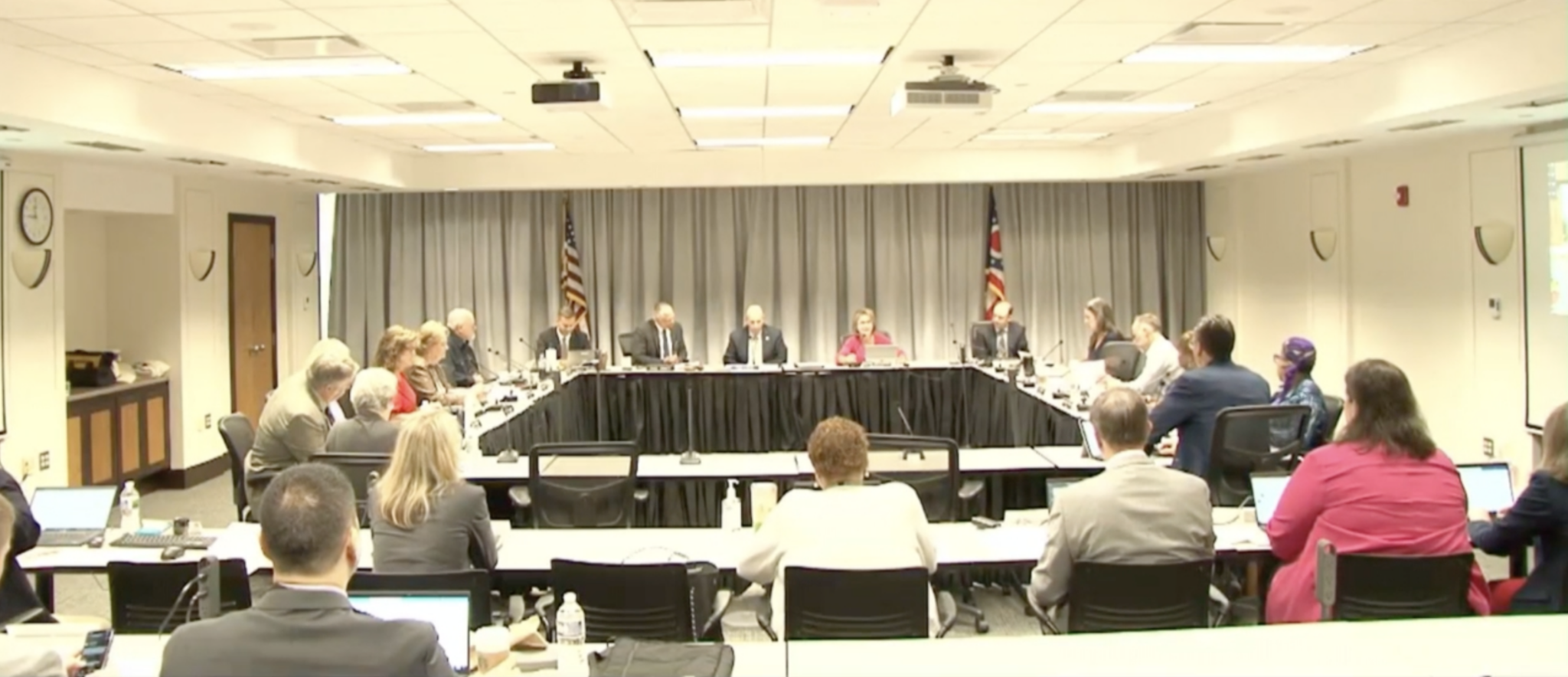
At the board’s July meeting, Superintendent of Public Instruction Paul Craft led the state agency’s budget committee through current balances and future projections for their $17 million operating budget.
With the changes made to carve out the board from the rest of the Ohio Department of Education and Workforce — changes tacked on to the previous state operating budget by the General Assembly last year and allowed despite a lawsuit against it — the board is left to use only the funds collected from teacher licensure fees as spending money for the entire agency, according to Craft.
In a separate bill passed by the Senate just last month, $4.7 million would be transferred from the state’s general revenue fund to the board’s licensure fund, also called Fund 4L20. That bill was passed by the House as well, but because they made changes before approving the bill, the Senate will need to concur on the changes, which won’t happen until at least November, when the legislature is scheduled to come back from summer break.
“This fund, supported by license fees paid by teachers and other school staff, is used by the State Board of Education to pay its operating expenses,” an analysis of Senate Bill 117 by the Legislative Service Commission stated, adding that the expenses are associated with educator credentials, investigations and disciplinary actions for education misconduct and background checks for school teachers and staff.
In fiscal year 2022 and 2023, the licensure fund was “running some deficits,” Craft told the board committee, but with the general revenue funds, the agency was able to pay the bills.
“Things changed rapidly,” he said, once fiscal years 2024 and 2025 approached.
The expenditure line has “jumped up quite a bit” since the board became its own agency with only the licensure fund from which to draw money.
The board is now using Fund 4L20 to pay the rent for its office building, support costs and IT expenses, things that were folded into the state’s Department of Education (as it was previously called) general expenses when the board was a part of it.
“Those are now things that are being charged against the teacher licensure fund that had never been drawn against the teacher licensure fund,” Craft said.
Revenue projections for the 2025 fiscal year are coming in about $2 million less than hoped, Craft told the board committee, adding that the projections are also lower than “historical average.”
Some of the hits to the board’s wallet stem from a familiar place of financial hardship: the COVID-19 pandemic.
When lockdowns and school closures hit the state in March 2019, the fiscal year 2020 was impacted, including the process of renewing and approving teacher licenses.
“It was a very, very slow hiring year, as you can imagine,” according to Craft.
Because college courses were hard to access and renewals were harder to arrange, the state allowed teachers to take a one-year extension on their five-year licenses. But that gap in licensure fees hadn’t come to bear in the board of education’s revenue stream until now, since the licenses are now set to be renewed in fiscal year 2026 with the one-year extension.
The board also just received a $1.3 million bill for the Resident Educator Summative Assessment (RESA) contract, a program that is required of teachers by state law before they are eligible for a professional teaching license.
The board is also expecting new expenses from expanded background check processes through what’s called the RAPBACK system, also required by the legislature. That is compounded with paying the 11 state board employee salaries under the umbrella of a licensure fund that sees ebbs and flows throughout the year based on number of teachers, coaches and administrators who apply for them. Typically, the demand ends by fall, when education staff who need them have received them.
“Right now, you can see that we need to end the year with some balances in order to make it through the lean months that come in the fall, until we get to the better months in the spring,” Craft said.
The board has instituted a hiring freeze within its employee ranks, and already has a freeze on travel expenses for the Craft and his staff. In its July meeting, the board approved a further travel expenses freeze, this time on members of the board, and talked about reducing the number and time of meetings to accommodate those who come from farther distances.
But Craft said the options for cuts are thinning out, with almost 1/3 of the operating budget required either by contract or by Ohio Revised Code mandate.
“There’s $6.3 million of those things that we can’t just cut because we want to,” Craft said.
Several members of the board pushed for discussions with legislators about getting more funding, especially for things required by lawmakers.
“I have never seen a budget so bare-bones; asking (Craft) not to travel, not having administrative assistants, pretty soon we’re going to have to pay for our paper to have the copies on,” said board member Amy Fugate.
Diana Fessler didn’t deny the usefulness of the background checks through RAPBACK, but said if expansions are required by the legislature, they should help out.
“I agree with you that it’s a good thing, but it does seem like an area that there could be discussion about the General Assembly picking up the tab since the source of this effort is expensive, but necessary … but we could use some help,” she said.
For Walter Davis, the problem behind it all is a lack of awareness that members of the financially-troubled board were elected to do the job.
“I think we can’t lose sight of the fact that the majority of this body is constitutionally elected by the people of Ohio who have a right … to have a certain amount of independence from the legislature, their whims and wiles,” Davis said.
This story has been changed to correct the status of Senate Bill 117.
SUSAN TEBBEN
Susan Tebben is an award-winning journalist with a decade of experience covering Ohio news, including courts and crime, Appalachian social issues, government, education, diversity and culture. She has worked for The Newark Advocate, The Glasgow (KY) Daily Times, The Athens Messenger, and WOUB Public Media. She has also had work featured on National Public Radio.
Ohio Capital Journal is part of States Newsroom, the nation’s largest state-focused nonprofit news organization.
Loveland, Ohio – Loveland Early Childhood Center has received a Five-Star Step Up To Quality Award from the State of Ohio.
Step Up To Quality is a five–star quality rating and improvement system administered by the Ohio Department of Education and the Ohio Department of Job and Family Services. SUTQ recognizes and promotes learning and development programs that meet quality program standards that exceed preschool licensing and school age child care licensing health and safety regulations. “The Step Up To Quality program standards are based on national research identifying standards which lead to improved outcomes for children”, according to the Ohio Department of Education and Workforce.
87,312 scholarships have been awarded as of March 18 — amounting to $394 million in allocated funding, according to the Ohio Department of Education and Workforce.
There have been more than 91,100 applications for Ohio’s private school voucher expansion program so far this school year — a dramatic increase compared to previous years.
Out of 91,157 voucher expansion applications, 87,312 scholarships have been awarded as of March 18 — amounting to $394,015,641 in allocated funding, according to the Ohio Department of Education and Workforce. Applications are continuing to be accepted through the end of the fiscal year.
There were 26,390 voucher expansion applications submitted in 2023 with 24,323 scholarships awarded, and 25,011 applications submitted and 21,873 scholarships awarded in 2022.
Ohio lawmakers expanded private school voucher eligibility to 450% of the poverty line — or a household income of $135,000 or less for a family of four — in the state budget that was signed into law last summer. Families above the $135,000 threshold can still be eligible for at least 10% of the maximum scholarship.
K-8 students can receive a $6,165 scholarship and high schoolers can receive a $8,407 scholarship in state funding under the expansion. 63,798 K-8 students were awarded a voucher scholarship and 20,495 high school students were awarded a scholarship, according to ODEW.
When it comes to traditional EdChoice private school vouchers for this year, 43,330 families submitted applications and 42,477 were awarded scholarships — $270,987,877 in allocated funding, as of March 18, according to ODEW. 40,629 students were awarded traditional voucher scholarships in 2023 and 38,543 received traditional voucher scholarships in 2022.
Ohioans are divided on this issue. Private school families who use the vouchers are obviously fans, but public school advocates oppose it.
“Our number one concern about the expansion of school vouchers is that it means significant resources are going to private schools at the expense of the nearly 90% of Ohio kids who are attending our public schools,” said Ohio Education Association President Scott DiMauro.
Ohio Lt. Gov. Jon Husted, who was the Ohio House speaker when the private school voucher program called EdChoice passed in 2005, recently visited St. Mary’s School in the Catholic Diocese of Columbus as part of a statewide tour of private schools.
“It’s fantastic because more kids are getting the opportunity to get a great education and a school of their choice,” Husted said during his stop.
St Mary’s School
Eighth grader Sorcha Sweeney has attended St. Mary’s in Columbus’ German Village neighborhood since she was in preschool and is on an EdChoice scholarship.
“I’ve never really been interested in going anywhere else,” she said during a recent roundtable discussion during Husted’s visit to the school.
She will receive a full scholarship to attend Bishop Hartley High School next school year.
“I wouldn’t have ever been able to afford (St. Mary’s),” Sorcha mom’s Megan Sweeney said. “Without a scholarship, it just wouldn’t be possible. … Without a private education, she wouldn’t be anywhere close to where she is.”
The school currently enrolls about 400 students and expects to have 500 students next year and a waitlist, Stull said.
“Through those initiatives, EdChoice has been a conduit for the big word of evangelization — trying to spread God’s love,” said St. Mary’s Pastor Vince Nguyen. “… With the EdChoice voucher program we have tried to love every single kid, catholic or not catholic, that comes through our doors here at St. Mary’s School.”
Despite the explosion of private school vouchers in Ohio, DiMauro said there has been little impact on Ohio’s public school enrollment.
“The evidence is very clear that the vast majority of those vouchers are going to students who are already attending private schools,” DiMauro said. “… It is about subsidizing private schools.”
Husted said the vouchers have “accountability and oversight” safeguards in place so something like the Electronic Classroom of Tomorrow online charter school scandal from 2018 will never happen again.
ECOT was forced to shut down after the Ohio Department of Education said Ohio’s first online charter school needed to repay much of its state aid for the 2015-16 and 2016-17 school years after the school inflated enrollment numbers. ECOT still owed the state $117 million in 2022.
“I actually just spoke with (Ohio Department of Education and Workforce) Director (Steve) Dackin about this the other day, and I asked him whether he felt the safeguards are in place to make sure something like that didn’t happen again and he reassured me he thought there were,” Husted said.
Megan Henry is a reporter for the Ohio Capital Journal and has spent the past five years reporting in Ohio on various topics including education, healthcare, business and crime. She previously worked at The Columbus Dispatch, part of the USA Today Network.
Ohio Capital Journal is part of States Newsroom, the nation’s largest state-focused nonprofit news organization.
Christina Collins’ journey to become an educator started when she helped her grandfather read his mail.
He had dropped out in middle school, and had trouble with reading and understanding words, even ones specifically written for him.
Collins’ dad and brother both struggled in school as well, and it was through their struggles that she saw “how hard it was for some people to be successful.”
“So, those moments all kind of led to, for me, believing that literacy is a key civil rights issue,” Collins told the Capital Journal. “I mean, the ability to participate in the world around you is to be a literate human being.”
The Gahanna native became a high school English teacher, and cherished the interactions she’d have with students, the kids who seemed to be doing fine and the kids who struggled or made trouble.
“I was always very driven about recognizing every student, and getting other people to recognize every student to help support every student,” Collins said.
To this day, she gets messages from students who have moved on to become educators themselves.
That new generation of teachers is facing a whole host of new challenges, from culture war battles to ever-changing education standards, and Collins sees the developments in education statewide and nationally as a departure from the true aims of the field.
“Our pendulum has swung way too far over to seeing kids as test scores,” she said. “We should be finding every kid’s talents and getting them going in the right direction.”
Joining the board
While Collins was an educator, she taught her classes, kept up with the curriculum and all the other everyday roles of a high school teacher.
But she realized that, for other teachers, those roles didn’t include staying up all night reading legislation.
“I thought that was just a thing all teachers did,” she said. “I thought ‘well this is part of education, everybody’s reading legislation.’”
When her colleagues dispelled that belief, she realized perhaps her next move might be toward honing the policy that came from the statehouse into local school districts.
She became an administrator with the purpose of “being a filter for the noise” coming out of Columbus via policy mandates and standard changes, from Race to the Top and performance evaluations to the third-grade reading guarantee.
“There was a time when I was in a district as curriculum director where in five years there were four different sets of graduation requirements,” Collins said.
Feeling the impact of constant and rapid changes coming from legislative bodies who included many non-educators compelled Collins to run for a spot on the Ohio State Board of Education. She took her spot on the board right as one of the biggest level-sets ever to happen to Ohio education unfolded: the COVID-19 pandemic.
The pandemic brought school closures, virtual learning, a scramble to decide whether testing made sense among uncertain learning environments, and a reckoning when it came to what kids really needed from their educational facilities.
Amid the stress of teachers learning new roles, and parents learning what it takes to be a teacher, Collins saw the era as a point of hope, as a needed reflection period for policymakers and districts alike.
“I saw it as a key moment where we could just blank-slate reset and think differently about our education system,” she said.
Surely, she thought, the adaptation that students had gone through in their methods of socialization and learning will lead to changes in the way education is conducted. Surely things like student hunger and poverty that were so starkly spotlighted amid a global pandemic would stay at the forefront of the minds of leadership as they move forward.
“My experience on the board, especially that first year, I was like ‘can we think differently, can we think about competency-based learning models, how can we meet their needs?’”
As a member of the board, she was part of many discussions when it came to coming out of the pandemic and the needs of the education system. But those discussions didn’t go the way she’d hoped.
“It was like the rush to return to normal was the sole focus, and that was coming straight from the statehouse,” she said.
She wasn’t naive to the fact that the state Board of Education, whose candidates appear on nonpartisan ballots, had its conservative and liberal members. But discussions during the pandemic were markedly bipartisan, with some “more known conservative members” hearing the ideas of education reform related to pandemic-era impacts and thinking “maybe we should think differently,” according to Collins.
“Coming out of the pandemic, this culture of kids has changed, and I don’t think that we’re focused on the right things to meet their needs,” she said.
The tune coming to Collins and the rest of the board was the return of state testing and the return of “normal” in-person instruction, despite a years-long pivot to learning alternatives.
“At no point did (the state) slow down and address how we’re throwing (the students) all back together,” Collins said.
The legislature paused testing amid the pandemic, and policymakers sought to allow schools to move forward without reflection on the tests that were conducted, some through federal mandate, at least for a while. But as 2022 rolled around, the restart of testing became a discussion at the legislative level again, a decision Collins thinks should have been put on the back-burner a little longer.
“That was a moment where we should have delayed, there should have been a bit longer before that happened again,” she said.
Culture wars over change
When the pandemic seemed to be in the rearview mirror, the board’s work didn’t slow down, instead shifting to an area Collins wasn’t quite expecting: culture wars.
She hadn’t been fully caught off-guard when anti-racism resolutions brought white-hot debate to the board’s door, or when proposed Title IX language changes brought along talk of transgender rights in schools. Her seat on the board was barely warm when she started receiving emails accusing her of being anti-American and even socialist, all based purely on the fact that she was an educator, she said.
“I think I’m still a little shocked that in Ohio we’re at a point where we’ve had those kinds of culture war issues,” Collins said. “I don’t believe the majority of Ohioans want those issues to be at the forefront.”
COLUMBUS, OH — MARCH 05: Christina Collins, former State Board of Education member and currently the head of Honesty for Ohio Education a pro-public schools organization that testifies in favor of fair school funding, March 5, 2024, outside the Statehouse in Columbus, Ohio. (Photo by Graham Stokes for Ohio Capital Journal. Republish photo only with original article.)
Having those issues, which Collins acknowledged weren’t necessarily within the board’s purview, become months-long debates with resolution approval, then reversal, meant other things that the board could have been doing within the education space weren’t seeing the light of day.
“All of that was happening at the same time, which I think is how we lost that potential for change,” she said.
A bigger change was headed for the board, that would remove many of its responsibilities, and cause a shift that would eventually convince Collins to move on.
A bill had been floating in the Ohio legislature for more than a year. The more than 2,000-page policy would not only change the name of the Ohio Department of Education to the Ohio Department of Education and Workforce, but it would restructure the department to have two leaders under the umbrella of the governor’s cabinet, one for education and another for workforce.
The ODEW would still include the State Board of Education, but board members would be mainly focused on teacher licensure, educator disciplinary actions and district territory disputes.
State Sen. Andrew Brenner, R-Delaware, an ex-officio member of the board of education, was not the main sponsor of the bill, but pushed hard for it as chairman of the Ohio Senate Education Committee.
Arguments were made that the board was ineffectual and inefficient. Collins sees no reason to place blame for the way the board has worked, but from her perspective, the board filters legislative measures to the local districts as another cog in a wheel that needs improvement.
“The board’s seeming inability to get things done – which I don’t believe, but the rhetoric around it – I think that’s a reflection of what our local districts are dealing with because they are struggling to implement all of the things,” Collins said.
During committee hearings on the bill, members of the state board, including Collins, submitted testimony against the changes, saying putting the leaders under the governor’s cabinet would decrease the level of accountability they could have to districts and voters.
Collins brought up the many mandates under which the board had guided local districts, and the source of any and all of those mandates.
“These were all legislated efforts, but you’re still saying our schools are failing,” she wrote in her testimony. “I ask, who holds this (General) Assembly accountable when the unending educational initiatives it doles out do not work?”
The overhaul of the ODE did not play out in the first General Assembly in which it was introduced, but shortly after a new General Assembly came to work, the push for Senate Bill 1 and the changes to the department were introduced again.
Teachers unions, board of education members and advocacy groups alike all came out in opposition to the bill, representing hours of testimony in committee. Supporters of the bill included the Ohio Chamber of Commerce.
The bill passed the Senate last March, but it wasn’t until it was inserted into the state budget in the summer of 2023 that it saw full passage.
Collins was one of a number of board members who signed a letter asking Gov. Mike DeWine to line-item veto the changes to the state board’s roles in the budget document.
“From my experience being on the board, I think the way that (SB 1) was shoved through and how it was shoved through and when it was shoved through was a little bit unbelievable,” Collins told the Capital Journal. “Something that had essentially stalled in process was added (to the budget) and pushed through the way it was, and then that quickly it was (passed).”
Honesty for Ohio Education
As the board faced drastic legislative changes and a significant reduction in the authority it held, Collins started to wonder if being a member would help her make the most change, something she says she looks for in any career move she makes.
Armed with a superintendent’s license, she debated going back into schools. Ultimately, the departure of Honesty for Ohio Education’s executive director at the end of 2023, and the fact that she’d just had a baby that November made Collins reflect on all the aspects of education and the changes needed.
“It’s a scary time as a parent, it’s a scary time for education,” she said. “I’m worried about my own kids, I’m worried about everyone else’s kids.”
As a staunch supporter of public education, the changes being made on a state level with the transformation of the ODEW and the implementation of near-universal private school vouchers made her nervous about the future of her chosen field.
But like the times with her grandfather years ago, the connection between education and civic duty floated to the top of her mind.
“On a grander scale, I’m really, really, really worried that we’re losing our democracy, and for me education and democracy are in this reciprocal relationship,” Collins said.
Honesty for Ohio Education started in 2021 as a reaction to “critical race theory” bills that sought to keep children from learning the connection between race and American history, with claims that the bills would protect children from feeling guilt for history.
The group started small, but as they began testifying against CRT bills, among others, the group’s numbers grew, and now the coalition “has outgrown itself” from its nascent days, according to Collins.
“That’s a response to the attacks on education, it’s the attacks on LGBTQ+ kids, it’s the attacks on multi-racial education, it’s the attacks on honest history,” she said. “All of that … has created this avalanche with Honesty where we’re at this influx, where we have to decide how we step into adulthood, essentially.”
But as the coalition makes its next moves, Collins said it plans to stay focused on things like state curriculum, fights against book bans and how schools can work better, even for the 10% of students outside of the public school system.
“It’s not just public education … it’s about the kids everywhere in any educational environment who deserve to be safe and have honest and diverse, inclusive education,” Collins told the Capital Journal.
The coalition focuses on content in schools, but Collins said the ability for school districts to succeed certainly comes down to how well they’re funded and supported by state and local sources.
Public education is a “common good” for Collins, and that means the 90% of Ohio children in public education should be taken care of in the way the Ohio Constitution dictates. For public education unions, advocacy groups and for Collins, that includes full implementation of the Fair School Funding Plan.
That reform of the state’s public school funding model emphasizes a formula based around the needs of individual school districts, to allow schools who have more need than others to build up their performance.
The plan as it is now began it’s push through the legislature in August 2020 but negotiations and the hesitance of legislative leaders like Senate President Matt Huffman to push out the entire $10 billion per year plan in one shot led to a six-year phase-in. The plan is currently up to about 66% implementation.
Meanwhile, however, the General Assembly fully funded what amounts to a near-universal private school voucher program in the last budget cycle, allowing students in what are considered under-performing public school districts to leave and take state-funded scholarships with them to nearby private schools if their household income is up to 450% of the federal poverty level, or $135,000 for a family of four.
“When we pass universal voucher bills that give more money to students when they leave the school than a lot of the schools receive for that student, that’s a sign of the value that at least our legislature places on public education kids,” Collins said.
SUSAN TEBBEN
Susan Tebben is an award-winning journalist with a decade of experience covering Ohio news, including courts and crime, Appalachian social issues, government, education, diversity and culture. She has worked for The Newark Advocate, The Glasgow (KY) Daily Times, The Athens Messenger, and WOUB Public Media. She has also had work featured on National Public Radio.
The Ohio Department of Education becomes the Ohio Department of Education and Workforce, which creates a cabinet-level director position and puts the department under the governor’s office.
Retired Franklin County Common Pleas Court Judge Richard Frye denied a preliminary injunction request to stop the transfer of power of K-12 education from the state school board to the governor’s office on Friday, the last day the temporary restraining order was in effect.
“I am thrilled that the restraining order has been dissolved and we can focus on the important work of moving forward to help our kids be better prepared for life after high school, whether choosing additional training, beginning a career, or heading to college,” DeWine said in a statement Friday.
Under the state’s two-year budget, the Ohio Department of Education becomes the Ohio Department of Education and Workforce, which creates a cabinet-level director position and puts the department under the governor’s office.
Jessica Voltolini will be the interim director of the Department of Education and Workforce starting Monday, DeWine said.
“She will lead the department as we resume our search for the director and deputy director positions,” he said.
Voltolini most recently served as the Ohio Department of Education’s chief of staff and she was one of two candidates former interim superintendent of public instruction Dr. Stephanie Siddens recommended to fill her role when she left the department earlier this year. The state board of education picked Chris Woolard as the interim state superintendent.
The new law also reduces the State Board of Education’s power to teacher disciplinary and licensure cases and territory disputes. The state board of education no longer has various administrative powers or control over curriculum standards.
Seven members of the Ohio State Board of Education originally filed a lawsuit against Ohio Gov. Mike DeWine on Sept. 19 in an attempt to block these changes from taking place. Judge Karen Held Phipps issued the temporary restraining order Sept. 21, which was eventually extended until Oct. 20.
“The temporary order we won to stop Gov. DeWine’s education takeover from going into effect was dissolved and an interim order was issued,” Democracy Forward, the plaintiff’s legal counsel, said Friday afternoon in a statement. “We await a final decision on our request to block the law while the case proceeds, and we are confident that democracy and the Ohio Constitution will ultimately prevail.”
Lawsuit
On Oct. 1, the lawsuit was amended and State Board of Education members Christina Collins and Michelle Newman, former Toledo Public School Board President Stephanie Eichenberg and the Toledo Public School Board were named the plaintiffs in the case.
Collins, Newman and Eichenberg all have children attending Ohio public schools. The plaintiffs were represented by Democracy Forward and Ulmer & Berne LLP.
Franklin County Magistrate Jennifer Hunt held an all-day preliminary injunction hearing on Oct. 2 and the judge’s temporary restraining order continued, but DeWine held a press conference later that day saying he was going to continue with the changes anyway.
The plaintiffs asked the judge for clarification of the restraining order and the temporary restraining order was extended until Oct. 20.
Chief Counsel and Ethics Officer for the Ohio Attorney General Bridget Coontz, who was representing the original state school board members, was disqualified from being involved in the lawsuit after she sent an Oct. 3 email with legal advice to the counsel for defendants, Julie Pfeiffer, the section chief at the Ohio Attorney General’s Office.
Ohio State Board of Education
Since Ohio voters passed a constitutional amendment in 1953 to create the State Board of Education, the plaintiffs argued these changes in the state budget were unconstitutional.
Hunt, however, disagreed.
“The Legislature has complete authority to grant, or remove, the respective powers and duties of the State Board and the Superintendent, and the State Board has no constitutional right to retain all the powers transferred under the Challenged Provisions,” she wrote in her decision.
The Ohio State Board of Education is currently made up of 19 members — 11 elected and eight appointed by DeWine.
State Superintendent Search
The search firm tasked with identifying superintendent candidates paused their search because of “the recent lawsuit and other events that surround the Board’s current situation,” President of Ray & Associates Michael Collins wrote in an Oct. 9 letter obtained by the Ohio Capital Journal.
“Plaintiffs failed to prove by clear and convincing evidence that they will suffer any of their claimed injuries if injunctive relief is denied,” Hunt wrote in her decision. “Defendants argue that an injunction will cause confusion, unrest and chaos for Ohio’s educational system.”
Megan Henry is a reporter for the Ohio Capital Journal and has spent the past five years reporting in Ohio on various topics including education, healthcare, business and crime. She previously worked at The Columbus Dispatch, part of the USA Today Network.



 The Purple Star Award recognizes schools that show a major commitment to students and families connected to our nation’s military. Schools that earn the award will receive a special Purple Star recognition to display.












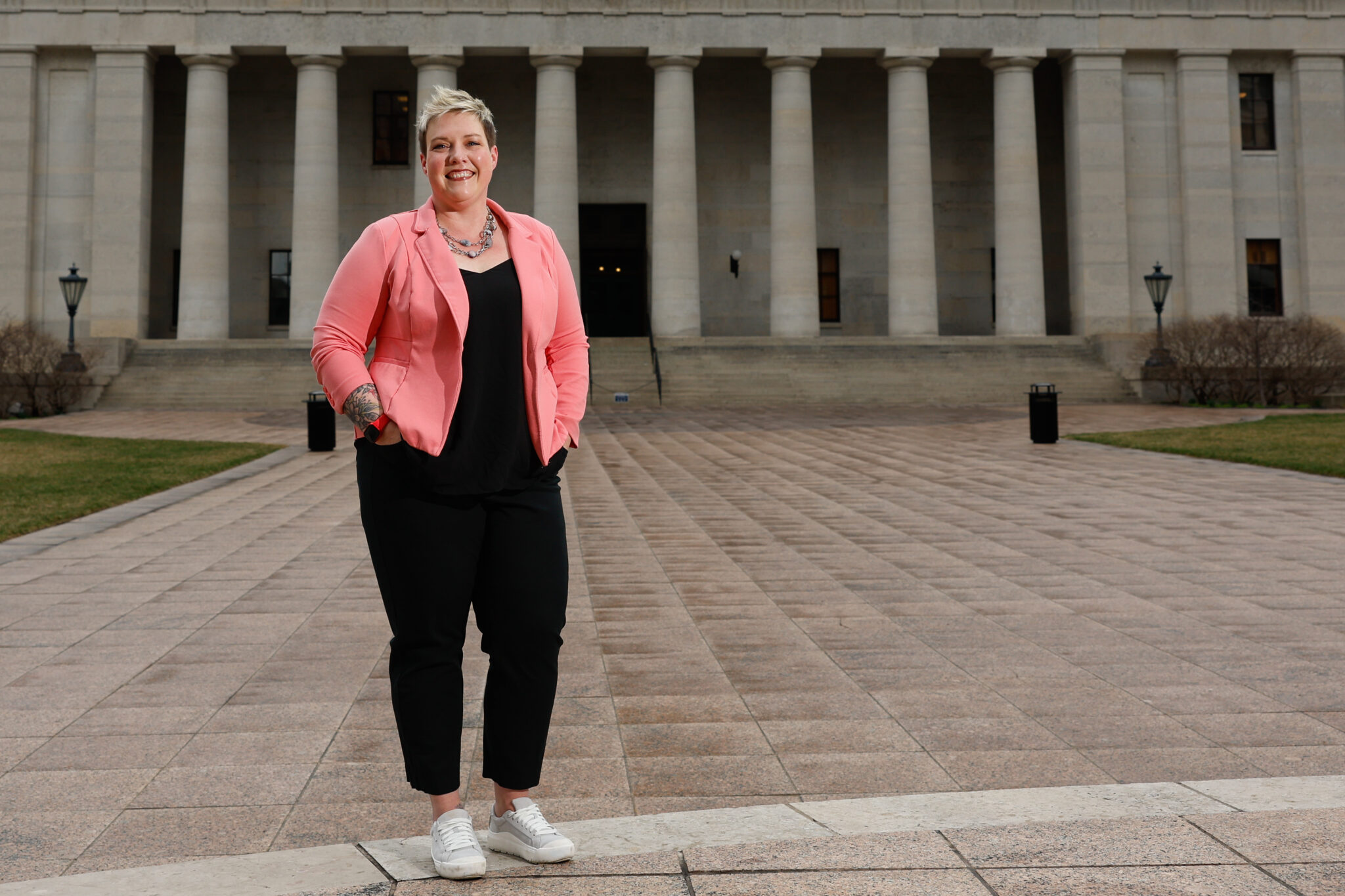
 Collins’ dad and brother both struggled in school as well, and it was through their struggles that she saw “how hard it was for some people to be successful.”