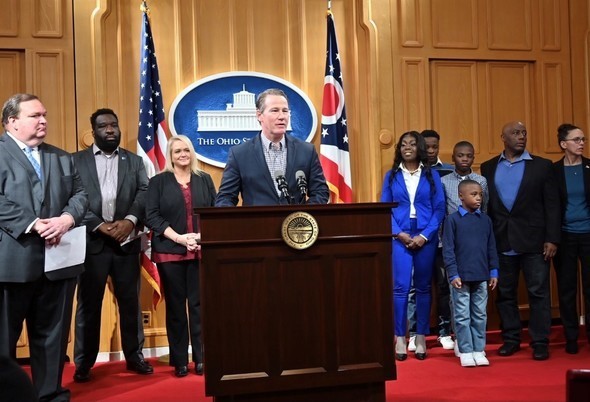
Loveland, Ohio – Loveland Early Childhood Center has received a Five-Star Step Up To Quality Award from the State of Ohio.
Step Up To Quality is a five–star quality rating and improvement system administered by the Ohio Department of Education and the Ohio Department of Job and Family Services. SUTQ recognizes and promotes learning and development programs that meet quality program standards that exceed preschool licensing and school age child care licensing health and safety regulations. “The Step Up To Quality program standards are based on national research identifying standards which lead to improved outcomes for children”, according to the Ohio Department of Education and Workforce.
Feeding America and Akron-Canton Regional Food Bank host Hungry to Help Lesson Plan for students at an Ohio elementary school in Fairlawn, Ohio. (Photo by Duane Prokop/Getty Images for Feeding America)
As Ohio food banks see record-breaking amounts of need, the state is also at risk of losing federal funding that could help residents get essential needs and boosts in employment.
After the most recent state budget passed with a plan to redesign the education and training piece of the state’s Supplemental Nutrition Assistance Program (SNAP), food and employment advocates across the state watched as the program became a “compliance machine,” rather than a way to bring Ohioans out of poverty.
“The bottom line is that our current program that we’ve been running for many, many years in Ohio does not … meet the needs of employers, it does not increase employment, it does not increase wages,” Rachel Cahill, a visiting fellow with the Center for Community Solutions, said during a recent webinar by the Ohio Workforce Coalition.
The federally-funded SNAP program’s future in Ohio could also be at risk after negative evaluations from the US Department of Agriculture and federal agencies meant to “assess how well our staff employment training program is working or not working,” according to Hope Lane-Gavin, director of nutrition policy and programs with the Ohio Association of Food Banks.
“Ohio has continued to produce bad management evaluations … that determine we are not screening participants for exemptions adequately and we are not providing supportive services,” said Lane-Gavin, who also participated in the OWC webinar on SNAP benefits and local implementation.
Cahill said she is in a work group aimed at redesigning the state SNAP program. She mentioned a “written warning letter” that was sent to the state from the USDA saying federal funding for the next fiscal year may be in jeopardy if the state doesn’t bring their program into compliance.
“If we don’t get this right, if we don’t redesign this well, we are going to lose that federal funding, and we won’t be able to support the type of programs … that we have now,” Cahill said.
The Ohio Department of Job and Family Services’ SNAP Employment & Training Plan states a new policy was implemented by the state effective July 1, 2023, “to help ensure all requirements are being met prior to sanctioning an individual who is non-compliant with SNAP E&T.”
The document states the change was made as a result of notification from the USDA’s Food and Nutrition Service, which said “until Ohio is in full compliance with regulations affecting program access, the state must take steps immediately to ensure that SNAP E&T participants are not improperly sanctioned.”
The current Ohio program expands on work requirements that are already in place through the federal SNAP program’s regulations by including the state option of mandatory employment requirements for “able-bodied adults without dependents” or ABAWDS.
Under the federal program, while there are work requirements, there is also a three-month grace period allowing individuals to attempt to gain employment before they’re removed from the SNAP program.
With Ohio’s mandatory employment and training, that three-month grace period does not exist for ABAWDS, unless they’ve been a victim of domestic violence, according to Lane-Gavin.
“So, the federal time limit recognizes that individuals need access to food first before any meaningful attempts are made at identifying adequate and sustainable employment,” Lane-Gavin said.
Job training and barriers
For those programs who provide job training to SNAP-eligible Ohioans, the idea that someone is forced to participate doesn’t necessarily improve the chances of success.
At the Center for Employment Opportunities, an Ohio-based program working to help formerly incarcerated individuals re-enter the workforce, program leaders would rather work with those who commit voluntarily. That way, CEO knows those that come to their program are ready to improve their lives, rather than merely check a state-mandated box.
“Individuals are coming to CEO really motivated to work, but are facing barriers in connecting to the right opportunities,” Bacon said.
Bacon said studies of their program participants show about 80% of them are eligible for SNAP, and access to basic necessities as the formerly incarcerated come back out is needed as they navigate their new situation.
“We know that there’s a need, we know that people need both training and food security, and we’re seeing that play out in our program,” Bacon said.
While advocates are hoping for state reform, the opportunity for federal reform outside of the long-awaited farm bill, at least for one “unintended consequence” of the work requirements included in SNAP, could be on the horizon.
Federal legislation called the Training & Nutrition Stability Act, co-sponsored by Ohio Republican U.S. Rep. Max Miller, was touted by Bacon as a fix for a clause in SNAP eligibility that counts wages earned in job training toward benefit levels. Counting those wages could potentially reduce benefits or make a household ineligible, Bacon said.
The TNSA would exclude that income with regard to eligibility.
Locally, Lane-Gavin said the state needs to jump in to help county Job and Family Services agencies deal with the heavy implementation load that comes from the mandatory education and training requirements.
“Our county agencies are stretched thin … and SNAP employment and training is a compliance issue,” Lane-Gavin said. “It is just a paperwork machine.”
Part of the changes needed as part of the SNAP program in Ohio is a “paradigm shift” for county JFS offices that will not only allow them to stem the flow of paperwork, but also gain back the trust of program participants, who may have “animosity” because of the “punitive” nature of the current program, according to Cahill.
“If we really want to do meaningful recruitment and outreach for an employment and training program … we are going to have to do some rebuilding of trust with the community and that’s not going to happen overnight,” Cahill said.
SUSAN TEBBEN
Susan Tebben is an award-winning journalist with a decade of experience covering Ohio news, including courts and crime, Appalachian social issues, government, education, diversity and culture. She has worked for The Newark Advocate, The Glasgow (KY) Daily Times, The Athens Messenger, and WOUB Public Media. She has also had work featured on National Public Radio.
Loveland, Ohio – The Ohio Department of Job and Family Services (ODJFS) announced that changes in federal law mean that February will be the last month of emergency Supplemental Nutrition Assistance Program (SNAP) allotments.
However, through March 31, Meijer is offering SNAP customers a 10 percent discount on produce purchased in-store, helping families stretch their dollars even further on fresh, healthy food. More info:
Ohio Department of Job and Family Services (ODJFS) Director Matt Damschroder has announced that changes in federal law mean that February will be the last month of emergency Supplemental Nutrition Assistance Program (SNAP) allotments. These are extra monthly payments the federal government created in response to the COVID-19 pandemic. In general, it ensures all households receive the maximum allotment for their household size. Beginning in March, recipients will receive only their one, normal monthly payment.
Here are examples of how the change will impact people:
Individual normally entitled to the minimum allotment of $23 per month has been receiving an additional $258 per month to receive the maximum allotment of $281.
Household of 3 normally entitled to $180 per month has been receiving an additional $560 per month to receive the maximum allotment of $740.
Household of 4 normally entitled to $939 per month (maximum allotment) has been receiving an additional $95 per month, for a total of $1,034.
“Recently passed federal legislation is bringing the temporary SNAP allotment to an end after February,” said Damschroder. “We will be communicating to recipients, county agencies, and our partners such as foodbanks, that normal SNAP payment will resume in March.”
The Supplemental Nutrition Assistance Program is a federally funded program meant to supplement the food budget of families in need so they can purchase healthy food and move towards self-sufficiency. Eligibility, as well as the normal monthly allotments, vary based on factors such as income and household size.
The Families First Coronavirus Response Act allowed states to request emergency allotments for households participating in SNAP. As a result, ODJFS has been providing emergency allotments to SNAP households since March 2020. Congress recently passed the Consolidated Appropriations Act of 2023, which ended the program.
The federal announcement means the last emergency allotment will be paid in late February, and beginning in March, recipients will receive only their one, normal monthly payment, which is typically loaded onto an electronic benefits card. As this is a federal change, there are no fair hearing rights or fair hearing benefits on the ending of the SNAP emergency allotments.
Recipient can manage their benefits by going to https://benefits.ohio.gov/ or by contacting their county Department of Job and Family Services (JFS).
An infusion of federal funds is coming to Ohio, targeted at improving kindergarten readiness.
The Ohio Department of Job and Family Services is set to receive a total of $48 million over three years as part of the U.S. Department of Health and Human Services’ Preschool Development Grant, according to an announcement from Gov. Mike DeWine’s office.
ODJFS Director Matt Damschroder said plans for the grant are “expansive,” and will include “culturally appropriate trauma training, credentialing and parent supports,” along with “creating long-term and sustainable local, state and federal funding for early childhood education programs.”
Through a partnership with the state departments of education, health, mental health and addiction, Medicaid and developmental disabilities, the grant will also be used to expand child care for special needs, homeless and English language learners.
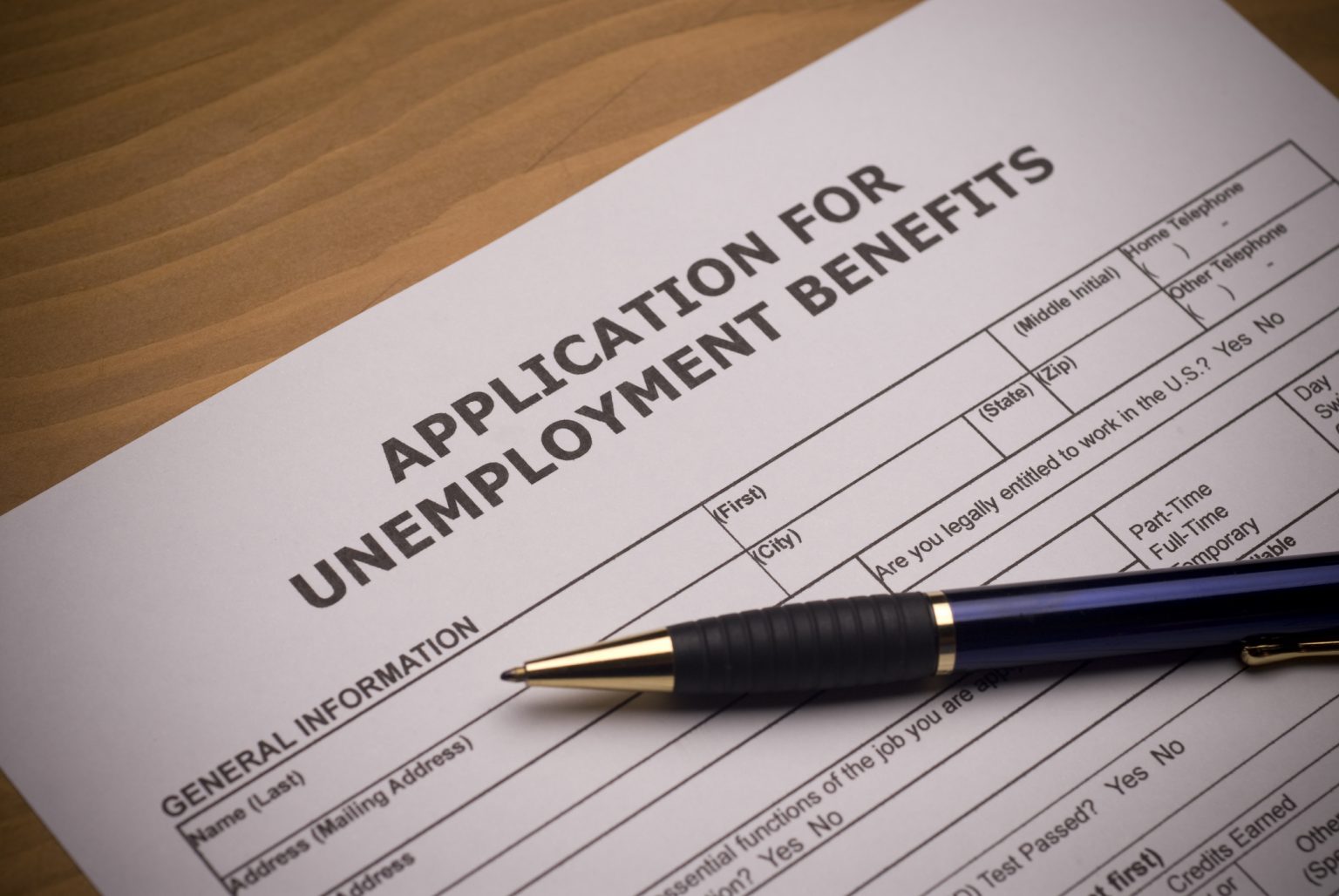
A think-tank in favor of Gov. Mike DeWine’s decision to end supplemental unemployment assistance despite a continued pandemic impacting the economy is yet again pushing the Ohio Supreme Court to support the decision. The governor himself is also weighing in.
The federal supplemental assistance from The CARES Act expired on Sept. 4, 2021 though DeWine ended it in Ohio on June 26, 2021.
In a court filing this week by attorney (and former state Senate president) Larry Obhof, the Buckeye Institute called the early ending of additional Federal Pandemic Unemployment Compensation (FPUC) “sound economic policy.”
The group argued in their second push for the court to land on the side of DeWine that “neither state nor federal law compels Ohio to continue participating” in the unemployment program.
“Federal law clearly indicates that states are free to participate and, if they so choose, to withdraw from the program as well,” the institute wrote in the Jan. 10 court filing.
Ohio residents Candy Bowling, Shawnee Huff and David Willis sued the DeWine administration in September to get the additional $300 monthly unemployment benefits reinstated, which they say are needed to help with household expenses such as rent, food and medical expenses since they were laid off due to the pandemic, according to their lawsuit.
What’s still up to the court to decide is whether the governor, not the state as a whole, was required to continue participating in the program. Obhof says in court documents that he is not.
“Because the Governor acted lawfully, the courts may not substitute their judgment for his policy decision,” he wrote.
The group argues, as DeWine did when he decided to cut the benefits, that the additional payments were “delaying employees’ return to work,” and ending the support brought more employees back, though businesses across the nation are still struggling to get back to full staffing.
“The Governor’s decision to end the additional FPUC payments was not a magic talisman for Ohio’s economy, but it was sound economic policy,” the institute wrote.
DeWine filed his own brief arguing a lower court’s ruling saying the governor shouldn’t have ended the assistance “rests on a misreading of a state law” requiring the director of the Ohio Department of Job and Family Services to adopt rules and regulations necessary to “secure to this state and its citizens the advantages” of federal statutes, in this case including the CARES Act funds.
“No state law – ‘long-standing’ or otherwise – compelled Ohio to participate in the program here at issue,” DeWine’s brief stated. “Because nothing compelled the governor to participate in the program, the governor’s withdrawal did not contradict any policy mandate from the legislature.”
DeWine’s son, Supreme Court Justice Patrick DeWine, recused himself from this case “to avoid any appearance of impropriety that might result from my father’s public involvement in this matter,” according to court documents.
In supporting the governor, the Buckeye Institute interpreted the additional unemployment benefits as a negative for the economy because Goldman Sachs economists cited in their brief estimated the median recipient of the benefits received “roughly 90% of their prior wage,” though it did not specify what the median wage for those beneficiaries was or whether it was enough to support Ohioans in essential ways.
The Buckeye Institute brief joined other Ohio groups who supported governor’s decision. In August of last year, the Ohio Chamber of Commerce, the Ohio Business Roundtable, the Ohio Restaurant Association, the Ohio Hotel and Lodging Association, the Ohio Grocers Association and the Ohio Trucking Association filed their own brief saying the FPUC benefits “will result in a scenario where many individuals will make more in unemployment than when working,” calling the staffing issues for businesses an “artificially created labor shortage.”
The groups levied their support once again in a Jan. 7 filing, which also included the Ohio Manufacturers’ Association, the Ohio Council of Retail Merchants and the Ohio Farm Bureau Federation.
In this filing, they made a matching argument with the Buckeye Institute that the governor is allowed to “exercise discretion regarding Ohio’s participation in federal programs.”
The state Supreme Court denied two attempts in the case to speed up the process of deciding the case, but has not set other deadlines in the case, including whether or not they will have an oral argument to hear from attorneys on both sides.
Columbus, Ohio – Lt. Governor Jon Husted and Ohio Department of Job and Family Services Director Matt Damschroder announced Tuesday that Ohio is the first state to implement two technology tools from Connect Our Kids. The tools will help children services professionals connect Ohio’s 3,100 foster youth with their forever family. They were joined by partners from InnovateOhio, Kinnect, the Dave Thomas Foundation, and Ohio CASA.
The Family Connections tool is a genogram or a digital diagram that illustrates an individual’s family members. Professionals can use the desktop or mobile app versions to build family trees, find family contact information and engage family and supporters of children in foster care. The People Search tool uses public information from over 300 sources and covers over 3 billion people to exponentially expand the pool of potential kinship caregivers, far beyond just those in current contact with the child’s parents.
“Using this technology is data sharing at its best to help find forever homes for kids in foster care. It’s going to save children’s services professionals time and resources,” said Lt. Governor Jon Husted. “Gone are the days of them having to map out family trees and contact information on their own. This technology does it for them, and then makes it widely available to other professionals.”
By Boniface Womber and Bonnie Jean Feldkamp December 18, 2020
This article is from Eye on Ohio, the nonprofit, nonpartisan Ohio Center for Journalism. Please join their free mailing list, as this helps provide more public service reporting.
Amid a raging pandemic, Ohio’s agency responsible for looking out for workers’ welfare has started posting full-time temporary jobs with no benefits for its own workforce.
For example, this week the Ohio Department of Job and Family Services (ODJFS) sought to hire an “electronic design specialist,” a job that requires a bachelor’s degree, years of experience, or some combination of both. The hours listed are full time, with a schedule that is “not negotiable” and the position is “not eligible” for benefits.
As total COVID-19 cases in the state soared to nearly 600,000 and deaths rose to almost 8,000, Eye on Ohio asked why the positions are listed without medical benefits when large employers have to give most of their workforce— even temporary workers— medical insurance eventually under the Affordable Care Act, or pay a penalty.
A spokesman for ODJFS said “Benefit eligibility under the ACA for temporary or part-time positions is determined based on the length of time employed and hours worked during that period of time.”
Eye on Ohio further inquired if the positions have a set end date and why officials listed positions with no health care as the chances of getting a debilitating disease have risen. Officials did not respond to multiple requests to comment.
Each job posting begins with, “The Ohio Department of Job and Family Services’ mission is to improve the well-being of Ohio’s workforce and families by promoting economic self-sufficiency and ensuring the safety of Ohio’s most vulnerable citizens.”
But it’s not clear if ODJFS’ own workers could be self-sufficient with its own positions: according to Heatlhcare.gov, a monthly premium for a nonsmoking family of four in Columbus is approximately $810. That’s about 24% of what an ODJFS electronic design would make after taxes. And doesn’t include money for a deductible, or other costs associated with getting sick.
Other temporary jobs don’t require a degree or much experience but make much less, such as a temporary customer service representative, who would have to shell out 30% of their post-tax income just for premiums for a similar family. Benefits the Law Requires
When it comes to employee benefits, Lyndsey Barnett, chair of Graydon Law’s Employee Benefits’ Department, said technically “there is no law that any employer provides any employee any benefit regardless of the number of hours that they work.”
The Affordable Care Act does however place a penalty on what’s called Applicable Large Employers (ALE) if they do not offer “minimum essential coverage” after a specified waiting period. According to IRS.gov, “applicable large employers have annual reporting responsibilities concerning whether and what health insurance they offered to their full-time employees (and their dependents).” Determining which employees are considered “full-time equivalent” isn’t always as simple as knowing who’s on the payroll for more than 30 hours per week. Also the ALEs are permitted a 90-day waiting period before employees are eligible for benefits so if a temporary position only lasts three months the employee may never qualify for benefits.
The state has announced a $25 million grant program to distribute federal CARES (Coronavirus Aid, Relief and Economic Security) Act monies to charitable organizations. Applications for the program, which will be administered through the Ohio Department of Job and Family Services, must be submitted prior to Nov. 27.
The discretionary grants will be distributed to 501(c)(3) organizations that serve low-income Ohioans and have been negatively impacted by the COVID-19 pandemic.
In addition to the types of services provided by the applicant organizations, consideration will also be given to unemployment charges paid by the charity, as well as other criteria. Grantees will be notified of their approval or denial by Dec. 11 and will receive funds by Dec. 21.
Would you like to receive important information like this more quickly? In addition to our Nonprofit Newsletter, charitable leaders can register to receive News and Updates which will generate email notices for timely information posted on the Charitable Section’s website. To receive these types of Alerts, go to https://Charitable.OhioAGO.gov/Announcements and subscribe at the bottom of the page.
Columbus, Ohio – On Monday, September 14, 2020, the Ohio Department of Administrative Services sent voter registration forms to 59,000 individuals who previously requested these forms through the Ohio Benefits system but had not yet received them due to a system error.
Ohio Benefits provides online services for Ohioans who receive benefits through programs within Ohio Medicaid and Ohio Department of Job and Family Services. Pursuant to legal requirements, Ohio Benefits offers users an opportunity to receive a voter registration form at their request.
Of the 59,000 Ohioans affected by the error, a review determined that approximately 18,900 were already registered to vote, 7,500 received voter registration forms from Ohio Benefits through other transactions, and 32,400 had not yet received a form at the time of the review.
The deadline to register to vote is October 5, 2020. Citizens can register online at VoteOhio.gov.