Tag: Ohio Department of Medicaid

  • Toolkit provides resources to prepare Medicaid members for end of COVID-19 health emergency

    Toolkit provides resources to prepare Medicaid members for end of COVID-19 health emergency

    Once the federal government declares the end of the PHE, the eFMAP will go away and states will once again resume normal eligibility operations which will result in some Medicaid members being disenrolled from the program. 
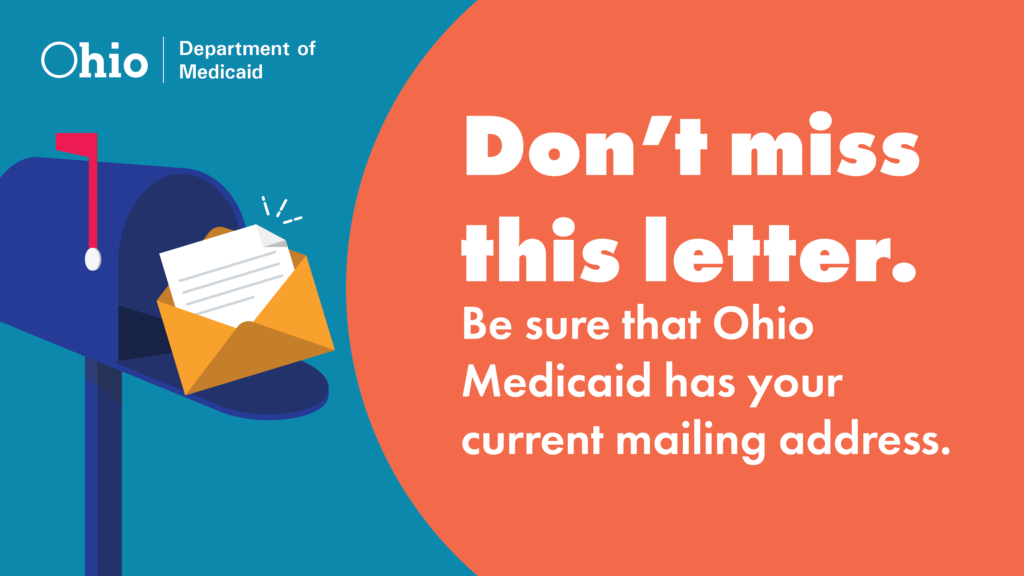
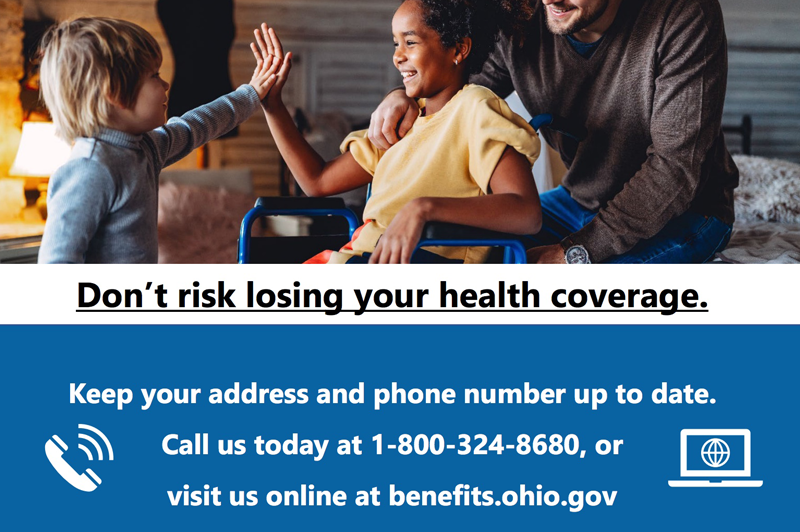
    The Ohio Department of Medicaid has materials and templates on its website to help prepare Medicaid members for the end of the COVID-19 public health emergency and any actions they need to take. The toolkit is for anyone who interacts with Medicaid members, including health care providers, advocates, elected officials, community organizations, schools and others. It includes a flyers, social media and text messages, and more.

    COVID-19 Unwinding

    The materials and templates included below are the best way for you to help prepare Medicaid members for the end of the public health emergency (PHE) and any actions they need to take. Updated September 16, 2022.

    Overview

    In March 2020, the Ohio Department of Medicaid (ODM) made a number of operational changes to its Medicaid program in response to the COVID-19 public health emergency (PHE). This included taking advantage of the flexibilities offered to states such as increasing service limits for home- and community-based waiver services, expanding telehealth, and adding Health Care Isolation Centers (HCIC) as a nursing facility benefit to name just a few. Additionally, with the passage of the Families First Coronavirus Response Act (FFCRA), the federal government provided states with an enhanced federal matching rate (eFMAP) of 6.2%. In exchange, states were prohibited from disenrolling members from Medicaid, even if they were found to be ineligible. This was to ensure members did not lose vital healthcare coverage during the pandemic.

    Once the federal government declares the end of the PHE, the eFMAP will go away and states will once again resume normal eligibility operations which will result in some Medicaid members being disenrolled from the program. 
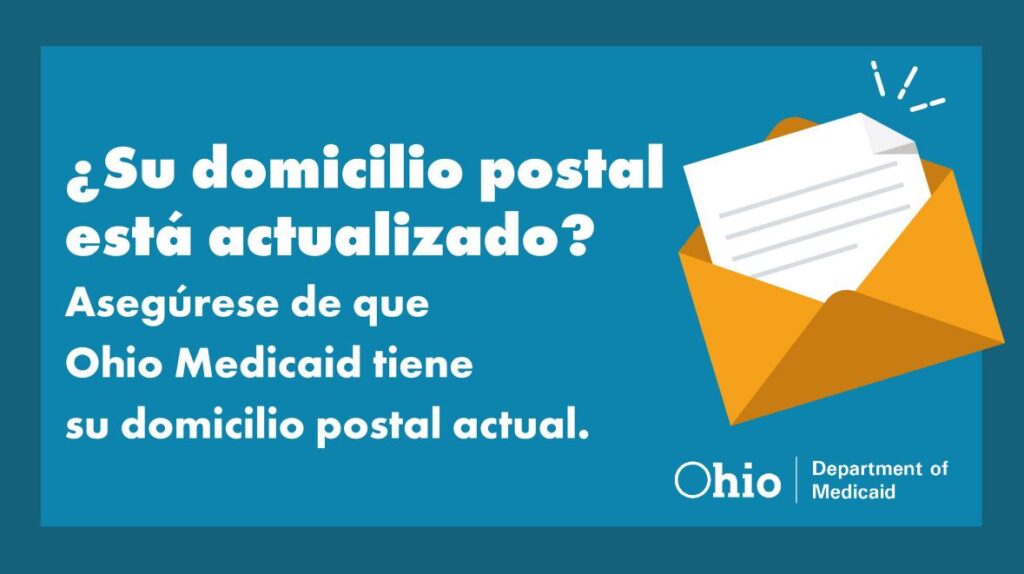
    While some renewals can be completed without a need to contact the member, some renewals will require members to respond to mail from their County Department of Job and Family Services (CDJFS).

    It is imperative that Medicaid members ensure their contact information is up to date, watch for mail from their CDJFS, and respond to requests for information. If members do not respond to renewal letters or requests for information, they run the risk of losing their healthcare coverage, even if they are still eligible.

    Key Messages

    The materials and templates included in this toolkit are the best way for you to help prepare Medicaid members for the end of the public health emergency (PHE) and any actions they need to take. If you prefer to create your own communications, use the following key messages to ensure the information you share is simple, direct, and accurate. 

    You will receive another Partner Packet with updated messaging and materials for continued outreach to Medicaid members after the PHE ends.

    If they don’t already have one, Medicaid members are strongly encouraged to create an Ohio Benefits Self-Service Portal (SSP) account as soon as possible at https://ssp.benefits.ohio.gov. This is the most convenient way for Medicaid members to complete a renewal or report any changes to their information. Through their SSP account, members can also easily check the status of their benefits.

    Update their contact information. Any time a Medicaid member’s information changes, they should let their County Department of Job and Family Services (CDJFS) know. Make sure the CDJFS has their current contact information. Contact information includes: name, residential address, mailing address (if different from home address), phone number, and email address.

    Medicaid members can update their contact information by:

    Calling 1-800-324-8680. Help is available Monday through Friday, 8 a.m.-8 p.m. and Saturday 8 a.m.-5 p.m. ET.

    Reporting changes online. Members with an existing Ohio Benefits Self-Service Portal (SSP) account can report changes online at https://ssp.benefits.ohio.gov. After logging in, they should click the Access my Benefits tile, then click Report a Change to my Case from the drop down and follow the prompts.

    Contacting their County Department of Job and Family Services (CDJFS). Ohio Medicaid members can find their CDJFS by selecting their county from the dropdown at https://medicaid.ohio.gov/home/update-contact-info/select-county-dropdown

    Checking their mail. The CDJFS mails letters to members when it is time to renew or when Medicaid needs more information from them to continue their healthcare coverage. Members should watch for mail from their CDJFS.

    Responding to requests for information. If members get a letter telling them it is time to renew, or that their CDJFS needs more information, they should be sure to respond. Their CDJFS needs to hear from them to review their Medicaid eligibility. 

    Other important messages: 

    In-person help is available to Medicaid members at their County Department of Job and Family Services (CDJFS). They can find their CDJFS by selecting their county from the dropdown at https://medicaid.ohio.gov/home/update-contact-info/select-county-dropdown

    If a Medicaid member has been notified they no longer qualify for Medicaid, they may be able to buy low-cost health coverage through the federally facilitated Marketplace at Healthcare.gov. If they need help understanding their options, trained, licensed healthcare Navigators are available at no cost to them. Contact Get Covered Ohio for free, unbiased assistance. Go to www.getcoveredohio.org or call 1-833-628-4467. Navigators can help in-person, online, or over the phone. 

    Medicaid members can ask to be represented by someone of their choosing to serve as their proxy in the application and renewal processes and decisions regarding their Medicaid coverage. These member-selected individuals serve as an “authorized representative” and must be age 18 or older and able to stand in their place. Members are asked to submit a written statement naming the authorized representative and the duties he or she may perform on the member’s behalf. The form to designate an authorized representative may be found on the Ohio Medicaid website. With this authorization, all notices and correspondence issued by Medicaid will be issued to both the member and the authorized representative.
    How To Use The Toolkit

  • Ohio’s Medicaid director owns the stock of some major contractors, but won’t say how much

    Ohio’s Medicaid director owns the stock of some major contractors, but won’t say how much

    A group representing small pharmacists says large chains, especially CVS, are moving patients’ prescriptions to their own stores without consent. CVS adamantly denies that. Photo by Marty Schladen, Ohio Capital Journal.

    It’s unclear if she disclosed potential conflict during massive procurement

    BY: MARTY SCHLADEN and Ohio Capital Journal

    Since she became director of the Ohio Department of Medicaid in January 2019, Maureen Corcoran has owned stock in some of the department’s biggest contractors. Given the size of those contracts, they could have increased the value of the stock Corcoran owned.

     Ohio Medicaid Director Maureen Corcoran. Official photo.

    But while she complied with one set of state disclosure requirements, Corcoran won’t say just how much stock she owns in such companies as CVS Health, UnitedHealth Group and Express Scripts — each of which has done billions of dollars worth of business with the Medicaid department since Corcoran started running it. 

    In addition, Corcoran won’t say if she filed legally required affidavits disclosing that she had an ownership stake in corporations the department hired earlier this year as part of its $20 billion managed-care re-procurement or the company the state hired to run its $1 billion OhioRISE program. Should they be found, violations of the law could carry criminal penalties and invalidate contracts signed without proper disclosures.

    Big money

    When Corcoran took the reins of the Medicaid department, she held a stake in some companies that were getting a lot of scrutiny over their business with the state. Two were CVS Caremark and OptumRX, pharmacy middlemen that together were handling more than $2 billion a year in prescription-drug transactions for the department.

    Ohio’s independent pharmacists and others accused the companies of several questionable practices — including charging a lot more for drugs than they were paying pharmacists. A state-commissioned analysis showed that in 2017, CVS and Optum charged almost a quarter-billion dollars more for drugs than they reimbursed the pharmacies that had bought and dispensed them.

    The findings were still big news — and the companies were suing the Medicaid department — when Corcoran took control just after Gov. Mike DeWine took office at the start of 2019. Even so, Corcoran held onto stocks in CVS Caremark owner CVS Health and in OptumRX owner UnitedHealth.

    According to disclosures filed with the Ohio Ethics Commission, Corcoran owned at least $1,000 worth of those companies’ stock. 

    Given that they were among 180 stocks and mutual funds she disclosed owning as of Jan. 31, 2019, it’s possible that Corcoran wasn’t even aware that she held stakes in companies that did such high-profile business with her agency. Whatever the case, Corcoran held onto shares in the companies through 2019 and 2020, her ethics filings show.

    Under Ohio’s aging ethics laws, agency bigwigs like Corcoran are allowed to own stock in companies with which their departments do business so long as their holdings don’t exceed 5% of the company’s outstanding stock. In the case of Medicaid’s big contractors, that would mean the director would have to be one of the wealthiest people in Ohio to violate the provision.

    CVS and UnitedHealth are the fourth and fifth-largest corporations in the country by revenue. In order to violate the ethics provision, Corcoran would have to have owned a combined $18 billion worth of the companies’ stock in 2019. 

    Potential for conflict

    That’s a clear sign that the state’s ethics laws need to be updated, said Catherine Turcer, executive director of Common Cause Ohio, a watchdog group.

    “Five percent of a company’s stock in the 70s, 80s or even the 90s wasn’t anywhere near what it is now,” Turcer said.

    In addition, knowing just how much Corcoran’s investments with Medicaid contractors were worth would go a long way toward showing how big a conflict of interest she has. If it’s just over $1,000, the conflict might seem nominal, but if it’s much more, it would be a lot more serious, Turcer said.

    “There are two things Maureen Corcoran could do,” Turcer said. “One would be to publicly identify how much over the $1,000 she owns and allow the public to weigh in. The other thing she could do so the public didn’t worry about the conflict of interest is actually divest herself of these stocks.”

    Last Friday, the Medicaid department was asked the value of Corcoran’s investments in CVS, UnitedHealth and Express Scripts, a third pharmacy middleman with which the department has done business.

    A spokeswoman for the department said it would respond to those and other questions, but as of Tuesday afternoon, it hadn’t. The spokeswoman also didn’t answer questions about when responses would be forthcoming.

    Bigger problem?

    Potentially more ominous for Corcoran and her department is another question they haven’t responded to: Whether Corcoran filed affidavits disclosing her interest in companies with whom the department recently entered into huge contracts.

    This year, the Medicaid department implemented a big redesign of its managed care program. 

    To gain more insight into drug transactions, the department will work next year with a single drug middleman contracted directly with the department — instead of being hired by managed-care providers as they have in the past.

    But while UnitedHealthcare’s OptumRx might be losing that business, the Medicaid department is hiring UnitedHealthcare Community Plan of Ohio to be one of six companies administering the state’s $20 billion-a-year managed-care program.

    The re-procurement has raised other questions. Also hired was a plan owned by managed-care giant Centene, which agreed earlier this year to pay out more than $1 billion to Ohio and 21 other states after being accused by Attorney General Dave Yost of fleecing taxpayers. Corcoran has struggled to explain why her department would keep doing business with the company.

    The state also is creating OhioRISE, an ambitious program intended to help 60,000 Ohio children with the most complex behavioral health and other needs. Aetna Better Health of Ohio was selected in April to administer the $1 billion program.

    The company is a subsidiary of insurer Aetna. CVS — in which Corcoran has been invested — bought the Aetna for $70 billion in 2019.

    It’s unclear whether Corcoran continues to own stock in UnitedHealth or CVS, or whether she disclosed any ownership when contracts were let this year. 

    But the state law governing such disclosures spells out potential criminal penalties for violations and it says any contract so made “is void and unenforceable.”

  • Analysis: Billion-dollar whitewash?

    Analysis: Billion-dollar whitewash?

    Centene execs eager to put Medicaid scandal in the rearview without explaining what they did

    By Marty Schladen and Ohio Capital Journal

    In the wake of a blockbuster settlement of fraud claims, the top executive at the nation’s biggest Medicaid contractor was eager Wednesday to put the matter behind the company, which derives most of its revenue from taxpayers.

    But even though executives repeatedly used some form of the word “transparency,” they seem to be trying to get past the scandal without explaining to taxpayers and shareholders what, exactly, they did. 

    That’s kind of a big deal as the company asks states and the federal government to continue to trust it to handle taxpayers’ billions. It’s also a big deal in a health care arena where huge corporations have been accused of exploiting a lack of transparency to overcharge taxpayers vast sums of money.


    Centene agrees to pay a record $88.3 million to settle Ohio…

    David Miller – Jun 14, 2021


    Michael F. Neidorff, chairman, president and CEO of Centene Corp., on Wednesday told investors that the $153 million the company is paying two states and the $1.1 billion it plans to pay 20 others settles a matter that was cleared up years ago. 

    “The agreement addresses a situation from 2017 to 2018,” he said. “The policies and practices that created the situation were changed in 2019, making the matter very much a thing of the past. With this agreement, Centene will be able to put the situation behind us in a timely manner.”

    To make sure none of the investment analysts viewing the presentation missed it, Neidorff hammered the point again.

    “I would like to reiterate that the matter in the agreement is very much a thing of the past and we are looking forward to bringing this to resolution as we move ahead and focus on delivering the highest quality of care to our members,” he said.

    The problem is, many states seem poised to accept settlement money and continue paying billions to Centene with only the vaguest idea of what the company did in 2017 and 2018, and what it might have cost taxpayers.

    On Monday, Ohio Attorney General Dave Yost announced that Centene initiated settlement talks and just four months after Ohio sued the company, Centene had agreed to pay $88.3 million. 

    Because it’s the first — and so far only — state to sue in the matter, Ohio’s getting special treatment. If any state gets more, Centene will have to plus up its settlement with Ohio to match it, Yost said.

    On Wednesday, Neidorff claimed that the state governments on which his company depended for much of its $120 billion in annual business deserved transparency.

    “We have a deep respect for our state partners, and have addressed their concerns expeditiously, increasing the transparency of our pharmacy network,” he said.

    But that transparency has been hard to spot in the company’s recent actions.

    Centene on Monday stressed that it admitted no wrongdoing as it shelled out all that money. The press release announcing the settlement was titled “Centene announces no-fault agreements with Ohio and Mississippi to resolve pharmacy subsidiary claims.”

    Centene’s press operation on Tuesday didn’t respond to a question asking for an explanation of the conduct over which the company was prepared to pay out $1.24 billion. 

    And on Wednesday, Centene’s six top executives answered a multitude of windy, jargon-laden questions from stock analysts. But they ignored another, seemingly simple one: Don’t taxpayers and shareholders deserve to know what Centene did to necessitate such a massive payout?

    The company is presumably anxious to keep other states from suspending their enormous contracts the way the Ohio Department of Medicaid has. And the company clearly wants to stop attorneys general in other states from following Yost’s lead by filing lawsuits alleging that Centene bilked taxpayers out of tens of millions of dollars.

    “Pursuing the matter in court could have involved litigation in 22 jurisdictions over the next three to five years,” Neidorff said. “And we all know what legal reserves and expenses that could have generated.”

    Unless other states do sue, the Ohio suit and earlier investigations there might be the fullest picture the public gets of Centene’s alleged misconduct.

    Yost’s team accused Centene of creating a non-transparent chain of pharmacy middlemen to overbill taxpayers through a few stratagems.

    “One was double billing,” Yost said Monday. “A process by which they used more than one entity to process a claim and added costs to it — overbilling.”

    Yost’s team also accused Centene of pocketing $6.7 million a year in funds that were intended to pay pharmacists to dispense drugs. 

    “They actually claimed they were paying more to the pharmacists than they actually were,” he said.

    The AG also accused the company of marking up drugs by as much as $400,000 in a single week. In court filings, Centene denied the claims.

    Mississippi, the other state with which Centene announced a settlement, was much less specific in its claims of wrongdoing.

    “Following suspicions that PBMs were inflating their bills, in 2019, the auditor’s office launched an investigation to review invoices produced by a Centene-owned company,” a joint press release by Attorney General Lynn Fitch and state Auditor Shad White said. “Contracts required payments be capped by certain industry-standard prices, and the PBM was charging Medicaid more than the allowed price cap.”

    Whether other state attorneys general will go into more detail is unclear. Those in Georgia, Florida, Kansas, New Mexico and Texas didn’t respond when asked whether they’ll seek settlement money from Centene or whether they’ll publicly describe what they believe the Medicaid contractor did wrong.

    They should be more forthcoming as the process moves forward, said Greg Reybold, vice president and association counsel of the Georgia Pharmacy Association — a group that says Centene and other healthcare giants have used non-transparent middlemen to drive drug prices up and community pharmacists out of business.

    “I think folks should know: What were some of the practices that were being investigated?” he said Tuesday.

    Georgia has some distinct similarities to Ohio. For example Centene-owned managed-care organizations in both states saw much higher markups of generic drugs than their peers did.

    An Ohio analysis showed that in 2017 all Medicaid managed-care plans were charging taxpayers far, far more for generic drugs than they were paying pharmacists. But Centene’s Buckeye Health Plan was charging almost double what the others were.

    Buckeye marked up generics an average of $11.60 each for the 4.57 million generic prescriptions it handled, while the average of the other four Medicaid managed-care organizations under contract with Ohio Medicaid was about $5.95. That means middlemen working for Centene marked up generic drugs $26 million more than if they were charging what the others were — and the the analyst hired by the Ohio Department of Medicaid concluded that together, the plans were charging at least triple the going rate

    And it turned out that a Centene-owned pharmacy middleman was paid $20 million for services that had an identical description to services that another middleman, CVS Caremark, said it provided. Be that as it may, the companies later said they weren’t double-dipping.

    Altogether, pharmacy middlemen working for Centene’s managed-care organization in Ohio charged $33 million more for the cheapest class of drugs in 2017 than they paid pharmacists. That was the highest rate for any of Ohio’s five managed-care organizations.

    Similarly, an audit of fiscal year 2019 commissioned by the Georgia Department of Community Health determined that the difference between what Centene-owned Peach State Health Plan was charging taxpayers for drugs and what pharmacies were getting was far greater than it was for the state’s other three managed-care organizations.

    A Myers and Stauffer report obtained by the Capital Journal said that at $12.93 per prescription, the Peach State markup in 2019 was almost quadruple the average of the other three plans. 

    Also similar to Ohio was that generic markups under the Centene managed-care organization totaled $30 million that year.

    That’s a lot of coincidences, Reybold said.

    “It begs the question, what isn’t being fleshed out?” he asked. “What don’t we know?”

  • Centene agrees to pay a record $88.3 million to settle Ohio PBM case

    Centene agrees to pay a record $88.3 million to settle Ohio PBM case


    Columbus, Ohio – Centene Corp. (CNC) has agreed to pay Ohio $88.3 million to settle a lawsuit filed by Attorney General Dave Yost in March alleging the pharmacy benefit manager overbilled the Ohio Department of Medicaid for pharmacy services it provided.

    Yost also alleged Centene and its subsidiary, Buckeye Health Plan, conspired to misrepresent the costs of pharmacy services, including the price of prescription drugs.

    The settlement is the first and largest in the country secured by a state attorney general against a pharmacy benefit manager (PBM). “Centene used sophisticated moves to bill unearned dollars – moves known only at the top levels of health care companies,” Yost said. “It has taken a huge effort by my team to untangle this scheme, and now that we know how it works, the alarm bells should be ringing for anyone using similar tactics.”

    Ohio Attorney General Dave Yost (Photo Provided)

    Most Ohioans’ prescription-drug plans are under the management of a PBM through their health insurance plans. PBMs are intermediaries in control of prescription-drug costs, and they decide which prescription drugs are covered by health insurance companies.

    Yost began investigating PBMs in 2018 while state auditor. Yost found that PBMs, while managing the Department of Medicaid prescription drug program, were engaged in spread pricing, which is an artificial inflation of prescription drug pricing. That investigation found that PBMs collected more for drugs compared to the actual cost to dispense the drugs. 

    The Department of Medicaid administers a taxpayer-funded medical assistance plan that provides coverage to about 2.9 million Ohioans, and it does so through the use of managed care organizations (MCOs).

    One such MCO, Centene’s Buckeye Health Plan, administered its pharmacy benefits via sister companies Envolve Health Solutions and Health Net Pharmacy Solutions. The practice of subcontracting with more than one PBM prompted questions about Buckeye Health Plan’s business practices and, ultimately, Centene. With help from outside counsel, the Office of Attorney General Yost conducted an investigation of these practices, finding significant breaches of contract. Notably, the breaches include:

    • Filing reimbursement requests for amounts already paid by third parties.
    • Failing to accurately disclose to ODM the true cost of pharmacy services, including the disclosure of discounts received.
    • Artificially inflating dispensing fees.

    “Centene took advantage of all of us who pay taxes to care for the most vulnerable Ohioans,” Attorney General Yost said. “This settlement is the big first step Centene is taking to repair Ohio’s trust and it’s my hope they continue on this path of good faith.”

    As part of the settlement, the lawsuit – filed on March 11 in the Franklin County Court of Common Pleas – has been unsealed.