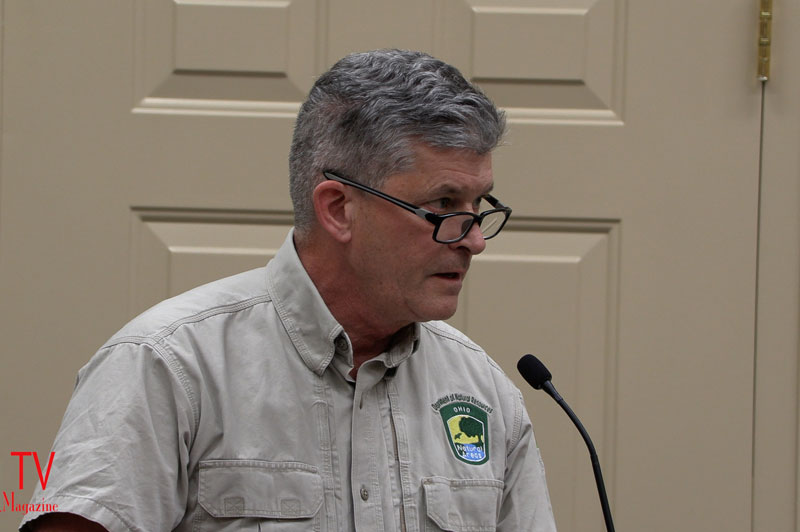
Aaron Rourke, the Assistant Regional Scenic Rivers Program Manager of the Division of Natural Areas & Preserve said, “The goose that laid the golden egg here, is the State and National Scenic Little Miami River.”
This story was up-dated at 6:15 AM on December 6 to reflect that the vote the Commission took during the meeting was to move forward with the SPD process by holding a formal Public Meeting on the plan at an as yet to be determined future date.
Loveland, Ohio – Richard Fisher spoke first and apparently had the wrong impression after hearing the Chairman of the Planning and Zoning Commission, Mark Redmond’s opening remarks. Fisher said, “I know you are not approving anything” tonight.
During the Open Forum Fisher added that he hopes down the line, wherever this goes, that people keepin mind that we just went through a “pretty big game changing election” in which people said that we want elected officials to listen to us.
However at the end of nearly one hour and 15 minutes of discussion and hearing from the public, the commission determined that the Schildmeyer proposal met all the conditions required to re-zone their property into a Special Planing District which would remove all current and existing zoning regulations by creating a new zoning map with its own set of regulations.
Redmond, Andy Bateman, and David Parker voted that the proposal met the requirements of establishing a Special Planing District. Rob Weisgerber voted that it did not. Member Brian O’Neill was absent from the meeting.
The vote was to move forward with the SPD process by holding a formal Public Meeting on the plan at a yet to be determined future date.
No one from the public spoke in favor of the plan moving forward. Terry Schildmeyer, representing the family and Douglas Hinger with Traditions Building and Development Group testified in favor of their plan.
Speaking about the importance of protecting the State and National Scenic Little Miami River, Aaron Rourke, the Assistant Regional Scenic Rivers Program Manager of the Division of Natural Areas & Preserve said, “The goose that laid the golden egg here, is the State and National Scenic Little Miami River.”
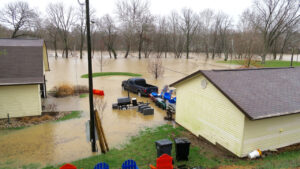
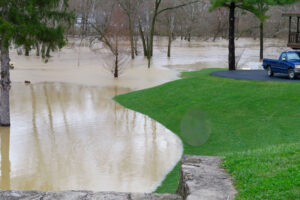
The development shares 540 feet of frontage along the Little Miami River at 128 North Riverside Drive in the West Loveland Historic District. The site will be elevated by bringing in earth to bring it above flooding elevation.
Loveland Magazine file photo of past flooding
Rourke works for the Ohio Department of Natural Resources.
Loveland Magazine file photo of past flooding
The proposed Special Planning District would be located at 128 North Riverside Drive and includes twelve (12) single-family detached dwelling units (24’ x 56’ 3-Story Homes) with minimum lot size of 0.114 acres or 4,966 sq. ft. The owner is Schildmeyer Holdings. The 12 proposed homes would be across Riverside Drive from the Loveland Museum Center and the Tufts Schildmeyer Family Funeral Home.
____________
In order to adopt an SPD, one or more of the following conditions exist, or will exist, within the proposed SPD:
(a) A concentration of retail and service oriented commercial establishments serving as a principal business activity center for the community.
(b) Land that is occupied by substantial natural characteristics worthy of preservation or which are historic aids to the identification of residential communities which help residents relate to their communities and to relate the social organization of communities to their physical environments.
(c) Lands which permit for ingenuity, imagination, and design efforts on the part of builders, architects, site planners, and developers that can produce residential developments which are in keeping with overall land use intensity and open space objectives of the Comprehensive Plan while departing from the strict application of use, setback, height, and minimum lot size requirements contained in the Zoning Code.
____________
[pdf-embedder url=”https://lovelandmagazine.com/wp-content/uploads/2024/11/2024-11-07-Planning-Zoning-Commission-Full-Agenda-1876.pdf” title=”2024-11-07 Planning & Zoning Commission – Full Agenda-1876″]
Ohio’s annual free fishing days on Saturday, June 15, and Sunday, June 16, give all residents a chance to fish at any public waterway without a license, according to the Ohio Department of Natural Resources (ODNR) Division of Wildlife. This includes Lake Erie, the Ohio River, and Ohio’s public lakes, reservoirs, streams, and rivers.
June 15 and 16 will be the only weekend of the year on which residents 16 years old and older can fish public waters for free without purchasing a fishing license. Anglers under 16 can fish for free year-round and are not required to hold a license. All other fishing regulations, size requirements, and bag limits apply.
Outside of the free fishing days on June 15 and16, all anglers 16 years old and older are required to have a valid fishing license to take fish, frogs, and turtles. Licenses can be purchased at participating agents, at wildohio.gov, or on the HuntFish OH mobile application. A one-year resident fishing license is $25.
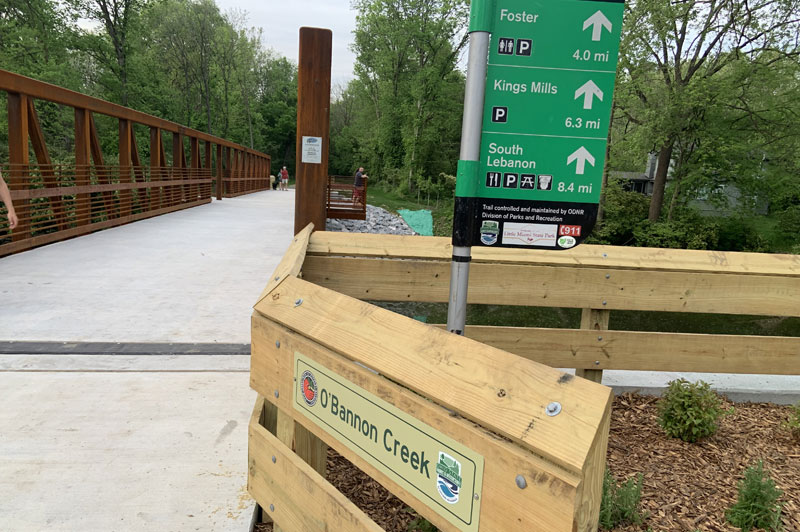
Loveland, Ohio – The Ohio Department of Natural Resources and Ohio State Parks just announced that the new Loveland Bike Trail bridge over O’Bannon Creek in Historic Downtown Loveland will have a ribbon cutting ceremony on Wednesday, May 22 at 11:30 AM.
The trail and bridge has been open to the public since May 2.
The public is invited. The bridge is adjacent to Loveland’s Nisbet Park.
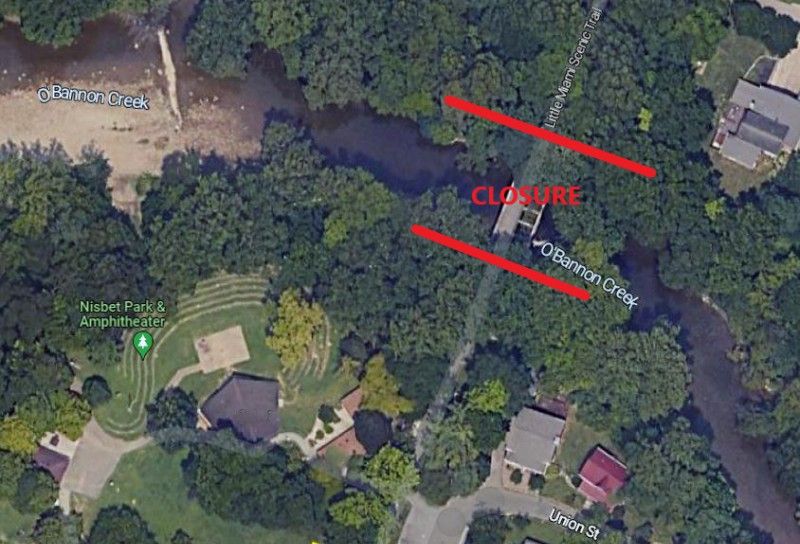
Loveland, Ohio – The Loveland Bike Trail pedestrian bridge over O’Bannon Creek in Historic Downtown is scheduled to close next Sunday, October 1 through May 2024.
The bridge, just north of Nisbet Park, will be replaced by the Ohio Department of Natural Resources. There is no designated detour, but the trail will remain open both south and north of the closing.
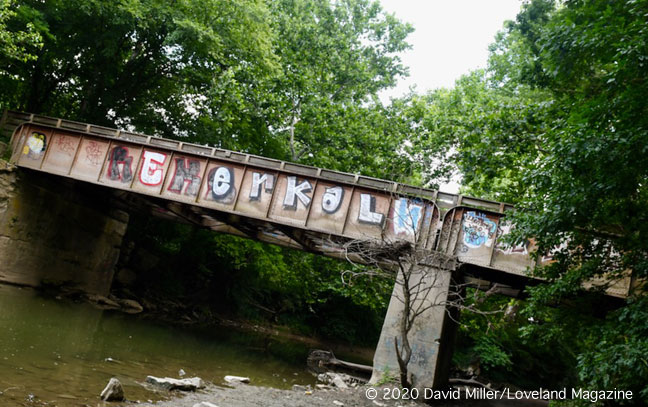
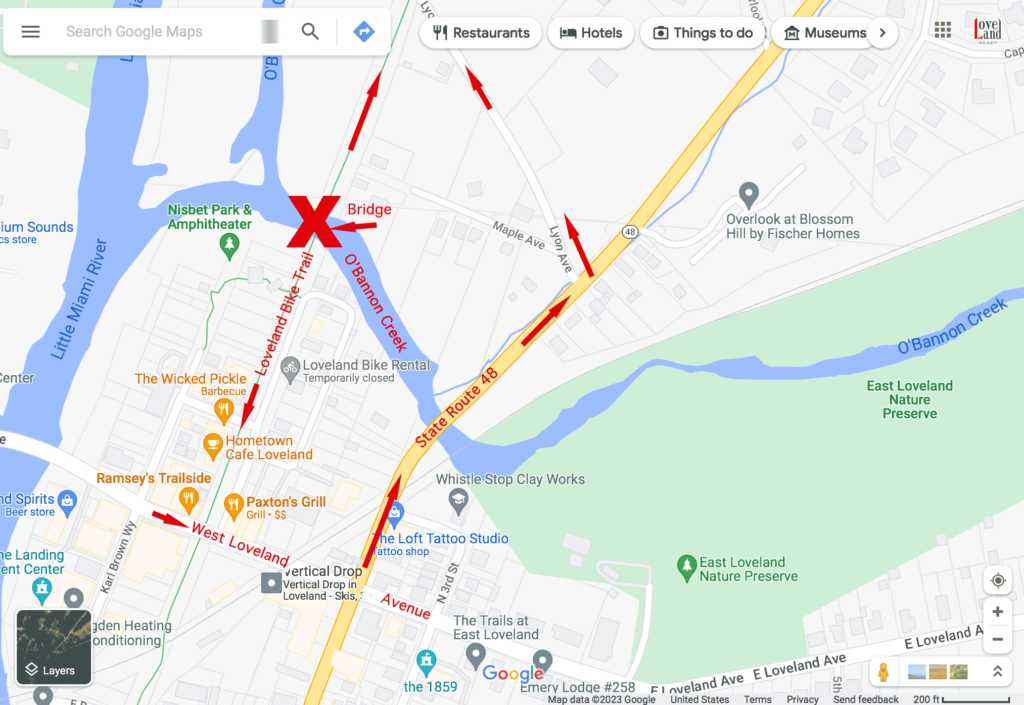
Loveland, Ohio – The O’Bannon Creek Bridge in Historic Downtown on the Loveland Bike Trail (Little Miami Scenic Trail) will be temporarily closed starting March 6th. Little Miami State Park, the division of the Ohio Department of Natural Resources that oversees the trail said that the bridge is nearing the end of its life expectancy and that they are “proactively replacing it before it becomes unsafe”.
Google Image
It will open again at the end of March and then close from May to October. There is no designated detour, however, local trail users will know that heading east on West Loveland Avenue and leaving Historic Downtown by heading north on State Route 48, then turning left onto Lyon Avenue will quickly take users to the other side of the closed bridge. From Lyon Avenue take either fork in the road to get back on the trail.
EDITOR’S NOTE: We have received a message from one of our faithful readers who lives on Maple avenue and she would rather not see people use the street as a detour. She said, “My street isn’t a proper workaround. Maple is a narrow, short dead-end street that doesn’t connect through to the trail, as depicted on the Google map. Our little neighborhood has several families with young children and would appreciate not having all the trail traffic directed our way. If trail users just stay on Lyon (which has just one house and no kids), they will quickly come to its intersection.”
“There are growing concerns about the potential impacts regarding the timing of the removal of males during the hunting season…”
Ryan Boyer, NWTF district biologist for Michigan, Indiana and Ohio.
The NWTF Ohio State Chapter recently allocated $50,000 to support a new wild turkey research study that seeks to address population declines in the state.
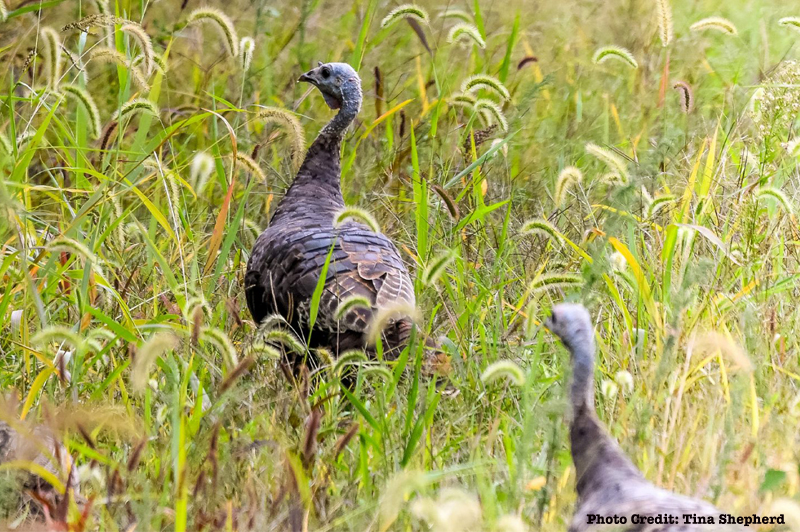
With increasing concerns over population declines in Ohio, the Ohio Department of Natural Resources and Ohio State University are conducting the first broad-scale study of hen survival in the state in almost two decades. Findings will help researchers and wildlife managers understand how survival rates, harvest rates and reproduction have changed in the last 17 years and what factors may be causing those changes.
In the early 2000s, researchers determined May 1 to be the median date for which hens begin incubating; however, it’s clear today that incubation start dates vary in different regions of the state. Changing weather and habitat conditions, too, may be impacting the initiation of nest incubation from the median date established in the early 2000s.
“There are growing concerns about the potential impacts regarding the timing of the removal of males during the hunting season, and therefore it is important to know as precisely as possible when hens begin incubating nests,” said Ryan Boyer, NWTF district biologist for Michigan, Indiana and Ohio. “In many cases, state agencies set their season open dates to coincide closely with the median date for nest incubation initiation, allowing time for hens to be bred and for nesting to begin. Ensuring that season start dates align with nesting chronology greatly reduces the chance of negatively impacting populations by removing males too early.
“Just like the world around us, wild turkey ecology is dynamic. We are proud to partner with the ODNR and Ohio State University to provide support for this research project and continue to ensure the best-available science is being used in informing management and regulatory decisions.”
Mark Wiley, ODNR game bird biologist, notes that it is not just timing that can have an effect nesting success, but also changes in habitat.
“Afforestation (establishment of a forest or stand of trees in an area where there was no previous tree cover) and forest maturation affect habitat quality, which in turn can affect nesting productivity and hen survival,” he said. “A more thorough understanding of hen demographics in relation to changing habitat conditions will improve our ability to successfully manage a dynamic wild turkey population.”
Beginning in early January and through March, ODNR staff will capture birds using rocket nets. Once captured, researchers and ODNR staff will quickly work to attach leg bands as well as GPS transmitters. The information from the transmitters will be invaluable to researchers.
“Researchers from OSU will download and monitor turkey location and activity data two to three times per week,” Wiley said. “They will use turkey location and activity data to detect nesting activity, movements and mortality events.”
The researchers will confirm nesting activity by locating the birds on the ground, and after the incubation period, the team will be able to determine nest fate, hatching rates and causes of nest failure, if it fails.
Three weeks after a successful hatch, the research team will locate and count the number of poults with each hen. They will also establish an annual survival rate of hens from transmitter data. That data will allow researchers to determine the sources of mortality and investigate the seasonal movements of hens.
Results of the study will be shared with nearby states that are conducting similar wild turkey research projects, including New Jersey, Pennsylvania and Maryland, and data will be aggregated to provide a larger representation of how climate and habitat changes impact nesting on a landscape scale.
“The research project is important to all hunters, experienced or new,” said Bill Sulicks, NWTF Ohio State Chapter president. “We are all eager to see the turkey population begin to thrive again as in earlier years. We believe this study can guide us, in a way, to approach the recent decline, and so in saying this: ‘Once you are aware of a problem, you need to understand how it works, before you can fix it.’”
Field work, including turkey trapping and telemetry monitoring, will occur throughout this year and 2024 and may continue into 2025. The final project report, thesis and scientific manuscript will be available at the end of the project in 2025.
About the National Wild Turkey Federation
Since 1973, the National Wild Turkey Federation has invested over half a billion dollars into wildlife conservation and has conserved or enhanced over 22 million acres of critical wildlife habitat. The organization continues to drive wildlife conservation, forest resiliency and robust recreational opportunities throughout the U.S. by working across boundaries on a landscape scale.
2023 is the NWTF’s 50th anniversary and an opportunity to propel the organization’s mission into the future while honoring its rich history. For its 50th anniversary, the NWTF has set six ambitious goals: positively impact 1 million acres of wildlife habitat; raise $500,000 for wild turkey research; increase membership to 250,000 members; dedicate $1 million to education and outreach programs; raise $5 million to invest in technology and NWTF’s people; and raise $5 million to build toward a $50 million endowment for the future. Learn how you can help us reach these lofty goals.
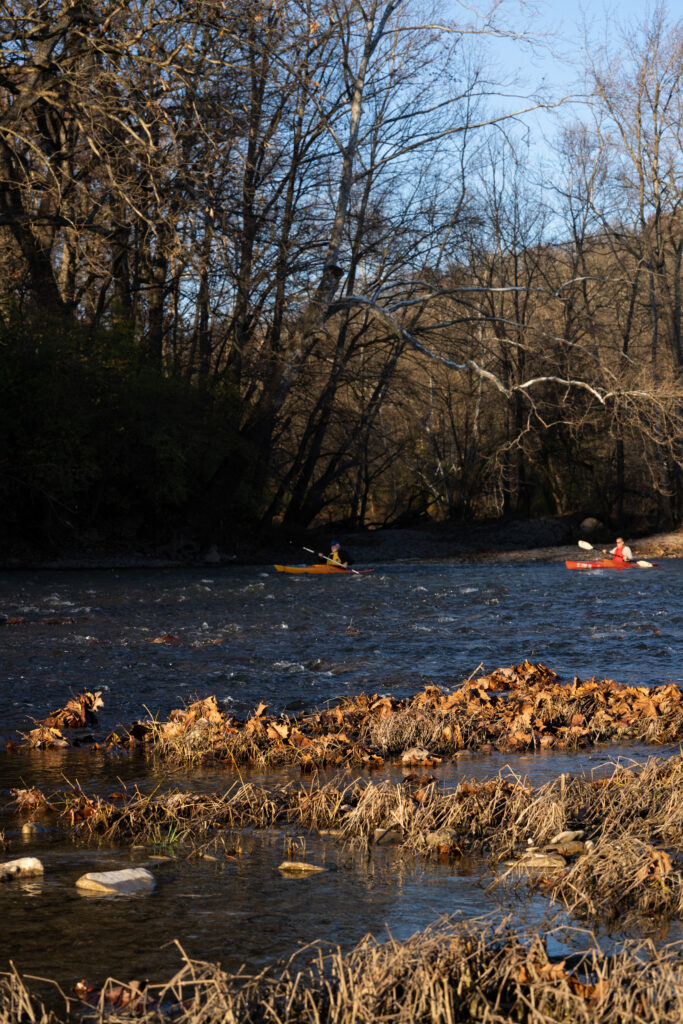
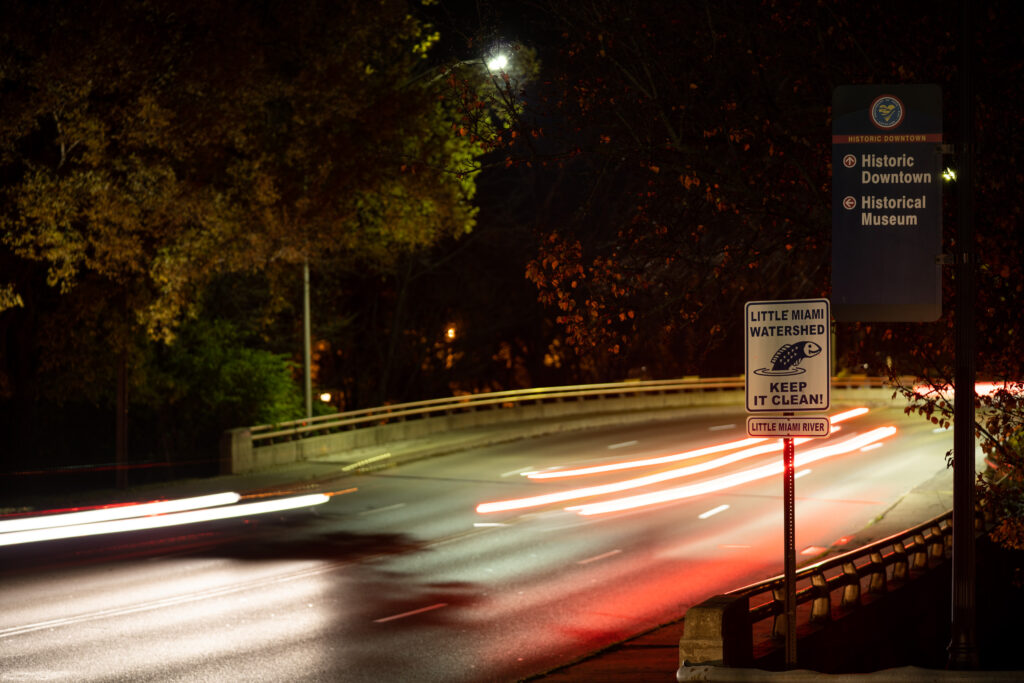
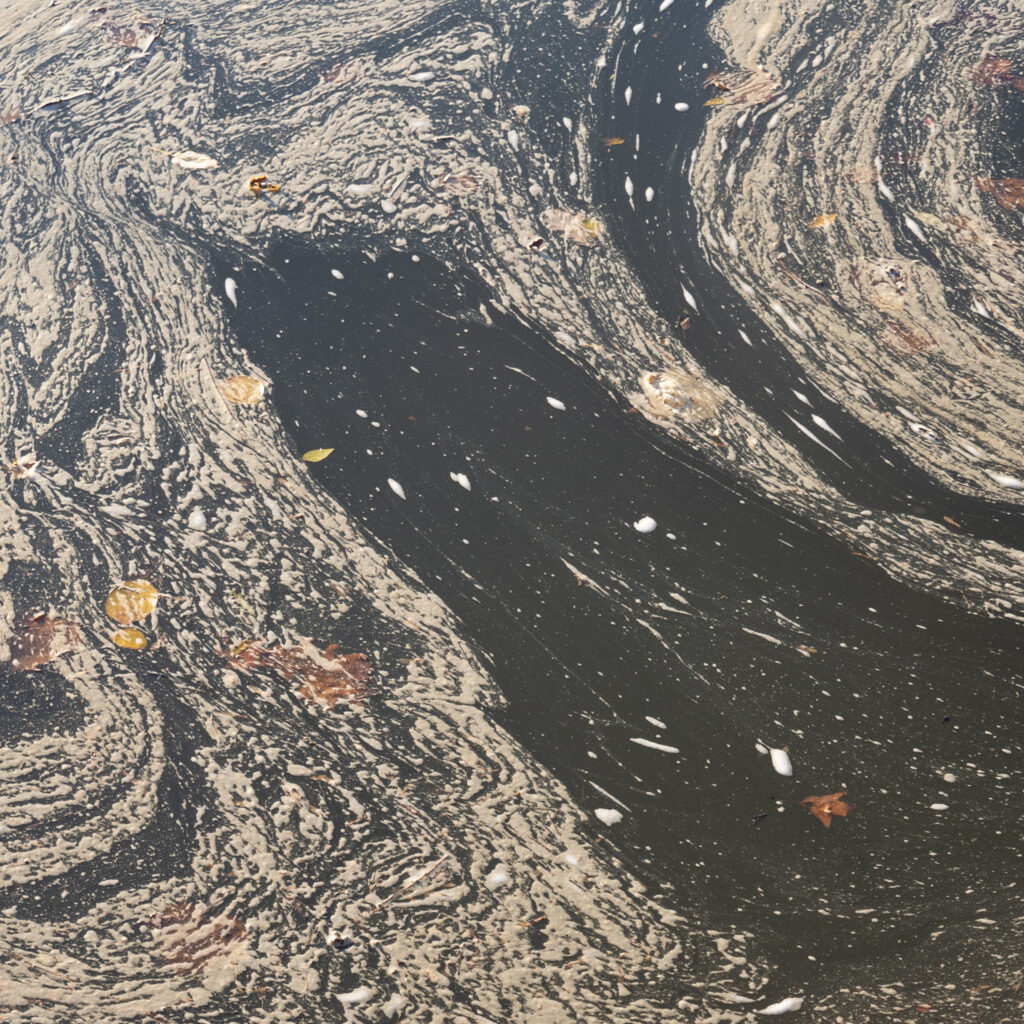
Few leaves are still falling off trees and down the ever-running water of the National Wild and Scenic Little Miami River, where they float through five counties and 111 miles of southwest Ohio, into the Ohio River and toward the Mississippi before eventually finding their way into the Gulf of Mexico. Today, these 111 miles of Little Miami River are the cleanest that they have been in the last 40 years, and as the world may seem largely disconnected due to the coronavirus pandemic, a connection between people over time is helping to create the river’s lasting sustainability.
Since the end of the last Ice Age before this land was known as America, humans have lived along the Little Miami River and enjoyed the resources it provides — drinking the water alongside its banks while hunting for fish within, using the clay to build pottery or structures, and floating on the surface in kayaks or canoes like the leaves still do today. In that time, the river has seen many seasons of change, from shifts in human culture alongside its banks through community development to biological diversities in its rich, natural environment, according to the Little Miami Ecology and History report.
When the Little Miami was designated as Ohio’s first State Scenic River and included in the National Wild and Scenic River System in 1973, according to the Ohio Department of Natural Resources, locals had already been active in its conservation and return to sustainability for more than half a decade. The Little Miami Conservancy (LMC), a non-profit organization fueled by passion for the protection of the river, led the effort in Washington to recognize the importance of protecting the Little Miami River as not only a local hidden gem, but as a national treasure.
The lower section of the river runs right through the heart of Loveland, Ohio, where LMC and its current executive director, Eric Partee, is based. Partee’s passion roots from the original director of the conservancy, Glenn Thompson, who in 1967 embodied the idea that their effort isn’t about one single person, but rather about everyone coming together to save the river.
“Someday, a corridor of green will stretch from one end of the river to the other. Individuals and families will enjoy peace and quiet and restoration of spirit that comes with clean water, birds, and trees,” a quote from Glenn Thompson that Partee believes the conservancy has lived up to.
Since its origin, the conservancy has worked with agencies like the Ohio Environmental Protection Agency (OEPA), who records the condition of the Little Miami River every 10 years by sampling fish life. In the 1980s, only 4% of the Little Miami River was in full attainment of water quality health, but in recent years, the chart has flipped, and as of 2007, the river is at 96% attainment of health, according to OEPA research.
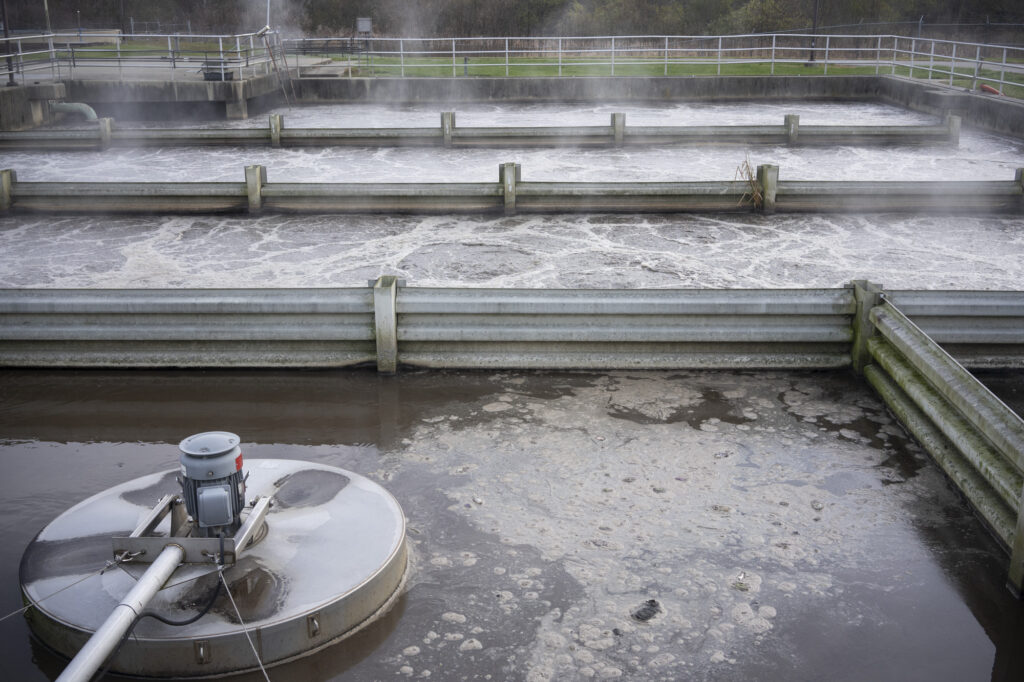
“As early as the turn of the century, this river was very well polluted. (There were) a lot of deformed fish, it was not anything close to exceptional,” Partee said in an interview. “It took a lot of discussion, a little bit of arm twisting, and some local funding to fund improvements to the sewage treatment plants to ratchet down on phosphorus, which was the main culprit … when we got the treatment plants to ratchet down on that, biology basically turned around on a dime —from terrible to exceptional.”
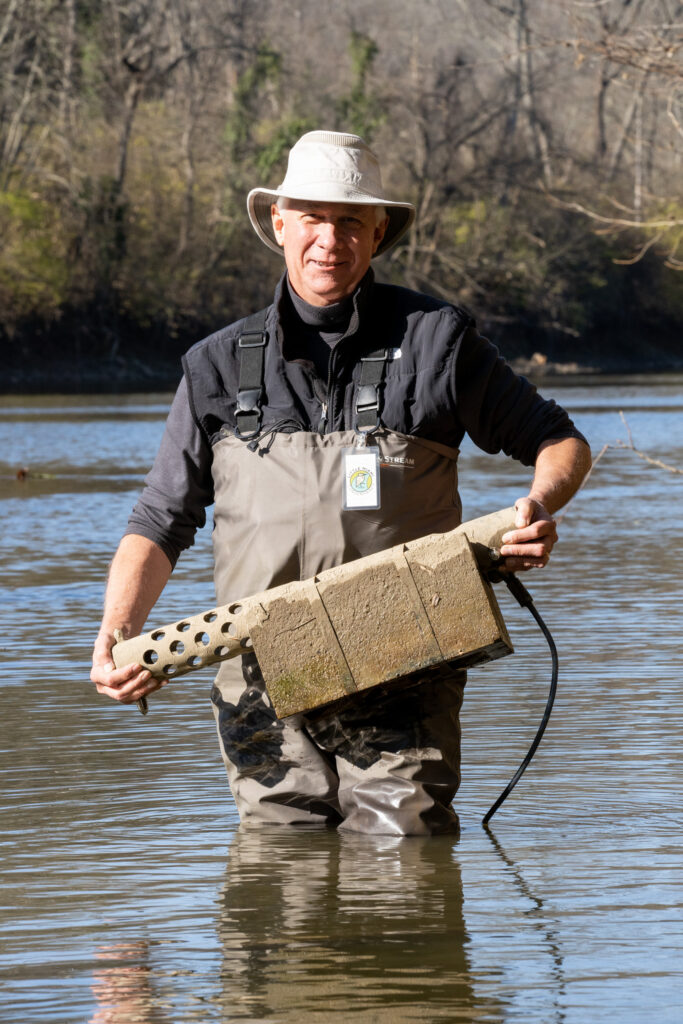
To make sure the river stays healthy, LMC introduced a set of equipment called YSI Water Quality Sondes, which monitor dissolved oxygen in nine locations throughout the length of the entire Little Miami, according to Partee. Each system monitors oxygen every 15 minutes, allowing for constant awareness of river health to prevent a reversion of quality. The conservancy also takes prides in their work on forest restoration through buying riverfront properties, planting trees, removing invasive species, and working collectively to clean up trash in the effort to grow closer to the initial goal of a corridor of green along the riverbank.
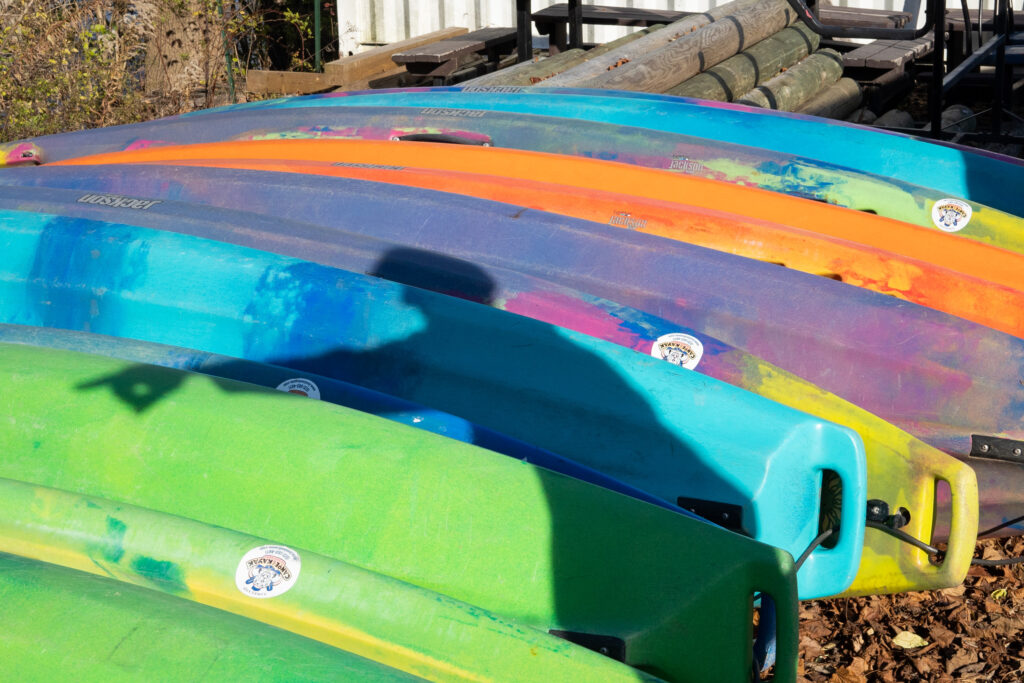
A short walk from the doors of the conservancy is the Loveland Canoe and Kayak Livery, owned by Mark and Robyn Bersani, which is just one of the many businesses along the Little Miami River that rely on its health as their main resource for income. The Bersanis work closely with the conservancy each year by offering and volunteering for cleanups as well as generous donations. This year, along with two other liveries including Rivers Edge and Scenic River, their combined donation to the Little Miami Conservancy’s effort was $56,000, according to Bersani.
“We’re involved from a grassroots portion, to actually helping with cleanups, to keeping an eye on the river, as well as donating and continuing to fund the good work that they do,” Bersani said in an interview. “It comes down to the people that live along the river, people that visit the river, the people in the community, if the river is going to stay clean. This river is very natural, it looks like it did 300 years ago … it is vital that the citizens all realize they have a role in this.”
Up the road at Loveland High School, Amy Aspenwall, an AP environmental science teacher teaches teenagers the importance of environmental awareness through hands-on experiences in places like the Little Miami River.
Perhaps half of the students attending Loveland High School cross over the Little Miami State and National Scenic Little Miami on their way to school each morning.
In an interview over Zoom, Aspenwall talked about the importance of students getting out into nature to actually see how humans fit in the environment, because “if you don’t see it, it’s really not your problem,” Aspenwall said. From understanding food waste to the water drinking system to sewer treatment facilities, her goal is to allow students the opportunity to realize a sense of civic responsibility.
“It’s important for students to start to think of themselves as a bigger picture rather than just someone following teacher instructions,” Aspenwall said. “I want them to start thinking on their own and realize how powerful they are as a consumer.”
Michelle Waller, an environmental specialist in the Division of Surface Water at OEPA, discussed the difficulties the river has faced through poor nutrients entering the river due to excess phosphorus from treatment plants and still faces through agricultural runoff from farms, in an interview over Zoom.
Waller said that placing phosphorus limits on the main stem’s water treatment plants in recent years proved to show major improvements in river nutrients after the OEPA performed sampling, but other negative sources are out of their reach. “We do not have authority over agriculture the way we do with what we call point sources, the treatment plants,” Waller said. “We try to work with local Soil and Water Conservation Districts, they try to get the word out about good farming practices … but there is no real regulatory authority which is a really big problem.”
The majority of land along the Little Miami River is agricultural, unlike other major rivers in Ohio that have industry running alongside their waters. And just like the branches of community that have come together to help preserve the river, many tributary streams and creeks branch out from the Little Miami, though those tributaries can be overlooked.
As most organizations, including the OEPA and LMC, focus their efforts on upholding the exceptional quality of the main stem of the Little Miami River, there is still work to be done in the tributaries. Partee talked about how there just isn’t enough time for LMC to visit every tributary and talk to every landowner. However, near Beaver Creek in Greene County, there is an organization called the Beaver Creek Wetlands Association, which has adopted that very issue. “I think that’s probably the best future for the watershed, to have local citizens dealing with multiple tributaries and try to restore or protect it,” said Partee.
Between the shared relationships of the Little Miami Conservancy, OEPA, local government officials, developers, landowners, non-profits, teachers, and local business owners, a community has come together and worked toward the common effort to make a positive, sustainable change in the health of the river.
The timelessness of the Little Miami River will carry on as long as its water continues to run. And as it always has been, it’s still up to the people alongside the riverbank to make sure that the water runs clean for generations to come. As the late author Nelson Henderson said, and Eric Partee paraphrased when we talked together, “The true meaning of life is to plant trees, under whose shade you do not expect to sit.”
Loveland, Ohio – The Ohio Department of Natural Resources has notified City Hall that the Loveland Bike Trail bridge over O’Bannon Creek, near Nisbet Park, will be closed for three days to conduct a feasibility study and soil borings for future repairs.
The closure is expected during the week of July 27th.
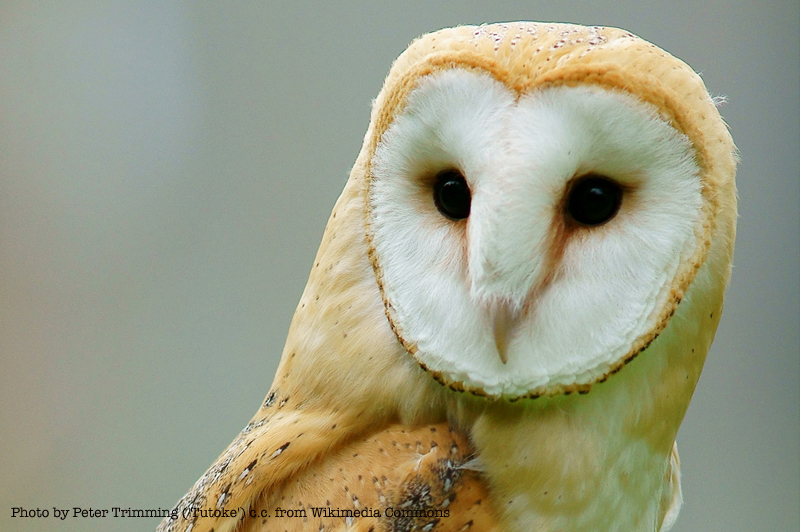
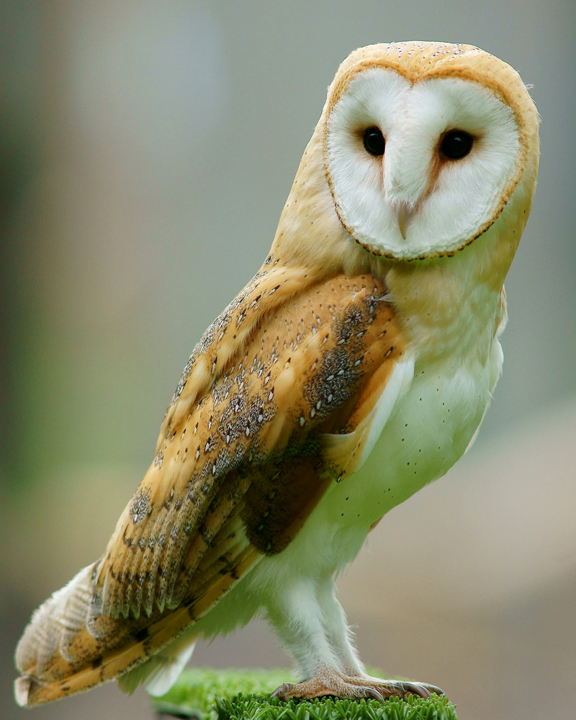
Loveland, Ohio – Shannon Russell Pennington is the Staff Naturalist with the Warren County Park District and tells Loveland Magazine the District had a potential sighting of a barn owl near Davis and Rich Roads. The Ohio Department of Natural Resources (ODNR) is interested in tracking this threatened species. She said, “So I was wondering if anyone else has seen or heard one recently. If so, we may be able to get some nest boxes installed by ODNR nearby.”
All About Birds says that you might find them by “listening for their eerie, raspy calls, quite unlike the hoots of other owls.”
“If any of your readers have seen or heard this bird, or know where it might be nesting, can you please let me know? This would be an exciting discovery for our area,” said Russell Pennington.
Photo by Peter Trimming (‘Tutoke’) c.c. from Wikimedia Commons
The bird has been spotted in White Pines and Columbia Farm neighborhood.
Russell Pennington added, “A couple of other people have chimed in that they have seen it near Nisbet Park in Downtown Loveland as well.” She is trying to pinpoint locations of sightings so they can give ODNR the most accurate information she can gather.
“I’ve had sixteen people get in touch so far, saying they’ve either heard it or seen it in the area. I’m going to reach out to ODNR tomorrow and see exactly what info they would like people to report. For now, feel free to have people reach out to me, Shannon Russell Pennington, Warren County Park District Naturalist, at MotherNaturesClassroom@gmail.com.”
She is currently keeping a list of where and when it has been observed. “If anyone has pictures, video, or a sound recording of it, that would be very helpful for documentation,” said Russell Pennington.
Use this resource from All About Birds to help identify the barn owl.
Barn Owl – Tyto alba
Overview from ODNR Division of Wildlife:
Perhaps no other animal is more a part of folklore and superstition than the owl, and it is likely the behavior of the barn owl is one of the reasons. The barn owl likes to haunt old buildings like barns, church steeples or abandoned houses. In reality, having a barn owl roosting nearby is more helpful than haunting. While barn owls may be no wiser than the average bird, they are good at catching mice and other small rodents that can sometimes be a problem for people. You may have never seen a barn owl; they are nocturnal hunters, flying at dark over Ohio farm country in search of prey. Barn owls are rare in Ohio and are listed as a threatened species.
Loveland, Ohio – The City was notified in November that its NatureWorks Grant application was approved by the Ohio Department of Natural Resources (ODNR). The grant amount of $18,294 will
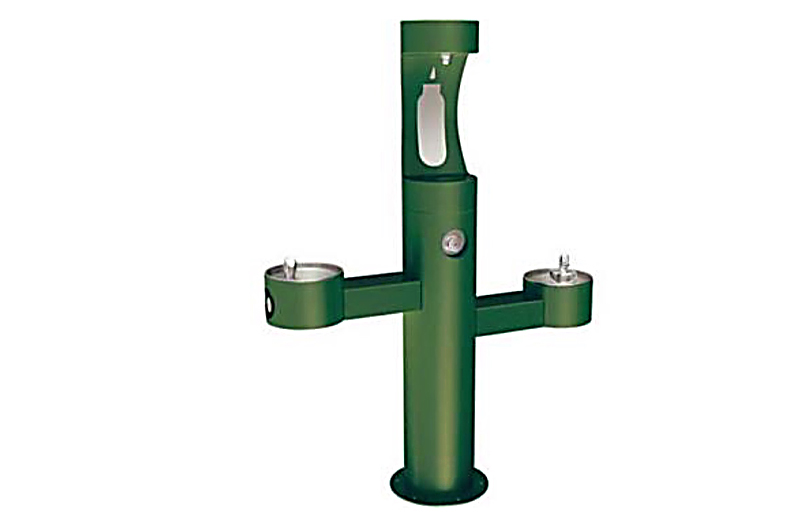
include a local match of $6,098 to complete repairs to the Nisbet Park restrooms. Repairs include roofing, exterior doors, interior/exterior painting, skylights, and lighting. Also included in the project, is a new ADA compliant drinking fountain with bottle filler.
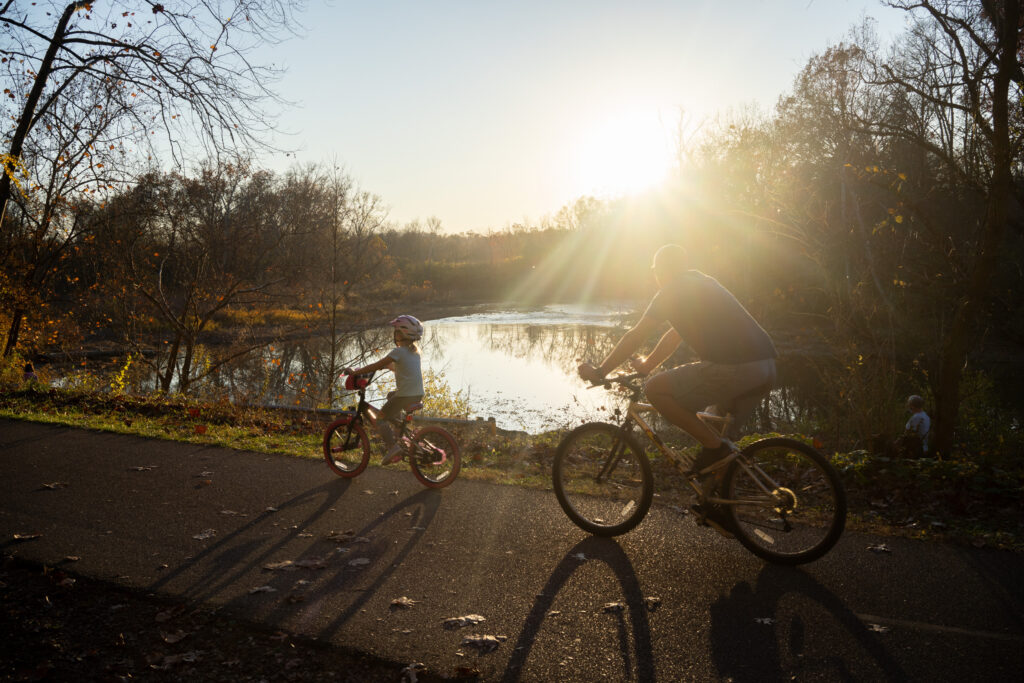
Nisbet Park is the heart of what local folks have always called the “Loveland Bike Trail”, and where the Little Miami Scenic Trail was first paved in 1989. Construction of the first paved miles of the Little Miami Scenic Trail began in Loveland and headed north into Warren County to Morrow. For decades the park and its related parking were the most accommodating spot on, and perhaps still the most popular place to access the trail. The trail runs parral to the Little Miami River along much of its length, a State and National Scenic and Wild River.
Dedicated on December 20, 1991, the Little Miami Scenic Trail runs from Spring Valley in Greene County to the limits of Terrace Park. The Little Miami Scenic Trail is the third-longest paved trail in the United States, running 78.1 miles (125.7 km) through five southwestern counties. Most of the trail runs along the banks of the Little Miami River, in a dedicated, car-free corridor known as Little Miami State Park. The Little Miami Scenic Trail is signposted as State Bike Route 1 south of Xenia and State Bike Route 3 throughout. It is the backbone of a nearly continuous network of paved multi-use trails, centered on the Miami Valley area, that stretches 330 miles (530 km) and connects the Cincinnati, Dayton, and Columbus metropolitan areas. The Little Miami trail is an incrementally growing section of the Buckeye Trail and North Country National Scenic Trail, while the trail south of Xenia also forms the southern leg of the Ohio to Erie Trail. Together with the Ohio Department of Natural Resources, the local governments of Xenia and Yellow Springs purchased land along the abandoned railroad from 1973 to 1983. In 1979, the land became an Ohio State Park. The Loveland Bike Trail was added to the state park in 1984*



 The bridge, just north of Nisbet Park, will be replaced by the Ohio Department of Natural Resources. There is no designated detour, but the trail will remain open both south and north of the closing.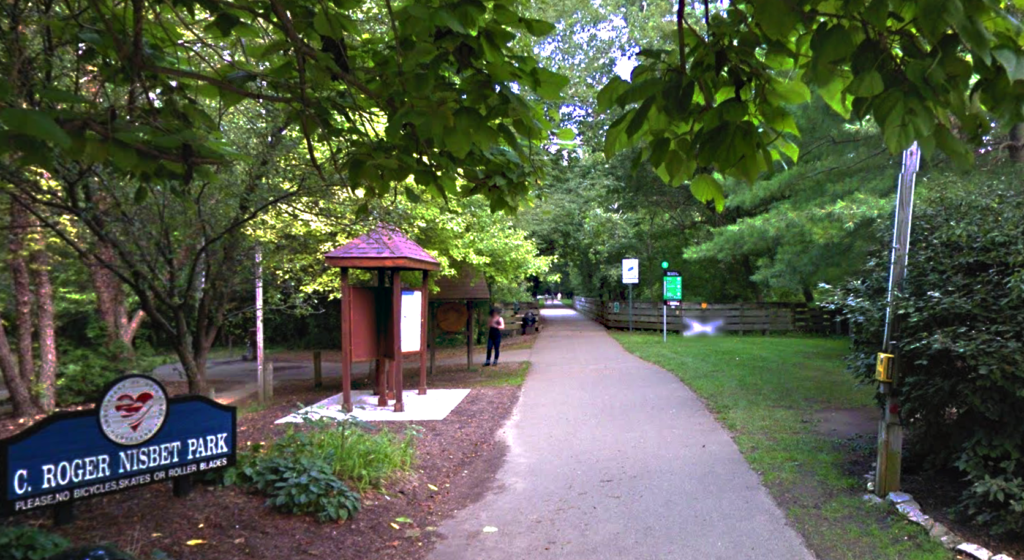



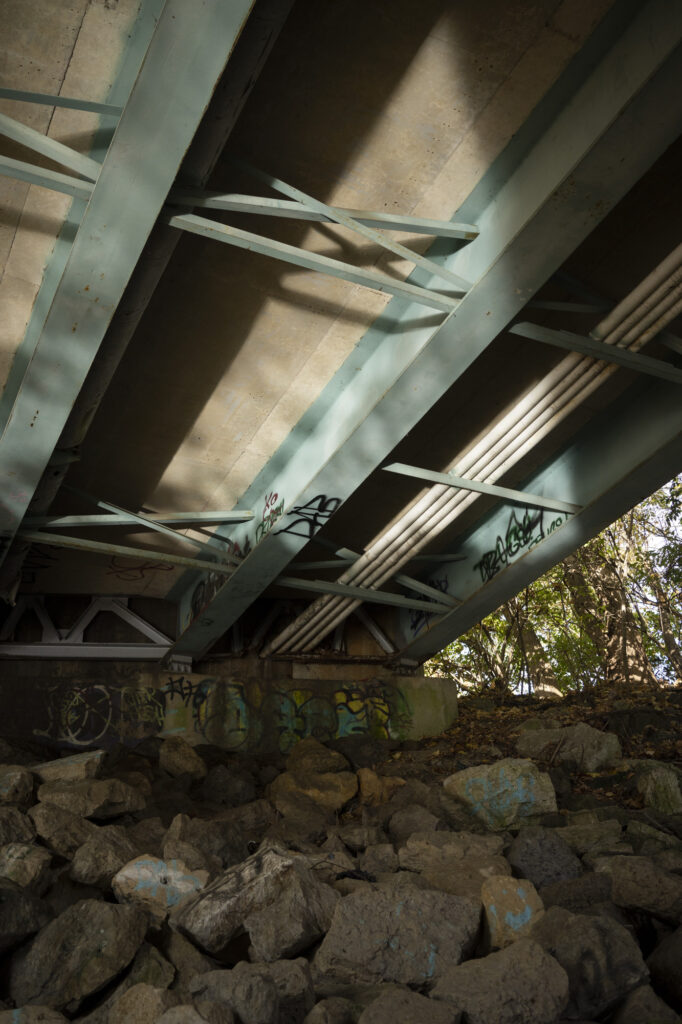
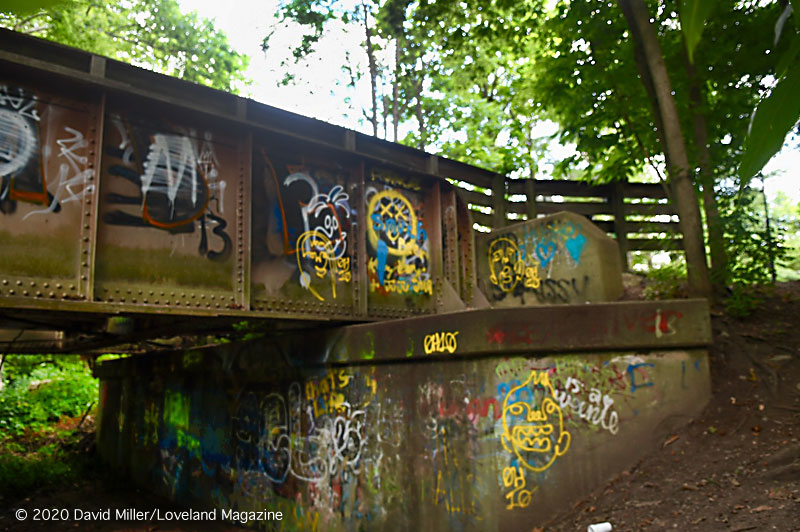
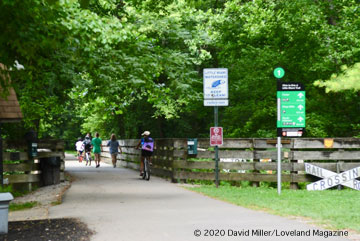 Loveland, Ohio – The Ohio Department of Natural Resources has notified City Hall that the Loveland Bike Trail bridge over O’Bannon Creek, near Nisbet Park, will be closed for three days to conduct a feasibility study and soil borings for future repairs.