Tag: Ohio families

  • Ohio families with transgender children relieved DeWine vetoed HB 68, worry about potential override

    Ohio families with transgender children relieved DeWine vetoed HB 68, worry about potential override

    A transgender Pride flag is covered with the words “Hands Off Trans Youth.” (Photo by Greg LaRose/Louisiana Illuminator/States Newsroom)

    The Ohio House will be in session next Wednesday and the Senate’s next scheduled session is Jan. 24.

    BY:  Ohio Capital Journal

    The Burkle family huddled together to watch last week’s press conference where Ohio Gov. Mike DeWine vetoed a controversial bill that would have banned gender-affirming care for transgender youth.

    “It was a brief sigh of relief,” mom Alicia Burkle said. “We were crying and hugging.”

    Their 10-year-old daughter Astrid has socially transitioned, but has not yet started puberty blockers.

    Ohio House Bill 68 would prevent transgender athletes from playing women’s sports and would ban transgender youth from accessing gender-affirming care, including puberty blockers and hormone therapy. DeWine said during last week’s press conference his focus was on the health care component of the bill.

    The Burkles figured they had a couple of weeks before the lawmakers returned from winter break, but the Ohio House announced they will have session next Wednesday, Jan. 10. The Ohio Senate’s next schedule session is Jan. 24.

    “It’s just so hurtful and it’s exhausting,” Burkle said.

    The Ohio Capital Journal talked to three families with transgender children who were relieved DeWine vetoed HB 68, but are now concerned the legislature could override his veto.

    “We do know that this was a math problem also and that the veto was not necessarily the end,” said Nick Zingarelli, the father of a transgender teenager.

    A three-fifths vote of the members of the House and Senate is necessary to override the governor’s veto — meaning 60 representatives and 20 senators.

    HB 68 passed in December with 24 votes in the Senate and 62 votes in the House. State Sen. Nathan Manning was the lone Republican senator to vote against the bill in December. Republican state Reps. Jamie Callender and Brett Hillyer voted against the bill when it originally passed the House with 64 votes in June.

    Ohio House Speaker Jason Stephens, R-Kitts Hill, said last week he was disappointed in DeWine’s veto.

    “We will certainly discuss as a caucus and take the appropriate next steps,” Stephens said in a statement.

    Burkle family

    When the Ohio House and Senate passed HB 68 on Dec. 13, the Burkles launched into action mode by asking their doctor what next steps they can take as well as emailing and calling DeWine. Astrid even sent DeWine some handwritten letters.

    “We really didn’t get to truly enjoy the holiday because we were just so anxious about what was going to happen,” Alicia Burkle said.

    Astrid is not currently on puberty blockers and wouldn’t be covered under the grandfather clause that would allow doctors who already started treatment on patients to continue.

    “We don’t know that she would be (on puberty blockers) before the bill were to take effect, if it were to pass,” Alicia Burkle said.

    DeWine said he would pursue administrative rules banning gender-affirming surgery on minors, collecting data, and combating clinics that might pop up to try to perform ideologically-driven care. No Ohio children’s hospital currently performs gender-affirming surgery on those under 18.

    “Those are all really reasonable concessions,” Burkle said.

    The Cleveland-area family doesn’t want to move out-of-state, and hopes it doesn’t get to that point.

    “It’s certainly one of the options that we’re keeping open if that’s what we’re forced to do,” Burkle said.

    The Scagliones

    While Kat Scaglione was impressed with DeWine’s veto, she said it feels like sitting in limbo waiting to see what happens next.

    “What if this override happens?” she asked. “It feels like we’ve almost backpedaled and we’re back to where we started.”

    She has a 14-year-old transgender daughter, a 13-year-old cisgender son, and a 10-year-old transgender daughter.

    Amity, 14, is past the point of being able to get puberty blockers and is waiting on hormone treatment.

    “I am supposed to be worrying about the next test I have to study for,” Amity said. “Not whether my rights are going to disappear. …  It’s very scary to have that thought looming over your head, like all the time.”

    Kat said waiting on the governor’s decision overshadowed the holiday season.

    “My kids were sitting there writing Christmas lists and writing letters to send to the governor and to the representatives,” she said. “It didn’t feel like much of a holiday this year.”

    Zingarelli family

    The Zingarelli family celebrated DeWine’s veto.

    “It was we’re going to take the next few days just to savor this victory, because it was a huge victory,” father Nick Zingarelli said.

    His 14-year-old daughter is treated by Cincinnati Children’s Hospital Medical Center, so she would be able to continue receiving care under the grandfather clause but he wants to make sure all Ohio kids would have access to this kind of care.

    He hopes DeWine’s veto will give other Republican lawmakers pause.

    “I would hope that they would listen to the elected leader from their own party, and then consider that and say, ‘Am I on the wrong side of this issue?’ … We’re not gonna roll over on this battle. If they win in the legislature, we will see them in court,” he said.

    Follow OCJ Reporter Megan Henry on X.

    ___________

    Megan Henry
    MEGAN HENRY

    Megan Henry is a reporter for the Ohio Capital Journal and has spent the past five years reporting in Ohio on various topics including education, healthcare, business and crime. She previously worked at The Columbus Dispatch, part of the USA Today Network.

    MORE FROM AUTHOR

  • Feds to provide $50M in food assistance to Ohio

    Feds to provide $50M in food assistance to Ohio

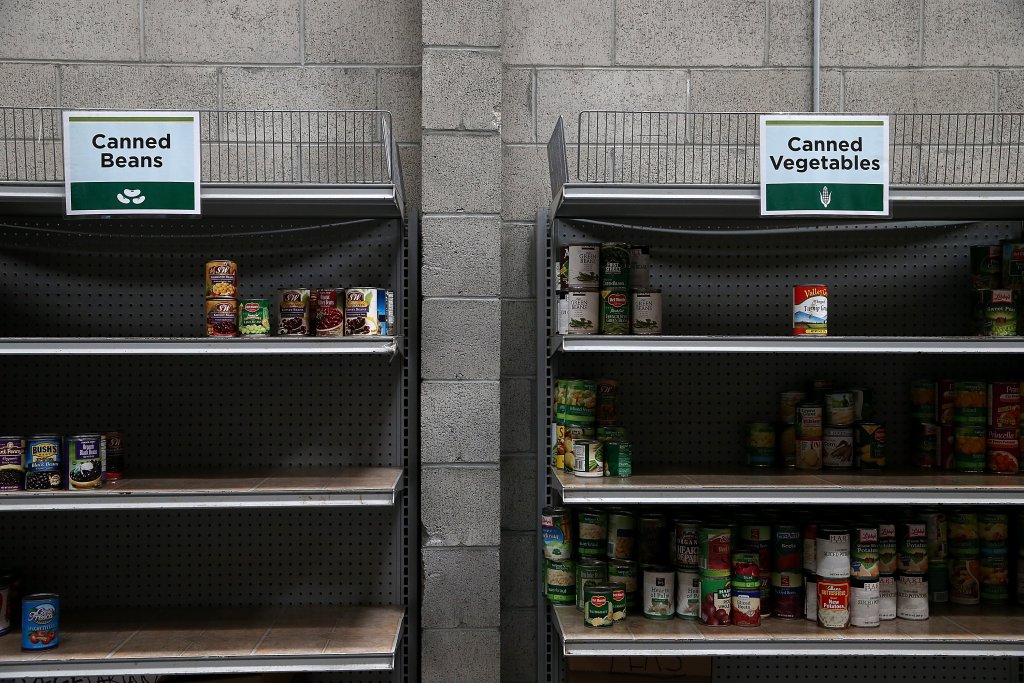
     Shelves of canned foods sit partially empty. Photo by Justin Sullivan/Getty Images.

    BY: MARTY SCHLADEN Ohio Capital Journal

    Ohio’s foodbanks say they’re desperate as summer is turning to fall. Demand has skyrocketed with increasing food costs at the same time that their resources have evaporated. And with current supply chain disruptions, they need to order food now if they hope to have it when winter comes.

    And even though the state is sitting on unprecedented fund balances of $7.4 billion and another $1.3 billion in unexpended American Rescue Plan Act funds, the administration of Gov. Mike DeWine so far hasn’t answered the foodbanks’ entreaties for $50 million in emergency assistance.

    The U.S. Department of Agriculture partially answered that call on Wednesday when it announced that it would put up nearly $1 billion nationally to purchase food for emergency providers such as foodbanks. Another $500 million will go to emergency food systems so they can buy commodities themselves. And $500 million will go to school lunch and breakfast programs, the USDA announced.

    “Food banks and schools are the backbone of our nutrition safety net, serving tens of millions of children and families,” Stacy Dean, Deputy Under Secretary for Food, Nutrition, and Consumer Services, said in a statement. “The Biden administration understands that supply chain disruptions and high food costs have created uncertainties for these crucial partners, and we are committed to equipping them with the resources they need to keep communities fed, strong, and healthy.”

    In a joint statement, the Ohio’s Foodbanks said that Ohio will get $50 million worth of help starting next year.

    “For many months, our foodbanks have been strained nearly to a breaking point,” the foodbanks said. “Some are operating in deficit budgets, purchasing food just to keep enough balanced products on the shelves for our hunger-relief partner organizations and the people we serve together. We have been buying more privately purchased food than ever before, at record prices. Just like Ohio families, foodbanks have been paying higher rates to keep our coolers on, our day-to-day operations afloat, and our trucks moving.”

    In an email, Ohio Association of Foodbanks Executive Director Lisa Hamler-Fugitt stressed that the federal assistance likely won’t come until January and Ohio foodbanks’ needs are immediate.

    “We need food now to meet the increasing need,” she said. “We have also requested that (Agriculture Secretary Tom) Vilsack send letters to the governors urging them to use ARPA funding to support foodbanks and emergency food assistance programs.”

    In their joint statement, the foodbanks made a similar appeal.

    “We want to be ready to distribute this food to Ohio families and balance the limited menu of USDA commodities with Ohio-grown, raised, and produced foods, and that’s where the state of Ohio can join with us,” it said. “By matching this $50 million investment by USDA with $50 million in the state of Ohio’s ARPA funds, Gov. DeWine and members of the Ohio General Assembly can ensure that the Ohioans hardest hit by the pandemic and ongoing economic uncertainty can count on us for the help they need in the future. 

    “Immediate ARPA funds will prevent a bleak holiday season, as well as help our network reinforce its storage and distribution capacity for the months ahead and support Ohio agriculture. We look forward to working with our state and federal partners to continue to keep our communities’ needs met.”

    Follow Marty Schladen on Twitter.

  • What’s at stake for Ohio families as the monthly child tax credit payment ends?

    What’s at stake for Ohio families as the monthly child tax credit payment ends?

    Commentary by Will PetrikOhio Capital Journal

    As we start the new year, parents are planning for the future and working hard to provide their kids a great quality of life. They’re facing challenges head on, including a surging pandemic, school closures and at-home schooling, and fewer affordable child care options.

    No child should go to bed hungry, and no parent should worry about keeping a roof over their head. But many of the same politicians who refuse to make the wealthy and corporations pay their fair share have failed to prioritize the stability, economic security, and dignity of children and families.

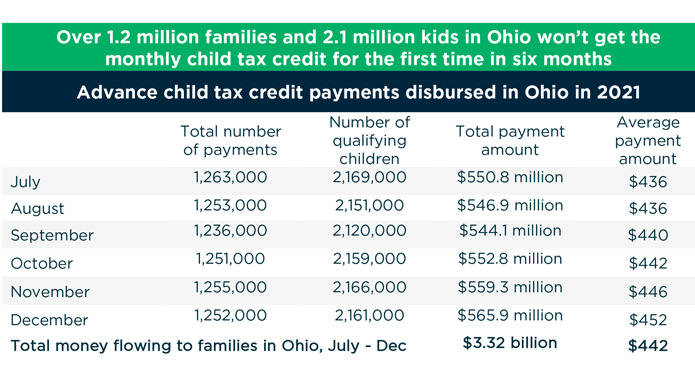
    The latest census data show an estimated 811,000 adults in Ohio didn’t have enough food to eat in the last week. An estimated 2.4 million adults had difficulty paying for usual household expenses in the last seven days. On top of that, Jan. 15 was the first time over 1.2 million families in Ohio didn’t get the monthly child tax credit payment since July 2021, because the Senate didn’t pass the Build Back Better legislation before the end of last year.

    The monthly payments provided many Ohio families relief from stress by helping them pay for the basics such as food, rent, clothing, phone, internet, and educational expenses. It helped more families get enough to eat and fewer adults with children reported having trouble paying for basic household expenses.

    The child tax credit helped Sophia Whitehouse, from central Ohio, start her own business providing mental health services to children. Before the child tax credit, it was nearly impossible to balance her work and care for her children.

    “The child tax credit has been a tremendous help paying for preschool and child care for my two kids under 5,” Ms. Whitehouse said. She said that losing the credit means she will have to sacrifice time dedicated to serving the community’s mental health needs, which will hurt her family’s income. “I will not be able to work as much, because I won’t have child care,” she said.

    Jason Carter and his wife live in Cincinnati. They had a baby girl at the end of July 2020. The monthly child tax credit payments provided a sense of peace for Mr. Carter and his wife because it was a chunk of money they didn’t have to stress about every month. “It helps us to survive, to plan and have hope for an improved quality of life in the future,” he said.

    Along with thousands of other Ohioans, Carter was laid off during the pandemic. He found a new job, but said it pays half as much. The child tax credit helped the Carters make up the difference. Now that payments have stopped, Mr. Carter said they could be forced to put some of their plans on hold, such as buying a new home.

    “This is a dream my wife and I have talked about for years, he said. “Now that we have our baby girl, we want to provide a home for her to grow up in, have a yard for her to run around in, to be happy, and to invest in ourselves. Without the child tax credit, the future we have dreamed about doesn’t seem as solid. It’s something that worries us. We’ve been working so hard to improve our quality of life. Now they throw another roadblock at us. How am I supposed to achieve the American dream?”

    https://youtube.com/watch?v=pNwZf7K4WrE%3Ffeature%3Doembed

    By letting 2021 end without passing the Build Back Better Act, certain Senators have pulled the rug out from under the Whitehouse family, the Carters, and millions of families across the country. Just as parents are facing increasing heating and food costs, they are losing the monthly child tax credit, which has provided Ohio families with an average of $442 a month since July of last year.

    “How am I supposed to achieve the American dream?”
     Source: U.S. Department of Treasury, “Advance Child Tax Credit Payments Disbursed each Month, by State,” accessed on January 10, July, August, September, October, November, and December https://bit.ly/2XGh9Gv

    The Senate must deliver for families. They must pass Build Back Better and make sure the expanded child tax credit is included in the legislation. Until they do, families will miss out on monthly tax credit payments that made a real difference in their lives.

    For Mr. Carter, Ms. Whitehouse, and millions of other parents and families across Ohio and the nation, there’s so much at stake. This is about security, opportunity, and parents’ dreams for the future. Our nation has the resources to provide stability and security for all families, but we now need the political will.