Another bill has entered the Ohio General Assembly in an attempt to address student hunger in schools, this time in the form of a Democratic measure that would still hold households accountable for student meal debt, but keep the child from feeling the consequences.
State Reps. Darnell Brewer, D-Cleveland, and Ismail Mohamed, D-Columbus, introduced House Bill 97 in a Tuesday hearing of the Ohio House Education Committee. The bill would require public schools to provide a meal to any student and bars districts from requiring “chores” or other activities from students due to outstanding meal debt. The bill also requires the Ohio Department of Education and Workforce to “provide guidance” to districts and schools about the collection of student meal debt.
“It’s a really common-sense solution to something that has been happening for so long and has such a negative impact on kids,” Mohamed told the committee on Tuesday.
Brewer and Mohamed pointed to statistics in their testimony to the committee that show more than 1.6 million Ohioans are considered food insecure, with 1 in 6 children in the state living in poverty in 2023.
Brewer said ideally, the “most sustainable and compassionate way” to address the problem would be with mandatory participation in the federal Community Eligibility Provision – a program that allows schools with large numbers of low-income children to serve free breakfast and lunch to all students in the school – or with a universal breakfast and lunch program in the state.
The Community Eligibility Provision’s future is uncertain as federal budget reconciliation continues. Back in January, a document from the U.S. House Ways and Means Committee listed potential cuts to the national budget through reconciliation, which included raising the threshold for school districts to qualify for the provision.
Eligibility is based on the amount of households in a school and district that receive Supplemental Nutrition Assistance Program (SNAP) and Temporary Assistance for Needy Families (TANF) funding. The document release in January proposed raising the eligibility from 40% of students in a school who receive the program assistance, to 60%.
The Food Research & Action Center has said the changes to the provision, which it found served more than 23 million children nationwide in the last school year, would “worsen childhood hunger, hurt struggling families and create unnecessary burdens for schools and districts.”
“Community eligibility is a proven success, ensuring tens of millions of students have access to nutritious meals while easing burdens on families and schools,” said Crystal FitzSimons, interim president of FRAC in a Tuesday statement on the provision’s uncertainty. “Instead of cutting community eligibility, (federal) lawmakers should be expanding it to allow more high-need schools and districts to adopt the options.”
Ohio-specific data on the impact of the provision from the Food Research & Action Center and the Center on Budget and Policy Priorities found the cuts would mean 728 schools in the state would not be able to provide free school meals, and more than 287,000 children would no longer have access to free meals through the provision.
GET THE MORNING HEADLINES.
Columbus Public Schools alone would see 110 schools and more than 44,000 students impacted by the changes, if implemented.
The sponsors said Ohio’s H.B. 97 wasn’t a way to allow parents and guardians to be released from the debt they owe, considering districts have to pay the debt whether the parents are accountable or not.
“We’re not letting the parents get away with the debt, what we’re saying in this bill is that the student will still be served,” Brewer said.
The bill is a way to get food that is already ready to be served to the students to those kids without the recognition that a student is part of the federal National School Lunch Program, or any other program that provides students from low-income households access to lunch at no cost or a reduced cost.
“All it does is just refocus where our priorities lie,” Mohamed said.
Schools would be prohibited from discarding a meal because the student isn’t able to pay for it, and it would ban “publicly identifying or stigmatizing a student who cannot pay for a meal or owes a meal debt,” according to an analysis of H.B. 97 by the Legislative Service Commission.
Guidance from the ODEW about school debt would include “best practices” and information on the establishment of an online system to allow payment of the debt, under the bill.
The bill comes shortly after comments were made by House Speaker Matt Huffman, R-Lima, rebuffing efforts to create a universal school breakfast and lunch program. According to reporting from the Statehouse News Bureau, Huffman made comments last week that a program like that would have a “huge amount of waste,” and many Ohio parents can pay for breakfast and lunch already.
A member of Huffman’s own party is part of a bipartisan effort that would do just that, and the public has expressed support for such a program. The legislature seemed to be somewhat swayed as well, at least in the previous state operating budget, when eligibility for free lunches was raised to include those who qualified for reduced-price lunches. It fell short of hopes for a universal meal program, but was praised as progress when the measure was implemented in the budget.
State Sen. Bill Blessing, R-Colerain Twp., who is a co-sponsor of the bipartisan bill to create a universal school meal program, said he wants to push for the language of his bill to appear in the new state budget, which is currently in the legislature, pushing toward a July 1 deadline.
YOU MAKE OUR WORK POSSIBLE.
_________________
Susan Tebben
Susan Tebben is an award-winning journalist with a decade of experience covering Ohio news, including courts and crime, Appalachian social issues, government, education, diversity and culture. She has worked for The Newark Advocate, The Glasgow (KY) Daily Times, The Athens Messenger, and WOUB Public Media. She has also had work featured on National Public Radio.
Ohio Capital Journal is part of States Newsroom, the nation’s largest state-focused nonprofit news organization.
Ohio lawmakers are trying again with measures to attack the child care crisis that advocates are warning continue to hurt the state’s families and economy, including with a bill that spreads the cost of child care out among employers, employees, and the state.
State Rep. Mark Johnson, R-Chillicothe, reintroduced a bill he said came “late in the game” last year, giving it an uphill battle to passage as the Republican supermajority sought to close up the General Assembly term with other priorities.
But Johnson’s bill is now Ohio House Bill 2, and has been introduced very early in the new General Assembly, with its first hearing in the House Children and Human Services Committee held on Tuesday.
This bill, and its companion bill led in the Ohio Senate by state Sen. Michele Reynolds, R-Canal Winchester, looks to direct $10 million to a “Child CareCred Program” within the Ohio Department of Children and Youth, to be distributed “on a first-come, first-served basis,” according to Johnson.
The bill models its child care program after Ohio’s TechCred program, which incentivizes employers to enroll employees in skill-building programs and connect them with credential providers in exchange for reimbursement.
The child care program would create an application process for employers who identify needs within their employees for child care assistance.
A program that engages the employer, the employee, and the state is Johnson’s way to address what he and child advocates say is a crisis that only hurts Ohio’s economy more the longer it goes on.
The average cost for child care has gone up on a yearly basis, and a 2024 report from Care.com found 1 in 5 American households are paying $36,000 annually on care for their children.
“This financial strain has forced many parents, especially mothers, to reduce their working hours, or leave their jobs entirely to manage child care responsibilities,” Johnson said.
GET THE MORNING HEADLINES.
In some areas of the state, workforce participation rates are as low as 50%, according to Johnson, who said that while there are other reasons for a low participation rate, child care is a major reason parents are unable to work or are choosing to leave their jobs.
“If we want to remain known as a business-friendly state, we need to address the child care crisis,” the representative told the House committee on Tuesday.
Johnson mentioned the proposal by Gov. Mike DeWine in his proposed executive budget, released on Monday, to increase eligibility for publicly funded child care from 145% to 200% of the federal poverty level. But Johnson said that by just increasing the eligibility level “we are rewarding employers who pay meager wages.”
The Children and Human Services Committee chair, state Rep. Andrea White, R-Kettering, is no stranger to pushing the legislature to address the child care issue, having successfully championed a wide-ranging bill in the last General Assembly that directs different state agencies to study processes and programs on everything from infant mortality to child care programs such as Head Start.
Though she’s still hoping to see the funding that was left out of her bill come in the new operating budget, White isn’t done addressing aspects of child care and child welfare.
On Tuesday, White and fellow Republican state Rep. Sharon Ray, R-Wadsworth, introduced House Bill 7. The legislation seeks to “increase the number of stable, safe family foster homes and long-term kinship care options by providing publicly funded child care for children in the foster care system in these placements,” White told the committee.
Ray said that about 14,300 children are in foster care in the state, with 4,000 of those placed with a relative or family friend in kinship care.
“Across the board we have a need for more foster families, whether very young children or teens,” Ray said. “Let’s take the objections off the table by removing the things that get in the way for current and potential foster and kinship parents, so that more loving, caring families can say yes to our children.”
Both bills will see further hearings to allow supporters and opponents to give their opinions of the bills before they are voted on by the committee, and if approved, moved forward to votes of the full House.
YOU MAKE OUR WORK POSSIBLE.
_______________
Susan Tebben
Susan Tebben is an award-winning journalist with a decade of experience covering Ohio news, including courts and crime, Appalachian social issues, government, education, diversity and culture. She has worked for The Newark Advocate, The Glasgow (KY) Daily Times, The Athens Messenger, and WOUB Public Media. She has also had work featured on National Public Radio.
Ohio Capital Journal is part of States Newsroom, the nation’s largest state-focused nonprofit news organization.
When Kamala Harris was announced as the running mate for Joe Biden in the 2020 presidential campaign, the questions about her heritage, ethnicity and even eligibility for office came strongly from the opposition.
Now that she’s running for the top job following President Joe Biden’s suspension of his reelection campaign, the emphasis on her skin color and her gender has come back fast and furious, just as swiftly as the enthusiasm for her campaign brings big fundraising numbers to the camp.
A supporter holds a sign as members of the San Francisco Democratic Party rally in support of Kamala Harris. (Photo by Loren Elliott/Getty Images)
“The United States has conflicting traditions,” said Dr. Susan Burgess, distinguished professor emerita of political science at Ohio University. “One of rampant racism and misogyny, and another toward greater change and inclusion.”
U.S. Sen. J.D. Vance of Ohio, the vice presidential candidate alongside former president Donald Trump, added to the rhetoric in a 2021 clip that has been brought back up in light of his new role. In the clip from a Fox News interview, he mentions the fact that Harris (and others) has not birthed any children of her own (she has two stepchildren with First Gentleman Doug Emhoff), and criticizes Democrats as “a bunch of childless cat ladies who are miserable at their own lives and so they want to make the rest of the country miserable, too.”
The comments don’t surprise those who are a part of or study the history of political campaigns, where sexism and misogyny are “alive and well,” according to Ohio University history professor Dr. Katherine Jellison.
“A man running for office, I’ve never heard comments about him being a childless cat/dog/fish person,” Jellison said. “These double standards are so blatantly on display and voiced whenever we have a prominent woman running.”
‘Attacks on the person, not the policy’
For women currently in the state legislature, criticism based on gender and family is nothing new. Even in local campaigns, female politicians have been underestimated and questioned on their merits in ways they say they don’t witness in male campaigns.
The Capital Journal contacted every female state representative and senator in the Ohio General Assembly to talk about their experience campaigning and working in politics. Included in the those who responded were the leaders of the minority side in both chambers, House Minority Leader Allison Russo and Senate Minority Leader Nickie Antonio.
Consistently, those that responded said they have talked to constituents with all sorts of interests and issues, and worked with local campaigns or in favor of local issues before they worked their way up to state office. Also consistently, it was their community and their families that were their biggest advocates.
House Minority Leader Allison Russo, left, talks with Senate Minority Leader Nickie Antonio, as they await the start of the Sept. 13, 2023, Ohio Redistricting Commission meeting.
(Photo by Susan Tebben, Ohio Capital Journal.)
Often, the women who are now representatives and senators didn’t intend to pursue politics until they were encouraged to or an issue motivated them to action. For most, misogyny wasn’t blatant, but the fact that they worked among a “boy’s club” was still highlighted.
“People told me I couldn’t win because, you know,” Antonio told the Capital Journal. “And I would make them say what that was, and it was because I was a lesbian.”
She faced the criticism of being a woman running for office, but called it a “false narrative that some people embrace, that I think they want to hang on to because frankly, I think we’re better at the job.”
The first time state Rep. Sharon Ray, R-Wadsworth, campaigned back in the early 1990s, she said she knocked on the door of a man in her community. She explained that she was running for local office and had a conversation with him about local issues.
“At the end he said, ‘You seem nice and all, but I would never vote for a woman,’” Ray said. “I had to tell him, ‘Well you’re in a bad way, because the two people going up for this are both women.’”
State Rep. Bride Rose Sweeney fought against the fact that not only was she a woman running for office, but she was also a 25-year-old.
“Most people, when I’d go to the door, thought I was selling Girl Scout cookies,” she said.
Though she had worked as a staffer in the Statehouse and could point to quotes she’d written for elected officials, she still had to answer questions about her life experience.
“I was shocked at how many times they didn’t think I was the candidate,” Sweeney said.
As a single mom who had adopted her children from China, state Rep. Rachel Baker went through a similar struggle to other moms running for office, in that she balanced taking care of her family and campaigning.
But when Chinese flags appeared around her campaigns signs in the yards of her supporters, put there anonymously in the dark of night, she saw a different side of campaigning.
It’s such a paradox, (my children) are why I’m doing it, but it’s also why I’m scared to do it.
– State Rep. Rachel Baker, D-Cincinnati
Russo – who also ran for a congressional seat in the U.S. House in 2021 against U.S. Rep. Mike Carey – said when she talks to women who are contemplating running for office, putting themselves out there, and even more, putting their family in the public eye is high on the list of reasons not to.
“It’s that piece that is the hesitation: Am I willing to open up my family for the level of scrutiny and potential for harassment,” Russo said.
She and other moms who campaigned often had no choice but to bring their kids along as they talked to voters, because of partner work schedules or a lack of alternative child care. Sometimes, that worked to the candidate’s advantage.
“Voters appreciated that because I’m a real person just trying to balance all the things in my life,” Russo said.
Still, she was questioned about who would care for her children.
“I’m pretty sure my male counterparts never got that question,” she said.
Accidental advantages
Dealing with heightened scrutiny as a woman in public office can be a struggle, but it can also be something that feels familiar to women who have faced challenges their entire lives and for which women already have coping mechanisms.
“You can’t change your ethnicity or race or sex,” said state Sen. Paula Hicks-Hudson, D-Toledo. “I am who I am, and therefore you just have to deal with whatever those issues are.”
COLUMBUS, Ohio — MAY 10: State Rep. Bride Rose Sweeney, D-Westlake, speaks during the Ohio House session, May 10, 2023, at the Statehouse in Columbus, Ohio. (Photo by Graham Stokes for Ohio Capital Journal)
Nothing can prepare you for “people writing the most heinous things about you,” as Sweeney said of social media attacks, but for many woman public officials, life has prepared them to work harder than might be expected of others.
“We think that we have to check certain boxes to run, and the reality is most of us are overqualified for office,” Russo said. “The woman candidates that I’ve worked with are incredibly good at putting together teams and networks, and that’s something that I think is very intuitive for women.”
Antonio said women are often “auditioning long before we see ourselves in that role” as a leader in the community or in politics.
State Rep. Beryl Brown Piccolantonio, D-Gahanna, feels like “it’s much more relevant that I’m a woman” with the issues in the political spotlight these days, including reproductive health.
“I don’t think the legislature should be making decisions about people’s health, and the population that is directly impacted, I’m in it,” she said.
The state representatives and senators who talked to the Capital Journal had their start in smaller ways, whether it be working in the Statehouse, opening their houses for local candidate meet-and-greets, knocking on doors for local campaigns or volunteering in their children’s events. It was those efforts that gave them the inside scoop on the issues that were important to their neighbors and melded them into the community to the point that they would be encouraged to make bigger moves.
As a divorced young mom going to night school, one thing Ray liked to do with her free time was work on campaigns. In one Wadsworth race, the candidate left the race and after being encouraged to – and seeing an opportunity to help her son get his Boy Scout government badge – Ray decided to run.
Antonio was miffed after a pitch for her daughter and other Lakewood kids to have a safe place to skateboard fell to an uninterested city council, when the opportunity occurred to her.
“I came home and I said I’m sick of explaining what’s important in our community,” she said. “I could do that job, and I heard myself say I could do that job.”
Looking forward, reaching back
The road to November will be fast-paced for the Vice President and other women running for office, but there’s a sense of hope from public officials that more women will take up the cause, whether it be at a local, state or congressional level.
The women of the Ohio legislature emphasized the need for anyone seeking the job of representing their community to meet with those constituents, whether at campaign events or at the residents’ front doors.
State Rep. Beth Liston, D-Dublin, speaks at a rally to protect abortion rights. (Photo from General Assembly website.)
“When you run for office, you’re often running to represent specific values, and you definitely learn the values of your constituents when you knock on doors,” said state Rep. Dr. Beth Liston, D-Dublin.
Not only do you get to hear what the community needs from their legislators, but candidates get to explain their “why” when it comes to running.
“I know because of the sacrifices that I’ve made to be in this position that some lives are better and people’s voices get heard because of the work that I do, and that gets me up and going everyday,” Sweeney said.
Russo, Ray, Sweeney, Baker, Piccolantonio and Liston are all running for reelection to their districts in the November general election.
And while the differences may be the focal point of campaigns against candidates in a political climate the public officials acknowledged is divisive and “terrifying” in some ways, those differences are reason enough for women to enter races.
“I don’t think differences are deficiencies,” Hicks-Hudson said. “I think they add flavor.”
It’s those who already hold office that can make the difference in whether or not more women come into the political space, too, according to Antonio.
“I think it’s important for those of us who are in office to encourage it,” the minority leader said. “You have to reach back as you climb, and bring folks with you.”
Comments like Vance’s “childless cat ladies” statement only serve as motivation for officials like Sweeney who see more women in office as the way to “change the world.”
“To say that I have no stake in America, that I can’t contribute … (Vance) clearly hasn’t been around a lot of women and doesn’t respect them,” Sweeney said.
Parsing through the messaging
Throughout the next three months (and already this election cycle), voters will go through the process of making decisions about who and what they want to choose in the general election. That means parsing through the heavy load of information coming from all sides about how to feel about those candidates and issues.
As elected officials who have read and distributed their fair share of campaign info, the legislators said it’s important to form opinions based on resources voters trust, and nonpartisan research like voting guides from the League of Women Voters of Ohio.
But it’s also just as important to base decisions on the issues and values that matter most to each voter, and vet each candidate based on those specific values.
“I personally think the voters should be able to interact with the people that are wanting to represent them,” Piccolantonio said.
When it comes to the presidential race, self-reflection and a vision for the future come right along with diligent research.
We are at a critical time for finding out what the integrity of candidates are. As we go forward with this presidential election, let’s look at what does this country need, what should we be looking for when it comes to our next leader.
– State Sen. Paula Hicks-Hudson, D-Toledo
While some people might be looking for parity in representation, Antonio said she thinks some are ready “for a majority of women to be running things to right the ship.”
Right before Biden announced he would be abandoning his reelection bid, Antonio said she was pulled aside by a man who said, “Look, it’s time, can the women just … I know we’ve made a mess of this, could you just fix this for us?”
The Senate minority leader said she smiled.
“I looked at him and I said, ‘We’re working on it.”
______________
Susan Tebben
Susan Tebben is an award-winning journalist with a decade of experience covering Ohio news, including courts and crime, Appalachian social issues, government, education, diversity and culture. She has worked for The Newark Advocate, The Glasgow (KY) Daily Times, The Athens Messenger, and WOUB Public Media. She has also had work featured on National Public Radio.
Ohio Capital Journal is part of States Newsroom, the nation’s largest state-focused nonprofit news organization.
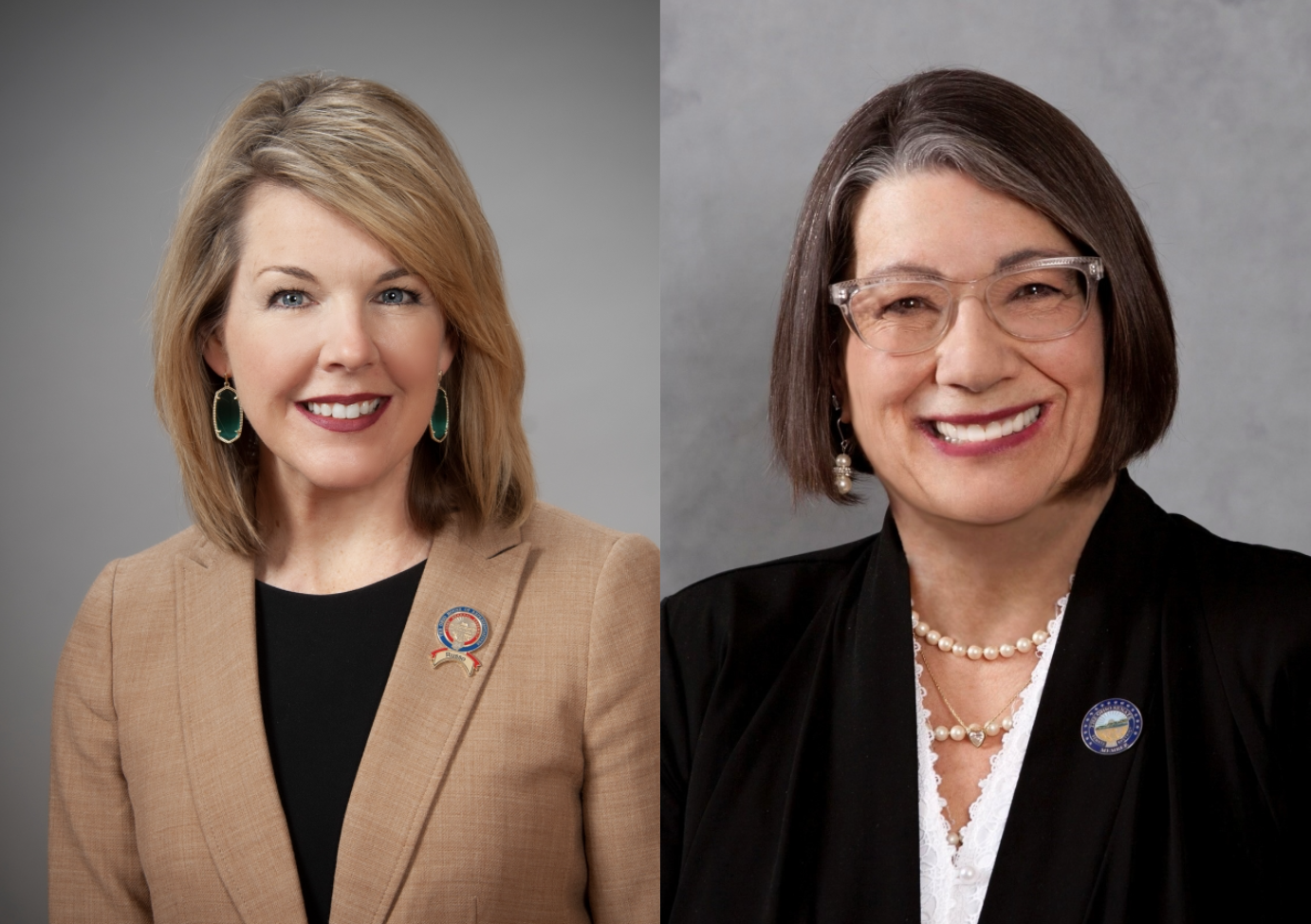
For the first time since 2008, two women are serving as the minority leaders of their caucuses in the Ohio Statehouse.
Ohio Senate Minority Leader Nickie Antonio, D-Lakewood, became leader in 2023 and Ohio House Minority Leader Allison Russo, D-Upper Arlington, became leader in 2022.
“I couldn’t be more proud to have two women leading the caucuses, but more importantly, beyond their gender, they’re just both really talented legislators and leaders,” said Ohio Democratic Chair Liz Walters. “They have different, but I think equally effective leadership styles that allow them to keep their caucuses together, and make sure the needs of all their members are met.”
The last time two women served as minority leaders was during the 127th General Assembly (2007-2008) when then-state Representative Joyce Beatty and state Senator Teresa Fedor were the minority leaders.
Antonio and Russo are navigating a Republican supermajority.
“I think they really work well and balance each other, which goes a long way towards making the Democrats as a whole very effective,” Walters said. “When they work together, right across chambers, it helps overcome a lot more of the obstacles and make them a more formidable force.”
But neither of them initially had political aspirations.
Antonio’s path to Senate Minority Leader
Antonio, 68, first got involved in politics at the local level when she advocated for a skatepark in Lakewood for her daughter. She went to city council, but was disappointed the council members didn’t seem to be paying attention to her.
“I could do that job,” she remembered saying when she got home that night.
COLUMBUS, Ohio — MAY 31: Senate Minority Leader Nickie Antonio, D-Lakewood, talks to reporters after the Ohio Senate session, May 31, 2023, at the Statehouse in Columbus, Ohio. (Photo by Graham Stokes for Ohio Capital Journal)
But she ultimately decided to run for office in 2004 after Ohio passed a constitutional amendment defining marriage as between a man and a woman.
That caused many of their friends to move out of state, but Antonio and her now wife Jean committed to staying in Ohio to make it better.
“We felt like LGBT folks were being attacked,” she said. “Certainly we were being marginalized and told that we were less than.”
There was an opening on Lakewood City Council in 2005, so she ran and ended up serving two terms. Then the House seat for her district opened up in 2010 so she ran and got elected — making her the first openly gay person to be elected to the Ohio General Assembly.
“A lot of people didn’t really know how to talk about it,” she recalled when she was elected in 2010.
She married her long-time partner Jean in 2015 after the Supreme Court legalized same-sex marriage.
Antonio served for eight years in the Ohio House of Representatives before being elected to the Ohio Senate in 2018, where she once again made history by being the first openly gay person to be elected Senate Minority Leader.
“One of the things I appreciate most is her tenure as a public servant,” Walters said.
People will often pull Antonio aside and tell her about a family member who is part of the LGBTQ community.
“I’m happy that I’m able to have those conversations with folks because I think every conversation that’s had opens the door for some understanding and … I really do believe it makes a change in the long run,” she said.
“I’m definitely where I am supposed to be and doing what I’m supposed to be doing,” she said. “It’s really important to me in the room where it happens. And as the minority leader, I am in the room where it happens.”
Some highlights of her career so far include working on bills that helped closed the loophole for people who are adopted to get original information, cut down on the response time for people experiencing a stroke and allowing pharmacies to give vaccines.
Before launching her political career, she taught students with behavioral problems and learning disorders for 10 years in Cleveland.
“I loved those kids and I always tell people that I learned everything I needed to know about the legislature and dealing with my colleagues in the legislature from troubled youth because you have to have a sense of humor, never show fear, really like people and make it part of your mission to find some kernel of commonality to start with to be able to communicate with them,” she said.
Russo’s path to House Minority Leader
Russo, 47, never intended to be in politics. She grew up in Mississippi and moved around quite a bit with her husband who was active duty military before deciding to put roots down in Ohio to be close to her in-laws.
She worked in health policy for more than twenty years, but a couple key moments lead to her to run for office.
COLUMBUS, Ohio — SEPTEMBER 20: House Minority Leader Allison Russo, D-Upper Arlington, speaks at the Ohio Redistricting Commission meeting, September 20, 2023, in the Lobby Hearing Room at the James A. Rhodes Office Tower in Columbus, Ohio. (Photo by Graham Stokes for Ohio Capital Journal)
The first was the 2016 Presidential Election where Donald Trump defeated Hillary Clinton.
“2016 got those of us who had always been very active voters off the sidelines and into the arena in a way that probably no other election has,” she said.
The following year, there were efforts to repeal the Affordable Care Act and freeze Medicaid expansion enrollments in Ohio, so she worked with folks doing advocacy work at the state and federal level. People encouraged her to pursue politics, but she brushed that aside since she was enjoying her career and her youngest child was less than a year old.
But she ultimately decided to throw her hat in the ring when the House seat in her district opened for the 2018 election.
“I thought, well, it’s now or never,” she said. “I knew absolutely nothing about running a campaign.”
Russo, a mother of three, often had her children with her when she was campaigning and knocking on doors. She ended up not only winning the election, but flipping the district seat blue.
She ran for Congress in 2021, but lost to U.S. Rep. Mike Carey 58% to 42%. The next year, she was elected House Minority Leader.
Walters said Russo has “an aptitude and innate ability to lead her caucus and maneuver, playing chess every day rather than checkers.”
As minority leader, Russo tells the members of her caucus they need to cultivate relationships and find common ground in order to be successful.
“In a super minority, you are constantly having to figure out how to navigate this place, so that you can be effective and it’s not always in big ways, like you pass a big massive piece of legislation,” Russo said. “It can be in little ways— you get part of your legislation into a bill, you make bills better, you get things into the budget, you have wins there.”
But sometimes finding common ground can be tricky.
“You also don’t want to sacrifice your values,” she said. “You also want to be fearless in calling (things) out when needed. Don’t pull your punches.”
Russo feels fortunate to live about 15 minutes away from the Statehouse, so she can run home to take one of her kids (ages 17, 14 and 7) to practice and then come back, if needed, for an event at the Statehouse later that night.
“I realize that’s a luxury,” she said. “In some ways, it’s my proximity to the Statehouse that allows me to do this job with three kids at home and I know that that’s not normal for most people who are in these roles.”
Advice for future women politicians
Russo’s advice for women looking to get into politics is to not wait around for approval to run for office.
“As women, we’re looking for someone to give us permission to take on these leadership roles or to run for office or whatever — you do not need that,” she said.
Antonio’s suggestion to women who are in politics or who want to go into politics is to not take anything personal.
“There are definitely things that make you feel like you get a gut punch some days,” she said.
Something that can turn women away from politics is the lack of privacy, Russo said
“Politics is an industry that’s tough for anyone, but it can be especially tough for women,” Walters said. “It’s a field that’s traditionally dominated by men with lots of strong opinions and feelings. … Leaders Russo and Antonio work twice as hard as their counterparts while overcoming unique obstacles. Even though they shouldn’t have to.”
What’s next for Antonio and Russo?
Antonio is term-limited and she’s not sure what she’ll do after her time in the Statehouse is up.
“What I do know is I do not intend to go back to the House,” she said.
Russo will be up for re-election for a fourth term this November. If she wins, she’ll be term-limited in the House. So what’s next after her time in the House is up?
“To be determined,” she said. “There’s a lot of this that’s out of my control. And then a lot of this is about timing, and often many unknown factors.”
And as for a potential run for Ohio Governor in 2026?
“I know there’s been a lot of chatter in that space,” she said. “Let’s get through 2024 first and we’ll see what happens.”
Megan Henry is a reporter for the Ohio Capital Journal and has spent the past five years reporting in Ohio on various topics including education, healthcare, business and crime. She previously worked at The Columbus Dispatch, part of the USA Today Network.
Ohio Capital Journal is part of States Newsroom, the nation’s largest state-focused nonprofit news organization.
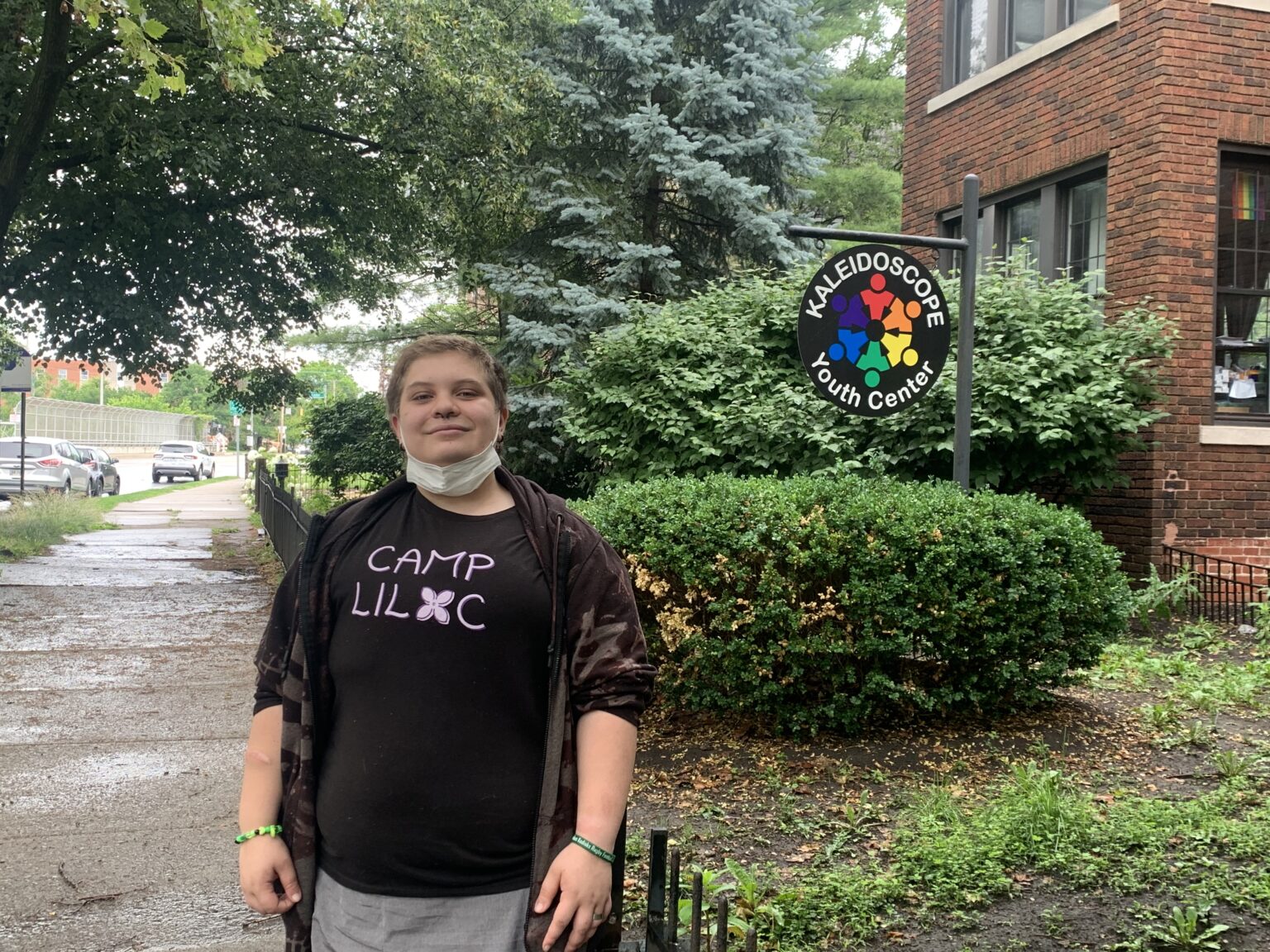
Nathan Alvarez, 15, stands outside Kaleidoscope Youth Center on June 23. He is worried about a bill that would require K-12 schools and colleges to mandate that students could only use the bathroom or locker room that matches their sex assigned at birth. (Photo by Megan Henry, Ohio Capital Journal) Ohio Capital Journal talked to three transgender youths who are concerned about these bills and their potential implications.
Nathan Alvarez is used to people laughing or snickering at him when he uses the men’s bathroom.
Despite that, the 15-year-old says his high school is one place he doesn’t have to worry about that happening because they have a couple of gender neutral bathrooms and anyone can use the men and women’s restroom.
State Reps. Beth Lear, R-Galena, and Adam Bird, R-New Richmond, recently introduced House Bill 183 which would require K-12 schools and colleges to mandate that students could only use the bathroom or locker room that matches their sex assigned at birth. HB 183 is still in House committee, awaiting sponsor testimony.
“It would be hell (if the bill were to pass),” Alvarez said, who uses he/him pronouns. “Hearing about it disgusted me. Like it violently disgusted me.”
HB 183 is one of a handful of anti-trans bills that have been introduced so far in the Ohio General Assembly.
Doctors wouldn’t be able to give puberty blockers and hormone therapy to trans youth, trans athletes wouldn’t be able to participate in women’s sports, educators would be forced to out students to their parents and require public schools to give parental notification before teaching “sexuality content” if these various anti-trans bills pass through the Republican-controlled Ohio Statehouse.
OCJ talked to three transgender youths who are concerned about these bills and their potential implications.
“It’s an attack on all trans people,” said Ko Rupert, who uses she/it pronouns. “They are all uniquely bad, but their uniqueness is important.”
Fifteen laws have been enacted banning gender affirming care for transgender youth and four additional laws have been passed that censor school curriculum like books, according to HRC.
“It’s very hard to see what’s been already happening in other states and how the bills that they are trying to pass here in Ohio are not even that different,” Jaylah Hollins, 19 said. “I feel like it’s not really in the interest of Ohioans, but only in the interest of anti-trans lobbyists from out of state.”
House Bill 8
Hollins is going to start attending Columbus State Community College this fall for social work and hopes to one day work for an organization that helps transgender people.
“Hopefully if these bills don’t pass, we can try and make Ohio a place where it can be a refuge for trans kids and trans adults,” Hollins, said, who uses she/her pronouns. “Ensuring that trans kids have access to medical care and that adults have access to the facilities that align with their gender identity shouldn’t be politicized in the first place.”
An advocate for the rights of trans children and their parents holds up a sign. Photo by Morgan Trau, WEWS.
While she said all the anti-trans bills are harmful, House Bill 8 stands out to her as the most damning.
“I feel like they don’t see it as putting children in harm’s way when it most likely is because you can’t expect a parent to be able to deal with knowing that their child is within an LGBT umbrella and not have to try and resort to what they may not see at the time as harmful approaches to their child’s identity,” Hollins said.
She said these bills would prevent children from learning more about themselves and make them feel as though they deserved to be punished because of how they identify.
“It won’t allow children to be able to understand others who are maybe different from them,” Hollins said. “It will encourage isolation and I think the most devastating would be suicidal ideation, especially with trans and non-binaries who already know that they are coming from families who are unaccepting of those identities.”
She’s said she’s still debating if she’ll stay in Ohio after college.
“It’s still hard for me to think about, but for me, I think I would want to stay in Ohio and fight for trans youth,” Hollins said.
Rupert, a 20-year-old Ohio State University graduate student, is also worried about HB 8 and the stripping away of youth rights.
“Young people can make decisions, can know their bodies and understand and have a deep relationship with their gender and sexuality and romantic orientations,” Rupert said.
“It’s upsetting to know that there are adults making choices for people to make choices about me. And I don’t have a choice,” Alvarez, of Reynoldsburg, said. “It’s scary.”
He hopes to move out of Ohio one day and relocate to Washington.
Anti-trans and anti-LGBTQ bills
House Bill 68, also known as the Save Adolescents from Experimentation Act (SAFE Act), would prevent doctors from giving puberty blockers and hormone therapy to trans youth. It would also ban physicians from performing gender reassignment surgery on a minor.
Megan Henry is a reporter for the Ohio Capital Journal and has spent the past five years reporting in Ohio on various topics including education, healthcare, business and crime. She previously worked at The Columbus Dispatch, part of the USA Today Network.
A direct-democracy attempt to force the state legislature to act on recreational marijuana will have enough signatures by the month’s end to set a plan in motion, an organizer projected Friday.
Ohio attorney Thomas Haren, a representative of the “Coalition to Regulate Marijuana Like Alcohol,” said he expects that enough signatures will be gathered to move a proposal forward that would allow for adult use, sale, and possession of marijuana in Ohio.
“We think that marijuana reform is popular,” he said at a panel hosted by the Ohio State University law school’s Drug Enforcement and Policy Center.
“It’s not a bipartisan issue. It’s a nonpartisan issue.”
The coalition launched what’s known in Ohio as an initiated statute. It proposed the architecture of a recreational marijuana program in Ohio. If state officials determine the coalition gathered the required 133,000 valid signatures, lawmakers in the Ohio General Assembly get four months to act on the proposal. If lawmakers fail, organizers must gather more signatures to send the proposal to a popular vote by the people at the next general election.
The proposal allows for the possession of up to 2.5 ounces of marijuana or 15 grams of marijuana extract. Adult Ohioans could purchase marijuana at retail locations or grow two plants at home (four if there are two adults living in the household).
Marijuana has reached a “tipping point” in the U.S. and the time to climb aboard was yesterday, according to Rep. Casey Weinstein, D-Hudson, a lead sponsor of House Democrats’ effort on recreational marijuana.
Nineteen states and Washington D.C. have legalized marijuana for personal use, according to the advocacy group NORML. Gallup polling indicates 68% of Americans support legalizing marijuana, the highest rate since the polling firm began surveying the issue in 1969. Roughly 83% of surveyed Democrats, 71% of independents and 50% of Republicans indicated support. The Washington Post reported this week that while there’s not yet agreement on its breadth, bipartisan members of Congress are working on significant reforms to the nation’s marijuana laws.
“This is a situation where we’re behind where Ohioans are,” Weinstein said, noting that the initiated statute might provide the Legislature with a sense of “urgency.”
History
Mary Jane Borden, co-founder of the Natural Therapies Education Foundation, said Ohio lawmakers have a long history slow-walking marijuana legislation until direct democracy attempts force them to act.
Between 2000 and 2010, seven marijuana bills were introduced, she said. Only one of them received more than a perfunctory introductory hearing.
In 2016, organizers launched a campaign for a constitutional amendment to allow for the use of medical marijuana in Ohio. They suspended the campaign after Gov. John Kasich signed House Bill 523, which created Ohio’s current program.
While voters are increasingly supportive of marijuana, lawmakers are decidedly agnostic. Borden cited a recent survey of 41 members from Gongwer News Service (the poll had a 31% response rate and doesn’t necessarily represent the full General Assembly). It found among Democrats, 36% support legalization, compared to 14% who don’t and 50% who are undecided. For Republicans, 43% support legalization, compared to 43% who don’t and 14% who are undecided.
“Republicans are more favorable on this issue than we might give them credit for,” Haren, who identified himself as a Republican, said.
With such a mixed take from lawmakers, Borden said the “end-run” of a referendum can spark action.
“What motivated the change [regarding medical marijuana] was obviously the ballot issue,” she said. “Similar to what [Haren] is doing now.”
Moving parts
Alongside Haren, there are three key items to watch regarding marijuana policy in Ohio.
For one, House Democrats Weinstein and Terrence Upchurch, D-Cleveland, introduced legislation of their own, with key differences from the initiated statute proposal. Their bill contains an expungement program, allows possession of up to five ounces of marijuana, and others.
The legislation, introduced in August, has yet to receive its first hearing from the House Finance Committee.
For two, House Republicans have announced a proposal of their own that’s fairly similar to the Democrats’ plan. When they announced the legislation last month, sponsoring Reps. Jamie Callender, R-Concord, and Ron Ferguson, R-Wintersville, acknowledged it’s a moonshot but said they believe they can convince the House Speaker — especially given pressure an initiated statute can provide.
They have yet to formally introduce a bill. A Callender aide said Friday they’re hoping to get a bill out around Thanksgiving but did not have details on any changes from what was announced.
Thirdly, a bipartisan group of Ohio Senators earlier this month proposed a broad expansion of the current medical marijuana program. Their bill would allow doctors to prescribe marijuana whenever they “reasonably” believe a patient might benefit. A Senate committee held its first hearing on the bill last week.
Both chambers of the Ohio General Assembly are plodding forward on legislation to waive training requirements to carry a concealed weapon.
While current law allows state residents to openly carry a weapon, it only allows those 21-and-up to obtain a concealed carry permit after completing an 8-hour training course and passing a background check.
House Bill 227 and Senate Bill 215, which contain some important differences, would waive these permitting requirements, including the training
The effort, if successful, would continue Ohio’s steady relaxing of its gun laws over the last 20 years, which has included launching the concealed carry program in 2004 that required 12 hours of training; passing “pre-emption” legislation in 2006 which blocks cities from enacting gun laws stricter than those at the state level; and removing the duty to retreat (passing “stand your ground”) in 2020, which removed the requirement for a person to seek retreat before responding to a perceived attack with deadly force.
On Thursday, the House Government Oversight Committee held its fourth hearing on the permitless concealed carry legislation.
Over several hours, members of Moms Demand Action, an anti-gun violence advocacy group, made their case against the bill. They argued it will inevitably increase rates of gun violence. The Ohio Attorney General’s Office reports roughly 1,200 concealed carry applications are denied each year for reasons set in code, like criminal histories, civil or temporary protective orders, or others.
What, they asked, will happen to those applicants if there’s no more licensing process?
“It allows guns in the pockets of lowlifes,” said Sieglinde Martin, an MDA member.
Micaela Deming, an attorney with the Ohio Domestic Violence Network, said domestic violence misdemeanor convictions and protective orders are the second highest reason that would-be gun owners fail background checks. Waiving the permitting requirements, she said, would mean the loss of a key screening mechanism to remove guns from these domestic offenders.
Gun lobbyists and enthusiasts argued that the public safety threat is overblown. Law breaking gun possessors, they said, will continue to break laws regardless of how strict or lax they are. The bill is about enshrining Ohioans rights under the Second Amendment of the U.S. Constitution.
“I don’t think there’s anything in the bill that says, ‘If you’re prohibited from carrying a [concealed] firearm, suddenly now you can’ — if you’re prohibited, you’re prohibited,” said Rep. Shane Wilkin, a cosponsor of the bill and committee chairman overseeing its hearings, in an interview.
“Those that are going to carry that are not mindful of the law regardless of what it is, are going to carry regardless.”
After the hearing, Wilkin said he didn’t know if the bill would be up for a vote at its next hearing but said he wouldn’t rule it out.
Lawmakers on the committee were generally warm to the legislation. Rep. Phil Plummer, R-Butler Twp., said it’s “kind of bizarre” that it’s legal to openly carry a weapon in Ohio, but becomes illegal if you put on a jacket that covers it.
Rep. Don Jones, R-Freeport, needled one witness who said states that legalized permitless concealed carry experienced higher levels of violent crime than those that did not. He asked whether that could be the effect of other legislation like legalizing marijuana for recreational use.
The Senate Veterans and Public Safety Committee, meanwhile, has held two hearings on similar legislation from Sen. Terry Johnson, R-McDermott.
A key difference from the House version: The Senate bill would also establish procedures for a pretrial immunity hearing for people facing criminal charges or a civil lawsuit related to their use of force in purported self-defense.
The hearing, which would come before any trial, provides a substantial advantage to the accused: It would tell the court to assume the accused used force in self-defense and requires prosecutors (in a criminal case) to prove beyond a reasonable doubt or plaintiffs (in a civil lawsuit) to provide “substantial evidence” that the person did not use force in self-defense.
If the prosecutor or plaintiff fails in this, the accused would be considered immune from the charge or lawsuit. If they succeed, the proceedings will then move toward a trial.
Although bill proponents say otherwise, courts have generally held that licensing requirements to carry concealed weapons do not violate the Second Amendment.
In a 2003 Ohio Supreme Court opinion (that preceded Ohio’s first concealed carry law), Justice Paul Pfeifer, writing for the majority, was blunt in a majority opinion.
“(The law) does not unconstitutionally infringe the right to bear arms; there is no constitutional right to bear concealed weapons,” he wrote.
“Like most rights, the right secured by the Second Amendment is not unlimited,” he wrote.
“(There is no constitutional) right to keep and carry any weapon whatsoever in any manner whatsoever and for whatever purpose.”
Ohio Attorney General Dave Yost is responsible by law to handle some of the administrative work in Ohio’s concealed carry program. In a statement, a spokesman said Yost has not yet taken a position on either bill and is actively monitoring them.
“By any measure, Ohio’s concealed-carry licensing system has succeeded in combining safeguards that protect the public and provisions that uphold Americans’ right to bear arms and protect themselves,” he wrote in the 2020 annual report on the program.
Twenty-one states allow inhabitants (residents only in North Dakota) to carry a concealed weapon without a permit, according to a count from the U.S Concealed Carry Association. This includes neighboring states of West Virginia and Kentucky.
Two bills are working their way through the Ohio General Assembly that do not solve any pressing issues in high school athletics; they simply target and needlessly victimize five Ohio children in a cynical attempt to score cheap political points.
I’m referring to Ohio House Bill 61 and Senate Bill 132, which would ban transgender girls from joining female teams in high school and college athletics. They are sponsored by state Rep. Jena Powell, R-Arcanum, and state Sen. Kristina Roegner, R-Hudson.
As OCJ has reported, out of about 400,000 Ohio high school athletes competing this year, five transgender girls opted to follow their gender identity and compete in women’s sports. Four transgender girls obtained approval in 2019-2020, two in 2018-2019, and none were approved between 2015 and 2017, according to the Ohio High School Athletic Association (OSHAA).
OSHAA Director of Compliance Kristin Ronai (LinkedIn photo)
OSHAA already has a policy regarding transgender athlete eligibility, and it seems to be working fine as OSHAA Director of Compliance Kristin Ronai told OCJ, “I personally, and the rest of our office, have not received one complaint about transgender athlete participation in the state of Ohio.”
There’s no evidence of transgender girls taking scholarship opportunities away from anyone, she added, saying OSHAA’s policy for this exceedingly small population was crafted by experts, and no real problem exists for the legislation to solve.
Meanwhile, an expert who helped the NCAA establish its policy for transgender participation in 2011 and also advised the International Olympic Committee on the issue told NPR recently these bills are discriminatory when school sports are supposed to be about inclusivity, team-building and personal well-being, and they have no basis in science.
“We know that men have, on average, an advantage in performance in athletics of about 10% to 12% over women, which the sports authorities have attributed to differences in levels of a male hormone called testosterone. But the question is whether there is in real life, during actual competitions, an advantage of performance linked to this male hormone and whether trans athletes are systematically winning all competitions. The answer to this latter question, are trans athletes winning everything, is simple — that’s not the case. And higher levels of the male hormone testosterone are associated with better performance only in a very small number of athletic disciplines: 400 meters, 800 meters, hammer throw, pole vault — and it certainly does not explain the whole 10% difference,” said Dr. Eric Vilain.
“And lastly, I would say that every sport requires different talents and anatomies for success. So I think we should focus on celebrating this diversity, rather than focusing on relative notions of fairness. For example, the body of a marathon runner is extremely different from the body of a shot put champion, and a trans woman athlete may have some advantage on the basketball field because of her height, but would be at a disadvantage in gymnastics. So it’s complicated.”
So why are Ohio Republicans and their colleagues in roughly 35 state legislatures around the country pursuing these bills?
Well, it’s about the only LGBTQ+ issue remaining that polls well for them — and by “well” I mean it still polls in favor of the discrimination that they support. Complicated issues require thoughtfulness. Cultural hate-baiting does not.
So if it’s no longer politically popular to promote discrimination against the LGBTQ+ community at-large, what is? Targeting transgender athletes and, really, targeting transgender people in general.
Given the polls and their own words, I have no doubt many of these Republican politicians are earnest in their support for discriminating against transgender people, but they also know it’s good politics for them. Perhaps they believe this is an actual issue that needs addressed. Perhaps. But the facts do not bear that out, and if they did an honest evaluation of the situation based on facts, expert testimony and science instead of political calculations and polling they would know that.
So it remains that our Republican supermajority state legislature is spending its days crafting legislation to needlessly attack five children.
These proposals victimize and attempt to villainize in the public mind an already vulnerable minority not to solve any real issue but for cynical political point-scoring. In essence, these politicians are saying that exploiting outrage politics is more important than acknowledging transgender people’s basic humanity and the harmful consequences of needlessly promoting discrimination against them.
Driving public policy with this intentional wedge issue at the expense of children is at the least highly unethical and at worst horribly immoral. It’s bullying, and it encourages more bullying.
Columbus, Ohio – The Governor’s Office of Workforce Transformation and the Ohio Department of Education today
$34 Million Available Over Two Years
announced the list of industry-recognized credentials eligible for $34 million under the new Innovative Workforce Incentive Program. Ohio Governor Mike DeWine and the Ohio General Assembly developed the program to create more opportunities for students to earn in-demand, industry-recognized credentials.
The program includes $9 million in the state’s two-year budget for grants to assist school districts, community schools, joint vocational schools, and STEM schools in establishing credential programs to prepare students for careers in priority industry sectors. Schools can begin applying for a share of the funding via the state’s Comprehensive Continuous Improvement Plan grant application process on December 19, 2019.
School districts are also eligible to receive a share of $25 million over the current state budget to encourage the start of additional credential programs. Under this program, schools can receive $1,250 for each qualifying credential earned by students.
“When Ohio students graduate high school, they should be college or career ready,” said Governor DeWine. “This program helps schools expand credentialing opportunities and ensures potential employers that students have the skills they need to succeed in high-wage, in-demand fields.”
Lieutenant Governor Jon Husted
“We must prepare Ohio’s workforce to earn the skills they need to succeed in an increasingly tech-infused economy, and we need to seize the opportunity to do so before they graduate from high school. Today’s announcement reinforces the administration’s commitment to providing more opportunities for Ohioans to earn in-demand, industry-recognized credentials, offering a pathway to better paying and higher quality career options,” said Lieutenant Governor Jon Husted who serves as Director of the Governor’s Office of Workforce Transformation.
Paolo DeMaria, state superintendent of public instruction
“Today’s students are tomorrow’s workforce,” said Paolo DeMaria, state superintendent of public instruction. “We are committed to supporting students in acquiring relevant, marketable skills that empower them to achieve success in Ohio’s emerging and priority industries. Innovative Workforce Incentive Program Funds will make it possible for schools to develop the programs students need to earn in-demand credentials.”
The Innovative Workforce Incentive Program aligns with Ohio’s five-year strategic plan for education, Each Child, Our Future. The plan states that each child will see the relevance of his or her learning, be exposed to practical, real-world work settings, and begin defining his or her future during high school.
Industry-recognized credentials are an innovative approach to ensuring that high school inspires students to identify paths to future success. Such credentials also offer students many ways to demonstrate the knowledge and skills needed for high school graduation and beyond. Credentials also benefit employers by validating the knowledge and skills of potential employees.
More information about the Innovative Workforce Incentive Program, including the qualifying industry-recognized credentials is available here.
Columbus, Ohio – Ohio Governor Mike DeWine today announced a series of legislative reforms to address gun violence and outlined further action to increase mental health prevention, identification, and treatment to better protect Ohioans.
“Gun violence doesn’t just take the form of mass shootings, people are victims every day in Ohio and across the country,” said Governor DeWine. “I believe that this is both a public safety issue and an individual wellness issue – we must address both sides to help solve the problem. It’s time to do something, and that is exactly what we are going to do.”
This series of solid, workable reforms will help get guns out of the hands of people who should not have them under the law while protecting the rights of law-abiding citizens who are entitled to the right to bear arms and will help prevent and treat those struggling with mental illness.
Governor DeWine’s proposals include:
Safety Protection Orders
Governor DeWine is asking the legislature to pass a law to allow courts to issue Safety Protection Orders which would remove firearms from potentially dangerous individuals and get them the mental health treatment they need all while maintaining an individual’s right to due process.
Increased Access to Inpatient Psychiatric Care
Over the past several years, Ohio’s state psychiatric hospitals have become predominantly used by patients who are court-ordered there for restoration to competency to stand trial. This week 79% of the adults in our state psychiatric hospitals are under court order. The Ohio Department of Mental Health and Addiction Services (OhioMHAS) is working to create a process where courts and community-based providers can work together to restore competency for those to stand trial in an outpatient setting which will free more hospital beds and decrease wait time for admission. The Ohio General Assembly will need to pass legislation to create this community-based misdemeanor competency restoration process.
Early Intervention
As part of the 2019-2020 biennium operating budget, the state is investing $675 million in wrap-around services for schools to design individualized programs, working with local mental health providers or social service organizations, to address the social and emotional challenges our students face.
Access to Behavioral Health Services
The Ohio Department of Medicaid is investing $15 million in telehealth mental health services to students, so no matter where a child lives, they have access to high-quality mental health care.
Risk Factor and Resource Identification
OhioMHAS will be working with communities to increase knowledge of risk factors, help parents identify when their child is showing warning signs of a mental illness. The department will share screening tools with clinicians and help connect community-based services to link parents, families, and schools with proven supports and strategies to manage a child’s wellness over the child’s lifetime.
Background Checks
Governor DeWine is calling on the Ohio General Assembly to pass a law requiring background checks for all firearms sales in the state of Ohio with certain limited, reasonable exceptions, including gifts between family members.
Increased Penalties for Felons Who Illegally Possess Firearms
Gun violence occurs in neighborhoods and communities every day across Ohio and the nation. Law enforcement reports that the majority of this violence is perpetrated by a relatively small number of individuals who don’t have the right to possess a gun. Governor DeWine is calling on the General Assembly to increase penalties on felons who illegally possess or use guns.
Increased Penalties for Violent Felons Who Illegally Possess Firearms
Governor DeWine is calling on the General Assembly to increase penalties violent felons and other people found with a gun they do not have the legal right to possess. The crime of having a weapon while under a disability is currently a third-degree felony punishable by a maximum of three years in prison. On a first offense, the crime should be a second-degree felony punishable by two-to eight-years in prison, and for subsequent offenses, it should be a first-degree felony punishable by three- to eleven-years incarceration.
Increased Penalties for People Who Commit Felonies while in Possessing Firearms
This proposal would increase penalties for people who commit felonies with a firearm or who possess a firearm while committing a felony to a mandatory additional one- to three-year sentence.
Increased Penalties for Brandishing a Gun
The General Assembly should pass a law that increases the penalty for those who commit a felony while brandishing a firearm to a mandatory three- to five-year sentence.
Increased Penalties for Straw Purchases
So-called “straw” purchases, the act of purchasing guns for or giving guns to another individual are currently illegal under Ohio and federal law. However, this practice is far too common, so Governor DeWine is calling on the General Assembly to increase the penalty for a straw purchase to a second-degree felony punishable by two to eight years in prison.
Increased Penalties for Illegally Obtained Guns
We should increase the penalty for a person who possesses a firearm that they know was obtained through an illegal or fraudulent purchase in order to avoid a federal background check. A person who possesses the gun should be punished in the same manner as a person who bought the firearm, increasing the penalty to a second-degree felony punishable by two- to- eight years in prison.
Increased Penalties for Those Who Improperly Provide Firearms to Minors
Too many kids are carrying guns on the streets often with tragic consequences. Adults who furnish firearms to minors must be held accountable. Governor DeWine proposes that the General Assembly increase the penalty for improperly providing a firearm to a minor to and a third-degree felony punishable by up to three years in prison.
School Tip Line
The DeWine administration is expanding the state’s school safety tip line, where kids and adults can call or text anonymously to 844-723-3764 with tips about potential school violence.
Social Media Monitoring
In a 24-7 world of social media, threats can arise at any time. The Hub at the Ohio Department of Public Safety is expanding its ability to monitor and track potential threats on social media and will share that information with local school and local law enforcement.
Community Safety
The operating budget provides nearly $9 million to help harden soft targets like non-profits and religious organizations to make their facilities more secure.
School Safety and Intervention Programs
Working closely with Sandy Hook Promise, Ohio’s schools are implementing their “Know the Signs” safety program across the state. This program equips school staff with knowledge and skills to identify potential threats of violent action and take steps to intervene. There are 23 training dates already scheduled.
“I believe these proposals fulfill three important requirements. They can pass the legislature, they make meaningful progress toward safer communities, and they are Constitutional. Passing them won’t be easy, but this is the right thing to do and this is the right time to do it,” Governor DeWine added. “We can pull together to do meaningful things to protect lives. It won’t be easy, but I believe in this state, and I believe in our people.”