Tag: Ohio Gov. DeWine

  • Ohio Gov. DeWine approves firearm privacy, insurance prohibitions

    Ohio Gov. DeWine approves firearm privacy, insurance prohibitions

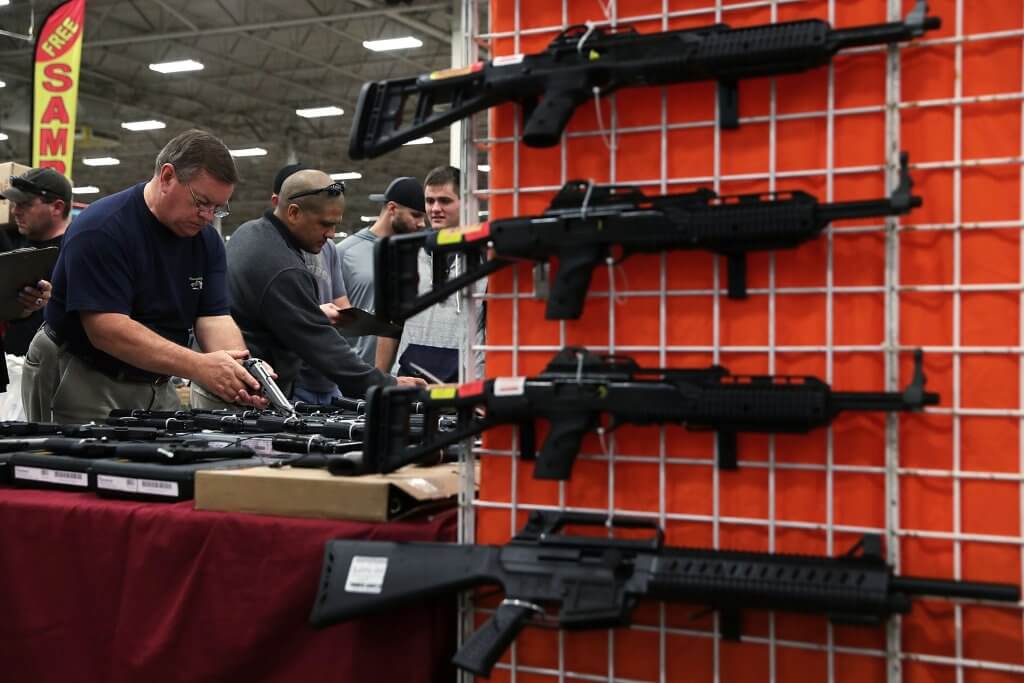
    Potential buyers try out guns which are displayed on an exhibitor’s table during the Nation’s Gun Show. (Photo by Alex Wong, Getty Images)

    The measures provide protections from requirements gun owners were unlikely to face

    By: Ohio Capital Journal

    Last week Gov. Mike DeWine signed a measure into law prohibiting Ohio financial institutions from using a separate merchant code for gun shops or requiring gun owners to purchase liability insurance. The measure also prohibits governments or agencies from maintaining a list of gun owners.

    Similar merchant code prohibitions have passed in more than 15 other states. But notably, the bill’s sponsors did not identify a single Ohio entity considering an insurance requirement or ownership list. As such, the proposal’s purpose appears geared toward burnishing lawmakers’ pro-gun bona fides.

    And it offers a potential answer for where messaging legislation goes when state leaders have already embraced almost every policy firearm enthusiasts could ask for. With state law already endorsing stand your ground, arming teachers, and permitless carry, lawmakers are left to chase hypothetical threats to the Second Amendment.

    GET THE MORNING HEADLINES.

    Last minute amendments

    The measure Gov. DeWine signed brought together two standalone pieces of firearm legislation late in the session. After those bills were combined House lawmakers proposed tacking on another piece legislation known as the Second Amendment Preservation Act.

    Furious at restrictions imposed by the Bureau of Alcohol Tobacco and Firearms, sponsors proposed stripping out all reference to federal firearm provisions in state law in a bid to bar local police forces from assisting federal agencies. They pitched the proposal as an “anti-commandeering” bill — i.e. prohibiting federal officials from using local authorities to enforce federal laws.

    But the measure went a few steps further. The initial version sought to inscribe the sponsors’ interpretation of the Second Amendment in state law, a task typically reserved for the courts. With those “infringements” codified, local police departments could face stiff fines for any purported violations. Departments could even be fined for hiring someone who previously worked for a federal agency.

    Opponents warned the proposal would cripple task forces fighting drug and human trafficking and undermine tools like the ballistics database authorities rely on in gun violence cases. The Missouri law on which it’s modeled was struck down in federal court, and last year a federal appeals court unanimously upheld that decision.

    The House floor amendment adding those provisions to the bill failed.

    What now?

    Dean Rieck who heads up the Buckeye Firearms Association praised DeWine for signing the measure prohibiting liability insurance and tracking ownership.

    He framed the underlying provisions as “fight(ing) recent efforts by gun control advocates to make gun ownership more expensive and less private for law-abiding gun owners instead of cracking down on the actual criminal misuse of firearms.”

    As for his organization’s priorities going forward, he said they’d fight “against Second Amendment infringements” and urge both parties to prioritize measures holding violent criminals accountable.


    The Second Amendment Preservation Act was a major priority for the organization Ohio Gun Owners. On social media, the group’s president Chris Dorr argued the Republican members who voted against the amendment should face primary challenges. The group later made member-specific thank you posts for the 32 Republicans who wanted to pass the provisions.

    A central premise of the measure was that state law can be leveraged to blunt the impact of federal firearm regulations by depriving agencies of local assistance. But even with a conservative, gun-friendly administration taking office, Dorr said it’s just as important to pass the bill.

    “It is critical that the General Assembly pass the Ohio Second Amendment Protection Act during the Trump Administration years so that, with a Second-Amendment-friendly Department of Justice, that law can get on the books and stay on the books long after President Trump is gone from the White House,” he argued.

    Dorr said they’re expecting to run it back in the coming General Assembly and although he declined to name them, said they’ve got a sponsor. As for their other priorities, he described even greater “stand your ground” protections and the right to “carry, transport or possess any lawful weapon” an Ohioan owns, rather than just handguns.

    But for the time being, he emphasized their happiness with DeWine signing any firearm legislation.

    “Legislation like this is exactly the kind of legislation the Ohio General Assembly should be putting on his desk in response to the attacks big corporations have leveled against conservative America,” he said.

    What opponents think

    For organizers pushing for greater gun restrictions, lawmakers eventually balking at the most sweeping proposal doesn’t get chalked up as a win.

    During the past session, Democrats proposed a handful of measures exerting a modicum of control over gun sales or promoting gun safety. One bill proposed a 10-day waiting period for gun sales. Another would’ve eliminated taxes on gun locks and other safety devices. The most sweeping proposal would’ve rolled back the law allowing Ohioans to carry concealed weapons without a permit. None of them passed.

    Everytown for Gun Safety Senior Counsel Alison Shih criticized the bill DeWine approved last week and derided lawmakers’ months-long debate over the Second Amendment Preservation Act.

    “This is a perfect example of what gun rights extremists in Ohio, led by Governor DeWine, love doing,” she argued. “Instead of taking action to end the gun violence crisis — which is killing children and teens more than anything else in this country — in pushing bills like a Second Amendment Preservation Act, lawmakers are creating a culture of fear by inventing some nonsensical ominous boogeyman coming to steal their rights.”

    “These lawmakers seem more interested in protecting violence than victims,” she added. “Instead of creating even a moderate culture of responsible gun ownership, these gun extremist lawmakers are sacrificing Ohioan family lives.”

    Follow Ohio Capital Journal Reporter Nick Evans on X or on Bluesky.

    YOU MAKE OUR WORK POSSIBLE.

    _______________
    Nick Evans
    Nick Evans

    Nick Evans has spent the past seven years reporting for NPR member stations in Florida and Ohio. He got his start in Tallahassee, covering issues like redistricting, same sex marriage and medical marijuana. Since arriving in Columbus in 2018, he has covered everything from city council to football. His work on Ohio politics and local policing have been featured numerous times on NPR.

    Ohio Capital Journal is part of States Newsroom, the nation’s largest state-focused nonprofit news organization.

    MORE FROM AUTHOR

  • Ohio Gov. DeWine won’t name names, but preparing to fill U.S. Senate vacancy

    Ohio Gov. DeWine won’t name names, but preparing to fill U.S. Senate vacancy

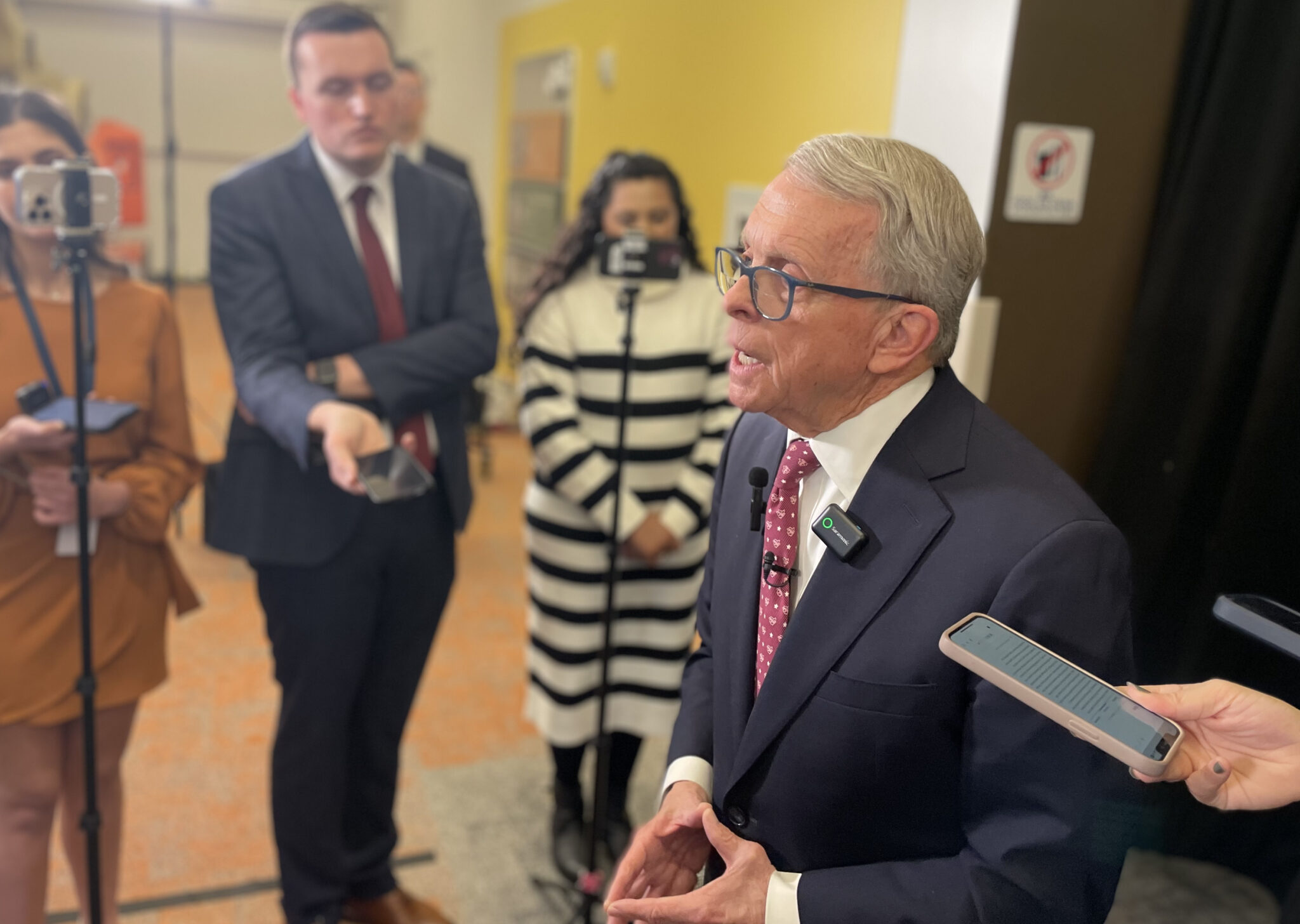
    Gov. Mike DeWine speaking to reporters. (Photo by Nick Evans, Ohio Capital Journal.)

    By:  Ohio Capital Journal

    Ballots in some districts are still being tallied, but the broad strokes of the 2024 election are clear, and the results mean Ohio Gov. Mike DeWine has a big decision to make. J.D. Vance is jumping from U.S. Senator to Vice President-elect leaving a vacancy DeWine needs to fill.

    Whoever he chooses will serve for the next two years, with the opportunity to defend the seat in the next federal election in 2026. And since Vance was elected in 2022, his replacement would have to turn around and do it all over again in 2028.

    “It’s got to be someone who wants to spend the next four years not just doing the job, but running for office,” DeWine explained at post-election conference hosted by the Ohio Chamber of Commerce.


    On the other hand, incumbency means DeWine’s appointee could enter the race with a bit of wind in their sails.

    And DeWine has important strategic factors to consider. The Republican party currently controls each state office in Ohio. But in each case — Governor, Lt. Governor, Attorney General, Secretary of State, Auditor and Treasurer — the politicians occupying those offices are term-limited. That means a broad array of open seats, and several experienced candidates who can make a case reasonable for their nomination to a new post.

    That game of musical chairs could easily tip into an intraparty knife fight. DeWine’s pick for the U.S. Senate could help keep it from getting out of hand.

    But it’s not clear if that will work. One potential recipient, Attorney General Dave Yost, has already said he’d turn down the nomination. Yost is eyeing a run for governor, as is Lt. Gov. Jon Husted.

    With DeWine’s political career likely nearing an end, it’s also one of his last opportunities to put his stamp on Ohio politics. In the most recent U.S. Senate primary, the governor endorsed state Sen. Matt Dolan, R-Chagrin Falls, instead of the eventual victor, U.S. Senator-elect Bernie Moreno.

    While DeWine has yet to give any indication as to who he is considering as a replacement to fill Vance’s Senate seat, but there are several potential names that have been circulating among strategists.

    How the governor views things

    At the Ohio Chamber conference, DeWine refused to discuss names but laid out the considerations that will drive his decision making. He noted with 12 years’ experience in the U.S. Senate himself, he wants to appoint someone “who actually does get things done.”

    GET THE MORNING HEADLINES.


    DeWine also said he’s not interested in a placeholder.

    “I want someone who will hold that seat — I hope for a long time,” DeWine said. “I think it’s in the interest of the state for them to do that.”

    And in addition to someone willing to mount back-to-back statewide campaigns, he’s concerned with finding someone who’s capable of actually winning those races.

    “Someone who can win a primary,” DeWine described, “because they will be faced with a primary in two years. They’re going to be in the primary election in less than that, and also someone who can win the general election.”

    After two contentious Republican U.S. Senate primaries it may be difficult to balance all of those priorities. But even if the final decision is challenging, DeWine said he won’t suffer from a lack of viable choices.

    “Well, yesterday I got a lot of calls,” DeWine said with smile. “Look, we have great people in the state of Ohio who could serve very well in the United States Senate. So, we’re just going through the process of starting to think about this and see who would be the best person.”

    As far as who he’s sounding out for opinions, DeWine said “certainly” Vance’s opinion about who should replace him matters.

    “Frankly I’m reaching out to a lot of people, I’m not going to talk about names, again,” DeWine said, “But I’m consulting a lot of people who I know are not interested, but who might have ideas about who should be.”

    Although Yost has publicly said he’s not interested, that news may not have reached the governor. Asked whether anyone has taken their name out of the running he said, “well, I don’t know about that.”

    “But I wouldn’t tell you anyway,” he quipped.

     Ohio U.S. Senator-elect Bernie Moreno addressing an Ohio Chamber of Commerce crowd. (Photo by Nick Evans, Ohio Capital Journal.) 

    What Moreno wants in a colleague

    A few hours after DeWine spoke, Senator-elect Bernie Moreno took the stage, and described how he wants to promote Ohio businesses in the Senate and earn the trust of voters who didn’t support him. He’s hoping whoever DeWine selects will be a partner in that effort.

    Like DeWine, Moreno said he has thoughts on who’d be a good pick but declined to go into specifics. He also stressed that the decision is ultimately the governor’s to make and that he and DeWine are “100% on the same page” about the kind of person who should get the nod.

    After what he described as “a grueling two years,” Moreno said finding an effective campaigner is very important.

    “It’s got to be somebody who has a proven record of actually doing the work,” he said. “Because if you are too lazy to campaign, you’re probably going to be too lazy to be an effective senator.”

    He added it’s important that the appointee really believes in Trump’s agenda rather than someone who would say you agree with it “and then stab us in the back in Washington, D.C.”

    Moreno said he wants to work alongside someone who’s decent and works well with others — he mentioned the job isn’t an executive role and will require a collaborative approach. And lastly Moreno hopes the governor avoids “publicity seeker(s).”

    “Because you have to be able to trust each other,” he said, “and you can’t be somebody who’s just constantly trying to make a name, out for themselves, and is looking at the next steppingstone.”

    “It’s a weighty job,” Moreno added. “I mean, 11, 12 million people look to you and say, hey, I want you to represent me properly.”

    Follow OCJ Reporter Nick Evans on Twitter.


    Nick Evans
    Nick Evans

    Nick Evans has spent the past seven years reporting for NPR member stations in Florida and Ohio. He got his start in Tallahassee, covering issues like redistricting, same sex marriage and medical marijuana. Since arriving in Columbus in 2018, he has covered everything from city council to football. His work on Ohio politics and local policing have been featured numerous times on NPR.

    Ohio Capital Journal is part of States Newsroom, the nation’s largest state-focused nonprofit news organization.

    MORE FROM AUTHOR