Tag: Ohio Governor Mike DeWine

  • Loveland area students can apply now for Ohio Student Safety Advisory Council

    Loveland area students can apply now for Ohio Student Safety Advisory Council

    David Miller is the Editor and Publisher of Loveland Magazine
    by David Miller

    Ohio Governor Mike DeWine today announced the creation of the new Ohio Student Safety Advisory Council within the Ohio School Safety Center (OSSC). The student-led Council will work to identify school safety concerns and develop innovative solutions to address them. “School safety programs are designed to protect students, so it’s important that students are given the opportunity to be a part of the conversation,” said Governor DeWine. “Involving them in the process of identifying safety concerns and creating solutions will provide Ohioans with a new and important perspective for violence prevention.”  Findings from the student-based council meetings will be delivered to the Governor’s Ohio School Safety Working Group to generate statewide solutions and supports.

    “Being a member of this statewide council will enable students to ensure their voice is heard when it comes to school safety,” Ohio Department of Public Safety Director Tom Stickrath said. “They will learn more about student safety-related issues and help devise effective peer-driven solutions.”

    To be eligible for the Council, students must:

    • Be entering grade 11 for the 2022-2023 school year.
    • Submit a completed application and nomination letter, which must be submitted together to OhioSchoolSafetyCenter@dps.ohio.gov prior to the May 6, 2022 deadline to be considered.  
    • Agree to serve a one-year term and attend monthly virtual meetings and one in-person meeting in Columbus.

    Two students from each of the five school safety center regions will be selected for the Council.

    Students will have the opportunity to be involved in additional events both in-person and remotely throughout their term. Those selected should plan on spending no fewer than 10 hours per month on group activities/work. 
    Council members will develop strategies to encourage their peers to actively engage in maintaining a safe school environment and will be an advocate for students’ overall well-being. Students will work directly with the regional school safety liaisons from the OSSC to organize events, focus groups, and trainings in their regions to help highlight student success and safety best practices at various schools. These members will also act as a sounding board for the Governor’s Ohio School Safety Working Group and OSSC on student marketing campaigns and projects to ensure a student voice is represented.  

    Candidates chosen to move forward with the process will be asked to attend a virtual interview. The OSSC plans to announce the student council member selections at the end
    of May. 

    Additional information can be found on the OSSC website.
  • DeWine: Juneteenth as state holiday

    DeWine: Juneteenth as state holiday

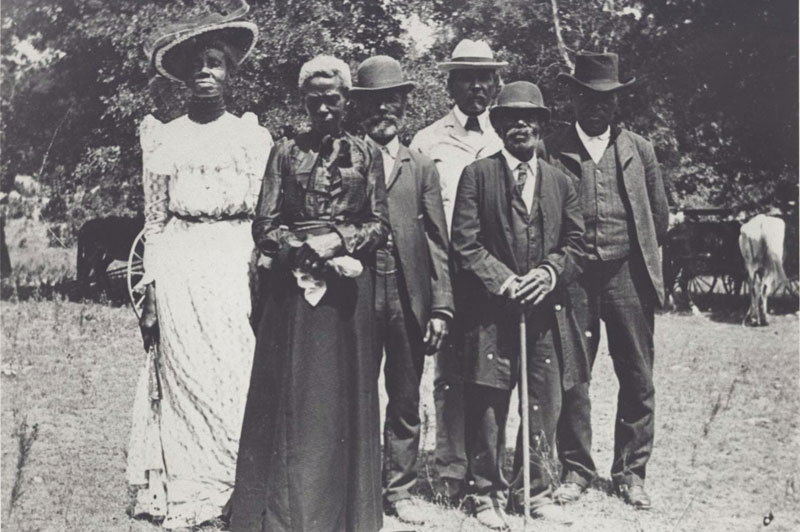
    Celebration of Emancipation Day (Juneteenth) in 1900, Texas

    (By Mrs. Charles Stephenson (Grace Murray) – The Portal to Texas History Austin History Center, Austin Public Library., Public Domain)

    Columbus, Ohio – Ohio Governor Mike DeWine issued the following statement on today’s developments regarding federal legislation making Juneteenth a federal holiday:


    “Juneteenth is the oldest nationally celebrated commemoration of the ending of slavery in the United States. Today, President Biden signed legislation making Juneteenth, June 19th, a federal holiday. This action by the president also makes Juneteenth a state holiday, pursuant to Ohio Revised Code §124.19, which defines state holidays as including ‘any day appointed and recommended by the governor of this state or the president of the United States.’

    “Pursuant to that statute, I also appoint and recommend Juneteenth, June 19th, as a state holiday. I also support legislative efforts to commemorate Juneteenth in the Ohio Revised Code.

    “Because Juneteenth falls on a Saturday, this makes the previous business day, Friday, June 18th, the day the state holiday is commemorated. This means that most state offices will be closed and most state employees will have the day off, with normal exceptions such as hospitals and public safety.”

  • COVID-19 Update: Declining Statewide Case Rate, Indoor Air Quality Assistance Program

    COVID-19 Update: Declining Statewide Case Rate, Indoor Air Quality Assistance Program

    Anthony Munoz: “I took my shot.”

    When Ohio reaches 50 cases per 100,000 people for two weeks, all health orders will be lifted.

    Read on and watch this message from Anthony Munoz, retired Cincinnati Bengal and Pro Football Hall of Famer, who was recently vaccinated.

    Yesterday, Ohio Governor Mike DeWine provided the following updates on Ohio’s response to the COVID-19 pandemic. 

    STATEWIDE CASE RATE

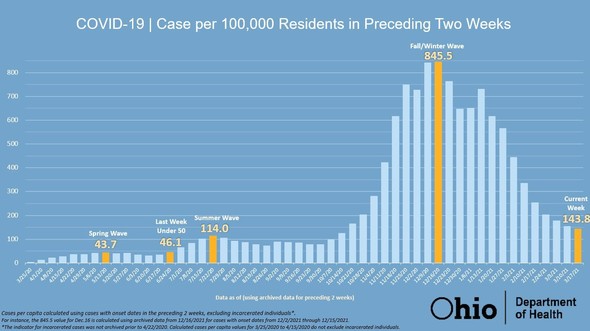
    Governor DeWine announced that Ohio’s statewide case rate stands at 143.8 cases per 100,000 people over the past two weeks. When Ohio reaches 50 cases per 100,000 people for two weeks, all health orders will be lifted. 

    Statewide Case Rate

    OHIO PUBLIC HEALTH ADVISORY SYSTEM

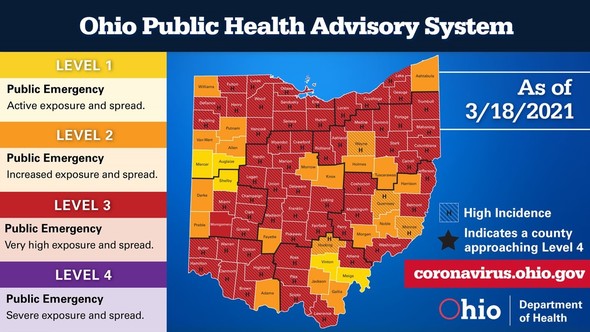
    New health data compiled by the Ohio Department of Health shows declining rates of COVID-19 exposure and spread in ten counties. 

    Dropping from Alert Level 3 to Alert Level 2: Ashtabula, Carroll, Fayette, Jackson, Morrow, and Tuscarawas.

    Dropping from Alert Level 2 to Alert Level 1: Auglaize, Mercer, Shelby, and Vinton. 

    Advisory Map

    NURSING HOME UPDATE

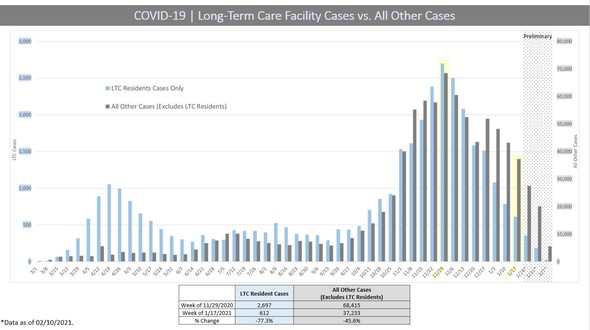
    This week, Ohio’s long-term care facilities reported just 70 new COVID-19 cases, compared to 157 new cases reported the previous week and 2,832 new cases reported at the peak of the pandemic in December.

    “In addition to wearing masks, social distancing, and cleaning, there is no doubt of the significant impact vaccination is having on protecting nursing home residents and preventing severe illness and death among those most targeted by the virus,” said Governor DeWine. 

    A total of 93 percent of Ohio’s nursing homes and 77 percent of assisted living facilities have signed up to get additional vaccine for new staff and new residents through Ohio’s COVID-19 Vaccine Maintenance Program. Governor DeWine urged the 243 facilities in Ohio that have not requested additional vaccine for new staff and residents to alert the state to its process to offer the vaccine by filling out the survey at aging.ohio.gov/COVIDvaccine.

    INDOOR AIR QUALITY ASSISTANCE PROGRAM

    The Ohio Bureau of Workers’ Compensation has expanded the eligibility of the COVID-19 Indoor Air Quality Assistance Program, which provides reimbursements to eligible applicants to help cover the costs of inspections, assessments, maintenance, and improvements to indoor heating, ventilation, and air conditioning systems to control the spread of COVID-19. The program also provides reimbursement for secondary devices designed to destroy bacteria, mold, and viruses.

    Launched in December, this $28 million federally-funded program targeted nursing homes, assisted living centers, and adult day centers that invested in HVAC improvements that weaken COVID-19’s spread. The expanded eligibility extends to:

    • Intermediate care facilities;
    • Hospices;
    • Senior centers;
    • Adult care facilities;
    • Waiver settings (group homes); and
    • Substance use treatment centers.

    More information, including the application, can be found at BWC.ohio.gov.

    CASE DATA/VACCINE INFORMATION

    In-depth COVID-19 data for Ohio: coronavirus.ohio.gov

    Ohio’s central scheduling system: gettheshot.coronavirus.ohio.gov

    All vaccine providers: vaccine.coronavirus.ohio.gov

    More vaccine information: coronavirus.ohio.gov/vaccine

    Video of today’s full update, including versions with foreign language translation, can be viewed on the Ohio Channel’s YouTube page

    For more information on Ohio’s response to COVID-19, visit coronavirus.ohio.gov or call 1-833-4-ASK-ODH.

  • Health Order Signed Regarding Spring Sports and Extracurricular Activities

    Health Order Signed Regarding Spring Sports and Extracurricular Activities

    Ohio Governor Mike DeWine announced today that Ohio Department of Health Director Stephanie McCloud has issued an addendum that updates quarantine guidance for student-athletes and participants in extracurricular activities who may have been incidentally exposed to COVID-19 in a classroom setting.

    The Addendum to Director’s Second Amended Order that Provides Mandatory Requirements for Youth, Collegiate, Amateur, Club and Professional Sports and Extracurricular Activities is in effect now. For spring sports and extracurricular activities, students will not be required to quarantine because they have an incidental exposure to COVID-19 in a classroom under the school-based exposure guidance unless symptoms develop. Students will now be permitted to participate in organized sporting and extracurricular activities as long as they remain symptom-free and follow applicable safety precautions.

    However, students who are exposed in other settings outside of the classroom will be required to continue following existing CDC quarantine guidance.

  • DeWine’s COVID-19 Update: Vaccine Distribution, Nursing Home Cases Drop, more…

    DeWine’s COVID-19 Update: Vaccine Distribution, Nursing Home Cases Drop, more…

    Ohio Governor Mike DeWine and Lt. Governor Jon Husted yesterday provided the following updates on Ohio’s response to the COVID-19 pandemic. 

    VACCINE DISTRIBUTION UPDATE

    Governor DeWine announced today that Ohio received a total of 214,525 first doses of vaccine this week. A total of 223,025 first doses are scheduled to arrive in Ohio during the week of February 15.

    The federal retail pharmacy program will soon begin allotting doses to Ohio’s more than 160 Rite Aid pharmacies. Vaccine distribution will also expand into all 194 Kroger pharmacies.

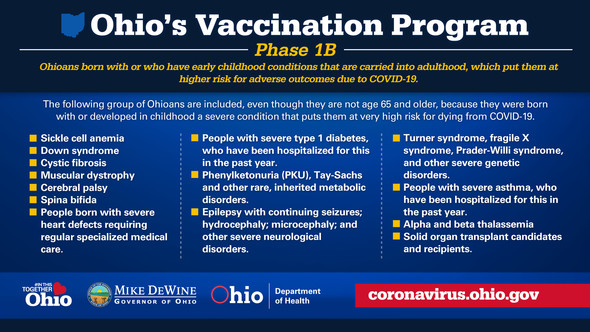
    Those with specific medical conditions that put them at a very high risk of dying from COVID-19 will be eligible for vaccinations next week.

    Ohioans born with the medical conditions outlined below, or those who were diagnosed in early childhood whose conditions continued into adulthood, will qualify to be vaccinated beginning on February 15.

    Phase 1B Conditions

    Dr. Bruce Vanderhoff, chief medical officer at Ohio Department of Health, explained these conditions in more detail. His remarks are available on the Ohio Channel’s YouTube page.

    Approximately 12,000 individuals with these severe medical conditions and developmental disabilities have already been vaccinated, and vaccinations of those in this group will continue.

    NURSING HOME CASES

    Governor DeWine announced today that the number of COVID-19 cases in Ohio’s nursing homes has dropped more than 77 percent since late November. This dramatic drop in cases follows Ohio’s aggressive efforts to vaccinate residents and staff in Ohio’s long-term care facilities. 

    As outlined in the chart below, there were 2,697 COVID-19 cases in long-term care facilities in Ohio during the week of November 29, 2021. During the week of January 17, there were 612 positive cases.

    Nursing Home Case Map

    SCHOOL MODEL UPDATE

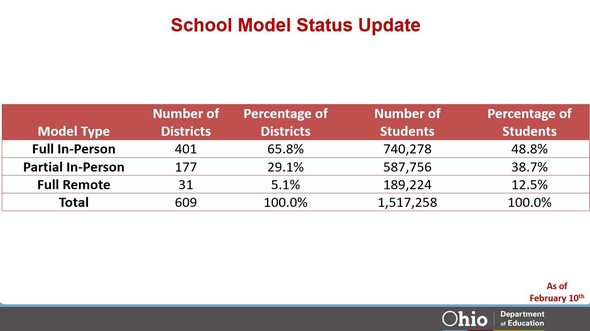
    Governor DeWine shared the latest information on the number of school districts that are physically in school versus those that are fully or partially remote. As a condition to receive priority access to the vaccine, schools were required to commit to full or partial in-person learning by March 1. All but one school district in Ohio have committed to this plan.

    School Update

    OHIO PUBLIC HEALTH ADVISORY SYSTEM

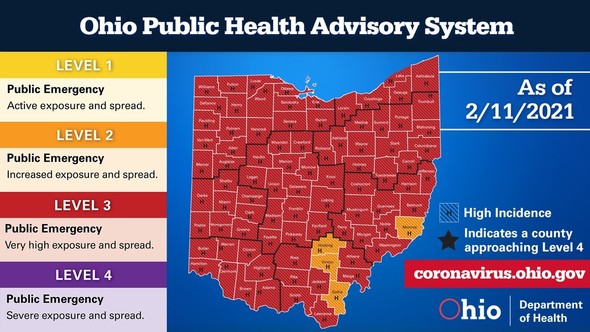
    There was no change in this week’s Ohio Public Health Advisory System map. A county-by-county breakdown outlining the presence of COVID-19 in all of Ohio’s 88 counties can be found on the Ohio Public Health Advisory System’s website.

    Advisory System Map

    CURRENT CASE DATA (2-12-21)

    In total, there are 931,437 confirmed and probable cases of COVID-19 reported in Ohio and 12,577 confirmed and probable COVID-19 deaths. A total of 48,269 people have been hospitalized throughout the pandemic, including 6,908 admissions to intensive care units. In-depth data can be accessed by visiting coronavirus.ohio.gov

    Video of today’s full update, including versions with foreign language translation, can be viewed on the Ohio Channel’s YouTube page

    For more information on Ohio’s response to COVID-19, visit coronavirus.ohio.gov or call 1-833-4-ASK-ODH.

  • Amended health order reopening food service stations signed

    Amended health order reopening food service stations signed

    Ohio Governor Mike DeWine today announced that Ohio Department of Health Director Stephanie McCloud signed the Addendum to Director’s Third Amended Order that Reopens Restaurants, Bars, Banquet and Catering Facilities and Services to Dine-In Service, with Exceptions.

    This amended order, reopens self-service food stations in restaurants, bars, banquet and catering facilities, and services, as long as the following conditions are met:

    • Customers must wear facial coverings while using self-service food stations or in line for self-service food stations. Those unable to wear a facial covering must be served by an employee.
    • Buffet tables/salad bars must be spaced a minimum of 6 feet away from customer seating/tables, and lines must not extend into seating areas.
    • Customer flow at buffet tables/salad bars must move in one direction with a beginning point and ending point, and customers must maintain at least 6 feet of social distancing while in line. Directional signage must be posted indicating where the customer line begins.
    • Hand sanitizer must be placed at self-serve food stations, including at the front of the line and end of the line of buffet tables/salad bars, and used by customers prior to, and after, serving themselves.
    • At least 6 feet of social distancing must be maintained between seated customers and customers in line for a buffet/salad bar and monitored by employees.
    • Serving utensils must be replaced or cleaned and sanitized at least hourly. It is recommended that customers use disposable napkins, tissues, wax paper, etc., when handling serving utensils, and operators of self-service food stations are encouraged to make them available. A trash receptacle should be conveniently located.
    • Use of individually packaged condiments is recommended instead of shared or bulk condiment dispensers.
    • Commonly touched surfaces must be cleaned and sanitized frequently.
    • While in operation, self-serve areas must be continually monitored by staff who are trained in food safety, including monitoring customer hand sanitizing practices at the self-service food station.
    • Food must be protected from contamination, including sneeze guards on self-serve equipment.
    • Signage must be placed at self-service food stations requiring customers to use hand sanitizer before and after serving themselves, and to maintain at least 6 feet of social distancing while in line. The signage should recommend that customers use disposable napkins, tissues, wax paper, etc., when handling serving utensils. A sample sign is available on Ohio’s coronavirus website at https://coronavirus.ohio.gov/wps/portal/gov/covid-19/responsible-restart-ohio/Posters-and-Signs (food service operations and retail food establishments may choose to develop their own signage).

    The order goes into effect on February 11, 2021 at 11:59 p.m.

  • Loveland City School District included in COVID-19 Vaccine Distribution Week 2

    Loveland City School District included in COVID-19 Vaccine Distribution Week 2

    * Story up-dated at 6:10 PM on 1-30-2021

    by David Miller

    David Miller

    Loveland, Ohio – Ohio K-12 schools, including public, private, and career-tech entities, yesterday learned when their teachers and staff necessary for in-person learning are able to begin receiving vaccines.

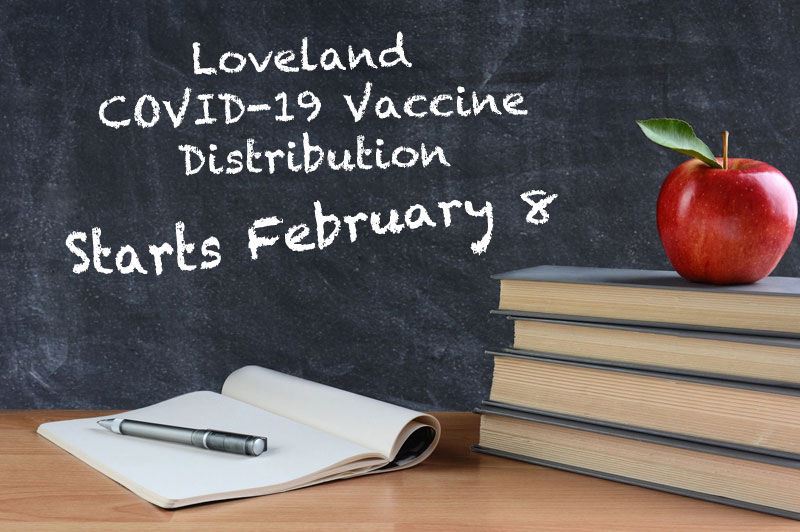
    Loveland City School District is included in COVID-19 Vaccine Distribution Week 2 of first doses, starting February 8 as well as Indian Hill, Moeller, St. Xavier, Cincinnati Hills Christian Academy, Forest Hills (Anderson), Great Oaks Career Campuses, and Sycamore.

    Included in Distribution Week 3 are, Kings, Lebanon, Little Miami, Mason, and St Margaret Of York.

    Included in Distribution Week 4 are, Children’s Meeting House, Goshen, Milford, Ohio Valley Voices, and St. Columban.

    Cincinnati Public Schools were able to jump the line and began their vacinations yesterday.

    Loveland’s schools remain in hybird-learning at all buildings, a combination of some students and staff attending in-person five-days per week and some students and staff teaching or learning in Loveland’s Remote Academy five-days a week.*

    Ohio Governor Mike DeWine has said that he is making it clear his “goal of Ohio returning to in-person learning either full-time or in a hybrid model by March 1st.” In order to do this, the governor identified teachers and school personnel necessary for in-person learning as Phase 1B recipients as part of the Ohio COVID-19 Vaccination program.

    “Vaccine is incredibly scarce, and we simply don’t have enough to vaccinate everyone at the same time. Therefore, this will be a rolling process, just like it has been during other vaccination phases, with a goal of administering all first doses by March 1st,” said Governor DeWine. “This rollout schedule is a heavy logistical lift that aims to ensure the maximum number of people can be vaccinated in the shortest amount of time.”

    In a news release, Dewine said, “The plan also makes the process as simple as possible for staff to be vaccinated and is organized to allow most K-12 staff in a county to be vaccinated within seven days of their assigned vaccination start date. For the limited number of counties where vaccinations will take place over multiple weeks, local leaders will make the logistical and scheduling decisions.”

    Eligible school employees will learn more about the locations and times of the vaccination sites from their administrators. The following documents list the entities by county in the week when teachers and personnel are able to begin vaccinations.

    Week One (Beginning February 1st)

    Week Two (Beginning February 8th)

    Week Three (Beginning February 15th)

    Week Four (Beginning February 22nd)

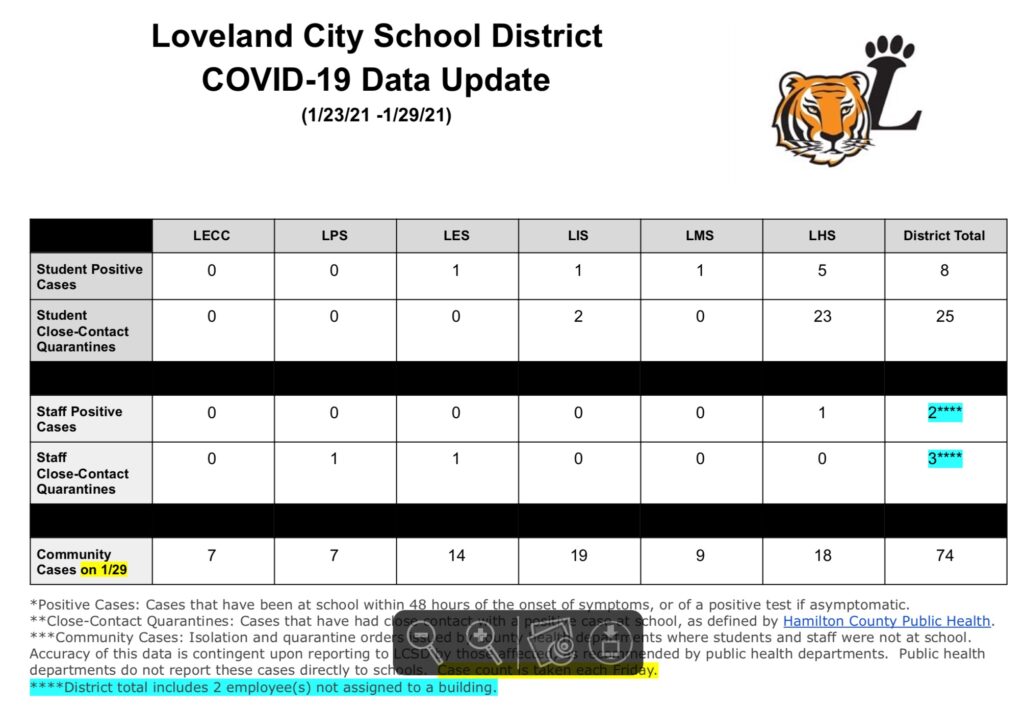
    Here is the Loveland District’s latest Covid 19 Dashboard also released on Friday:

    Below are the recent daily reports issued by the District:

    The district has been notified of the following positive case of COVID-19:

    • On 1/28/21, a student at Loveland Elementary School, last at school on 1/25/21.
    • On 1/26/21, a student at Loveland Intermediate School, last at school on 1/22/21.
    • On 1/23/21, a teaching staff member at Loveland High School, last at school on 1/20/21;
    • On 1/24/21, a student at Loveland High School, last at school on 1/20/21; 
    • On 1/25/21, a non-teaching, non-school-based staff member, last at work on 1/21/21;
    • On 1/25/21, a student at Loveland High School, last at school on 1/20/21; and
    • On 1/25/21, a student at Loveland High School, last at school on 1/22/21.
    • On 1/22/21, a student at Loveland High School, last at school on 1/20/21.
  • DeWine: COVID-19 Update: Phase 1B Timeline

    DeWine: COVID-19 Update: Phase 1B Timeline

    Loveland, Ohio – Ohio Governor Mike DeWine and Lt. Governor Jon Husted today provided the following updates on Ohio’s response to the COVID-19 pandemic. 

    PHASE 1B TIMELINE

    Governor DeWine today reemphasized the vaccine distribution timeline for Phase 1B of Ohio’s vaccination program which is set to begin next week with those ages 80 and older.

    This week: Today, the Ohio Department of Health will receive information from the federal government on Ohio’s vaccine allotment for the upcoming week. This information, including which providers will receive vaccines and how many, will be communicated to local health departments this evening. Each county health department, in partnership with their local emergency management agency and vaccine providers, will communicate vaccine distribution plans with the media and the public on Wednesday and Thursday. The process to vaccinate those in each county will vary depending on the provider. Some are expected to hold walk-up clinics, others may take appointments, etc.

    On Thursday, the Ohio Department of Health will launch a tool on coronavirus.ohio.gov to assist citizens looking for a provider that has been allotted vaccines. The tool will be searchable by zip code or county, but it will not be updated in real-time. It is critical that those eligible to receive a vaccine consult local sources to determine up-to-date vaccine availability. 

    Hospitals that are vaccinating their frontline healthcare workers as part of Phase 1A must complete these vaccinations by Sunday, January 17.

    Week of January 18: Vaccine providers will begin receiving their first allotment of vaccines for those ages 80 and older. Vaccines will be delivered on Monday, Tuesday, and Wednesday. Each provider will begin administering vaccines the day after they receive their shipment. All vaccines must be distributed within seven days.

    Week of January 25: Vaccinations are anticipated to begin for those ages 75 and up following the same process outlined above. Vaccinations will also be available to those with severe congenital, developmental, or early-onset medical disorders. Additional information on how these individuals can choose to receive their vaccines is forthcoming.

    Week of February 1: Vaccinations are anticipated to begin for those ages 70 and up following the same process outlined above. 

    Week of February 8: Vaccinations are anticipated to begin for those ages 65 and up following the same process outlined above. 

    Vaccine providers are not expected to vaccinate everyone in each age group in one week. As new age groups are authorized to receive vaccinations, previous age groups will continue receiving the vaccine. 

    Senior citizens with questions on the vaccination process are urged to contact the Area Agencies on Aging at www.aging.ohio.gov or by calling 1-866-243-5678.

    NURSING HOME VACCINATIONS

    To date, 85 percent of Ohio’s nursing homes have been visited by a vaccine provider as part of Phase 1A. Vaccine providers anecdotally tell the Ohio Department of Health that the number of residents and staff accepting the vaccine is increasing. 

    In Ohio’s two nursing homes operated by the Ohio Department of Veteran Services, 92 percent of veterans have accepted the vaccine. Regarding staff, 60 percent have opted to receive the vaccine in the Sandusky home and 42 percent have chosen to be vaccinated in the Georgetown home.

  • Gov. DeWine on COVID in Ohio

    Gov. DeWine on COVID in Ohio

    This afternoon Ohio Governor Mike DeWine delivered a statewide broadcast address to Ohioans to discuss the “critical stage” Ohio is at in battling COVID-19 and its impact on Ohio moving forward.

    The address is archived on the Ohio Channel.

    http://ohiochannel.org/video/governor-mike-dewine-11-11-2020-statewide-address-to-ohioans

  • Trick or Treat’s a go in Loveland

    Trick or Treat’s a go in Loveland

    -This story has been corrected to reflect that Halloween is on Saturday October 31.

    Loveland Police Chief Sean Rahe

    Loveland, Ohio – City Manager Dave Kennedy announced at last night’s council meeting that Halloween Trick or Treating in Loveland is a go. He said that Police Chief Sean Rahe is reviewing an advisory that was issued by the Ohio Department of health and the City will issue a statement after it has been reviewed.

    Kennedy said, “We hope to move forward full steam and certainly encourage people to follow the rules. We are not going to mess with changing times or dates.”

    Photo by Olivia Smith © 2020

    Although not announced at the meeting, Trick or Treating hours in Loveland have been between 6 and 8 PM for many consecutive years.

    Halloween is on Saturday October 31.

    DeWine recommends children wear masks on Halloween!

    In Ohio Governor Mike DeWine’s announcement of the health department orders he reminded parents that Halloween activities will be different this year than in years past. He encouraged, “parents and children to wear a mask, practice social distancing, avoid large groups, and to stay home if sick.” Dewine also said, “Final decisions on whether to hold or participate in trick-or-treating or other events should be made by local communities, individuals, and parents.”

    The state has developed guidance for Halloween and it can be found at coronavirus.ohio.gov.


    Celebrating Halloween at Re-Start Ohio

    Amid the COVID-19 pandemic, it is important to use caution and plan ahead for Halloween festivities. Decisions on whether to participate should be made by local communities, individuals, and parents/ guardians.

    Always follow current state public health orders and rules/regulations established by your local community, and check the Ohio Public Health Advisory System to determine COVID-19 risk levels in your county before making decisions about Halloween activities. Some communities may choose to cancel Halloween events, so check with local sources before making plans.

    This guidance is designed to help curb the spread of COVID-19. It will be reassessed and updated as the situation evolves and we learn more in the weeks leading up to Halloween.

    Recommended Best Practices

    General Guidance

    • It is strongly recommended that hayrides and haunted houses be canceled/avoided.

    • It is strongly recommended that Ohioans exercise caution when deciding to participate in trick-or-treating and events that put them in close contact with people outside their households. To lower risk, consider safer, socially distant ways to celebrate, such as:

    • Holding a drive-through or drive-in trick-or-treat event, with children in costume and face coverings staying in cars and collecting treats from individuals spaced at least 6 feet apart.

    • Holding drive-by costume or car-decorating contests with judges who are physically distanced.

    • Leaving treats for friends and neighbors.

    • Decorating your home and hide treats as an alternative to trick-or-treating.

    • Holding costume parties or pumpkin carving events or contests online, such as by video conference.

    • Do not hold large in-person Halloween parties. If holding smaller parties, limit attendance to 10 or fewer people and hold the event in an outdoor area where social distancing is possible. Avoid activities, such as bobbing for apples, that foster the spread of infection.

    • Always wear a face covering and stay 6 feet away from people who are not from your household, whether trick-or- treating, passing out treats, or attending attractions or events. Stay home if you are sick. (NOTE: Face coverings should never be placed on children younger than 2 or anyone who cannot easily remove them.)

    • Carry hand sanitizer and use it often, especially after coming into contact with frequently touched surfaces and before eating candy.

    • Select events/attractions that are held outdoors and allow attendees to stay in their cars (such as drive-through event with displays) or socially distance. Avoid events that involve being crowded in a small area or coming into contact with/being touched by others.

    • Consider the people in your household who may be at greater risk of complications if COVID-19 is brought into the home, such as those with certain health conditions, women who are pregnant, or older family members.

    For Parents/ Guardians

    • If taking your children trick-or-treating, limit the number of houses you visit and ask your children to stay as far from treat-givers as possible. For small children, consider holding the bag for them.

    • Wipe off candy wrappers with sanitizing wipes when you arrive home. (NOTE: Never wipe unpackaged food with wipes.) • Allow children to eat only factory-wrapped treats. Avoid homemade treats made by strangers.

    • If your child is at greater risk of complications from COVID-19, contact your doctor before allowing participation in Halloween activities.

    For Community Members

    • For trick-or-treating, reach out to neighbors to discuss ways to ensure 6-foot social distancing, how candy can most safely be distributed, and the need for face coverings.
    • Refrain from having children select their own treats from a bowl/common container or set up a hand-sanitizing station. Consider placing treats on porch steps or a table in the driveway with a sign asking children to take only one. Or use other creative ways to distribute treats, such as using a candy “slide” made of PVC pipe, or hanging treats from a wall or fence.