|
|
|

News and Events from the Loveland, Ohio Area
Without fear or favor
Since 2004


|
|
|
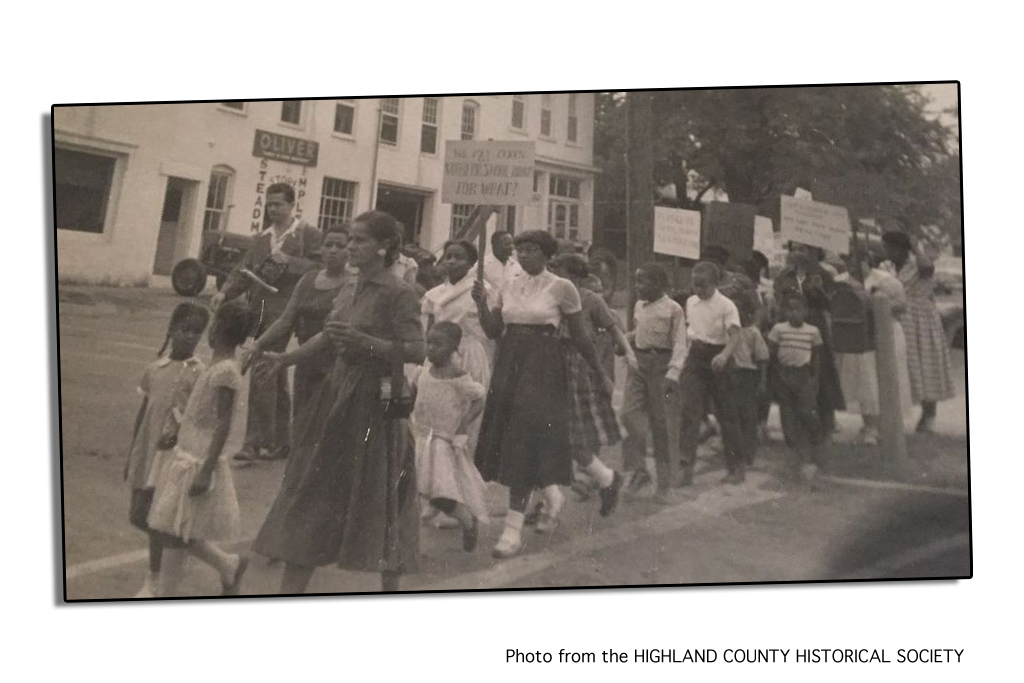
| For over two years, 55 Black mothers and children in Hillsboro, Ohio, marched daily to a whites-only school to demand admission. The Lincoln School Story highlights a facet of the Black struggle for freedom that is too often under-recognized. Remembering the efforts of the marchers to integrate public schools in southwest Ohio provides important context for understanding the Black experience in the United States. The stories shared by the Lincoln School marchers help us imagine a future free of racial inequality. This project provides an opportunity to connect and build understanding. Here are a few of the things documentary viewers said they want to share with their friends: |
| “History lives through us. We first learn to experience history in our bodies then later in our hearts.” “Ohio played an important role in the civil rights movement.” “The fearless and persistent mothers who fought for a better life for their children. AMAZING!” “There are good people in dark places! Keep believing.” “Perseverance and love can change the world.” |
Ohio Humanities is proud to support important projects like The Lincoln School Story so that we can learn from the powerful dedication and bravery of those who fight for change. We plan to expand this project by funding an extended documentary that will explore the story in more depth and producing complementary educational materials and a children’s book.
If you value projects like The Lincoln School Story, please make a gift to Ohio Humanities so that more Ohioans can learn about the people, moments, and movements that have made our state what it is. And help us reach more people by sharing this link with your friends and family. Encourage them to sign up to receive our newsletter, magazine, updates on events and activities, and more ways to get involved with Ohio Humanities.
Sincerely, 
Rebecca Brown Asmo
Executive Director

Available to assist nonprofit organizations that serve the public by offering programs in history, literature, philosophy, or other humanities topics.
Columbus, Ohio – Ohio Humanities announced the availability of additional OH CARES funding to help cultural nonprofit organizations affected by COVID-19 health crisis. According to Pat Williamsen, Ohio Humanities executive director, up to $60,000 is available to assist nonprofit organizations that serve the public by offering programs in history, literature, philosophy, or other humanities topics. Grants of up to $5,000 will be awarded through a competitive application process.
Funded by the Coronavirus Aid, Relief, and Economic Security Act (CARES Act), the grants will help Ohio’s cultural community maintain staffing and provide programming for audiences affected by continuing pandemic restrictions. OH CARES grants may be used for digital programming, humanities education staff, and supplies to maintain the safety of employees and patrons. Organizations that received OH CARES grants in the first round of funding are ineligible.
Do you belong to or support a Loveland organization that may be eligible?
Applications for OH CARES II grants will be available beginning on Friday, July 31; the deadline for submission will be Friday, August 14. A webinar about this funding initiative will be held on July 29 at 10 a.m. To register for the webinar, go to ohiohumanities.org/CARES.
The CARES Act, passed by Congress on March 27, included $75 million of emergency funding for the National Endowment for the Humanities (NEH). Forty percent of that amount was distributed to the 56 state and territorial humanities councils to support local relief efforts. In late March, NEH reported that the anchors of the creative economy such as museums and historical societies were reporting losses of $1 billion every month as facilities were closed and educational programs were canceled.
Art museums, local historical societies, preservation societies, and other organizations that preserve and promote Ohio history, heritage, and culture.
Announcing the emergency appropriations available through the CARES Act, NEH Chairman Jon Parrish Peede observed, “To the extent that healing is to come during and after this pandemic, it will be through humanities fields from philosophy to literature to history to religious studies—through the act of documenting, preserving, sharing, and reflecting— that our communities will move toward a greater sense of wholeness.”
In its first call for OH CARES grants, Ohio Humanities awarded $690,000 to 91 organizations throughout Ohio. Recipients included art museums, local historical societies, preservation societies, and other organizations that preserve and promote Ohio history, heritage, and culture.
Ohio Humanities staff are available by email to help applicants navigate the application process to access emergency funding. Ohio Humanities will continue accepting grant applications for regular projects at deadlines listed at http://www.ohiohumanities.org/grants-2/.
Additional information about OH CARES funding can be found at ohiohumanities.org/CARES.