Tag: Ohio lawmakers

  • Ohio lawmakers introduce bipartisan bill that would help college students combat food insecurity

    Ohio lawmakers introduce bipartisan bill that would help college students combat food insecurity

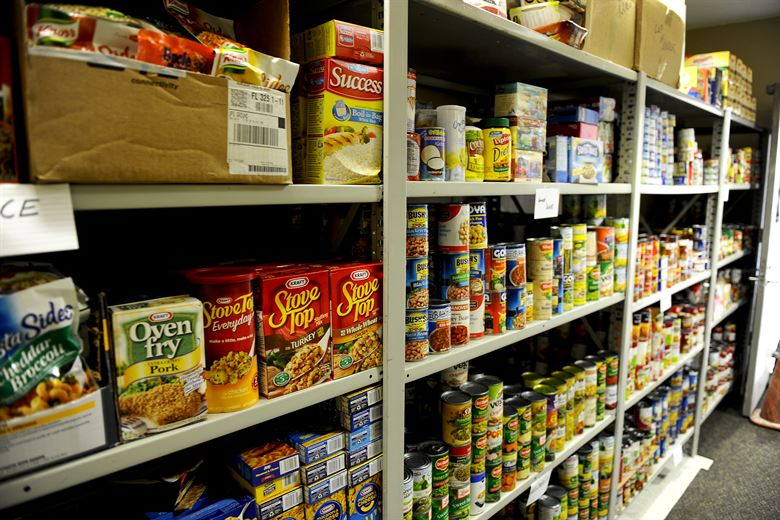
    Stock image of a food pantry courtesy Hurlburt Field.

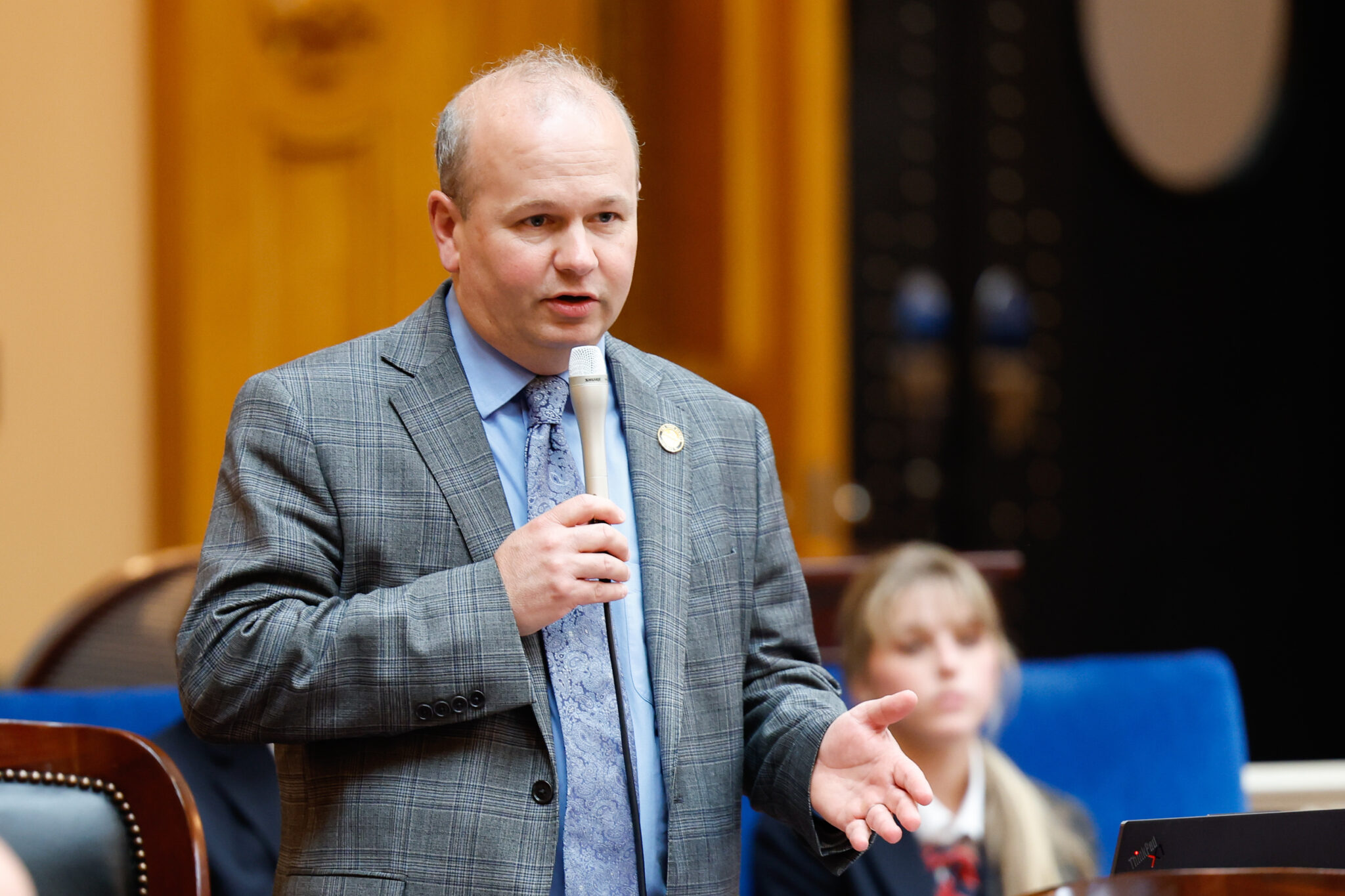
    Ohio House Reps. Sean Patrick Brennan, D-Parma, and Jim Hoops, R-Napoleon, introduced Enact the Hunger Free Campus Act earlier this year.

    By: Ohio Capital Journal

    A proposed bipartisan bill would help Ohio college students struggling with food insecurity.

    Ohio House Reps. Sean Patrick Brennan, D-Parma, and Jim Hoops, R-Napoleon, introduced Enact the Hunger Free Campus Act earlier this year and it had sponsor testimony Tuesday in the Ohio House Workforce and Higher Education Committee meeting.

    Ohio House Bill 157 would require the Chancellor of Higher Education to create the Hunger-Free Campus Grant Program and award hunger-free campus grants which could, for example, create an on-campus food pantry or a partnership with a local bank, provide students information about SNAP, have an emergency assistance grant available to students, or have a student meal plan credit donation program.

    GET THE MORNING HEADLINES.


    “A Hunger Free Campus program addresses these challenges directly by providing accessible resources and support systems tailored to meet students’ nutritional needs free from stigma,” Brennan said. “Such initiatives ensure that no student has to choose between paying the electric bill or buying textbooks or groceries, allowing them to concentrate fully on their education.”

    H.B. 157 would appropriate $625,000 for fiscal year 2026 and 2027 for the program.

    Some universities across the state have a food pantry on campus for students, but how they operate varies, Brennan said.

    “There is not consistency on where the pantries live, the size, what is offered, what department they are under, and what you have to prove in order to utilize them,” he said. “Sometimes it’s a single staff member going to the local grocer on their day off to buy things for the pantry.”

    Food insecurity is often an overlooked issue that affects many college students, Brennan said.

    “Rising costs are making it tougher for students to find sustainable and affordable food options, especially for the growing number of non-traditional students with children,” he said.

    Food insecurity is an issue that goes beyond hunger, Brennan said.

    About 23% of college students experienced food insecurity in 2020 and 59% of food-insecure students potentially eligible for SNAP did not report receiving benefits, according to a report released last summer by the U.S. Government Accountability Office.

    A survey conducted last year at Ohio State University showed that nearly one out of every three Ohio State students is food insecure, according to the student newspaper The Lantern.

    Food insecurity means a household has limited or uncertain access to enough food to meet their needs, according to the U.S. Department of Agriculture.

    “It affects students’ academic performance, mental health, and overall well-being,” Brennan said. “When students are unsure where their next meal will come from, they struggle to focus in class, perform poorly on exams, and are more likely to drop out.”

    Similar legislation has passed in California, Washington, Oklahoma, Illinois, Louisiana, Minnesota, Pennsylvania, Maryland, and Massachusetts.

    “This bill will place Ohio at the forefront of tackling food insecurity in America and serve once again as a beacon by which more states will soon emulate,” Hoops said.

    Brennan introduced a similar bill in the previous general assembly, but it only had sponsor testimony.

    Members of the committee had positive things to say about H.B. 157.

    “I remember working in college full-time, but still it was difficult to afford food alongside my medicine, and so this is, no doubt, hopefully passes and will support a lot of students,” said state Rep. Munira Abdullahi, D-Columbus.

    State Rep. Beryl Brown Piccolantonio, D-Gahanna, asked Brennan and Hoops about the importance of students being nourished in order to learn.

    “If you don’t have a full belly, the last thing you’re thinking about is loading the three branches of government,” Brennan said. “The same would be true for anyone, for that matter, whether you’re an elementary school kid, a middle school, a high school, or in our higher ed classrooms.”

    State Rep. Kevin Ritter, R-Marietta, asked where the line is?

    “Just because we can do it, should we do it?” he asked.

    Brennan responded by saying he views this bill as an investment in young people.

    “When we invest in people that are hard-working and want to move ahead and climb that socioeconomic ladder, it’s going to save us in the long run,” he said.

    Follow Capital Journal Reporter Megan Henry on Bluesky.


    Megan Henry
    Megan Henry

    Megan Henry is a reporter for the Ohio Capital Journal and has spent the past five years reporting in Ohio on various topics including education, healthcare, business and crime. She previously worked at The Columbus Dispatch, part of the USA Today Network.

    Ohio Capital Journal is part of States Newsroom, the nation’s largest state-focused nonprofit news organization.

    MORE FROM AUTHOR

  • I am once again asking Ohio lawmakers to please just feed the children

    I am once again asking Ohio lawmakers to please just feed the children

    Students getting their l lunch at a primary school. (Photo by Amanda Mills/Centers for Disease Control and Prevention.)

    Commentary

    by David DeWitt

    I am once again asking Ohio lawmakers to please just feed the children. For all that is good and decent, at long last, may we please at least just make sure schoolchildren aren’t going hungry?

    Pleading for the state government to make sure that Ohio schoolchildren aren’t spending their days dealing with hunger pangs, tired, irritable, distracted, unable to concentrate, unable to learn, well, that has traditionally been an obscene and mind-boggling ask for too many Ohio lawmakers.

    They keep declining to do it.

    But as my buddy Alexander Pope says, hope springs eternal in the human breast.

    So I will continue sounding the call, because I hold the firm and unshakeable, but apparently insane opinion that schoolchildren shouldn’t be going hungry.

    They should be fed. All of them. Whatever meals they need.

    Student hunger is pervasive in Ohio.

    With more than 1.6 million public school students, about 57% of them meet qualifications and are participating in free and reduced lunch programs.

    Data from Feeding America shows 1 in 5 Ohio children live in homes that are food insecure. In some counties like Cuyahoga and Adams and Scioto, it’s 1 in 4.

    Here’s the rub: A 2023 report from Children’s Defense Fund Ohio found that 1 in 3 children who live in those food insecure homes don’t qualify for free school meals because their households are technically over the 185% of poverty line.

    Many others don’t participate for fear of judgment.

    This means that hundreds of thousands of schoolchildren in Ohio are going hungry during the school day because either they’re not covered or fear the stigma.

    Rubbing gravel on the wound, Republicans in U.S. Congress are right now looking at making cuts that would slash national school meal programs, impacting 280,000 Ohio kids.

    But in Ohio, a new bipartisan bill, Ohio Senate Bill 109, would make sure that no Ohio K-12 student has to go through the day hungry. The legislation sponsored by state Sen. Bill Blessing, R-Colerain Twp., and state Sen. Kent Smith, D-Euclid, would provide breakfast and lunch at no cost to public and chartered nonpublic school students.

    During the 2023 Ohio budget season, a proposal for universal school meals was made but was never passed.

    Under this cycle’s proposal, the Ohio Department of Education and Workforce would be directed to reimburse public and chartered nonpublic schools who participate in the national school breakfast and lunch programs by covering the gap between the federal reimbursements for free and reduced-price breakfasts and lunches and those who would be required to pay because they don’t qualify for meal assistance.

    The bill lists an appropriation of $300 million to support the state reimbursements. The state operating budget is projected at $108 billion for fiscal year 2026 and $110 billion for fiscal year 2027.

    Blessing and Smith plan to push for the bill to be included in the two-year budget due July 1, currently under negotiation in the Ohio House.

    A group of high schoolers from across Ohio rallied at the Statehouse this past Tuesday advocating for it.

    Every teacher I’ve ever talked to about it has told me the same thing: Hunger is an enormous barrier to learning. Meanwhile, kids are being put into social situations where they either go hungry or face the judgment of their peers.

    As we all know, the antenna of fear of social stigma and judgment is sky high in childhood and adolescence.

    We have a simple and effective solution: Remove the stigma, remove the fear of judgment, remove the school meal caste system, and just feed the children, all of the children.

    If the basic humanity and decency of it isn’t compelling enough, I can make an economic argument.

    Well-fed kids make for more attentive and engaged students. Attentive and engaged students have better academic success. Most successful students become successful citizens. Successful citizens grow the economy.

    So, feed the children. All of the children, all the same.

    Please just feed the children.

    YOU MAKE OUR WORK POSSIBLE.

    GET THE MORNING HEADLINES.

    ________________
    David DeWitt
    David DeWitt

    Ohio Capital Journal Editor-in-Chief and Opinion Columnist David DeWitt has been covering government, politics, and policy in Ohio since 2007, including education, health care, crime and the courts, poverty, state and local government, business, labor, energy, the environment, and social issues. He has worked for the National Journal, The New York Observer, and The Athens NEWS. He holds a bachelor’s degree from Ohio University’s E.W. Scripps School of Journalism and is a board member of the E.W. Scripps Society of Alumni and Friends. He can be found on X @DC_DeWitt

    Ohio Capital Journal is part of States Newsroom, the nation’s largest state-focused nonprofit news organization.

    MORE FROM AUTHOR


  • Ohio lawmakers approve cellphones in school measure

    Ohio lawmakers approve cellphones in school measure

    BY:  Ohio Capital Journal

    Ohio lawmakers signed off on changes to the military seal for high school diplomas on Wednesday. But the bill’s most notable provision was a last minute amendment regarding cellphones in K-12 schools that caught a ride on the non-controversial measure.

    Recently, Gov. Mike DeWine urged lawmakers to address cellphones in classrooms during his state of the state address. Now, about a month later, those changes are headed to his desk.

    Some lawmakers casually refer to the changes as a “cellphone ban,” but that’s a bit of a misnomer. Instead, the law directs every district to develop a written policy aimed at minimizing phone use during school hours and potential distractions during class instruction.

    The bill also includes an exception for students who need a phone to assist in learning or to track a health concern, so long as it is reflected in their individual education plan.

    On the Senate floor, the cellphone provision’s chief backer, Sen. Andrew Brenner, R-Delaware, explained “the legislation does not require districts to adopt a ban on all students’ cell phone use, though that is an option if the school district chooses to do so.”

    He added that those districts with cellphone policies in place don’t need to change them so long as the policy “emphasize(s) minimal use and least amount of distraction.”

    “The language also directs the Department of Education and Workforce to develop a model policy informed by evidence-based research on the effects of smartphones and classrooms, that districts may choose to adopt as their policy if they wish to do so,” Brenner said.

     COLUMBUS, Ohio — JANUARY 10: Newly sworn in State Rep. Beryl Brown Piccolantonio, D-Gahanna. (Photo by Graham Stokes for Ohio Capital Journal) 

    Across the hall in the House, Rep. Tracy Richardson, R-Marysville, emphasized how their approach gives districts direction without being prescriptive.

    “Each school district is required to create their own policy, thus ensuring — and let me make this very clear — local control,” she said.

    Up until this January, Rep. Beryl Piccolantonio, D-Gahanna, was serving as president of the Gahanna-Jefferson School Board, and she described the changes as “critically important.”

    “A frequent issue that was raised to us by staff, and by students, quite frankly, was how difficult it was for staff to enforce their own classroom policies because they didn’t have broader support to back up that enforcement.”

    She praised the measure for giving districts the “flexibility” to develop their own approaches to deal with the issue. Highlighting a recent take your child to work day event where kids debated cellphones in schools, she noted “even some of the students acknowledge the distraction that cellphones have within their classroom.”

    Follow OCJ Reporter Nick Evans on Twitter.


    Nick Evans
    NICK EVANS

    Nick Evans has spent the past seven years reporting for NPR member stations in Florida and Ohio. He got his start in Tallahassee, covering issues like redistricting, same sex marriage and medical marijuana. Since arriving in Columbus in 2018, he has covered everything from city council to football. His work on Ohio politics and local policing have been featured numerous times on NPR.

    Ohio Capital Journal is part of States Newsroom, the nation’s largest state-focused nonprofit news organization.

    MORE FROM AUTHOR