Tag: Ohio legislature

  • Education advocates say Ohio legislature should focus on funding, not regulating curriculum

    Education advocates say Ohio legislature should focus on funding, not regulating curriculum

    Getty Images

    BY: SUSAN TEBBEN – Ohio Capital Journal

    Groups keeping an eye on the Ohio legislature’s handling of education are hoping the General Assembly focuses on funding and appealing to new teachers, rather than bills regulating curriculum and “divisive” issues.

    The Ohio Education Association is continuing it’s push to eliminate mandatory retention from the third-grade reading guarantee, focusing their attention getting through to the state Senate.

    “I’m optimistic, I think now that we’re past election season, we can focus on finding common ground and really making sure that we’re addressing the needs of students,” said Scott DiMauro, head of the OEA.

    The association has already put out a series of recommendations for improving recruitment and retention strategies for teachers, including taking away financial barriers and prioritizing “the need to have a diverse teaching pool to serve all our communities.”

    “I’m encouraged that there have been a lot of productive conversations at the regional level and with policymakers who I think share this concern,” DiMauro said.

    The Ohio Federation of Teachers has also spotlighted the training of teachers and the retention of quality teachers as part of their state priorities.

    “Teachers are still tired and we need to look at how we make the education system work them,” said OFT executive director Melissa Cropper.

    What education policy groups don’t want to see is rushed legislation that flies through the lame duck session without the ability for transparency and accountability. This includes bills that have already been introduced, like House Bill 616, the most recent “divisive concepts” bill brought by state Reps. Jean Schmidt, R-Loveland, and Mike Loychik, R-Bazetta, to regulate the curriculums in schools, including legislating when and how sexual orientation and gender ideology can be included in school lessons.

    But Cropper isn’t as worried about “extremist” bills being pushed through before the end of the year because the Republican majority has increased based on general election results, theoretically giving the GOP no reason to fast-track bills or attach them quickly to other bills.

    “We are certainly opposed to anything being passed during a lame duck session when there’s not time for anything to be vetted,” Cropper said. “But given the results of the election, I don’t think that there’s any urgency on their part to do anything.”

    HB 616 is not currently scheduled to appear in committee this week, as the legislature comes back from its summer recess.

    DiMauro said he’s not sure what the prospects for education policy will be going into the lame duck session, but more than that, he wants to see more focus on “committing resources to a funding plan that primarily fits the needs of students and teachers.”

    “We know that it’s critical for the future of our state … that Ohio is a welcoming place for educators,” DiMauro said.

    Both education leaders were bolstered by the results of the Ohio State Board of Education races that took place on November 8, wherein two incumbents were unseated, and another race put a former Democratic legislator and teacher on the board to replace outgoing member Kirsten Hill.

    “I don’t think these are tiny changes, I think these are huge changes,” Cropper said. “We finally have some more people on (the board) who are there because they want to make this education system work for students and … is not about some culture war agenda.”

  • Ohio abortion bans on the way following death of Roe

    Ohio abortion bans on the way following death of Roe

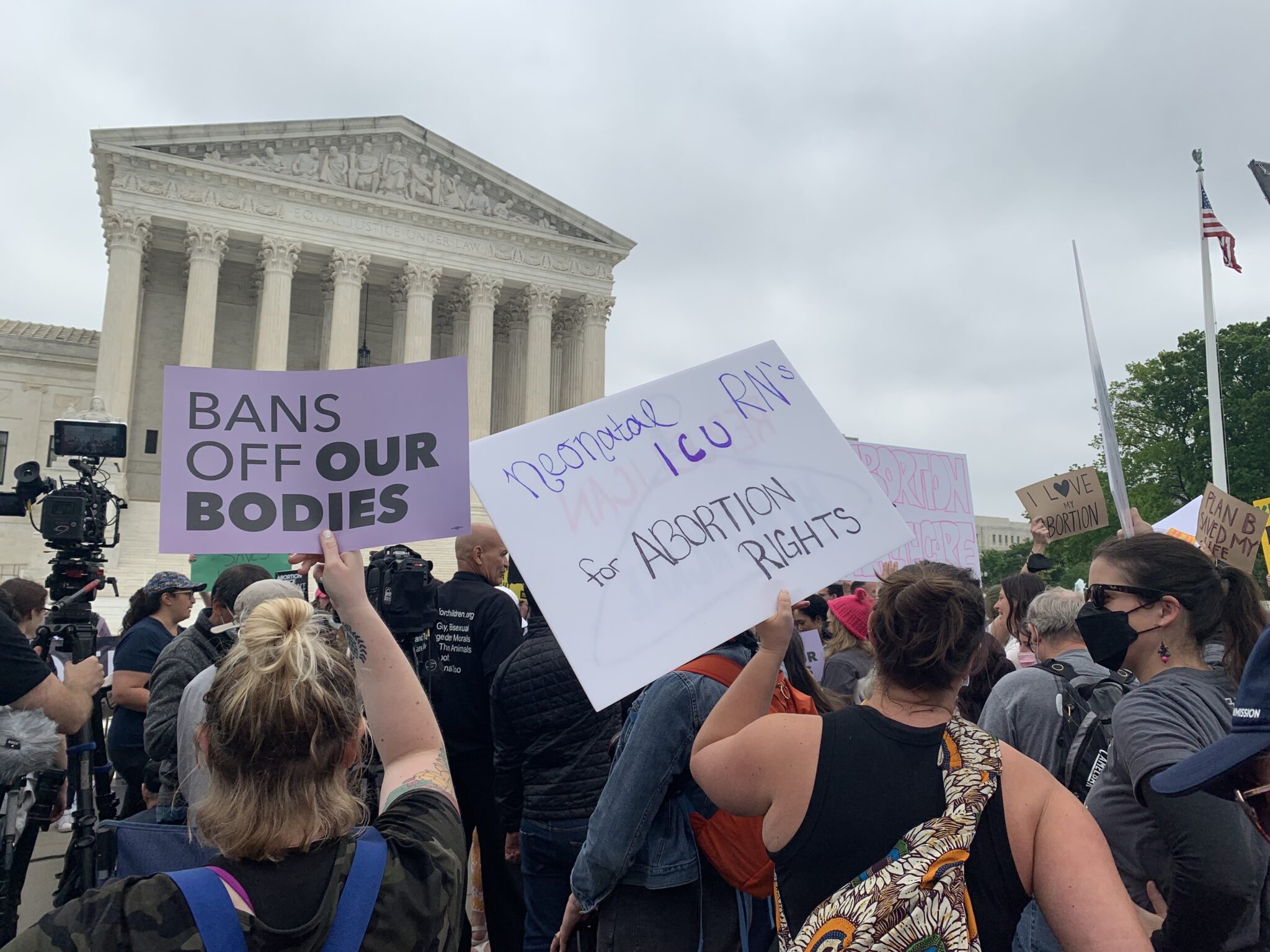
    Abortion rights activists protest outside the U.S. Supreme Court. Photo by Jane Norman, States Newsroom.

    BY: SUSAN TEBBEN – Ohio Capital Journal


    Now that Roe v. Wade has been overturned by the U.S. Supreme Court, the Ohio legislature is set up to move forward with abortion bans in the state.

    The U.S. Supreme Court ruled Friday morning that “The Constitution does not confer a right to abortion; Roe and Casey are overruled; and the authority to regulate abortion is returned to the people and their elected representatives.”

    Legislative leaders said they were prepared to wait until the decision was released before moving forward with legislation to eliminate abortion services. As of Friday night, abortion is legal in Ohio up to six weeks into a pregnancy.

    “The most important thing that Ohioans need to know today is that abortion is still legal in Ohio,” said Kellie Copeland, executive director of Pro-Choice Ohio. “There are nine clinics across the state and several in neighboring states that can safely and legally provide abortion care for patients. Today’s ruling is devastating, but it is not the end.”

    Gov. Mike DeWine agreed that it would be “prudent” to wait until the Dobbs decision was made, and implement the previously-passed six-week abortion ban before moving on to new legislation.

    “While noting those conditions, the Governor has expressed support for additional legislation depending on the details of the Dobbs decision,” a spokesperson for DeWine told the OCJ.

    The Ohio Policy Evaluation Network, a group of researchers working with The Ohio State University, the University of Cincinnati and Case Western Reserve University, said in a fact-sheet that it expects Ohio to ask for immediate implementation of the six-week abortion ban enacted in 2019.

    The ban does not include exceptions for rape or incest, and only allows doctors to present an “affirmative defense,” legal arguments that could only come into play after a doctor has been charged with an offense, if the life of the pregnant person was at risk at the time of the abortion. The defense only works if the abortion happened in a hospital, and does not allow for risks that involve mental health.

    Columbus-area OB/GYN Dr. Anita Somani said a ban at six weeks could eliminate the chance of an abortion before a pregnant person is aware of the pregnancy.

    “If you don’t know you’re six-weeks pregnant, and you find out at eight or 10 weeks, then you have to look at going to a neighboring state,” Somani said. “At that point, you have to have money and time, as a patient, when you may have other children or just can’t afford it.”

    The most recent abortion trigger ban, House Bill 598, was introduced by state Rep. Jean Schmidt, R-Loveland, would make abortion a fourth-degree felony, and promotion of abortion a misdemeanor offense.

    The charges are targeted at the medical professionals providing the abortions, and provides no exemptions for cases of incest or rape. “Affirmative defenses” would be allowed in cases where the pregnancy presented a serious risk to the pregnant person.

    Civil lawsuits could also be filed against physicians who perform abortions under the bill, and medical licenses could be at risk.

    Senate President Matt Huffman celebrated the decision as “a long overdue turning point in our nation’s history.”

    “I look forward to reviewing the specific details in the opinion, so that as we move forward, any legislation we pass in the Ohio Senate follows the guidance of the court, protecting life, and upholding the Constitution,” Huffman said.

    House Speaker Bob Cupp said in a Friday statement that the “process of reviewing the decision is underway, including what steps should be taken at the state level and the timeline for doing so.”

    “We will be working closely with Governor DeWine, Attorney General Dave Yost and our colleagues in the Ohio Senate on this matter,” Cupp’s statement read.

    DeWine has been consistently pro-life in his support of legislation and funding choices, including an executive order that allocated $3 million in Temporary Assistance for Needy Families (TANF) dollars to organizations who assisted pregnant Ohioans without promoting abortion as an option.

    Attorney General Dave Yost said the decision “returns abortion policy to the place it has always belonged: to the elected policy branches of government.”

    “Roe was poorly reasoned, a doctrine of shifting sands that invited perpetual litigation,” Yost said in a statement.

    Meanwhile, the impacts of abortion bans in the state could create significant health care barriers and increased transportation costs to access care, according to researchers. These impacts could disproportionately impact low-income communities and people of color.

    Iris Harvey, CEO and president of Planned Parenthood of Greater Ohio, said the Supreme Court decision will give politicians power over Ohio bodies, including how they receive care.

    “This dangerous and chilling decision can have devastating consequences in Ohio, forcing people to travel hundreds, sometimes thousands, of miles for care or remain pregnant,” Harvey said in a statement.

  • Ohio pediatric doctors decry government control of gender-affirming care

    Ohio pediatric doctors decry government control of gender-affirming care

    Getty images

    BY: SUSAN TEBBEN – Ohio Capital Journal

    Doctors in Ohio’s major children’s hospitals say a bill that would regulate and restrict gender-affirming care puts both the patients and the doctors at risk, and brings government overreach into medical decisions.

    House Bill 454 had its fourth hearing in the Ohio House Families, Aging and Human Services Committee on Wednesday, where opponent testimony was heard from leaders of gender programs and treatment centers, all of whom said not only is a disconnect between a gender assigned at birth and one’s identity a medical condition, but it is one that should get the treatment that is needed.

    The decision as to how that treatment is conducted should not be made by the Ohio legislature, the medical professionals argued, but by those going through the process.

    “Decisions regarding treatment of gender dysphoria should be left to parents and their adolescents in consultation with their health care providers,”

    Dr. Armand Antommaria

    “Decisions regarding treatment of gender dysphoria should be left to parents and their adolescents in consultation with their health care providers,” Dr. Armand Antommaria, of the Cincinnati Children’s Hospital & Medical Center, told the committee on Wednesday.

    The bill, introduced by Republican state Reps. Gary Click and Diane Grendell, bars health professionals from providing “gender transition procedures” to minors, or even referring minors to doctors for the procedures.

    Medical professionals who provide such services could be accused of engaging in “unprofessional conduct,” which could affect their medical license, and could even expose doctors to lawsuits.

    The bill also restricts public funds from going to organizations who provide the procedures and would keep insurance coverage from going to gender-affirming care in minors, including Medicaid.

    All school staff, including school nurses, would be banned from “withholding, or encouraging or coercing a minor to withhold, from the minor’s parent or legal guardian, information that a minor’s gender identity is inconsistent with the minor’s biological sex.”

    But the physicians who spoke on the bill on Wednesday said the parents are engaged in the entire process when treatment for gender dysphoria – when a person’s gender identity differs from their gender assigned at birth – is conducted at Ohio medical facilities.

    “As a lifelong conservative, I implore you not to legislate personal family decision-making or override the professional practice of medicine,” said Nick Lashutka, president and CEO of the Ohio Children’s Hospital Association.

    Supporters of the bill include the religious lobby group Center for Christian Virtue, whose leaders deny that a person can be anything other than the biological gender they were assigned at birth. Dr. David Axelson, head of the Department of Psychiatry and Behavioral Health at Nationwide Children’s Hospital, said starting from the standpoint that gender dysphoria is a medical diagnosis, not an elective procedure, is vital to helping with children’s health.

    “Fundamental to our understanding of gender dysphoria is understanding and recognizing that medically, it is absolutely possible that a person’s gender identity can differ from their body for many reasons, and that these experiences are not choices or ideologies,” Axelson said.

    Lashutka submitted estimates that the OCHA member hospitals have seen about 3,300 patients in clinics under the age of 18 for gender dysphoria.

    Other data provided by Lashutka said patients receive a comprehensive evaluation by mental health specialists, and only 7% of minor patients have been prescribed “puberty blockers.” Only 35% of minor patients are prescribed hormone treatments, according to the OCHA data.

    “No minor can or has received any treatment without parental or legal guardian consent,” Lashutka said. “There has never been evidence presented to the contrary.”

    Antommaria said HB 454’s passage would “threaten the safety of some of Ohio’s most vulnerable children; it would threaten the mental health of adolescents with gender dysphoria.”

    The committee did not conduct a vote on the bill Wednesday, but one clarification was made by Click. He said questions had arisen about the bill’s regulation of therapy as a “gender transition procedure.” The Legislative Service Commission decided counseling does not meet the definition of gender transition procedure under the bill, according to Click.

    “In all the things (opponents and sponsors) disagree on, I think that’s one of the things we can all agree is that children do deserve to have counseling, and so we want to make sure that that’s possible,” Click said.

    Late Wednesday evening, another trans bill was pushed through the House along party lines, despite having not had a hearing in committee since June of last year.

    State Rep. Jena Powell’s bill to ban transgender athletes from competing in sports alongside others of their gender was added to a bill regarding local mentorship while it went through floor debate Wednesday night.

    Republican supporters said the issue centered on fairness in sports, and several female legislators talked of their own experiences in sports, arguing about the biological differences between boys and girls.

    “I got no issue with trans people,” said state Rep. Sara Carruthers, R-Hamilton. “I do have an issue with physically being able to outdo women in women’s sports.”

    Democrats, wearing rainbow lapel pins in honor of June’s designation as LGBTQ+ Pride month, heavily criticized the bill.

    “How nice it is that it’s 11 p.m. at night and we’re attacking trans kids in Ohio”

    Rep. Kent Smith, D-Euclid

    “How nice it is that it’s 11 p.m. at night and we’re attacking trans kids in Ohio,” said state Rep. Kent Smith, D-Euclid.

    State Rep. Richard Brown, D-Canal Winchester, called out sponsors for bringing an amendment that “is not germane at all” to the original bill’s purpose, and multiple Democrats criticized legislation of youth in Ohio, especially without passage by a House committee before it was presented on the floor.

    “This is an issue searching for a problem that doesn’t exist,” said state Rep. Phil Robinson, D-Solon.

    The bill must now go to the state Senate before it can move to the governor for signature.

    Last June, when the House tried to push through the bill the first time, Gov. Mike DeWine criticized the measure.

    “This issue is best addressed outside of government, through individual sports leagues and athletic associations, including the Ohio High School Athletic Association, who can tailor policies to meet the needs of their member athletes and member institutions,” the governor said in a statement.

    Also as previously reported, only five transgender girls competed in women’s high school sports as of April of last year.

  • Ohio Supreme Court denies Dem request to change primary

    Ohio Supreme Court denies Dem request to change primary

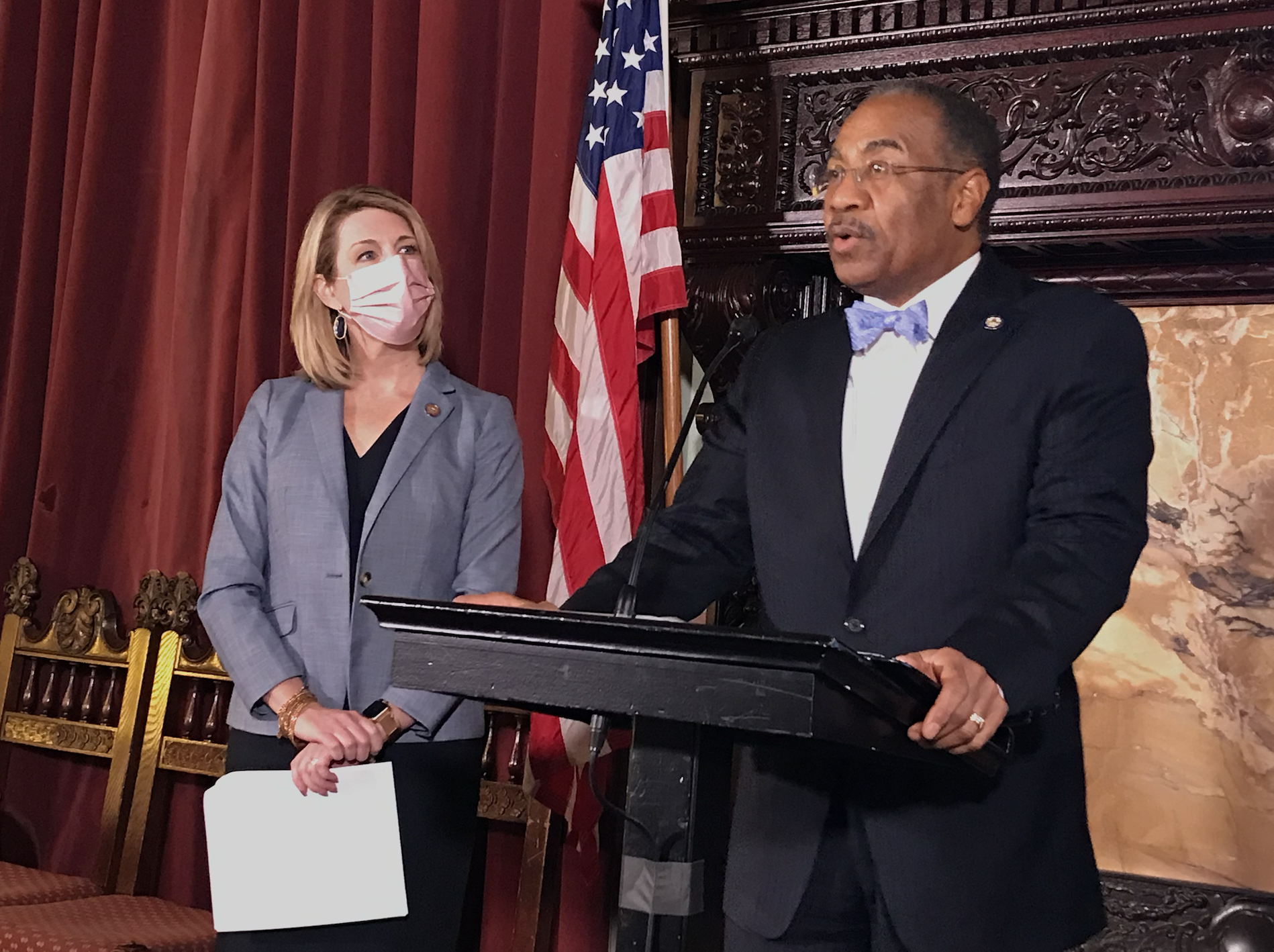
    State Sen. Vernon Sykes, D-Akron, speaks with press alongside House Minority Leader Allison Russo in a February press conference. (Photo: Susan Tebben, OCJ)

    BY: SUSAN TEBBEN – Ohio Capital Journal

    Democrats weren’t successful in convincing the Ohio Supreme Court to change the May 3 primary date, according to a Thursday afternoon filing.

    The motion was filed by House Minority Leader Allison Russo and state Sen. Vernon Sykes, both members of the Ohio Redistricting Commission, who said moving the primary date would help the commission be able to finish their work without worrying about the election deadlines.

    They also said the supreme court had the “inherent” authority to force the change, despite laws that state the General Assembly controls changes to the election dates and times.

    The state’s high court disagreed, firmly planting the power of election dates and times on the Ohio legislature.

    Justice Patrick Fischer made a point to issue an opinion agreeing with the court decision, and emphasizing the General Assembly’s power to establish the date of the primary election, and its authority to “ease the pressure that the commission’s failure to adopt a constitutional redistricting plan has placed on the secretary of state and on court boards of elections by moving the primary election, should that action become necessary.”

    Republicans who responded to the request to move the primary accused Democrats of attempting to “circumvent the power of the General Assembly.”

    “They apparently cannot muster enough support for legislation to move the primary election date so they’ve come here asking this court, improperly, to do it,” Secretary of State Frank LaRose told the court.

    Legislative measures by other Democratic legislators are still pending in the General Assembly. Senate President Matt Huffman said the temperature of at least the Ohio Senate hasn’t changed, meaning there isn’t enough support for changing the primary. He said the situation is “dynamic,” especially as the Ohio Redistricting Commission continues a week of work to revise legislative maps for the fourth time.

  • Abortion ‘trigger bill’ coming to Senate committee

    Abortion ‘trigger bill’ coming to Senate committee

    BY: and Ohio Capital Journal

    A piece of legislation meant to go into effect if federal abortion rights protections are overturned will start its path through the Ohio legislature this week.

    Senate Bill 123 is set to appear in the Ohio Senate Health Committee on Wednesday morning.

    If passed, the bill would then await court challenges of the U.S. Supreme Court’s Roe v. Wade decision, the ruling that legalized abortion nationwide. If challenges to Roe were successful, Ohio could then quickly ban abortion.

    There is an exception in the bill for abortions when there is serious risk to the pregnant person’s life, but written certification of the necessity is required, and “appropriate neonatal services for premature infants must exist at the facility where the physician performs or induces the abortion.”

    Currently, abortion is legal in the state of Ohio up to 22 weeks gestation.

    The proposed legislation would also ban “as the crime of promoting abortion” possessing, selling or advertising “drugs, medicine, instrument or device to cause an abortion”

    “Promoting abortion” is one of a few crimes defined under the bill, and would be a first-degree misdemeanor if passed. “Abortion manslaughter” would be a crime under the bill, treated as a first-degree felony punishable with a minimum of four to seven years in prison for “purposely taking the life of a child born by attempted abortion who is alive when removed from the…uterus.”

    As with other attempted legislation on abortion in the state, the punishment primarily lands on the physicians, leaving those having the abortions legally cleared and even able to file a wrongful death lawsuit if an abortion is performed in violation of the proposed legislation.

    A physician could have their license revoked if found guilty of “abortion manslaughter,” “criminal abortion,” or “promoting abortion.”

    The language regarding “abortion manslaughter” is reminiscent of language in a different abortion-related bill seeking to punish doctors after “botched abortions.” That bill seeks to prohibit inaction by doctors in the case of “failed” abortions, however, state data shows failed abortions are very rare.

    Of abortions reported at 19 weeks or more gestation in the state’s most recent data — which was available at the time the botched abortion bill was presented — only one pregnancy was found to be viable.

    The Senate legislation isn’t the first “trigger ban” that has been introduced in the General Assembly in the recent past. Last spring, a House bill was introduced by former state Rep. John Becker, also aiming to take effect if Roe v. Wade was overturned.

    Abortion-rights advocates are planning to rally together at the Ohio Statehouse at 12:30 p.m. on Tuesday, the day before the committee meets to consider the trigger ban.

    “With the stark reality that Ohio could be the next state where abortion is entirely inaccessible, now is the time to show up and fight for our communities,” said Aileen Day, communications for Planned Parenthood Advocates of Ohio, in a statement.


    Susan Tebben is an award-winning journalist with a decade of experience covering Ohio news, including courts and crime, Appalachian social issues, government, education, diversity and culture. She has worked for The Newark Advocate, The Glasgow Daily Times, The Athens Messenger, and WOUB Public Media. She has also had work featured on National Public Radio.

  • HEALTH CARE POLITICS & GOV Proposed Ohio abortion bills would impose new mandates, spread misinformation

    HEALTH CARE POLITICS & GOV Proposed Ohio abortion bills would impose new mandates, spread misinformation

    BY: and Ohio Capital Journal

    Returning from summer break, the Ohio legislature could review two GOP-led pieces of legislation that would place health mandates on patients considering abortions.

    One of the bills, recently introduced by state Rep. Jennifer Gross, would require physicians to dictate the results of a mandated ultrasound and also provide information about a link between breast cancer that has been disproven by multiple medical organizations.

    State Rep. Jennifer Gross, R-West Chester 

    Gross, usually known for and outspoken in her disapproval of health care mandates, introduced the bill this week.

    Patients already have to meet with a physician 24 hours before an abortion, but under this bill, along with hearing about the medical risks of the procedure and the probably gestational age, a patient would be told “the possible increased risk of breast cancer that is associated with women who have undergone an abortion,” along with the “short-term and long-term risk of psychological or emotional harm” from choosing to have an abortion.

    Multiple organizations, including the American Cancer Society, the American College of Gynecologists and the Susan G. Komen Breast Cancer Foundation have denied the link, citing research studies on the relationship between breast cancer and abortion.

    The American Cancer Society said these research studies “have not found a cause-and-effect relationship between abortion and breast cancer.”

    The Gross bill has not been assigned to a committee for consideration, but it has several sponsors, all Republican.

    Meanwhile, a separate bill seeking to notify abortion patients of possible risks was introduced during the legislature’s summer break, and has been assigned to the House Health Committee.

    House Bill 378  was introduced in July by state Reps. Kyle Koehler, R-Springfield, and Sarah Fowler Arthur, R-Ashtabula, and specifically targets medication abortion, which is done through a two-pill regimen, rather than surgery.

    The bill would require medical professionals to explain a controversial and medically unproven method of “reversing” the abortion by not taking the second of the two-pill regimen and giving additional progesterone to counteract the first pill.

    The American College of Obstetricians and Gynecologists said claims about the “reversal” method “are not based in science and do not meet clinical standards.”

    The bill is a reintroduction of a similar one that passed the Senate in 2019, but didn’t make it through the House.

    Abortion is legal in the state of Ohio up to 20 weeks gestation.


    Susan Tebben is an award-winning journalist with a decade of experience covering Ohio news, including courts and crime, Appalachian social issues, government, education, diversity and culture. She has worked for The Newark Advocate, The Glasgow Daily Times, The Athens Messenger, and WOUB Public Media. She has also had work featured on National Public Radio.

  • K-12 funding boost headed to districts, ACT/SAT opt-out bill headed to the House

    K-12 funding boost headed to districts, ACT/SAT opt-out bill headed to the House

    By Susan Tebben and Ohio Capital Journal

    Columbus, Ohio – The Ohio legislature approved COVID-19 pandemic-related measures to bring more federal monies to K-12 schools, and the House will review another bill to reduce testing requirements for students.

    The Ohio Senate unanimously passed House Bill 170 on Wednesday, with the House promptly agreeing to the Senate’s version of the bill the same day.

    “Parents, teachers and students in the communities that we represent are depending on this,” said state Sen. Teresa Fedor, D-Toledo, during the Senate session on Wednesday.

    The bill provides a total of $857 million to the Ohio Department of Education in federal CARES Act funding to K-12 schools.

    Included in the bill is $7 million for duties performed by the Ohio National Guard during the pandemic, and $173 million for the state Department of Health to expand COVID-19 testing and support.

    Another $154.9 million will go to the Emergency Assistance to Non-Public Schools, and $633 million to the Elementary and Secondary Relief (ESSER) funds.

    The bill also permits the Auditor of State to audit the spending by the Ohio Department of Education and each school district for money appropriated for fiscal year 2021 and funds received via COVID-19 stimulus packages, the CARES Act and the American Rescue Plan.

    A piece of legislation helping students and their schools avoid using standardized testing as a metric of learning is on its way for a full House full vote.

    House Bill 82 was quickly passed out of the House Primary & Secondary Committee this week, moving forward a measure to allow students to opt out of state-funded administration of the ACT and SATs.

    There was no discussion of the bill before it was passed out of committee, but the bill had the support of the Ohio School Counselor Association and the Ohio Education Association. The bill’s sponsors, GOP state Reps. Jon Cross and Don Jones, said the stress of the tests on students and a trend in higher education of making ACT/SAT scores optional for admission make state spending on the tests unnecessary.

    Currently, all high school juniors are required to take a college admission test as part of the state’s College and Work Ready Assessment System. The state pays $40 per student for the ACT and $36.35 per student for the SAT, according to an analysis by the Legislative Service Commission.

    That amounts to $4.9 million in state spending in fiscal year 2019, most of which was used for the ACT.

    Should the bill be passed and go into effect during the 2021-22 school year, the first class to be allowed to opt out would be the class of 2026.

  • School safety training grants available for schools in Ohio

    School safety training grants available for schools in Ohio

    Schools will have the flexibility to use these grants for things like training for school resource officers, safety and security materials, and programs to identify and help students who may be struggling with their mental health.

    Ohio Attorney General Mike DeWine has announced that he is awarding $12 million in grants to help enhance safety and security at schools across the state.

    All of Ohio’s public schools, chartered nonpublic schools, and schools operated by county boards of developmental disabilities will receive the greater of $2,500 or $5.65 per student to spend toward school safety programs and training.

    “Schools will have the flexibility to use these grants for things like training for school resource officers, safety and security materials, and programs to identify and help students who may be struggling with their mental health,” said DeWine

    The grants are funded with appropriations made by the Ohio legislature as part of House Bill 318. The bill, which was sponsored by state representatives Sarah LaTourette (R-Chesterland) and John Patterson (D-Jefferson), appointed the Ohio Attorney General’s Office to develop the school safety training grant program in consultation with the Ohio Department of Education and the Ohio Department of Mental Health and Addiction Services.

    The law requires that participating schools and county boards work with law enforcement in their jurisdictions to determine the best use of the grant funding.

    A full list of grant awards can be found on the Ohio Attorney General’s website.

    Other Resourses

    • Active Shooter Response: An Educator’s Guide: This 25-part video series was produced by the Attorney General’s Ohio Peace Officer Training Academy (OPOTA) to aid educators in preparing for and reacting to a potentially violent school incident, such as a school shooting. The brief videos are an update to the training offered by OPOTA beginning in 2013 that provided guidance to nearly 15,000 educators on how to intervene with students who could pose a danger and how to respond in a crisis situation.
    • Emergency Management Plan Aerial Photographs: Special agents with the Attorney General’s Ohio Bureau of Criminal Investigation (BCI) are available to take free aerial photographs of school buildings for inclusion in school emergency management plans. BCI currently has six drones that are used primarily to document crime scenes and assist in missing persons cases, but BCI is offering to use its drones to take aerial photos of school campuses to help law enforcement plan for and respond to an emergency. School administrators, in coordination with local law enforcement, can request photographs by calling 855-BCI-OHIO (855-224-6446).

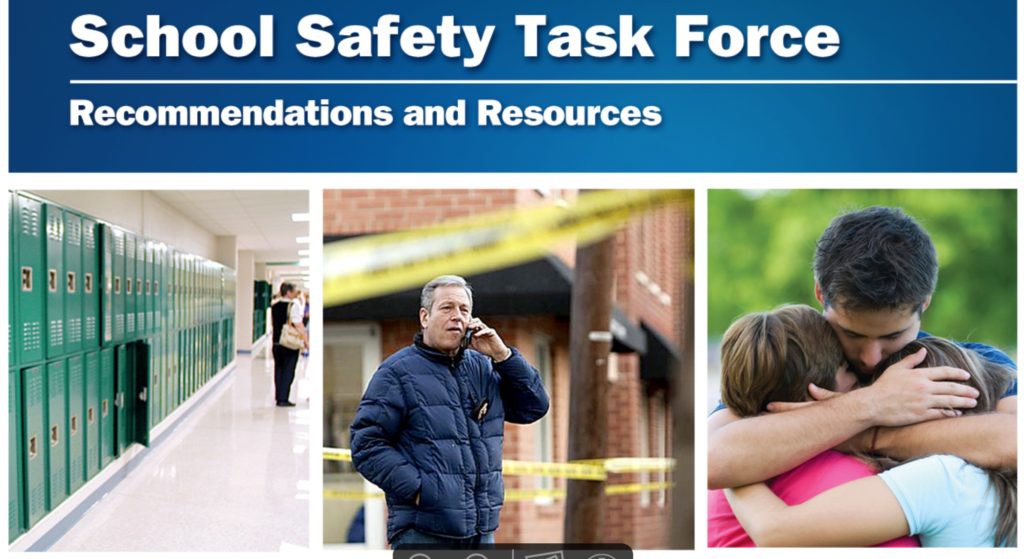
    Attorney General DeWine also worked with schools across the state to achieve greater compliance on school safety plans and convened a School Safety Task Force that issued dozens of school safety recommendations. The task force recognized that mental health awareness was essential for schools to identify and intervene with students who may be at risk.