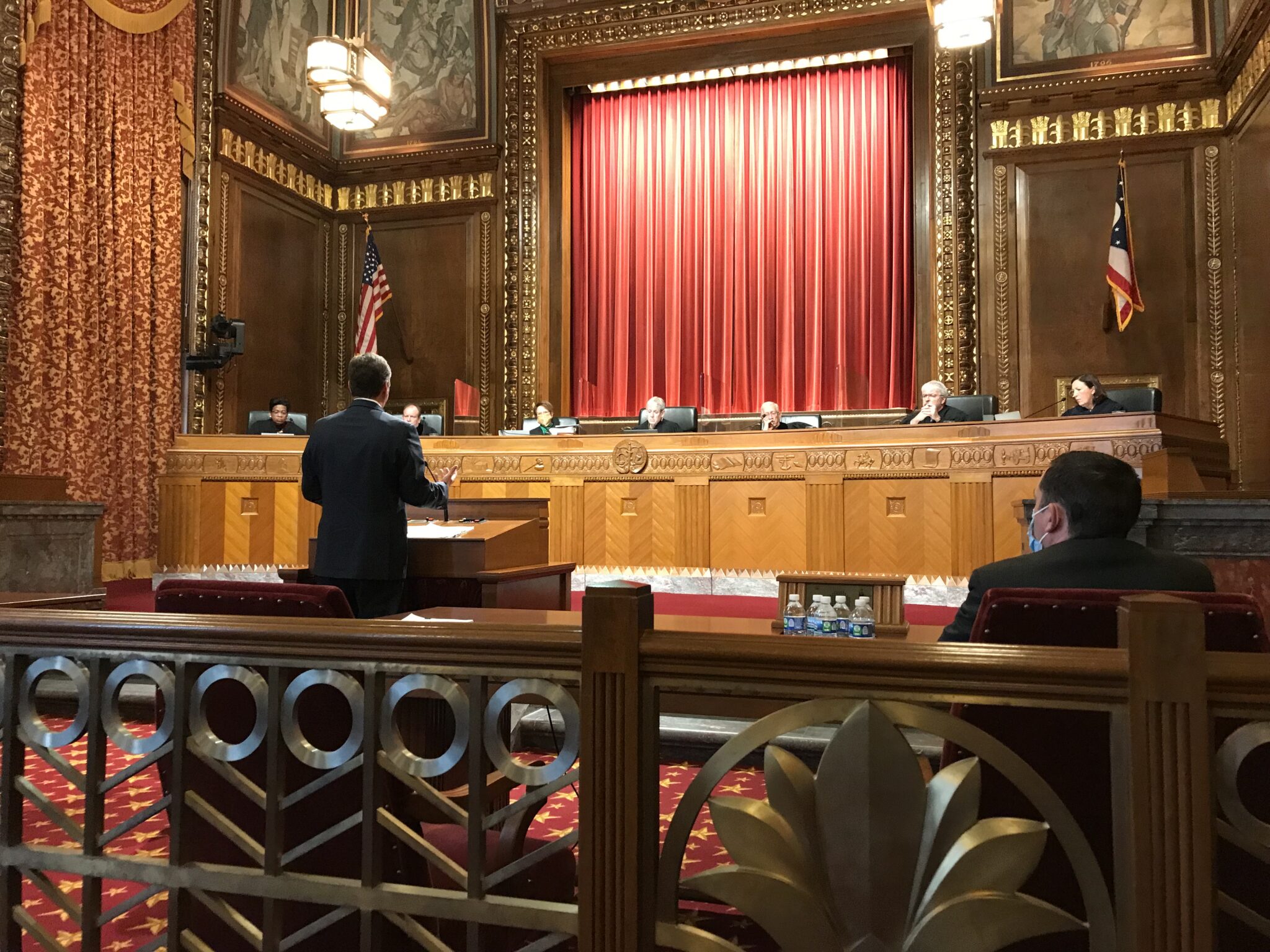
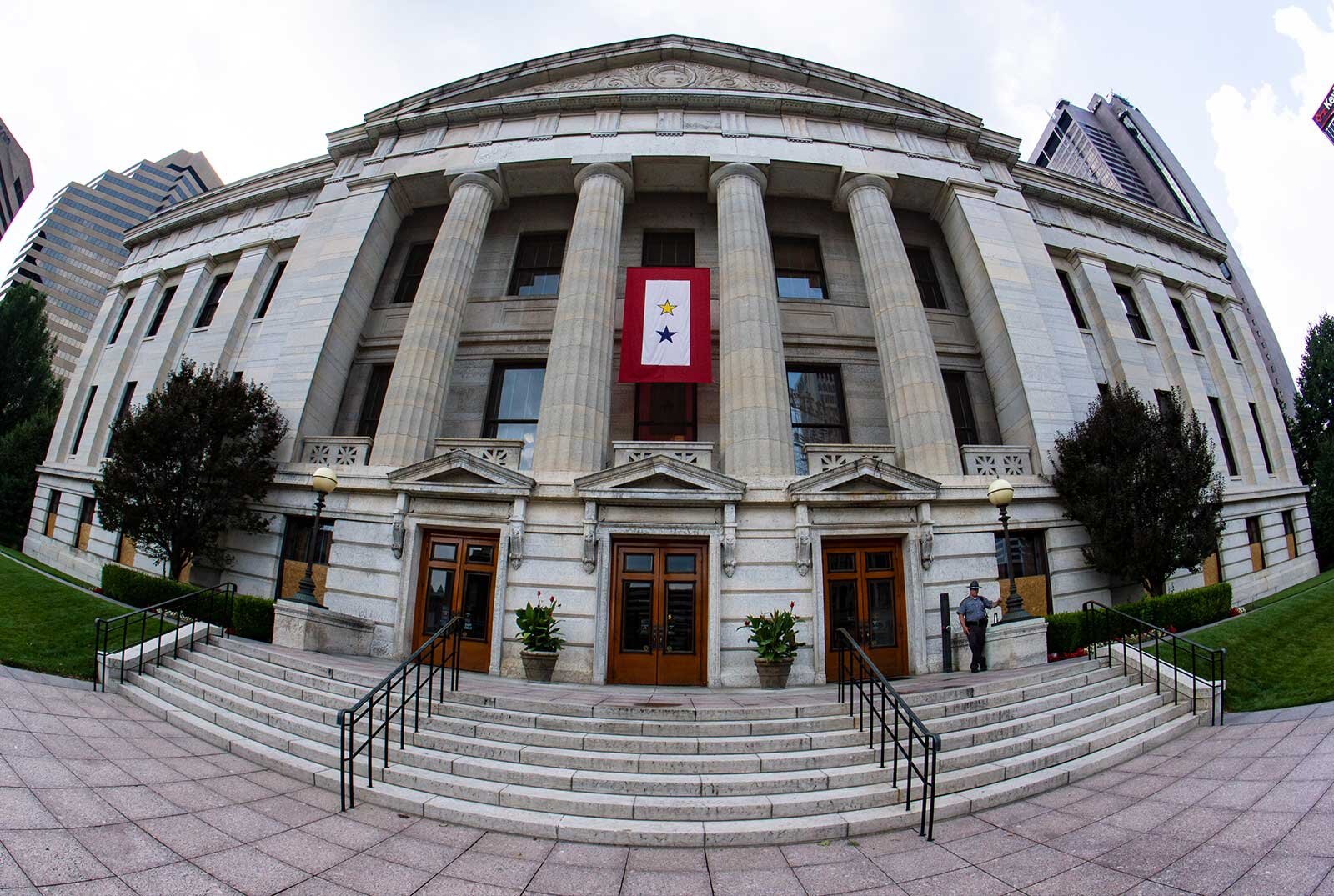
Attorney Phillip Strach speaks before the Ohio Supreme Court, arguing for the constitutionality of legislative district maps. The court heard arguments on three cases asking it to reject the maps approved in September. (Photo: Susan Tebben, OCJ)
The Ohio Supreme Court weighed in on the redistricting battle on Friday evening, asking the members of the Ohio Redistricting Commission why it shouldn’t hold them in contempt of court for defying its order.
Chief Justice Maureen O’Connor signed an entry in all three of the lawsuits against the ORC on legislative redistricting, asking Gov. Mike DeWine, Secretary of State Frank LaRose, Auditor Keith Faber, Senate President Matt Huffman, House Speaker (and commission co-chair) Bob Cupp, state Sen. (and commission co-chair) Vernon Sykes and House Minority Leader Allison Russo, to explain the “failure to comply with this court’s February 7, 2022 order,” and why they shouldn’t face anything from fines to jail time, the consequences for contempt of court.
The court had been asked by the League of Women Voters, the Ohio Organizing Collaborative and a group of Ohio residents – the parties in the three lawsuits originally filed to challenge maps approved by the ORC – to order the commission to give specific reasons for their choice to adjourn without maps on Feb. 17.
The ORC members now have until noon on Feb. 23 to tell the court why they shouldn’t be held in contempt.
The groups also asked for justification for the commission’s lack of action on any sort of map, despite being presented with a map by the Democratic House and Senate caucuses, which they shot down along party lines on the day of the deadline.
Huffman accused drawers of the Dem map of racial gerrymandering to the benefit of Democrats in certain districts, including the district that holds Lake County, typically a strongly GOP area. Russo wholly denied the accusations.
The GOP commission members said during the meeting that they could not find a way to draw maps that complied with all the redistricting provisions of the constitution, while also complying with the rules the supreme court had given in their majority opinion invalidating the previous maps. Mainly, the GOP said they couldn’t hit the target of 54-46 partisan breakdown asked for by the court justices, a number based on statewide voter preferences over the last 10 years.
But some of the commission members, of both parties, disagreed with the decision to leave before approving a map.
“I think it is a mistake for this commission to stop and basically say that we’re at an impasse,” Gov. Mike DeWine said on Thursday. “I don’t think that is an option that the law gives us.”
Co-chair Sykes agreed that contempt was a possibility for the commission members, and said he was willing to do whatever could be done to move forward.
Asked after the commission adjourned if that included contempt of court: “Including whatever we can do.”
The choice to adjourn didn’t require a majority vote, but was met with no formal objections.
The supreme court ordered the ORC to come up with “entirely new” maps after invalidating not one but two different sets of legislative district maps. Their deadline to file with the Secretary of State’s Office was Feb. 17, with those maps then being sent to the court for review by the next day.
The order came the same day a federal lawsuit was filed by Ohio residents, some of whom are also anti-abortion advocates in the statewide lobby group Ohio Right to Life. That lawsuit asks the district court to take over the process, and accuses the redistricting commission of preventing them from advocating for candidates, running for office, and even voting.
“When we speak we are afraid our words will not be heard nor welcomed, but when we are silent we are still afraid. So is it better to speak?” – Audre Lorde
I am in sixth grade. My hands, gripping the edge of my desk in a quiet rage. Knuckles white. I. Hate. It. Here. My skin crawls. There isn’t a place in the world I want to exist. Everyone listens to me say this. But no one hears me. I am ignored.
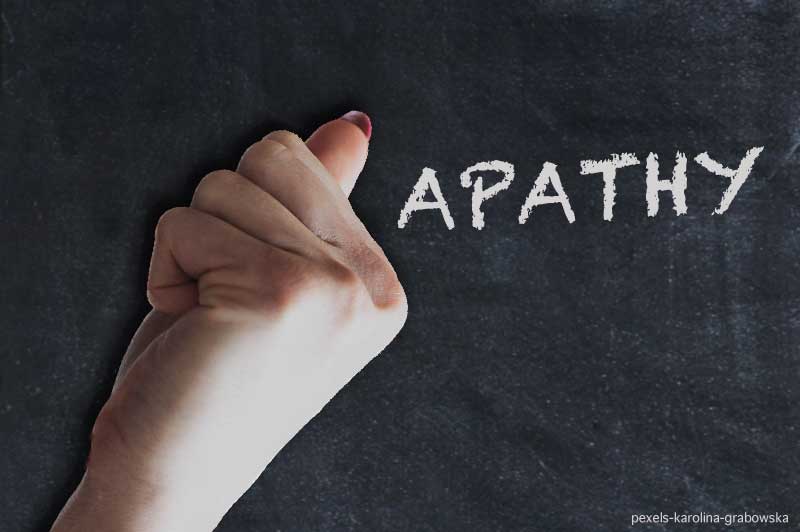
Mrs. S. wrote the word “Apathy” on the board.
“That feeling. That word, murdered 11 million people. 6 million Jews. 1.5 million Jewish Children. Look at it.”
We stare for a minute. Silent.
I hear a soft laugh. Is that my snicker? Another. Uncomfortable shifting in desk chairs. Whoever it was, Brandon has the loudest giggle, and he receives the teacher’s corrective glare.
She darkens the room and pulls down the screen. A slide of a naked, emaciated, woman, dead appears. My eyes glance over at the word. Apathy.
The next slide. A gas chamber. Dead bodies slumped over each other.
Next, the entrance to Birkenau.
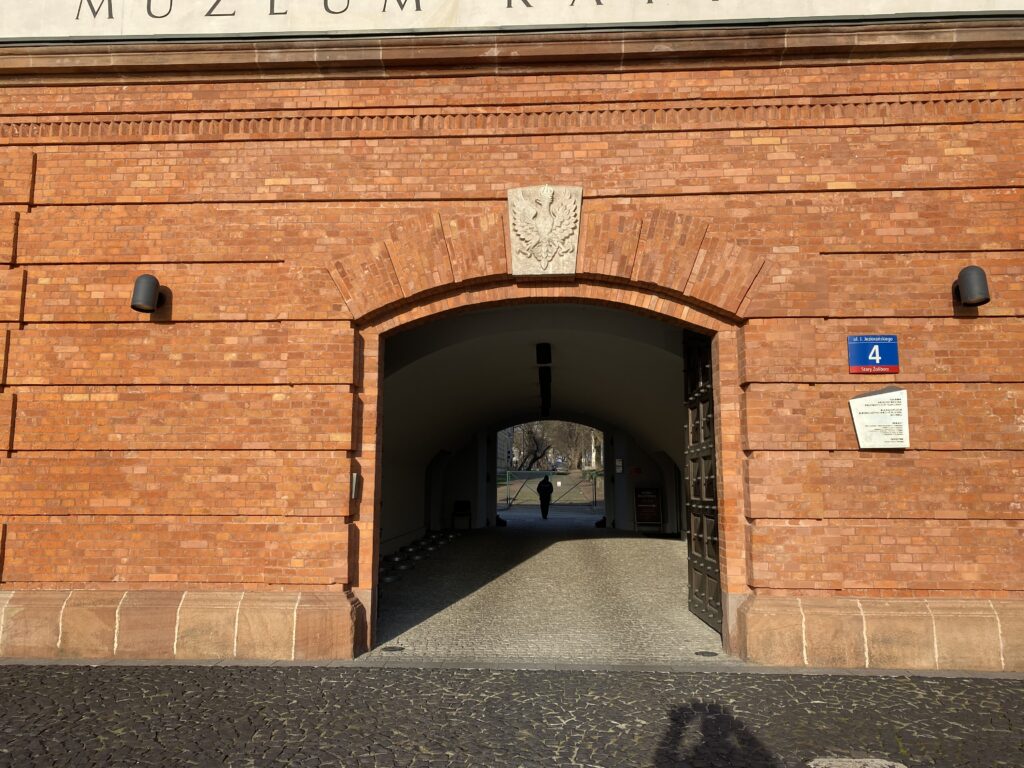
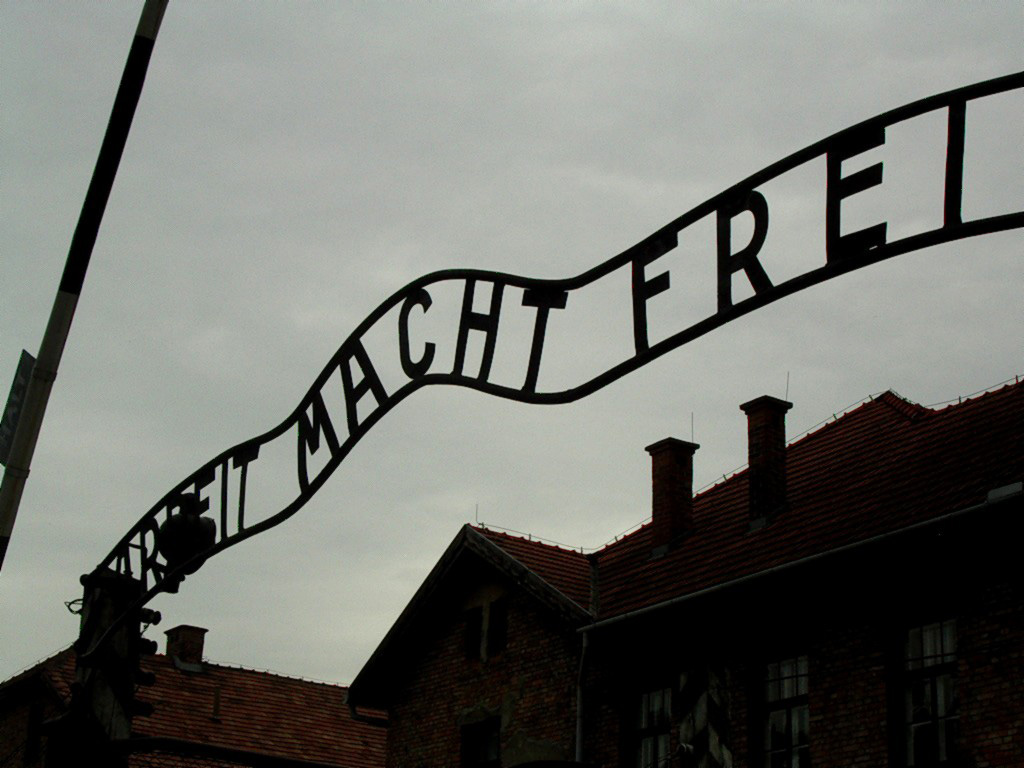
Next, Auschwitz. “Arbeit Macht Frei” Apathy.
The deceitful message at the entrance to Auschwitz- translated means “Work sets you free”.
Another slide.
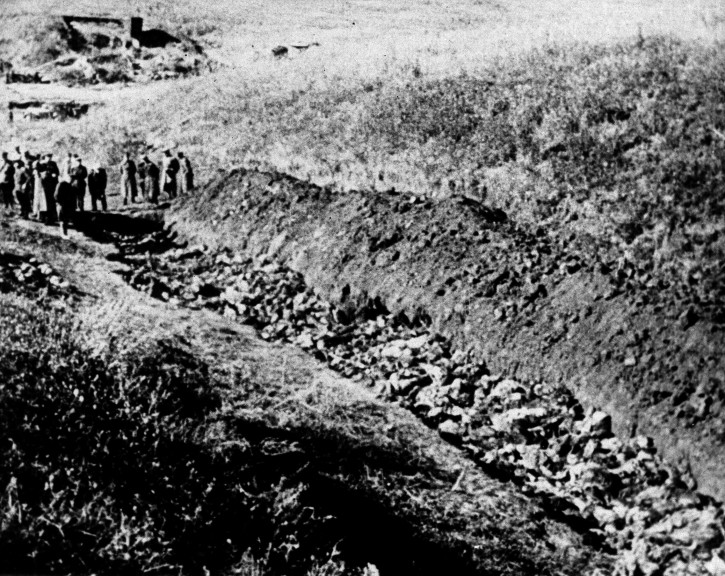
“This is Babi Yar”. Mrs. S. delivers the information with a cold, flat, statement. The class gasps. All of us. Collectively. Gasping at the sight – a photograph of a mass grave holding the dead and starved bodies of 33,771 Jews, murdered over 2 days. Marci looks down at her paper and reads the quote that was to accompany the slide, number 18, “There is no gravestone that stands on Babi Yar; Only coarse earth heaped roughly on the gash.” One of the boys groans, “Ugh…Gash.”
Apathy.
I silently rode home with my father. I will never look at my Grandmother the same. “What did she see in Germany?”
Apathy.
I visited Majdanek, Sobibor, Auschwitz, Treblinka, Birkenau when I was 17. I am numb, the feeling of existing nowhere. I think I have died, but I am only numb. Every day, I want to die. Instead I am numb. Now I can survive.
And I promise to share these words, as I stand under the gallows of Auschwitz:
“Never shall I forget that night, the first night in camp which has turned my life into one long night, seven times cursed and seven times sealed. Never shall I forget that smoke. Never shall I forget the little faces of the children, whose bodies I saw turned into wreaths of smoke beneath a silent blue sky.
Never shall I forget those flames which consumed my faith forever.
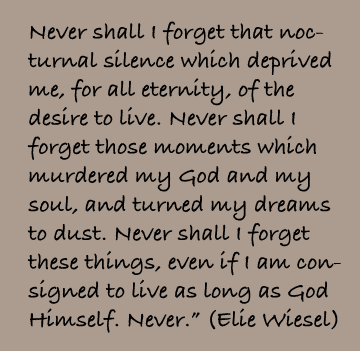
Never shall I forget that nocturnal silence which deprived me, for all eternity, of the desire to live. Never shall I forget those moments which murdered my God and my soul, and turned my dreams to dust. Never shall I forget these things, even if I am consigned to live as long as God Himself. Never.” (Elie Wiesel)
“It doesn’t feel right.”
“Let it go.”
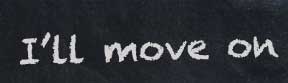
“Ok, I’ll move on.”
That conversation has dominated my life for 34 years. Apathy. I define it. My stomach rumbles every day, I never feel good. I sit with my husband at dinner and watch the news. This isn’t how it is supposed to be. All that I have seen and heard. I am numb and dead inside, as I was in Majdenak choking on the stench on rotten leather shoes. Trophies saved by Nazis to commemorate 80,000 murders.
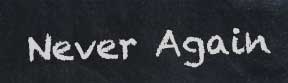
“Never Again. What does that mean?”
He stares back at me. My question emerges from my apathetic silence.
“When we say never again, doesn’t that mean we’re supposed to do something? What does `never again’ mean to you?”
He quietly speaks of his dreams for peace. Eradicating poverty. Housing for the poor. Healthcare. College. Employment.
“What about you?”
“I can’t live here anymore. Not the way it is. When I said never again, I meant I would stop a train carrying cattle cars of Jews with my body, with my strength, with my power. I don’t have power. I don’t want to live that way anymore. I don’t want to live here anymore.”
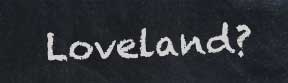
“Like Loveland? You don’t want to live in Loveland anymore?”
“No. I can’t live in the world as it is anymore. I have to change it. It’s unbearable.” I cry. I can’t stop. I feel the quiet rage of my youth. But my hands lie flat on the table, my knuckles pink. I don’t think I can exist here. I look to my husband and children. But they exist here.
I pick up books and learn. I register voters. I learn how to organize large groups of people to fight for a common cause, not because of politics, but because it aligns with their self-interests. I learn about my privilege. I learn about systemic racism. I make so many mistakes. I am corrected aggressively. Kindly. Ignored. I cry. I laugh. I am successful. I learn as I go. Things change.
One day, I press play. My daughter is watching over my shoulder. We watch George Floyd die. She has closed her eyes. I restart the video.
“Open them. Open your eyes. We have to see.”
I think, “There is no gravestone that stands on Babi Yar; Only coarse earth heaped roughly on the gash.”
We exist in a world like this – coarse earth heaped roughly on the gash. I don’t want this world to exist as long as I live in it.
We hug at the end of the video.
When my husband finishes work, I greet him by stating simply, “Never Again.”
He knows what it means.
I step in front of the train and put my hand up.
With a short meeting and trusted friends, the Loveland Diversity Advisory Board is formed.
John comments only occasionally, but when he does, I put the “mature administrator” hat on immediately and respond with a question, “Help me understand…” or “I’m not sure I am following what you mean…could you say more about that?” Inevitably, John replies with a co-opted statement about the thread and relates it back to Critical Race Theory or Reparations, or School Funding and School Policy. Clearly, he is looking to push buttons and searching for a “gotcha moment”.
I don’t want this world to exist as long as I live in it. My stomach rumbles. Looking down, I see that my hands are clutching the edge of my desk. My knuckles are white.
He writes, “Critical Race theory has no place in American Schools. The tenets of Critical Race Theory are based in the destructive ideal of inherent racism and will teach our children to judge and self segregate based solely on skin color….It promotes the dismantling of American Society thru (sic) Marxist anti American rhetoric.”
It takes my breath away to see it in writing. “Marxist anti-American Rhetoric”. In the rambling online blogs of the Poway Synagogue shooter, references to Jews and their control of the media, the banks, and his description of hatred for Jews and their role in “cultural Marxism”. This phrase has repeatedly created a rationale for violence against leftists, against Jewish people, and against anyone associated with either.
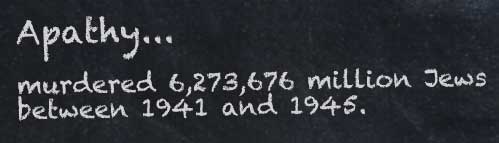
My alarm is sounded. Bully. Microassault. Dog Whistle. “There is no gravestone that stands on Babi Yar; Only coarse earth heaped roughly on the gash.” Apathy murdered 6,273,676 million Jews between 1941 and 1945.
Never Again.
I step in front of the train.
Stop.
You’re either driving the train. Or you’re stopping it.
The more people that stand in front of this train, the faster it will stop.
We must always take sides. Neutrality helps the oppressor, never the victim. Silence encourages the tormentor, never the tormented. –Elie Wiesel Z”L, Buna, Buchenwald, Auschwitz Survivor (1928 – 2016)
This Guest Column by Leah Marcus is presented by Loveland Magazine in collaboration with the Loveland Diversity Advisory Board. Contact them if you’ve a story to share.
Columbus, Ohio – As state lawmakers work on Ohio’s budget for fiscal years 2022 and 2023, there’s a grassroots call for the budget to reflect policies that protect and care for all Ohioans and communities.
The Ohio Organizing Collaborative and Policy Matters Ohio unveiled their “People’s Budget” on Tuesday, which the groups say will ensure the government is working for its people. (You can read the People’s Budget below)
Portage County Treasurer Brad Cromes joined the release, saying budgets are moral documents and should reflect that.
“For too long, we have been saying that the financial wellness of a very few is more important than the financial wellness of everybody in the state,” he said, “and that’s got to change if we’re ever going to start moving our state forward.”
The People’s Budget features seven demands: quality education, safe communities, economic dignity, care for caregivers, stability for families, a working health-care system, and a category known as “Funding Our Lives.” It’s an alternative to Gov. Mike DeWine’s budget proposal released in February.
Tia Ferguson shared her struggles working as a substitute teacher in Columbus without paid leave. After giving birth to a stillborn son, Ferguson said she had to return to work before she was emotionally ready. She contended that with economic stability, other aspects of life will fall into place.
“If your child care is funded, that’s a worry that you don’t have,” she said. “So, you can make sure that you’re taking the time to go back to school and get your education, so you can further your career. But if you don’t have that foundational piece set, then all the other aspects don’t even come into play.”
State Rep. Stephanie Howse, D-Cleveland, said a “people’s budget” is about paying attention and being flexible enough to make adjustments when people really need them. She said she thinks state leaders should take the lead in addressing the discrimination faced by people of color in education, health care, housing, and more.
“Declaring racism as a public health crisis is needed more now than any time, ever,” she said. “We could be on the forefront of what it really looks like to lift up racial equity and social justice.”
Specific provisions of the People’s Budget include tax code reforms, increased funding for education, and investments in housing, anti-hunger programs, and maternal health.
This story was produced in association with Media in the Public Interest and funded in part by the George Gund Foundation.
A budget that cares for all of us
The future of Ohio depends on a fair, equitable, and people-centered budget that cares for all of us — no exceptions.
We Ohioans believe in taking care of one other, no matter our skin color, our ability, or how much money we have. But for nearly two decades, our elected officials have passed a state budget that does not meet our needs or provide us with opportunities to thrive.
Instead, the wealthy few and corporations have hoarded wealth, lining their pockets at the expense of our schools, hospitals, and child care centers. That is why we are demanding a People’s Budget.
Our Seven Demands
1. Quality Education
For all Ohio students to thrive and pursue their dreams, regardless of how much money they have or what they look like.OUR DEMANDS
2. Safe Communities
For Ohio to be a place of freedom and justice for all, where our families can be whole and safe.OUR DEMANDS
3. Economic Dignity
For all Ohioans to have a home to make memories, see a doctor when we are sick, and put food on the table.OUR DEMANDS
4. Care for Caregivers
An Ohio that respects and lifts up BIPOC women and the people who care for our families.OUR DEMANDS
5. Stability For Our Families
For every Ohioan regardless of color or income to be cared for if and when they fall on hard times.OUR DEMANDS
6. A Working Health Care System
For all Ohioans to receive the very best care and see a doctor when we are sick, no exceptions.OUR DEMANDS
7. Funding Our Lives
An Ohio where everyone has the opportunity for a better life, no matter what we look like or how much money we have.OUR DEMANDS
Tell our elected state leaders why you support The People’s Budget