Tag: Ohio Poverty Law Center

  • Ohio law aims to reduce license suspensions

    Ohio law aims to reduce license suspensions

    By:  Ohio Capital Journal

    The Ohio Poverty Law Center is praising a bill passed in the lame-duck session of the Ohio General Assembly that is intended to reduce the huge number of Ohioans whose driver’s licenses are suspended because of unpaid debts or drug offenses. The bill awaits Gov. Mike DeWine’s signature.

    In a state so poor that a fourth of Ohioans are on Medicaid, 1 million have suspended licenses because of debts from things such as a lack of insurance, unpaid fines and court costs, according to a 2022 analysis by the Legal Aid Society of Cleveland.

    “Debt-related suspensions trap drivers with limited resources in a vicious cycle,” the report said. “Fines and fees related to seemingly minor traffic stops can easily spiral into thousands of dollars owed to the state. Drivers unable to pay these debts cannot get their licenses back, which for most Ohioans means they cannot drive to work to earn the money needed to pay down the debt, without risking even more driving restrictions, fines, fees, or even jail.”

    The suspensions are concentrated most heavily in impoverished urban communities of color, the analysis found. Not only is that bad news for poor people needing to get to work and businesses in need of employees, it risks disenfranchising thousands under Ohio’s strict voter ID law.

    But new legislation, House Bill 29, prevents many debt and drug-related license suspensions. The bill, sponsored by Reps. Latyna Humphrey, D-Columbus, and Darnell T. Brewer, D-Cleveland, mandates several measures aimed at reducing license suspensions:

    • It eliminates suspensions for failure to pay court fines or fees both retroactively and automatically, without reinstatement fees.
    • It ends suspensions for drug-abuse offenses, unless they involve manufacture or trafficking with the offender using a vehicle in the commission of the offense.
    • It reduces the lookback period for driving without insurance offenses. Where previously drivers could be charged as repeat offenders if caught driving without insurance twice in five years, they would have to be caught twice in 12 months to be charged as repeat offender under the bill just passed.
    • It eliminates school truancy as a reason to deny licenses or to suspend them.
    • It allows people whose licenses are suspended for failure to pay child support to ask a judge to allow limited driving privileges in all circumstances, not just when the motion is made during contempt proceedings.

    In a statement, the Ohio Poverty Law Center said provisions from a separate Senate bill were amended into H.B. 29, making it much stronger.

    “In Ohio, 1 million drivers currently have suspended driver’s licenses. Approximately 60% of these suspensions are the result of debt-related and issues other than dangerous driving,” it said. “With the inclusion of the provisions from Senate Bill 37, House Bill 29 goes a long way toward ensuring that a person’s ability to pay a fine or fee should not determine whether they are free to drive. In fact, the bill will help hundreds of thousands of Ohioans get their licenses back immediately and dramatically reduce the number of suspensions in the future.”

    The statement added, “We thank Senate Bill 37’s co-sponsors, Sen. Louis Blessing III (R-Colerain Township) and Senator Catherine Ingram (D-Cincinnati) for their dedication to eliminating debt-related driver’s license suspensions. We also thank Senate Judiciary Committee Chairman Nathan Manning (R-North Ridgeville) for his efforts to advance the legislation through the amendment process. They all have continually demonstrated their understanding that eliminating debt-related suspensions will put Ohioans back on track to a more productive future.”

    GET THE MORNING HEADLINES.

    YOU MAKE OUR WORK POSSIBLE.

    _____________
    Marty Schladen
    Marty Schladen

    Marty Schladen has been a reporter for decades, working in Indiana, Texas and other places before returning to his native Ohio to work at The Columbus Dispatch in 2017. He’s won state and national journalism awards for investigations into utility regulation, public corruption, the environment, prescription drug spending and other matters.

    Ohio Capital Journal is part of States Newsroom, the nation’s largest state-focused nonprofit news organization.

    MORE FROM AUTHOR

  • License amnesty program nets big gains for low-income drivers

    License amnesty program nets big gains for low-income drivers

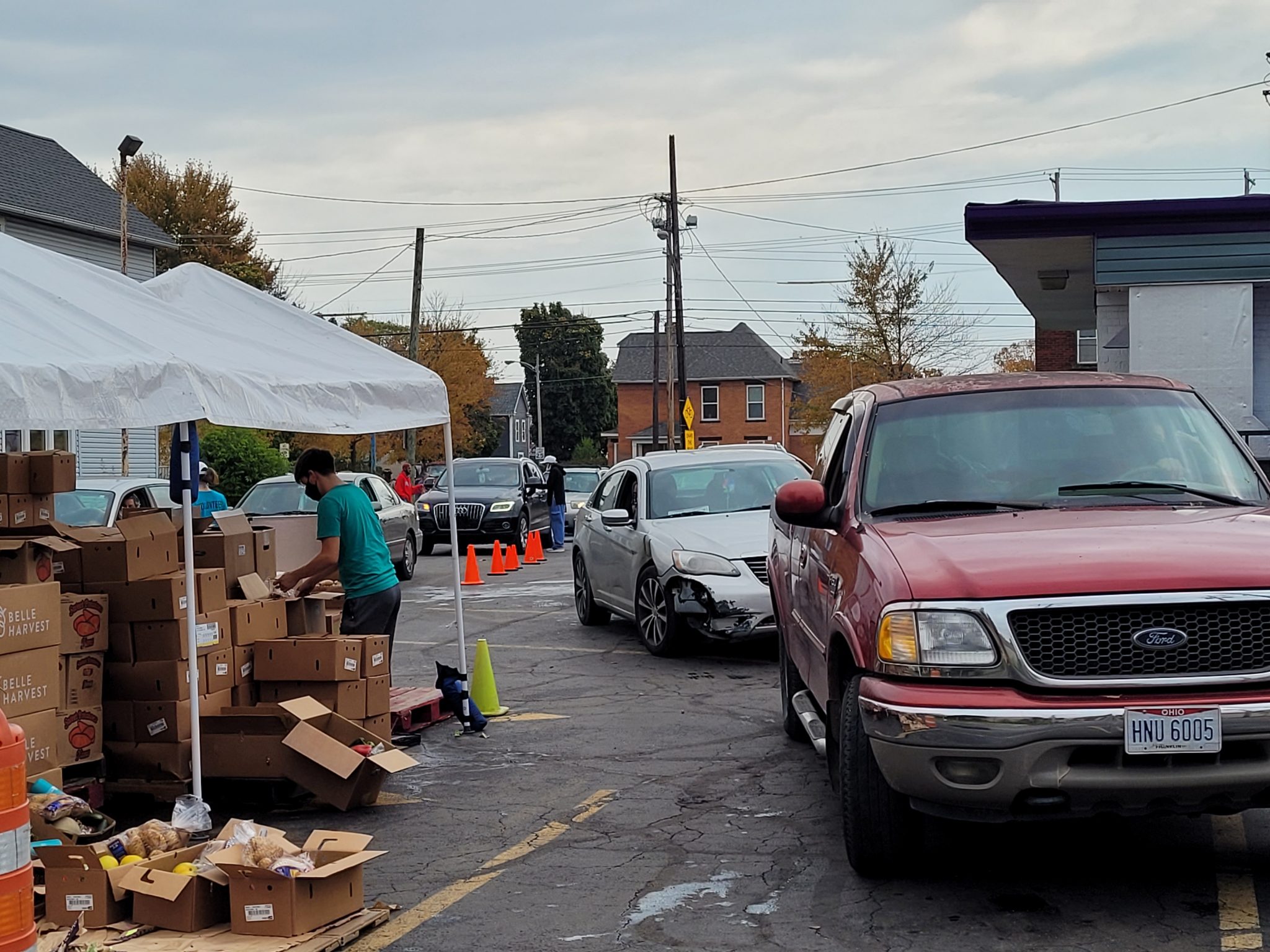
     Two lines of cars wait for food assistance at the All People’s Fresh Market in Columbus. Photo by Marty Schladen, Ohio Capital Journal.

    BY:  Ohio Capital Journal

    Nearly a quarter-million Ohio drivers have taken advantage of a program started at the end of 2020 that is intended to reduce license-reinstatement fees or waive them altogether, the Ohio Poverty Law Center said Monday.

    The group released an analysis of the amnesty program, a bipartisan measure passed by the legislature. It found that nearly 223,000 drivers have participated and saved more than $136 million, with an average individual savings of $612.

    “The program has provided a lot of relief from the financial barriers that prevent hundreds of thousands of lower-income Ohioans from driving legally,” Zack Eckles of the poverty law center said during a virtual press conference. “Driving is essential for economic participation in the state of Ohio.”

    Suspensions stemming from driving under the influence of alcohol, drugs or with deadly weapons are not eligible for the amnesty. Instead, the program is aimed at people who just don’t have the funds to pay the fees to reinstate their licenses after being suspended for offenses such as driving with no proof of insurance.

    “Although reinstatement fees are distinct from punitive fines, they have many characteristics of a fine,” the report said. “For example, they vary by the type of offense or increase in amount for repeated offenses, and they can be extremely burdensome. One particularly punitive reinstatement fee is for non-compliance suspensions, which occur when a driver does not show proof of insurance at a traffic stop or at the time of an accident. These non-compliance suspensions carry reinstatement fees of $100 for the first offense, $300 for the second offense, and $600 for the third and any subsequent offenses within a five-year period.”

    To help ensure that only people who can’t afford reinstatement fees get reductions, the program requires that suspended drivers wait 18 months after at least one of their suspensions expire before they’re eligible. Presumably, people who can afford to pay won’t wait that long, but Eckles faulted the rule for holding those without funds “hostage” for 18 months before they can clear their fees and drive legally.

    People eligible for Medicaid, Supplemental Security Income, Ohio Workers First, Supplemental Nutrition Assistance or the VA Pension Benefit are eligible to have their reinstatement fees canceled and don’t have to wait 18 months because their eligibility for those programs demonstrates their financial need. However, Ohioans eligible for the waiver made up only about 5% of those who have participated in the amnesty program.

    Benefits of the amnesty extend well beyond making it easier for huge numbers of Ohioans to drive legally to work, school, medical appointments and the grocery store.

    Of the drivers applying for fee reductions, 85% paid their fees in full, paying $23 million to the Bureau of Motor Vehicles that it otherwise likely wouldn’t have collected. And, with an estimated 75% of those with suspended licenses continuing to drive illegally, the amnesty program probably has greatly reduced the number of uninsured drivers because participants have to furnish proof of insurance to participate.

    But even though nearly a quarter-million Ohioans participated in the program, that’s only a third of 748,000 that the BMV notified that they were eligible.

    That has implications beyond increasing the number of legal drivers on Ohio roadways. The Legal Aid Society of Cleveland last year estimated that about 1 million Ohioans have debt-related license suspensions. With Ohio’s heavily gerrymandered legislature passing one of the strictest voter ID laws in the country, that could have a huge impact in a state with about 8 million registered voters.

    To improve participation in the amnesty program, the Ohio Poverty Law center made three recommendations:

    • Standardize reinstatement fees at $25
    • Eliminate suspensions strictly resulting from unpaid fines and fees. “Driver’s license suspensions should only be imposed for dangerous driving, not for a person’s inability to pay a fee,” the report said.
    • Expand the program so that all 14% of Ohioans living in poverty are eligible for full waivers

    ______________________________

    MARTY SCHLADEN

    Marty Schladen has been a reporter for decades, working in Indiana, Texas and other places before returning to his native Ohio to work at The Columbus Dispatch in 2017. He’s won state and national journalism awards for investigations into utility regulation, public corruption, the environment, prescription drug spending and other matters.

    MORE FROM AUTHOR


  • DeWine, state leaders announce $430M in coronavirus relief

    DeWine, state leaders announce $430M in coronavirus relief

    Marty Schladen

    Marty Schladen has been a reporter for decades, working in Indiana, Texas and other places before returning to his native Ohio to work at The Columbus Dispatch in 2017. He’s won state and national journalism awards for investigations into utility regulation, public corruption, the environment, prescription drug spending and other matters.

    Ohio Gov. Mike DeWine and the state’s legislative leaders on Friday announced how they’d allocate almost half of what the state has left in federal coronavirus-relief dollars.

    The state has about $1 billion unexpended from its share of the $2.2 trillion CARES Act that Congress passed in March. At least until the feds change the rules, the funds have to be spent by Dec. 31.

    Social-service groups that deal with issues of homelessness and hunger have been clamoring for months for a share of the money, as have business groups and others. So it’s been up to DeWine and the legislature to decide what to do with the money while Congress appears stymied over further coronavirus relief.

    “We tried to look at what the needs were and what had already been put out,” DeWine said during a remote press conference. “We don’t know whether Congress will pass another bill or not.”

    The state is holding about half of the funds for coronavirus testing and contact tracing and other needs while it awaits a possible second round of relief — which may or may not include assistance to state and local governments.

    The expenditures announced Friday include:

    • $50 million for mortgage and rental assistance to families making 200% or less of the federal poverty level 
    • $125 million for businesses with up to 25 employees
    • $37.5 million for restaurants and bars
    • $100 million for colleges and universities to do testing, contact tracing and provide mental-health services
    • $62 million for rural and critical-access hospitals
    • $25 million for non-profits providing services such a food banks, homeless shelters and other social services
    • $20 million for the arts

    A good deal more of the money was focused on businesses than on assisting individuals who are suffering most. But several in Friday’s press conference said they hope by helping small businesses keep their doors open, people will be able to get or keep jobs.

    “We know some businesses are barely making it,” Lt. Gov. Jon Husted said of that portion of the package. “This is focused on them.”

    For their part, some leaders of social-service organizations said they were grateful for the help they will receive.

    “We’re pleased that Gov. DeWine finally deployed federal coronavirus relief funds to help people avoid getting evicted during this pandemic,” Bill Faith, executive director of the Coalition on Housing and Homelessness in Ohio, said in a written statement. “And we appreciate (Ohio) Controlling Board members’ support, especially Sen. (Matt) Dolan (R-Chagrin Falls) and Sen. (Jay) Hottinger (R-Newark) who took a personal interest in keeping struggling Ohioans safely in their homes. We look forward to seeing details on how the program will be implemented. Given the Dec. 31 deadline to use these funds, we would welcome the governor’s assistance in advocating for Congress to provide additional rental assistance into 2021.”

    The Ohio Poverty Law Center also released a statement praising state leaders for their action. But it warned that it won’t be enough.

    “As Ohioans continue to experience job and income loss due to the pandemic, additional federal and state resources will be needed to prevent evictions and keep Ohioans safe, especially as we get closer to the expiration of the Centers for Disease Control and Prevention’s eviction moratorium,” it said. “We hope housing assistance will be among the highest priorities for resources in the coming weeks and months.”