Tag: ohio public schools

  • Urgent Issue: Ohio House Bill 335

    Urgent Issue: Ohio House Bill 335

    Loveland, Ohio – This press release was sent by the political action committee, Citizens for Loveland City Schools.

    Dear Loveland City Schools Community,

    Thank you for your continued outreach to our state representatives. You are making a difference!

    Our work continues, however. There is new legislation that is pending – HB 335 – which would be devastating for our schools, cities and counties. It would result in the following losses:

    • Loveland City Schools – annual loss of  $5,846,450
    • City of Loveland – annual loss of $1,683,559
    • Hamilton County – annual loss of $65,730,784
    • Clermont County – annual loss of $22,347,076

    More information on the bill and its impacts to Ohio public schools can be found here.

    How to Help

    Please contact our representatives and ask them to reject this bill. Here is a template you can use.

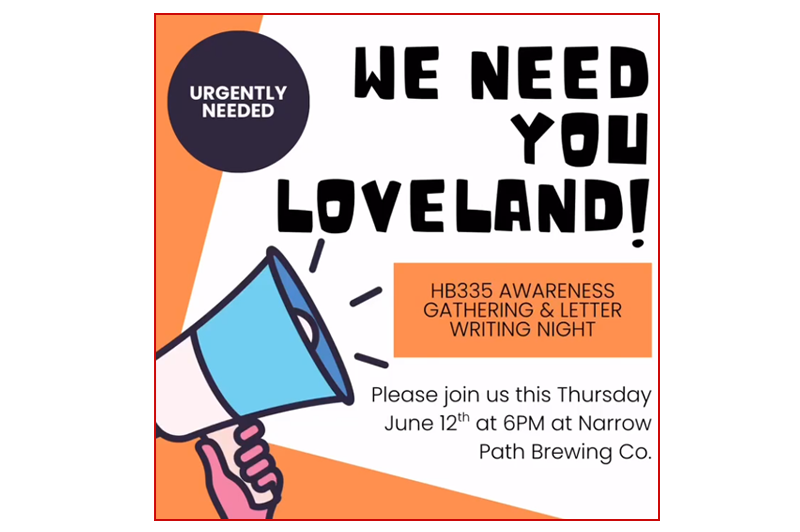
    You can also join us at Narrow Path Brewery tomorrow, June 12, from 6-8pm. We will gather to write letters to our represenatives, asking them to oppose HB 335.

    We hope to see you tomorrow evening!

    [pdf-embedder url=”https://lovelandmagazine.com/wp-content/uploads/2025/06/HB-335-FAQ.pdf”]

    OH SENATE DISTRICTS

    Ohio Find Your Senator

    District 7

    Senator: Steve Wilson (Republican)  wilson@ohiosenate.gov  (614) 466-9737
    Coverage: Covers Warren County, which includes the City of Loveland.
    Website: ohiosenate.gov/wilsonlookup.boe.ohio.gov+2en.wikipedia.org+2lookup.boe.ohio.gov+2

    District 14

    Senator: Terry Johnson johnson@ohiosenate.gov         (614) 466-8082

    Coverage: Represents portions of Clermont County
    Website: ohiosenate.gov/terry-johnsonohiosenate.gov+1senate.state.oh.us+1

    OH HOUSE DISTRICTS

    District 28: Karen Brownlee (Democrat) represents Symmes Township.
    District 62: Jean Schmidt (Republican) represents the City of Loveland and Miami Township. house.ohio.govhouse.ohio.gov

    HOUSE LEADERSHIP

    House Speaker Matt Huffman: Rep78@ohiohouse.gov, (614) 466-6344 

    Finance Chair Brian Stewart: Rep12@ohiohouse.gov, (614) 466-1464 

    Speaker Pro Tempore Gayle Manning: Rep52@ohiohouse.gov, (614) 644-5076 

    Assistant Speaker Pro Tempore Phil Plummer: Rep39@ohiohouse.gov, (614) 644-8051 

    Majority Floor Leader Marilyn John: Rep76@ohiohouse.gov, (614) 466-5802 

    Assistant Majority Floor Leader Adam Bird: Rep63@ohiohouse.gov, (614) 644-6034 

    Majority Whip Riordan McClain: Rep87@ohiohouse.gov, (614) 644-5088 

    Majority Whip Steve Demetriou: Rep35@ohiohouse.gov, (614) 644-5088 

    Majority Whip Nick Santucci: Rep64@ohiohouse.gov, (614) 466-5441 

    Majority Whip Josh Williams: Rep44@ohiohouse.gov, (614) 466-1418 

    Sample Letter

    Dear …… 

    As a resident of Loveland and a strong supporter of Ohio’s public schools, I am writing to urge you to oppose House Bill 335, the so-called “Property Tax Relief NOW Act.” While I understand the importance of addressing property tax concerns, this bill goes far beyond reasonable reform and would cause irreversible harm to our community schools.

    HB 335 proposes to:

    • Eliminate inside millage for school districts, removing over $1.5 billion annually from school funding statewide;
    • Allow unelected county budget commissions to override voter-approved levies, violating core democratic principles;
    • Prohibit new emergency or substitute levies and block renewal of existing ones, stripping districts of vital funding tools;
    • Introduce a patchwork tax credit scheme that creates unequal tax rates on identical properties, raising serious constitutional concerns;
    • Offer no reimbursement or offset for the massive loss in revenue, forcing districts to slash programs, increase class sizes, and cut staff and services.

    This bill directly threatens the quality of education in Loveland and across Ohio. Our schools could be forced to eliminate arts, music, athletics, AP classes, transportation, and much more—reducing educational opportunities and community strength.

    If HB 335 passes, it is likely that Loveland City Schools and other districts will have no choice but to go to the ballot more often, placing a greater burden on voters and increasing instability in school funding. The lost revenue from HB335 for Loveland City Schools is projected at $5.846 million annually, approximately 6.6 mills. Worse yet, by shifting the tax burden from businesses to individuals, this legislation accelerates a 30-year trend of disinvestment in public services.

    There is a better way. Senate Bill 22 provides targeted property tax relief to those who need it most—without destroying school funding. I strongly encourage you to reject HB 335 and instead support a balanced approach that maintains educational excellence while addressing affordability concerns.

    Please stand with your constituents, with Ohio’s children, and with our future. Oppose HB 335.

    Sincerely,
  • Ohio Republican state senator wants to ban diversity and inclusion efforts in public schools

    Ohio Republican state senator wants to ban diversity and inclusion efforts in public schools

    By:  Ohio Capital Journal

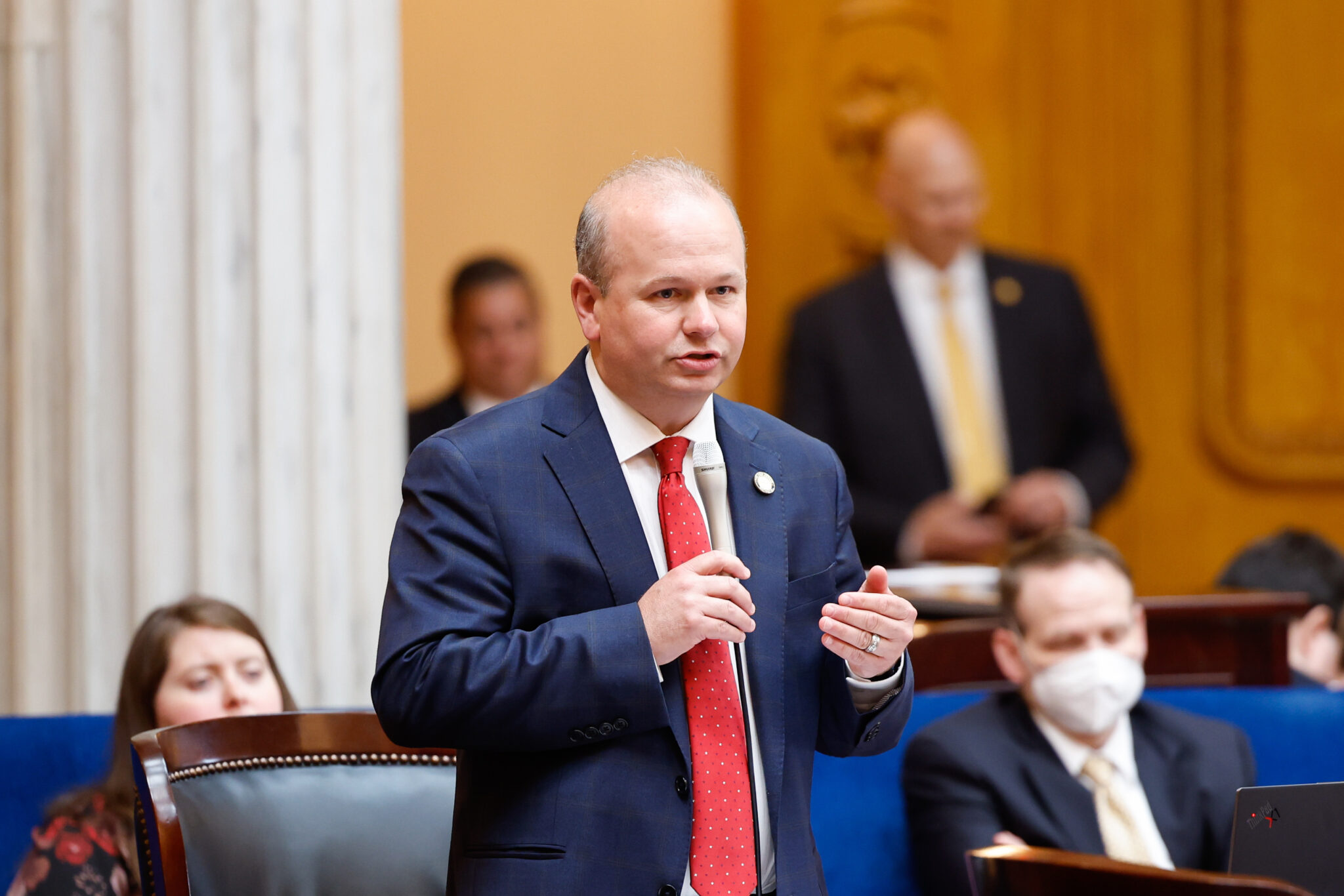
    A new bill proposed by an Ohio Republican lawmaker would ban diversity and inclusion efforts in Ohio K-12 public schools.

    State Sen. Andrew Brenner, R-Delaware, recently introduced Ohio Senate Bill 113 which would require every local board of education in the state to adopt a policy that would end any current diversity and inclusion offices or departments and ban any diversity, equity, and inclusion orientation or training. It would also prevent the creation of any new such offices or departments and using DEI in job descriptions.

    Under the bill, each board of education would be required to create a complaint process for an alleged violation of the policy and the board would investigate the complaint with a hearing.

    GET THE MORNING HEADLINES.

    Ohio teacher unions were quick to critique the bill.

    “This is another petty attempt from this legislature to sidestep local control and micromanage every aspect of how public schools operate,” Ohio Federation of Teachers President Melissa Cropper said in an email. “It is objectively a good thing for students of all races when school districts make an effort to hire a diverse teaching staff.”

    Ohio Education Association President Scott DiMauro said S.B. 113 is a distraction.

    “Ohio’s General Assembly should be focused on the real issues facing Ohioans and our schools — fully and adequately funding public schools and seeking solutions to help alleviate the economic challenges faced by families and communities,” he said in an email.

    Honesty for Ohio Education Executive Director Christina Collins said this is another example of Ohio lawmakers are going after school curriculum and programming.

    “This bill uses the vilified acronym ‘DEI’ without offering a definition to advance an agenda that harms our public education system,” she said in an email.

    S.B. 113 is not the only bill Ohio lawmakers have introduced that would ban diversity and inclusion efforts in education. Senate Bill 1 would, among other things, ban diversity, equity, and inclusion efforts at Ohio’s public universities. The Senate passed the bill earlier this month and is waiting to be heard in the House.

    S.B. 113 comes as President Donald Trump’s executive orders attempt to get rid of diversity and inclusion efforts across federal agencies.

    On Feb. 14, the U.S. Department of Education sent a Dear Colleague letter to schools nationwide threatening to rescind federal funds for schools that use race-conscious practices in admissions, programming, training, hiring, scholarships, and other aspects of student life.

    This would apply to all preschool, elementary, secondary, postsecondary educational institutions and state educational agencies that receive financial assistance. Institutions have until Friday to comply or else they face the “potential loss of federal funding.”

    Follow Capital Journal Reporter Megan Henry on Bluesky.

    YOU MAKE OUR WORK POSSIBLE.

    __________
    Megan Henry
    Megan Henry

    Megan Henry is a reporter for the Ohio Capital Journal and has spent the past five years reporting in Ohio on various topics including education, healthcare, business and crime. She previously worked at The Columbus Dispatch, part of the USA Today Network.

    Ohio Capital Journal is part of States Newsroom, the nation’s largest state-focused nonprofit news organization.

    MORE FROM AUTHOR


  • Trump order prioritizes school choice and vouchers, which Ohio has been expanding for decades

    Trump order prioritizes school choice and vouchers, which Ohio has been expanding for decades

    Getty Images

    By:  Ohio Capital Journal

    An executive order signed by President Donald Trump directs an emphasis on school choice and private school voucher programs when it comes to education funding, something that’s been happening in Ohio for several decades now.

    While it’s unclear how much power the executive order will have with spending decisions decided by Congress, the executive order directs to the U.S. Department of Education to prioritize “school choice” programs in grant funding, and requires the U.S. Department of Health and Human Services to guide states on block grants that can be used for private schools.

    The executive order also directs the U.S. Department of Education to release guidance on using federal funding formulas for private school scholarship programs, and for military families in particular to be given information on scholarships.

    It’s not yet clear how this will affect individual states, but Ohio has already vastly expanded its private school voucher programs over the last two decades, and recently passed near-universal levels eligibility.

    Ohio House Speaker Matt Huffman began 2025 by saying the six-year phase-in of the public school funding model in Ohio was “unsustainable,” which received massive pushback from public school supporters, especially after the lawmakers poured nearly $1 billion into private school scholarships last year.

    Huffman called the future of the current funding model – also called the Fair School Funding Plan or the Cupp-Patterson plan – a “fantasy,” but has seemingly softened his stance for now after hearing from members of his own party.

    A spokesperson for Huffman and the House Majority Caucus did not respond to a request for comment on the executive order.

    GET THE MORNING HEADLINES.


    The president and CEO of EdChoice, Ohio’s private voucher program, praised the order in a statement, saying prioritizing and expanding such programs “is a crucial step toward empowering families and giving them greater control over their children’s education.”

    “This initiative reflects a commitment to funding students not systems and to ensuring the proper role of the federal government in education,” EdChoice President and CEO Robert Enlow said in the Wednesday statement. “It recognizes both the appropriate role of the federal government on education and the fact that education is primarily a state function.”

    Public school advocates feel the same way about a federal push for private school funding expansion as they do about state-level funding increases, for which a lawsuit was filed in Franklin County Common Pleas Court to eliminate the private school voucher program.

    The lawsuit argues that funding for private schools is coming out of the coffers of the public school system, something the state is constitutionally obligated to fund properly.

    “Diverting public money to unaccountable and ineffective private schools is a failed strategy that runs counter to public opinion,” Ohio Federation of Teachers head Melissa Cropper told the Capital Journal.

    2024 survey done by All4Ed, Lake Research Partners and the Tarrance Group, found a majority of American voters support public education, and an increase in funding to improve public schools. This included 58% of Republicans surveyed. Only 34% of GOP voters polled said funding for voucher programs should be increased.

    “Voters view public schools, including their local public school, more favorably than charter, private or religious schools,” the study stated.

    Cropper called the move by the Trump administration “a strategy straight of Project 2025,” the playbook written and supported by right-wing Heritage Foundation members, some of whom have become players in the Trump administration, including the White House budget office.

    “Regardless of what politicians do, Ohio educators and school staff will continue fighting for the resources that our students deserve,” Cropper said.

    YOU MAKE OUR WORK POSSIBLE.

    _______________
    Susan Tebben
    Susan Tebben

    Susan Tebben is an award-winning journalist with a decade of experience covering Ohio news, including courts and crime, Appalachian social issues, government, education, diversity and culture. She has worked for The Newark Advocate, The Glasgow (KY) Daily Times, The Athens Messenger, and WOUB Public Media. She has also had work featured on National Public Radio.

    Ohio Capital Journal is part of States Newsroom, the nation’s largest state-focused nonprofit news organization.

    MORE FROM AUTHOR

  • Ohio Republicans start the year by throwing public education under the school bus

    Ohio Republicans start the year by throwing public education under the school bus

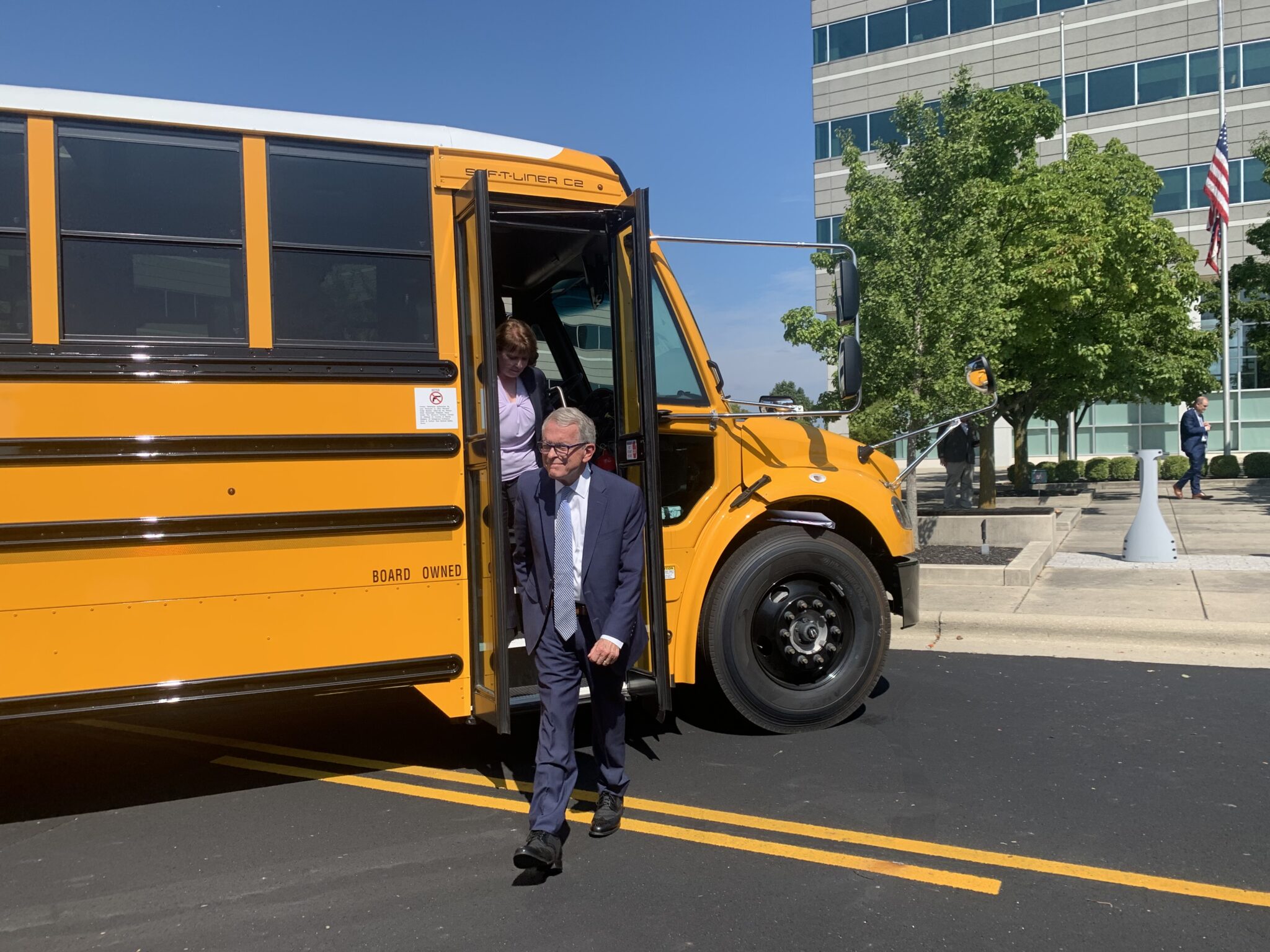
    Ohio Gov. Mike DeWine gets off a school bus as part of the first Ohio School Bus Safety Working Group meeting at the Ohio Department of Public Safety Atrium on Sept. 11, 2023. (Photo by Megan Henry, Ohio Capital Journal).

    Commentary

    by Marilou Johanek – Ohio Capital Journal

    It didn’t take long. The new legislative session began in Columbus with Republican chieftains in the state throwing the future of public education in Ohio under the school bus.

    First it was the billion-dollar voucher king, Ohio House Speaker Matt Huffman, to hedge his bets on giving Ohio’s 611 school districts what they need to provide a quality education to the 1.7 million students they serve.

    Then it was Huffman’s patsy in the executive branch, Ohio Gov. Mike DeWine, who added his two cents worth of wishy-washy about how a leaner state budget ahead means something’s gotta give — like fully funding the education system used by the vast majority of Ohio families and their children. “Sometimes these are very, very difficult, difficult choices,” said the gutless wonder. What leadership.

    Educating future generations of Ohioans with high-quality public schools is your job, governor. It’s the No. 1 responsibility of the state to ensure a thorough and efficient system of funding for public schools. ‘Says so right in the Ohio Constitution. It also says, “no religious or other sect, or sects, shall ever have any exclusive right to, control of, any part of the school funds of this state.” But DeWine and his puppet master in the Ohio House ignored that part years ago when the state began diverting hundreds of millions of education funds to private and mostly religious schools.

    Clearly, the politicians calling the shots in state government have no regard for the state constitution. Adhering to the rule of law is optional when political power is absolute. Huffman, who thumbed his nose at the Ohio Constitution on fair redistricting (to pull off even more egregious gerrymandering in legislative and congressional districts) is doing the same thing on adequately funding public education.

    He’s looking to cut revenue to public schools while spending a ton of tax dollars on private school vouchers — with aspirations to fund more private school facilities to increase demand for those vouchers. Call it the Great GOP Phase-out of Public Education. Last week, Huffman dropped a calculated bombshell to prepare Ohio’s public-school districts for another financial hit from the state.

    YOU MAKE OUR WORK POSSIBLE.


    The Lima Republican said the state couldn’t afford to fully fund public schools or finally fix a school funding formula ruled unconstitutional nearly three decades ago. The Ohio Supreme Court’s 1997 ruling said the state’s failure to provide and distribute sufficient resources for public education and its over-reliance on local property taxes to cover that shortcoming violated the law.

    Yet Ohio lawmakers never remedied the problem. School districts had to keep going back to voters just to maintain and operate local schools. Homeowners carried the weight of school funding, not the state. They were/are understandably tapped out on school levies, especially as changes in property evaluations jack up tax bills.

    But in 2021, after years of collaboration between former Republican Ohio House Speaker Bob Cupp, former Democratic state Rep. John Patterson and scores of public education stakeholders, Ohio came close to meeting its constitutional obligation of ensuring a thorough and efficient system of funding for public schools. “What we really wanted to do was figure out what it really costs to educate a student and then what a district can really do to support its fair share, and then the state would compensate with the rest,” said Patterson.

    The Cupp-Patterson spending formula, known as the Fair School Funding Plan, was enacted as part of the 2021-23 state budget. The new system weighed a district’s expenses to come up with the base per-pupil funding amount — instead of a blanket amount of state funding for all schools — and changed the way the local community’s share was measured depending on property tax value and the income of local residents.

    That was a big deal and a significant step forward to address the long-running inequities of an unconstitutional school funding system that had failed generations of K-12 students. The quality of their education often depended on where they lived. Wealthy school districts in Ohio had every advantage over high poverty districts that struggled to pay for even basics in the classroom.

    The Fair School Funding Plan initiated a level of fairness and reliability in state support that past spending programs lacked. Complete state funding of the FSFP (around $2 billion altogether) was to be phased in over a six-year period through two-year budget cycles. The goal was to continue expanding state funding for districts in successive biennial state budgets until the Fair School Funding Plan was fully funded.

    The last installation, or third phase, was to be paid in full in the upcoming 2026-2027 operating budget. But that expectation hit a wall when Huffman nixed increased spending to public schools as “unsustainable.”

    His excuses for not making good on fully funding Cupp-Patterson — less state revenue to work with, less federal pandemic relief money, more scrutiny needed for school money already allocate — don’t apply to his expansive voucher outlays to religious schools that reached $966.2 million for the 2023-2024 school year. Enough to fully fund Fair School Funding Plan.

    But Huffman is laying the ground to shave more off the FSFP and showing his utter indifference to the acute financial challenges facing countless districts. Tough luck for the nearly 90% of Ohio students who attend public schools with slashed opportunities. It didn’t take long.

    GET THE MORNING HEADLINES.

    __________
    Marilou Johanek
    Marilou Johanek

    Marilou Johanek is a veteran Ohio print and broadcast journalist who has covered state and national politics as a longtime newspaper editorial writer and columnist.

    MORE FROM AUTHOR

  • Public school advocates take issue with new Ohio Speaker’s claim that funding model ‘unsustainable’

    Public school advocates take issue with new Ohio Speaker’s claim that funding model ‘unsustainable’

    (Stock photo from Getty Images)

    By:  Ohio Capital Journal

    As Ohio’s 136th General Assembly begins, the newly minted House Speaker has already taken a stand on education, saying spending for the state’s public school funding model is “unsustainable.”

    Priorities (and for that matter, legislative committees) have yet to be formally established, but comments by Speaker Matt Huffman, R-Lima, have already brought criticism from public school advocates across the state.

    Speaking to reporters after the first official meeting of the Ohio House under his leadership, Huffman was asked about the Cupp-Patterson public school funding plan, also called the Fair School Funding Plan by supporters.

    The funding model for state support of public schools has been through most of its six-year phase-in, seeing funding through the last two budget cycles. This year was set to be the last phase-in for the funding, but Huffman said there is no such thing as a “three-generation roll-out” and pointed to his comments when Cupp-Patterson was first considered by the legislature. Back then, he did not support funding the full measure all at once, because he said it would tie down future state legislatures with a funding method they may or may not be able to afford.

    “I don’t think there is a third phase to Cupp-Patterson,” Huffman said this week. “I guess the clearest statement I can say is that I think those increases in spending are unsustainable.”

    The new speaker went on to say the state needs to look at “whether these dollars are being spent wisely in some districts, we know they are in many.”

    Public school advocates have fought for the funding model, a model that focuses on real-time costs from district to district, rather than a blanket amount of state funding for all schools. While the comments from Huffman were criticized by advocates, they didn’t necessarily come as a surprise.

    “It’s certainly disappointing, but it doesn’t change anything for us,” said Scott DiMauro, president of the Ohio Education Association. “Implementing the Fair School Funding Plan is still our top priority.”

    YOU MAKE OUR WORK POSSIBLE.


    Without the funding, public schools will have to reach further into the pockets of taxpayers with levy-increase requests, something that shouldn’t have to happen under a system that constitutionally supports public schools.

    ” If the speaker thinks there isn’t enough education funding to go around, Ohio law is very clear,” Melissa Cropper, president of the Ohio Federation of Teachers, told the Capital Journal. “The legislature must fund public schools and make cuts to the costly and ineffective universal private school vouchers that were put in place by Speaker Huffman (as an Ohio senator) and other legislators,” said Melissa Cropper, president of the Ohio Federation of Teachers.

    Those who support the funding model pointed to the $1 billion that went to scholarship funds including the EdChoice private school voucher program in 2023, which the legislature approved to give Ohio students near-universal eligibility to move to private schools of their choosing if they live in public school districts considered under-performing.

    “If the speaker wants to talk about sustainability, you have to start with those numbers,” DiMauro said.

    Late last year, the legislature also removed provisions of a bill that would have added accountability measures to the private school voucher program, despite education advocates asking that accountability measures for private schools match those of public schools.

    That demand for accountability includes an ongoing lawsuit that seeks to eliminate EdChoice from the state’s educational portfolio. The group Vouchers Hurt Ohio is leading the effort in a court battle that has specifically targeted Huffman for answers on the process of passing legislative measures that support and fund EdChoice.

    Eric Brown, former Ohio Supreme Court chief justice and chair of the steering committee for Vouchers Hurt Ohio, said the group “never trusted that state lawmakers would fully fund public schools.”

    “Instead they are intent on giving refunds and rebates to wealthy families to pay for private schools and forcing homeowners and taxpayers to pay more for their local public schools,” Brown said in a statement. “We believe this system is unsustainable and unconstitutional.”

    DiMauro acknowledged that the Fair School Funding Plan will require inputting the real costs on an ongoing basis to account for inflation, and having the funding method keep up with those costs, but to do so would only be keeping up with what the constitution asks of state leaders, he said.

    “It means finally having a system that will meet the requirements of the constitution and serve the needs of the nearly 90% of students who are in our public schools,” DiMauro said.

    Aaron Churchill, Ohio research director for charter school advocates The Fordham Institute, said the cost of the Cupp-Patterson plan is “something that the legislature is just going to have to grapple with over the longterm.”

    Charter schools in Ohio have “long been underfunded,” Churchill said, and the fact that public school enrollment has seen a decline in recent years shows that public schools “should have less need for funding” but also more focus on putting the funding “where the needs are the greatest.”

    “Our school funding should be driven by enrollment and head counts,” Churchill said. “There’s a lot of money going to our public schools, so the dollars are going even further than they would if our state had a growing student population.”

    The enrollment in public schools has gone down slightly over the past few years, though some experts attribute that to a national decline in birth rates more than participation choices. The National Center for Education Statistics sets projections for enrollment, and estimates Ohio’s public school student enrollment will go down by 7.6% by 2031, a loss of more than 127,000 students.

    The most recent data from the Ohio Department of Education and Workforce showed more than 1.75 million students in public schools, versus 173,156 students in the state’s non-public schools.

    The public school numbers showed a loss of 5,400 students compared to numbers reported by the ODEW in fiscal year 2023. That’s down from 2022 as well, but public schools saw an increase of nearly 18,000 students between 2021 and 2022, according to state data.

    Non-public schools have seen gradual increases since fiscal year 2021, when enrollment was reported at 162,917.

    Still, in the 2022-2023 school year, the ODEW reported 88% of schools in Ohio were traditional public schools, followed by community schools at 9.4% and vocational schools at 2.1%.

    YOU MAKE OUR WORK POSSIBLE.

    _________________
    Susan Tebben
    Susan Tebben

    Susan Tebben is an award-winning journalist with a decade of experience covering Ohio news, including courts and crime, Appalachian social issues, government, education, diversity and culture. She has worked for The Newark Advocate, The Glasgow (KY) Daily Times, The Athens Messenger, and WOUB Public Media. She has also had work featured on National Public Radio.

    Ohio Capital Journal is part of States Newsroom, the nation’s largest state-focused nonprofit news organization.

    MORE FROM AUTHOR

  • Ohio Senate bill would automatically close low-performing public schools

    Ohio Senate bill would automatically close low-performing public schools

    Getty Image

    Republican State Sen. Andrew Brenner introduced Senate Bill 295 which would revise the state’s automatic school closure language.

    By:  Ohio Capital Journal

    A Republican bill in the state Senate would automatically shut down low-performing Ohio public schools.

    State Sen. Andrew Brenner, R-Delaware, introduced Senate Bill 295 over the summer, which would revise the state’s automatic school closure language. The bill has a fourth hearing scheduled Tuesday in the Senate Education Committee.

    The bill defines a poor performing school as a school, serving grades four and older, that has performed in the bottom 5% among public schools based on their Performance Index Score for three consecutive years. A school would also be considered a poor performing school if they are in the bottom 10% based on their Value-Added Progress for three consecutive years.

    “It is my hope that this bill will help to standardize the law surrounding school closures for public and community schools and help ensure that each student in Ohio receives the best education possible,” Brenner said.

    Ohio charter schools are automatically closed if they have three straight years of poor performance.

    “We right now have an existing law where charter schools can be shut down if they don’t perform, and just the threat of that has actually forced the turn around with many of these charter schools,” Brenner said.

    Seventeen people submitted opponent testimony against S.B. 295 during last week’s committee meeting. Only one person submitted supporter testimony.

    “Because the requirements for closure or restructuring are based upon bottom percentages, there will always be schools that meet the criteria, even if those schools are meeting state standards,” Ohio Federation of Teachers President Melissa Cropper said in her testimony. “As low performing schools are closed, other schools that are higher ranked will now be in the bottom 5% even if they show no decline in their own rating. This cut-off is arbitrary and its potential effect is that eventually well-performing schools will also be subject to closure.”

    GET THE MORNING HEADLINES.


    As an alternative to closing, Brenner said a school can replace the principal and 60% of their licensed staff, but Cropper wonders where the replacement educators would come from.

    “There is already a shortage of teachers and other licensed personnel in schools and positions in low performing schools are especially hard to fill,” she said. “This will also create a further disincentive for teachers to teach in challenging schools.”

    Ohio Education Association President Scott DiMauro said the bill would harm students.

    “S.B. 295 proposes a heavy handed and overreaching state approach to local schools that receive low ratings on state report cards,” he said in his opponent testimony.

    The Ohio Department of Education and Workforce uses 1 to 5 star ratings in half increments based on five categories: achievement, progress, early literacy, gap closing and graduation. 10% percent of Ohio school districts are below state standards, according to the latest state report cards ODEW released earlier this year.

    Schools and school districts that receive one star need “significant support to meet state standards.”

    “S.B. 295 does not do this,” DiMauro said. “Instead of offering significant support, S.B. 295 proposes significant punishments that will most likely destabilize schools where many great things are happening, even if those successes are not revealed on data printouts of standardized test scores.”

    Sen. Catherine Ingram, D-Cincinnati, asked where the students would go if their school closed.

    “The school would be closed and all the students would have to go to another school, which is what happens right now in our charter school law,” Brenner said.

    The two-year General Assembly ends this week, so any bills that don’t pass will die and would have to be reintroduced in the next General Assembly.

    Follow OCJ Reporter Megan Henry on X.

    YOU MAKE OUR WORK POSSIBLE.

    _____________
    Megan Henry
    Megan Henry

    Megan Henry is a reporter for the Ohio Capital Journal and has spent the past five years reporting in Ohio on various topics including education, healthcare, business and crime. She previously worked at The Columbus Dispatch, part of the USA Today Network.

    Ohio Capital Journal is part of States Newsroom, the nation’s largest state-focused nonprofit news organization.

    MORE FROM AUTHOR

  • ‘Legacy of neglect’ showcased in Ohio schools report

    ‘Legacy of neglect’ showcased in Ohio schools report

    Stock image from Pixabay.

    BY:  – Ohio Capital Journal

    A report from an Ohio think tank examined the new budget changes and private school voucher impacts on public schools over the last year.

    Research from Policy Matters Ohio said divestments from public schools at the state level “hurt public school students everywhere – especially those in rural counties.”

    Furthering study of the impact the COVID-19 pandemic had on education, Policy Matters’ Tanisha Pruitt and Cassie Mohr said those pandemic effects combined with “Ohio’s legacy of inadequate, inequitable funding” have “weakened the role school plays as a foundational public institution.”

    Ohio was ranked 21st in a U.S. News & World Report on K-12 education and 46th in an EdWeek ranking of equitable distribution of education funding, both of which were cited as part of the 2023 report.

    “Ohio’s students deserve a world-class education, including safe and well-resourced schools that are staffed by teachers who are well trained and fairly paid,” Pruitt and Mohr wrote.

    The new report also confirmed what advocates have repeatedly noted over the years that the public school funding model has been debated — that the vast majority of Ohio students are enrolled in public schools.

    Of the nearly 2 million students enrolled in K-12 education in Ohio, 88.6% are in public schools, and 8.8% are in private schools, while 2.7% are home-schooled.

    Private school vouchers saw a significant change in Ohio’s most recent two-year budget this summer, when legislators opened the state-paid subsidies to 450% of the federal poverty level, nearly universal eligibility.

    But also included in the budget was another phase-in of the Fair School Funding Plan, a six-year effort to dive into the real cost of funding public school students, and fund the schools on an individual basis based on their needs.

    “When fully implemented, the six-year FSFP will correct the over-reliance on local property taxes, eliminate funding caps on districts, and base funding on per-pupil cost estimates that more accurately reflect what it takes to educate a diverse student population,” the report stated.

    Policy Matters’ report focused largely on public schools, where they found a student population that is “somewhat more racially diverse than the state overall” with a makeup that is 16.4% Black versus the 13.3% population in the state overall, and serving a large population of more than 800,000 who are considered economically disadvantaged.

    Pruitt and Mohr remained skeptical of the ultimate success of the FSFP, however, as legislators have “only incrementally moved funding through the formula.”

    “If legislators follow through on their promise to fully realize the FSFP by 2026, they will be helping every public school in the state to be equitably funded, and helping ensure that we live in a state where every child has what they need to succeed in school and after graduation,” the report stated.

    Senate President Matt Huffman has commented in the past that he wouldn’t support funding more than two years at a time, to avoid saddling future General Assemblies with budget items with which they may not agree.

    Teachers

     Source: Policy Matters Ohio 

    The constraints of COVID had their effect on teachers as well, but even outside of the pandemic education methods, educators still face pressures, according to the 2023 report.

    “Teachers recently have experienced a rash of targeted political campaigns to stoke division by denying the identities of trans and nonbinary students, as well as censoring what teachers are allowed to teach in the classroom,” Pruitt and Mohr wrote.

    Beyond that, compensation levels have not kept up over the years, with the Ohio Department of Education showing an average annual salary of $69,130 for an Ohio teacher in the 2022-2023 school year. That amounts to a decrease of more than 6% from the 2018-2019 school year, according to the new Policy Matters research.

    “These factors contribute to one of the most significant problems facing Ohio schools today: too many have too few teachers to give our kids the education they deserve,” according to Pruitt and Mohr.

    The state has also seen a dip in newly licensed teachers as well, with more than 9,000 teachers leaving their jobs in 2021, but only 5,388 earning a new license.

    “Recruitment declines can be attributed to low pay, poor working conditions and other economic factors,” researchers found. New teachers are paid less, and face mounting student loans on top of a salary that is often less than fellow graduates in other professions, they said.

    But licensure was addressed in the budget, with a clause allowing substitutes to have one-year temporary substitute teaching license which could increase the number of subs, and some members of the military could obtain a “military educator license.”

    “While these changes have the potential to boost our educators workforce, they weaken teacher training requirements, which could negatively affect the quality of classroom education, especially in high-poverty schools that already grapple with recruiting and retaining highly qualified educators,” Policy Matters researchers argued.

    The state needs to improve the recruitment methods, according to the report. It could use models like the one pursued by Cincinnati Public Schools superintendent Iranetta Wright, who pledged to recruit more teachers who matched the demographics of her school, but also keep teachers from being saddled with debt by increasing funding for grant programs and teacher residency programs.

    State testing

    For the teachers who are in schools, state testing can be a significant part of the school year, and despite their best efforts, inequities can shine through in even the standardized assessments for subjects like math and reading.

    A 2022 National Assessment of Educational Progress showed fourth and eighth graders in the state “were not statistically different from the national average,” according to Pruitt and Mohr, and Ohio was ranked 21st in a U.S. News & World Report ranking on pre-K-12 education.

    “However, these statewide metrics can mask a high degree of variability among districts, schools and student populations, with predictable disparities,” Policy Matters stated in their 2023 report.

    Disparities among English Language Arts and math scores, for example, don’t have a single cause, researchers found, but “inequities in school funding track closely with gaps in academic achievement.”

     Source: Policy Matters Ohio 

    An analysis of test scores and categories from the Ohio Department of Education showed disparities among student races, but also showed a universal trend that economically disadvantaged students “are more likely to live in school districts with concentrations of poverty – including in rural and Appalachian counties – where property-value-based school funding shortchanges them,” the researchers found.

    In terms of kindergarten readiness, COVID had a negative impact, and in the 2022-23 school year, Ohio’s kindergarten-bound students showed the lowest rate of readiness since 2014, when the state began using a Kindergarten Readiness Assessment.

    “A dropoff in kindergarten readiness was likely inevitable after COVID; Ohio needs to make significant investments in early childhood education to begin recovery,” Pruitt and Mohr said in their analysis.

    The researchers criticized legislative priorities like restructuring the Ohio Department of Education, something that is now being fought over in court. But other curricular level efforts, like one to change the social studies lessons in schools and another that would bar teachers from teaching “any oral or written instruction, presentation, image or description of sexual concepts or gender ideology,” don’t fall under improvements, according to Pruitt and Mohr’s analysis.

    The recommendations they do hope will be implemented include the full implementation of the Fair School Funding Plan, elimination of the private school vouchers at universal eligibility levels, better pay for teachers and the creation of a “pathway to becoming an educator” that helps recruit teachers of diverse backgrounds.

    “More funding should be dedicated to attracting new educators, especially from underrepresented populations, while ensuring the teachers coming out of these programs are fully qualified and prepared to give our kids the best education possible,” the researchers concluded.


    Susan Tebben
    SUSAN TEBBEN

    Susan Tebben is an award-winning journalist with a decade of experience covering Ohio news, including courts and crime, Appalachian social issues, government, education, diversity and culture. She has worked for The Newark Advocate, The Glasgow (KY) Daily Times, The Athens Messenger, and WOUB Public Media. She has also had work featured on National Public Radio.

    MORE FROM AUTHOR