Tag: Ohio Republican Party

  • Ohio’s HB 6 utility scandal gets true-crime treatment in HBO film

    Ohio’s HB 6 utility scandal gets true-crime treatment in HBO film

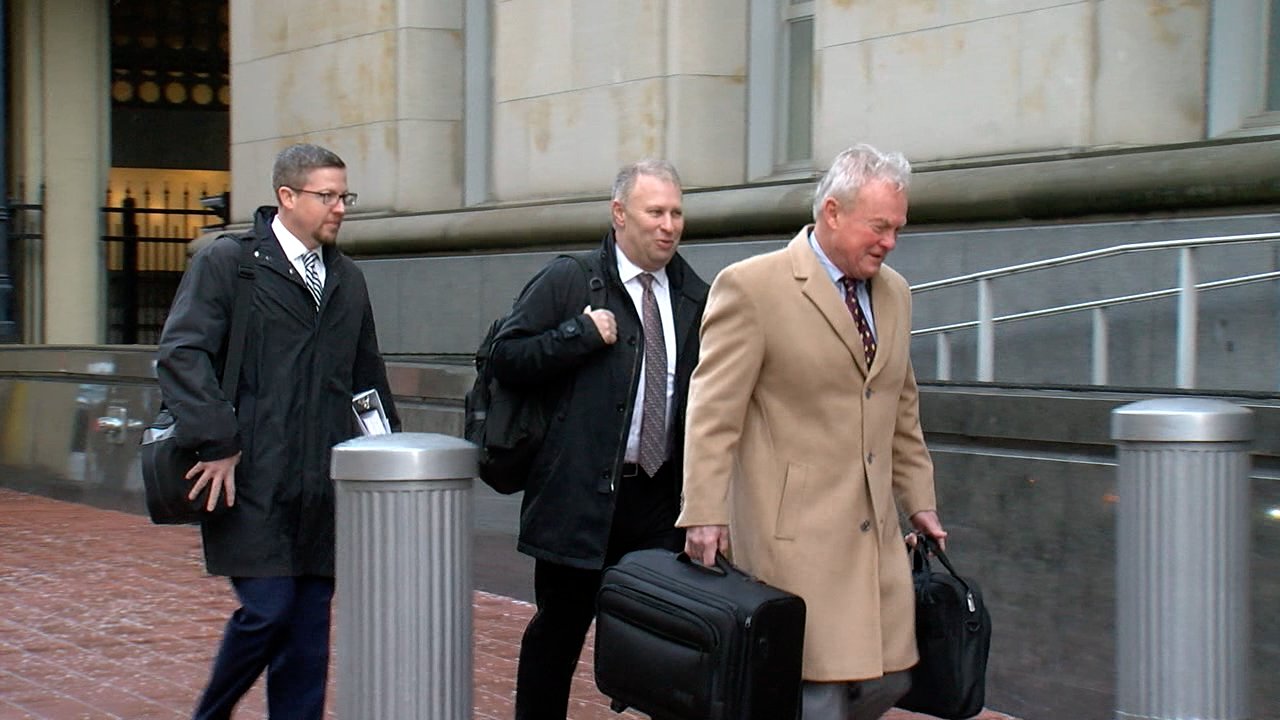
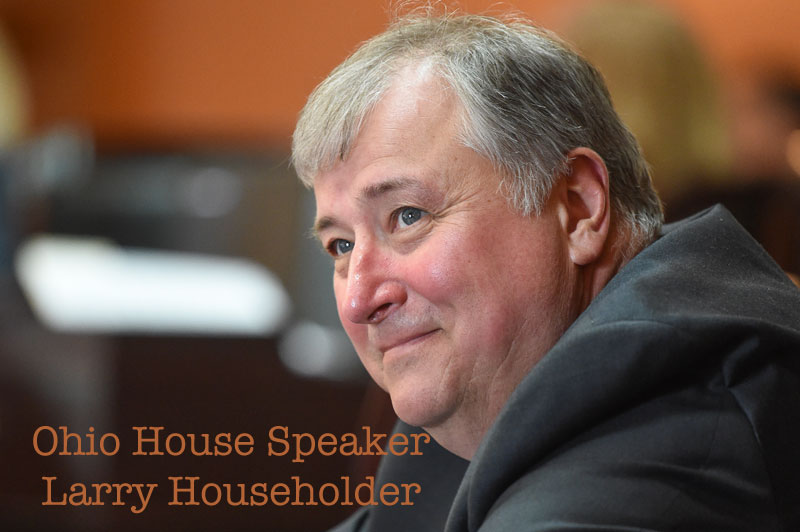
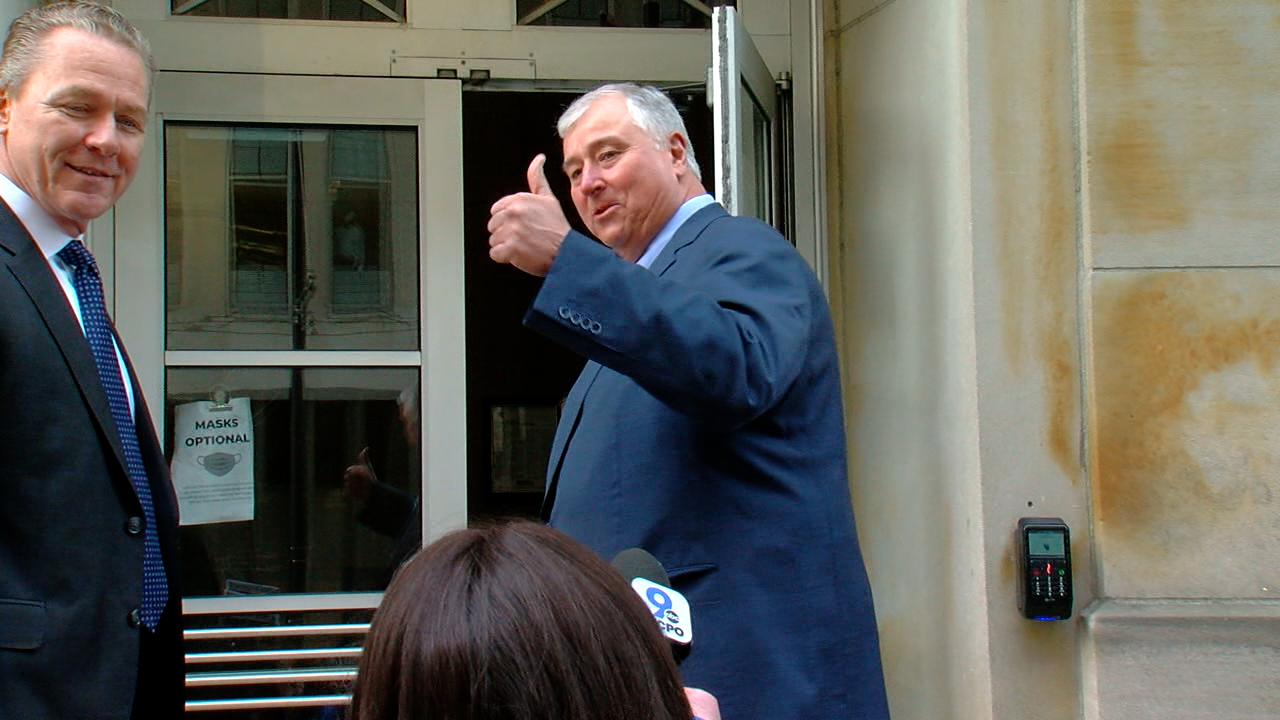
    Former Ohio House Speaker Larry Householder gives the thumbs up as he enters a federal courthouse in Cincinnati. (Photo from WEWS.)

    By:  and  Ohio Capital Journal

    This story was originally published by Canary Media.

    One of the largest utility scandals in U.S. history has remained largely unknown outside Ohio — until now.

    Last week, HBO released a documentary that covers the long, sordid saga, which led to the federal criminal convictions of a former speaker of the Ohio House of Representatives and a former head of the Ohio Republican Party.

    The Dark Money Game: Ohio Confidential” follows the story of how utility companies used roughly $60 million in bribes to public officials to secure more than $1.5 billion in ratepayer subsidies for aging, uneconomical coal and nuclear plants.

    Canary Media contributing reporter Kathiann Kowalski has spent more than a decade covering the House Bill 6 saga and Ohio utilities’ other efforts to get ratepayer-funded bailouts. Dan Haugen, a senior editor at Canary Media, recently spoke with Kowalski about her reactions to the new film.

    The following transcript has been edited slightly for length and clarity.

    Haugen: So, you watched this new HBO documentary ​Ohio Confidential” the other day. What about it is still on your mind today? 

    Kowalski: I was struck by the focus they used of how dark money and gerrymandering undermined voters’ will in the wake of a 2010 Supreme Court case that opened the door for unlimited corporate spending on political campaigns, subject to few conditions.

    Haugen: Was there any factual information that wasn’t previously reported by you or others?

    Kowalski: A lot of it was very familiar, given the fact that I had read through most of the exhibits, read Neil Clark’s book, gone to part of the trial, and been following this for years. There was an interesting scene where they were able to get footage of the FBI observing a private detective that former Ohio GOP Chair Matt Borges and company had apparently retained to follow Tyler Fehrman, who was a witness in the federal criminal case.

    Haugen: Did the film change your understanding of the HB 6 story in any way? 

    Kowalski: They did a decent job connecting some dots. I had not thought through how former Ohio House Speaker Larry Householder’s actions also enabled a far-right coalition in the Legislature to push through an anti-abortion law in 2019. It gave me a broader perspective on the anti-democracy angle of the public corruption, but my understanding of the basic story did not change.

    Haugen: Where did the abortion legislation appear on the timeline?

    Kowalski: The way that the filmmaker presents it is that once Householder helped these people get the anti-abortion legislation passed, he then had people who felt they owed him something. I looked at the timing, and Gov. Mike DeWine signed the anti-abortion legislation the day before House Bill 6 was introduced.

    Haugen: One of the biggest unknowns still today is what, if any, role the governor’s office had in all this. You and others have reported on a December 2018 dinner with FirstEnergy executives, DeWine, and Jon Husted, just weeks before the latter two took office as governor and lieutenant governor. Neither has been charged nor accused of any wrongdoing. Does the film shed any new light on their connections?

    Kowalski: The filmmakers include an allegation of $5 million going from FirstEnergy to help elect DeWine. And they note a disclaimer from DeWine’s office that it was all within the confines of what was allowed under the law. That’s basically about all they did. It was not a deep dive into the governor’s actions or Husted, who was recently appointed to fill Vice President JD Vance’s U.S. Senate seat. I think maybe they wanted to keep their story tightly focused on the legislature and what has been proven in the first federal criminal case. That also avoids having to include more disclaimers about how nothing’s been proven against others, everybody denies wrongdoing, etc., etc.

    Haugen: So is this something you would recommend that your readers watch? 

    Kowalski: Yes. It’s compelling storytelling. It does a good job of explaining things in plain terms. There’s a limited cast of characters, and you can follow the story. If House Bill 6 is new to you, it’s definitely worth watching. And it’s certainly important now as we’re looking at not only the continued use of dark money in politics through either nonprofits or limited liability corporations, but also, with technology, likely more ways to cover up potential bribes. So, yes, people should be aware of this.

    ________________

    Kathiann M. Kowalski, Canary Media
    Kathiann M. Kowalski, Canary Media
    Kathiann M. Kowalski is a contributing reporter at Canary Media who covers Ohio. She reports on energy, science, and policy issues and is the author of 25 books. In addition to her journalism career, Kathi is an alumna of Harvard Law School and has spent 15 years practicing law. She is a member of the Society of Environmental Journalists, the National Association of Science Writers, and the Society of Professional Journalists.

    MORE FROM AUTHOR

    Dan Haugen, Canary Media
    Dan Haugen, Canary Media

    Dan Haugen is a senior editor at Canary Media. He joined Canary Media as part of its 2025 merger with the Energy News Network, where he was managing editor and oversaw state and local reporting on clean energy policy. He previously worked as a newspaper reporter, freelance writer, and watchdog editor at a Gannett-owned newsroom in South Dakota. He currently lives with his wife and two kids in Minneapolis, where he enjoys reading books, collecting vinyl, and watching baseball.

    MORE FROM AUTHOR

  • Former GOP Chair Borges chair sentenced to five years in massive corruption case

    Former GOP Chair Borges chair sentenced to five years in massive corruption case

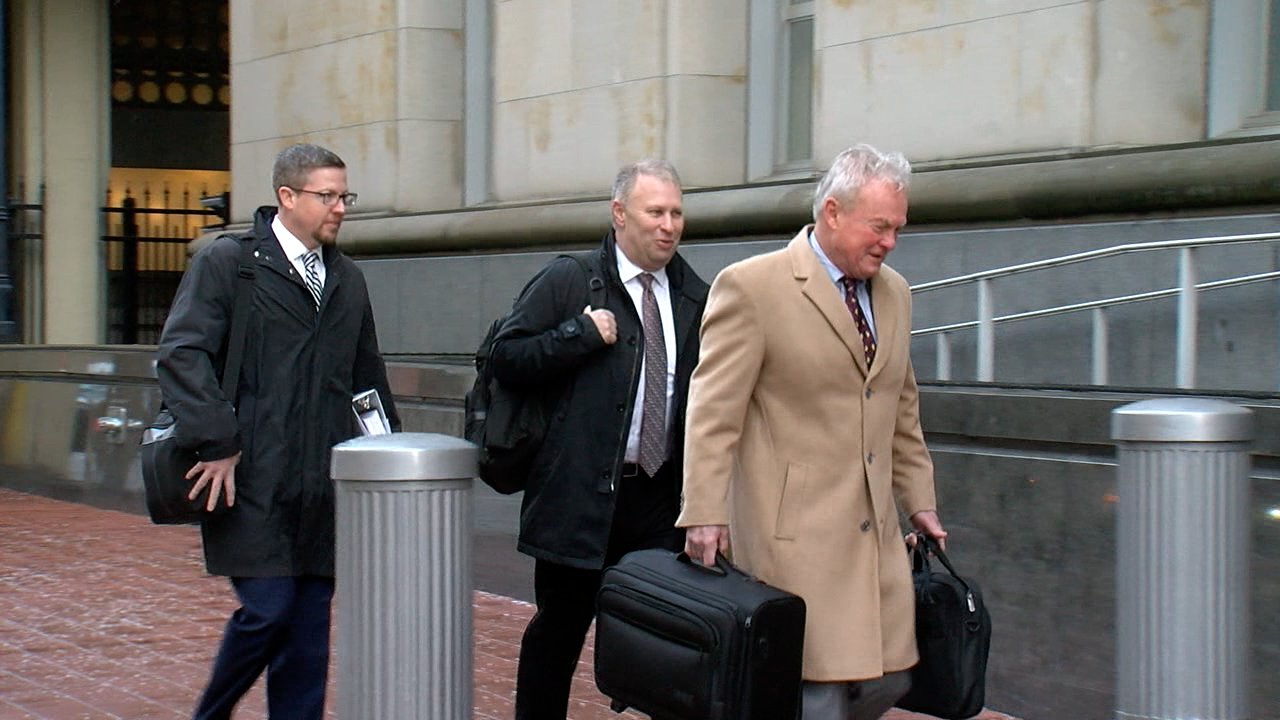
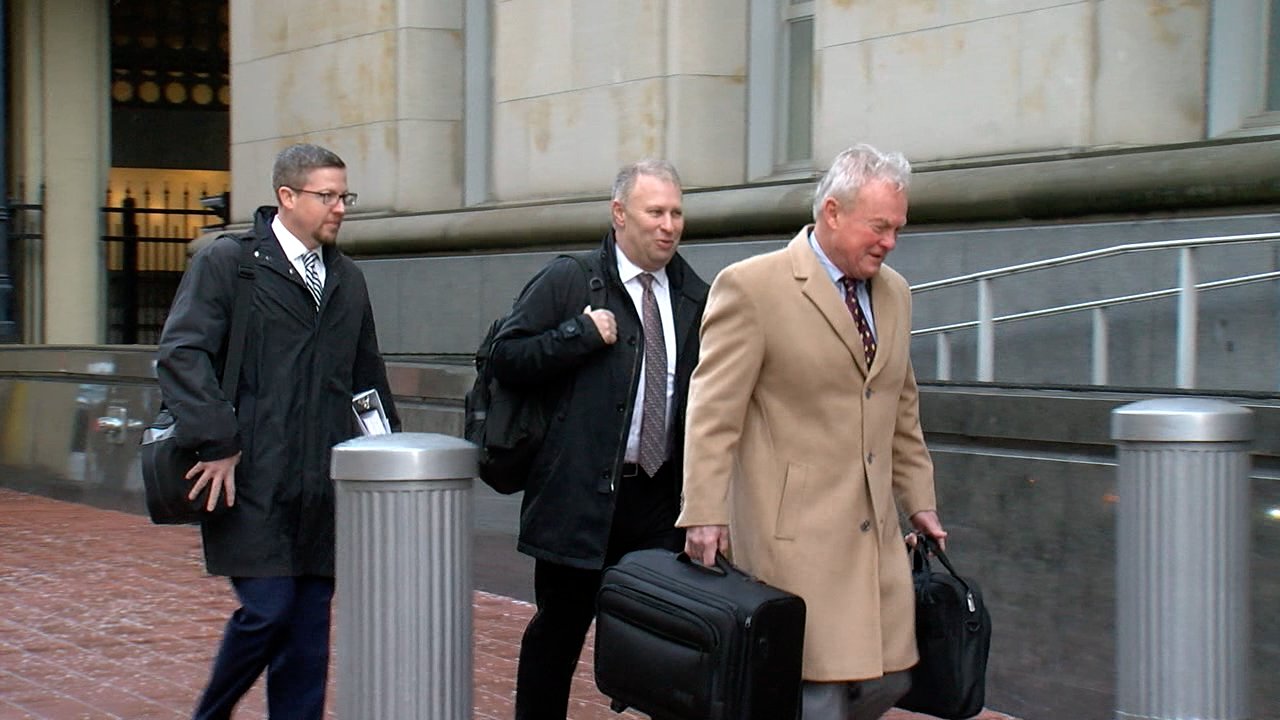
     Center, former Ohio Republican Party chair, and statehouse lobbyist, Matt Borges with his attorneys outside of the federal courthouse. Photo courtesy of WEWS.

    BY:  Ohio Capital Journal

    CINCINNATI — It was Matt Borges, the former chairman of the Ohio Republican Party, who was handcuffed by U.S. Marshals Friday after being sentenced to five years in prison for his participation in the biggest corruption scandal in state history.

    But federal prosecutors made clear that they were trying to send a message to other state leaders who played roles in the scandal and are now trying to pretend they didn’t.

    The sentencing of Borges, 51, follows the 20-year sentence U.S. District Judge Timothy Black meted out a day earlier to former Ohio House Speaker Larry Householder for masterminding the scheme. Akron-based FirstEnergy and other Ohio utilities ponied up more than $60 million between 2017 and 2020 to pass and protect a $1.3 billion ratepayer bailout that was mostly intended to benefit FirstEnergy.

    Borges received a lesser sentence because he was only involved in 2019, when FirstEnergy funneled $38 million into a dark-money group that funded an ugly, falsehood-strewn campaign to defeat a citizen-initiated repeal of the unpopular bailout. Because those voices were squelched — and because Ohio’s Republican legislature refuses to repeal the corrupt bailout — Ohioans continue to be harmed by the racketeering conspiracy, said Assistant U.S. Attorney Matthew Singer.

    The bulk of the subsidies — those going to two nuclear plants in Northern Ohio and a fee to “recession-proof” FirstEnergy — have been suspended. But Ohio ratepayers continue to pay hundreds of millions to prop two coal plants owned by AEP and other utilities, including one that’s in Indiana.

    The effort to gather enough voter signatures to put a repeal of the bailout — House Bill 6 — failed after Borges bribed a worker with the petition drive $15,000 for inside information and opened lines of communication with Republican officeholders.

    At the same time, teams of “blockers” harassed and allegedly assaulted petition gatherers and Householder’s minions flooded the airways with ads falsely claiming that the repeal effort was really China’s bid to take over the Ohio energy grid.

    The scheme Borges participated in was meant to “prevent Ohio voters from exercising their right to reject this corruption,” Singer said. “Ohioans never had the opportunity to vote up or down on this legislation.”

    Singer also pointed the finger at people only speaking out about Householder now and not earlier.

    “It’s interesting that some people are piling on (Householder) after the fact,” he said. “So many knew what was happening in real time and did nothing about it. Not only did they do nothing about it, they helped facilitate it.”

    Ohio Secretary of State Frank LaRose in a Tuesday appearance on Cincinnati’s 700WLW claimed that everybody who knew Householder knew he was “a crook” at the time the mammoth conspiracy was taking place. However, LaRose never spoke out against the deal at the time. And in text messages presented to the jury, FirstEnergy CEO Chuck Jones said that LaRose — who also heads up the Ohio Ballot Board — was giving him “private” updates about the signature-gathering effort.

    LaRose has refused to explain whether he was in communication with Jones or what he might have told him, but Singer, the prosecutor, seemed to refer to the state’s top elections official on Friday.

    Not only did Householder, Borges and their Republican allies squelch a citizen-initiated attempt to repeal the corrupt utility bailout, the gerrymandered legislature is now putting Issue 1 on the Aug. 8 ballot. It would make it virtually impossible for citizens to initiate amendments to the state Constitution. LaRose, a major supporter of the move, claims it will reduce corruption in Ohio.

    During Borges’ sentencing Friday, Singer decried the fact that many of the uncharged players in the racketeering scandal continue to thrive on Capitol Square. They include mega-lobbyist Robert Klaffkey, whom co-defendant Juan Cespedes testified slid a check for $400,000 in FirstEnergy dark money across a table to Householder during a 2018 meeting. Klaffkey denied sliding the check, but he didn’t deny being present.

    Singer said that it was remarkable that Klaffkey was “comfortable sitting in a room and sliding a $400,000 check to a public official.”

    Klaffkey is hardly alone.

    Megan Fitzmartin was paid hundreds of thousands as she aided Householder and co-defendant Jeffrey Longstreth in creating a Householder-friendly Republican majority in the state House. Now she’s policy director for the Republican supermajority in Ohio’s gerrymandered House.

    Corruption — and tolerance of it — corrodes our political foundation, Singer said.

    “Once corruption takes hold democracy itself becomes a charade,” he said.

    Cespedes and Longstreth are yet to be sentenced and U.S. Attorney Kenneth L. Parker on Thursday hinted that others might yet be charged in the scandal.


    Marty Schladen
    MARTY SCHLADEN

    Marty Schladen has been a reporter for decades, working in Indiana, Texas and other places before returning to his native Ohio to work at The Columbus Dispatch in 2017. He’s won state and national journalism awards for investigations into utility regulation, public corruption, the environment, prescription drug spending and other matters.

    MORE FROM AUTHOR

  • As Borges delay is denied, former FirstEnergy execs say “no doubt” the feds are after them

    As Borges delay is denied, former FirstEnergy execs say “no doubt” the feds are after them

    Litigation, prosecutions in massive corruption scandal move forward

    BY:  Ohio Capital Journal

    Judges denied two delays in recent days that would have been key to a bribery and money laundering scandal that took place in Ohio between 2017 to 2020. Lawyers in one suit called it “one of the largest corruption and bribery schemes in U.S. history.”

    Denial of a delay in one court case means that a player will still be sentenced late next month.

    In denying the other, the judge in that case agreed with two former FirstEnergy executives who said federal law enforcement has them in its crosshairs. But she ordered that they be questioned under oath anyway.

    One of those denied was former Ohio Republican Party Chairman Matt Borges, who on March 9 was convicted of racketeering along with former Ohio House Speaker Larry Householder, R-Glenford. Two others who were also charged in 2020 pleaded guilty and a third died by suicide.

    Borges and Householder played very different roles in a scheme to use more than $60 million from Akron-based FirstEnergy to make Householder speaker at the start of 2019 so Householder could pass and protect a $1.3 billion ratepayer bailout that mostly benefited FirstEnergy. But both made heavy use of funds that were passed through 501(c)(4) “dark money” accounts that enabled them to disguise its FirstEnergy source.

    Householder directed the effort in 2018 to elect friendly representatives who would make him speaker. He led the 2019 legislative fight to pass the bailout. And he engineered the nasty, dishonest battle to beat back an attempted repeal.

    Borges’ role was much more limited. He acted as a go-between with statewide officials such as Attorney General Dave Yost and Secretary of State Frank LaRose — and he paid a worker on the repeal campaign $15,000 as the worker shared inside information about its likelihood of success.

    Even though Householder’s role in the scandal was much bigger than that of Borges, each faces a sentence of up to 20 years in prison on the one count of racketeering of which he was convicted. Householder is scheduled to be sentenced in the Potter Stewart U.S. Courthouse in Cincinnati on June 29. Borges was scheduled for sentencing the next day.

    But after his conviction, Borges asked the court for extra time to file post-trial motions asking that his conviction be thrown out. U.S. District Judge Timothy Black agreed, giving him until April 24.

    Borges didn’t file anything by that deadline. But on May 15, Borges again asked permission to file post-trial motions. He argued that his conviction was on much shakier ground in light of two decisions handed down on May 11 by the U.S. Supreme Court: Ciminelli vs. United States and Percoco vs. United States.

    Judge Black, however, on Monday agreed with Assistant U.S. Attorney Emily Glatfelter that the legal theories those decisions dealt with were “neither charged, nor argued, nor instructed” in Borges’ case. Black added that it’s important to keep the case moving.

    “Finally, this case has been litigated, tried, and a verdict returned. Defendant Borges is now scheduled for sentencing on June 30, 2023. Disrupting the schedule would needlessly undermine the interests in judicial efficiency and finality,” the judge wrote.

     Former FirstEnergy CEO Charles “Chuck” Jones. Source: FirstEnergy, via Flickr 

    Similarly, a separate federal judge declined to postpone sworn depositions of the two former FirstEnergy executives who directed more than $60 million in corporate cash to Householder-controlled dark money groups that fueled the scandal. She did so even as she acknowledged that former CEO Chuck Jones and former Vice President Michael Dowling “fear they are next in line for indictment” and don’t want to incriminate themselves in their depositions.

    U.S. Magistrate Judge Kimberly Jolson is helping to manage the administration of a massive class-action suit against FirstEnergy, Jones and Dowling over the Householder scandal. Investors say the recklessness of the scheme cost them big — especially when it came to light and stock values plummeted.

    Alleging federal securities fraud, lawyers for pension funds and other investors have said in court filings, “FirstEnergy and its most senior executives bankrolled one of the largest corruption and bribery schemes in U.S. history.”

    Judge Jolson already slapped Sam Randazzo — Gov. Mike DeWine’s chairman of the Public Utilities Commission of Ohio — for not producing documents related to the $4.3 million FirstEnergy paid him just as DeWine was nominating Randazzo. Even though he was supposed to be regulating the utility, Randazzo, who has not been charged, helped draft the corrupt bailout law.

    Last Friday, Jolson also rejected attempts by Jones and Dowling — the former FirstEnergy executives — to delay sworn depositions to September or even later. The depositions had been scheduled for this week and next, but plaintiffs and defendants agreed to a short delay while Jolson considered the request.

    In asking to hold off until Sept. 8, Jones and Dowling said that having to give a deposition under oath put them in a position in which they were damned if they did, and damned if they didn’t.

    Answering questions could put them in criminal jeopardy, but if they took the Fifth, the jury in the class-action case is free to conclude they have something bad to hide, Jones and Dowling argued. They added that it’s certain that the feds are coming after them.

    “Although the defendants in (the Householder trial) have been found guilty (but are yet to be sentenced) and charges have not yet been brought against Jones or Dowling, there can be no doubt that the government’s investigation into Jones and Dowling remains ongoing,” their motion said.

    Judge Jolson replied that she had to weigh those concerns against those of FirstEnergy investors, who already have been fighting the case for nearly three years.

    Jones and Dowling “say the stay is temporary, (but) their grounds supporting the stay could extend for months or even years,” Jolson wrote. “Presently, they request that the depositions be delayed until at least September 8, 2023. (Jones and Dowling) have chosen this date because it is the first date on which investigations and proceedings conducted by PUCO might resume—after a third six-month stay of those proceedings was recently granted at the request of” federal prosecutors.

    The judge added it didn’t help the former executives’ argument that they haven’t been indicted yet because waiting until that question is resolved is a recipe for further delay.

    Jolson said she understood the executives’ dilemma.

    “In sum, there is substantial overlap between the issues in this case and the criminal investigation surrounding the Householder case,” she wrote. “And (Jones and Dowling) are faced with legitimate concerns regarding the invocation of their Fifth Amendment rights.”

    Jolson added, however, that granting a delay would privilege the former executives who funded the corrupt bailout scheme over the aggrieved investors and the public.

    “A stay of these key depositions at this moment — with no clear end in sight — would throw a wrench into the works of discovery and impede or even halt the litigation,” she wrote. “It would privilege the interests of (Jones and Dowling) above those of Plaintiffs, the public (whose interests are particularly implicated given that this is a class action), and the Court.”


    Marty Schladen
    MARTY SCHLADEN

    Marty Schladen has been a reporter for decades, working in Indiana, Texas and other places before returning to his native Ohio to work at The Columbus Dispatch in 2017. He’s won state and national journalism awards for investigations into utility regulation, public corruption, the environment, prescription drug spending and other matters.

    MORE FROM AUTHOR

  • Former associate testifies that ex-Ohio GOP Chair Borges paid to spy on bailout repeal effort

    Former associate testifies that ex-Ohio GOP Chair Borges paid to spy on bailout repeal effort

    BY: MARTY SCHLADEN – Ohio Capital Journal

    CINCINNATI — Former Ohio Republican Party Chairman Matt Borges paid $15,000 off the books in 2019, a witness testified Tuesday. It was in an attempt to gather inside information about the campaign to repeal a $1.3 billion utility subsidy that had just been passed by the legislature, a Borges associate said.

    In addition, the chairman of the company that benefited most from the subsidy in an email referred to the scheme as a “black op” and said he was prepared “to do whatever it takes” to defeat the repeal effort, the witness, Juan Cespedes, said. Coincidentally, the chairman, John Kiani, started his career at Enron, a Houston Energy company that collapsed under a wave of unmet contracts and accounting scandals in 2001.

    It was the 11th day in the federal court trial of Borges and former Ohio House Speaker Larry Householder, R-Glenford. Borges is accused of assisting Householder and others in a scheme to use $61 million from Akron-based FirstEnergy to make Householder speaker and pass the massive bailout.

    The bulk of the bailout was intended to benefit money-losing nuclear and coal plants owned by FirstEnergy subsidiary FirstEnergy Solutions. It was going through bankruptcy proceedings and executives with the parent company and the subsidiary desperately wanted the bailout to complete the bankruptcy, spin off FirstEnergy Solutions and possibly sell the nuclear plants.

    Gov. Mike DeWine signed the bailout the same day it passed in 2019, but a repeal effort started amid reports that it was “the worst energy bill of the 21st century.” Not only did it prop up 70-year-old coal plants under the guise of being a “Clean Air Program,” it also gutted the state’s renewable energy standards.

    Borges was part of a team of lobbyists who worked to pass and protect the bailout, House Bill 6. And, because of his long experience in Ohio politics, he was asked to make use of some of his relationships in the effort, Cespedes, another member of the team, testified.

    Cespedes was also charged with racketeering, but he pleaded guilty and is cooperating with prosecutors.

    The off-the-books payment

    One of the primary acts Borges is charged with has to do with a $15,000 payment he made during the repeal effort to Tyler Fehrman, who was helping manage the campaign to gather enough valid signatures to get the repeal on the ballot. 

    Inside information was valuable to the pro-H.B. 6 team because it enabled them to gauge the strategy and likelihood of success of the repeal effort.

    Cespedes testified that he tried to keep the plan to recruit Fehrman from Kiani, the FirstEnergy Solutions chairman whose company financed a big portion of the fight against the repeal. Kiani was a hard-charging executive and Cespedes believed that once he learned of the spying effort, he would press the operatives relentlessly. 

    However, Cespedes said, Borges told Kiani about it, and it seems Cespedes’s worries were well founded.

    In an Aug. 31, 2019 text, Kiani asked “what happened to the black ops?” in a reference that Cespedes said was to the spying effort. Then, in a Sept. 2, 2019 text, Cespedes told Borges that Kiani, “reiterated to do whatever it takes to get this information.”

    It appears that Fehrman was paid, but it’s unclear what he was paid for.

    In taped conversations played earlier in the trial, Borges discussed paying Fehrman, but he claimed to Fehrman that it was for work Fehrman might do some time in the future. But Borges made other statements that seemed to show that he knew the two were doing something wrong.

    “It would be bad for both of us if the story came out,” he told Fehrman in a recording that Fehrman made with the help of the FBI. “But it would be worse for you.”

    On Tuesday, Cespedes testified that he roughed out a budget at the time of the repeal campaign. He made an entry in it to pay $25,000 to an “employee.” Cespedes said the money was intended for Fehrman.

    Asked why he used “employee” to label the entry, Cespedes said, “I wasn’t going to write ‘bribe.’ I wasn’t going to write anything nefarious.”

    Prosecutors displayed a photograph of what they said was a contemporaneous budget that Borges roughed out in a notebook that Cespedes had photographed. Cespedes testified that when he asked Borges why a payment to Fehrman wasn’t in it, Borges “simply said it wasn’t something he wanted to write down.”

    Cespedes testified that Fehrman later went quiet on Borges and Cespedes assumed that their deal had fallen through. But after the repeal campaign had failed, an accounting showed that the $15,000 had been paid, Cespedes said. 

    When he asked Borges about it, “He said, ‘I just wanted to keep him quiet,’” Cespedes testified.

    Earlier in the HB 6 fight, Borges and Cespedes were struck by Kiani’s connections to Enron, which ceased to exist after one of the biggest corporate scandals to that point in American history.

    “The shocking thing last night was learning that Kiani came from Enron,” Borges said in a text.

    Kiani went from there to work as a hedge fund manager and then he made his way onto the FirstEnergy Services board as an activist investor. Cespedes testified that a Kiani aide told him that Kiani would make $100 million from the sale of FirstEnergy Solutions’ nuclear plants. 

    Regardless of whether that’s accurate, Kiani clearly was willing to spend lots of corporate money to win subsidies for them. To fund a statewide, eight-week media campaign for the bailout, bankrupt FirstEnergy Solutions approved a $15 million budget, Cespedes testified.

    That amount would grow after the bill passed and the repeal fight got underway.

    Kiani continues to be executive chairman of Energy Harbor, the new name for FirstEnergy Solutions after it emerged from bankruptcy. His company bio credits him with “the successful operational and financial turnaround of Energy Harbor into a leading, carbon free power infrastructure and energy supply company.”

  • Ohio House speaker, four others arrested amid massive dark-money, pay-to-play allegations

    Ohio House speaker, four others arrested amid massive dark-money, pay-to-play allegations

    All are charged with racketeering

    Make no mistake – the $61 million came from Company A’s ratepayers and ultimately extorted from every residential and commercial electrical utility user in Ohio. The racketeering scheme of lies and deception corrupted Ohio citizen’s ability to overturn corrupt legislation at the ballot box. – David Miller, Loveland Magazine Publisher

    By Marty Schladen The Ohio Capital Journal and David Miller/LovelandMagazine
    ddd

    Cincinnati, Ohio – Ohio House Speaker Larry Householder, four political operatives and a dark-money group were charged Tuesday in a criminal complaint that an Ohio energy company paid them $61 million to get a $1.5 billion nuclear bailout from taxpayers.

    Read the Press Release issued by the Department of Justice

    Neil Clark, a lobbyist who owns Grant Street Consulting – Photo from Grant Street Consulting who exclaim, “Clark’s decades of experience and role in shaping Ohio’s political landscape makes him an indispensable resource to Ohio’s elected leaders, to whom he often serves as a trusted and highly sought after campaign advisor.”

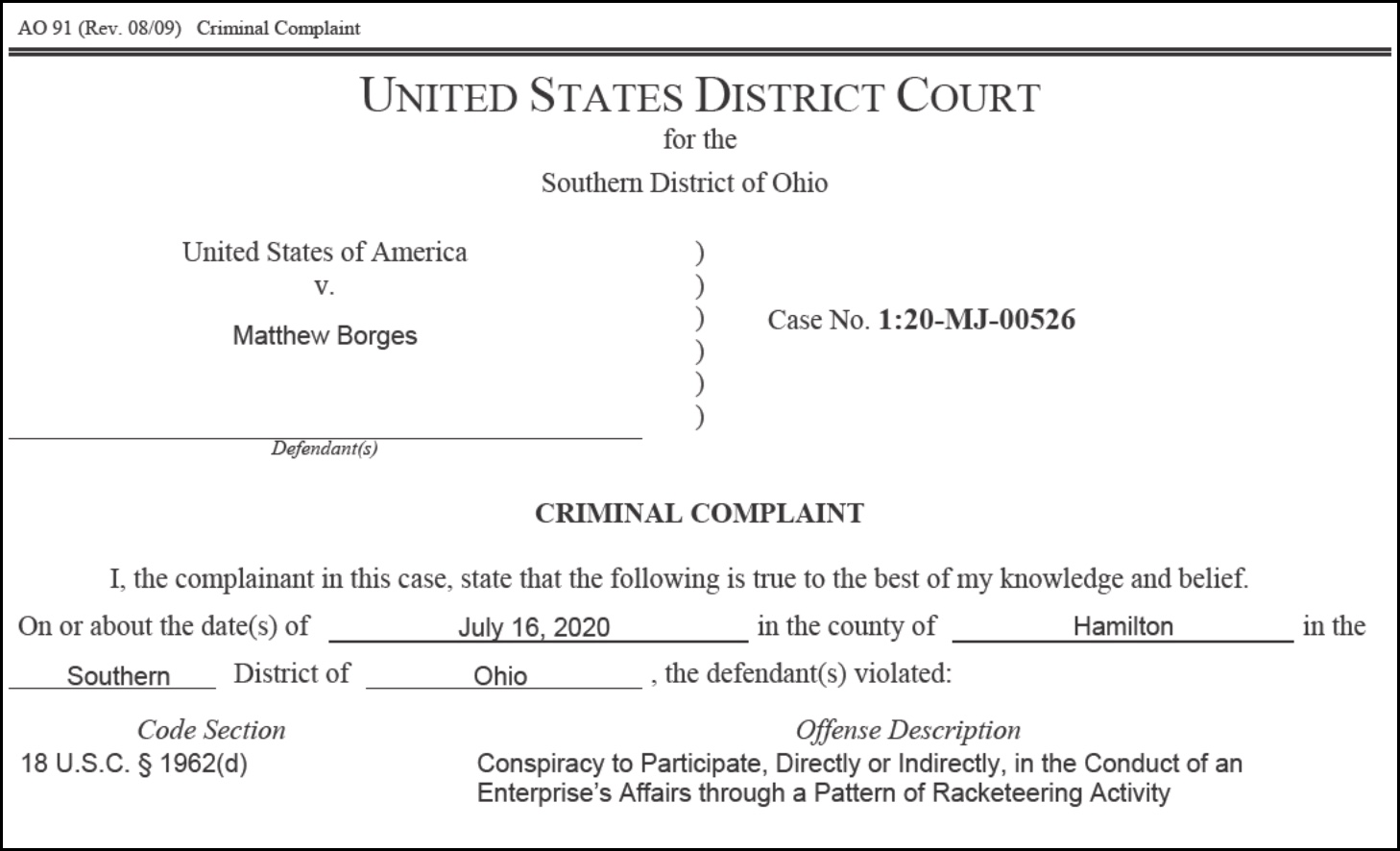
    Charged along with Householder were Matt Borges, a lobbyist who was formerly chairman of the Ohio Republican Party, Neil Clark, a lobbyist who owns Grant Street Consulting, Juan Cespedes, also a lobbyist, and Householder’s aide, Jeffrey Longstreth.

    All are charged with racketeering, which carries a prison sentence of up to 20 years.

    David M. DeVillers, U.S. Attorney for the Southern District of Ohio

    The alleged conspiracy, which revolved around the bailout of two failing nuclear plants in Northern Ohio, is “likely the largest bribery and money-laundering scheme ever in the state of Ohio,” David M. DeVillers, U.S. Attorney for the Southern District of Ohio, said at a Tuesday afternoon press conference.

    Shortly after the press conference, Ohio Gov. Mike DeWine called on his fellow Republican to step down.

    “I am deeply concerned about the allegations of wrongdoing in the criminal complaint issued today by the U.S. Attorney’s Office,” DeWine, who last year signed the bailout into law, said in a written statement. “Every American has the presumption of innocence until proven guilty.  Because of the nature of these charges, it will be impossible for Speaker Householder to effectively lead the Ohio House of Representatives; therefore, I am calling on Speaker Householder to resign immediately. This is a sad day for Ohio.”

    Read the Criminal Complaint

    ccc

    The criminal complaint says that “Company A,” the former FirstEnergy Solutions of Akron, worked to save its failing nuclear plants by funneling $61 million into Generation Now, a 501(c)(4) “dark money” group controlled by Householder.

    On September 9, 2019, President Donald Trump nominated DeVillers for the United States Attorney in the Southern District of Ohio. The Senate confirmed the nomination in October, and DeVillers took his oath on November 1, 2019.

    “Make no mistake, this is Larry Householder’s 501(c)(4),” the U.S. attorney said.

    The money was used for three general purposes, the complaint said. First it was used to build “Team Householder” through campaign contributions and other measures that helped Householder win the speakership in 2019.

    “In exchange for payment from Company A, Householder’s enterprise helped pass House Bill 6, legislation described by an enterprise member as a billion-dollar ‘bailout’ that saved from closure two failing nuclear power plants in Ohio affiliated with company A,” the complaint said

    The money was also used for the personal benefit of Householder and the other conspirators, DeVillers said. Householder got about $500,000, he said.

    Despite the companies claims of poverty, the interests behind the bailout spent millions — much of it in the form of hard-to-trace dark money on campaign contributions, a xenophobic ad campaign and then on an aggressive effort to stymie a petition drive to repeal the bailout DeWine signed into law a year ago.

    And the money was used to fend off a petition effort to repeal HB6, going so far as to buy plane tickets for and pay $1,000 each to people circulating it to get out of town, DeVillers said.

    The federal prosecutor said that it was crucial to keep the investigation secret until Tuesday. Now it begins a new phase that might be causing some lawmakers, energy executives and some others to lose sleep.

    “We are not done with this case,” he said. “There were things we couldn’t do before. People we couldn’t interview. People we couldn’t subpoena. Documents and search warrants we couldn’t execute. 

    “As of this morning there are a lot of FBI agents knocking on a lot of doors asking a lot of questions, serving lots of subpoenas. That’s going to go on for days.”

    “It takes courage for citizens to assist law enforcement in the ways detailed in the affidavit,” U.S. Attorney David M. DeVillers said. “We are grateful to those who felt a moral duty to work together with agents in bringing to light this alleged, significant public corruption.”

    House Bill 6 is adding $1.5 billion in additional taxpayer bailouts to the $10.2 billion that Akron-based FirstEnergy Solutions and its former parent company, FirstEnergy Corp, have received from taxpayers since 1999. Most of the funds have gone to prop up the Davis-Besse and Perry nuclear power plants in Northern Ohio.

    The company that owns the plants was renamed Energy Harbor after emerging from bankruptcy earlier this year.

    Despite the companies claims of poverty, the interests behind the bailout spent millions — much of it in the form of hard-to-trace dark money on campaign contributions, a xenophobic ad campaign and then on an aggressive effort to stymie a petition drive to repeal the bailout DeWine signed into law a year ago.

    The interests behind the nuclear bailout also contributed heavily to the effort at the beginning of 2019 to elect Householder speaker. He ended up winning the support of 26 Republicans and 26 Democrats, His opponent, Ryan Smith, R-Bidwell, got the votes of 34 Republicans and 12 Democrats.

    The Ohio Republican Party didn’t respond Tuesday to requests for comment.

    The Ohio Democratic Party didn’t respond when asked about the fact that Householder wouldn’t have worn the speakership without Democratic votes. However, the party chairman, David Pepper called on Householder to step down as speaker.

    “As the U.S. attorney indicated, this investigation is ongoing, and we will wait to hear all the facts as they emerge. However, given what was revealed in today’s complaint and the taint of corruption over Ohio legislative activity, we believe Speaker Householder should step down from leadership immediately as he avails himself of his due process rights,” Pepper said in a written statement.

    House Bill 6, which passed 51-38, was quickly signed into law by Gov. Mike DeWine. Under the bill, from 2021 until 2027, every Ohio electricity customer will have to pay a new monthly surcharge that ranges from 85 cents for residential customers to $2,400 for large industrial plants. Ratepayers around the state would also have to chip in up to $1.50 monthly (and up to $1,500 per month for commercial and industrial users) to subsidize coal plants in Ohio and Indiana run by the Ohio Valley Electric Corporation.- cleveland.com

    Starting next January, ratepayers around the state would also have to chip in up to $1.50 monthly (and up to $1,500 per month for commercial and industrial users) to subsidize coal plants in Ohio and Indiana run by the Ohio Valley Electric Corporation.

    This isn’t Householder’s first encounter with federal law enforcement. 

    In 2006, the Justice Department told the FBI that it wouldn’t pursue charges against Householder. The FBI had been told two years earlier that Householder had used his post as head of the House Republican Campaign Committee to overpay some vendors in exchange for kickbacks from them.

    Nor is Householder, 61, of Glenford, the first Ohio House speaker to find himself in the FBI’s crosshairs. In 2018, Speaker Cliff Rosenberger, a Republican, resigned amid an FBI probe of his overseas travel. He has not been charged, but the investigation remains open.

    cccc

  • John Becker: I’m a conservative Republican who is vetted, tested, and proven

    John Becker: I’m a conservative Republican who is vetted, tested, and proven


    Guest Column

    by John Becker,

    On October 26th, Loveland Magazine published, Patricia Lawrence: I’m running because our community deserves effective leadership. My liberal Democrat opponent repeatedly misrepresented, mischaracterized, fabricated, and twisted facts beyond recognition. But hey, that can be expected from a desperate politician.

    John Becker has been serving as the State Representative for Ohio’s 65th House District since January 2013. It includes the cities of Milford and Loveland (inside Clermont County) and the townships of Union, Miami, Goshen, Stonelick, and Wayne.

    Rather than picking apart her statements and correcting the record line-by-line, I’m going to reintroduce myself and then compare and contrast our positions and values:

    It is my honor and privilege to serve as your State Representative. I’ve been involved with the Clermont County Republican Party since 1993, served southern Ohio as a State Committeeman for the Ohio Republican Party from 2004-2012, and I’ve been a member of the Ohio General Assembly since January 2013.

    My MBA, with an emphasis in Taxation, was earned at Xavier University. I also have a Bachelor of Science degree in Business Management with a minor in Psychology from Northern Kentucky University. Additionally, I also hold a Certified Treasury Professional (CTP) designation, a school district treasurer’s license, and am a graduate of the Union Township Citizens Police Academy.

    I am running for re-election to continue being a champion in Columbus for our shared conservative values. My platform is very simple: Pro-Life, Pro-Gun, Limited Government, and Lower Taxes.

    With a 30-year career in the private sector, my experience has spanned four major industries including Manufacturing, Health Care Insurance, Banking/Financial, and Charter Education. The companies I’ve worked for include household names like GE, Ford, MetLife, Prudential, Provident Bank, Fifth Third Bank, and Check ‘n Go. I’ve held positions such as supervisor, manager of health care information systems, senior financial analyst, finance officer, assistant vice president, business analyst, and treasurer.

    I am running for re-election to continue being a champion in Columbus for our shared conservative values. My platform is very simple: Pro-Life, Pro-Gun, Limited Government, and Lower Taxes.

    Endorsements are a key indicator of a candidate’s values and effectiveness. My growing list are as follows:

    Party Endorsements

    • Clermont County Republican Party
    • Ohio Republican Party

    Business Endorsements

    • NFIB Ohio – National Federation of Independent Business (small business)
    • Ohio Chamber of Commerce
    • The Ohio Society of CPAs
    • Ohio Valley Associated Builders and Contractors ABC-PAC
    • Ohio State Medical Association PAC
    • 2018 Ohio Farm Bureau “Friend of Agriculture”
    • Ohio State Chiropractors Association
    • Cincinnati Area Board of REALTORS® and the Ohio REALTORS®

    Pro-Life and Grass Roots Values Voters Endorsements

    • Cincinnati Right to Life – PAC
    • Ohio Right to Life – PAC
    • Ohio Value Voters
    • Family First PAC
    • Janet Folger Porter
    • “Very Conservative” from iVoterGuide. (This is their highest rating.)

    Gun Voters

    • NRA with the highly exclusive A+ rating
    • Buckeye Firearms PAC with the highly exclusive A+ rating
    • Ohioans for Concealed Carry (OFCC)

    TEA Party, Liberty, and Tax Voters

    • Ohio Citizens PAC
    • Republican Liberty Caucus of Ohio
    • Coalition Opposed to Additional Sending and Taxes (COAST)

    Military and Veterans Voters

    • “Highly Recommended” by Ohio Veterans United

    In contrast, my liberal Democrat opponent boasts of her endorsements by a collective of labor unions, gun control, and left-wing, pink hat-wearing, feminist pro-abortion groups, including Planned Parenthood.

    If the people of Clermont County want to continue winning with a pro-life, pro-gun, fiscal conservative, they will send me back to Columbus.

    If the people of Clermont County are tired of winning, they will vote for my liberal Democrat opponent. If they want to continue winning with a pro-life, pro-gun, fiscal conservative, they will send me back to Columbus.

    To learn more about me and my candidacy for state representative, please visit my website at www.BeckerGOP.com. If you’d like to subscribe to my monthly newsletter, The Becker Report, email me at John@BeckerGOP.com.

    Election Day is quickly approaching. I’m a conservative Republican who is vetted, tested, and proven. I humbly ask for your vote on November 6, 2018.