Tag: Ohio Right to Life

  • Ohio Issue 1: Attacks on parental rights do not appear in amendment

    Ohio Issue 1: Attacks on parental rights do not appear in amendment

    BY:  Ohio Capital Journal

    Editor’s Note: This article is part of a series looking at the language of Ohio Issue 1 and the reproductive rights it would impact. The full language of the amendment can be found here.

    __________

    The topic of parental rights does not appear in Ohio Issue 1 on the ballot Nov. 7.

    There is no mention of denying any rights to parents in the process of enshrining reproductive rights like abortion, contraception, miscarriage care and infertility treatment into the Ohio Constitution.

    “I don’t think Issue 1 would affect parent’s rights at all,” said Tracy Thomas, the Seiberling Chair for Constitutional Law and director of the University of Akron’s Center for Constitutional Law.

    Having studied reproductive rights cases in Ohio and nationwide, including the Dobbs case that overturned Roe v. Wade, Thomas said historically, “parental rights have consistently been retained.”

    “I would expect that those (rights) can all stay consistent,” Thomas told the Capital Journal.

    Ohio Attorney General Dave Yost also acknowledged that previous abortion rights court cases have upheld parental consent in a legal analysis of Issue 1 he released in early October.

    Yost went on to say “the amendment does not specifically address parental consent.”

    But, Yost argued, that consent “would certainly be challenged on the basis that Issue 1 gives abortion rights to any pregnant ‘individual,’ not just to a ‘woman.’”

    The term “individual” is currently used 36 times in the Ohio Constitution, including in the definition of “health care system,” the eligibility of officeholders, and clauses on temporary housing and corporate property.

    Only one use of the word “individual” is connected to a gender specifier: the constitutional language on marriage status “only one man and one woman” can be in a marriage “valid or recognized by this state,” and “relationships of unmarried individuals” can not hold the same legal status.

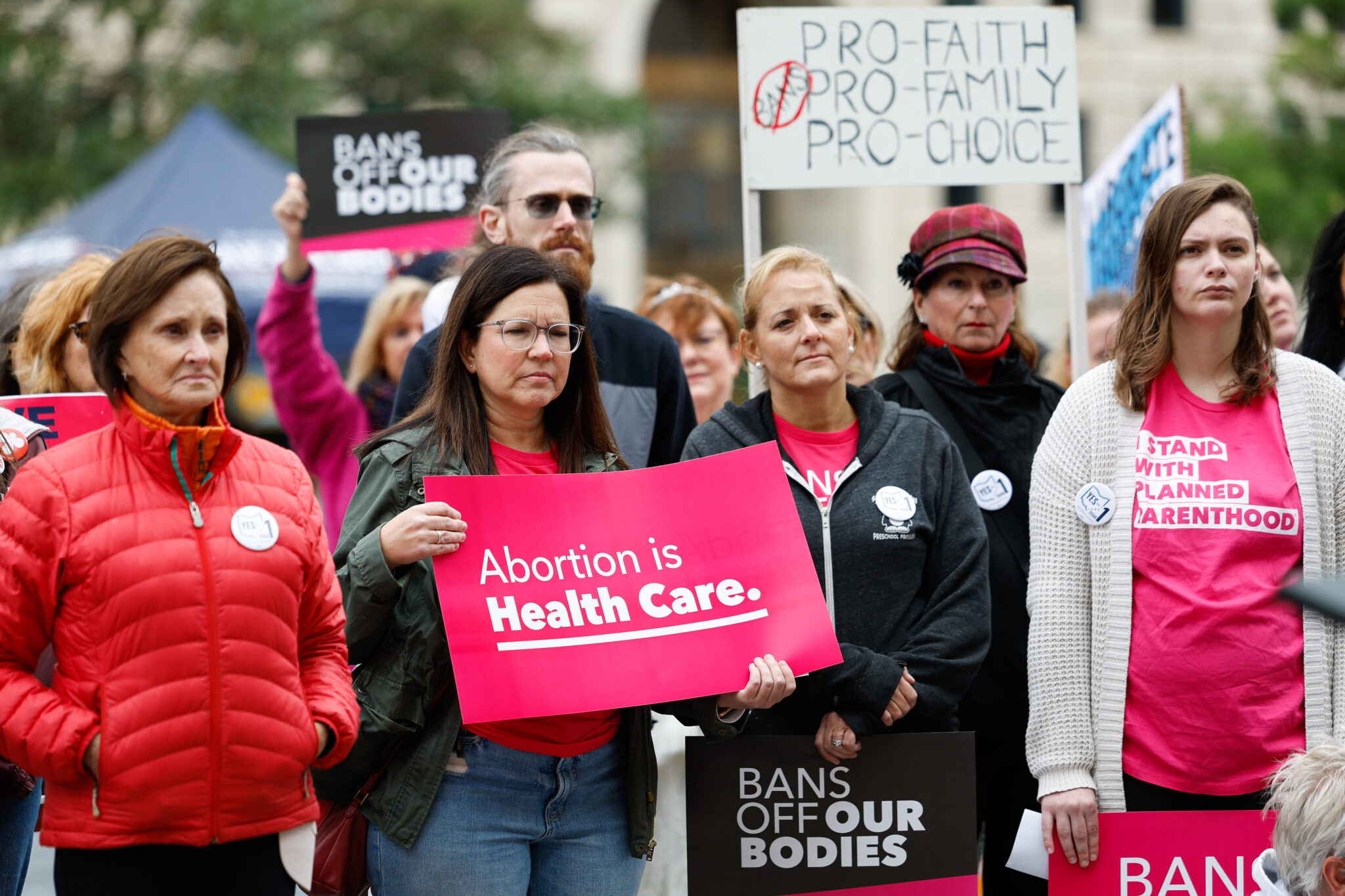
     COLUMBUS, Ohio — OCTOBER 06: Sister Amor of the Bridgettine Sisters of Columbus holds a sign on High Street during the Ohio March for Life against November’s Issue 1 reproductive rights amendment, October 6, 2023, outside the Statehouse in Columbus, Ohio. (Photo by Graham Stokes for Ohio Capital Journal. Republish photo only with original article.) 

    Still, Religious lobbies and anti-abortion rights groups that oppose the amendment have used that message as one of their primary arguments against the measure since the effort to get it on the ballot began.

    In a new ad for the Issue 1 opposition group Protect Women Ohio, a coalition including Ohio Right to Life and other anti-abortion rights groups, Gov. Mike DeWine and First Lady Fran DeWine feature as leaders against the measure.

    Fran DeWine is shown in the ad saying Issue 1 “would deny parents the right to be involved when their daughter is making the most important decision of her life.”

    Gov. DeWine admits in the ad that Ohioans “are divided on the issue of abortion,” but calls Issue 1 “not right for Ohio.”

    The Catholic Conference of Ohio pointed to the first line of the proposed amendment and the word “individual,” saying the use of the word would allow anyone under age 18 to “have an abortion, or make any reproductive decision without their parents’ consent or notification.”

    State Sen. Kristina Roegner, R-Hudson, the sponsor of the six-week abortion ban law that is currently on hold as court cases determine its fate, co-sponsored a resolution in the Ohio Senate on Oct. 11 officially standing against Issue 1.

    In opposing Issue 1, she said the measure was “extreme, nefarious” and would “harm women and take away parental rights.”

    The resolution passed with the GOP majority unanimously approving it. The seven Democratic senators all voted against the measure.

    The resolution itself proclaims “parents are the ultimate arbiter of what is best for their children.”

    In one paragraph of the resolution, sponsors Roegner and state Sen. Michele Reynolds, R-Canal Winchester, write that Issue 1 “will eliminate many, if not all, state laws regarding abortion,” including “parental notification requirements.”

    In the next paragraph, the resolution states Issue 1 “may” eliminate parental rights.

    Senate Minority Leader Nickie Antonio, D-Lakewood, pushed back against the resolution by bringing up a decade-old legal process present in Ohio called “judicial bypass.”

    Judicial bypass, as it stands now, has been around since 2012 in the state, after then-Gov. John Kasich signed a law that prohibits forcing a minor to have an abortion, but leaves in place a legal way for minors to petition juvenile court to bypass parental consent.

    The Ohio Supreme Court explained the process in Rule 23 of a 2015 amendment to its “rules of superintendence,” an internal operations document for all Ohio courts.

    The legal method uses the court system to allow underage individuals to make decisions for themselves where parental consent would typically be necessary, such as in cases of abuse.

    “If the court finds by clear and convincing evidence that the minor is sufficiently mature and well enough informed to decide intelligently whether to have an abortion, the court shall grant the petition and permit the minor to consent to the abortion,” the law states.


    Read Part 1 and 2…


    Susan Tebben
    SUSAN TEBBEN

    Susan Tebben is an award-winning journalist with a decade of experience covering Ohio news, including courts and crime, Appalachian social issues, government, education, diversity and culture. She has worked for The Newark Advocate, The Glasgow (KY) Daily Times, The Athens Messenger, and WOUB Public Media. She has also had work featured on National Public Radio.

    MORE FROM AUTHOR

  • Split ballot board approves reproductive rights amendment summary written by Ohio Sec. of State

    Split ballot board approves reproductive rights amendment summary written by Ohio Sec. of State


    In a 3-2 decision, the Ohio Ballot Board rejected using the full amendment proposal text for voters to see, and the approved summary language leaves out protecting contraception, fertility treatment and miscarriage care

    BY:  Ohio Capital Journal

    In a 3-2 split decision Thursday, the Ohio Ballot Board rejected using the full text of a proposed reproductive rights amendment on the ballot in November, adopting instead summary language written by the Ohio Secretary of State’s Office that was criticized for being incomplete and inaccurate.

    The board’s approval of the language – which is now titled Issue 1 for the November general election – was the next step in the process of voters deciding whether or not the Ohio Constitution will include the right to abortion, as well as contraception, fertility treatment, miscarriage care, and continuing one’s own pregnancy. Those last four items were all left out of the language approved by the ballot board majority.

    The summary language does not change what the actual amendment would state in the constitution, but would be the last representation of the amendment voters read before the casting their approval or rejection.

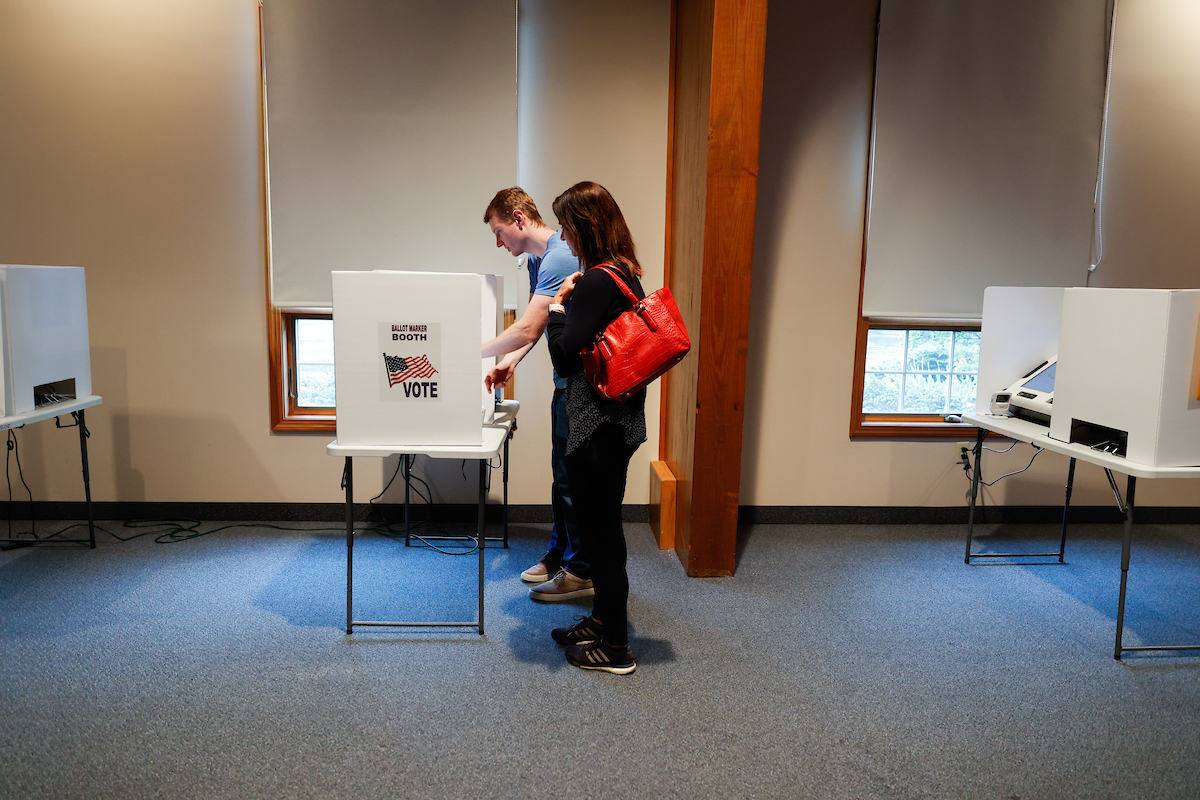
    The full text of the amendment will be available at boards of elections during the election, but not in the ballot booths with voters. LaRose said posters with the text will be accessible at voting locations.

    In the summary language approved by the board, the medical term “fetus” is changed to “unborn child,” and the amendment’s “decision” language is changed to “medical treatment.”

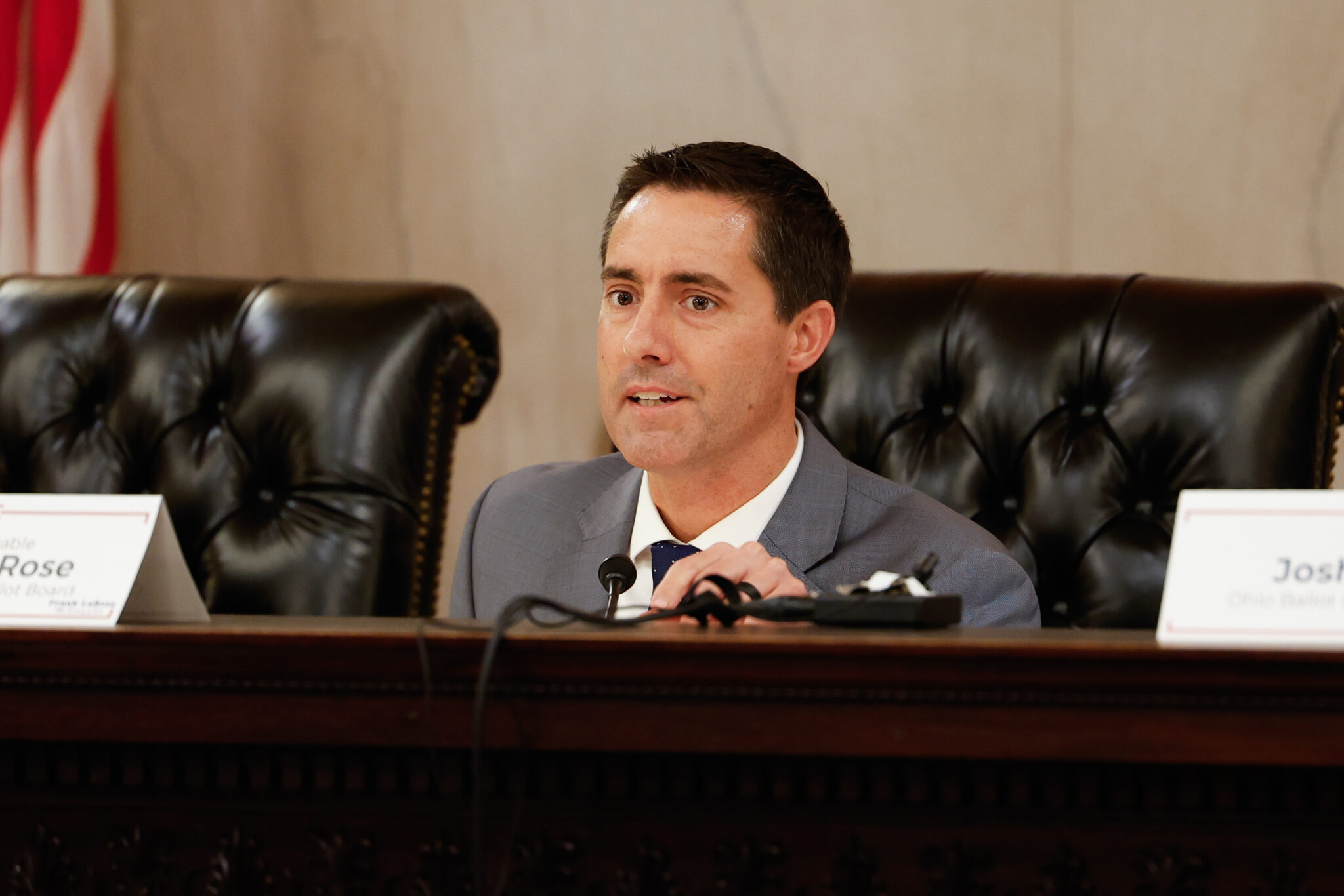
    The leader of the Ohio Ballot Board, Secretary of State Frank LaRose, said the changes were made by “staff” of the board, though Democratic board member and state Rep. Elliot Forhan said “I would assume that the buck stops with the secretary of state.”

    LaRose during the meeting also said that, “having worked extensively on drafting this, I do believe it’s fair and accurate.”

    LaRose has been vocal in his opposition of the amendment, even saying the effort around the previous Issue 1, which would have changed the threshold to approve a constitutional amendment had it not been roundly defeated, was targeting the abortion rights fight specifically.

    At the beginning of Thursday’s meeting, he prefaced the board’s activity by saying the group was not there to “debate the merits” of the amendment or the marijuana ballot initiative also on the table at the meeting.

     Ohio Ballot Board member, State Sen. Theresa Gavarone, R-Bowling Green, speaks at the Ballot Board meeting Thursday. (Photo by Graham Stokes for Ohio Capital Journal. Republish photo only with original article.) 

    Board member and state Sen. Theresa Gavarone, however, gave a speech in the middle of the meeting harshly criticizing the amendment and calling it “a bridge too far,” even after multiple comments by LaRose about the neutrality with which the board was supposed to conduct their business.

    “This is a dangerous amendment that I’m going to fight tirelessly against,” Gavarone said. “But that’s not why we’re here today.”

    Gavarone also claimed, as anti-abortion groups throughout the state do as well, that the amendment is “an assault on parental rights.” Neither the amendment nor the summary approved by the board mention parental rights of any kind.

    The senator continued her comments during the board meeting, saying the true nature of the amendment “is hidden behind overly broad language,” despite the fact that the board summary took out pieces of the full text.

    The summary passed by the board does not include a list of the rights to “reproductive decisions” spelled out in the ballot measure, including contraception, fertility treatment, continuing one’s own pregnancy, and miscarriage care, all of which would be impacted under the new constitutional amendment.

    A clause in the proposed amendment that says “the state shall not, directly or indirectly, burden, penalize, prohibit, interfere with, or discriminate against” the exercise of the amendment by an individual or an assistant of the individual was reduced to “the citizens of the state of Ohio” in the summary.

    The phrase “the citizens of the state of Ohio” is also used in the clause summarizing a prohibition of abortion that would only happen if a pregnant patient’s physician finds the pregnancy to be viable.

    The phrase “pregnant patient” in the ballot measure was changed to “pregnant woman” in the summary.

     Ohio Ballot Board member, State Sen. Paula Hicks-Hudson, D-Toledo, speaks at the Ballot Board meeting Thursday. (Photo by Graham Stokes for Ohio Capital Journal. Republish photo only with original article.) 

    State Sen. Paula Hicks-Hudson, the other Democratic member of the ballot board, made two motions to change the language of the summary to bring back the full text or certain clauses of the actual amendment text into the approved language.

    “The full text is clear, it’s concise and it’s direct, which is one of the requirements that’s needed for us to present to voters in the state of Ohio,” Hicks-Hudson said.

    Both motions were rejected 3-2, with LaRose, Gavarone and the final board member, Bill Morgan, voting against the motions.

    Morgan didn’t speak during the meeting other than to register his votes, and didn’t specifically comment on the amendment discussion or language afterward.

    “I think it’s what we were supposed to do, what the ballot board does,” Morgan told the OCJ.

    Groups for and against the initiative anticipated potential issues with the board’s decision, with pro-abortion rights group Ohioans United for Reproductive Rights requesting that the ballot language mirror the amendment itself, so voters could see the entire constitutional change when they vote in November.

    Lauren Blauvelt, a member of the coalition, decried the changes made to the language, and said the group is considering a lawsuit to fight back.

    “The entire summary is really propaganda and we are going to talk about all of the reasons why Ohio voters should just be able to see the language for what it is,” Blauvelt said after the board meeting.

    Anti-abortion groups argued against using the full text, saying it was unnecessary, and Ohio Right to Life president Mike Gonidakis pushed back on calls for a lawsuit against the summary.

    “Any litigation filed on this is going to be thrown out by the Ohio Supreme Court because the statutory responsibility of the ballot board is to provide a fair and accurate representation. That’s what the law requires, and that’s what they did today,” Gonidakis said.

    Gonidakis said he did not work with anyone on the ballot board on the summary language, but he wished the language was “stronger.”

     Mike Gonidakis, president of Ohio Right to Life, talks to the press after the Ohio Ballot Board meeting Thursday. (Photo by Graham Stokes for Ohio Capital Journal. Republish photo only with original article.) 

    “Look, at the end of the day, people are going to make up their minds before they go in the ballot box anyways, and they’re not going to go in and then try to figure out what they want to do by reading something on a screen,” he said.

    The proposed amendment has gone through a rollercoaster of activity since the Ohio Ballot Board approved the measure in March as compliant with the regulations for a constitutional amendment proposal, allowing a petition campaign that resulted in nearly 500,000 supporting signatures from Ohio voters.

    Amid all the necessary hoops through which the abortion rights campaign has jumped, abortion rights groups have also had to battle against lawsuits attempting to block the amendment from voters. Another lawsuit alleged the Ohio Ballot Board hadn’t taken enough time or consideration before certifying that the amendment was compliant.

    The Ohio Supreme Court rejected both lawsuits, clearing the way for voters to see the issue in the Nov. 7 general election.


    Susan Tebben
    SUSAN TEBBEN

    Susan Tebben is an award-winning journalist with a decade of experience covering Ohio news, including courts and crime, Appalachian social issues, government, education, diversity and culture. She has worked for The Newark Advocate, The Glasgow (KY) Daily Times, The Athens Messenger, and WOUB Public Media. She has also had work featured on National Public Radio.

    MORE FROM AUTHOR

  • Ohio abortion rights amendment a go for November ballot

    Ohio abortion rights amendment a go for November ballot

    495,938 valid signatures certified to bring proposal to Ohio voters

    BY:  Ohio Capital Journal

    An abortion rights amendment proposed for the Ohio Constitution was certified on Tuesday to go forward for consideration by voters in November as nearly 500,000 signatures in support were verified by the Secretary of State’s office.

    In a letter to the campaign that collected signatures to put the ballot measure to Ohioans this year, Secretary of State Frank LaRose said 495,938 valid signatures were recorded, and a total of 55 counties fulfilled the percentage requirements for verification.

    “Therefore, in the absence of judicial direction to the contrary, I will direct the boards of election to place the proposed amendment on the November 7, 2023, general election ballot,” LaRose wrote.

    When advocates turned their boxes of signatures in to the secretary of state’s office on the July 5 deadline, they reported more than 700,000 signatures were submitted to be verified statewide.

    Despite the lower number, the final tally is well above Ohio’s legal requirements to put an amendment proposal on the ballot.

    Based on current law, abortion rights advocates needed to collect 413,487 signatures in 44 of 88 counties, a number based on election results from the last governor’s race.

    Ohioans United for Reproductive Rights (OURR), a coalition of groups supporting the the codification of abortion rights in the state constitution, celebrated the news, but also set their sights on another hurdle at the ballot: Issue 1, hitting voters next month in the August 8 primary.

    Issue 1 would make it harder for Ohio voters to amend the constitution by raising the threshold from a simple majority to 60%. If passed, Issue 1 would require the abortion ballot measure to meet that threshold.

    It would also require proposals made after January 1, 2024, to meet signature requirements in all 88 counties instead of the current requirement of 44 counties.

    “Now that the petition drive is complete, we’re eager to continue the campaign to enshrine those rights in Ohio’s constitution and ensure that Ohioans will never again be subject to draconian reproductive health care policies imposed by extremists,” wrote Lauren Blauvelt and Dr. Lauren Beene, executive committee members for the OURR, in a statement.

    “This is a major step for Ohio, but it’s bigger than just one state,” said Kimberly Inez McGuire, executive director for Unite for Reproductive and Gender Equity. “This is about reversing the tide of abortion bans and securing a better future for us all.”

    GOP leaders including LaRose have admitted Issue 1 supporters are motivated by their desire to stop the abortion rights amendment.

    The campaign standing in opposition to the abortion amendment, Protect Women Ohio, and anti-abortion lobby Ohio Right to Life, decried the new development, pushing ahead with their efforts to block the amendment from passage.

    Peter Range, CEO of Ohio Right to Life, called the amendment “anti-life,” and said it is “even more imperative that every pro-life Ohioan votes yes on Issue 1 this August to ensure that our constitution, our preborn and our families are protected,” according to a statement sent by the group.

    Protect Women Ohio said they have spent “an initial” $8 million on TV, radio and digital ads in support of Issue 1, and against the November abortion amendment.

    With the amendment now allowed to go to the ballot, the Ohio Ballot Board chaired by LaRose will draft the language voters will read about the measure on their ballots.

    Recent polls show 57.6% of Ohioans support the abortion rights amendment, while 32.4% oppose it and 10% are undecided. On the Aug. 8 Issue 1 effort to change the threshold for passage of amendments from 50% to 60%, another recent poll showed 57.2% of Ohioans oppose Issue 1, while 26% support it, and 17% are undecided.


    Susan Tebben
    SUSAN TEBBEN

    Susan Tebben is an award-winning journalist with a decade of experience covering Ohio news, including courts and crime, Appalachian social issues, government, education, diversity and culture. She has worked for The Newark Advocate, The Glasgow (KY) Daily Times, The Athens Messenger, and WOUB Public Media. She has also had work featured on National Public Radio.

    MORE FROM AUTHOR

    ____________________

    Related Loveland Magazine Interview:

  • Ohio Right to Life announces three new members on its board of directors

    Ohio Right to Life announces three new members on its board of directors

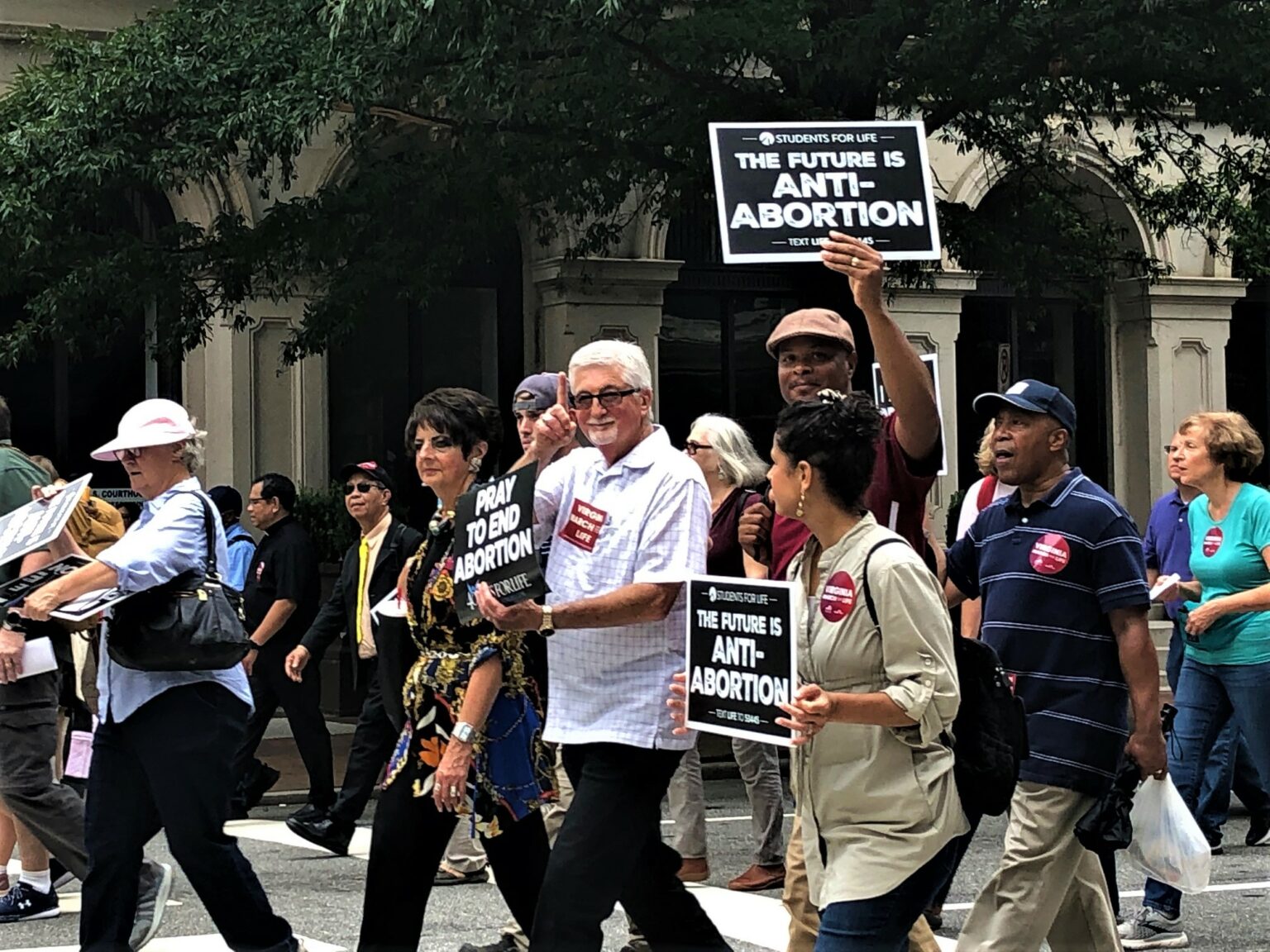
    Anti-abortion demonstrators march. (Photo by Robert Zullo/ States Newsroom).

    BY: 

    A former Cuyahoga County Republican Party leader and the chief of staff for the former speaker of the Ohio House have joined the state’s biggest anti-abortion rights lobby.

    Ohio Right to Life announced it was bringing three new members on to its board of directors: Attorney Philip Williamson, Sheila Williamowski Boehner, and Emily Moreno Miller.

    Miller is married to Ohio GOP Congressman and former Trump advisor Max Miller, and the daughter of Bernie Moreno, currently running for the Republican nomination in the 2024 U.S. Senate race against Democratic Ohio U.S. Sen. Sherrod Brown.

    She was the executive chairman of the Cuyahoga County Republican Party until she left abruptly in April after three months on the job.

    Ohio Right to Life cited Williamson’s legal support for the overturning of nationwide abortion legalization in Dobbs v. Jackson as part of his work in the pro-life space. Williamson, as part of the law firm Taft, Stettinius & Hollister, LLP., wrote a “friends of the court” brief supporting overturning abortion rights.

    Boehner was most recently the deputy chief of staff and executive counsel for then-Ohio House Speaker Bob Cupp, and has worked for State Treasurer Robert Sprague and Secretary of State Frank LaRose. She now works for the firm of Kegler, Brown, Hill and Ritter.


    Susan Tebben
    SUSAN TEBBEN

    Susan Tebben is an award-winning journalist with a decade of experience covering Ohio news, including courts and crime, Appalachian social issues, government, education, diversity and culture. She has worked for The Newark Advocate, The Glasgow (KY) Daily Times, The Athens Messenger, and WOUB Public Media. She has also had work featured on National Public Radio.

    MORE FROM AUTHOR

  • Ohio coalition moves forward with plans for abortion ballot measure

    Ohio coalition moves forward with plans for abortion ballot measure

    BY: SUSAN TEBBEN – Ohio Capital Journal

    A coalition of reproductive rights groups, along with the ACLU of Ohio say they plan to have a pro-abortion ballot initiative on the Ohio Attorney General’s desk by February.

    Ohioans for Reproductive Freedom announced the plan to do this with the help of a recently hired “general consultant” with experience boosting ballot initiatives on the topic in two other states.

    The coalition – made up of Planned Parenthood Advocates of Ohio, Abortion Fund of Ohio, New Voices for Reproductive Justice, the Ohio Women’s Alliance, Preterm-Cleveland, Pro-Choice Ohio and Unite for Reproductive & Gender Equity (URGE), along with the ACLU of Ohio – said the amendment would “explicitly protect reproductive freedom for all Ohioans.”

    “We are working expeditiously and prudently because we know that skipping steps or rushing the process would be a reckless approach when stakes are so high,” said Erin Scott, co-founder and director of the Ohio Women’s Alliance, in a joint statement of ORP members.

    Mission Control, Inc., was hired by the group to help with the effort, after previously working on ballot initiative campaigns in Kansas and Kentucky, both of which showed voters in support of abortion rights. The company has offices in Washington, D.C., Connecticut, Colorado and California.

    ORP said it has “completed initial language drafting and is now moving into comprehensive qualitative and quantitative research and message testing.”

    Anti-abortion groups were quick to criticize the effort, saying support for the measure wouldn’t come in Ohio.

    “Any attempt to change Ohio’s constitution by these large out-of-state abortion groups will ultimately fail here in Ohio,” said Peter Range, Ohio Right to Life CEO, in a statement.

    The religious lobby group Center for Christian Virtue acknowledged Mission Control’s success in other states, but also said the Ohio effort is “doomed to fail.”

    CCV president Aaron Baer used his statement against the measure to support a joint resolution that would make it harder for the state constitution to be amended by raising the voting threshold to 60%. The measure was HJR 6 in the last General Assembly, and is now being led by state Rep. Brian Stewart, R-Ashville, and state Rep. Derrick Merrin, R-Monclova.

  • DeWine re-ups anti-abortion lobbyist, COVID skeptic on Ohio Medical Board

    DeWine re-ups anti-abortion lobbyist, COVID skeptic on Ohio Medical Board

    Michael Gonidakis. Photo from the Ohio Medical Board.

    BY: JAKE ZUCKERMAN – Ohio Capital Journal

    Ohio Gov. Mike DeWine plans to re-appoint a longtime anti-abortion lobbyist and COVID-19 skeptic to the Ohio Medical Board, a spokesman said Monday.

    Michael Gonidakis, 48, a lawyer and president of Ohio Right to Life, will serve his third five-year term on the board, which is charged with licensing and disciplining physicians and other health care providers.

    “I’m honored that the governor has confidence in me to serve,” he said in an interview. “I think there’s no greater service than public service, and I encourage everybody to find a board or commission or way to give back to the state of Ohio.”

    Abortion rights advocates have criticized Gonidakis’ appointment in the past, claiming his anti-abortion lobbying intractably clashes with his state responsibilities. More recently, the U.S. Supreme Court’s overturning of Roe v. Wade in June allowed a new abortion restriction in Ohio to take effect that gives enforcement authority to the state medical board.

    Ohio’s new abortion law, enacted hours after Roe’s demise, prohibits the procedure starting at about six weeks after a woman’s last period, with narrow exceptions to save the life of the mother. This exemption requires physicians to document their beliefs in writing regarding a woman’s medical emergency and report it to the Ohio Department of Health. The Ohio Medical Board can revoke or suspend a physician’s license for noncompliance, or order the state attorney general to initiate a case seeking up to a $20,000 fine.

    Gonidakis sits on the medical board as one of three members who “shall represent the interests of consumers,” per state law. At least two of those members “shall not be a member of, or associated with, a health care provider or profession.”

    Besides his anti-abortion advocacy, state lobbying records show Gonidakis has registered to lobby for an array of health care clients before state lawmakers and the executive branch during his time on the board.

    For instance, he has represented eight medical marijuana companies: The Source HoldingsCannaNat TheraputicsCielo ProcessingNorth Coast TherapeuticsOhio ReleafGreenleaf GardensThe Pharm, and Marijuana Policy Group.

    His other health care clients have included WebMD Health Corp., Comprehensive Pain ManagementHealth Compliance Associates, and Proove Biosciences.

    A spokeswoman for the state medical board declined to answer whether Gonidakis is complying with the requirements of the consumer representative board seat, only noting that the governor appoints members of the board.

    Dan Tierney, a DeWine spokesman, said the appointment doesn’t create any conflict.

    “With respect to abortion or marijuana, neither of these have been an issue related to Mr. Gonidakis’ service in his first two terms,” he said. “We trust they will not be an issue in his third term either, as the vast majority, if not almost all, of medical licensure issues are unrelated to abortion or medical marijuana.”

    He added the sentiment applies to Gonidakis’ other lobbying clients’ industries as well.

    Gonidakis said he recuses himself on issues relating to abortion and medical marijuana when they come up before the Medical Board. He said he believes he’s following the statute, given his clients likely don’t qualify as a “health care provider.”

    COVID skeptic

    A review of Gonidakis’ comments on social media about COVID-19 show a pattern of skepticism around lockdowns, masks, closing schools, efficacy of vaccines, and vaccination policies.

    In February of 2021, Gonidakis shared a Fox News article quoting Dr. Anthony Fauci, the federal government’s top infectious disease expert, warning indoor dining is still unsafe after vaccination given high rates of COVID-19 spread at the time.

    “If this is accurate (and I do not believe it is), then there is absolutely no reason to get the vaccine … There is just no justifiable reason whatsoever,” he said.

    Around that same time, he shared an article citing a study suggesting hydroxychloroquine could help COVID-19 patients. The drug grew in popularity following praise from former President Donald Trump, despite multiple, large-scale, double-blind studies finding no benefit in treating COVID-19 and possible risk to patients.

    “Wonder how many Americans had to die because politicians and the media hated Trump so much & just rejected this drug because Trump promoted it???” he said.

    He said in an interview he’s not an “anti-vaxxer” and that he and his family are all vaccinated against COVID-19. He noted the Medical Board doesn’t create policy — it abides by state law. Of his tweets, he said he doesn’t retract any of his comments, but noted they come in his personal capacity and not as a member of the medical board.

    “Any Ohioan can be vaccinated and want to protect the health of their family but also question some of the politicians’ decisions that are being made,” he said. “At the medical board, we license and regulate doctors. We don’t set policy as it relates to pandemics.”

  • Federal redistricting lawsuit filed as notice of impasse hits Ohio Supreme Court

    Federal redistricting lawsuit filed as notice of impasse hits Ohio Supreme Court

    Photo by Getty Image

    BY: SUSAN TEBBEN – Ohio Capital Journal

    Update: The ACLU filed a request with the Ohio Supreme Court to ask for the Ohio Redistricting Commission’s reasoning behind deciding not to file new legislative redistricting maps by the February 17 deadline. Details below:

    The leader of an anti-abortion lobby and other Ohio citizens are suing the Ohio Redistricting Commission and the Secretary of State, accusing them of depriving them of rights under the U.S. Constitution.

    Attorneys from the Columbus firm of Isaac Wiles & Burkholder, LLC, asked the U.S. District Court for the Southern District of Ohio to declare current legislative districts “or lack thereof” in violation of the U.S. Constitution, and to adopt the last plan the ORC approved. That plan, a revision of the first plan struck down by the Ohio Supreme Court, was also struck down by the high court.

    Though not members of the lawsuit in their official capacities, several of the plaintiffs are leaders or staff at Ohio Right to Life, a lobby group who works on anti-abortion measures throughout the state.

    Mike Gonidakis, president of Ohio Right to Life, is the lead plaintiff in the case, along with Mary Parker, OR2L’s director of legislative affairs. Also listed in the lawsuit is Margaret Conditt, who is on the lobby’s website as a “member trustee.”

    Beth Vanderkooi, another plaintiff in the case, is the executive director of Greater Columbus Right to Life, and Ducia Hamm was previously listed as associate director of affiliate services for Heartbeat International, and religious anti-abortion organization.

    After declaring two rounds of previous maps unconstitutional gerrymanders, the state supreme court sent the commission back to work with a Feb. 17 deadline, which the ORC passed by without adopting new maps.

    Ohio’s state legislative districts are not “substantially similar in population,” according to the lawsuit.

    With Thursday’s “impasse” of the Ohio Redistricting Commission members, the plaintiffs in the lawsuit say they “are cut out of the political process.”

    “Either the 2010 legislative districts apply and their votes are diluted by the population growth reflected in the 2020 U.S. Census data,” the lawsuit stated. “Or alternatively, they are not members of any state legislative district and cannot vote for state house of representatives or senate candidates.”

    The commission filed their notice of impasse on Friday, laying out the commission’s actions and non-actions from Feb. 7, when the supreme court invalidated the ORC revised General Assembly plan, until Thursday, when no map was approved.

    “Among other discussion, (Senate) President (Matt) Huffman stated that the commission was at an impasse, as the commission is unable to ascertain and determine a plan that complies with the court’s order and the Ohio Constitution,” the notice, written by the Ohio Attorney General’s Office, informed the supreme court.

    The federal lawsuit filed late Thursday cites the 2020 census, which showed a net gain of more than 250,000 Ohioans over the last 10 years.

    Because “valid redistricting” has yet to occur, the plaintiffs say they can’t decide on candidates to support, make a decision to run for office or “educate themselves or others on the positions of candidates in their districts and prepare to hold those candidates responsible.”

    Gonidakis and the other Ohioans acknowledged that a nearly five-month legal battle on legislative redistricting is unlikely to have a resolution before the voter registration deadline of April 4 for the May primary, which is why they requested the use of a previous map for the primary.

    The parties in the lawsuit said they chose the previously submitted maps, maps adopted without bipartisan support and called unconstitutional by the supreme court, because they “properly distribute voting power and are based on 2020 census data.”

    They worry if elections were allowed to take place before the redistricting process is resulted, overpopulated districts could see vote dilution, and thus a “deprivation of political power and resources.”

    A lack of districts deprives Ohioans of the right to vote, in violation of the U.S. Constitution and fundamental rights of Americans, the lawsuit states.

    “There is no harm in the Redistricting Commission following the U.S. Constitution and plaintiffs receiving the right to vote,” according to the lawsuit.

    The court challengers ask that a three-judge panel be assigned to the case to keep the ORC and the Secretary of State from “acting on their behalf” and implementing, enforcing or conducting elections under the current state of redistricting.

    The lawsuit also asks the court to establish a schedule “to adopt a timely enacted and lawful plan and implement the new plan for Ohio’s state legislative districts.”

    The lawsuit does not allege racial gerrymandering or any vote dilution based on racial discrimination, which the U.S. Supreme Court has set as a standard for taking any redistricting cases.

    Senate President Matt Huffman, a member of the Ohio Redistricting Commission, accused Democrats of drawing maps to favor Dems while using racial gerrymandering. The Dems were the only ones to propose a map at Thursday’s meeting of the commission, and it was voted down along party lines after a lengthy dissection, mainly by Huffman.

    This is the second federal lawsuit to be filed regarding redistricting in Ohio. In December, a pair of Mahoning County residents sued accusing the ORC of discriminating against Black voters in legislative and congressional district lines.

    That lawsuit was put on hold after district lines were invalidated, and is still awaiting court decisions on maps before proceeding.

    Court challengers asks for impasse reasoning

    On Friday, attorneys for the League of Women Voters and other court challengers asked the court to order the commission to explain their “bald refusal” to abide by the February 7 court order.

    “What steps the commission itself undertook to comply with the court’s order – and why there could be no possible plan to comply with the (state) constitution – remain shrouded in generalities,” wrote Freda Levenson, attorney for the ACLU, in a Friday filing with the supreme court.

    Levenson called out Governor Mike DeWine’s comments after the commission adjourned without a map, in which he said it was a “mistake for this commission to stop and basically say that we’re at an impasse,” and that the choice was “not an option that the law gives us.”

    The notice of impasse “provides no concrete statement of any reason why a more proportionate plan could not be enacted,” according to court challengers, and provides no no explanation of steps taken to draw a compliant plan.

    “It provides a bare conclusion, as if it were sufficient to justify the refusal to comply with this court’s order,” the court document stated.

    Levenson asked that the court order the commission to file evidence by February 22 that “must concretely identify why a compliant plan could not be drawn” and specific reasons why the commission did not consider other plans. The court document also asked for a position from the court on whether it can order an extension of the candidate filing deadline for the May primary.

  • John Becker: I’m a conservative Republican who is vetted, tested, and proven

    John Becker: I’m a conservative Republican who is vetted, tested, and proven


    Guest Column

    by John Becker,

    On October 26th, Loveland Magazine published, Patricia Lawrence: I’m running because our community deserves effective leadership. My liberal Democrat opponent repeatedly misrepresented, mischaracterized, fabricated, and twisted facts beyond recognition. But hey, that can be expected from a desperate politician.

    John Becker has been serving as the State Representative for Ohio’s 65th House District since January 2013. It includes the cities of Milford and Loveland (inside Clermont County) and the townships of Union, Miami, Goshen, Stonelick, and Wayne.

    Rather than picking apart her statements and correcting the record line-by-line, I’m going to reintroduce myself and then compare and contrast our positions and values:

    It is my honor and privilege to serve as your State Representative. I’ve been involved with the Clermont County Republican Party since 1993, served southern Ohio as a State Committeeman for the Ohio Republican Party from 2004-2012, and I’ve been a member of the Ohio General Assembly since January 2013.

    My MBA, with an emphasis in Taxation, was earned at Xavier University. I also have a Bachelor of Science degree in Business Management with a minor in Psychology from Northern Kentucky University. Additionally, I also hold a Certified Treasury Professional (CTP) designation, a school district treasurer’s license, and am a graduate of the Union Township Citizens Police Academy.

    I am running for re-election to continue being a champion in Columbus for our shared conservative values. My platform is very simple: Pro-Life, Pro-Gun, Limited Government, and Lower Taxes.

    With a 30-year career in the private sector, my experience has spanned four major industries including Manufacturing, Health Care Insurance, Banking/Financial, and Charter Education. The companies I’ve worked for include household names like GE, Ford, MetLife, Prudential, Provident Bank, Fifth Third Bank, and Check ‘n Go. I’ve held positions such as supervisor, manager of health care information systems, senior financial analyst, finance officer, assistant vice president, business analyst, and treasurer.

    I am running for re-election to continue being a champion in Columbus for our shared conservative values. My platform is very simple: Pro-Life, Pro-Gun, Limited Government, and Lower Taxes.

    Endorsements are a key indicator of a candidate’s values and effectiveness. My growing list are as follows:

    Party Endorsements

    • Clermont County Republican Party
    • Ohio Republican Party

    Business Endorsements

    • NFIB Ohio – National Federation of Independent Business (small business)
    • Ohio Chamber of Commerce
    • The Ohio Society of CPAs
    • Ohio Valley Associated Builders and Contractors ABC-PAC
    • Ohio State Medical Association PAC
    • 2018 Ohio Farm Bureau “Friend of Agriculture”
    • Ohio State Chiropractors Association
    • Cincinnati Area Board of REALTORS® and the Ohio REALTORS®

    Pro-Life and Grass Roots Values Voters Endorsements

    • Cincinnati Right to Life – PAC
    • Ohio Right to Life – PAC
    • Ohio Value Voters
    • Family First PAC
    • Janet Folger Porter
    • “Very Conservative” from iVoterGuide. (This is their highest rating.)

    Gun Voters

    • NRA with the highly exclusive A+ rating
    • Buckeye Firearms PAC with the highly exclusive A+ rating
    • Ohioans for Concealed Carry (OFCC)

    TEA Party, Liberty, and Tax Voters

    • Ohio Citizens PAC
    • Republican Liberty Caucus of Ohio
    • Coalition Opposed to Additional Sending and Taxes (COAST)

    Military and Veterans Voters

    • “Highly Recommended” by Ohio Veterans United

    In contrast, my liberal Democrat opponent boasts of her endorsements by a collective of labor unions, gun control, and left-wing, pink hat-wearing, feminist pro-abortion groups, including Planned Parenthood.

    If the people of Clermont County want to continue winning with a pro-life, pro-gun, fiscal conservative, they will send me back to Columbus.

    If the people of Clermont County are tired of winning, they will vote for my liberal Democrat opponent. If they want to continue winning with a pro-life, pro-gun, fiscal conservative, they will send me back to Columbus.

    To learn more about me and my candidacy for state representative, please visit my website at www.BeckerGOP.com. If you’d like to subscribe to my monthly newsletter, The Becker Report, email me at John@BeckerGOP.com.

    Election Day is quickly approaching. I’m a conservative Republican who is vetted, tested, and proven. I humbly ask for your vote on November 6, 2018.


  • Gov. John Kasich signs Down Syndrome abortion legislation

    Gov. John Kasich signs Down Syndrome abortion legislation

    Columbus, Ohio – On December 22 Gov. John Kasich signed HB 214 Prohibits a person from performing, inducing, or attempting to perform or induce an abortion on a pregnant woman who is seeking the abortion because an unborn child has or may have Down Syndrome.

    HB 214 and its companion bill, SB 164, would prohibit a person from performing an abortion if they have knowledge that the woman’s decision was influenced by her belief that the fetus has down syndrome. This bill would require doctors to submit a report to the Department of Health for every patient that has an abortion, indicating that the patient did not terminate her pregnancy for this reason. If a doctor violates the terms of HB 214, they would be guilty of committing a fourth degree felony and would lose their medical license.

    This ban would apply to both pre- and post-viability abortions, and includes no exception for situations in which the woman’s life or health is endangered.

    In supporting the legislation, Ohio Right to Life said “Sadly, upwards of 90 percent of babies diagnosed with Down syndrome are aborted.”

    Kasich has signed his 20th anti-abortion law. In doing so, he has ignored rulings of the United States District Court, Southern District of Indiana, which issued a permanent injunction on that state’s Down syndrome abortion ban just 92 days ago, on September 22.

    NARAL Pro-Choice Ohio Executive Director Kellie Copeland said in opposition to the bill: “When a woman receives a diagnosis of Down syndrome during her pregnancy, the last thing she needs is Governor Kasich barging in to tell her what’s best for her family. This law shames women and will have a chilling effect on the conversations between doctors and patients because of the criminal penalties that doctors will face. This law does nothing to support families taking care of loved ones with Down syndrome, instead it exploits them as part of a larger anti-choice strategy to systematically make all abortion care illegal.”